Home
Blog
Find 500 B2B Contacts for Free Every Month with Built-In Outreach.
Home
Blog
Stephen Parker
Published February 19, 2026
7 min
Try Oppora AI
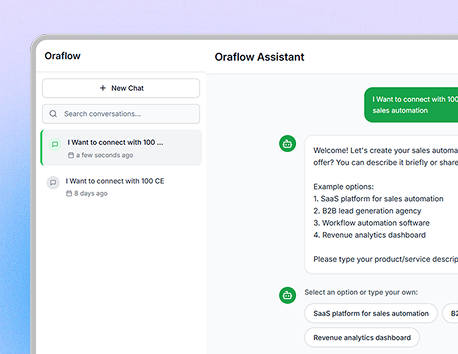
Create Self-Running Agentic Sales Workflows like N8N just by chatting with AI
Get Started for FREE
When you evaluate outbound performance, most people look at open rates first. But opens don’t generate revenue. Replies do.
Your b2b cold email response rates tell you whether your targeting, messaging, and timing actually resonate with real decision-makers. An email that gets opened but ignored is just noise in a crowded inbox.
Another problem is benchmark confusion.
Some sources claim 10% reply rates are normal, while others report numbers below 3%. Without context, these figures create unrealistic expectations.
In this guide, you’ll see 2026 benchmark data, learn how to calculate your own b2b cold email response rate benchmark, and understand a structured growth method to improve it.
Let’s begin with what performance actually looks like in 2026.
Before you try to improve performance, you need to understand what “normal” looks like today. Cold outreach in 2026 is very different from what it was even two years ago.
The average b2b cold email response rate in 2026 typically falls between 3% and 5%.
If you send 1,000 delivered emails, you can expect around 30 to 50 total replies under standard conditions.
Why is the range relatively modest?
Inbox saturation is at an all-time high. Decision-makers receive dozens of automated pitches daily. At the same time, AI-driven email outreach tools have made it easier than ever to scale cold email, which means more competition for attention.
This combination has compressed reply rates across industries.
Well-targeted niche campaigns can exceed 5%, but large-volume campaigns with broad targeting often fall below 3%. The benchmark reflects aggregated, real-world performance across industries rather than best-case scenarios.
So if you’re seeing 4%, you’re not underperforming. You’re operating within the current market reality.
A b2b cold email response rate between 5% and 8% is considered strong performance in 2026.
At this level, your ICP targeting is likely precise, your messaging is relevant, and your follow-ups on cold email are structured correctly.
When campaigns cross 8%, you’re typically looking at optimized systems rather than one-off improvements. This usually means:
In other words, high reply rates are rarely accidental. They result from structured outbound workflows.
If you consistently hit 8%+, you are operating above benchmark and likely have refined both targeting and process.
Many published benchmarks look impressive, but they often hide important details.
Some reports use selective data from high-performing campaigns only. Others exclude negative replies such as “not interested” or unsubscribe responses, artificially inflating performance numbers.
Another common issue is sample size.
Small, highly targeted campaigns for instance, 150 hand-picked accounts can produce 10%+ reply rates. But those numbers don’t scale across thousands of contacts.
When evaluating any b2b cold email response rate benchmark, always ask:
Without this context, benchmarks can create unrealistic expectations.
Once you know the benchmark, you need to calculate your own correctly.
Once you understand the benchmark, the next step is measuring your own performance correctly.
Many teams think they know their numbers, but the calculation is often flawed.
The standard formula for calculating your b2b cold email response rate is:
(Total Replies ÷ Delivered Emails) × 100
Delivered emails matter — not sent emails.
If you send 1,000 emails but 120 bounce, your real base is 880 delivered emails. If you receive 40 replies, your response rate is:
(40 ÷ 880) × 100 = 4.54%
That number gives you a true performance view.
Using sent volume instead of delivered volume artificially lowers your rate and hides deliverability issues.
There’s an important distinction between overall reply rate and positive reply rate.
Your reply rate includes every response:
Your positive reply rate includes only responses that show buying intent or openness to continue the conversation.
Why does this matter?
Because a campaign with a 6% reply rate but only 1% positive replies signals targeting issues. A campaign with 4% total replies and 3% positive replies is much healthier.
Both numbers tell different stories about your outbound quality.
Small tracking errors can distort your b2b cold email response rates significantly.
Here are the most common mistakes:
If your tracking is inaccurate, your optimization decisions will be too.
Clean data leads to clear decisions.
If the benchmark is 4–5%, why do most campaigns struggle to reach it?
If the average b2b cold email response rate sits between 3–5%, why do so many campaigns fail to reach it? The problem is rarely one mistake — it’s usually multiple structural gaps compounding together.
Weak targeting, poor segmentation, shallow personalization, inconsistent follow-ups, and deliverability issues quietly stack up. When these areas are misaligned, response rates naturally decline.
Everything begins with your Ideal Customer Profile. If your ICP is too broad, your messaging becomes vague because your audience is undefined.
Strong campaigns narrow targeting using factors like:
Without that clarity, your b2b cold email response rates will struggle to stay competitive.
Even with a defined ICP, many teams send one universal message to everyone. But a startup founder and an enterprise VP evaluate opportunities very differently.
Segmentation should happen before writing the email. You can segment by:
When segmentation improves, relevance improves — and replies follow.
Adding a first name is not personalization; it’s formatting. Real personalization connects your offer to a visible business situation.
Weak personalization sounds like:
If your email could be sent unchanged to 300 prospects, it is too generic to generate strong response rates.
Many campaigns stop after the first email or send inconsistent follow-ups. A significant percentage of replies happen after the second or third touchpoint.
A structured sequence should include:
Consistency almost always outperforms one-off effort.
Even strong messaging fails if emails don’t land in the inbox. Poor sending behavior quietly damages performance over time.
Common issues include:
When deliverability drops, effective reach shrinks. And when reach shrinks, response rates follow.
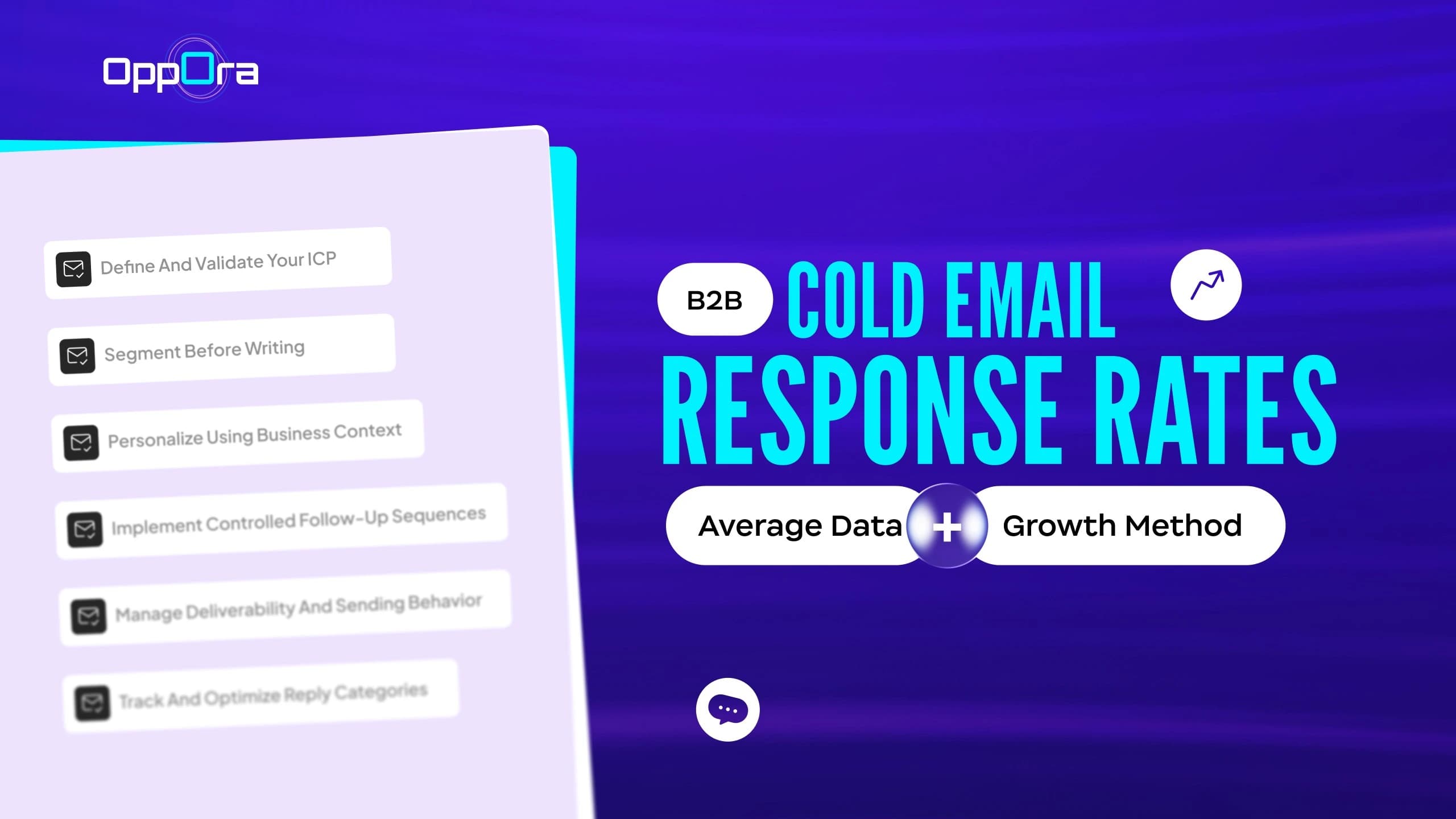
Improving response rates requires structure, not isolated tweaks.
Once you understand the benchmark, the real question becomes simple. How do you consistently push your b2b cold email response rates above 5%?
The answer is not better copy alone. It’s building a structured outbound system where targeting, messaging, sequencing, and deliverability work together.
Everything starts with clarity on who should receive your email. If your ICP is vague, every improvement after that becomes guesswork.
Define your ICP using measurable attributes:
Then validate it using real replies, not assumptions. If positive responses cluster around a certain segment, narrow further and double down.
Strong b2b cold email response rate benchmarks are usually the result of tight ICP focus, not creative writing.
Most campaigns fail because segmentation happens after the email draft is written. That approach forces one message to serve multiple realities.
Instead, segment first and write second.
Group prospects by context such as:
When segmentation improves, relevance increases automatically. Higher relevance directly lifts your b2b cold email response rate without increasing volume.
Personalization should reflect business signals, not surface-level details. Referencing a funding round, hiring surge, product launch, or operational shift creates credibility.
Avoid generic lines that sound automated. Tie your value proposition directly to the observable situation of the company.
When recipients feel understood rather than scraped, reply behavior changes.
A large portion of replies comes after the second or third touchpoint. Without structured sequencing, you’re measuring incomplete performance.
A strong follow-up system includes:
Each step should build context rather than repeat the first email. Structured outbound systems like Oppora.ai help unify targeting, sequencing, deliverability control, and reply tracking — which directly improves consistency in b2b cold email response rates.
When your workflow is controlled, results become predictable.
Even the best messaging fails if emails land in spam. Deliverability is the invisible multiplier behind every campaign.
You need to control:
Stable sending behavior protects inbox placement. And inbox placement protects your response rate benchmark.
Not all replies are equal. Tracking only total replies hides deeper performance signals.
Break replies into categories:
If total replies are strong but positive replies are weak, your targeting may be misaligned. If replies are low across all categories, deliverability or messaging may be the issue.
Optimization should be diagnostic, not random.
When ICP clarity, segmentation, personalization, sequencing, deliverability, and reply tracking work together, your b2b cold email response rate stops being unpredictable. It becomes a measurable output of a structured outbound system.
Most b2b cold email response rates in 2026 fall between 3–5%, reflecting the reality of saturated inboxes and AI-scaled outreach. If your numbers sit in that range, you’re operating within today’s market conditions.
Understanding the real b2b cold email response rate benchmark prevents unrealistic expectations. It also keeps you focused on structural improvements instead of chasing inflated case-study numbers.
Sustainable growth comes from disciplined segmentation, controlled workflows, deliverability management, and consistent optimization of reply categories. When outbound becomes structured, your response rates stop feeling random and start becoming predictable.
If you want to systemize that structure instead of managing it manually, platforms like Oppora.ai help unify targeting, sequencing, deliverability control, and reply tracking in one workflow so improving response rates becomes a process, not a guess.
A good b2b cold email response rate typically falls between 3–5%. If you consistently reach 5–8%, your targeting, segmentation, and workflow are likely well optimized.
The average b2b cold email response rate benchmark across industries generally sits around 3–5%. Higher numbers are possible with tight ICP targeting and structured follow-ups.
Use this formula:
(Total Replies ÷ Delivered Emails) × 100
Always calculate using delivered emails, not sent emails, to ensure accuracy.
Reply rate includes all responses — positive, negative, and neutral.
Positive reply rate measures only interested or qualified responses.
Tracking both helps you diagnose whether targeting or messaging needs improvement.
Summarize with AI
Share