Home
Blog
Find & Send Cold Emails to 500 Unique Prospects Every Month for FREE.
Home
Blog
Manasa Goli
Published February 26, 2026
6 min
Try Oppora AI
Create Self-Running Agentic Sales Workflows like N8N just by chatting with AI
Get Started for FREE
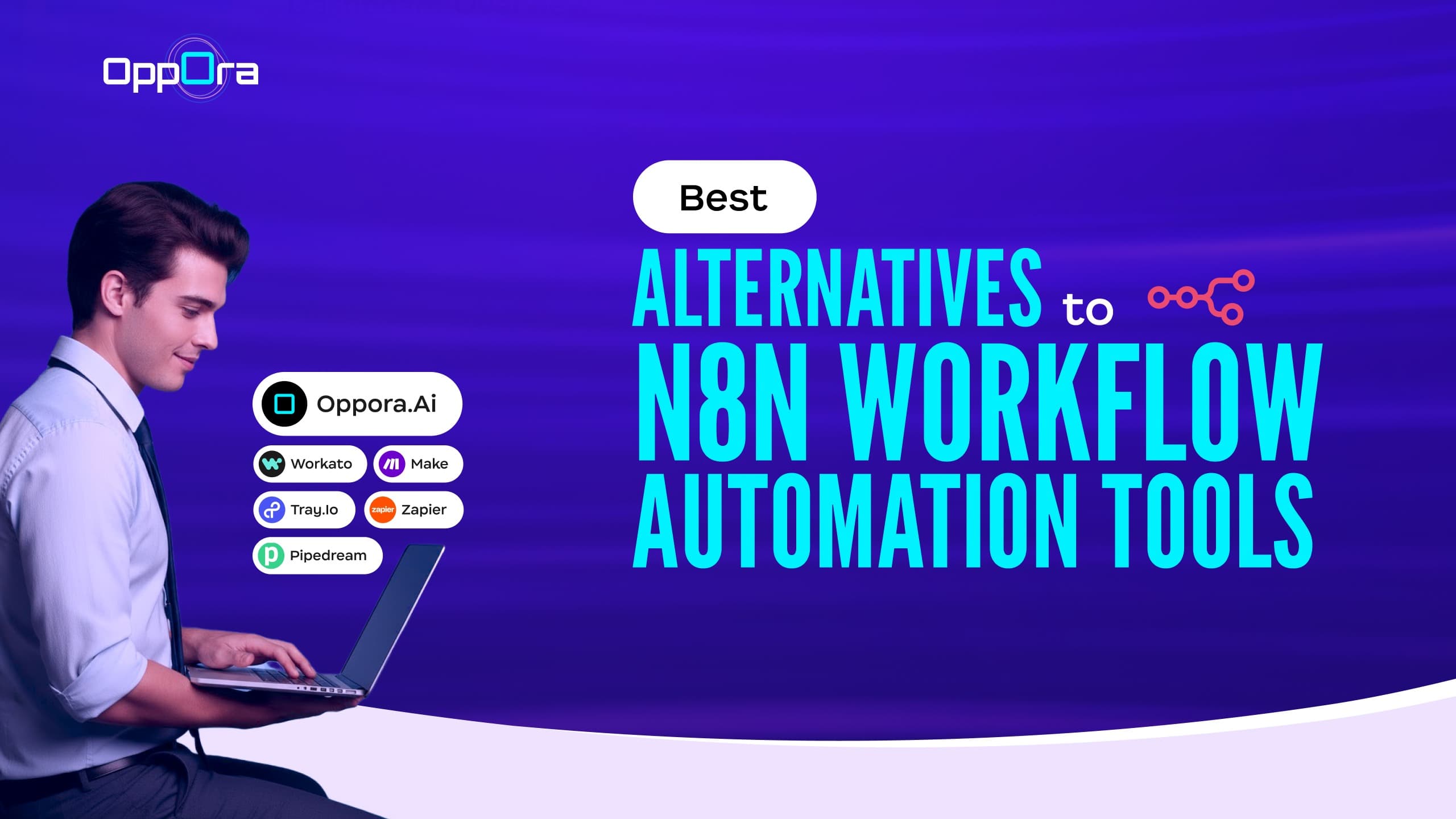
Workflow automation has become a core part of modern tech stacks, and n8n is often a popular starting point thanks to its flexibility and open-source approach.
However, as teams scale, many begin exploring alternatives that offer easier setup, deeper integrations, stronger AI capabilities, or more specialized use cases. The right choice ultimately depends on whether you need simple app connections, complex workflow orchestration, or automation tied directly to revenue operations.
In this guide, we’ll explore the best alternatives to n8n workflow automation tools in 2026 and help you understand where each option fits.
n8n is powerful, but it’s not perfect for every team. Common reasons teams explore alternatives include:
The good news: the ecosystem is rich with strong options.
Oppora.ai is an AI-powered outbound automation platform built for modern B2B revenue teams. Instead of just connecting apps like traditional workflow tools, it automates the full outbound process—from detecting buying signals and finding prospects to sending personalized outreach and managing replies.
As an alternative to n8n, Oppora.ai is especially relevant for teams whose primary goal is pipeline generation and sales automation rather than general-purpose workflow building.
What makes it different
Most automation tools focus on connecting apps. Oppora focuses on creating pipeline automatically.
Best for: Revenue teams, founders, and GTM teams who want automation tied directly to pipeline outcomes.
👉 If you're currently using n8n mainly for outbound workflows, Oppora.ai can replace large parts of that stack with purpose-built AI agents.
Zapier is a no-code workflow automation platform that connects different apps and triggers actions between them (called “Zaps”). It is widely used to automate routine tasks like syncing leads, sending notifications, or updating records across tools without writing code.
Key strengths
Limitations
Best for: Non-technical teams needing quick, simple automations across common SaaS tools.
Make is a visual workflow automation platform designed for building more complex, multi-step automations. It allows users to create detailed scenarios with advanced routing, data transformations, and conditional logic using a drag-and-drop interface.
Why teams choose it
Make is often preferred over simpler tools when workflows require deeper logic and customization.
Best for:Operations teams and technical marketers who need sophisticated multi-step automations.
Pipedream is a developer-focused automation and integration platform that combines workflows with real code execution. It enables teams to build event-driven automations using Node.js, Python, and APIs while still offering some low-code convenience.
Highlights
Trade-offs
Best for: Developers and technical teams who want programmable automation beyond visual builders.
Workato is an enterprise automation and integration platform built to orchestrate complex business processes across large organizations. It combines iPaaS (integration platform as a service) capabilities with workflow automation and governance controls.
Key capabilities
Downside
Best for: Large enterprises managing complex, cross-system business workflows.
Microsoft Power Automate is a workflow automation and robotic process automation (RPA) tool within the Microsoft Power Platform. It enables users to automate processes across Microsoft apps and third-party services, including both cloud flows and desktop automation.
Strengths
It performs especially well in organizations already standardized on Microsoft infrastructure.
Limitations
Best for: Organizations heavily invested in the Microsoft ecosystem.
Tray.io is an enterprise-grade integration and automation platform designed for building scalable, API-driven workflows. It is often used by product, data, and platform teams that need embedded integrations or highly customized automation logic.
Why it stands out
Tray provides robust infrastructure for teams building integration-heavy products or internal automation systems.
Best for: Product and platform teams building embedded or highly customized integrations.
Activepieces is an open-source, no-code automation platform positioned as a modern alternative to tools like Zapier and n8n. It allows teams to build workflows visually while maintaining the flexibility of self-hosting if needed.
Key benefits
Watch-outs
Best for: Teams that want open-source control with a no-code automation experience.
Pabbly Connect is a budget-friendly workflow automation tool that enables users to create multi-step automations between apps without coding. It focuses on affordability while covering common marketing, sales, and business automation use cases.
Pros
Pabbly is often chosen by small teams that want basic automation without the higher recurring costs of premium tools.
Cons
Best for: Small businesses and marketers on a tight budget.
Choosing the right workflow automation platform isn’t about finding the most popular tool—it’s about matching the platform to your team’s technical comfort, scale, and business goals. Before switching from n8n, step back and evaluate what you actually need automation to achieve. Some teams simply want to connect apps faster, while others need deeper orchestration, developer flexibility, or automation that directly supports revenue operations.
The best alternative is the one that removes friction from your current workflow without adding unnecessary complexity.
When evaluating options, focus on:
Taking time to map your current pain points against these criteria will make the decision far clearer and prevent costly tool switching later.
n8n remains a powerful workflow automation tool, but it’s no longer the only serious option in 2026. As automation needs become more specialized, many teams find better fits in platforms that prioritize ease of use, enterprise scalability, developer flexibility, or AI-driven execution.
The right alternative ultimately depends on what you want automation to achieve. If your goal is simple app connectivity, several no-code tools can get you running quickly. If you need complex orchestration or embedded integrations, more advanced platforms may be the better route. And for revenue teams focused specifically on pipeline generation and outbound automation, purpose-built AI solutions like Oppora.ai offer a more targeted approach than general workflow builders.
Before making the switch, map your current bottlenecks, technical resources, and growth plans. Choosing a platform aligned with your real use case—not just feature lists—will ensure your automation stack scales with you instead of slowing you down.
Yes, many modern automation platforms support real-time or event-based triggers (such as webhooks, app events, or API calls). The availability and speed of real-time processing can vary by tool and pricing tier.
Startups often prefer cloud-hosted tools for faster setup and lower maintenance. Self-hosted options make more sense when you need strict data control, customization, or cost optimization at scale.
Task-based pricing can become expensive as workflow volume grows. It’s important to estimate monthly automation runs and understand how retries, multi-step workflows, and branching affect total task consumption.
AI is increasingly used for lead enrichment, personalization, data classification, anomaly detection, and autonomous workflow execution. Teams evaluating new platforms should consider whether AI capabilities align with their future automation needs.
In most cases, workflows cannot be directly migrated because each platform has its own architecture and logic builder. However, you can usually recreate the workflow by mapping triggers, actions, and data flows in the new tool.
Summarize with AI
Share