Home
Blog
Find & Send Cold Emails to 500 Unique Prospects Every Month for FREE.
Home
Blog
Manasa Goli
Published February 20, 2026
4 min

Try Oppora AI
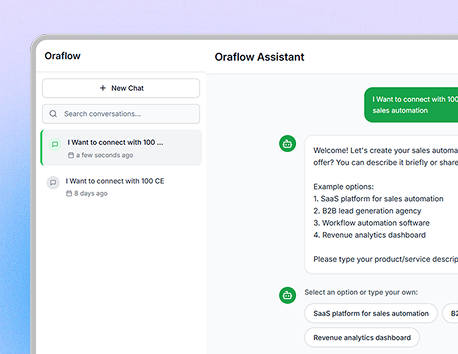
Create Self-Running Agentic Sales Workflows like N8N just by chatting with AI
Get Started for FREE
Email volume has grown far beyond what manual sorting can handle. Sales replies, support requests, campaign responses, and internal messages now compete for attention in the same inbox.
When emails aren’t categorized properly, teams quickly run into problems:
Because of this, modern teams treat email classification as more than inbox hygiene — it’s an operational system that keeps revenue and support moving.
To make it work at scale, teams need both clear category criteria and a reliable way to apply them consistently.
Email category classification is the process of assigning incoming emails into predefined groups based on signals such as:
At a practical level, it answers one core question:
What kind of email is this — and what should happen next?
Instead of treating every message the same, classification helps teams:
However, the real challenge is not defining categories — it’s applying them accurately when reply volume increases.
Email classification becomes critical once teams manage shared inboxes or outbound reply volume.
It’s especially valuable for:
If your team is manually scanning every reply to decide what to do next, structured classification usually delivers immediate time savings.
Inbox organization used to be optional. Today, it directly affects pipeline speed and customer experience.
Three shifts have raised the stakes:
Because of this, most teams start by defining a simple category framework.
The most effective systems begin simple and expand later.
These indicate buying intent.
Examples
Example reply
“Yes, this looks interesting. Can we book a demo?”
Recommended action
💡 Outbound reality: For SDR teams, this is the most time-sensitive category. Missing even a few positive replies can directly impact the pipeline.
This is why many outbound platforms, including Oppora, automatically tag replies like Interested, Meeting Booked, or Positive — so teams can prioritize without manually reading every message.
These require product or account help.
Examples
Recommended action
Informational but usually low urgency.
Examples
Recommended action
Internal coordination should stay separate from external demand.
Examples
This category protects team focus.
Examples
Recommended action
With categories defined, the next step is applying the right logic behind them.
Defining categories is step one. Accuracy depends on the rules behind them.
Keyword-only filters often fail because they ignore context.
Weak rule
If email contains “pricing” → Sales
Stronger rule
Pricing language + external sender + inquiry tone → Sales
Intent-based logic significantly reduces false positives.
High-performing systems rarely rely on a single condition.
They typically layer:
This multi-signal approach improves routing reliability.
Classification only creates value when it triggers the next step.
Example mapping
💡 Where automation helps
As reply volume grows, manually tagging every response becomes slow and inconsistent. This is where outbound platforms like Oppora help SDR teams by automatically labeling replies (for example: Interested, Not now, Wrong person), making inbox triage much faster.
Email patterns evolve quickly.
Best practice:
Even with strong rules, however, teams eventually hit scaling limits.
Rule-based systems work well early on. But as outbound scales, teams typically notice:
At this stage, the challenge isn’t the category framework — it’s the volume and speed of replies.
Teams that respond to high outbound volume usually solve this by combining:
To maintain performance over time:
Email classification has evolved from simple inbox organization into a core operational layer for modern GTM teams.
When done well, teams can:
The biggest wins come when structured classification is paired with automation that helps teams quickly identify which replies actually need attention.
Ideally, teams should review classification performance weekly or at least monthly. Email patterns, campaign types, and outreach strategies evolve quickly. Regular reviews help identify misclassifications, reduce false positives, and maintain automation accuracy.
Yes. Proper classification ensures that high-intent emails — such as demo requests or pricing inquiries — are routed immediately to the right sales owner. This reduces response time and increases the chances of conversion. Many revenue teams see measurable pipeline improvements after implementing structured email categorization.
A basic system can be set up in a few days using simple rules and core categories. However, achieving high accuracy typically takes several weeks of testing and refinement. Teams that combine strong criteria design with clean data (for example, using tools like Oppora) usually reach reliable performance much faster.
Summarize with AI
Share
 Mike Ivan