Home
Blog
Find & Send Cold Emails to 500 Unique Prospects Every Month for FREE.
Home
Blog

Mike Ivan
Published February 19, 2026
6 min
Try Oppora AI
Create Self-Running Agentic Sales Workflows like N8N just by chatting with AI
Get Started for FREE
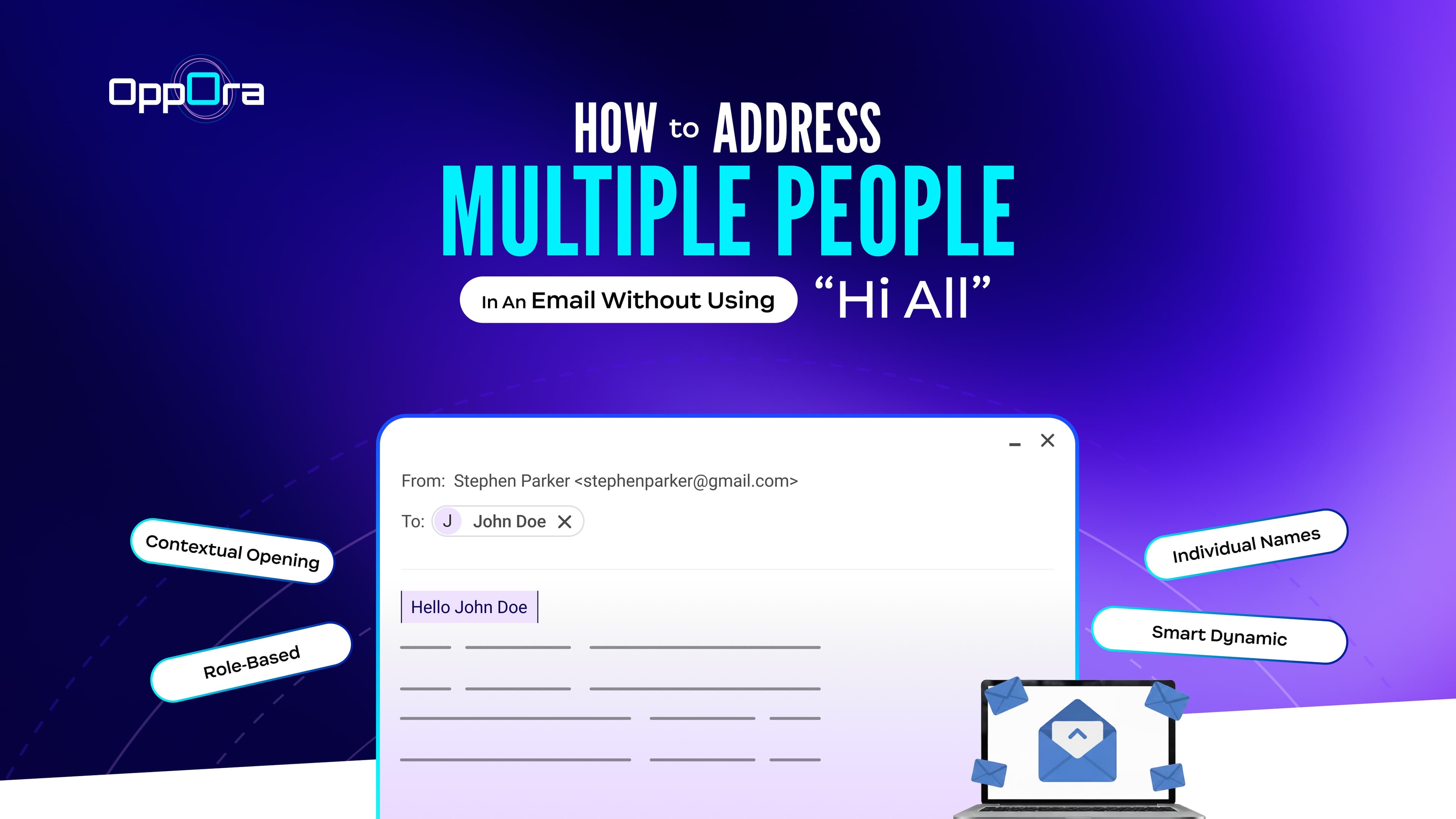
Email etiquette still matters — especially in cold outreach, sales conversations, and professional communication. The way you open an email shapes the reader’s first impression and directly affects reply rates.
Yet many senders default to the same tired greeting: “Hi all.”
It’s convenient, but it often feels impersonal, lazy, or overly generic — particularly in high‑stakes emails like prospecting, partnerships, or client communication.
If you want your emails to feel thoughtful, human, and reply‑worthy, you need better alternatives.
In this guide, you’ll learn:
Let’s dive in.
“Hi all” isn’t always wrong — but it frequently signals low effort personalization, especially in outbound or semi‑formal contexts.
Here’s why it can backfire:
In cold outreach and revenue‑focused emails, even small details like greetings can impact open and reply rates.
Before we replace it everywhere — context matters.
“Hi all” is acceptable when:
But if your goal is engagement, replies, or relationship building, stronger alternatives perform better.
The right greeting depends on three things:
Below are the best approaches that actually work in 2026.
Best for: sales emails, client communication, partnerships
This is the gold standard when emailing 2–3 people.
Examples:
Why it works:
Pro tip: Always match the tone of the relationship. First names work in most modern business contexts.
Best for: inbound inquiries, unknown recipients, support emails
If you don’t know the individuals, a role‑based greeting is better than “Hi all.”
Examples:
Why it works:
Best for: semi‑formal group emails
These strike a balance between personal and scalable.
Better alternatives to “Hi all”:
Important: These work best when the recipients already share context.
When one person matters most in the thread, lead with them.
Best for: sales cycles, deal conversations, stakeholder emails
Examples:
Why it works:
This approach is highly effective in outbound and account‑based outreach.
Modern high‑performing emails sometimes skip the generic greeting entirely.
Best for: cold outreach and warm sales emails
Examples:
Why it works:
Used correctly, this can outperform traditional greetings.
Best for: formal external communication, legal, academic, or executive emails
When the situation is more formal and you want to maintain professionalism without listing multiple names, a collective salutation works well.
Examples:
Why it works:
Pro tip: Use “Dear” only when the rest of your email matches a formal tone.
Best for: outbound to shared inboxes, partnerships, or unknown stakeholders
When you're emailing a function rather than individuals, addressing the company or department can feel more intentional than “Hi all.”
Examples:
Why it works:
Best for: formal outreach, international teams, executive communication
Time‑based greetings can feel polished and respectful when used correctly.
Examples:
Why it works:
Important: Only use when you’re reasonably confident about the recipient’s time zone.
Best for: ongoing email threads and deal cycles
In replies, repeating full greetings can feel robotic. A lighter, thread‑aware opener keeps the conversation natural.
Examples:
Why it works:
This is especially effective in multi‑stakeholder sales conversations.
Best for: high‑volume outbound, ABM campaigns, growth teams
When sending at scale, the most advanced teams don’t rely on one fixed greeting — they dynamically adapt based on the number of recipients and available data.
What this looks like:
Example logic:
Why it works:
Even experienced senders slip here.
Avoid these:
❌ Using “Hi all” in cold outreach
❌ Misspelling names
❌ Listing too many names (over 4 gets messy)
❌ Mixing formality levels (e.g., Dear + first names randomly)
❌ Forgetting to update greetings in reply threads
Small errors at the top of the email can quietly hurt credibility.
When you’re sending dozens or hundreds of emails, manually customizing greetings becomes unrealistic.
This is where Oppora becomes valuable.
With Oppora, you can:
Example with Oppora variables:
Instead of:
Hi all,
You can automatically generate:
Hi {{first_name_1}} and {{first_name_2}},
Or when multiple stakeholders are present:
Hi {{primary_first_name}} — looping in {{secondary_first_name}} here.
This keeps your outreach personal, scalable, and high‑performing.
Weak: Hi all,
Better: Hi Rohan and Vikram,
Best (pattern interrupt):Rohan and Vikram — quick idea for your outbound pipeline
Good: Hello Priya and team,
Better: Hi Priya — sharing this with the implementation team as well.
Perfectly fine: Hi everyone,
Internal communication allows more flexibility.
Use this cheat sheet:
“Hi all” isn’t wrong — it’s just often lazy for high‑impact emails.
If your goal is better replies, stronger relationships, and more human outreach, your opening line deserves more attention.
The best-performing senders today:
When done right, even a small change in your greeting can meaningfully improve engagement.
Not inherently. It’s acceptable for internal or informal group emails. However, in sales, client, or outreach emails, more personalized greetings usually perform better.
Ideally 2–3. If there are more recipients, prioritize the key stakeholder or switch to a role‑based greeting to keep the email clean.
Using individual names (e.g., “Hi Sarah and James”) or a contextual opener typically drives the highest reply rates.
Yes — when your contact data is clean. Tools like Oppora help dynamically insert recipient names while keeping emails natural and human.
In most modern business communication, first names are preferred. Use full names only in very formal industries or initial legal/official communication.
Summarize with AI
Share