Home
Blog
Find 500 B2B Contacts for Free Every Month with Built-In Outreach.
Home
Blog
Manasa Goli
Published March 25, 2026
6 min
Try Oppora AI
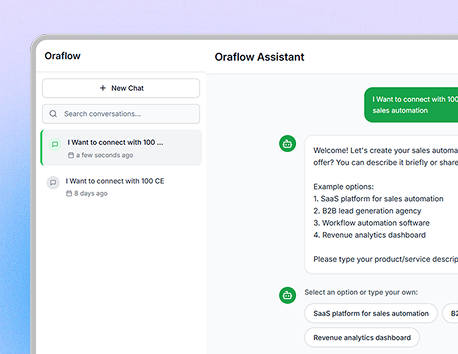
Create Self-Running Agentic Sales Workflows like N8N just by chatting with AI
Get Started for FREE
If you’ve ever sent an email and heard nothing back, you’re not alone.
The truth is—most emails don’t fail because the offer is bad. They fail because the execution is poor.
From vague subject lines to pushy messaging, small mistakes in email writing can quietly destroy your chances of getting a reply. And the worst part? Many of these mistakes are incredibly common.
In this guide, we’ll break down 15 bad email examples, explain why they don’t work, and show you what to write instead—so you can improve response rates, build credibility, and actually start conversations.
Before jumping into examples, let’s quickly understand what makes an email “bad.”
Most ignored emails share one or more of these issues:
Now let’s look at real bad email etiquette examples and how to fix them.
Bad Example:
Hi, I wanted to connect and discuss something that could be useful for your business. Let me know.
Why it fails:
What to write instead:
Hi [Name], I noticed your team is hiring SDRs—are you currently scaling outbound? I have a quick idea on how teams are improving reply rates by 2–3x. Open to a 10-min chat?
👉 Clear, relevant, and easy to respond to.
Bad Example:
Hi, I’m the founder of XYZ. We offer multiple services including AI, automation, CRM, and more...
Why it fails:
What to write instead:
Hi [Name], Many sales teams struggle with inconsistent follow-ups and missed opportunities. Curious—how are you currently managing outbound workflows?
👉 Shift from “about you” to “about them.”
Bad Example:
Hi, I wanted to reach out because our company provides a wide range of services including lead generation, automation, CRM integration, and...
Why it fails:
What to write instead:
Hi [Name], Quick question— Are you currently handling outbound manually or using automation?
We’ve seen teams save 10+ hours/week by structuring this better. Worth a quick chat?
👉 Short emails perform better—this is consistently backed by outreach data.
Bad Example:
Dear Sir/Madam, We offer the best services in the industry...
Why it fails:
What to write instead:
Hi [Name], Saw your recent post on scaling outbound—interesting take on SDR workflows. Curious how you’re currently handling follow-ups?
👉 Even light personalization improves reply rates significantly.
Bad Example:
Let me know your thoughts.
Why it fails:
What to write instead:
Would you be open to a quick 10-min call this week?
👉 Always guide the reader.
Bad Example:
Let’s schedule a demo tomorrow. I’m available at 11 AM.
Why it fails:
What to write instead:
Would it make sense to explore this further if it’s relevant?
👉 Respect the reader’s space.
Bad Example:
URGENT: You need to see this!!!
Why it fails:
What to write instead:
Quick question about your outbound process
👉 Honest subject lines build credibility.
Bad Example:
Just following up.
Why it fails:
What to write instead:
Just circling back— Are you currently exploring ways to improve reply rates, or not a priority right now?
👉 Add context or a new angle.
Bad Example:
Our solution is the best in the market and guarantees results.
Why it fails:
What to write instead:
Teams similar to yours have improved response rates by structuring their outreach better. Happy to share how if useful.
👉 Subtle > aggressive.
Bad Example:
Check our website, case studies, videos, blog, and demo link...
Why it fails:
What to write instead:
Happy to share more details if this sounds relevant.
👉 Reduce distractions.
Bad Example: Sending emails without considering time zones or work hours.
Why it fails:
Fix: Send emails when your audience is most active.
Bad Example:
We can help you grow your business.
Why it fails:
What to write instead:
We’ve helped similar teams streamline outreach and improve consistency.
👉 Add light proof.
Bad Example: Same email sent to founders, SDRs, and marketers.
Why it fails:
What to write instead: Tailor your message based on role and pain points.
Bad Example:
Can we schedule a 45-minute demo to walk through everything?
Why it fails:
What to write instead:
Open to a quick 10-min intro?
👉 Lower the barrier.
This is the most overlooked issue.
Even if your email is good, inconsistency kills results:
By now, you’ve seen multiple bad examples of emails—but here’s the deeper issue:
👉 Most teams know what a good email looks like. 👉 They just struggle to execute it consistently.
And that’s where things start breaking:
Instead of just telling you how to write better emails, it helps you execute your outreach the right way—every time.
With Oppora.ai, an AI agent that manages your entire outbound process—from sending emails and follow-ups to organizing workflows and keeping everything running smoothly—your outreach happens consistently without manual effort.
Instead of managing outreach across spreadsheets, notes, or memory, Oppora.ai lets you define your entire flow in one place.
For example:
Once this is set, the system knows exactly what should happen next for every lead—without you manually tracking it.
👉 You’re not just planning the process—you’re turning it into something executable.
Normally, follow-ups depend on:
Which is where most opportunities get lost.
With Oppora.ai:
👉 Every lead gets the same level of attention—consistently.
When multiple emails are sent manually:
Oppora.ai solves this by letting you:
👉 So instead of rewriting emails every time, you’re sending proven communication at scale.
Most outreach issues aren’t strategy problems—they’re execution problems:
Oppora.ai removes these gaps by:
👉 The process runs the way it was designed—without breakdowns.
Bad emails don’t fail because of one big mistake.
They fail because of small, repeated issues:
The good news?
Every one of these problems is fixable.
Start by improving your messaging. Then make sure your process runs consistently.
Because in the end:
👉 A good email gets attention 👉 A well-executed system gets results
If your open rates are extremely low, it could be a deliverability issue (spam, promotions, or blocked domain). If opens are high but replies are low, the problem is likely your messaging, targeting, or CTA.
Yes. High volume with low engagement (opens/replies) signals spam behavior to email providers, which can hurt your sender reputation and reduce deliverability over time.
Subject lines that are too long often get cut off, especially on mobile devices. Keeping them under 6–8 words improves readability and increases the chances of getting opened.
Very important. A large percentage of emails are opened on mobile devices, so using short paragraphs, simple formatting, and clear CTAs improves readability and engagement.
It’s generally better to avoid them in initial outreach. Attachments and images can trigger spam filters and reduce trust, especially if the recipient doesn’t know you yet.
There’s no fixed rule, but most high-performing cold emails are between 50–125 words, focusing on clarity and a single objective.
Only if they feel generic or lack personalization. When used correctly—with context and customization—AI can actually improve consistency and efficiency.
Summarize with AI
Share