Home
Blog
Find 500 B2B Contacts for Free Every Month with Built-In Outreach.
Home
Blog
Manasa Goli
Published May 1, 2026
6 min
Try Oppora AI
Create Self-Running Agentic Sales Workflows like N8N just by chatting with AI
Get Started for FREE
You’ve probably spent hours improving your cold emails.
Tweaking subject lines, rewriting hooks, and personalizing every line.
But there’s one part you almost ignore.
Your sales email signature.
It sits quietly at the bottom, yet it often decides whether someone trusts you enough to reply.
In this guide, you’ll learn:
Most people treat their signature like a formality.
Just a name, company, maybe a link.
But in cold email, it plays a much bigger role.
It answers the silent questions in your prospect’s mind.
“Is this person real?” “Can I trust this?” “Should I reply?”
A strong sales email signature reduces friction instantly.
It adds credibility without you having to say it in the email body.
And more importantly, it makes your message feel human.
Now that you know why it matters, let’s break down what actually works.
The best sales email signature is not about stuffing information.
It’s about clarity, trust, and subtle persuasion.
Too much information creates friction.
Focus on:
Cold emails feel robotic by default.
Your signature should make you feel real.
This could be:
Suggested Reading:
Email Signature Examples for Professionals: Do’s & Don’tsDon’t overwhelm the reader with multiple links.
Guide them toward one action:
Most emails are opened on phones.
Your email signature for sales should be clean and easy to scan.
Now let’s get into what actually moves the needle.
You don’t need a fancy or overdesigned sales email signature to get replies.
What you need is the right structure that builds trust, feels human, and gently nudges action.
Below are proven formats you can use depending on your outreach style, audience, and goal.
This is the simplest version of an email signature for sales, and it works especially well for cold outreach.
It removes anything that could distract the reader and keeps the focus entirely on your message.
Example:
John Carter Growth Lead, Revix [email protected]
Why it works
It feels personal and low-friction.
There’s no overload of links or branding, so it doesn’t trigger “sales email” resistance.
And because it looks like a normal person’s email, it builds quiet trust.
This format adds a small layer of context so the reader instantly understands what you do.
It doesn’t pitch.
It simply positions you.
Example:
Sarah Kim Account Executive, FlowSync
Helping SaaS teams improve outbound results www.flowsync.com
Why it works
It answers “who are you and why should I care?” in seconds.
That clarity reduces hesitation and builds confidence in your message.
It’s especially useful when your brand isn’t widely known.
If you’re a founder or early-stage operator, this format gives you a natural edge.
It signals authority without needing extra explanation.
Example:
Arjun Mehta Founder @ LeadStack Built for teams scaling outbound
Why it works
People respond faster to decision-makers.
It feels like a direct, intentional outreach instead of a mass email.
And that perception alone increases reply chances.
This format removes the stiff, corporate feel and makes your email sound like a real person wrote it.
Instead of sounding like a formal sales rep, you come across as someone starting a simple conversation.
Example:
Alex Helping B2B teams fix cold email Happy to share ideas if useful
Why it works
It lowers pressure and makes replying feel natural.
The tone feels human, which helps your email stand out in a crowded inbox.
And it invites a response instead of pushing for one.
Suggested Reading:
Different Ways to Sign Off an EmailThis format is built to guide the reader toward a clear next step.
Instead of leaving things open-ended, it gives them a simple action to take right away.
Example:
Daniel Ross Sales @ PipelinePro Book a quick chat → calendly.com/danielross
Why it works
It removes decision friction.
The reader doesn’t have to think about what to do next.
And when the action is clear and easy, replies (or clicks) naturally increase.
This version focuses on building trust through results, numbers, or past work.
It shows that you’ve already helped others.
Example:
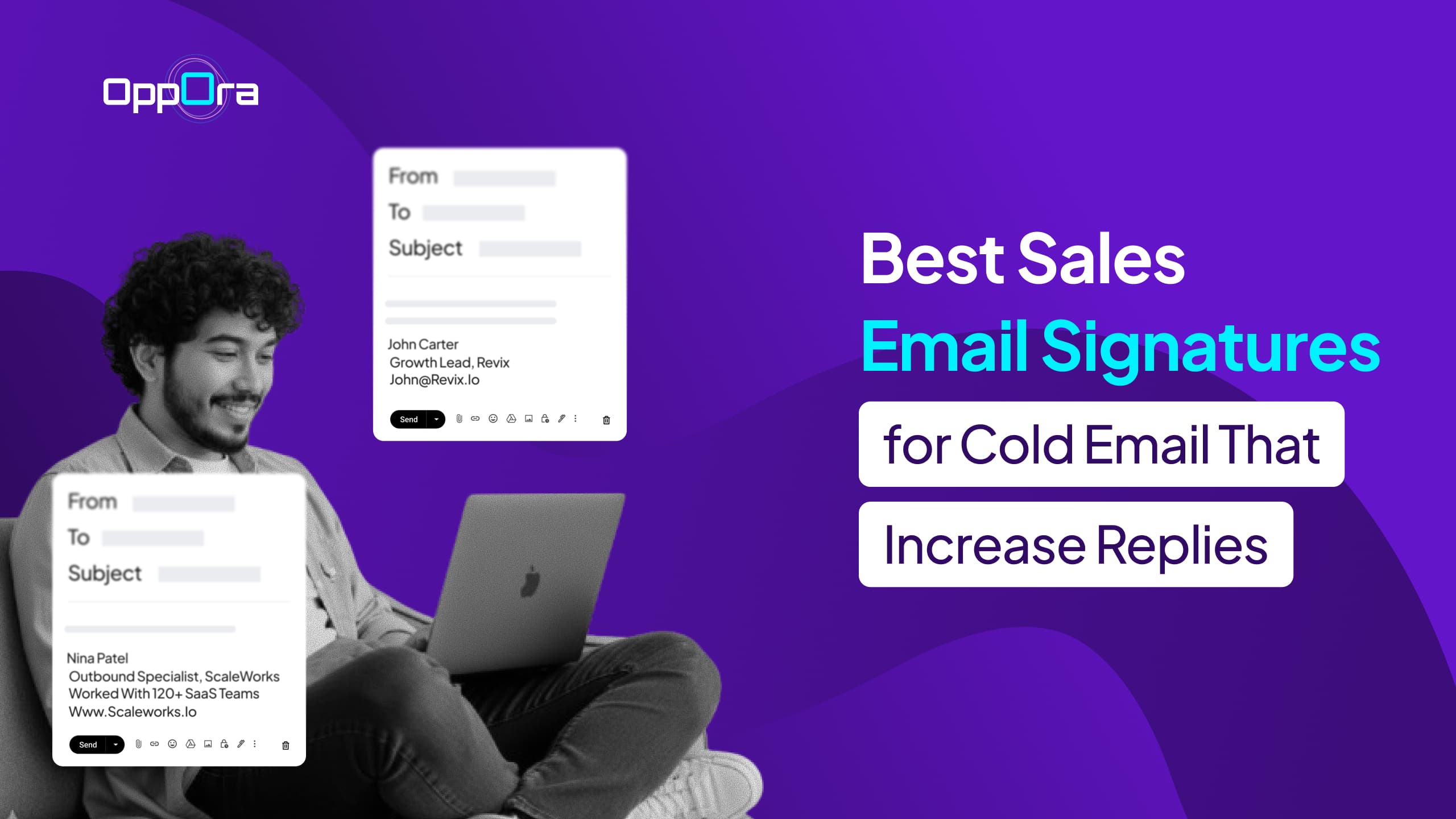
Nina Patel Outbound Specialist, ScaleWorks Worked with 120+ SaaS teams www.scaleworks.io
Why it works
It answers the credibility question instantly.
Instead of just telling, you’re showing proof.
That small signal can reduce doubt and make your outreach feel more reliable.
This format gives your prospect another way to connect beyond email.
It works well when someone prefers to check you out before replying.
Example:
Chris Evans BDR, GrowthLoop Let’s connect → linkedin.com/in/chrisevans
Why it works
It lowers the commitment required to engage.
Not everyone wants to reply to a cold email immediately.
But clicking a profile link feels easier and more natural.
And once trust builds there, replies often follow.
This format subtly offers value without pushing for anything.
It positions you as helpful rather than transactional.
Example:
Emma Collins Helping startups improve outbound systems Can share a few ideas if helpful
Why it works
It shifts the dynamic from selling to helping.
That makes your outreach feel less intrusive.
And when people don’t feel sold to, they’re more open to replying.
This works well if you’re active on content platforms or building a personal brand.
It adds familiarity and authority at the same time.
Example:
Ryan Lee Sharing outbound strategies for B2B teams linkedin.com/in/ryanlee
Why it works
It creates recognition and curiosity.
If the prospect checks your profile and sees useful content, trust builds faster.
And that makes replying feel safer.
Here’s the reality.
Creating one good signature is easy.
Maintaining consistency across hundreds of emails is not.
With Oppora, your entire outreach system works together.
Instead of manually adjusting every sales email signature, you can:
It’s not just about writing better emails.
It’s about building a system that improves every part of your outreach.
Your cold email doesn’t end at your last sentence.
It ends with your signature.
And that small detail can quietly influence whether someone replies or ignores you.
Start simple.
Keep it human.
And treat your best sales email signature as a conversion tool — not just a sign-off.
No. Adjust slightly based on audience and tone to improve relevance.
Not always. It can help credibility but may add unnecessary friction in cold emails.
Yes, but keep it light. Too much branding makes it feel like marketing.
Sometimes. It won’t fix a bad email, but it can boost trust.
Slightly. Small tweaks in CTA or tone can make a difference.
Summarize with AI
Share