Home
Blog
Find 500 B2B Contacts for Free Every Month with Built-In Outreach.
Home
Blog
Manasa Goli
Published February 5, 2026
10 min
Try Oppora AI
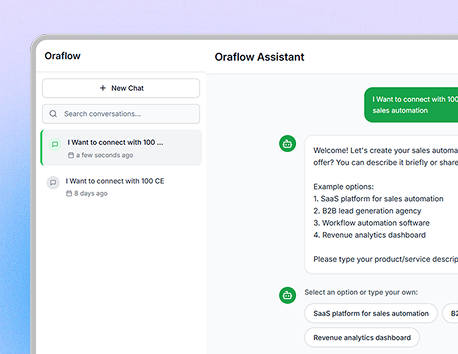
Create Self-Running Agentic Sales Workflows like N8N just by chatting with AI
Get Started for FREE
Ever spent several minutes writing the perfect email without spam… only to pause at the very last line?
It happens more often than you think.
Your email sign-off may seem like a small detail, but it plays a powerful psychological role. It shapes the reader’s final impression, signals professionalism, and can even influence whether you get a reply.
In fact, a well-crafted closing builds trust, while an awkward one can quietly weaken an otherwise strong message.
If you’ve already learned how to end an email properly, the next step is choosing the right sign-off for the situation — because not every email should end with “Best regards.”
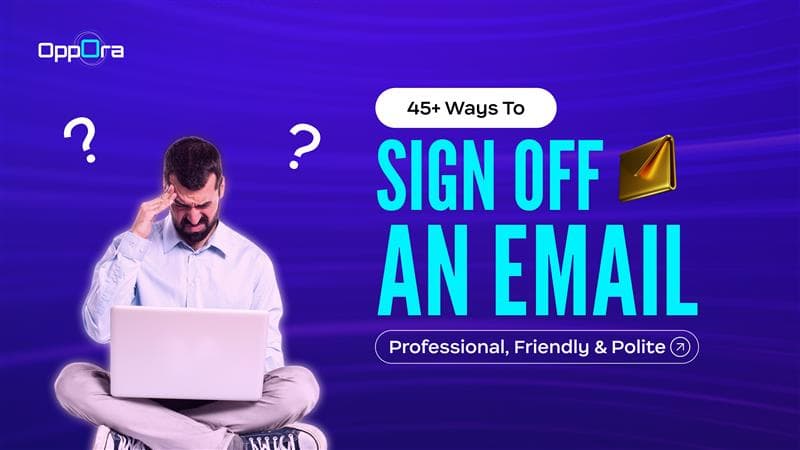
This guide gives you 45+ different ways to sign off an email, complete with examples and when to use them, so you never have to second-guess your closing again.
Think of your sign-off as the handshake at the end of a conversation.
It should feel:
✔ Natural
✔ Intentional
✔ Tone-appropriate
✔ Professional
A mismatch — like ending a formal proposal with “Cheers” — can subtly damage credibility.
On the other hand, the right sign-off reinforces your message and makes your email feel polished from start to finish.
👉 Before diving in, you may want to read our detailed guide on how to end an email, where we break down closing sentences, CTAs, and signature best practices.
Now — let’s get into the list.
Use these when emailing clients, prospects, leadership, recruiters, or anyone you don’t know well.
The safest professional sign-off. Neutral, respectful, and universally accepted.
Example:
I’ve attached the proposal for your review. Please let me know if you have any questions.
Best regards,
Slightly warmer than “Best regards” but still polished.
Example:
Thank you for your time today. I look forward to your feedback.
Kind regards,
Traditional and formal — ideal for serious business communication.
Example:
We appreciate your consideration and hope to work together soon. Sincerely,
Professional with a human touch.
Example:
It was great speaking with you. Excited about the next steps.
Warm regards,
Best for formal settings or structured business letters.
Example:
I appreciate your time reviewing my application. I look forward to your response.
Yours sincerely,
Ananya Sharma
Common in formal communication when addressing someone you haven’t met.
Example:
Please find the requested documents attached. Do not hesitate to contact me if you need further information.
Yours faithfully,
Rahul Mehta
Signals professionalism and deference — useful in sensitive conversations.
Example:
Thank you for considering my request. I understand the constraints and truly value your guidance.
Respectfully,
Neha Kapoor
Underused but strong. Suggests respect with a hint of friendliness.
Example:
It was a pleasure speaking with you about the partnership opportunity. I hope we can collaborate soon.
Cordially,
Arjun Patel
Classic and dependable.
Example:
I’m writing to confirm our meeting scheduled for Thursday at 2 PM. Please let me know if the timing works for you.
Yours truly,
Priya Nair
Ideal when writing to senior professionals or stakeholders.
Example:
I admire the work your organization is doing and would be honored to contribute to your team.
With respect,
Karan Verma
Confident and authoritative — great for consultants.
Example:
I’m confident this strategy will help improve your outreach results. Happy to discuss the next steps at your convenience.
Professionally yours,
Ritika Desai
Adds a touch more warmth than the standard version.
Example:
Thank you for your continued support throughout this project. I look forward to achieving great results together.
With best regards,
Siddharth Rao
Formal but effective in traditional industries.
Example:
We are committed to delivering the highest level of service and will keep you updated on the progress.
Faithfully,
Aditi Singh
Professional while expressing gratitude.
Example:
Your feedback has been incredibly helpful in refining our proposal. Thank you for sharing your insights.
In appreciation,
Vikram Joshi
Excellent when someone has invested time or effort.
Example:
Thank you for taking the time to mentor me during the onboarding process. Your support means a lot.
With sincere thanks,
Meera Iyer
Professional closings show respect and clarity. They set a tone of credibility — which is especially important when you’re asking for a meeting, decision, or response.
Perfect once a relationship is established but professionalism still matters.
Friendly without being casual.
Example:
Great collaborating with you on this — excited to see the results.
All the best,
Positive and supportive.
Example:
Hope your presentation goes wonderfully — excited to hear how it turns out.
Best Wishes
Professional gratitude with warmth.
Example:
Many thanks for your quick response; it helped us stay on schedule.
Great for follow-ups.
Example:
Thanks again for your insights during the meeting. They were extremely helpful.
Thoughtful and relationship-focused.
Example:
With appreciation for your continued support throughout this project
Subtly encourages continued communication.
Example:
Looking forward to our conversation and the ideas we’ll build together.
Polished gratitude.
Example:
Appreciatively acknowledging the time and expertise you shared with us.
Optimistic and approachable.
Example:
Have a great day, and feel free to reach out if you need anything further.
More personal — ideal for ongoing conversations.
Example:
Have a great week ahead — excited to reconnect soon.
Supportive and sincere.
Example:
Wishing you well as you take on this exciting new initiative.
Works beautifully after mentorship or support.
Example:
Gratefully recognizing your guidance and encouragement.
Effective when making a request — but use sparingly.
Example:
Thanks in advance for reviewing this and sharing your feedback.
Professional yet warm.
Example:
With gratitude for your trust and collaboration.
Recognizes effort — increases response likelihood.
Example:
Appreciate your time and thoughtful input during our discussion.
Courteous without sounding stiff.
Example:
Thank you kindly for your prompt attention to this request.
Friendly professional closings are ideal for:
These sign-offs build rapport — they keep emails warm and human without slipping into unprofessional territory.
Use these when you want a reply, approval, or action.
Direct but polite.
Example:
Looking forward to your response so we can move ahead with the next steps.
Encouraging without pressure.
Example:
Looking forward to hearing from you whenever you’ve had a chance to review this.
Signals openness.
Example:
Happy to discuss further if you’d like a deeper walkthrough of the proposal.
Collaborative tone.
Example:
Please let me know your thoughts when you’ve had a moment to review.
Excellent for scheduling emails.
Example:
Would Tuesday or Wednesday suit you better? Let me know what works best,
Shows flexibility.
Example:
Open to your feedback and any suggestions you may have.
Adds energy without being pushy.
Example:
Excited to hear your thoughts on this idea.
Creates gentle urgency.
Example:
Hope to hear from you soon so we can keep the momentum going.
Perfect for proposals or applications.
Example:
Appreciate your consideration as you evaluate this opportunity.
Professional and respectful — especially in hiring contexts.
Example:
Thank you for your time and consideration throughout this process.
When to use these:
People are more likely to respond positively when you recognize their effort or time — especially when you’re asking something of them.
Use only when the relationship and culture support it.
Relaxed yet widely accepted in modern workplaces.
Example:
Cheers, and thanks again for the smooth collaboration
Great for ongoing projects.
Example:
Talk soon as we finalize the remaining details
Friendly and human.
Example:
Take care, and don’t hesitate to reach out if anything comes up.
Relationship-driven.
Example:
Catch up soon — it’s always great connecting with you.
Warm and memorable.
Example:
Until next time, wishing you continued success with your projects.
Best for:
Avoid these with:
❌ New clients
❌ Formal proposals
❌ Executive stakeholders
❌ Hiring managers
Your tone should always match your audience.
These closings encourage action and reinforce your intent.
“Please share any feedback you have at your earliest convenience. Looking forward to your thoughts,”
Does Wednesday or Thursday work for you? Let me know what works best,
If you’d like to review this in detail, I’m happy to discuss further. Happy to discuss further,
Let me know how this reads on your end. Excited to hear your feedback,
If you see areas for improvement, I’m open to your suggestions.
Open to your suggestions,
Perfect for:
✔ Follow-up emails
✔ After sharing drafts or proposals
✔ When you want a specific action or reply
These phrases lightly nudge the reader to respond without sounding pushy.
Choosing the best way to sign off an email isn’t about picking your favorite phrase — it’s about matching intent, tone, and context. The wrong sign-off can feel awkward or careless, while the right one reinforces trust and nudges the reader toward a response.
Here’s how to get it right every time.
The closer the relationship, the more relaxed your sign-off can be.
👉 Rule of thumb: When in doubt, lean more formal. It’s easier to sound warmer later than to recover from sounding unprofessional.
Read More: Cold Email Benchmarks
Your sign-off should support what you want the reader to do next.
A strong sign-off reinforces your closing sentence — it doesn’t contradict it.
One of the most common mistakes is a tone mismatch.
For example:
Both feel off.
Your sign-off should feel like a natural continuation of the email, not a sudden shift in personality. Read your email out loud — if the ending sounds jarring, change it.
Even well-written emails can lose impact because of these errors:
Small details like this shape how polished and thoughtful your communication appears.
If your goal is a reply, your sign-off should gently support that — not pressure it.
Good examples:
Avoid overly aggressive closings like:
The goal is to invite, not demand.
Different industries have different expectations.
Being aware of cultural context makes your emails feel thoughtful and intentional.
If you’re ever unsure which sign-off to use, choose:
“Best regards,”
It works in almost every professional scenario and rarely feels out of place.
Consistency and clarity always beat creativity when tone is uncertain.
Choosing the right sign-off once is easy. Doing it consistently across outreach campaigns is harder.
This is where tools like Oppora.ai help.
Oppora automatically:
So instead of guessing, every email ends the right way — without extra effort.
Some sign-offs seem friendly but can weaken your message or feel unprofessional.
Tip: Always end with a sign-off — emails without them can feel abrupt or incomplete.
Knowing the right sign-off is one thing.
Using it consistently across dozens — or hundreds — of emails is another.
This is exactly where Oppora.ai makes a difference.
Oppora.ai is an AI-powered sales and outreach platform designed to handle the heavy lifting of modern email communication.
Instead of guessing how to close each message, Oppora:
✅ Generates context-aware emails
✅ Matches tone to audience automatically
✅ Writes natural closing lines and sign-offs
✅ Keeps outreach human — not robotic
✅ Helps improve reply rates
So whether you're sending cold emails, follow-ups, or partnership messages, your emails end as strongly as they begin.
👉 If you haven’t already, read our guide on how to end an email to master the full closing strategy.
Together with Oppora, you can turn every email into a thoughtful, professional interaction — without spending hours writing them.
Great emails don’t just start strong — they finish strong.
The right sign-off reinforces your message, reflects emotional intelligence, and leaves the reader with a positive impression.
Bookmark this list of 45+ ways to sign off an email so you always have the perfect closing ready.
Because sometimes… The last line is the one that gets the reply.
Summarize with AI
Share