Home
Blog
Find & Send Cold Emails to 500 Unique Prospects Every Month for FREE.
Home
Blog
Manasa Goli
Published January 7, 2026
6 min
Try Oppora AI
Create Self-Running Agentic Sales Workflows like N8N just by chatting with AI
Get Started for FREE
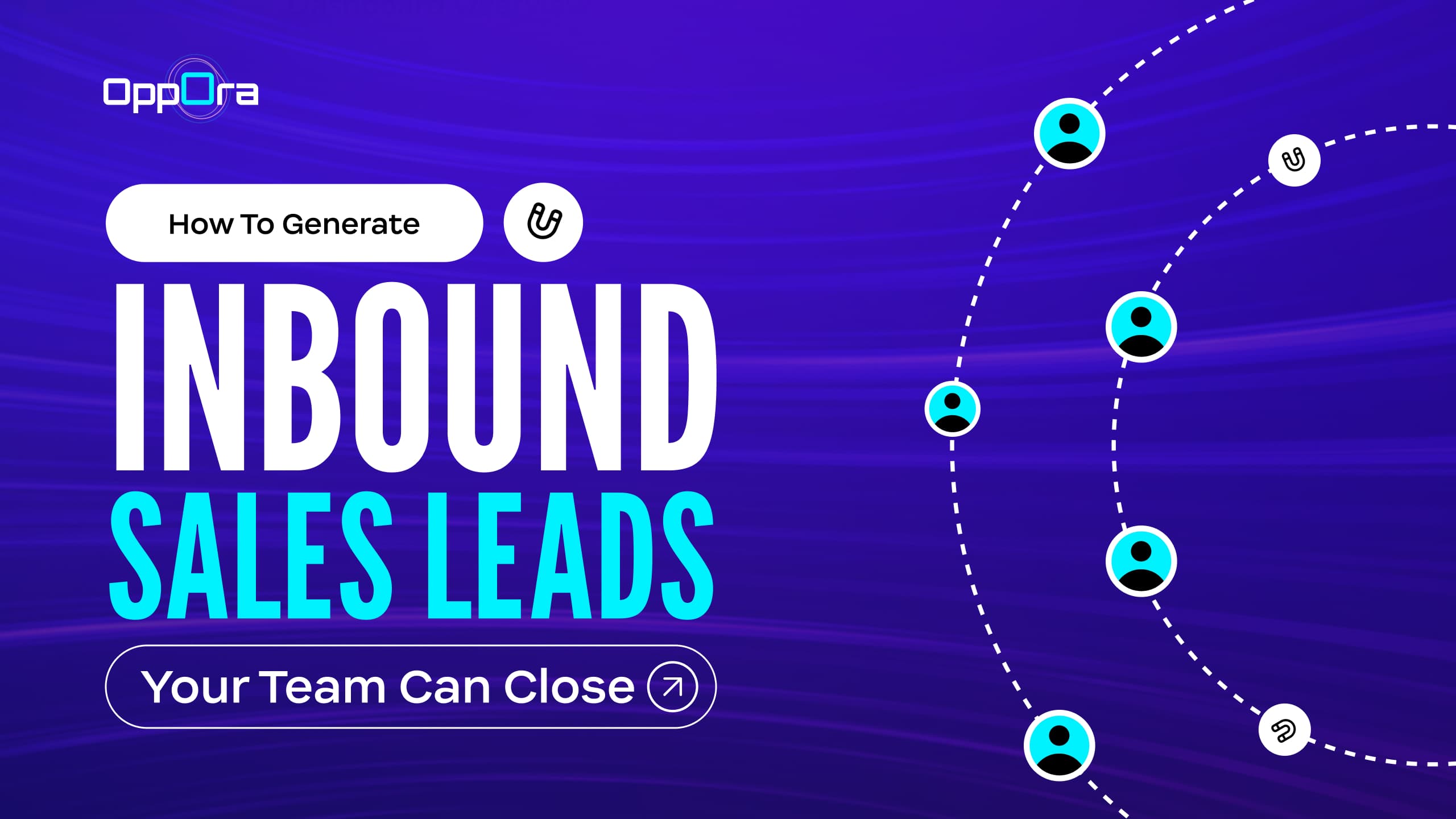
Generating inbound sales leads is not about luck or publishing random content. It’s about building a system that attracts the right prospects, provides value, and guides them naturally toward engagement. Many businesses focus solely on traffic or numbers, without a clear plan for who they want to reach and how to capture their interest effectively.
This guide will walk you through how to generate inbound leads, strategies to increase lead volume, and practical steps to convert interest into actionable opportunities, with insights on how Oppora.ai can help your team efficiently prioritize and reach leads at the outreach stage.
Before generating high-quality inbound leads, it’s crucial to understand their nature. Inbound leads aren’t just names or emails — they are people who have actively shown interest in your solutions, whether by:
However, interest alone doesn’t indicate readiness to buy. Some leads are simply researching, while others are actively seeking solutions. Recognizing this difference forms the foundation of your inbound lead generation strategy.
Think of inbound leads as visitors in a store: some are browsing, some are comparing prices, and a few are ready to purchase. Your goal is to create an environment where browsing leads gradually move closer to engagement.
Once your audience is clear, the next step is creating content and resources designed to attract and engage them. Simply publishing content isn’t enough; your goal is to provide value that encourages prospects to take action and share their information.
Before you can generate meaningful leads, you need clarity on who your ideal prospects are:
Creating an Ideal Customer Profile (ICP) ensures that every piece of content, lead magnet, and engagement strategy targets the right audience — not random traffic.
Example: A B2B software company targeting HR managers at mid-sized SaaS firms should focus on content about remote workforce management, recruiting efficiency, and compliance tools — not general business advice.
Prospects search for solutions, not products. By publishing in-depth guides, step-by-step articles, or case studies, you attract visitors who are actively seeking answers.
Examples:
Tools and templates provide immediate value and naturally encourage visitors to become leads:
These resources not only help prospects solve problems but also collect their contact information for follow-up.
Live or recorded webinars offer a direct engagement opportunity. Prospects who attend are more likely to convert because they are actively investing time to learn from you.
By combining guides, tools, and webinars, you create a layered content ecosystem that attracts and engages prospects at multiple touchpoints.
Attracting the right audience is only the first part of the equation. Once prospects are engaged with your content, the next challenge is ensuring that interest doesn’t disappear—this is where structured lead capture becomes essential.
Attraction alone isn’t enough — you need a system to convert visitors into leads.
Every offer should have a dedicated landing page with:
Lead magnets must align with the content that attracted the visitor. For example, someone downloading a lead qualification template might also be interested in a webinar on building an outreach workflow.
Minimize friction to increase conversions:
Every extra click or confusing step can cost a potential lead.
Even the best content won’t generate leads if your audience can’t find it. To increase inbound leads, combine organic and active promotion strategies:
Visibility is not just traffic — it’s targeted attention from prospects most likely to engage.
Not all inbound leads are ready to speak with sales immediately. Lead nurturing keeps them engaged until they are.
Segment leads based on their behavior:
Show content or offers to visitors who didn’t convert initially. This keeps your brand top-of-mind and increases the chance of eventual engagement.
Every touchpoint should teach, guide, or solve a problem. This builds trust and positions your business as a reliable partner.
Once leads are nurtured and engaged, your team can prioritize and reach out efficiently. This is where Oppora.ai can help, without analyzing inbound lead data directly:
The goal is to turn engaged inbound leads into actionable opportunities your sales team can act on effectively.
Generating leads is only half the battle. To grow your pipeline consistently, you need to track what works and optimize continuously.
Monitor metrics that show both quantity and quality of inbound leads:
Tracking these metrics ensures you focus on strategies that deliver real opportunities, not just traffic.
Some content drives more leads than others. Analyze:
Once you identify top-performing content, repurpose and promote it further to maximize its impact.
Inbound lead generation is a continuous experiment. Small adjustments can have a big impact:
Consistent testing ensures your system evolves with audience preferences and market trends.
Once you have a system that works, it’s time to scale it for predictable results.
Automation can save your team hours and ensure no lead is missed:
Automation doesn’t replace human outreach but ensures every high-potential lead is captured and engaged efficiently.
A strong feedback loop between marketing and sales ensures the inbound lead generation system improves over time:
The combination of marketing insights and sales feedback keeps your pipeline healthy, qualified, and conversion-ready.
Even a strong inbound lead strategy can fail if certain pitfalls are ignored:
Avoiding these mistakes ensures your inbound lead generation remains efficient and ROI-driven.
Inbound sales leads your team can close don’t come from traffic alone—they come from a system. One that attracts the right audience, captures intent, nurtures engagement, and prepares prospects for meaningful outreach.
When marketing and sales are aligned, inbound lead generation becomes predictable. Content brings in relevant prospects, nurturing builds trust, and sales teams focus only on leads worth engaging.
Done right, inbound lead generation stops being a numbers game and becomes a repeatable growth engine.
What’s the difference between generating leads and converting them?
Generating leads is about attracting the right audience to your content. Converting leads involves capturing their information, nurturing engagement, and preparing them for sales outreach. Both steps are essential for a healthy pipeline.
How do I know if my content is attracting the right leads and not just traffic?
Not all traffic equals quality leads. Look for engagement signals: downloads, time spent on guides, webinar attendance, and tool usage. Aligning content with your ICP ensures visitors are genuinely interested in solutions you provide.
Why do some inbound leads stall even after initial engagement?
Engagement doesn’t always mean readiness to buy. Leads stall when content doesn’t follow a structured nurture path, or when there’s no clear next step. Consistent touchpoints, retargeting, and timely resources prevent cold leads.
What’s the role of data in turning inbound leads into actionable opportunities?
Data allows you to prioritize leads, verify contact information, and understand prospect behavior. Without accurate insights, even engaged leads may go cold. Oppora.ai can automate much of this, providing verified, actionable lead lists.
Summarize with AI
Share