Home
Blog
Find 500 B2B Contacts for Free Every Month with Built-In Outreach.
Home
Blog
Manasa Goli
Published March 23, 2026
5 min
Try Oppora AI
Create Self-Running Agentic Sales Workflows like N8N just by chatting with AI
Get Started for FREE
If your emails are landing in spam, promotions, or not being seen at all — you’re not alone.
Even well-written emails with strong offers can fail if they never reach the inbox.
That’s where email whitelisting comes in.
In this guide, you’ll learn:
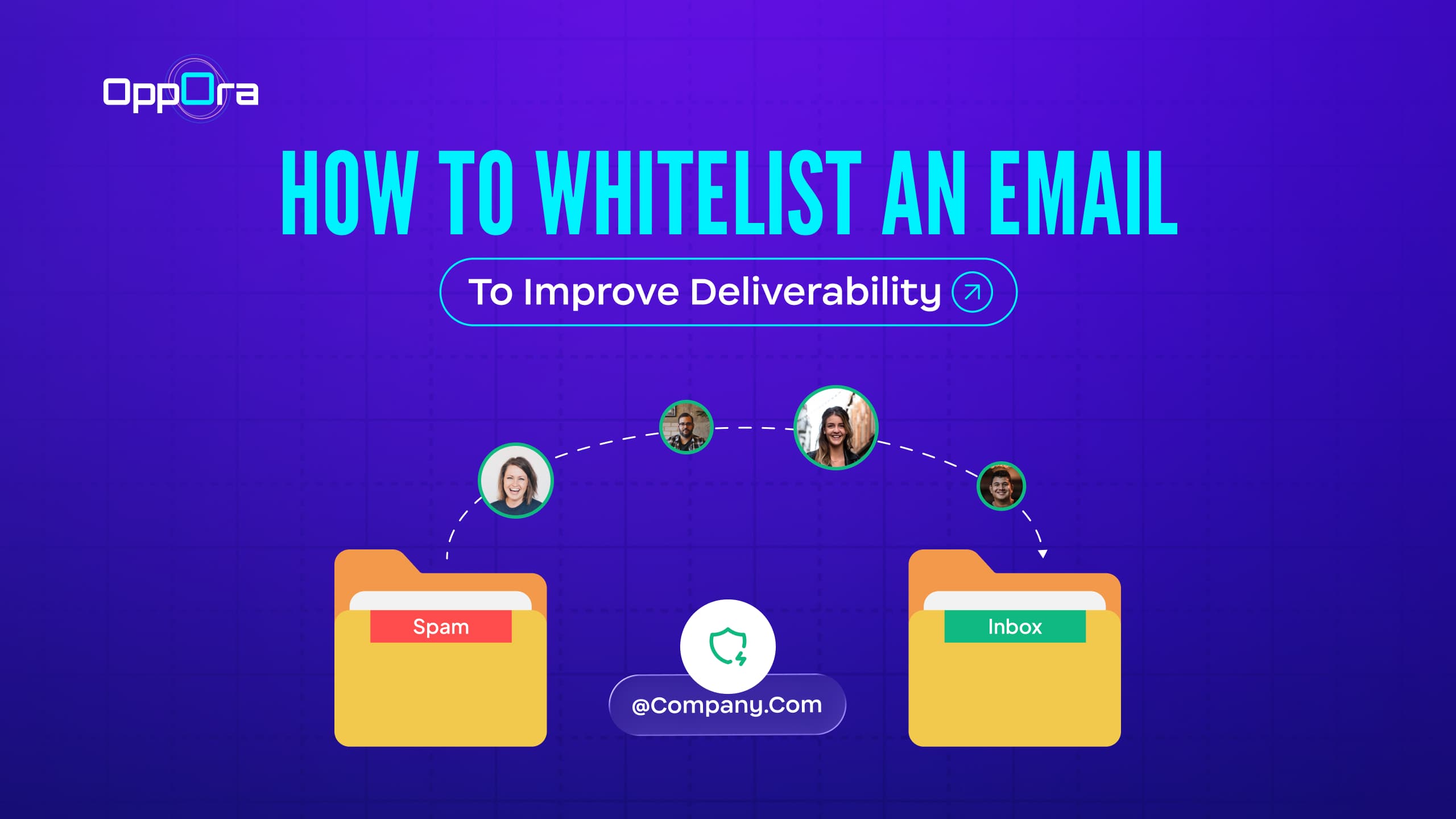
Whitelisting an email simply means marking a sender as trusted, so future emails always land in the inbox instead of spam.
In technical terms:
A whitelist is essentially a safe list of approved senders or domains.
Let’s connect this to real-world email performance.
Email providers like Gmail and Outlook use algorithms to decide:
When someone whitelists your email:
👉 One key insight: Even a single action like marking “Not Spam” or adding to safe senders can override filtering behavior.
This is where most businesses get it wrong.
Don’t ask randomly — ask at the right moments:
Best timing:
Example:
“If you don’t see our email, check spam and move it to inbox — this ensures you don’t miss important updates.”
Let’s break it down by platform — this is what most top-ranking pages focus on.
This ensures emails from that sender always land in the inbox.
This trains Gmail’s algorithm for future emails.
Pro Tip: You can whitelist an entire domain (e.g., @company.com) instead of a single email.
Outlook calls this “Safe Senders.”
Steps:
Once added, Outlook will treat these emails as safe.
Yahoo uses filters:
Now emails bypass spam and go directly to the inbox.
Let’s say you’re running cold outreach.
You send 100 emails:
Now, if even 10 recipients whitelist you:
That’s a compounding effect most people underestimate.
Here’s something most guides won’t tell you:
👉 You can’t force whitelisting — 👉 You can only earn it.
And that comes down to relevance, timing, and engagement.
If your emails are relevant, users are far more likely to:
This is where most outreach fails — not at deliverability, but at targeting.
Users don’t whitelist brands. They whitelist conversations they care about.
Simple personalization like:
…can dramatically increase trust.
Inbox providers track engagement:
Higher engagement = better inbox placement Better inbox placement = higher chance of whitelisting
This is exactly where tools like Oppora become relevant — not as a shortcut, but as a system for better deliverability outcomes.
Oppora is an AI sales agent that helps you:
👉 Why this matters for whitelisting:
When your outreach is:
Users are naturally more likely to:
Even if you ask users to whitelist your email, it doesn’t always happen.
Why?
Because trust isn’t automatic — it’s earned.
Here are the most common mistakes that reduce your chances:
If your message feels like mass spam, users won’t:
👉 Whitelisting only happens when the email feels worth keeping.
If your first email says:
“Whitelist this email now”
…it feels transactional, not valuable.
Instead, users whitelist emails when:
If you’re emailing the wrong audience:
This directly kills your chances of being whitelisted.
If your emails keep landing in spam:
People whitelist emails when they think:
“I don’t want to miss this.”
If your emails don’t create that feeling, they won’t take action.
Whitelisting an email can improve deliverability — but it’s not something you can force.
It happens when your emails feel relevant, valuable, and worth keeping.
Focus on:
When you get this right, users naturally trust your emails — and that’s what leads to whitelisting.
Tools like Oppora help make this easier by combining smart targeting, personalization, and outreach automation, so your emails don’t just reach inboxes — they get attention.
No, whitelisting improves the chances of inbox placement, but it doesn’t guarantee it. Email providers still consider factors like sender reputation, engagement, and email content.
In most cases, whitelisting works immediately. However, consistent inbox placement may improve over time as engagement signals (opens, replies) increase.
Yes, but indirectly. If recipients engage with your emails and mark them as safe, it improves inbox placement for future emails from you.
Not exactly. Marking “Not Spam” is a one-time action that trains the algorithm, while whitelisting (filters/safe senders) creates a more permanent rule.
Summarize with AI
Share