Home
Blog
Find 500 B2B Contacts for Free Every Month with Built-In Outreach.
Home
Blog
Stephen Parker
Published March 30, 2026
15 min
Try Oppora AI
Create Self-Running Agentic Sales Workflows like N8N just by chatting with AI
Get Started for FREE
Sales reps spend hours on repetitive tasks like emails, research, and follow-ups, leaving less time for actual selling. This overload can slow productivity and reduce focus on high-impact activities.
ChatGPT can reclaim this lost time when used with the right prompts. Top reps don’t just use ChatGPT they strategically apply prompts to streamline workflows and generate actionable insights.
AI can assist across prospecting, outreach, pipeline, and daily tasks. In this guide, we’ll share 25 ChatGPT prompts for sales that save time, improve personalization, and boost efficiency every day.
High-performing sales teams don’t rely on generic prompts. They build structured inputs that turn ChatGPT into a repeatable sales system, not just a writing tool.
Your prompt is only as strong as the data you feed it. Instead of vague inputs, use structured sources like CRM data, LinkedIn profiles, company news, and past email threads.
When you include real data points, outputs become specific, relevant, and usable without heavy editing. This is what separates generic AI output from high-converting sales messaging.
Define Role, Context, and Custom GPT Behavior
Top teams don’t just write prompts they define how AI should behave. Assign a role like “B2B SaaS SDR” or “Enterprise AE” and include clear context about your product and audience.
For scale, many teams use custom GPT setups or system-level prompts to standardize tone, messaging, and structure across the team. This ensures consistency without rewriting prompts every time.
One of the most overlooked inputs is your own sales conversations. Feed call transcripts, objections, and real prospect questions into prompts to generate messaging that reflects actual buyer language.
This turns ChatGPT into a learning system that improves over time. Instead of guessing what works, you build prompts based on what buyers are already saying.
High-impact prompts don’t just ask for content they define how it should be used. Specify formats like bullet points, email drafts, CRM notes, or call scripts to match your workflow.
The real value comes when outputs plug directly into your sales process. Whether it’s outreach, follow-ups, or pipeline updates, prompts should generate content that’s immediately actionable.
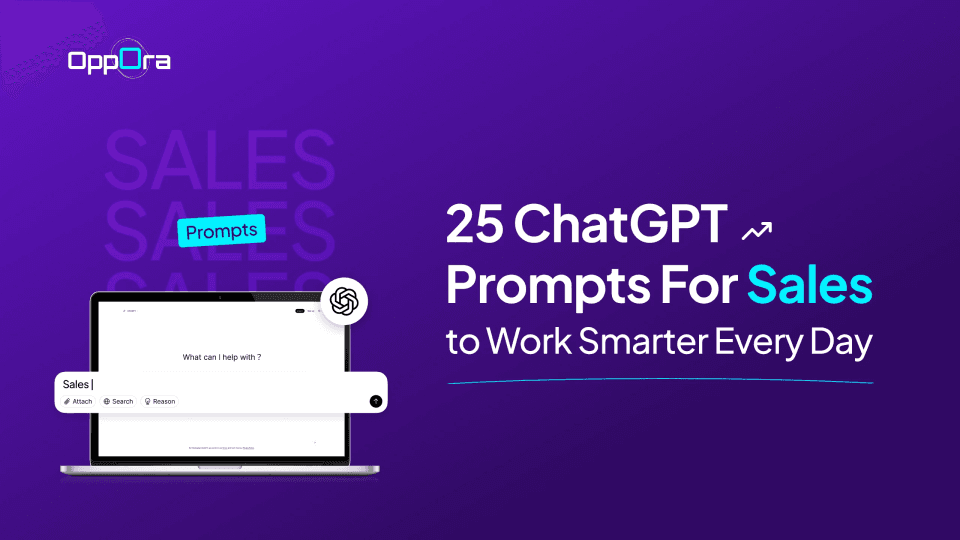
These 25 prompts cover sales prospecting, outreach, sales calls, pipeline, and productivity. They save time, enhance personalization, and allow sales reps to focus on selling while AI handles research and content generation.
“Here is the company data:
Here is the prospect data:
Analyze all the inputs together to understand the company’s current situation and priorities.
Identify growth signals, risks, and buying triggers based on hiring, messaging, and recent updates.
Infer 3–5 specific problems the company or prospect is likely facing based on these signals. Avoid generic assumptions.
Connect each problem directly to my product’s value using simple, outbound-ready language.
Make the output structured and easy to skim for fast sales preparation.”
“Here is my Ideal Customer Profile (ICP):
Here are market and intent signals:
Analyze these inputs to identify companies that show active buying intent, not just ICP fit.
Look for overlapping signals such as hiring + funding + tech gaps to determine stronger intent.
Generate a list of 10–15 target accounts.
For each account:
Prioritize accounts with multiple strong signals.
Format the output as a ranked, easy-to-use list for outbound targeting.”
“Here is the company data:
Analyze all inputs together to identify hidden or unspoken pain points.
Look for patterns such as repeated complaints in reviews, hiring gaps, messaging inconsistencies, or priorities reflected in content.
Based on these signals, extract 3–5 specific problems the company is likely facing. Avoid generic assumptions.
For each problem:
Keep the output concise and easy to use for outbound messaging.”
“Here are competitor details:
Here is my product information:
Analyze competitors to understand their messaging, positioning, and feature focus.
Identify gaps between what competitors claim and what users complain about in reviews or feedback.
Extract 3–5 clear positioning opportunities where my product can stand out.
For each opportunity, explain the gap, why it matters to the buyer, and how I can position my product differently in outreach.
Keep the output concise and directly usable for emails, calls, or demos.”
“Here is the prospect data:
Analyze this data to understand how this person thinks and operates in their role.
Identify their likely priorities, goals, pressures, and decision-making triggers based on their behavior and activity.
Infer common objections they may have and what outcomes they care about most. Avoid generic persona assumptions.
Base every insight on real signals from the data provided.
Create a structured persona that can be directly used for personalized outreach, messaging, and sales conversations.”
“Here is the prospect data:
Analyze these inputs to identify a relevant trigger event or signal that indicates a current need or change.
Based on this, infer a specific business problem the prospect is likely facing. Avoid generic assumptions and rely only on signals from the data.
Write a cold email that:
Keep the tone conversational, human, and non-salesy.
Limit the email to 80–120 words and make it easy to skim.”
“Here is the prospect context:
Analyze the engagement behavior to understand interest level and intent.
Create a 5-step follow-up sequence where each message introduces a new angle, such as insight, social proof, problem reframing, or missed opportunity.
Adjust tone and messaging based on lack of response, avoiding repetition or generic follow-ups.
Use light psychological triggers like curiosity, relevance, and timing without sounding pushy.
Include subject lines and keep each email concise, human, and easy to skim.”
“Here is the prospect data:
Analyze this data to understand what the prospect is currently focused on.
Identify a relevant insight, shared context, or trigger that can be used to start a conversation.
Write:
Both messages should reference something specific from their profile or activity.
Keep the tone natural, relevant, and non-promotional. Avoid sounding like a sales pitch.”
“Here is the outreach history:
Analyze the engagement pattern to understand the prospect’s likely interest level.
Based on this, write a breakup email that acknowledges the lack of response in a natural and respectful way.
Reinforce the core value of my product briefly without repeating previous messages.
Include a soft call-to-action that allows the prospect to either re-engage or opt out easily.
Keep the tone human, honest, and non-pushy.
Limit the email to under 100 words and make it feel like a real conversation, not an automated sequence.”
“Here are past email data inputs:
Analyze the performance data to identify patterns in high-performing emails.
Look for trends in subject lines, opening lines, structure, tone, and calls-to-action.
Based on these insights, rewrite one email to improve:
Ensure the new version is concise, personalized, and aligned with the audience.
Briefly explain what changes were made and why they should improve performance.”
“Here is the base email: {paste}.
Here is performance data (if available):
Analyze the email and identify areas to improve, including subject line, hook, tone, and call-to-action.
Generate 3 distinct variations of this email:
Ensure each version has a different subject line, opening line, and CTA.
Keep all versions concise, personalized, and suitable for outbound use.
Make the differences meaningful, not just minor wording changes.”
“Here are past sales call transcripts or notes: {paste}.
Here is the target prospect context:
Analyze the transcripts to identify how buyers describe their problems, goals, and objections in their own words.
Extract patterns in language, concerns, and priorities across conversations.
Based on these patterns, generate 10 discovery questions that:
Avoid generic questions. Base everything on actual insights from the data.
Format the questions clearly so they can be used directly during live sales calls.”
“Here are data inputs from successful deals:
Analyze these inputs to identify patterns in how successful calls were structured.
Look for common elements such as how top reps open calls, position value, ask questions, and transition toward closing.
Based on these patterns, create a sales call script that includes:
Keep the script flexible and conversational, not rigid or robotic.
Use language that reflects real conversations from the data.”
“Here are real objections from past sales calls: {paste call transcripts or notes}.
Here is the prospect context:
Analyze the objections to identify patterns in concerns, hesitations, and decision blockers.
Group similar objections together and understand the underlying reason behind each one.
For each objection, create a response that:
Use language that sounds conversational and human, not scripted.
Keep responses concise and usable in live sales calls or emails.”
“Here is the prospect data:
Here is my product information:
Analyze the prospect’s needs and map them to the most relevant product features.
Create a demo flow that focuses only on what matters to this prospect.
Structure the demo with:
Avoid generic product walkthroughs.
Keep the demo focused, concise, and aligned with the prospect’s priorities.”
“Here is the sales call data:
Analyze the conversation and extract the most important information.
Identify:
Summarize everything into a clear, structured format.
Make the output suitable for direct CRM entry and easy for team members to understand quickly.
Keep it concise, actionable, and focused on moving the deal forward.”
“Here is the deal data:
Analyze the deal to identify potential risks that could delay or prevent closing.
Look for signals such as low engagement, missing decision-makers, long inactivity, or unresolved objections.
Identify the top risks and explain why each one matters based on the data.
For each risk, suggest a clear action to move the deal forward.
Keep the output concise, structured, and focused on improving deal progression.”
“Here is the deal data:
Analyze the engagement and behavior to understand the prospect’s current intent level.
Identify what is holding them back from making a decision.
Write a closing email that:
Keep the tone confident, helpful, and non-pushy.
Make the email concise, easy to skim, and focused on moving the deal forward.”
“Here is the proposal or deal document: {paste}.
Here is the prospect context:
Analyze the proposal and extract only the most important information for decision-making.
Summarize:
Simplify complex details into clear, business-focused language.
Make the summary concise, easy to skim, and suitable for an executive who does not have time to read the full proposal.”
“Here are past deal data inputs:
Here is the current deal context:
Analyze past deals to identify patterns in successful and unsuccessful negotiations.
Look for trends such as pricing sensitivity, common objections, timing of concessions, and decision-making behavior.
Based on these insights, suggest a negotiation strategy for the current deal.
Include:
Keep the strategy practical, concise, and focused on increasing the chances of closing the deal successfully.”
“Here is the deal data:
Analyze the deal timeline and engagement to understand why the deal is slowing down.
Identify any urgency signals such as missed timelines, delayed responses, or business impact of inaction.
Write a follow-up email that:
Keep the tone helpful, relevant, and aligned with the prospect’s situation.
Make the email concise, clear, and focused on moving the deal forward.”
“Here is my current sales data:
Analyze all inputs to identify the highest-impact opportunities for today.
Prioritize deals and tasks based on revenue potential, urgency, and likelihood to close.
Create a structured daily sales plan that includes:
Focus on activities that directly impact pipeline movement and revenue.
Keep the plan clear, actionable, and easy to follow.”
“Here are raw CRM notes and activity logs: {paste}.
Analyze the notes to extract meaningful insights instead of just summarizing.
Identify:
Remove noise, repetition, and irrelevant details.
Organize the output into a clean, structured format that is easy to read and act on.
Make it suitable for quick review by a sales rep or manager.”
“Here is my current sales data:
Analyze all inputs to understand which tasks will have the highest impact on revenue.
Evaluate each task based on deal stage, urgency, engagement, and likelihood to close.
Rank tasks in order of priority, focusing on actions that move deals forward fastest.
For top-priority tasks, explain why they matter and what outcome they can drive.
Present the output as a clear, structured list that is easy to act on immediately.”
“Here is the weekly sales data:
Analyze the data to identify patterns in performance.
Highlight:
Identify trends across the week and explain why they happened based on the data.
Suggest 3–5 clear actions to improve performance in the next week.
Keep the output structured, concise, and focused on actionable insights.”
Using ChatGPT can save sales reps hours, but common mistakes can reduce its effectiveness. Key pitfalls to avoid include:
Avoiding these mistakes helps sales teams maximize ChatGPT’s potential. With proper context, personalization, verification, brand alignment, and workflow integration, reps can generate accurate, engaging content and maintain a consistent, efficient sales process that drives results.
Most teams use ChatGPT for writing, but the real advantage comes when you turn prompts into a fully automated sales system. This is where Oppora.ai works as an AI Outbound Sales Agent, connecting data, prompts, and execution into one continuous workflow.
Instead of doing each step manually, Oppora.ai lets multiple AI agents handle your entire outbound process from lead generation to replies and meeting booking.
Oppora.ai turns ChatGPT prompts into multi-channel sales automated workflows. Instead of just generating content, you create a system that runs your outbound consistently and at scale.
ChatGPT prompts give sales reps leverage to streamline research, outreach, and pipeline tasks. Combined with Oppora.ai, they scale into automated workflows with minimal manual effort.
Experiment, test, and refine prompts to keep content personalized and effective. Align outputs with your ideal customer profile for maximum impact.
Prompts are only the start. Integrate them with Oppora.ai to turn AI outputs into actionable campaigns. The future of sales is prompt-driven, but workflow-powered.
Looking ahead, teams that master both prompts and automated workflows will gain a competitive edge. The combination of human strategy, AI intelligence, and Oppora.ai’s automation ensures sales processes are faster, smarter, and more scalable than ever.
The best ChatGPT prompts for sales cover prospecting, outreach, calls, pipeline management, and productivity. Using clear context, ICP data, and tone ensures AI outputs are actionable and personalized for better engagement.
Organize prompts by workflow, include ICP and context, and integrate outputs into Oppora.ai. Testing and refining your prompts improves response rates and streamlines your sales process.
Yes. Combined with Oppora.ai, ChatGPT prompts can automate multi-channel outreach, follow-ups, and CRM updates, saving time and scaling personalized campaigns efficiently.
Avoid using vague prompts, ignoring personalization, over-relying on AI without verification, misaligning tone with your brand, and failing to integrate outputs into workflows.
Track open rates, replies, and conversions using Oppora.ai dashboards. Use A/B testing for emails, LinkedIn messages, and scripts to refine prompts and improve campaign performance.
Summarize with AI
Share