Home
Blog
Find & Send Cold Emails to 500 Unique Prospects Every Month for FREE.
Home
Blog
Stephen Parker
Published January 7, 2026
8 min
Try Oppora AI
Create Self-Running Agentic Sales Workflows like N8N just by chatting with AI
Get Started for FREE
Most emails are ignored before they are even opened.
That usually has nothing to do with the message inside. It happens because the subject line gives people no reason to stop.
Inbox behavior has changed. People scan fast and decide faster. If a subject line feels unclear, familiar, or out of place, it gets skipped without thought. The email never gets a chance to matter.
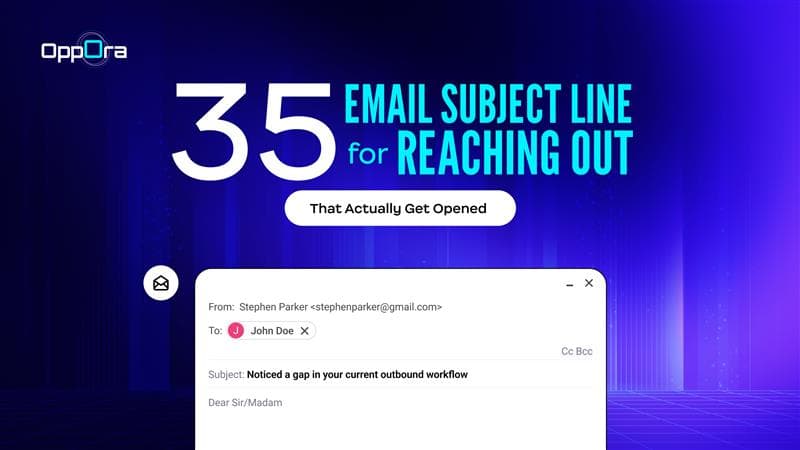
This is why writing an email subject line for reaching out is harder than it looks. You are not competing with better emails. You are competing with attention, timing, and trust.
Many guides focus on clever phrases or endless templates. That approach misses what really works. What gets opened is clear, relevant, and written for one specific moment.
This guide breaks that down in simple terms. It shows how to choose subject lines based on intent, context, and timing, with real examples you can use without sounding forced.
The inbox does not reward effort on its own. It rewards clarity at the right moment. When that clarity is missing, even a good email gets ignored.
Most subject lines fail quietly. They are not wrong. They just do not feel relevant enough while someone is scanning fast. In that moment, the reader is deciding whether opening the email will feel useful or distracting. The subject line tips that decision.
What works today is simple. Good email subject lines for reaching out reduce uncertainty. They explain why the email exists and what kind of message follows. No tricks. No guessing.
That comes down to a few connected choices: reason, clarity, context, and alignment.
Every outreach email creates one silent question: Why am I getting this?
If the subject line does not hint at an answer, the email feels like friction. People avoid friction in their inbox.
Starting with the reason does not mean adding detail. It means offering just enough context to justify the interruption. For example, “Quick question” hides intent. “Thoughts on your recent article” explains it without effort.
The same applies to reconnecting. Ignoring a long gap often feels awkward. A subject line like “Picking up where we left off” acknowledges time and keeps the tone honest.
Clear reasons reduce hesitation. Less hesitation leads to more opens.
Clever subject lines ask people to think. Clear ones help them understand.
In a crowded inbox, understanding wins. Teasing phrases or vague hooks slow the reader down. When meaning is not obvious, skipping feels easier.
Compare “Circling back” with “Following up on our pricing discussion.” One is familiar but empty. The other sets expectations before the email is opened.
Clarity respects time and builds trust. That is why good email subject lines for reaching out often look simple. They aim to make sense first.
Relevance makes a subject line feel intentional.
Context creates that relevance. A shared connection, a recent interaction, or a specific moment helps the reader place the email. “Intro via Alex” works better than “Introduction” because it explains the relationship instantly.
Timing matters too. “Following up after last week’s demo” feels grounded. “Following up” feels vague.
Context does not need to be complex. It needs to be real. When it is, the subject line feels written for one person, not everyone.
Short subject lines work because they match how people read.
Most emails are opened on mobile. Long lines get cut off. Meaning disappears early.
Short does not mean vague. It means focused. A subject line sets an expectation. The email should meet it quickly. When subject lines promise one thing, and emails deliver another, trust fades.
The strongest email subject line for reaching out feels accurate before the open and consistent after the read.
Most business outreach fails because the subject line doesn’t sound like business. It sounds generic, vague, or overly templated. Decision-makers expect relevance tied to real problems, not filler language.
The email subject lines for reaching out below reflect how real B2B emails get opened. They map to common SaaS, services, marketing, cybersecurity, and operations outreach scenarios. Use them as reference points to match intent, timing, and context.
First-time outreach has the highest friction because there is no prior relationship. Subject lines here must establish relevance quickly by pointing to a real business area or challenge. When the reason for reaching out is clear, opening the email feels safer and more justified.
Examples:
They point to real business concerns instead of generic introductions.
Summary (40–50 words): A lack of response is common in B2B inboxes and usually isn’t intentional. Subject lines in this category should maintain continuity without adding pressure. The goal is to restart the conversation naturally, not to demand attention or explain the silence.
Examples:
6. Following up on our earlier note
7. Reconnecting about sales workflow efficiency
8. One more thought on pipeline tracking
9. Checking if this is still a priority
10. Closing the loop on this conversation
They acknowledge time passing without creating pressure.
Warm introductions already include context, so the subject line should surface it immediately. Mentioning a shared contact, event, or conversation helps the reader place the email quickly and understand why it exists, which lowers friction and increases opens.
Examples:
11. Intro via a mutual contact
12. Following up after last week’s event
13. Continuing our discussion on automation
14. As mentioned during the demo
15. Great to connect after the webinar
These feel expected, not intrusive.
Value-based outreach works best when the subject line signals usefulness rather than intent to sell. These subject lines hint at insight, improvement, or risk reduction, which is especially effective in SaaS, marketing, consulting, and cybersecurity conversations.
Examples:
16. One idea to simplify reporting
17. Observation about your CRM setup
18. Thought this might help your sales team
19. Reducing risk in outbound campaigns
20. A quick insight into conversion drop-offs
They signal usefulness without overselling.
When outreach has a commercial angle, subject lines should keep the conversation optional. These examples introduce business intent without forcing a decision, which helps the reader engage comfortably or pass without feeling pressured.
Examples:
21. Exploring a better approach to lead scoring
22. Question about your current sales tools
23. Open to a short conversation?
24. Seeing if this aligns with your goals
25. Possible fit for your growth plans
They leave room for an easy yes or no.
Follow-ups are often where replies happen, but tone determines success. These subject lines respect attention and timing, giving control back to the reader. That restraint helps keep conversations open instead of triggering avoidance.
Examples:
26. Quick follow-up, no rush
27. Still relevant for your team?
28. Happy to pause if timing isn’t right
29. Let me know if I should close this out
30. Final note on this topic
They reduce pressure and keep the tone human.
Sometimes small wording changes make outreach feel less automated and more natural. These subtle variations are useful when you want to stay present in the inbox without repeating yourself or escalating tone, especially in longer outreach sequences.
Examples:
31. One quick clarification
32. A short follow-up on this
33. Picking up where we left off
34. A brief note before I close this
35. Following up with context
They keep continuity without sounding repetitive.
These examples work because they match intent, timing, and relationship stage. Problems usually start when the right words are used at the wrong moment. Paying attention to that mismatch explains why some emails stall even when everything else looks fine.
By now, the pattern behind effective subject lines should feel practical. When intent and timing match, opens follow more naturally. When they don’t, even well-written emails struggle. Most of the time, the problem isn’t strategy. It’s small, avoidable mistakes in the subject line that quietly push readers away.
These issues show up across industries and roles. They’re common because they feel harmless while writing, but costly once the email hits a busy inbox. Avoiding them is often the fastest way to improve good email subject lines for reaching out without changing your message or audience.
Vague subject lines force the reader to guess.“Quick question.” “Checking in.” “Following up.”
Each of these could mean anything. The reader has no idea what the email is about or how much effort opening it will take. In a crowded inbox, guessing feels like work, so the email gets skipped.
Compare that to “Following up on last week’s demo” or “Quick question about your recent post.” One small detail removes uncertainty and makes the open feel safer.
Curiosity can help, but only when it’s grounded.
Subject lines like “You’ll want to see this” or “Did you notice this?” create intrigue without context. In professional outreach, that often feels manipulative. Readers expect relevance first, not suspense.
For example, “One thing you might be missing” sounds clever, but unclear. “One observation about your onboarding flow” keeps curiosity while explaining the purpose. Context turns curiosity into interest instead of suspicion.
Automation helps scale outreach. Automation tone hurts it.
Repeated phrasing, unnatural personalization, or overly polished subject lines signal that the email wasn’t written with the reader in mind. Even relevant messages suffer when they feel mass-sent.
Adding a first name without context rarely helps. Referencing a real moment or reason does. Human subject lines vary slightly based on situation, not atthe template.
Avoiding these mistakes keeps subject lines clear, grounded, and human. Once those basics are in place, the challenge becomes maintaining that quality as outreach grows.
Once you avoid the common mistakes, a new challenge appears. Writing one good subject line is manageable. Writing many, across different situations, without losing quality, is harder. As outreach grows, context slips, follow-ups repeat, and replies get delayed. That’s when even a strong email subject line for reaching out can start to feel mechanical.
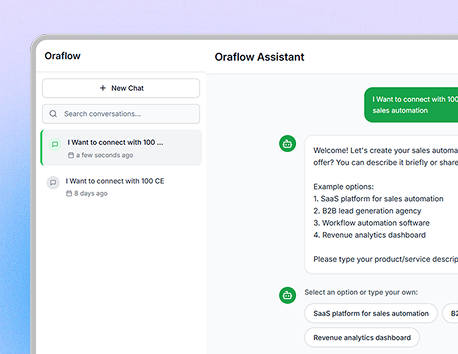
This is where Oppora.ai fits naturally into the process. It doesn’t replace judgment or intent. It supports them, so outreach stays human from the first email to the final reply.
Here’s how that plays out in real use.
When subject lines, follow-ups, and replies stay aligned, outreach feels consistent instead of forced. That consistency is what turns opens into conversations.
At this point, the pattern should feel grounded in real situations, not theory. Subject lines work when they fit the moment they are sent in. The same words can succeed or fail depending on timing, relationship stage, and intent. That’s why copying templates rarely works for long.
A strong email subject line for reaching out is clear about why the message exists and respectful of the reader’s attention. For example, a first introduction benefits from reassurance, while a follow-up benefits from restraint. Treating both the same creates friction.
Clarity lowers effort. Context builds trust. Alignment keeps the conversation human. When those elements come together, openings feel natural, and replies stop feeling unpredictable.
Summarize with AI
Share