Home
Blog
Find 500 B2B Contacts for Free Every Month with Built-In Outreach.
Home
Blog
Divya Mekala
Published April 13, 2026
12 min
Try Oppora AI
Create Self-Running Agentic Sales Workflows like N8N just by chatting with AI
Get Started for FREE
You’ve probably sent a great email and heard nothing back.
That’s more common than you think—and usually, it’s not the message, it’s the missing follow-up.
In this blog, you’ll understand why follow-ups matter and how to do them without sounding pushy or repetitive.
You’ll also get practical, easy-to-use follow up email templates for sales, networking, and no response situations so you can send better emails, stay consistent, and get more replies without overthinking every word.
Follow-up emails matter because most replies, deals, and connections happen after multiple touchpoints, not the first message.
A timely follow up email keeps you visible and relevant, while a structured email follow up template helps you stay consistent, save time, and improve response rates.
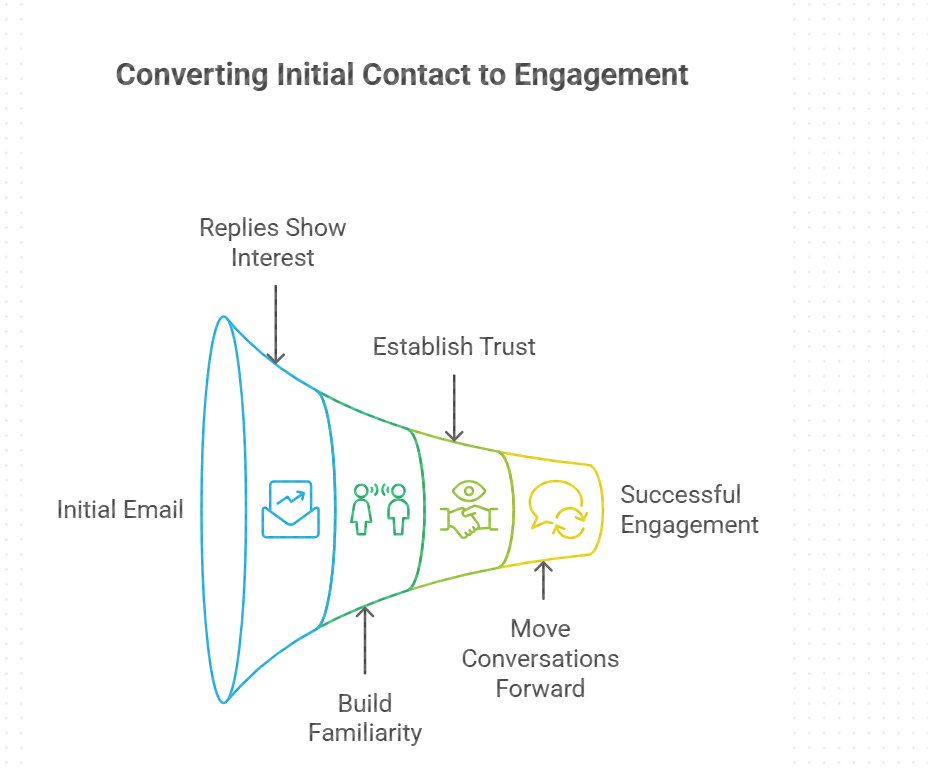
Most people don’t reply to the first message because they’re busy or simply miss it. A follow-up email brings your message back to their attention without starting over.
It helps you stay visible in a crowded inbox while keeping the conversation open. This isn’t about being pushy—it’s about being consistent.
Well-timed follow-ups remind the recipient and increase your chances of getting a response. Over time, this consistency is what drives more replies, conversations, and opportunities.
A well-written follow-up email shows genuine interest without forcing a reply. It keeps the conversation open while respecting the recipient’s time.
Short and clear messages help you stay professional, gently reminding them about your previous email without adding pressure or making the interaction feel uncomfortable.
People are more likely to respond when they recognize your name.
A simple follow-up email keeps you visible in their inbox, while repeated and thoughtful messages gradually build familiarity. Over time, this trust makes it easier for prospects or connections to engage and respond when the timing is right.
A follow up email does more than remind someone you reached out.
It gives the conversation a clear direction instead of leaving it open-ended. A strong template for follow up email includes a simple next step, making it easier for the recipient to respond without thinking too much.
Clarity drives action.
When you guide the conversation forward, replies become much more natural and frequent.
Timing matters as much as the message itself.
Send your first follow up email within 2–3 days, then space others every 3–5 days. Using follow up email helps you stay consistent, avoid over-messaging, and improve response rates across sales and networking.
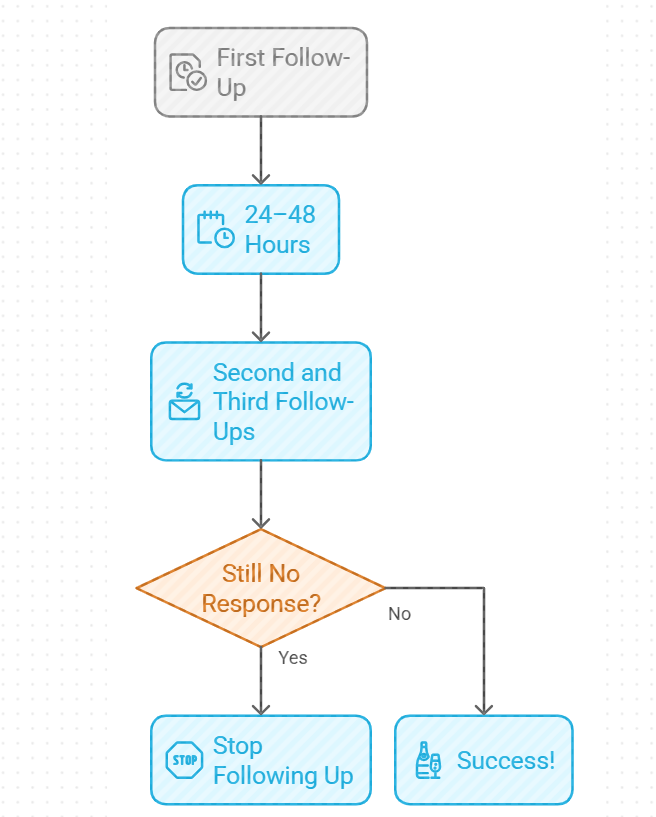
Your first follow-up should go out within 24–48 hours.
This keeps your message fresh while the recipient still remembers your initial email. Waiting too long can reduce relevance, while following up too soon may feel rushed.
Pair this timing with a simple template for a follow up email.
It helps you stay clear, timely, and more likely to get a response.
After your first follow-up, space the next ones every 2–4 days.
This keeps you consistent without overwhelming the recipient or flooding their inbox. Using a structured email follow up template helps you stay on track while avoiding repetition.
Keep your messages short and clear.
You don’t need long explanations—just a simple reminder works best.
Follow-ups work, but only up to a point.
If you’ve sent 4–6 emails without a response, it’s usually best to stop and move on. Continuing beyond this can feel repetitive and reduce your credibility.
Use a final following up email to close the loop.
Keep it polite, and leave the door open for future conversations.
Keep follow-up emails short, clear, and focused. Use simple subject lines, stay direct, and avoid unnecessary details. A structured approach ensures consistency while keeping messages natural and easy to read.
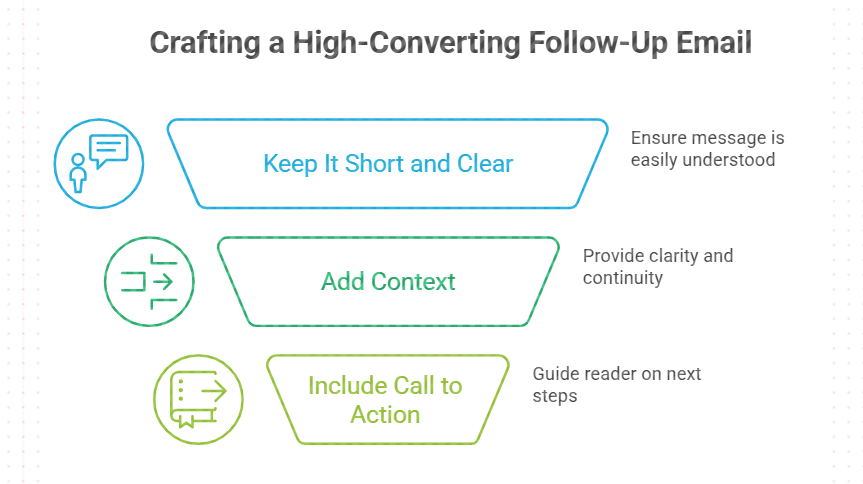
Short emails get more replies because they’re easier to read.
People don’t want to spend time decoding long messages. A simple template for follow up email keeps your message focused and scannable.
Stick to one clear point per email.
This improves readability and makes it easier for the recipient to respond quickly.
Always remind them why you’re reaching out.
A good email follow up template briefly references your previous message so they don’t have to search their inbox.
Keep it short and relevant.
You don’t need to repeat everything—just enough context to make your follow-up feel connected and easy to understand.
Don’t leave your email open-ended.
Every follow-up email should include one clear next step so the reader knows exactly what to do.
Keep it simple and specific.
Ask one direct question or action, making it easy for them to reply quickly without overthinking. This makes it easy for them to respond quickly without overthinking, streamlining communication and improving reply rates. Clear calls to action help move conversations forward efficiently.
Now that you know how follow-ups work, the next step is knowing what to send.
In this section, you’ll get practical follow up email templates you can use right away. Each one is short, clear, and designed for specific situations like sales outreach, networking, or no response—so you can follow up confidently without overthinking your emails.
Sales follow-up email templates help you stay consistent, send clear messages, and increase replies without overthinking your outreach.
Sometimes, a quick nudge is all it takes.
This template for a follow up email simply reminds the prospect about your previous message without adding pressure or extra details.
Example:
Subject: Just checking in
Hi [Name],
Wanted to quickly follow up on my previous email.
Let me know if you have a chance to take a look.
Happy to share more details if needed.
Best, [Your Name]
If your first email didn’t get a reply, adding value can restart the conversation.
This email template for follow up shares a useful resource or insight, making your message helpful instead of just a reminder.
Example:
Subject: Thought this might help
Hi [Name],
I wanted to follow up and share this [resource/insight] I came across—it might be relevant to what we discussed.
Let me know your thoughts, happy to explore this further with you.
Best, [Your Name]
When replies are slow, make it easy to answer.
This email asks a simple yes/no question, reducing effort and increasing your chances of getting a response.
Example:
Subject: Quick question
Hi [Name],
Just wanted to quickly follow up—would this be relevant for you right now?
A quick yes or no works.
Thanks, [Your Name]
If your prospect needs proof, show them real results.
This email follow up template shares a relevant example or case study to build trust and make your message more credible.
Example:
Subject: Quick example you might find useful
Hi [Name],
Wanted to follow up and share a quick example of how we helped [similar company/role] achieve [specific result].
Happy to walk you through it if this sounds relevant.
Best, [Your Name]
When multiple follow-ups don’t get a response, it’s best to close the loop.
This template for follow up email lets you end the conversation politely while still leaving the door open for future opportunities.
Example:
Subject: Should I close this?
Hi [Name],
I haven’t heard back, so I’ll assume this isn’t a priority right now.
If that’s the case, no worries at all. Feel free to reach out anytime if this becomes relevant.
Best, [Your Name]
Networking follow-up templates help you build and maintain professional relationships with simple, natural emails.
After meeting someone, a quick follow-up keeps the connection alive.
This follow up email template helps you reconnect naturally without sounding formal or forced, making the conversation feel easy and genuine.
Example:
Subject: Great meeting you
Hi [Name],
It was great meeting you at [event/place].
I really enjoyed our conversation about [topic]. Would love to stay in touch.
Best, [Your Name]
Turn a connection into a conversation.
This follow up email builds on a LinkedIn interaction and helps you move things forward by adding context, keeping it relevant, and making the next step feel natural.
Example:
Subject: Thanks for connecting, [Name]
Hi [Name],
Thanks for connecting on LinkedIn. I came across your post on [topic]—really insightful.
Would love to hear more about your experience with this.
Best, [Your Name]
People respond more when you ask, not pitch.
This email template for follow up focuses on seeking guidance or insights, making your message feel genuine and increasing your chances of getting a thoughtful response.
Example:
Subject: Quick question about [topic]
Hi [Name],
I’ve been exploring [topic/field] and found your work really interesting.
Would you be open to sharing a quick piece of advice on how to approach this?
Thanks in advance, [Your Name]
Keep partnership conversations moving forward.
This template is designed to explore collaborations, helping you express interest clearly while keeping the tone open, professional, and easy to respond to.
Example:
Subject: Exploring a quick collaboration
Hi [Name],
Just following up on my earlier note about a potential collaboration.
I think there’s a great opportunity to work together on [idea/project]. Let me know your thoughts.
Best, [Your Name]
Sometimes, timing is everything.
This simple email follow up helps you reconnect after some time has passed, bringing the conversation back without pressure and keeping the relationship warm.
Example:
Subject: Checking back in
Hi [Name],
Just wanted to check back in—hope things have been going well.
Let me know if now is a better time to reconnect.
Best, [Your Name]
Suggested Reading:
Follow Up Email on Business ProposalNo response follow-up templates help you re-engage prospects with simple, polite messages that increase your chances of getting a reply.
A soft reminder can bring your email back into attention.
This follow up email template keeps the tone polite and simple, making it easy to follow up without sounding pushy or demanding.
Example:
Subject: Just following up
Hi [Name],
Just wanted to gently follow up on my previous email.
Let me know if you have a chance to review it.
Best, [Your Name]
If one message doesn’t work, try a fresh approach.
This email template changes the angle to re-engage the reader with new context or value.
Example:
Subject: Thought this might be relevant
Hi [Name],
I wanted to follow up and share a slightly different angle—this might be useful for [specific need].
Happy to explain further if this sounds relevant.
Best, [Your Name]
Clarity and brevity often get faster replies.
This email template for follow up keeps the message minimal and straight to the point.
Example:
Subject: Quick follow-up
Hi [Name],
Just checking—did you get a chance to look at my last message?
Thanks, [Your Name]
Make your follow-up about helping, not selling.
This template for follow up email focuses on offering support, making your message more useful and less transactional.
Example:
Subject: Happy to help
Hi [Name],
Just following up—happy to help with [specific problem] if that’s something you’re exploring.
Let me know if this would be useful.
Best, [Your Name]
Know when to close the loop respectfully.
This closing email follow up template signals the end while keeping the door open for future conversations.
Example:
Subject: Closing the loop
Hi [Name],
I haven’t heard back, so I’ll assume this isn’t a priority right now.
Feel free to reach out anytime if this becomes relevant.
Best, [Your Name]
Many follow-up emails fail due to simple mistakes that reduce response rates and hurt results.
Common issues include writing overly long emails, being too pushy, or failing to add value. Correcting these problems can significantly improve your outreach and help you get more responses from the same effort.
Long emails often lose the reader’s attention, as most people skim messages rather than read them thoroughly.
A short, focused follow-up email works better because it is easy to read and quick to respond to. Remove unnecessary details and keep your message concise to maximize engagement.
Aggressive or overly persistent follow-up emails often reduce replies. People tend to avoid emails that feel forced or demanding.
A good follow-up keeps the tone calm and respectful, reminding the recipient of your message while giving them space to respond comfortably. This approach maintains professionalism and encourages engagement.
Repeating the same message rarely works.
If your follow-up doesn’t add anything new, it gets ignored. A good template for a follow up email should bring fresh context, insight, or value.
This gives the reader a reason to respond.
Suggested Reading:
Quotation Follow-Up EmailsOppora.ai is an AI outbound platform that manages your entire outreach process from start to finish. Instead of manually searching for prospects or writing emails, you simply define your target audience. Oppora.ai then finds relevant leads, writes personalized emails, sends follow-ups, handles replies, and even books meetings automatically.
This makes it easier to scale your outreach without spending hours on repetitive tasks.
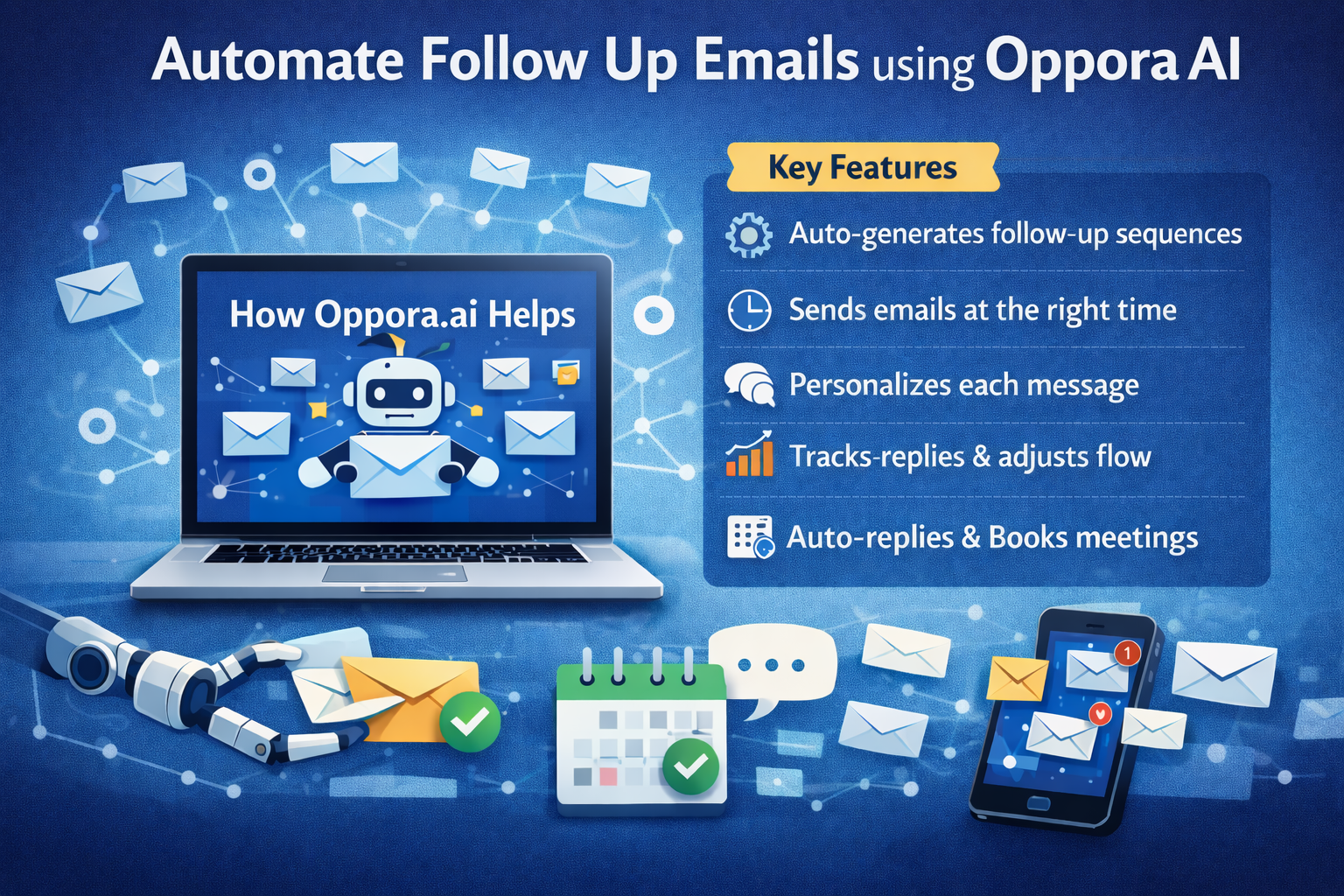
Follow-ups often fail because of inconsistency and manual effort.
Oppora.ai removes this problem by automating the entire workflow. It ensures every lead is contacted, followed up with at the right time, and moved forward in the conversation without delays.
You don’t have to track who replied or when to send the next email
Oppora.ai handles it all in the background, keeping your outreach consistent, organized, and active. This allows you to focus more on closing deals and building relationships instead of managing emails.
Follow-ups are what turn missed emails into real conversations.
In this blog, you learned how to write and use follow up email templates effectively, including when to send them, what to include, and how to structure them for better results. You also explored ready-to-use templates for sales, networking, and no response situations.
When you stay consistent, keep your emails clear, and focus on adding value, follow-ups become much easier.
If you want to save time and avoid manual effort, tools like Oppora.ai can automate your follow-ups, keep your outreach running smoothly, and help you get more replies without extra work.
Sending too many follow-ups can hurt your credibility. Typically, 4–6 follow-ups are considered effective without being excessive. After that, it’s best to stop or send a final “breakup” email. Spacing them properly and adding value in each message prevents your outreach from feeling repetitive or spammy.
Effective follow-up subject lines are short, relevant, and conversational. Examples include “Quick follow-up,” “Just checking in,” or replying to the original thread. Keeping the same subject line often works best, as it maintains context and increases the chances of your email being noticed and opened.
In most cases, yes. Replying within the same thread keeps the conversation organized and provides context to the recipient. However, if you’re trying a completely new angle or message, starting a new thread can sometimes help grab attention and reset the conversation.
Yes, many outreach tools allow you to automate follow-up sequences while still personalizing messages. Automation saves time and ensures consistency, but it’s important to customize key parts of your emails so they don’t feel generic or robotic to the recipient.
The best tone is polite, professional, and conversational. Avoid sounding desperate, overly formal, or aggressive. A friendly tone with clear intent works best. Keeping your message simple and respectful makes it easier for recipients to respond positively and engage in further conversation.
Summarize with AI
Share