Home
Blog
Find 500 B2B Contacts for Free Every Month with Built-In Outreach.
Home
Blog
Ravikanth
Published April 17, 2026
15 min
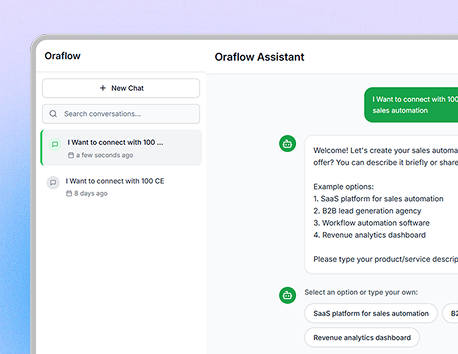
Try Oppora AI
Create Self-Running Agentic Sales Workflows like N8N just by chatting with AI
Get Started for FREE
You’re probably working hard to get more clients, but the real problem isn’t quantity — it’s quality.
Low-value clients drain your time, negotiate endlessly, and limit your growth, while high ticket clients respect your expertise and pay for outcomes.
Yet most people struggle to attract high ticket clients because their positioning, outreach, and targeting aren’t aligned.
In this guide, you’ll learn:
Before you try to find high ticket clients, you need to understand what actually defines them.
It’s not just about how much they pay, but how they think, decide, and invest in results.
When you recognize these traits early, you stop chasing the wrong prospects and focus on people who are easier to close and more valuable long term.
This clarity helps you build a pipeline filled with serious buyers instead of low-quality leads.
Once you start noticing patterns, one thing becomes obvious — high ticket clients don’t waste time.
They are actively looking for solutions because they already feel the cost of not fixing their problem.
You’ll rarely see them browsing casually or delaying decisions for weeks.
This urgency makes conversations more direct, focused on outcomes, and easier to close faster.
Another clear shift is how these clients think about money.
High ticket clients are not looking for the cheapest option because they understand the cost of poor results.
They are willing to invest more when they see a clear return.
Instead of short-term savings, they focus on long-term value, which often leads to repeat business and stronger partnerships.
Even strong deals slow down when you’re not talking to the right person.
High ticket clients are usually decision-makers or closely connected to them.
You’re often speaking with founders or key stakeholders who understand the problem deeply.
This removes unnecessary back-and-forth and allows decisions to happen faster.
Finally, the best high ticket clients are the right fit for what you offer.
Their goals and challenges align closely with your expertise.
This makes it easier to communicate value and deliver results.
Strong alignment leads to smoother execution, better retention, and more referrals over time.
Before you jump into strategies to find high ticket clients, you need to get a few fundamentals right.
Because even the best outreach or lead generation tactics won’t work if your foundation is weak.
High ticket clients don’t respond to vague offers or unclear positioning.
When your offer, niche, and messaging are aligned, targeting improves and conversations become easier to close.
Everything starts with knowing exactly who you want to work with.
If your targeting is too broad, you’ll attract low-value clients who are not ready to invest.
High ticket clients usually come from businesses that already generate revenue and have clear growth needs.
Define them based on budget, urgency, and how costly their problem is if left unsolved.
Look for companies where your solution directly impacts revenue, saves time, or removes bottlenecks.
This clarity helps you focus only on prospects who are ready to invest.
Once you know who you’re targeting, the next step is shaping an offer that makes high pricing feel justified.
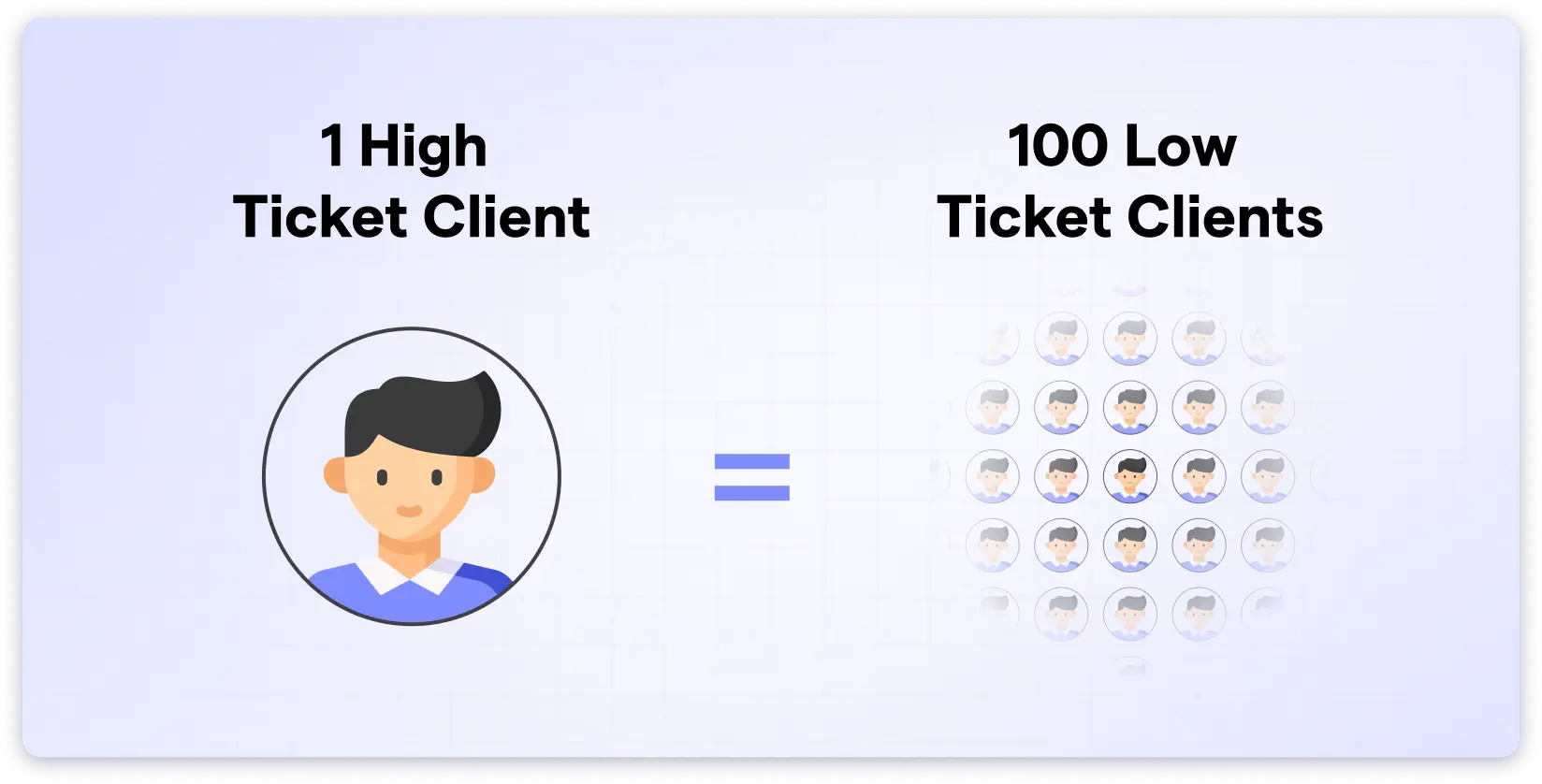
High ticket pricing is not about effort, but about the outcomes you deliver.
Position your offer around results like increased revenue, faster growth, or reduced costs.
The more tangible the outcome, the easier it becomes for clients to justify the investment.
When your offer clearly connects what you do to what they gain, price becomes a secondary conversation.
Even with a strong offer, positioning plays a huge role in attracting the right clients.
If you try to serve everyone, you end up appealing to low-value clients.
High ticket clients prefer specialists who understand their industry and challenges deeply.
When you focus on a niche, your messaging becomes sharper and more relevant.
This builds trust faster and allows you to charge premium prices without resistance.
Now that your foundation is clear, the next step is execution.
Finding high ticket clients is not about chasing every possible channel, but about using a few proven strategies consistently.
Most people fail because they try everything at once without depth or consistency.
The strategies below are practical, tested, and focused on reaching decision-makers who are ready to invest.
If you apply them with clarity and patience, you’ll start seeing better conversations, stronger opportunities, and higher-quality clients.
One of the most reliable ways to find high ticket clients is through targeted cold outreach.
The difference between spam and results comes down to relevance and personalization.
High ticket clients don’t respond to generic templates because they receive dozens every day.
To make this work, focus on three key elements:
Keep your message simple and focused on starting a conversation.
While outbound gets you in front of people, LinkedIn helps you attract them.
It works by building visibility and trust through consistent, valuable content.
High ticket clients often check your profile before responding, and your content influences that decision.
To make LinkedIn work effectively, focus on:
Over time, this attracts inbound leads who already trust your expertise.
While cold outreach helps you reach new people, referrals help you close faster with less resistance.
High ticket clients trust recommendations because the credibility is already transferred before the first conversation.
This removes skepticism, shortens sales cycles, and increases deal size.
To use this effectively, focus on three key actions:
Referrals often convert faster, involve less negotiation, and lead to higher-quality high ticket clients.
While outbound brings in opportunities, partnerships help you build a consistent deal flow without starting from scratch each time.
Agencies and service providers already work with your ideal clients, which means they can become a reliable source of high ticket opportunities.
Instead of competing, you collaborate and grow together.
To make partnerships work effectively, focus on three key actions:
Strong partnerships can become one of your most predictable channels for closing high ticket clients.
Paid channels help you scale faster with more control.
Webinar ads and targeted campaigns work well because they educate and qualify prospects before sales conversations.
Instead of pitching directly, you guide them through a structured experience that builds trust.
To make this strategy work, focus on:
This gives you better lead quality and a more predictable pipeline.
Content becomes powerful when it attracts people already looking for solutions.
High-intent content helps you bring in prospects who are easier to convert into high ticket clients.
Instead of chasing leads, you create a system where they discover you.
To make this work, focus on:
Over time, this builds a steady flow of qualified inbound leads.
Along with digital channels, real relationships still play a key role in finding high ticket clients.
High-value communities and events bring you closer to people who are already serious about growth and investing in solutions.
These spaces are filled with decision-makers actively looking for insights, partnerships, and opportunities.
To make the most of this strategy, focus on three actions:
Over time, these connections turn into conversations, referrals, and high ticket opportunities.
Suggested Reading:
How to Generate B2B LeadsNow that you know the strategies, the next step is knowing where to apply them based on your role.
Because not every channel works the same way for freelancers, agencies, or businesses targeting different industries.
High ticket client acquisition becomes much easier when you focus on the right segment instead of trying to target everyone.
Each role has its own strengths, advantages, and best-performing channels.
When you align your approach with your role, your efforts become more predictable, scalable, and effective over time.
If you’re a freelancer or consultant, your biggest advantage is flexibility and direct communication.
You can move faster than larger teams, which makes outbound and relationship-based channels highly effective.
To find high ticket clients, focus on:
Moving upmarket comes down to targeting better businesses and positioning around results instead of execution.
As an agency, your strength lies in systems, scale, and repeatability.
You’re not just closing deals, you’re building a consistent pipeline of high ticket clients.
To do that effectively, focus on:
Agencies that focus on a specific niche and show proven results tend to attract higher-value clients more consistently.
Suggested Reading:
Find Clients for a Staffing AgencyIf you’re targeting B2B SaaS, you’re already looking at one of the strongest high ticket segments.
These companies are growth-focused and constantly investing in revenue generation.
To find them effectively, focus on:
Because SaaS businesses operate on recurring revenue, they are more willing to invest in solutions that drive consistent growth.
Service-based businesses depend heavily on a steady flow of new clients.
This makes them highly motivated to invest in solutions that improve their acquisition process.
To reach them effectively, focus on:
Since their revenue depends on continuous client flow, they are strong candidates for high ticket services.
Coaches and consultants already understand the value of high ticket offers because they sell them themselves.
Their biggest challenge is not pricing, but maintaining a consistent pipeline of qualified leads.
To find and connect with them, focus on:
Because they already sell premium services, they are more open to investing in solutions that improve their growth.
Once you start applying these strategies, the real challenge becomes managing everything consistently.
You need to find leads, verify data, send outreach, follow up, and book meetings without losing momentum.
That’s where Oppora changes the game.
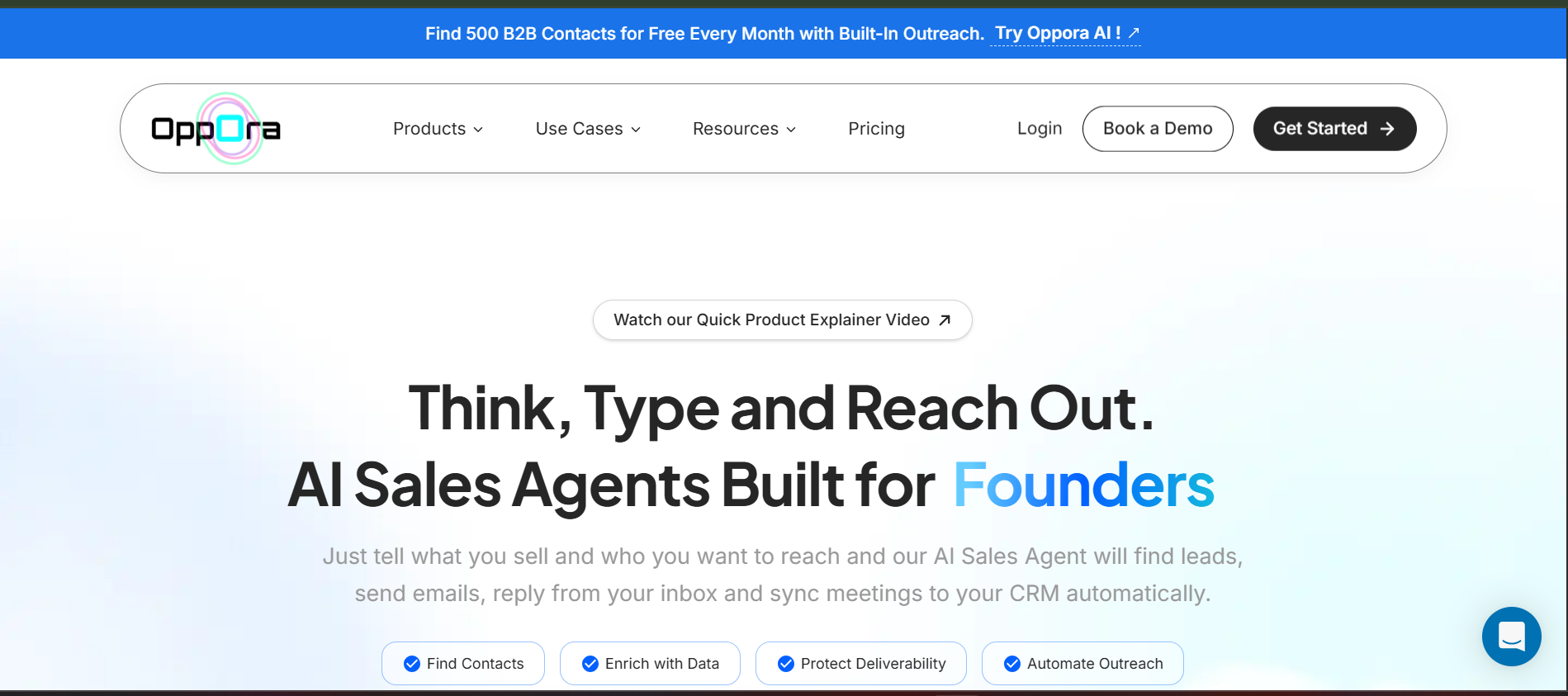
Oppora is an AI outbound sales agent that automates your entire outbound workflow — similar to tools like n8n, but controlled simply by chatting with AI.
Instead of manually handling each step, you build one workflow, and the system keeps running it for you.
It combines 5+ outbound steps into 1 system, so you can focus on strategy while execution happens automatically.
This removes manual prospecting and gives you a high-quality, ready-to-contact pipeline instantly.
This allows you to send thousands of emails without damaging your sender reputation.
This removes manual follow-ups and keeps your pipeline moving continuously.
This reduces cost, removes complexity, and gives you a single system to scale high ticket client acquisition.
Even with the right strategies, small mistakes can completely block your ability to attract high ticket clients.
Most people don’t fail because of lack of effort, but because they focus on the wrong things.
Poor targeting, unclear messaging, and inconsistency are the biggest reasons why outreach doesn’t convert.
If you fix these early, your results improve faster and your efforts start compounding.
Everything breaks down when you target the wrong audience.
If you’re reaching out to businesses that don’t have the budget or urgency, your chances of closing high ticket deals drop significantly.
You’ll face constant objections, price sensitivity, and long decision cycles.
Instead, focus on:
Better targeting leads to better conversations and higher-quality deals.
Even if you reach the right people, unclear messaging will stop you from converting them.
High ticket clients don’t respond to vague offers or generic service descriptions.
If they can’t quickly understand the value you bring, they will move on.
To improve your positioning, focus on:
Strong messaging builds trust and makes your offer easier to say yes to.
One of the most common reasons people fail to get high ticket clients is inconsistency.
They send a few emails, post occasionally, or try outreach for a short time and then stop.
High ticket client acquisition requires repetition, follow-ups, and long-term effort.
To stay consistent, focus on:
Consistency is what turns strategies into predictable results over time.
At this point, you can see that finding high ticket clients is not about one single tactic.
It comes down to having the right foundation, choosing proven strategies, and executing them consistently.
When your targeting, offer, and messaging are aligned, every strategy starts working better.
Instead of chasing random leads, you build a system that attracts serious buyers.
The real difference comes from staying consistent and refining what works over time.
Finding high ticket clients becomes much easier when you focus on what actually works instead of trying everything at once.
Start with a clear foundation, apply a few proven strategies, and stay consistent with your execution.
Over time, build systems that bring in, nurture, and convert the right clients.
Take action, stay patient, and you’ll create a predictable pipeline of high ticket opportunities.
The timeline depends on your strategy and consistency.
Outbound methods like cold email or LinkedIn can start generating results within a few weeks, while inbound takes longer to build.
With clear positioning and daily outreach, you can significantly reduce the time to land your first high ticket client.
The fastest channels are cold outreach, LinkedIn, and referrals.
These give you direct access to decision-makers without waiting for inbound traction.
Focus on businesses already investing in similar services, as they are more likely to buy and move faster.
As a closer, your focus should be on partnering with people who already have offers and leads.
Work with agencies, coaches, and offer owners who need help converting prospects.
Networking, outbound outreach, and proving your ability to drive revenue will help you stand out.
You don’t need a large audience to get high ticket clients.
Direct outreach can bring results much faster than waiting to build followers.
What matters more is how you position yourself and communicate your value, not how many people follow you.
If you’re just starting, focus on one simple and proven approach.
Cold outreach combined with a clear niche is the best starting point.
Stay consistent, learn from responses, and improve your messaging instead of trying multiple strategies at once.
Summarize with AI
Share