Home
Blog
Find & Send Cold Emails to 500 Unique Prospects Every Month for FREE.
Home
Blog
Manasa Goli
Published February 17, 2026
4 min
Try Oppora AI
Create Self-Running Agentic Sales Workflows like N8N just by chatting with AI
Get Started for FREE
In today’s fragmented digital landscape, your audience doesn’t live on just one platform. They scroll on LinkedIn, search on Google, open emails selectively, watch YouTube, and engage with brands across multiple touchpoints.
That’s exactly why an integrated marketing campaign is no longer optional — it’s essential.
Instead of running disconnected ads, emails, and social posts, businesses now combine channels into one unified strategy with a consistent message, tone, and goal.
In this guide, we’ll break down:
Let’s dive in.
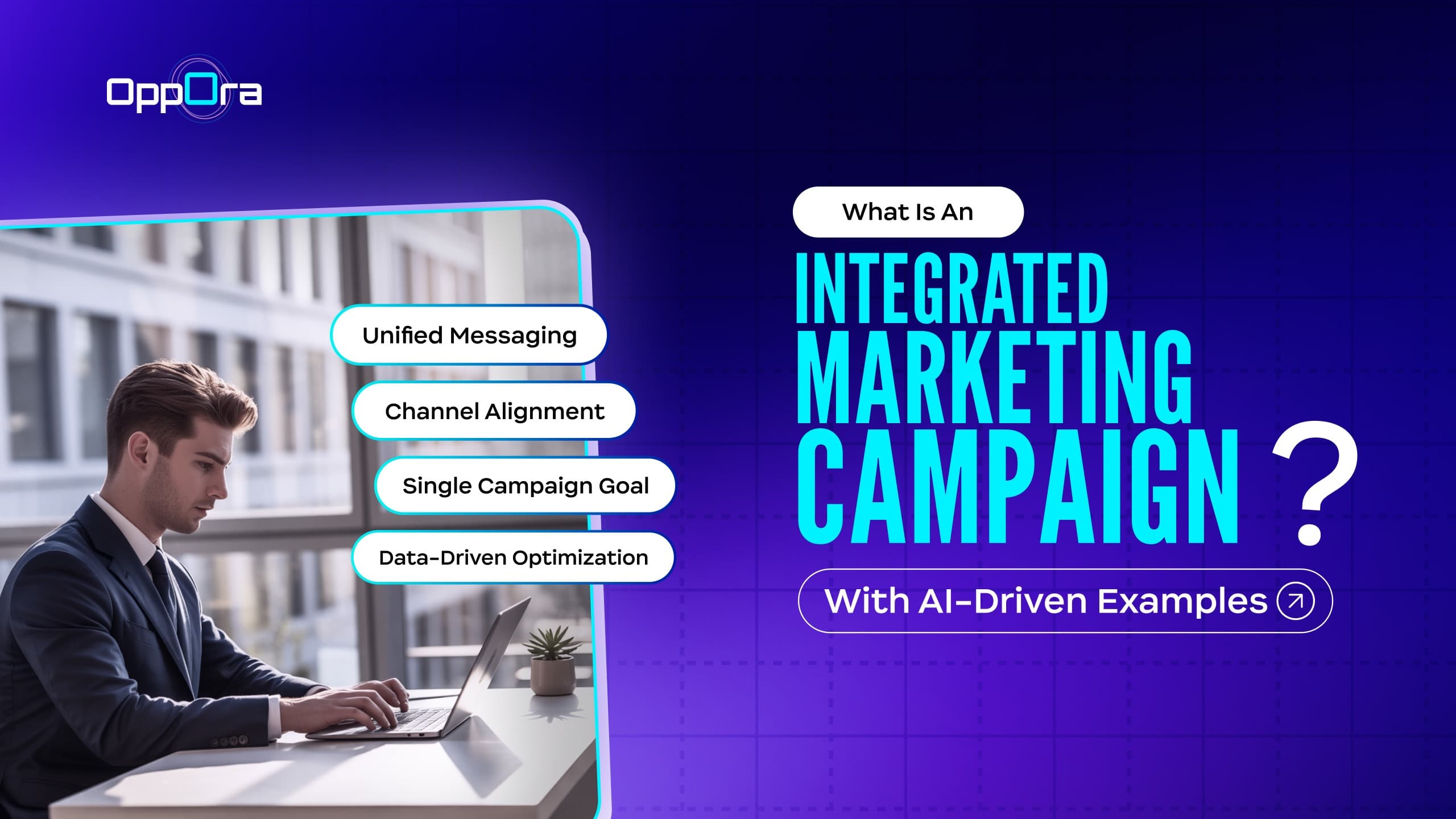
An integrated marketing campaign is a strategic marketing approach that delivers a consistent message across multiple channels — such as email, social media, paid ads, content marketing, PR, and sales outreach — all working toward a single objective.
Instead of treating each channel separately, everything is connected.
In simple terms:
One campaign. One message. Multiple channels. Shared goal.
Modern buyers require multiple touchpoints before making a decision. A prospect might:
If those touchpoints feel disconnected, trust drops.
Integrated marketing campaigns solve this by creating a seamless experience — improving brand recall, trust, and conversion rates.
When marketing and sales operate in silos, campaigns leak revenue.
Integration fixes that.
Let’s look at how major brands execute integrated marketing campaigns effectively.
Channels Used: TV ads, social media, retail packaging, website personalization
Core Idea: Personalized bottles with individual names.
The message was consistent everywhere — personalization and sharing moments. Social campaigns encouraged users to share pictures. Offline packaging reinforced the same message.
Result: Massive engagement and increased sales globally.
Channels Used: Video ads, athlete partnerships, social media, retail, experiential marketing
The message remained emotionally powerful and consistent across platforms. Whether you saw a billboard or a YouTube ad, the tone and mission aligned.
This long-running integrated strategy built brand identity, not just short-term sales.
Channels Used: In-app data experience, social sharing, email, outdoor ads
Spotify uses user data to generate personalized year-end summaries. The same visual style and message appear across apps, social media, and advertising.
It’s integrated, data-driven, and highly shareable.
Now let’s move into modern execution.
Today, AI allows companies to automate coordination between marketing and sales touchpoints.
Here’s what an AI-driven integrated marketing campaign looks like:
Goal: Generate 500 demo bookings in 60 days.
Using a platform like Oppora.ai, teams can identify companies showing intent signals such as:
Instead of blasting generic ads, you start with qualified accounts.
All messaging focuses on one theme: “Unify your marketing & sales outreach.”
Here’s where integration becomes powerful.
With Oppora.ai, outbound teams can:
Instead of manual research taking 3–4 hours per account, AI compiles contextual insights so SDRs and BDRs focus on conversations.
The message used in ads = same value proposition used in emails = same positioning on landing pages.
That’s integrated execution.
Everything reinforces the same campaign theme.
No disconnected messaging.
Let’s say your ICP includes funded startups.
Integrated Campaign Flow:
This creates contextual alignment across all touchpoints.
Instead of “Hi, we help companies grow,” the message becomes:
“Congrats on your recent funding — here’s how high-growth startups streamline outbound.”
That level of relevance dramatically improves conversion.
Here’s a practical framework:
Examples:
Avoid multiple competing goals.
Your messaging must answer:
Everything else supports this narrative.
Common combinations:
Don’t use channels randomly — use them purposefully.
Integrated marketing campaigns fail when marketing generates leads but sales uses different messaging.
Ensure:
AI tools like Oppora.ai help bridge this gap by giving both teams shared account intelligence and automated workflows.
Measure:
Optimization keeps the campaign dynamic.
Integration requires coordination — not just presence on multiple platforms.
An integrated marketing campaign is not about being everywhere.
It’s about being consistent, connected, and contextual across every touchpoint.
The best integrated marketing campaigns:
And with AI-powered platforms like Oppora.ai, teams can:
Integration + intelligence = sustainable growth.
If your marketing feels fragmented, it’s not a traffic problem.
It’s an integration problem.
And that’s exactly where modern AI-driven campaigns create the difference.
Summarize with AI
Share