Home
Blog
Find 500 B2B Contacts for Free Every Month with Built-In Outreach.
Home
Blog
Adam Hossain
Published March 12, 2026
9 min

Try Oppora AI
Create Self-Running Agentic Sales Workflows like N8N just by chatting with AI
Get Started for FREE
LinkedIn has become one of the most reliable platforms for B2B prospecting.You can reach decision-makers, start meaningful conversations, and build relationships directly with professionals who influence buying decisions.
Instead of relying only on inbound marketing, many sales teams now use LinkedIn to actively discover prospects and start conversations.
In this guide, you’ll learn how LinkedIn sales lead generation works, how sales teams identify the right prospects, and which strategies help turn LinkedIn connections into a consistent pipeline of qualified B2B opportunities.
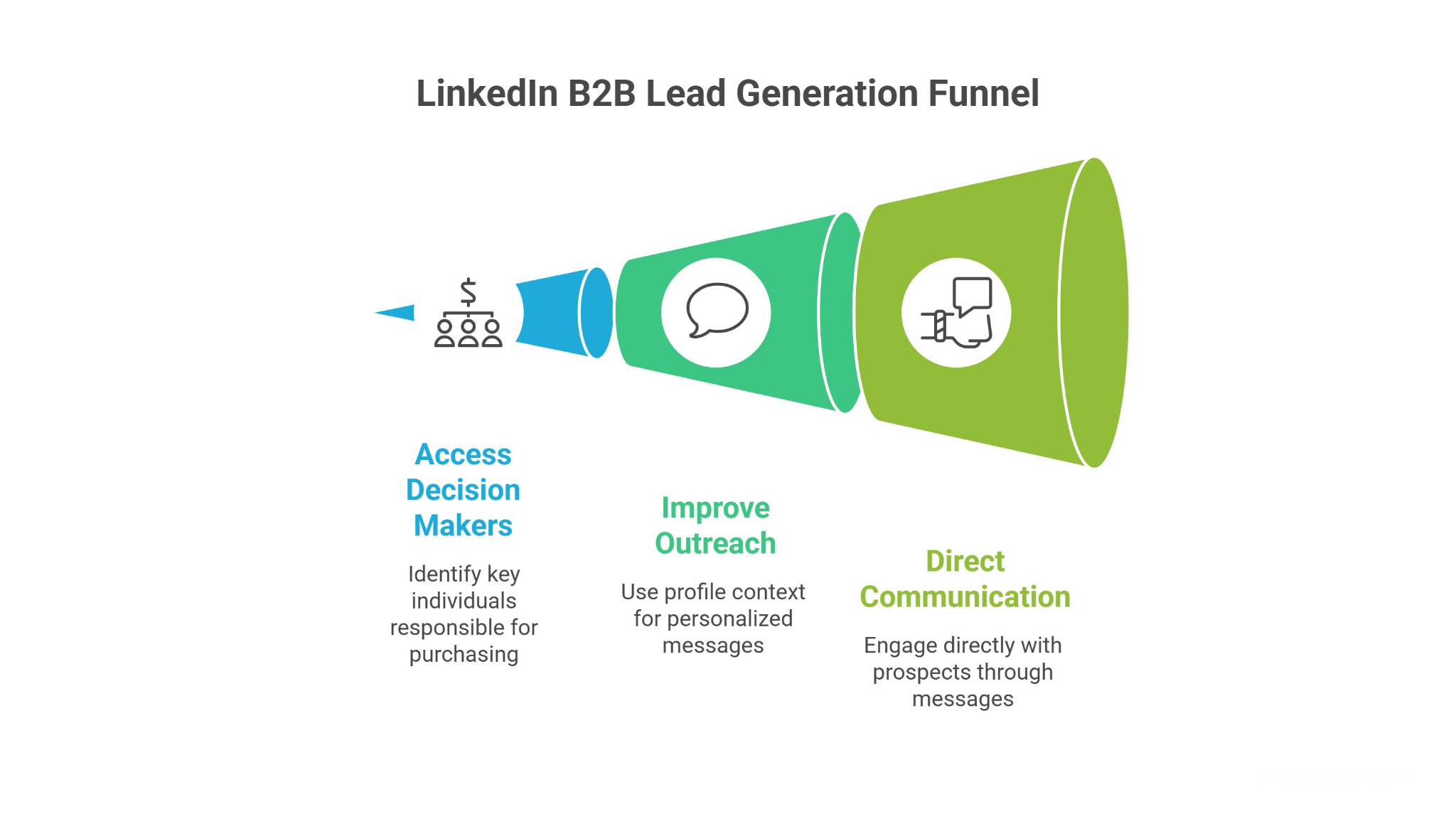
For B2B sales teams, finding the right prospects is often the hardest part of building a reliable pipeline.
LinkedIn solves this challenge by connecting professionals across industries in a space designed specifically for business conversations.
Instead of searching blindly for leads, you can identify relevant professionals, understand their roles, and start meaningful discussions.
That combination makes LinkedIn sales lead generation one of the most effective prospecting channels for B2B teams.
One major advantage of LinkedIn is direct visibility into company roles and leadership structures.
You can quickly identify founders, executives, department heads, and managers responsible for purchasing decisions.
This reduces the time spent contacting the wrong people and helps your outreach focus on professionals who actually influence buying decisions.
LinkedIn profiles provide valuable context about a prospect’s work, responsibilities, and interests.
You can see their company updates, career history, and even the content they interact with.
This information helps you write personalized messages that feel relevant and thoughtful rather than generic sales outreach.
Unlike many marketing channels that depend on forms or ads, LinkedIn allows you to start conversations directly.
You can connect, comment on posts, and send messages to begin a professional relationship.
This direct communication helps you build trust over time and turns LinkedIn into a consistent source of meaningful B2B conversations.
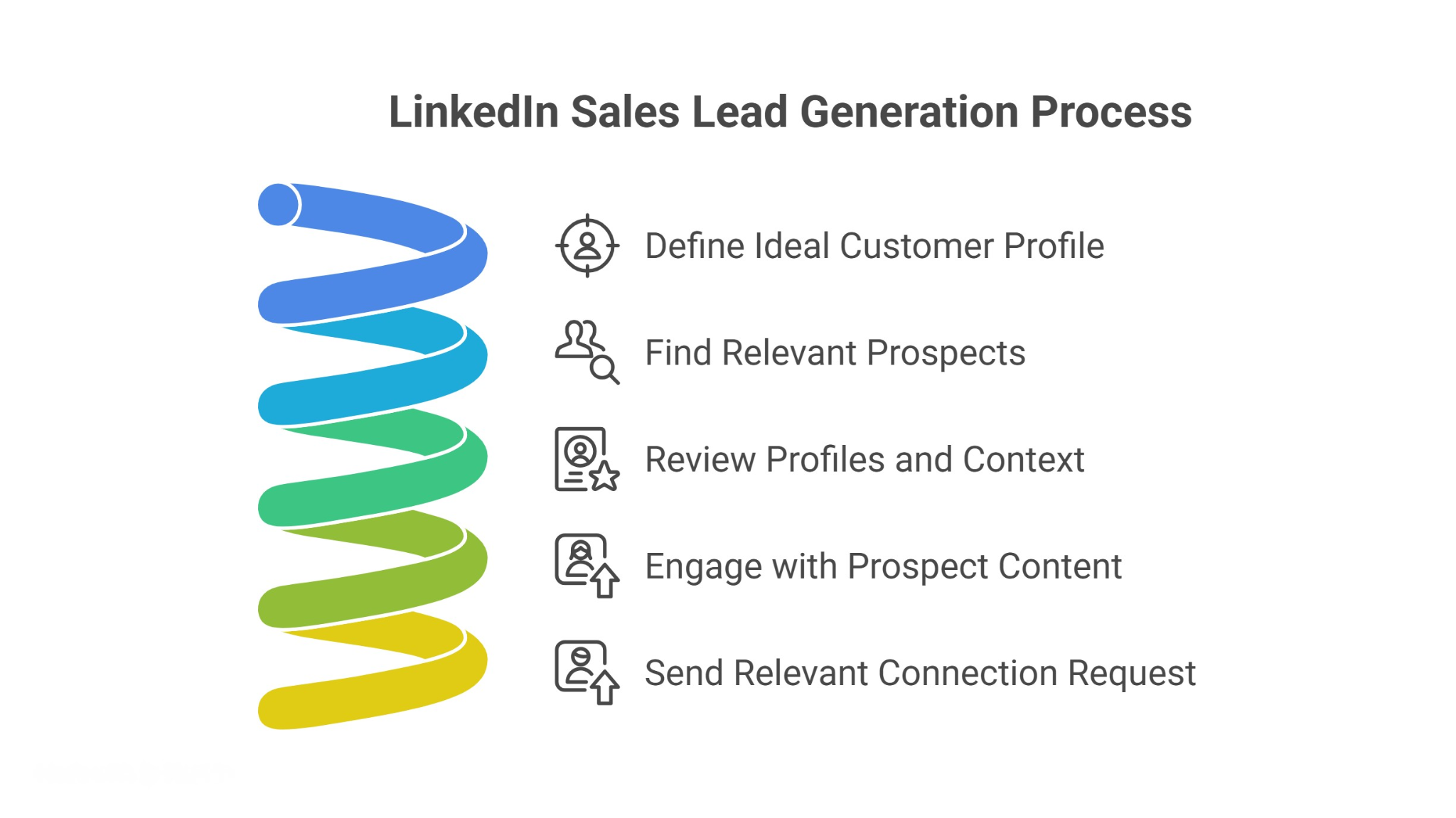
Successful LinkedIn prospecting rarely happens by accident.The most effective sales teams follow a clear process that helps them consistently find and connect with the right professionals.
Instead of randomly sending connection requests, they focus on identifying relevant prospects, understanding their context, and starting meaningful conversations.
When this process is followed consistently, LinkedIn becomes a reliable source of qualified B2B opportunities.
Before searching for leads, you need clarity about who you want to reach.
Your Ideal Customer Profile (ICP) defines the type of companies and decision-makers most likely to benefit from your product or service.
This usually includes factors such as industry, company size, location, and job roles.
With a clear ICP, your prospecting becomes focused and efficient because you spend time engaging only with professionals who match your target audience.
Once your ICP is defined, LinkedIn’s search filters make it easier to find relevant professionals.
You can filter prospects by job title, industry, company, location, and experience level.
These filters help narrow a large professional network into smaller, targeted groups of potential buyers.
Instead of sending outreach to thousands of random contacts, you can focus on professionals who closely match your ideal customer profile.
Before starting a conversation, take time to understand the prospect’s professional background.
Review their role, company information, recent posts, and activity.
This context helps you understand what challenges they might be facing and what topics are relevant to them.
When your outreach reflects this understanding, it feels more thoughtful and relevant.
Engagement before outreach helps build familiarity.
When you like or comment on a prospect’s posts, your name becomes recognizable before you send a connection request.
This small interaction signals genuine interest in their ideas and professional discussions.
Over time, this approach makes your outreach feel less like cold prospecting and more like a natural conversation.
Once you have some context and visibility, send a short and personalized connection request.
Mention something specific such as their recent post, industry topic, or shared interest.
A relevant message shows that you are not sending generic requests.
This simple step often increases connection acceptance rates and opens the door for meaningful business conversations.
Once you understand the basic prospecting process, the next step is improving how you find and approach potential buyers.
Successful sales teams don’t rely on random outreach.
Instead, they use signals, engagement patterns, and professional conversations to identify prospects who are more likely to respond.
The following strategies help you turn LinkedIn into a consistent source of qualified B2B opportunities.
A job change often signals a moment of transition.
When professionals start a new role, they usually review tools, vendors, and processes to support their new responsibilities.
Reaching out during this period can feel timely and relevant because the prospect may already be evaluating new solutions.
A simple congratulatory message combined with a thoughtful question can open the door to a meaningful conversation.
Hiring activity is a strong indicator of company growth or internal change.
Organizations expanding their teams often need new tools, processes, or service providers to support the additional workload.
By monitoring companies that are actively hiring, you can identify businesses that may soon require solutions related to their growth.
This allows you to approach prospects at the moment when their needs are evolving.
Professionals who interact with competitor posts often show interest in similar solutions.
They might comment on discussions, like posts, or follow industry conversations related to your product category.
These engagement signals help you discover prospects who are already researching the type of solution you offer.
Instead of starting from zero awareness, your outreach becomes part of an ongoing industry discussion.
Cold connection requests can sometimes feel transactional.
A better approach is engaging through comments before sending a message.
When you contribute thoughtful insights on posts, prospects begin recognizing your name and perspective.
This familiarity makes your connection request feel natural rather than promotional.
Over time, comment-based outreach helps build credibility and trust within your professional network.
Many valuable conversations on LinkedIn happen within smaller groups or niche discussions.
These micro-communities often revolve around specific industry challenges, tools, or trends.
By participating in these conversations and sharing useful insights, you position yourself as someone who understands the problems professionals are trying to solve.
As trust builds, connections and business conversations begin to happen naturally.
Cold outreach often feels unfamiliar to prospects.But when a shared connection exists, the conversation instantly feels more credible.
Before sending a message, check whether you and the prospect share mutual connections.
Mentioning a shared professional contact can make the outreach feel warmer and more trustworthy.
Even a simple line referencing a mutual connection or shared network often increases response rates.
People naturally trust introductions or conversations that come through familiar professional circles.
Traditional prospect lists are often built using static filters like industry or job title.
However, engagement signals provide stronger buying intent indicators.
Professionals who regularly interact with industry posts, comment on discussions, or follow certain topics are more likely to be interested in related solutions.
By observing who engages with relevant content, sales teams can create prospect lists based on actual activity rather than assumptions.
This approach improves the quality of outreach and increases the chances of starting productive conversations.
LinkedIn is excellent for starting conversations and building familiarity.
However, email often works better for detailed discussions, scheduling meetings, and sharing resources.
Combining both channels creates a more balanced outreach strategy.
For example, a prospect might notice your name on LinkedIn through engagement or connection requests.
Later, when they receive your email, the message feels more familiar and credible.
Timing plays an important role in LinkedIn prospecting.
Prospects who recently posted, commented, or interacted with content are usually active on the platform.
Reaching out during these moments increases the chances that your message will be seen quickly.
This small timing adjustment can significantly improve response rates.
LinkedIn is powerful for discovering prospects, but it may not always reveal every potential lead.
Many sales teams combine LinkedIn research with prospect data platforms.
These platforms provide larger datasets of companies and decision-makers.
By combining these sources with LinkedIn insights, sales teams can expand their prospect lists and run more targeted outreach campaigns.
As your prospecting grows, managing LinkedIn outreach manually can quickly become time-consuming.
Sales teams often struggle to track leads, manage follow-ups, and maintain consistent communication with multiple prospects at the same time.
This is where sales prospecting platforms like Oppora help streamline the process.
Instead of juggling spreadsheets, inboxes, and LinkedIn messages separately, you can manage your prospecting workflow more efficiently while keeping conversations organized.
Finding qualified prospects manually on LinkedIn can take significant time.
Platforms like Oppora provide access to large prospect databases that help you quickly identify relevant companies and decision-makers.
With advanced filters, you can narrow your search based on industry, company size, role, and location.
This helps sales teams discover new leads faster while maintaining accurate targeting.
Consistent outreach requires structure.
Oppora helps organize prospect lists, outreach sequences, and follow-up schedules in one place.
Instead of manually tracking every interaction, sales teams can manage campaigns more efficiently and maintain consistent communication with potential buyers.
Structured workflows also make it easier to run outreach at scale without losing organization.
Understanding how prospects respond to outreach is essential for improving results.
Oppora helps track replies, engagement, and ongoing conversations so sales teams can quickly identify interested prospects.
This visibility ensures important opportunities are not missed and allows teams to refine their messaging based on what generates the best responses.

LinkedIn can be a powerful prospecting channel, but many sales professionals struggle to get responses.
Often the problem isn’t the platform itself. It’s the way outreach is approached.
Avoiding a few common mistakes can significantly improve response rates and help you build stronger professional relationships.
One of the most common mistakes is sending the same copy-paste message to every prospect.
Generic messages usually feel impersonal and sales-focused, which makes prospects ignore them.
Instead, take a moment to reference the person’s role, company, or recent activity.
Even small personalization signals that you’ve taken time to understand who they are and why the conversation might be relevant.
Many sales professionals try to sell immediately after connecting.
This approach often feels pushy because the relationship hasn’t been established yet.
LinkedIn conversations work better when they start with curiosity and value.
Begin by discussing industry topics, asking thoughtful questions, or sharing insights before introducing your product or service.
Even the best outreach message won’t work if it reaches the wrong people.
Contacting professionals outside your ideal customer profile wastes time and lowers response rates.
Successful LinkedIn sales lead generation starts with accurate targeting.
When you focus on the right roles, industries, and company types, your outreach becomes far more relevant and productive.
LinkedIn remains one of the most reliable platforms for B2B prospecting when used with the right approach.
By defining your ideal customer profile, identifying relevant professionals, and starting thoughtful conversations, you can turn LinkedIn into a consistent pipeline of qualified opportunities.
The key is consistency, personalization, and timing.
As your outreach grows, managing prospect research, follow-ups, and conversations can become complex.
Platforms like Oppora can help streamline this process by organizing prospect data, managing outreach workflows, and tracking conversations—allowing your LinkedIn sales lead generation efforts to scale more efficiently.
A safe range is usually 20–30 personalized connection requests per day. This helps maintain account safety while keeping outreach consistent. The key is focusing on quality rather than volume by targeting relevant prospects and writing thoughtful connection messages.
A strong LinkedIn profile should clearly explain what you do, who you help, and the value you provide. Profiles with clear positioning, professional photos, and helpful content tend to build more credibility and make prospects more likely to accept connection requests.
Results usually depend on consistency and targeting. Many sales professionals start seeing conversations within a few weeks of regular outreach. Building a predictable pipeline typically takes a few months of steady prospecting and relationship-focused engagement.
LinkedIn Sales Navigator can be useful for advanced prospecting. It provides deeper filters, lead alerts, and account insights that make it easier to find and track potential buyers. However, good targeting and messaging remain more important than the tool itself.
Automation tools can help manage outreach, follow-ups, and prospect organization at scale. When used carefully, they reduce manual work while maintaining consistent communication. The most effective tools still focus on personalization, relevance, and relationship-based conversations rather than bulk messaging.
Summarize with AI
Share