Home
Blog
Find 500 B2B Contacts for Free Every Month with Built-In Outreach.
Home
Blog
Manasa Goli
Published May 2, 2026
10 min
Try Oppora AI
Create Self-Running Agentic Sales Workflows like N8N just by chatting with AI
Get Started for FREE
You’ve probably sent partnership emails that got ignored.
No replies, no traction, and no clear reason why it didn’t work.
The frustrating part is that you know your offer makes sense, but it still doesn’t get attention.
In this guide, you’ll learn how to fix that and write emails people actually respond to.
Here’s what we’ll cover:
Before you jump into using any partnership email template, it helps to understand what you're really trying to do.
A partnership email is not just a pitch.
It’s your way of starting a conversation where both sides see value.
Most emails fail because they focus only on your goal and ignore the other person’s perspective.
That’s why even a well-written business partnership email template can fall flat if it feels one-sided.
Here’s what usually goes wrong:
If your email doesn’t quickly answer “why should I care?”, it gets ignored.
Now that you know what not to do, let’s look at what actually works.
Every strong email template for partnership follows a simple structure that makes it easy to read and respond to.
Your subject line decides whether your email gets opened or skipped.
Keep it simple, specific, and directly tied to the idea you’re proposing.
This is where you show effort.
Mention something real about their work, content, or company so it doesn’t feel automated.
Instead of explaining what you want, focus on what they gain.
Make the benefit obvious and easy to understand.
Don’t overload them with options or long explanations.
Just suggest one clear next step like a quick call or reply.
Keep it casual and easy to respond to.
You’re starting a conversation, not closing a deal in one email.
Suggested Reading:
Email Subject Line for Reaching Out That Actually Get OpenedWhen you’re reaching out without any prior relationship, you need a clean and direct approach.
Here’s a simple cold email template for partnership you can use.
Subject: Quick idea for [Their Company Name]
Hi [First Name],
I came across [specific detail about them] and had an idea that could be worth exploring together.
We’re currently working on [what you do] and noticed a strong overlap with [their audience or product].
I think there’s an opportunity to [specific benefit or outcome].
Would you be open to a quick chat to see if this makes sense?
Best, [Your Name]
This works because it feels relevant, short, and easy to respond to.
It doesn’t overwhelm the reader, and it creates curiosity without sounding pushy.
Sometimes you need a more structured tone, especially in B2B or corporate settings.
In those cases, a more formal business partnership email template works better.
Subject: Partnership Opportunity Between [Your Company] & [Their Company]
Hi [First Name],
I hope you’re doing well.
I’m reaching out to explore a potential partnership between [Your Company] and [Their Company].
We help [target audience] achieve [result], and I believe there’s strong alignment with your work in [their area].
I’d love to discuss how we can collaborate to create value for both sides.
Would you be available for a brief conversation this week?
Best regards, [Your Name]
Use this when you're dealing with larger companies or more traditional industries where tone matters more.
Not all partnerships are formal.
Sometimes you just want to collaborate on content, webinars, or campaigns.
This type of email template business partnership works best in those situations.
Subject: Let’s collaborate on something valuable
Hi [First Name],
I’ve been following your work on [platform or content], especially [specific piece].
I think our audiences overlap in a meaningful way.
Would you be open to collaborating on [webinar, content, or campaign]?
We can create something that brings value to both audiences.
Let me know what you think.
Cheers, [Your Name]
It feels natural and low-pressure.
You’re not selling, you’re suggesting something mutually beneficial.
If you’re not following up, you’re leaving most opportunities on the table.
People are busy, and your first email often gets missed.
Here’s a simple follow-up you can use.
Subject: Re: Quick idea for [Their Company Name]
Hi [First Name],
Just wanted to quickly follow up on my previous note.
I still think there’s a strong opportunity to collaborate around [specific idea].
Happy to share more details if this sounds interesting.
Let me know either way 🙂
Best, [Your Name]
Tip
Keep it short and respectful.
A good follow-up reminds, not pressures.
When you're reaching out to creators or influencers, the tone needs to feel natural and respectful.
Subject: Loved your content — quick collab idea
Hi [First Name],
I’ve been following your content on [platform], especially [specific post/video].
I think there’s a strong fit between your audience and what we’re building at [your company].
Would you be open to exploring a collaboration around [idea]?
Happy to share more details if you're interested.
Best, [Your Name]
It feels personal and shows genuine interest instead of sounding transactional.
Suggested Reading:
Permission-Based Email MarketingThis works well when you're offering revenue-sharing or commission-based partnerships.
Subject: Partner with us & earn from your audience
Hi [First Name],
I wanted to reach out with a potential affiliate partnership idea.
We work with [target audience] and have seen strong results with partners who promote [your product/service].
I think your audience could benefit from this, and we offer [commission or incentive].
Would you be open to discussing this further?
Best, [Your Name]
It clearly communicates value and gives a direct incentive to respond.
Use this when you're proposing a deeper, long-term collaboration.
Subject: Exploring a strategic partnership
Hi [First Name],
I’ve been looking into [their company] and see a strong alignment with what we’re doing at [your company].
There could be an opportunity to collaborate more strategically around [specific idea].
I’d love to explore how we can create long-term value for both sides.
Would you be open to a quick discussion?
Best, [Your Name]
It positions the conversation as long-term and high-value, not just a one-off ask.
Perfect for SaaS or tech products looking to integrate.
Subject: Integration idea with [Their Product Name]
Hi [First Name],
I’ve been exploring [their product] and had an idea for a potential integration.
Our users often also use [their product], and there’s a clear opportunity to improve their workflow.
Would you be open to discussing a possible integration?
Happy to walk you through the idea.
Best, [Your Name]
It’s specific, relevant, and focused on user value rather than just business gain.
Great for co-hosted webinars, events, or workshops.
Subject: Co-host a webinar together?
Hi [First Name],
I’ve been following your work in [area], and I think our audiences overlap quite well.
Would you be open to co-hosting a webinar on [topic]?
We can bring value to both audiences while building something meaningful together.
Let me know your thoughts.
Best, [Your Name]
It’s simple, collaborative, and focused on shared audience value.
Use this when you want to promote each other’s products or content.
Subject: Quick cross-promo idea
Hi [First Name],
I noticed we both serve a similar audience in [niche].
I think there’s an opportunity for a simple cross-promotion that benefits both sides.
We could promote each other through [email/newsletter/social].
Would you be open to trying this out?
Best, [Your Name]
It’s low effort and easy to say yes to.
Best for companies looking to expand distribution through partners.
Subject: Partner with us as a reseller
Hi [First Name],
I came across your work in [industry] and thought there could be a strong fit.
We’re looking to partner with companies who can offer [your product/service] to their clients.
I believe this could be a valuable addition to what you already provide.
Would you be open to exploring this?
Best, [Your Name]
It connects directly to their existing business model.
Use this when you’ve spoken before but lost touch.
Subject: Revisiting our earlier conversation
Hi [First Name],
We had connected earlier about a potential partnership around [topic].
I wanted to check if this is still something worth exploring.
We’ve made some progress on our side and thought it might be a good time to reconnect.
Let me know your thoughts.
Best, [Your Name]
It reopens the conversation without starting from scratch.
Useful when you want partners to refer clients to you.
Subject: Referral partnership idea
Hi [First Name],
I’ve been looking at how you work with [your audience/clients], and I think there’s a strong opportunity to collaborate.
We help [target audience] with [specific problem], and this could complement your offering well.
Would you be open to a referral-based partnership?
Happy to share more details.
Best, [Your Name]
It aligns naturally with their existing client relationships.
This works when you want to stand out by leading with value.
Subject: Thought this might help you
Hi [First Name],
I came across [something about them] and put together a quick idea that could help with [specific area].
Happy to share it if it's useful.
If it makes sense, we can also explore working together around this.
Let me know 🙂
Best, [Your Name]
It flips the approach by offering value first, which increases replies.
Best when you want a fast response without long conversations.
Subject: Worth exploring?
Hi [First Name],
Had a quick partnership idea that might make sense for both of us.
We help [audience] with [result], and I think there’s some overlap with your work.
Would you be open to exploring this — yes or no?
Best, [Your Name]
It removes friction and makes replying extremely easy.
Once you start seeing some replies, the next challenge shows up.
You can’t keep writing every email manually forever.
But if you switch to bulk sending without personalization, your reply rates drop fast.
So the real goal is not just scaling.
It’s scaling without losing relevance.
That means you need a system that can:
This is where most tools fall short because they only solve one part of the problem.
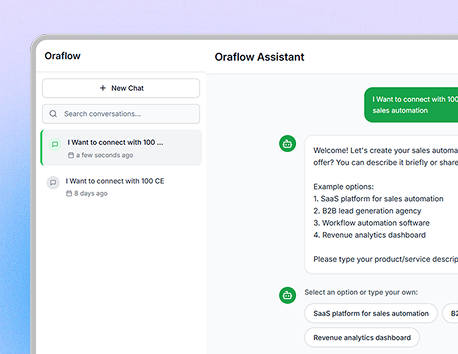
Instead of managing multiple tools, platforms like Oppora bring everything into one flow.
You define who you want to reach and what you offer.
Then the system handles lead discovery, personalization, outreach, and even replies.
What makes it different is that emails are not just templates being reused.
Each message is generated uniquely, which keeps your outreach from feeling repetitive or automated.
It also takes care of things like email deliverability, inbox rotation, and reply handling, so you don’t burn your domain while scaling.
The result is simple.
You keep the quality of personalized outreach while operating at a much larger scale without manual effort.
Partnership outreach is not about sending more emails.
It’s about sending better ones.
If your message feels relevant, clear, and valuable, people will respond.
Use these templates as a starting point, but always adapt them to your voice and audience.
And as you grow, focus on building systems that help you scale without losing what makes your outreach work in the first place.
Your partnership email should ideally stay under 120–150 words. The goal is to make it quick to read and easy to respond to without overwhelming the recipient.
Weekdays, especially Tuesday to Thursday mornings, tend to perform best. But more important than timing is relevance and personalization, which matter more for replies.
You can send 2–3 follow-ups spaced a few days apart. If there’s still no response after that, it’s better to move on instead of over-persisting.
You can reuse the structure, but not the exact message. Each email should feel tailored, even if it’s built from the same base template.
Summarize with AI
Share