Home
Blog
Find & Send Cold Emails to 500 Unique Prospects Every Month for FREE.
Home
Blog
Stephen Parker
Published February 10, 2026
12 min
Try Oppora AI
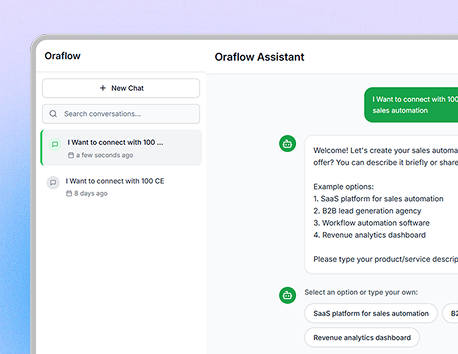
Create Self-Running Agentic Sales Workflows like N8N just by chatting with AI
Get Started for FREE
The 2026 sales landscape has officially outpaced manual effort. Statistics show sales teams waste 72% of their time on non-selling activities like lead research.
This "human bottleneck" caps growth and fuels team burnout. Enter the ai prospecting agent: a transformative digital workforce.
These autonomous systems shift the discovery burden away from your team. They promise more booked meetings with significantly less busywork.
In this guide, learn how to leverage these agents to reclaim your time. Build a self-scaling pipeline in today's high-stakes market.
An ai prospecting agent is an autonomous system that finds, qualifies, and engages leads without human intervention. It uses reasoning to navigate the discovery lifecycle, moving beyond the manual clicks of traditional tools.
Sales technology has moved from static databases to agentic AI that "drives" the discovery process. Modern agents don't just provide data; they actively work to book demos.
The primary difference between an assistant and an agent is autonomy. Agents observe goals, plan paths, and execute tasks independently using internal logic.
Generally, these systems fall into three categories:
In 2026, businesses adopt agents because manual prospecting costs now often exceed the ROI. This allows humans to focus on closing while AI manages the repetitive discovery loop.
The intelligence of an ai agent for prospecting is rooted in Natural Language Processing (NLP) for human-like outreach and Machine Learning for continuous pattern recognition. These systems learn which personas and hooks convert best over time.
They leverage intent data and deep firmographic enrichment to ensure you aren't just reaching people, but reaching people who are in a "buying window." Predictive lead scoring then prioritizes these prospects based on their likelihood to close.
The standard agentic workflow follows a high-velocity cycle:
The true power of this technology lies in the collaborative nature of multiple agents working together to execute these complex tasks.
Selecting an AI prospecting agent is no longer just about buying a tool; it is about choosing the digital foundation of your growth engine. The following ten agents represent the elite tier of autonomous discovery, each vetted for their ability to eliminate manual bottlenecks and drive predictable revenue in 2026.
While many platforms claim to be "agentic," the following leaders are categorized by their specific architectural strengths and operational focus.
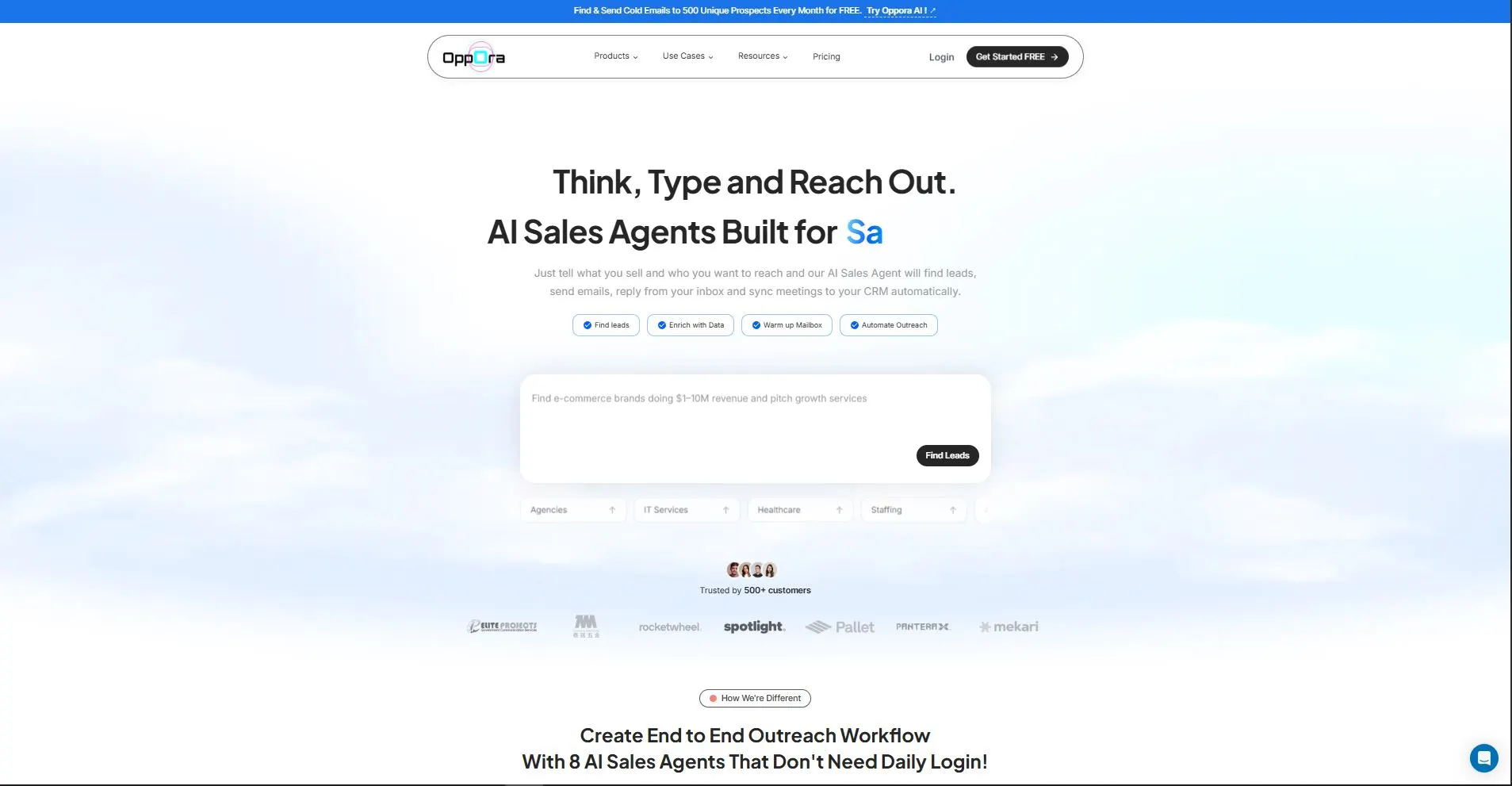
Oppora.ai is an AI-powered outreach platform and the industry’s first unified hub featuring interconnected AI agents. These agents collaborate to build and execute end-to-end Workflows like n8n that replace the need for a fragmented sales stack.
Through the Ask ORA interface, users can issue natural-language commands to plan and launch sophisticated prospecting loops. The system doesn't just automate tasks; it reasons through the discovery and engagement process to ensure every lead is qualified and every reply is handled.
Best for full-cycle agentic orchestration that combines lead discovery, data enrichment, and autonomous reply handling in one loop.
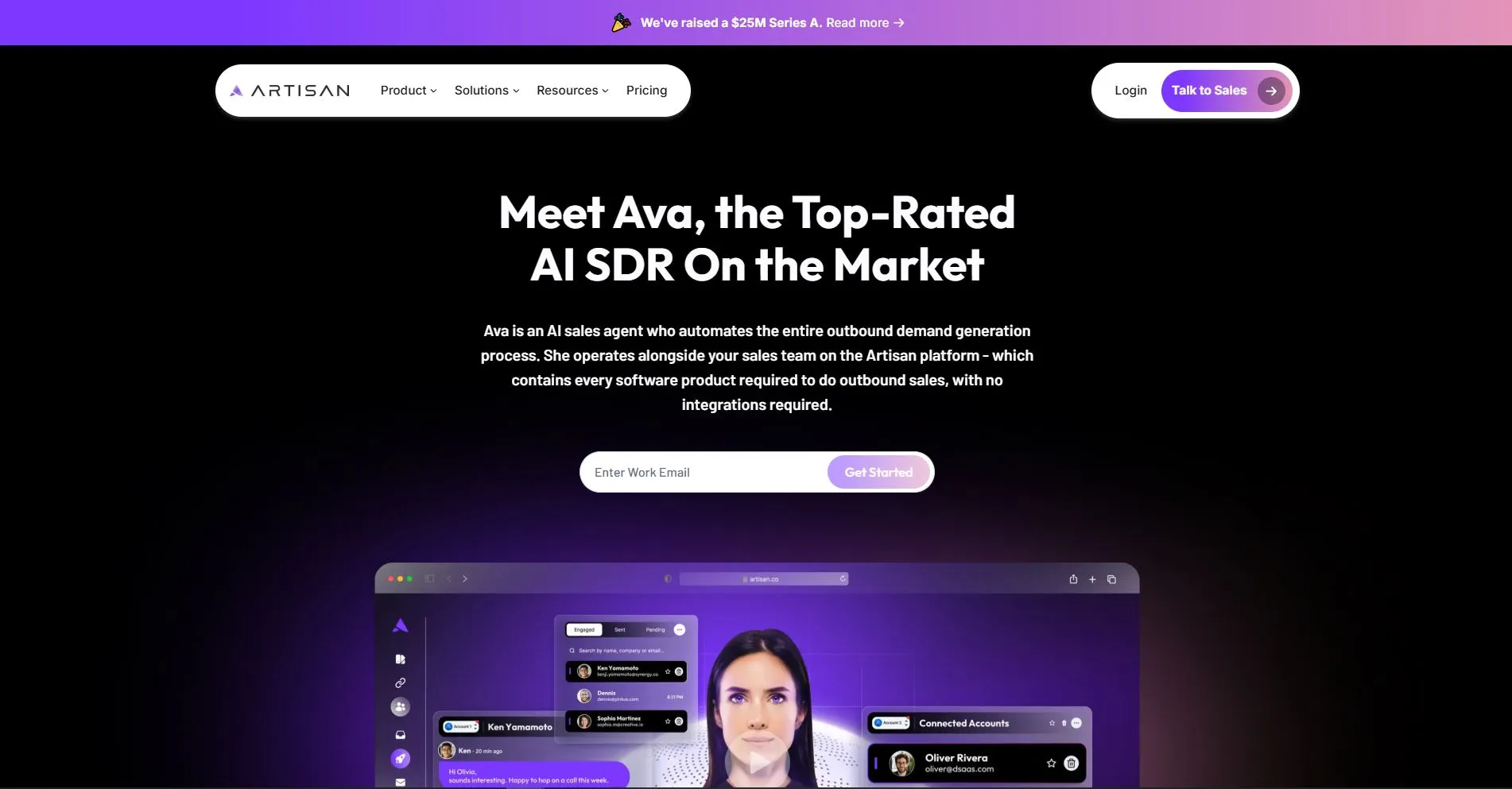
Artisan provides "Ava," a digital SDR that handles the prospecting lifecycle with minimal human oversight. Ava is designed to act as a digital teammate that researches leads and writes personalized copy that mimics a human hire.
Best for human-like persona research and simulating the daily activity of a digital sales worker.
Custom pricing based on team size and needs.
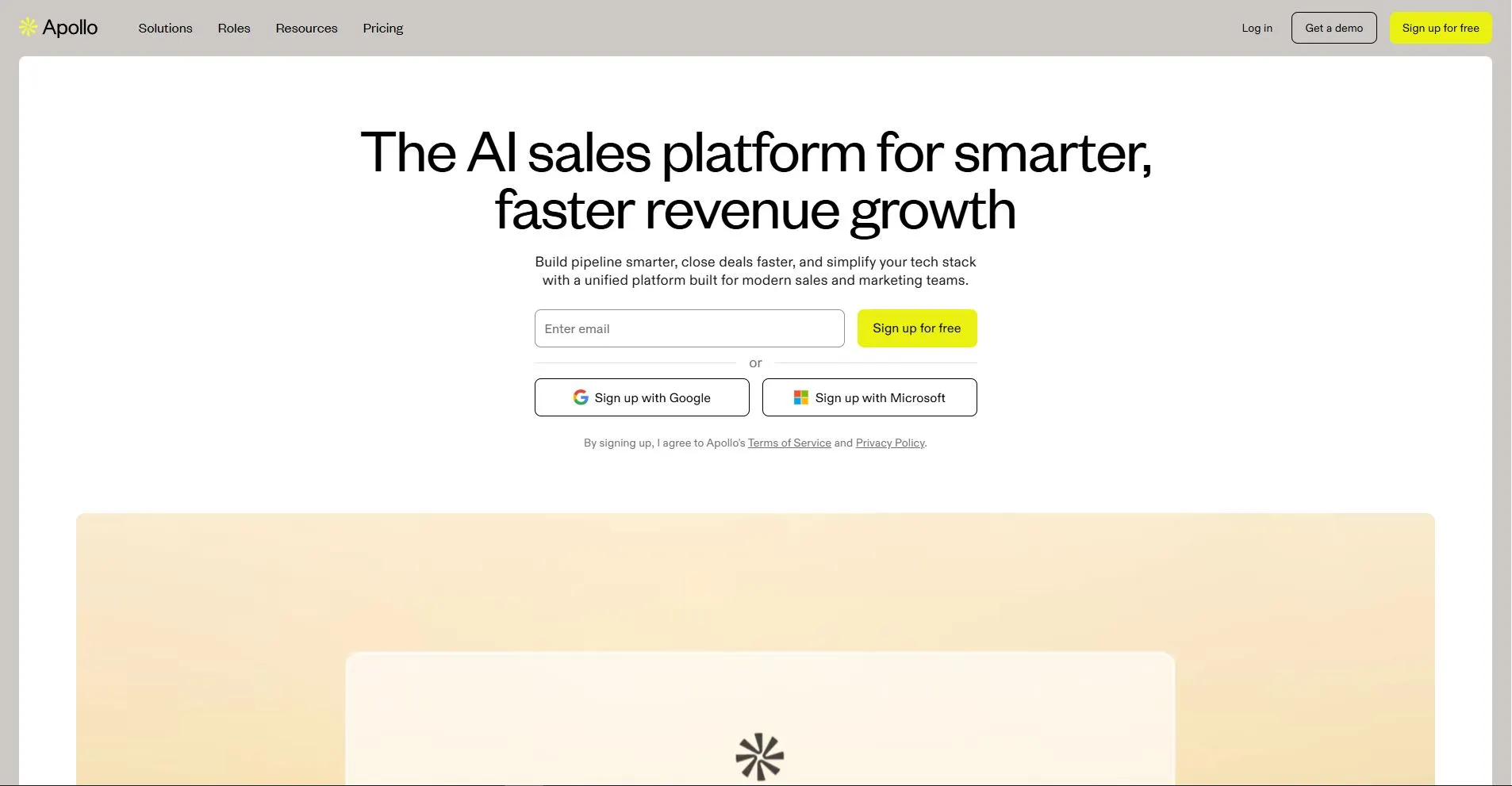
Apollo.io is a widely adopted sales platform that combines a massive database with a basic engagement layer. It is the go-to choice for teams needing high-volume data and simple, manual-led sequencing.
Best for accessing many static lead databases and managing manual, task-led sales sequences.
Free plan available; paid plans from $49/user/month.
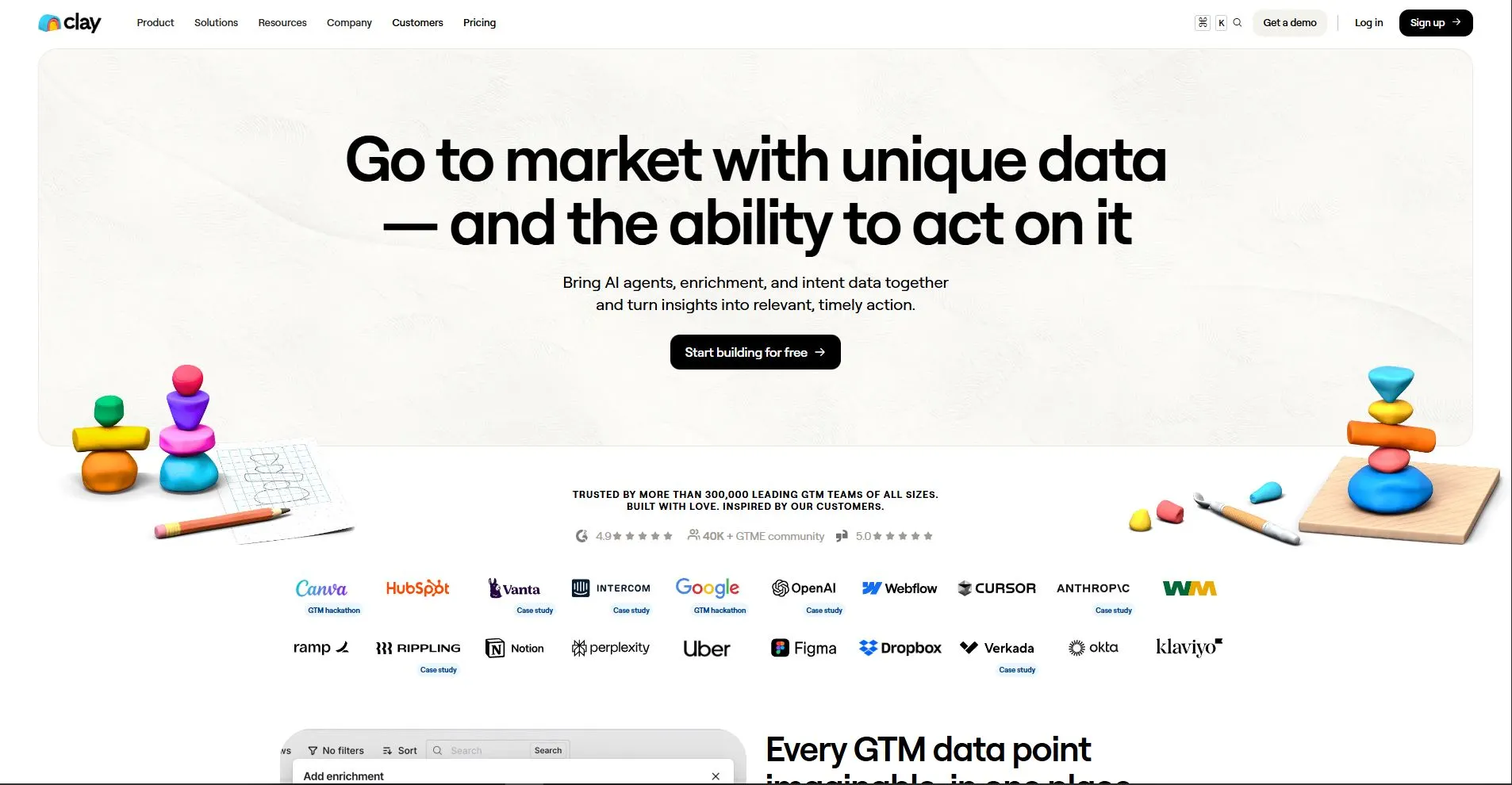
Clay is a data orchestration tool that uses a spreadsheet-like interface to build complex, multi-provider enrichment workflows. It is designed for "builders" who want extreme data depth through layered logic.
Best for building complex waterfall enrichment loops and multi-provider data workflows.
Starting at $149/month for the Creator plan.
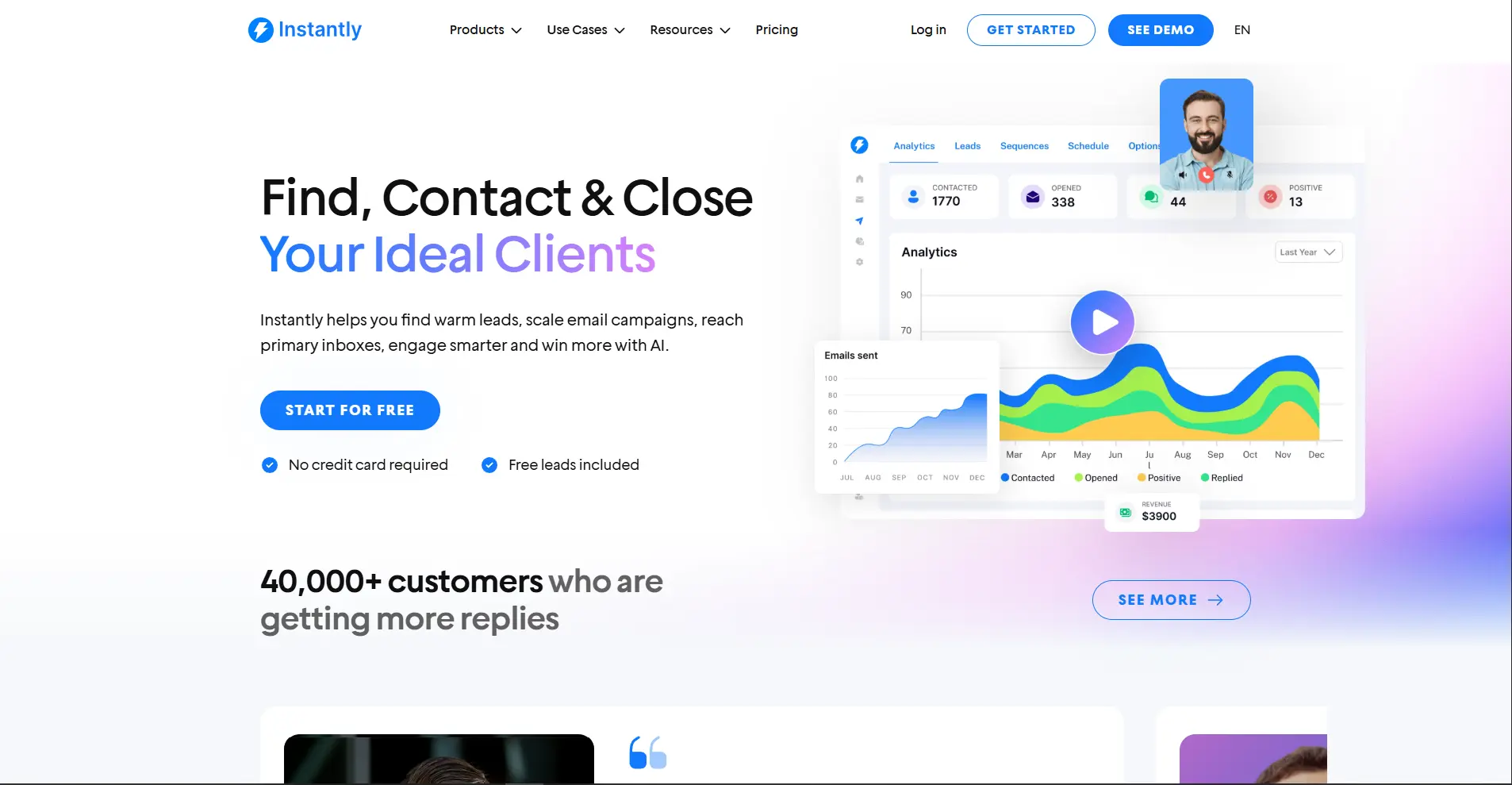
Instantly focuses primarily on high-volume cold email outreach. It is known for its unlimited account structure and its focus on maintaining a high domain reputation through horizontal mailbox scaling.
Best for high-volume cold email sending only, combined with robust mailbox rotation.
Starting at $37/month.
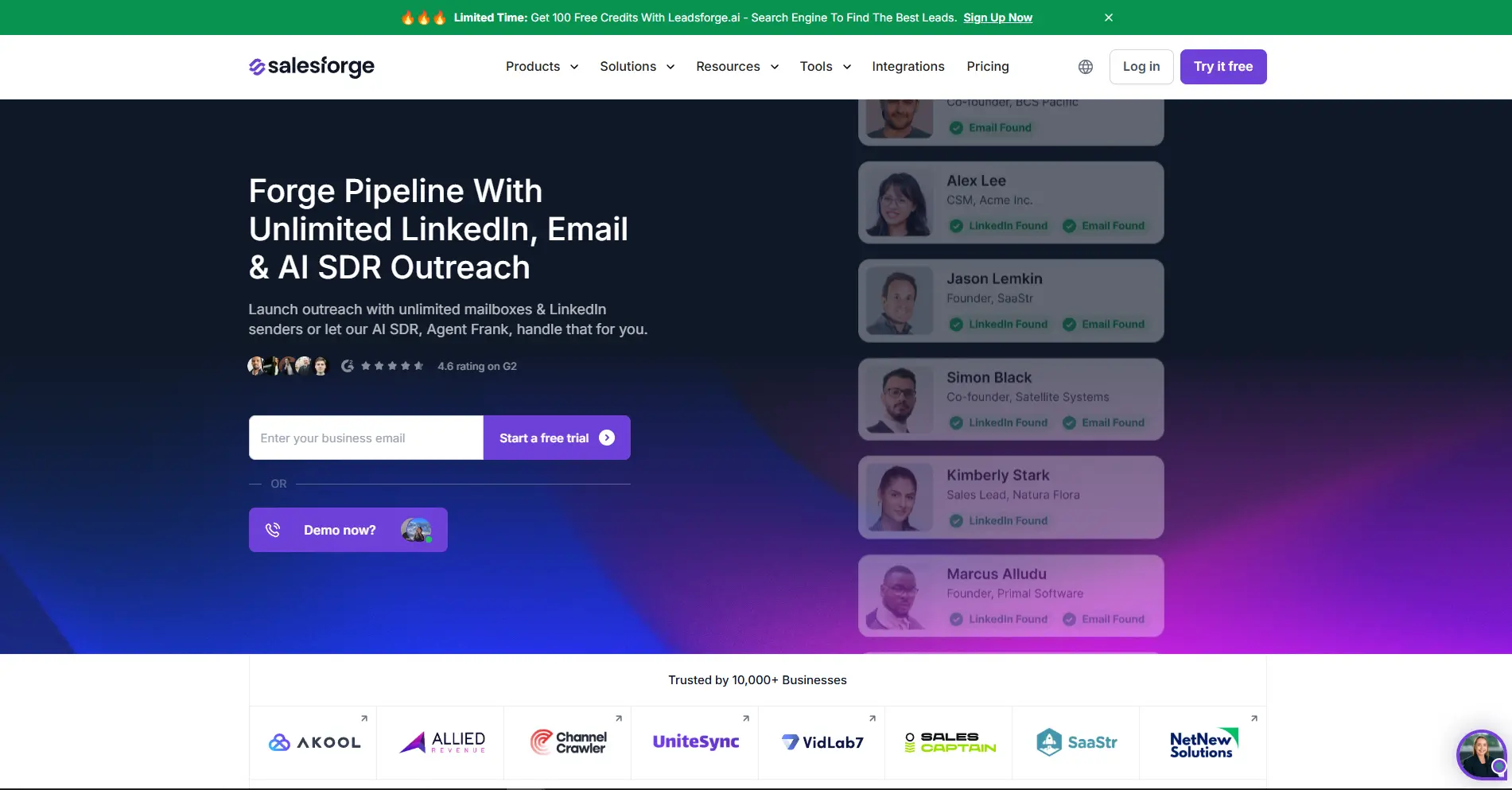
Salesforge utilizes "Agent Frank" to manage the end-to-end prospecting cycle. It is an agentic platform that prioritizes multi-language support and built-in mailbox infrastructure for global teams.
Best for teams wanting fully autonomous prospecting across multiple international markets.
Starting at $98/month.
Seamless.AI is a real-time search engine that crawls the web to find current contact information. It is heavily utilized by reps who need direct-dial mobile data to bypass corporate gatekeepers.
Best for real-time contact extraction and finding verified direct-dial mobile data.
Custom pricing, typically starting around $125/user/month.
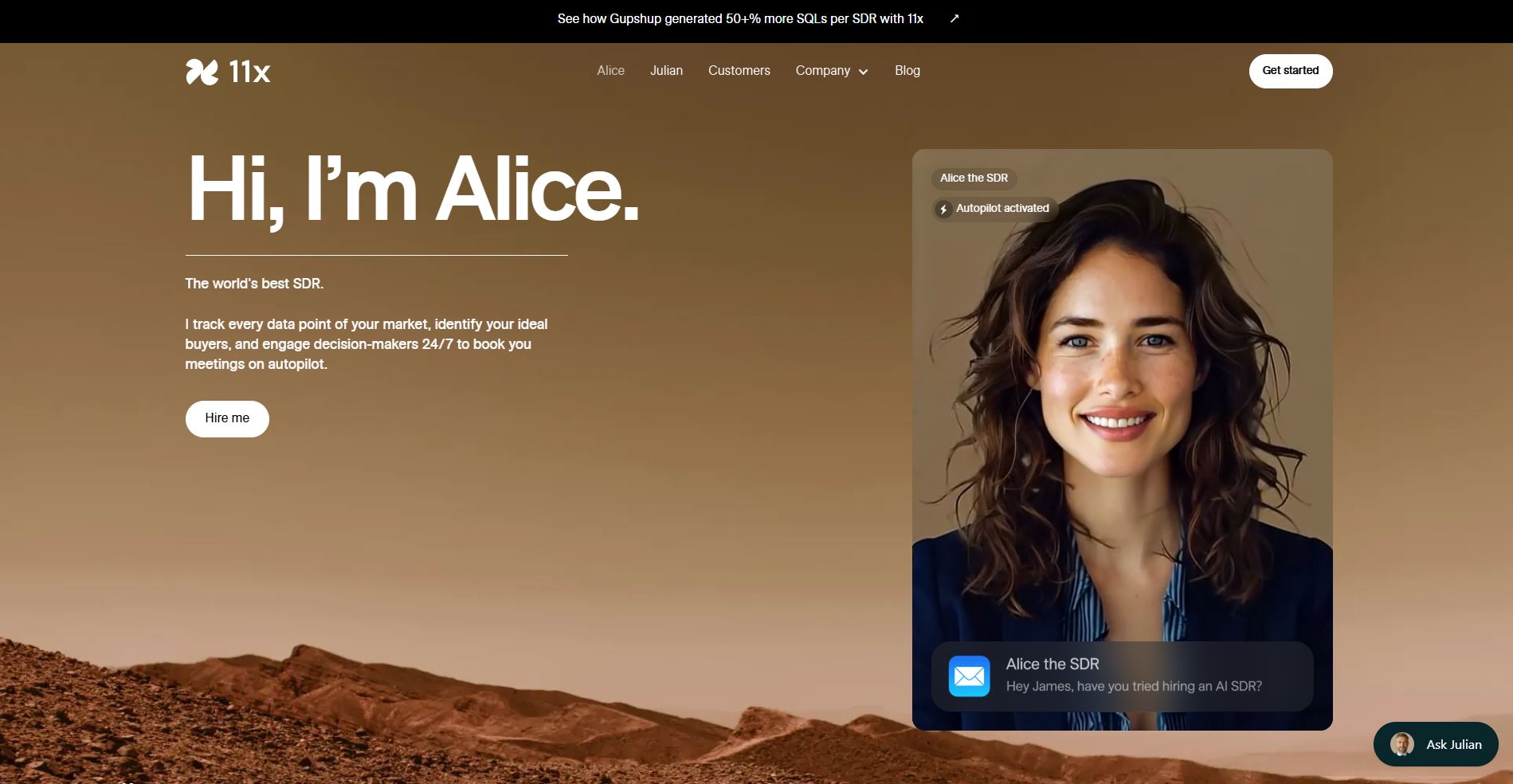
11x provides "Alice," an AI SDR that is unique for its ability to manage both inbound lead follow-up and outbound discovery in a single, agentic interface.
Best for companies wanting one agentic system to handle both inbound traffic and outbound discovery.
Custom pricing based on needs.
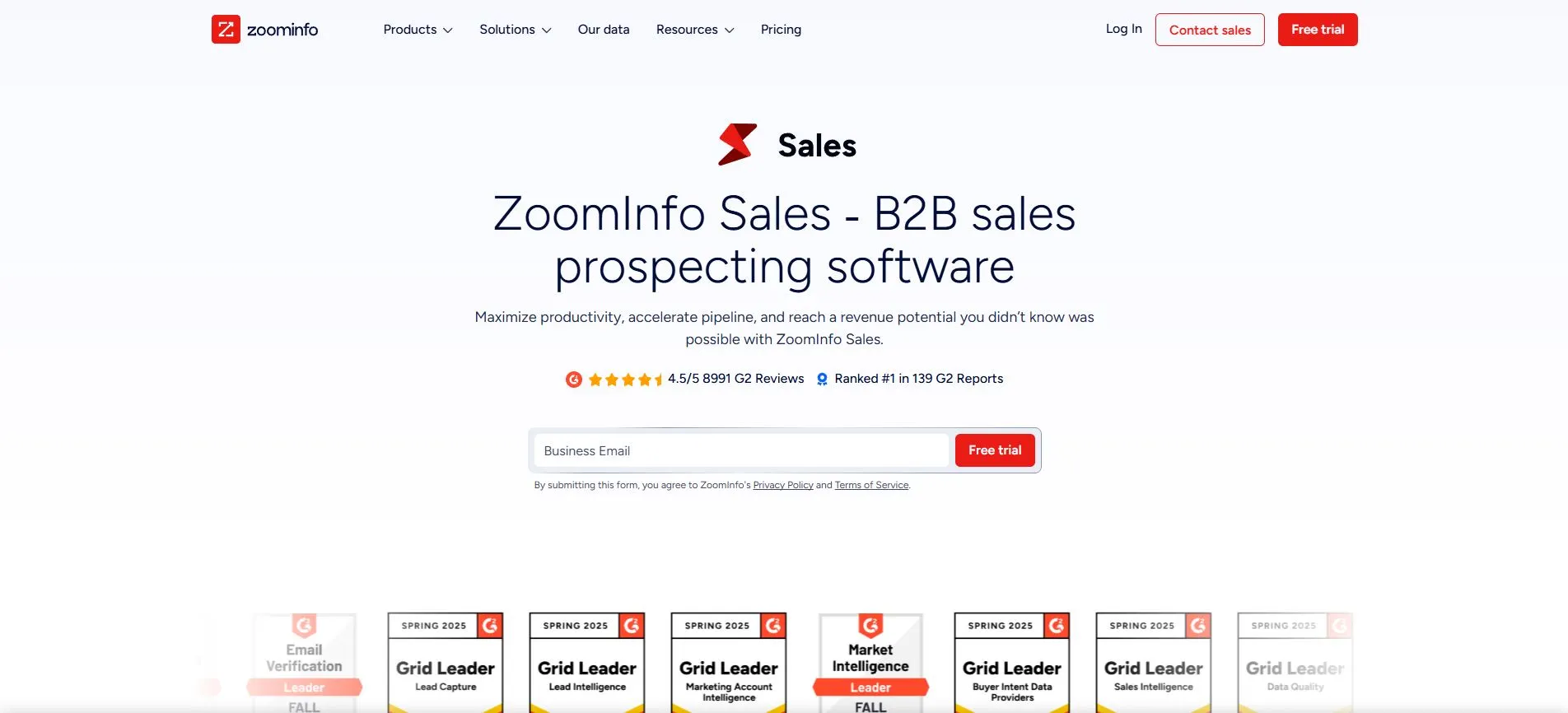
ZoomInfo is the legacy leader in B2B data accuracy, providing premium intelligence and buying signals for large-scale enterprise sales floors.
Best for enterprise teams requiring comprehensive data coverage, intent signals, and compliance.
Custom enterprise pricing, typically starting at $15k+ annually.
Choosing the right platform depends on your specific operational goals, but a visual comparison helps clarify the landscape.
Choosing the right system requires a direct side-by-side comparison of data depth, cost, and functional autonomy. This table provides a high-level snapshot of how each agent stacks up across the core metrics that define sales performance in 2026.
Use this summary to quickly identify which platform aligns with your current database requirements and multi-channel outreach goals.
While the tools are diverse, there are universal features that separate a standard software tool from a true prospecting agent.
To scale your discovery predictably, your system must move beyond simple scripts and adopt a strategic agentic ai architecture. This ensures your sales floor remains efficient by utilizing the following core pillars:
Selecting an agent with these pillars ensures your sales floor remains efficient, compliant, and profitable as you scale.
The shift from manual effort to autonomous discovery is the most transformative change in sales efficiency we have seen in 2026. By adopting an ai agents for prospecting, teams can finally remove the human bottleneck and focus on high-value closing.
The right tool depends on your specific workflow, but the trend is clear: agentic platforms like Oppora.ai represent the future of autonomous prospecting. They offer the only path to 10x your output without 10x-ing your headcount.
We recommend starting with free trials to test the fit before committing your budget. The evolution of sales is moving toward fully autonomous, multi-agent systems that work 24/7 to build your revenue.
Begin your AI prospecting journey today. Deploy your digital sales workforce with Oppora.ai and experience the power of truly autonomous Workflows.
A traditional prospecting tool is a passive database that requires a human to manually filter, export, and trigger emails. An ai prospecting agent is a goal-oriented system that reasons through the data. It autonomously builds its own workflows, handles objections, and manages the end-to-end conversation without needing constant human "clicks."
Yes, elite platforms like Oppora.ai are built with a "Privacy-First" architecture. They utilize publicly available business data, offer built-in "Do Not Contact" (DNC) list scrubbing, and respect unsubscribe headers automatically to ensure your brand remains compliant with global data regulations.
Rather than replacing humans, AI agents act as a force multiplier. They handle the repetitive, 72% of "non-selling" activities like data cleaning and initial outreach. This allows your human team to focus exclusively on high-value strategy and closing deals, effectively 10x-ing the output of a single rep.
Systems like Replyora use sentiment analysis to categorize replies. If a prospect raises a common objection (e.g., "too expensive"), the agent can autonomously share a relevant case study or pricing breakdown. If the reply is complex or sensitive, the agent flags it for a human to step in.
Yes, as long as the agent mimics human behavior. True agents avoid high-speed "bot" patterns. They use randomized sending gaps and social interaction simulation to ensure your LinkedIn account remains healthy while scaling your social outreach.
Summarize with AI
Share