Home
Blog
Find & Send Cold Emails to 500 Unique Prospects Every Month for FREE.
Home
Blog
Stephen Parker
Published February 18, 2026
11 min
Try Oppora AI
Create Self-Running Agentic Sales Workflows like N8N just by chatting with AI
Get Started for FREE
Predictable lead generation is what allows a B2B SaaS company to grow consistently instead of relying on random wins. When your pipeline depends on referrals or one-off campaigns, revenue becomes unpredictable.
SaaS buying decisions rarely happen after a single interaction because multiple stakeholders evaluate risk, budget, and long-term fit. That naturally creates longer sales cycles and requires structured multi-touch outreach.
To keep pipeline steady, you need a system that continuously identifies the right accounts and nurtures them across email and LinkedIn. The tools you choose determine whether this process scales smoothly or becomes operationally heavy.
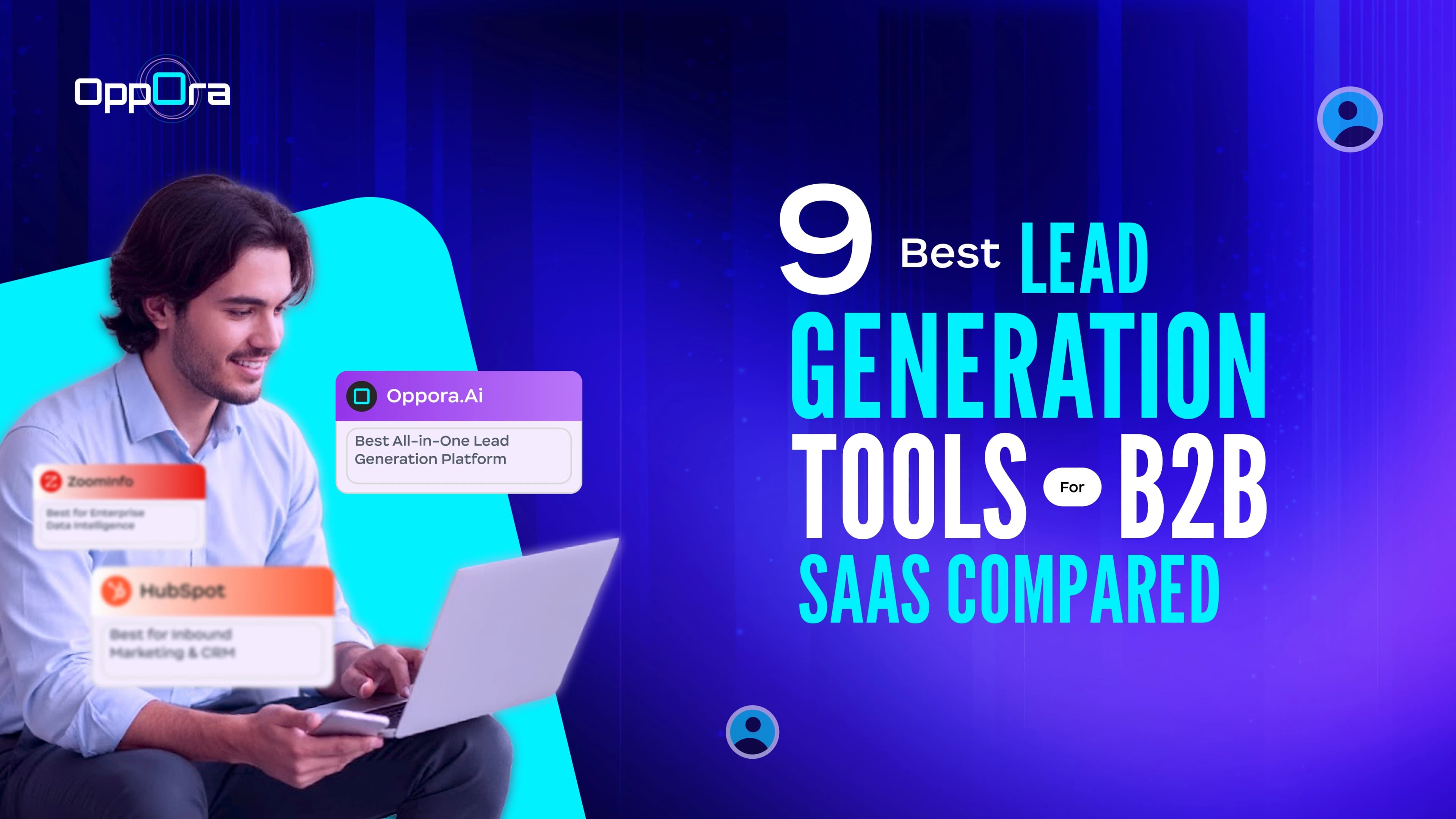
In this guide, you’ll see a clear comparison of the best lead generation tools for B2B SaaS so you can choose based on growth stage, budget, and workflow complexity.
Before comparing platforms, you need clarity on what actually drives results in B2B SaaS. Not every tool labeled “lead generation” supports complex outbound workflows and long sales cycles.
The strongest platforms combine data, automation, personalization, and infrastructure into a system that scales reliably. Here are the factors that matter most.
Everything begins with data quality because even strong outreach fails with outdated or inaccurate contact details. A reliable platform provides access to a large, frequently updated database of verified companies and decision-makers.
When your data foundation is accurate, targeting becomes sharper and campaign performance becomes predictable. Without it, pipeline suffers before outreach even starts.
In B2B SaaS, precision matters more than volume because reaching the wrong audience wastes time and budget. Advanced filtering allows you to narrow prospects by industry, company size, revenue, funding stage, tech stack, and geography.
Granular targeting keeps your outreach aligned with your ideal customer profile. That alignment directly improves response quality.
Finding an email address is not enough if the data lacks context or accuracy. Built-in enrichment adds job titles, firmographics, and company insights that improve message relevance.
Integrated verification reduces bounce rates and protects sender reputation. This keeps your campaigns stable as you scale outreach.
Scaling outbound requires automation, but automation without personalization feels robotic. Modern platforms let you build multi-step campaigns while using AI to generate natural, relevant messaging.
This balance increases volume without sacrificing quality. The result is stronger response rates without more manual work.
Email alone limits visibility in competitive SaaS markets. LinkedIn integration allows you to connect, message, and follow up inside one coordinated workflow.
When both channels work together, your outreach becomes more visible and harder to ignore. Multi-channel consistency improves engagement significantly.
Managing leads in spreadsheets becomes chaotic as the pipeline grows. Strong tools include a built-in CRM or sync seamlessly with platforms like HubSpot or Salesforce.
Clear workflow management keeps contacts, deals, and activities organized. This prevents opportunities from slipping through the cracks.
Even well-written emails fail if they land in spam. Advanced tools offer domain warm-up, inbox rotation, and infrastructure controls that protect sender reputation.
Without deliverability safeguards, scaling outbound becomes risky. Infrastructure determines whether your campaigns actually reach prospects.
Your platform should support your current stage without limiting future growth. Early-stage teams need affordable entry points, while scaling companies require flexible pricing for higher outreach volumes.
A tool that grows with you prevents costly migrations later. Scalability should feel seamless rather than restrictive
Now that you know what defines a strong platform, let’s compare the best lead generation tools for B2B SaaS. Each tool below is evaluated using the same structure so you can compare them clearly.
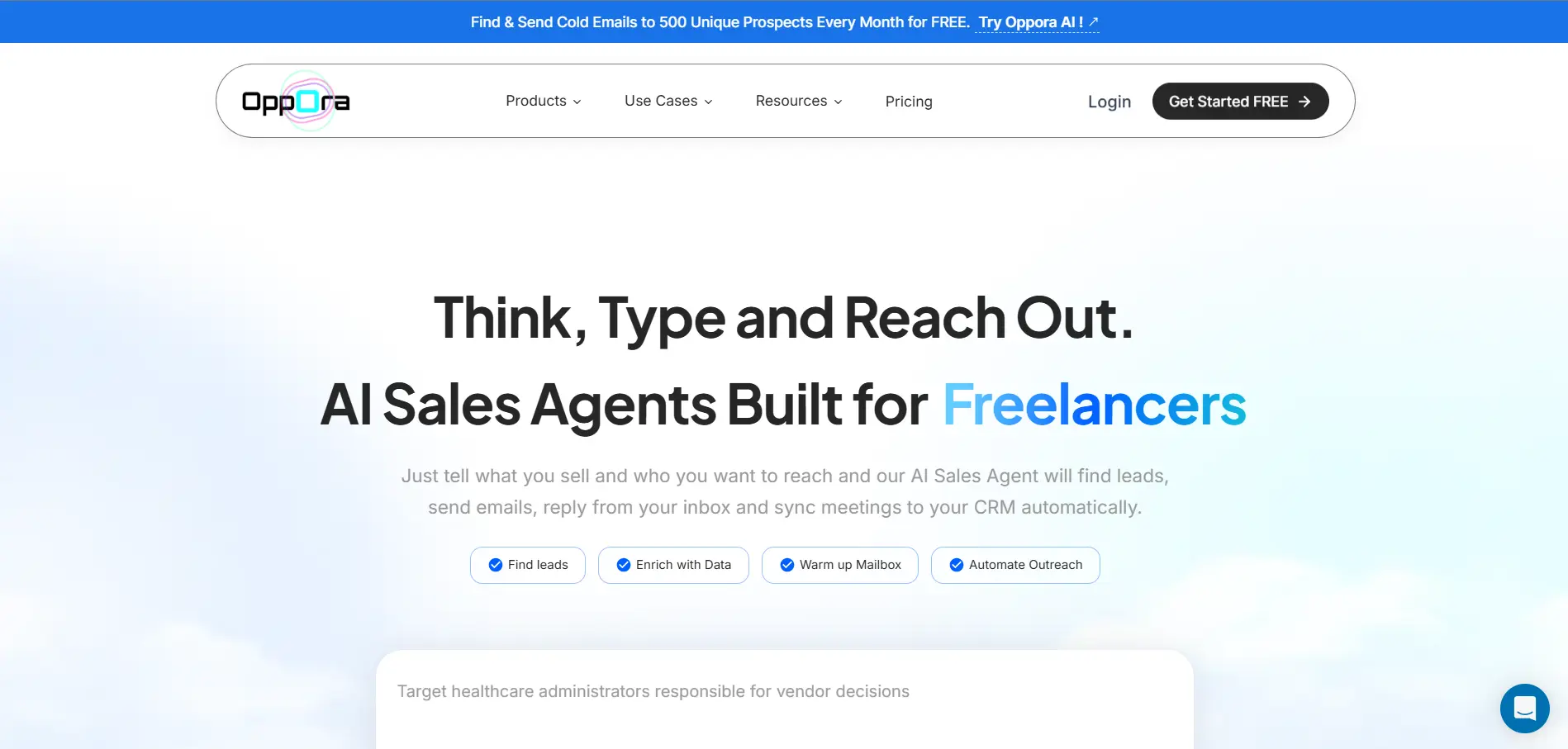
Oppora.ai is an AI-powered outbound sales platform that combines lead discovery, enrichment, personalization, outreach automation, reply management, and CRM tracking into one unified system. Instead of stitching together multiple tools, it allows B2B SaaS teams to build and run complete outbound workflows from a single dashboard.
Key features
Best forSaaS teams looking to scale outbound with a unified system instead of managing separate tools for data, outreach, CRM, and deliverability.
Pros
Limitations
Pricing
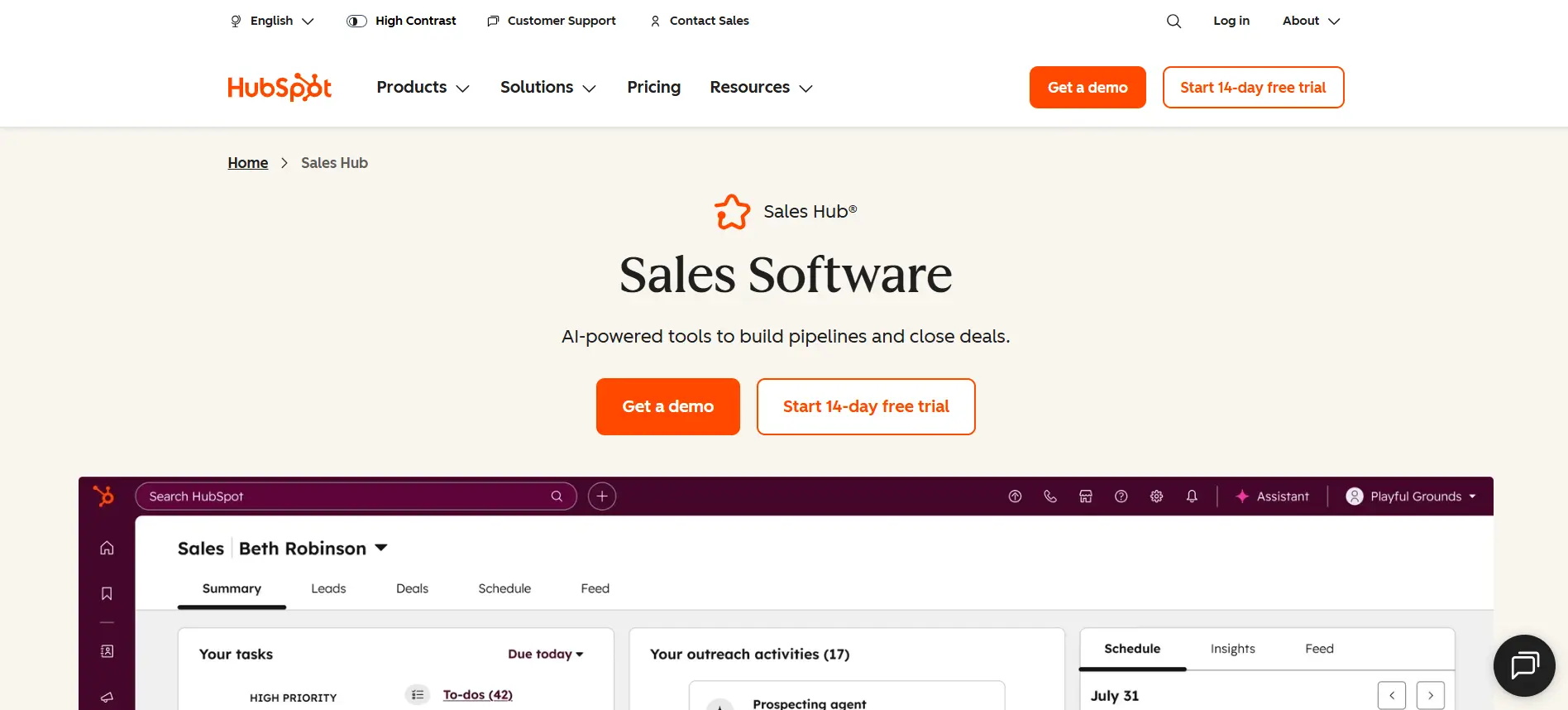
HubSpot is a marketing automation and CRM platform built primarily for inbound lead generation. It helps SaaS companies attract traffic, capture leads, nurture them through automated workflows, and track deals through the sales pipeline.
Key features
Best forSaaS companies focused heavily on content marketing and inbound acquisition strategies.
Pros
Limitations
Pricing
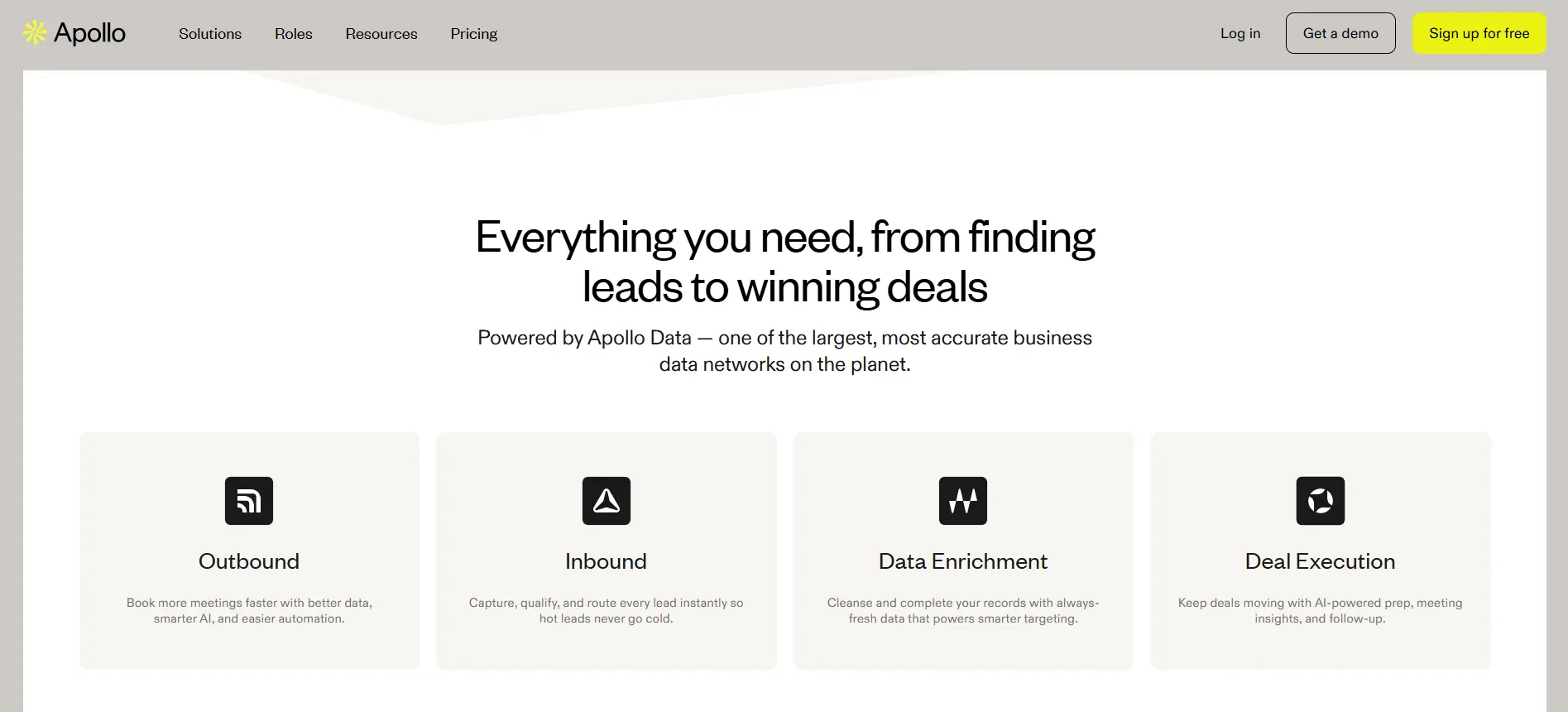
Apollo.io combines a B2B contact database with outbound email sequencing tools, allowing sales teams to both find and engage prospects from a single platform.
Key features
Best for Startups and growing SDR teams that need an affordable outbound prospecting tool.
Pros
Limitations
Pricing
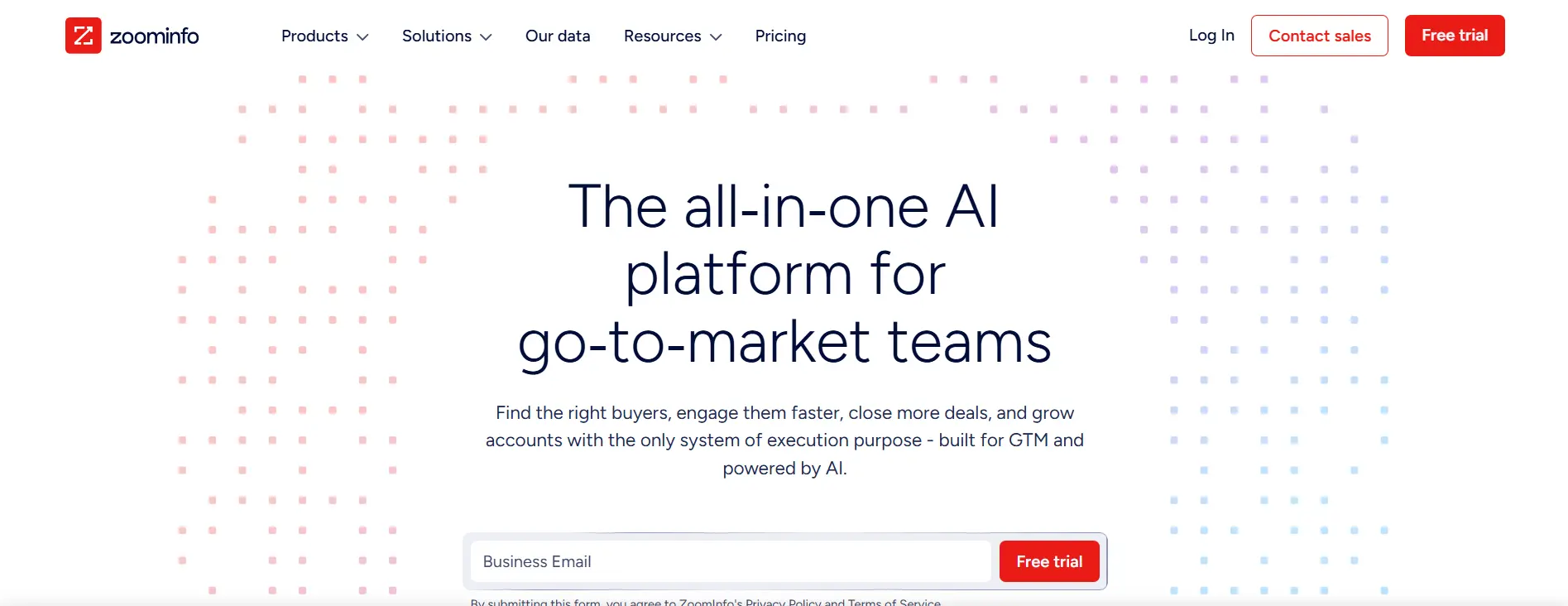
ZoomInfo is an enterprise-grade B2B data intelligence platform that provides large-scale contact data and intent signals to support complex sales operations.
Key features
Best for Enterprise SaaS companies managing large sales teams and complex territories.
Pros
Limitations
Pricing
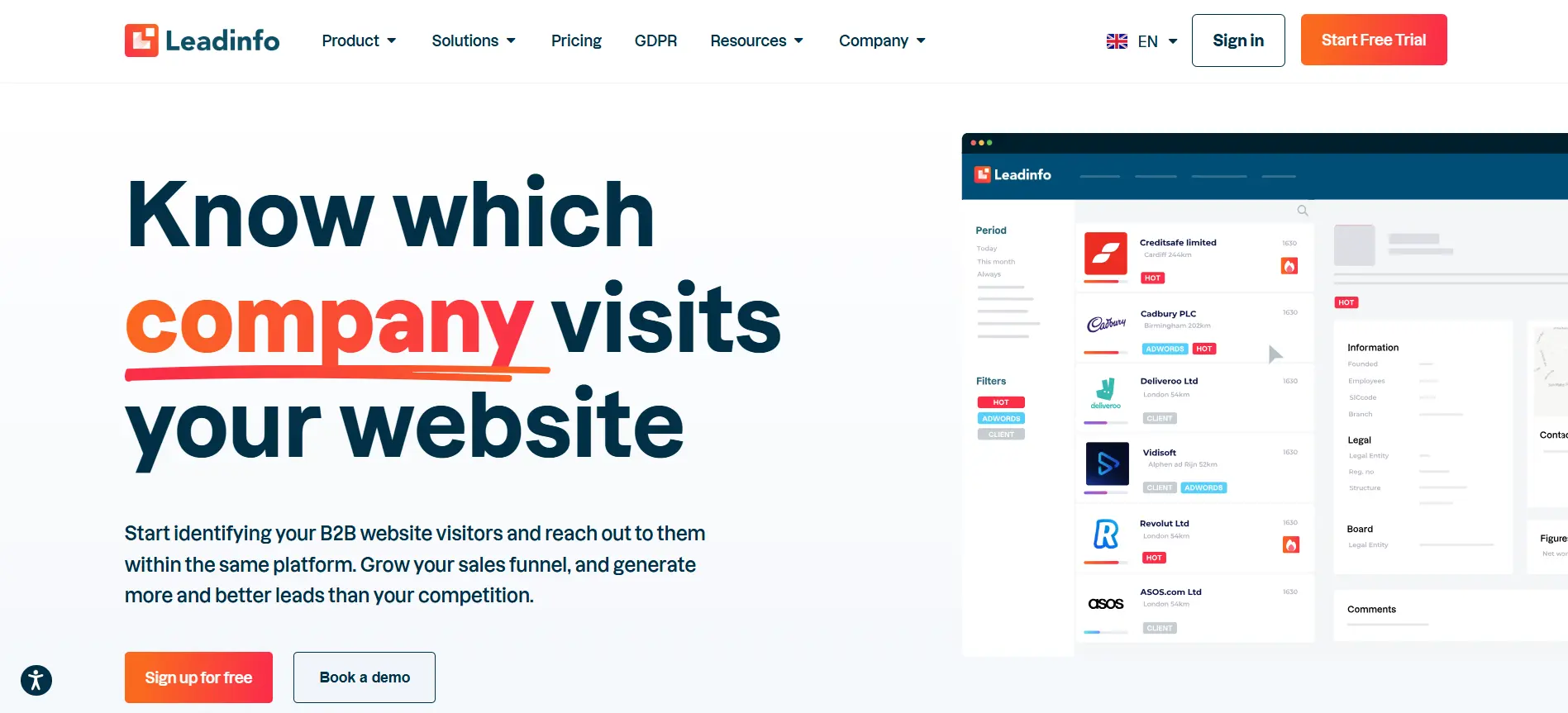
Leadinfo identifies companies that visit your website, even if they do not submit a form or request a demo. It helps sales teams uncover warm accounts that are already researching your product.
Key features
Best for SaaS companies generating steady inbound traffic and wanting to prioritize high-intent accounts.
Pros
Limitations
Pricing
Clearbit is a data enrichment platform that enhances existing contact and company records with deeper intelligence. It focuses on improving data accuracy rather than running outbound campaigns.
Key features
Best for Teams that already generate leads but need better data depth and segmentation accuracy.
Pros
Limitations
Pricing
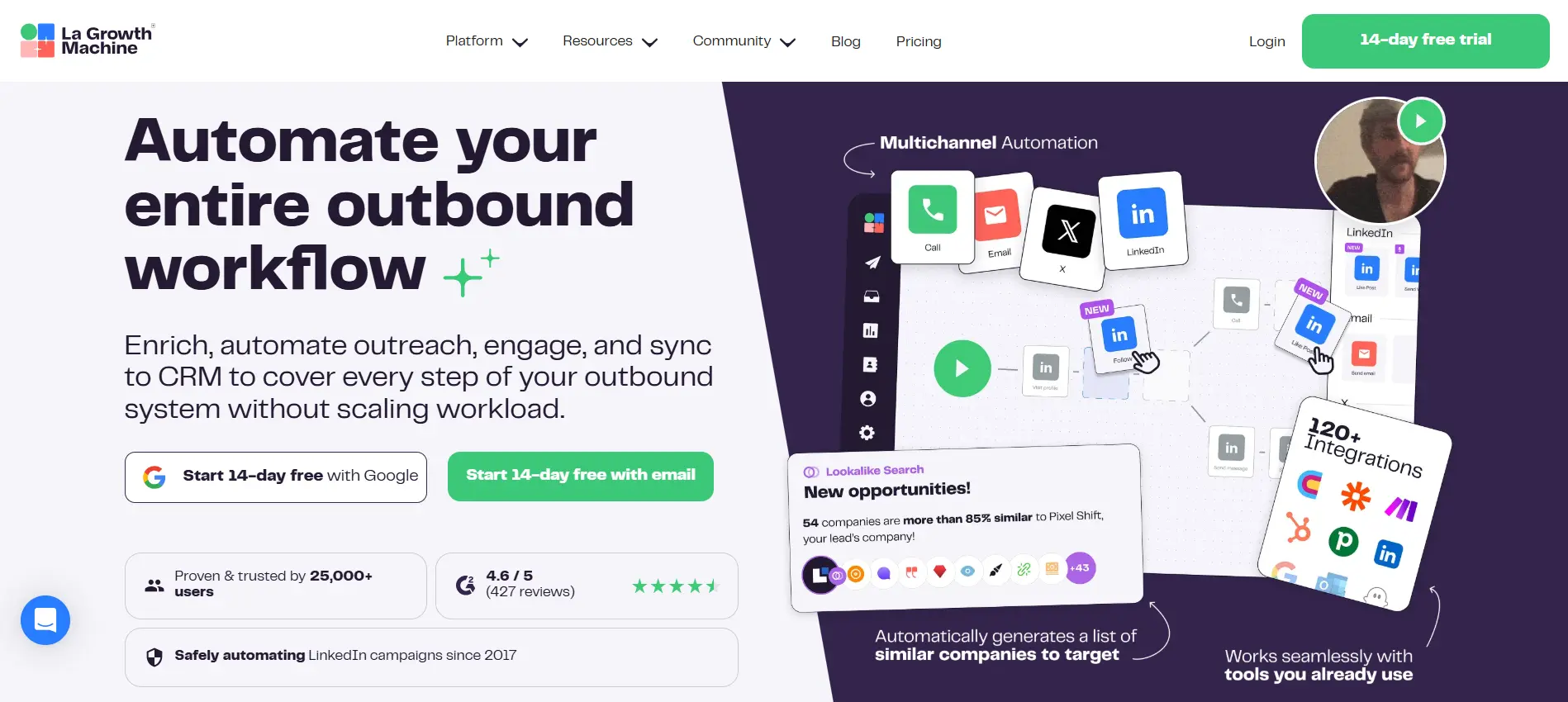
La Growth Machine is a multichannel automation tool that coordinates LinkedIn and email outreach inside structured outbound workflows.
Key features
Best for Outbound-focused SaaS teams and agencies running coordinated multichannel campaigns.
Pros
Limitations
Pricing
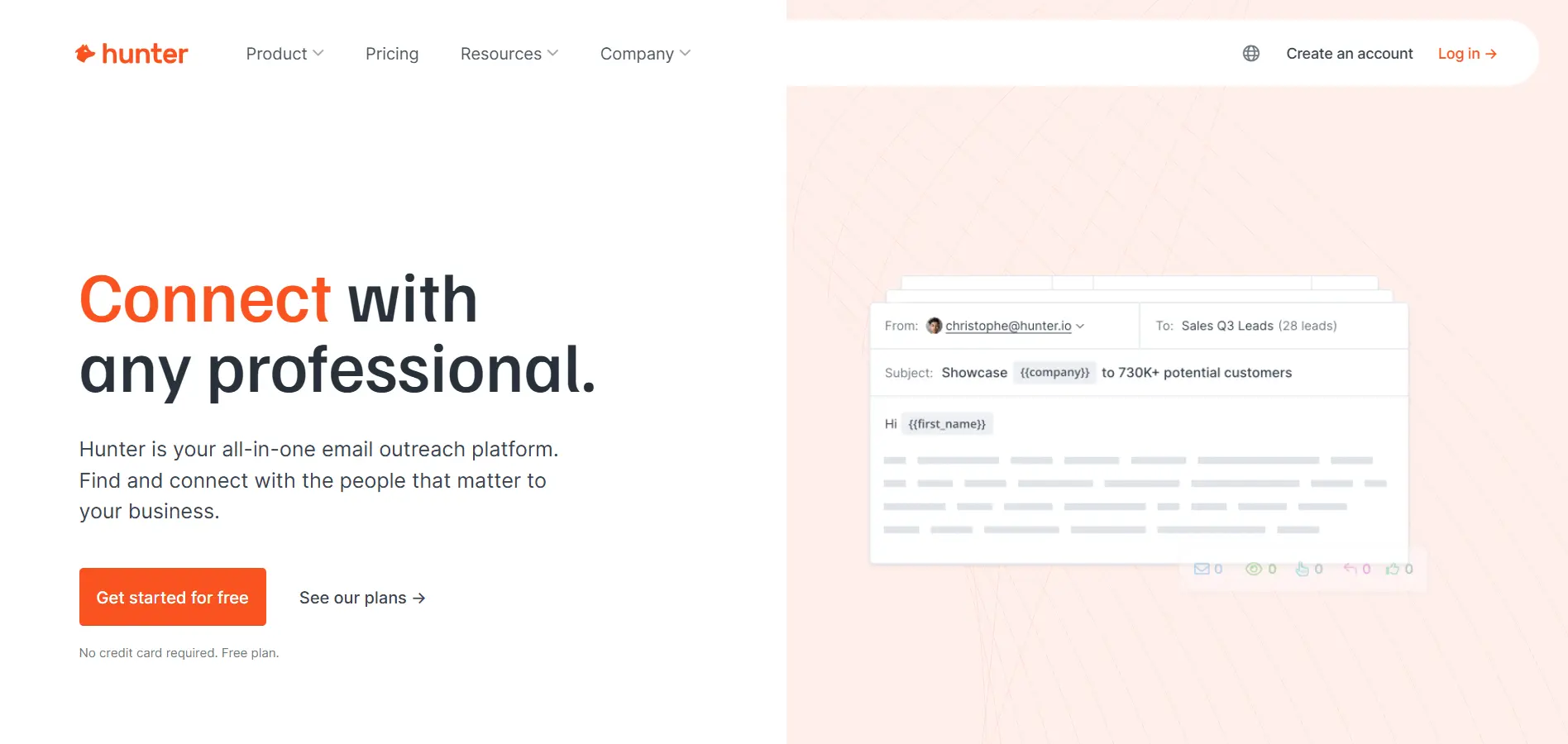
Hunter.io is an email discovery and verification tool that helps teams find professional email addresses associated with company domains.
Key features
Best for Founders and small SaaS teams running manual or semi-automated email outreach.
Pros
Limitations
Pricing
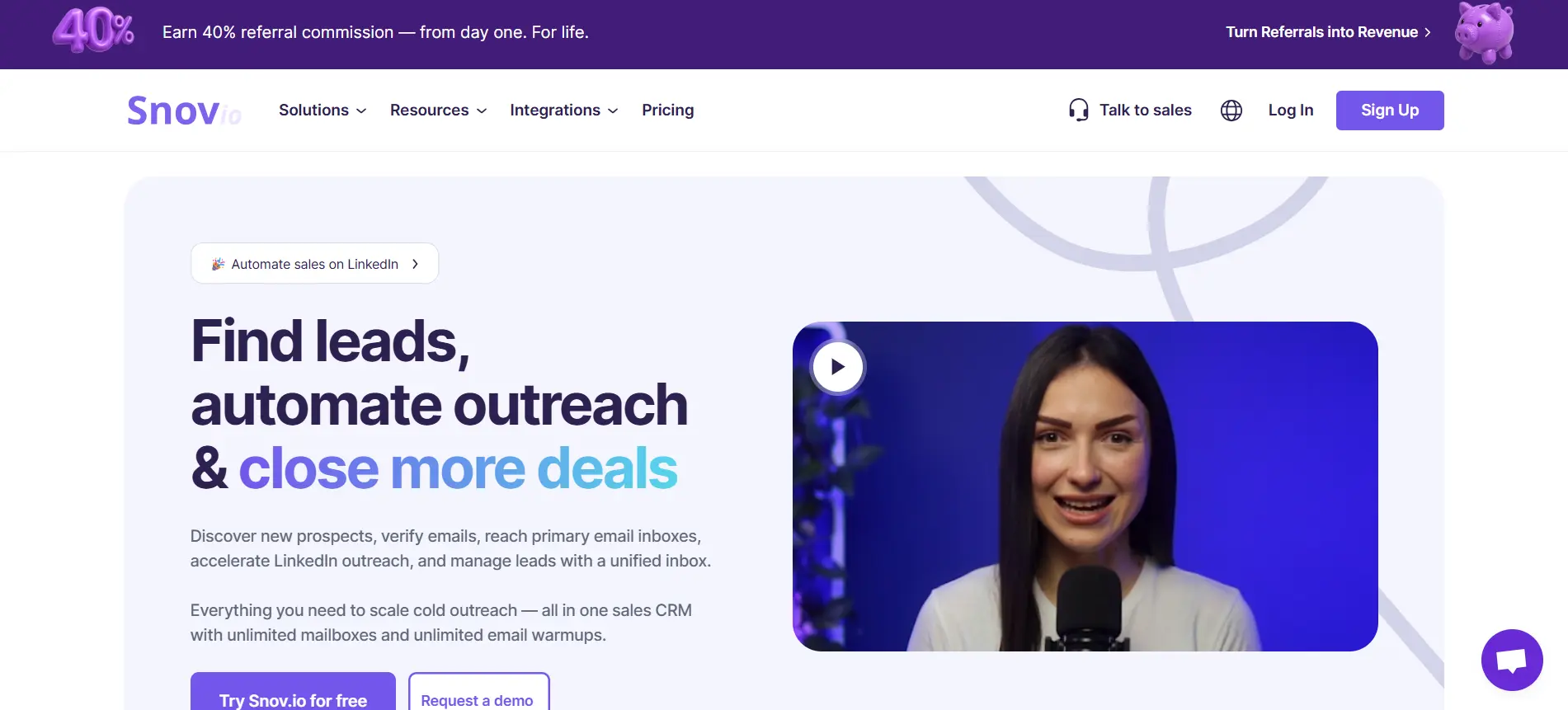
Snov.io is an affordable outbound toolkit combining email discovery, verification, and basic drip campaign automation.
Key features
Best for Early-stage SaaS startups testing outbound without enterprise-level budgets.
Pros
Limitations
Pricing
The right lead generation tool depends on your growth stage, not just its features. What works for an early startup may slow down a scaling team.
Your sales complexity, outreach volume, and internal bandwidth should guide your choice. Here’s how to decide based on where you are today.
If you’re still validating your offer, keep your stack simple and affordable. Tools like Apollo.io, Hunter.io, or Snov.io help you test outbound without heavy investment.
At this stage, you mainly need a usable database and basic sequencing. Overloading your stack too early creates cost and confusion.
Once you’ve found product-market fit, scale becomes the priority. You need better targeting, multichannel workflows, and stronger deliverability control.
Disconnected tools start slowing your team down. Platforms that combine database access with automation become much more valuable.
If your growth depends on content and SEO, inbound tools make more sense. Platforms like HubSpot or Drift help you capture and nurture warm traffic.
Here, lifecycle visibility matters more than cold outreach volume. Your focus shifts toward converting existing interest.
Enterprise sales requires deeper data and account-level visibility. Tools like ZoomInfo provide intent signals and advanced segmentation.
Large teams also need territory planning and tight CRM integration. Operational depth matters more than entry-level pricing.
As outbound grows, managing separate tools for database, enrichment, LinkedIn, outreach, CRM, and deliverability becomes inefficient. Complexity increases while visibility drops.
If you need a large Lead Finder database, built-in enrichment, LinkedIn prospecting, outreach automation, AI personalization, CRM tracking, and deliverability control in one place, a unified platform like Oppora.ai simplifies scaling. One connected workflow replaces a scattered stack.
Choosing the best lead generation tools for B2B SaaS depends on how you build pipeline. Different tools support different growth models.
Some focus on inbound capture, while others specialize in outbound prospecting or enterprise data. The key is choosing what fits your sales motion.
Real results come from aligning your database, automation, and workflow. When these pieces work together, outreach becomes predictable.
As you scale, managing separate tools for data, enrichment, CRM, and deliverability becomes heavy. A structured evaluation based on your growth stage helps you avoid unnecessary complexity.
If you’re looking to simplify your outbound stack and run everything from one system, it may be worth exploring how Oppora.ai fits into your workflow. The right platform should support steady pipeline growth without adding operational friction.
Early-stage startups should prioritize affordable and easy-to-use tools like Apollo.io, Hunter.io, or Snov.io to test outbound without heavy investment. If you need a more structured outbound system from the start, an all-in-one platform can reduce future stack complexity.
Many SaaS teams begin with separate tools for LinkedIn and email outreach, which works in the early stages. As outreach scales, managing disconnected systems becomes inefficient, and unified platforms help simplify execution and reporting.
Entry-level lead generation tools usually start between $39 and $49 per month, while enterprise platforms require custom pricing. Costs increase when multiple tools are combined, so evaluating the total stack expense is more important than comparing single subscriptions.
AI-powered tools help scale personalization and automate repetitive tasks, improving efficiency and response rates. However, their effectiveness still depends on accurate data and strong targeting strategy.
A CRM is designed to manage contacts and track deals, not to discover new prospects. Most B2B SaaS companies need dedicated lead generation tools alongside a CRM to consistently build pipeline.
Summarize with AI
Share