Home
Blog
Find 500 B2B Contacts for Free Every Month with Built-In Outreach.
Home
Blog
Stephen Parker
Published March 26, 2026
9 min
Try Oppora AI
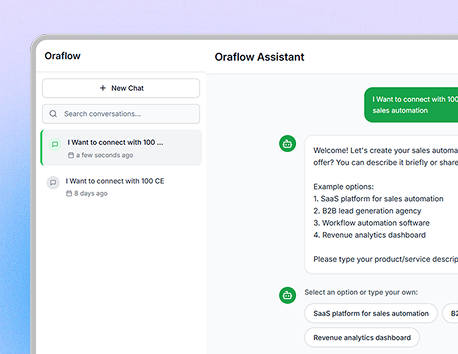
Create Self-Running Agentic Sales Workflows like N8N just by chatting with AI
Get Started for FREE
Most cold emails fail because they sound generic and focus too much on selling. When your message feels like it could be sent to anyone, it usually gets ignored.
The difference lies in approach, where random outreach depends on volume while a structured cold email strategy focuses on relevance. You target the right people with messages that actually match their situation.
Cold email has shifted from sending more emails to building a system that works consistently. Results now come from timing, context, and a repeatable process.
In this blog, you’ll learn how to move beyond replies and build conversations that convert. The goal is simple: turn cold outreach into real customers, not just activity.
Most teams struggle with cold outreach because they rely on outdated tactics that no longer work in today’s inbox. A strong cold email strategy focuses less on volume and more on relevance, targeting, and consistency.
Many people still believe that sending more emails will eventually bring results. This “send more emails” mindset leads to generic messaging that fails to connect with the reader.
Low reply rates are usually not a volume problem but a relevance problem. When your message doesn’t match the recipient’s context, it gets ignored no matter how many emails you send.
Scaling volume without improving quality only amplifies poor results. A modern cold email marketing strategy works by improving message fit, not just increasing output.
Even the best message will fail if it reaches the wrong audience. When your ICP is unclear, you end up sending emails to people who have no reason to respond.
Random lists may give you numbers, but they don’t give you buying intent. Targeting the right roles and companies ensures your outreach lands where it actually matters.
Poor targeting also affects deliverability over time. If your emails get ignored repeatedly, inbox providers start treating your messages as low value.
Many teams run one-off campaigns without a clear structure. This leads to inconsistent results because there is no repeatable process behind the outreach.
A successful cold email approach connects targeting, messaging, and follow-ups into one system. Each part supports the other instead of working in isolation.
Top teams treat cold email as a system, not a one-time effort. That’s what allows them to generate predictable results instead of relying on guesswork.
A strong cold email outreach strategy is not just about writing emails, but about building multiple layers that work together. When each layer is aligned, your outreach becomes more predictable and effective.
Everything starts with defining a clear ideal customer profile based on industry, size, and specific problems. When you know exactly who you want, your outreach becomes more focused and relevant.
Your message should focus on the problem first, not your product or features. When you speak in terms of the prospect’s challenges, your email feels more relevant.
Even the best email fails if it never reaches the inbox. That’s why inbox placement plays a critical role in any cold email strategy.
Improvement comes from tracking the right metrics like replies instead of just opens. Replies show real interest, while opens can often be misleading.
Now that you understand the core components, the next step is applying them in real scenarios. A strong cold email strategy is built through consistent actions that connect targeting, messaging, and execution.
Below are nine proven approaches that define the best cold email strategy used by top-performing teams today.
Everything starts with who you reach out to, not what you send. If your lead source lacks intent, even great messaging won’t convert.
Buying signals help you identify prospects who are more likely to respond. These signals indicate that a company is actively solving a problem.
Once you identify signals, refine your targeting further to improve relevance. This ensures your outreach connects with the right decision-makers.
Relevance is what separates ignored emails from meaningful conversations. It ensures your message feels timely and worth reading.
Your email should focus on the prospect’s situation, not your features. When you lead with problems, your message feels more relatable.
Most emails fail because they try to personalize everything without adding value. One strong insight is more effective than multiple generic lines.
Clarity drives responses, while complexity creates confusion. A simple structure helps your message get understood quickly.
A clear structure makes your email easier to read and act on. It ensures every part of your message has a purpose.
Your call to action should invite a response, not pressure one. A softer tone increases the chances of engagement.
Cold email works through consistency, not single attempts. Sequences help you stay visible without being intrusive.
Most responses don’t come from the first email. Follow-ups remind prospects and increase your chances of getting noticed.
A structured sequence improves engagement over time. Each step should feel intentional and not repetitive.
Before increasing volume, ensure your emails actually reach the inbox. Deliverability is the foundation of every campaign.
Your technical setup directly impacts your results. Without it, even great emails will fail.
Consistent and natural sending behavior improves inbox placement. Sudden spikes can harm your reputation.
Automation helps you scale faster, but only when used correctly. A good cold email marketing strategy balances automation with human relevance.
Not everything should be automated. Focus on tasks that save time without affecting quality.
Over-automation often leads to generic messaging. This reduces the effectiveness of your campaigns.
Data helps you understand what works and what doesn’t. Without it, you rely on guesswork instead of insights.
Not all metrics are useful for decision-making. Focus on outcomes that reflect real engagement.
Testing helps you refine your strategy over time. Small changes can lead to significant improvements.
Timing plays a key role in how your emails are received. Even a strong message can fail if sent at the wrong time.
Certain days and times consistently perform better. Align your sending schedule with recipient behavior.
Reaching out at the right moment increases relevance. Event-driven outreach feels more natural and timely.
Replies are only the first step in the process. Your goal should be to move conversations toward meaningful outcomes.
Once a prospect responds, the next step should feel easy. Reducing friction helps move the conversation forward.
A clear and simple next step increases conversion rates. Make it easy for prospects to take action.
By now, you understand that a strong cold email system needs multiple parts working together. This is where Oppora.ai helps you turn strategy into consistent execution.
Finding the right leads is often slow without a structured system. Oppora combines large-scale data with intelligent targeting to simplify this process.
Execution becomes difficult when your process is manual and fragmented. Oppora helps you build workflows that run continuously without daily effort.
Scaling outreach often reduces quality if not managed properly. Oppora ensures your emails stay relevant even at higher volumes.
Managing replies across tools can become overwhelming quickly. Oppora centralizes everything so you can track and improve performance easily.
This helps you run your cold email strategy in a more structured, scalable, and result-driven way.
Cold email success doesn’t come from isolated tactics but from having a clear and repeatable strategy. When you focus on building a system instead of chasing hacks, your results become more consistent.
A strong cold email strategy connects targeting, messaging, and execution into one flow. Each part supports the other, making your outreach more relevant and effective over time.
This is where execution becomes the real differentiator. You can have the right strategy, but without a system to run it consistently, results will always vary.
Tools like Oppora.ai act as the execution layer that brings everything together. They help you turn your strategy into a working system that runs continuously.
When you combine strategy with the right execution, cold email becomes predictable, scalable, and capable of consistently turning leads into customers.
Focus on clear targeting, simple messaging, and short sequences that feel natural. This helps you get replies without overcomplicating your approach.
Send 4–6 follow-ups after the first email, as most replies come from follow-ups. Space them out to stay visible without being pushy.
Relevance matters more because a message tied to a real problem gets better responses. One strong insight works better than multiple generic personalizations.
Keep your email under 100 words so it’s easy to read and respond to. Focus on one clear idea instead of adding unnecessary details.
Measure success through replies and meetings instead of opens. These metrics show real engagement and actual outcomes.
Summarize with AI
Share