Home
Blog
Find & Send Cold Emails to 500 Unique Prospects Every Month for FREE.
Home
Blog
Adam Hossain
Published December 21, 2025
18 min
Try Oppora AI
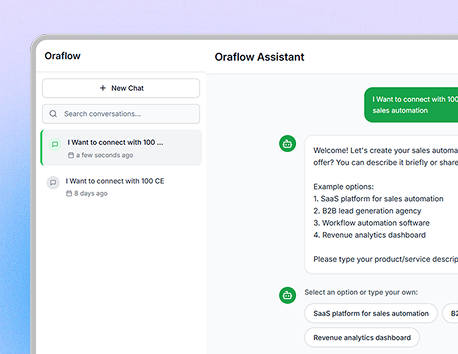
Create Self-Running Agentic Sales Workflows like N8N just by chatting with AI
Get Started for FREE
Most agencies struggle with client acquisition, especially when the market is crowded, and clients have endless options.
If you’re trying to figure out how to find clients for a staffing agency, the process can feel confusing and unpredictable.
The truth is, getting clients becomes much easier when you follow a clear, repeatable system instead of trying random tactics.
In this guide, you’ll learn 11 proven, practical, and easy-to-use methods that help staffing agencies attract consistent clients.
Each method is simple to apply, works for any niche, and helps you stay competitive even when budgets are tight or hiring slows down.
By the end, you’ll know exactly how to build a predictable client-acquisition engine.
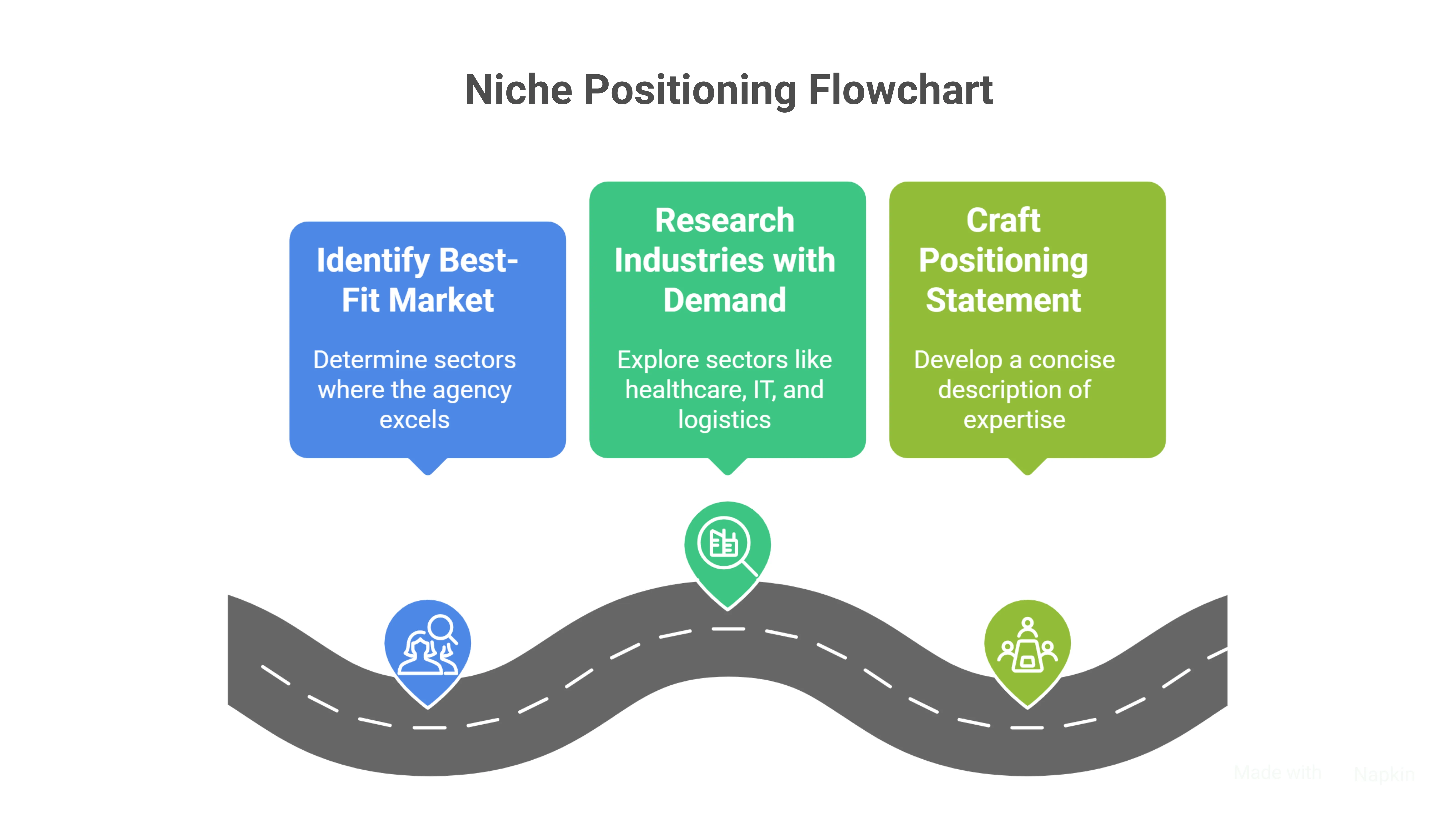
Specialization is one of the simplest ways to build trust quickly.
When clients see that you focus on their specific industry or role type, they feel more confident that you understand their environment. This instantly improves the quality of your conversations and increases your response rates.
A clear niche also makes your messaging sharper.
Instead of sounding like a general recruiter trying to cover everything, you position yourself as the expert partner for a defined category of talent.
This gives your outreach more relevance and makes your agency easier to remember.
Start by reviewing the industries where your team already performs well. Look at the roles you fill quickly, the clients who engage the fastest, and the markets where your recruiters naturally understand the job requirements.
These patterns reveal where your agency has a competitive edge.
Next, target industries with steady hiring demand—such as healthcare, IT, logistics, accounting, or hospitality.
These sectors hire year-round, allowing you to build predictable pipelines instead of jumping between unrelated industries.
Your goal is to match what your team is naturally good at with a market that consistently needs support.
When your niche is aligned with real demand, you attract the right clients more smoothly and without unnecessary effort.
Once your niche is defined, create a simple statement that explains who you help and what you specialize in. Keep it short, specific, and easy for clients to understand.
For example: “We help growing tech teams hire senior developers quickly.” or “We provide dependable CNAs for long-term care facilities.”
Avoid broad claims like “We recruit for all industries.”This weakens your credibility and makes your agency appear unfocused.
Clients prefer specialists who understand their challenges, hiring cycles, and priorities. A clear positioning statement strengthens your message, improves outreach relevance, and helps new clients recognize your value instantly.
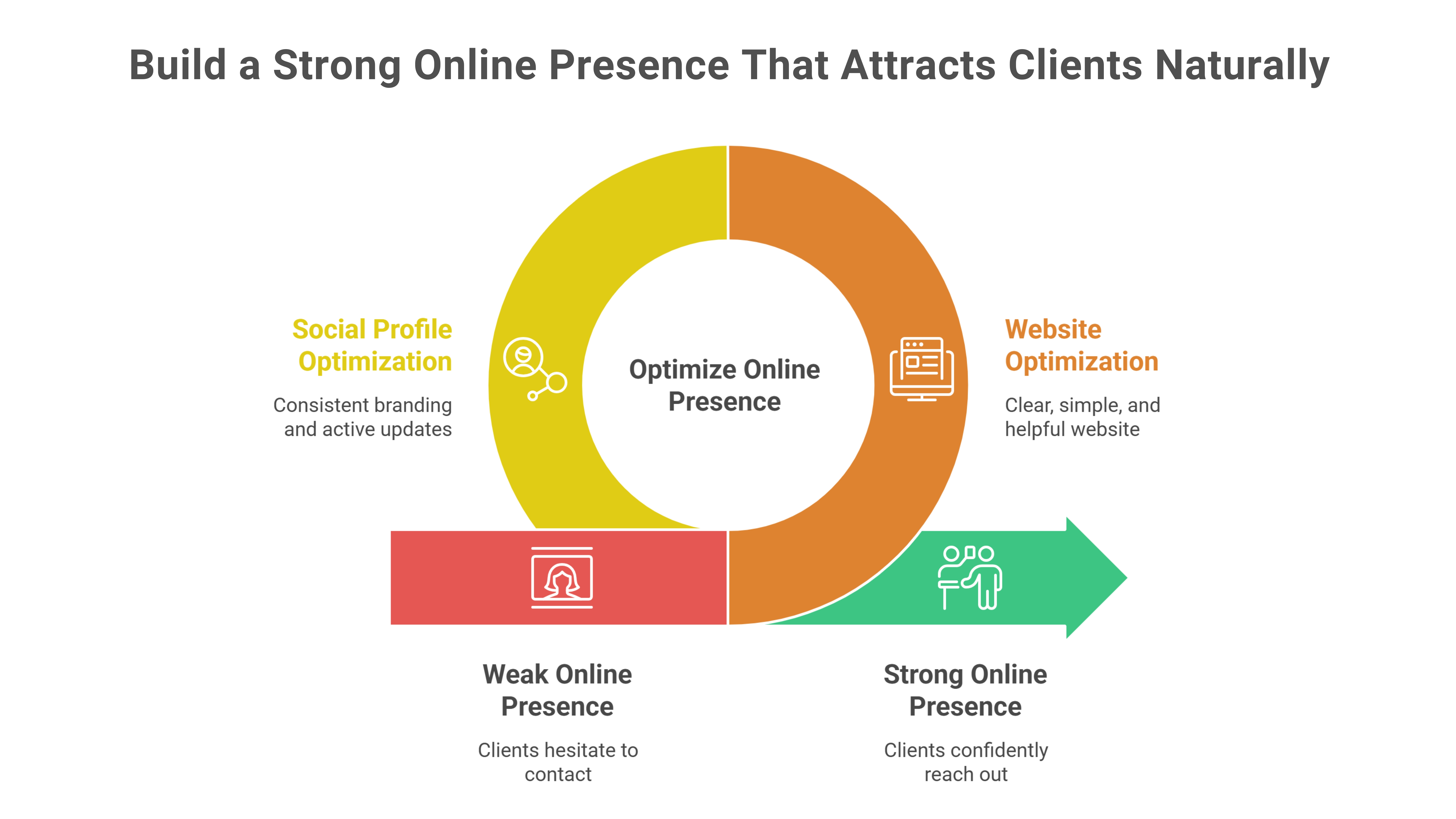
Your online presence tells clients if you’re credible before they ever speak to you. This section explains what your website and social profiles must include to build trust quickly, show professionalism, and help you attract more inquiries without relying on paid advertising.
Your website is often the first place a potential client checks when deciding whether to contact your agency. It doesn’t need to be fancy, just clear, simple, and helpful. Make sure it includes the core pages clients expect:
Your website should include:
A website with these essentials reduces hesitation, answers client questions faster, and gives visitors the confidence to reach out without uncertainty.
Lists essential website pages and explains how each one reduces hesitation and increases trust by giving clients clear, simple information that helps them feel confident about reaching out.
Your social profiles should give the same impression across every platform. Think of them as digital storefronts clean, consistent, and easy to understand.
Your social profiles should include:
Keep your profiles active by posting small updates about roles filled, market trends, or short hiring tips. Even light activity shows that your agency is engaged and reliable.
On your company pages, share the industries you support and the types of roles you recruit for. This helps potential clients quickly understand your expertise.
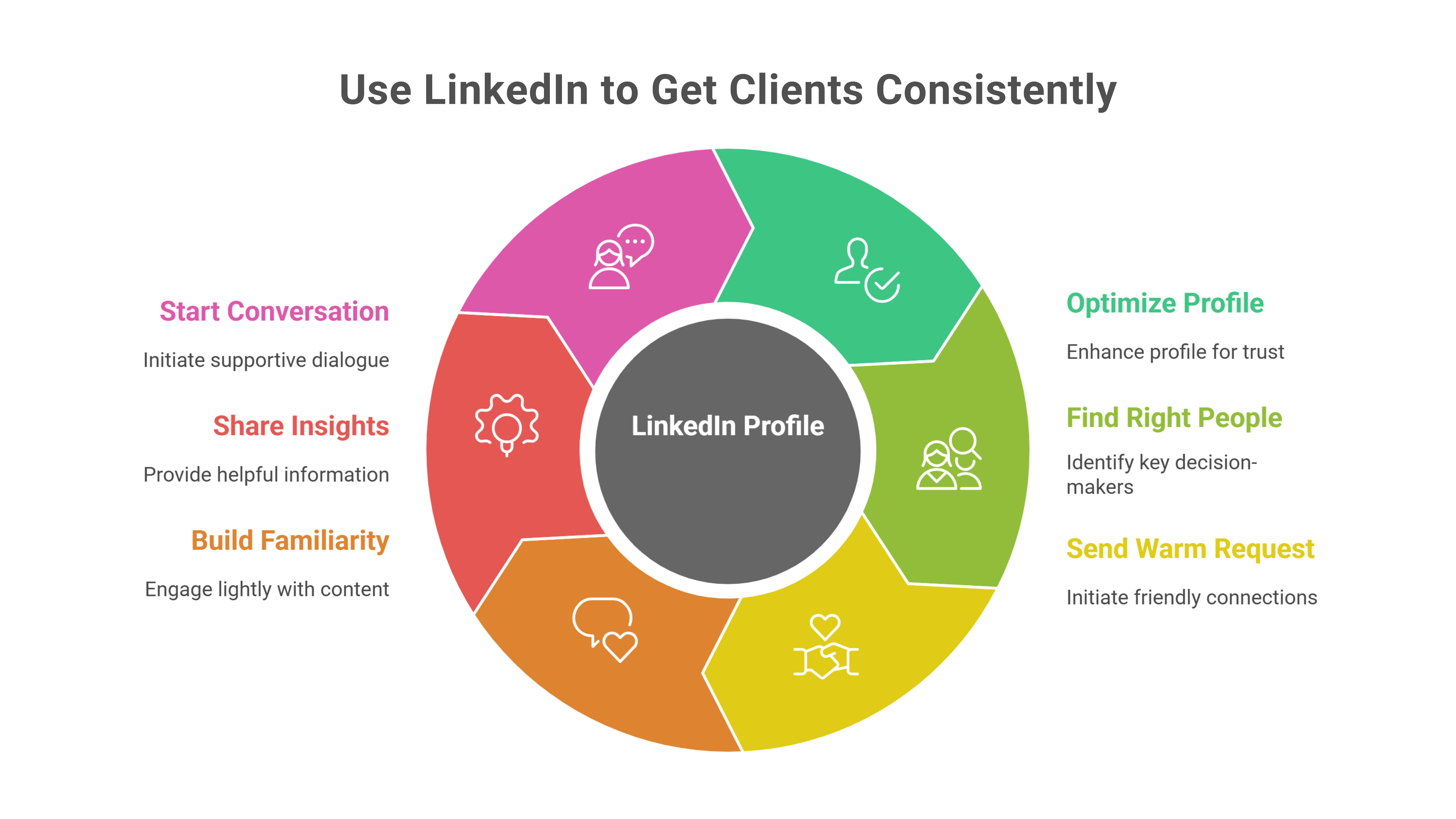
LinkedIn is the easiest place to reach decision-makers because they actively look for talent and industry insights. This section shows how to build real trust through your profile and start conversations using simple, friendly outreach without long pitches or complicated strategies.
Your LinkedIn profile should help hiring managers feel confident speaking with you. It’s not about looking perfect—it's about showing that you understand their world.
Start with a headline that clearly states your specialty, such as:
Your About section should read like a short intro, not a resume. Explain:
Use the Featured section to display simple trust signals:
Finish with:
When your profile communicates expertise clearly, hiring managers trust you faster because they immediately understand what you do and who you can help.
A friendly connection strategy works far better than aggressive outreach. To keep it simple, follow this structure:
Step 1 — Find the right people:
Step 2 — Send a warm, human request: Short examples:
Step 3 — Build familiarity after acceptance:
Step 4 — Share helpful insights on your feed:
Step 5 — Start a warm conversation:
This approach builds trust step by step. Decision-makers respond more often when your tone is real, supportive, and low-pressure.
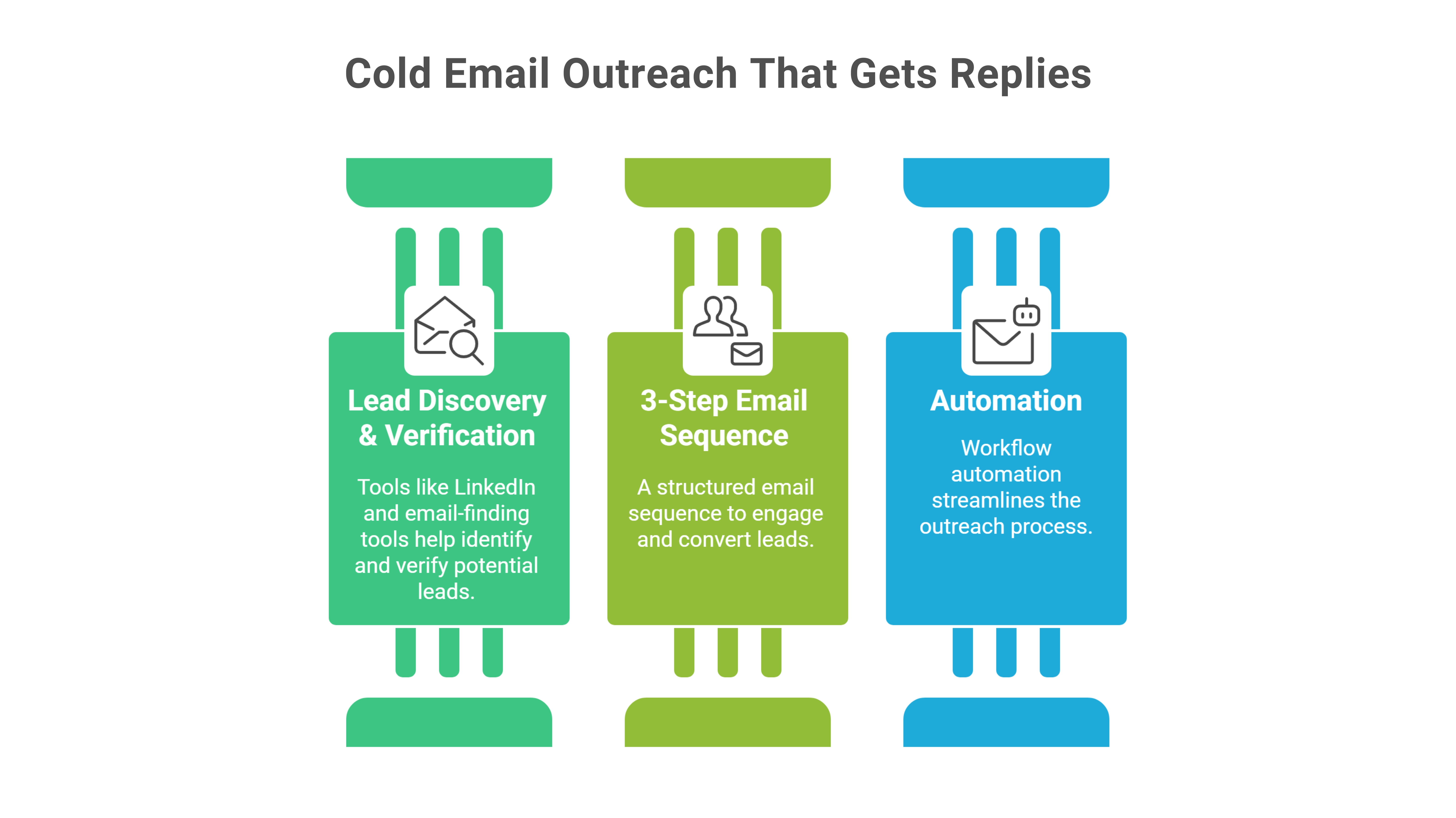
Cold email is still one of the most reliable ways to reach hiring managers directly. This section explains how to find accurate email addresses and write short, helpful messages that feel human. The goal is to start more conversations without sounding pushy or sales-driven.
Finding the right email address is the first step in sending effective cold emails. Start by identifying decision-makers, usually HR managers, directors, hiring leads, or small-business owners. You can use simple tools like LinkedIn search, company websites, or employee directories to locate names and job titles.
Next, use email-finding tools or browser extensions to uncover verified addresses. Always check deliverability before sending anything.
You can also use hiring signals, such as open job postings, to find companies already looking for talent. These companies are more likely to respond because their need is immediate.
When you keep your list clean, targeted, and verified, cold email becomes a reliable part of your outreach because you’re contacting the right people at the right time.
Cold emailing is a powerful tool for client acquisition, but many agencies struggle with the email discovery, verification, and list cleanup stages. These tasks are time-consuming and lead to wasted effort searching across multiple platforms, not to mention the damage to sender reputation from bounce-backs.
Since these steps take time, they are often the reason cold emailing feels overwhelming. Tools like Oppora can streamline this part quietly in the background. They help you organize your prospect list and discover verified emails faster.
This lets you spend more time on actual outreach instead of admin work. The transition feels natural because it addresses the exact problem recruiters face, rather than sounding like a sales pitch.
Short, friendly emails get more replies than long sales pitches. Your first email should be simple: introduce yourself, mention the type of roles you fill, and offer one helpful line related to their hiring needs. Keep it under 80 words.
Your second email should come 2–3 days later. This message can include a small example of how you helped a similar company or share a quick insight about hiring in their industry. Keep it focused and helpful.
The third email should be a soft follow-up. A simple note like, “Just checking in happily to help if you’re hiring,” keeps the conversation light and pressure-free.
This 3-step sequence works because it’s human. It respects the reader’s time, offers genuine value, and builds familiarity without pushing too hard.
While writing effective email sequences is important, staying consistent with follow-ups can be challenging, especially when you’re handling multiple prospects across different stages. Manually tracking each lead and remembering to send timely follow-ups can feel overwhelming.
A streamlined system makes all the difference. Oppora’s workflow automation automatically schedules follow-ups, ensuring you never miss a step. It organizes leads, tracks responses, and personalizes follow-ups, keeping the process efficient and consistent without sacrificing quality.
By automating this part of your outreach, you can focus on building meaningful relationships and maintaining a steady outreach rhythm, rather than manually managing cold email sequences.
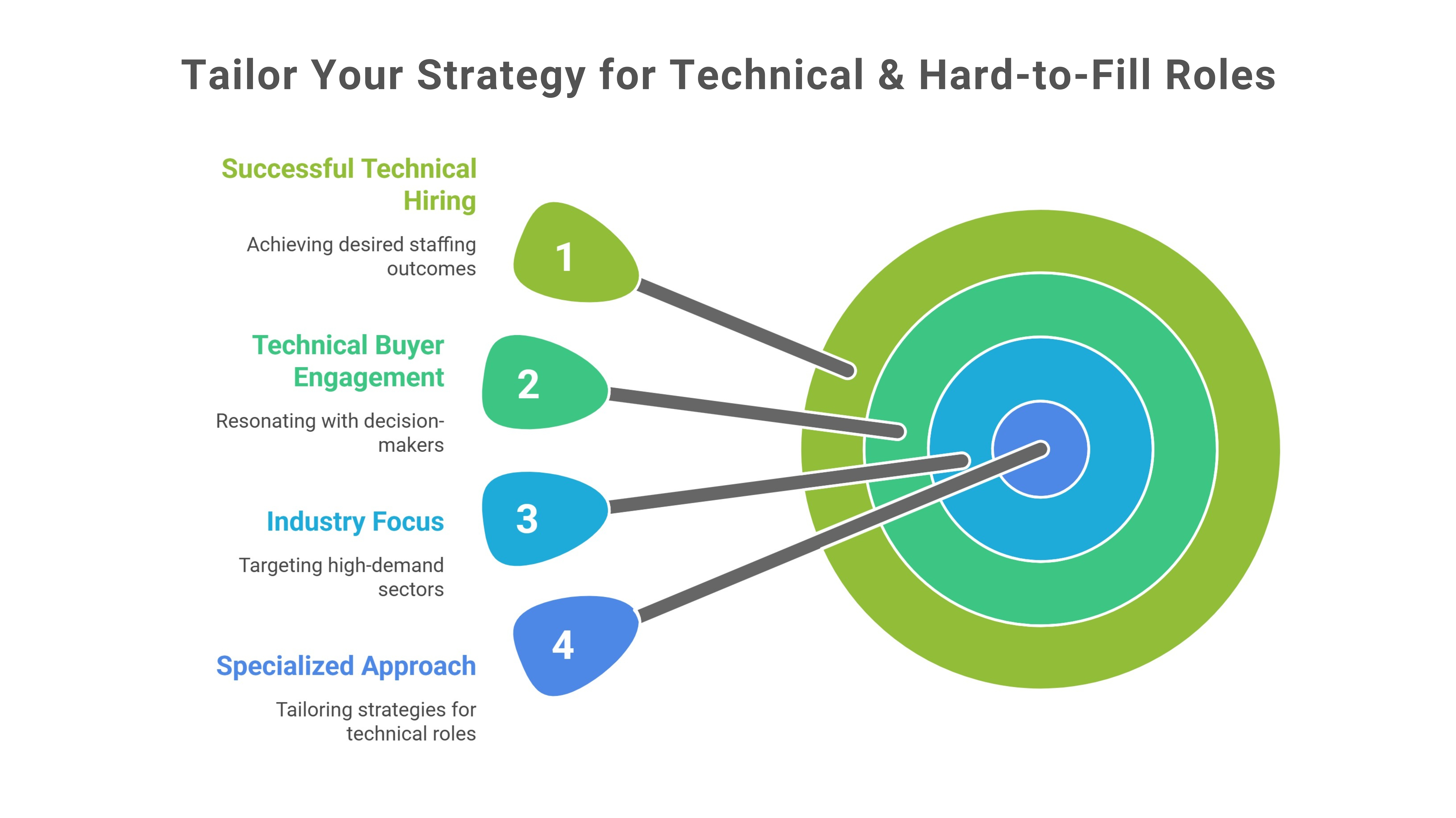
Technical hiring works differently from general staffing. IT, engineering, and data-driven roles require a more specialized approach because skill sets evolve quickly, roles are harder to fill, and decision-makers expect precision.
This method helps you position yourself correctly and communicate in a way that resonates with technical buyers.
Focus on industries with continuous technical hiring needs SaaS, fintech, cybersecurity, cloud services, and AI-based companies.
These sectors frequently hire software engineers, DevOps specialists, cloud architects, QA testers, and data engineers. This insight helps you understand how to find IT staffing clients without sending random outreach.
CTOs, engineering managers, and product leaders prefer messages that demonstrate a clear understanding of their stack and pain points. Avoid generic claims like “we have quality candidates.”Use precision, like:
“We help SaaS teams hire backend developers experienced in Node.js and AWS.” This instantly differentiates you and increases response rates.
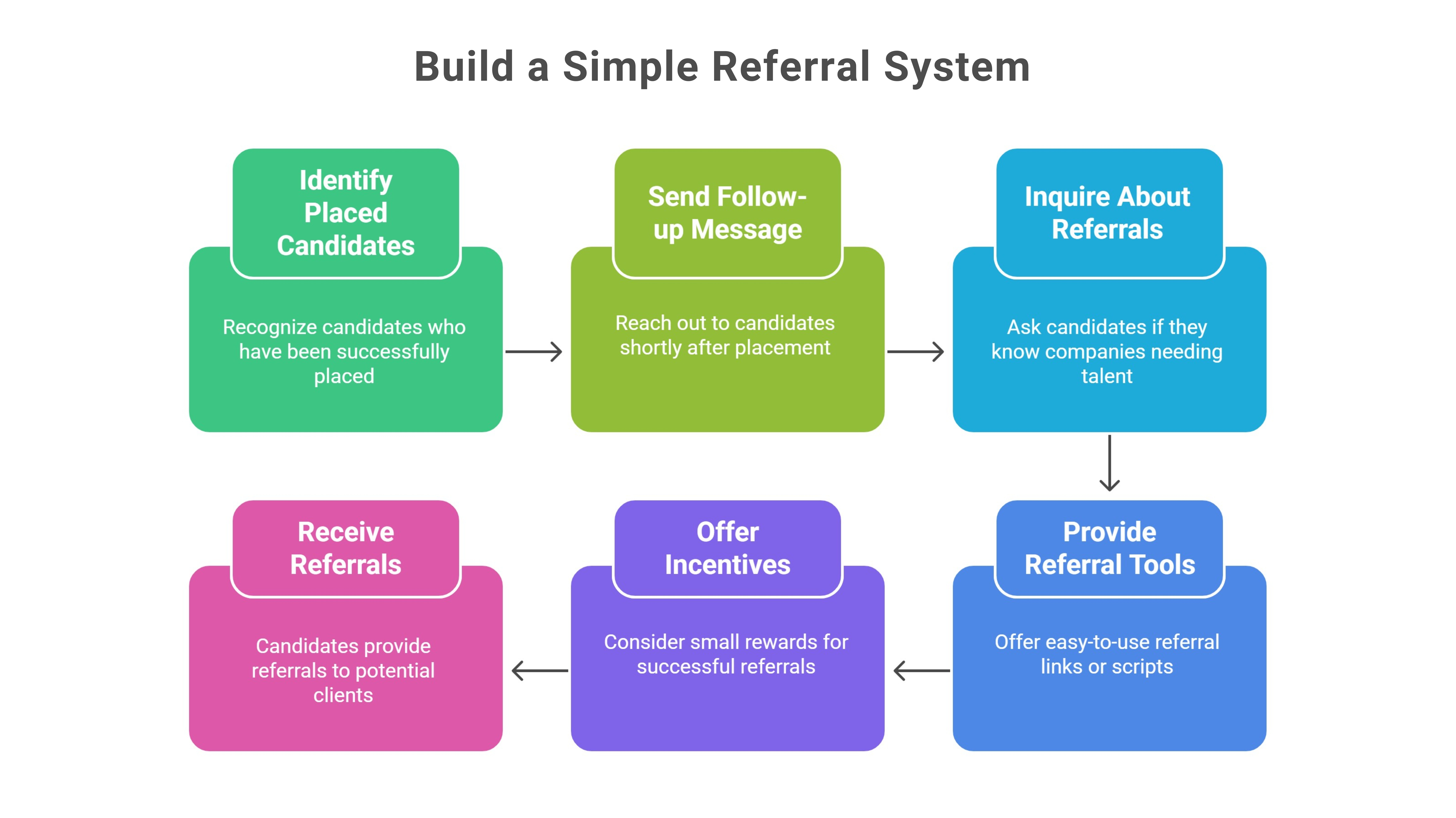
Referrals are one of the easiest ways to get new clients without doing extra outreach. This section explains how to build a simple referral system that brings warm, ready-to-talk leads consistently and helps you grow even when outbound activity slows down.
Placed candidates are one of the strongest sources of warm referrals. They already trust you and understand your process. They also often know hiring managers or team leads at their next workplace.
When you make the referral process simple, candidates can help you find a staffing clients through someone they know without extra effort.
Start by sending a short, friendly message a few days after they begin their assignment. Ask whether they know another company struggling to hire similar talent.
Make it easy for them to share a simple referral link or a one-line script they can forward. You can offer small incentives like gift cards or priority job alerts, but the real key is convenience.
When candidates feel supported, and the process is easy, they naturally bring more opportunities your way.
Clients are often happy to recommend you, but only if the request feels natural. The best moment to ask is right after you successfully fill a role or receive positive feedback. Keep your request light and friendly, such as: “If you know another team struggling to hire, feel free to point them my way.”
You can also include referral wording in your closing emails or status updates. For example: “If anyone in your network needs help hiring for similar roles, I’m always happy to assist.”
Short scripts work well because they remove pressure from both sides. When clients feel appreciated and not sold to, they refer you more often. Over time, these small requests build a steady flow of warm introductions.
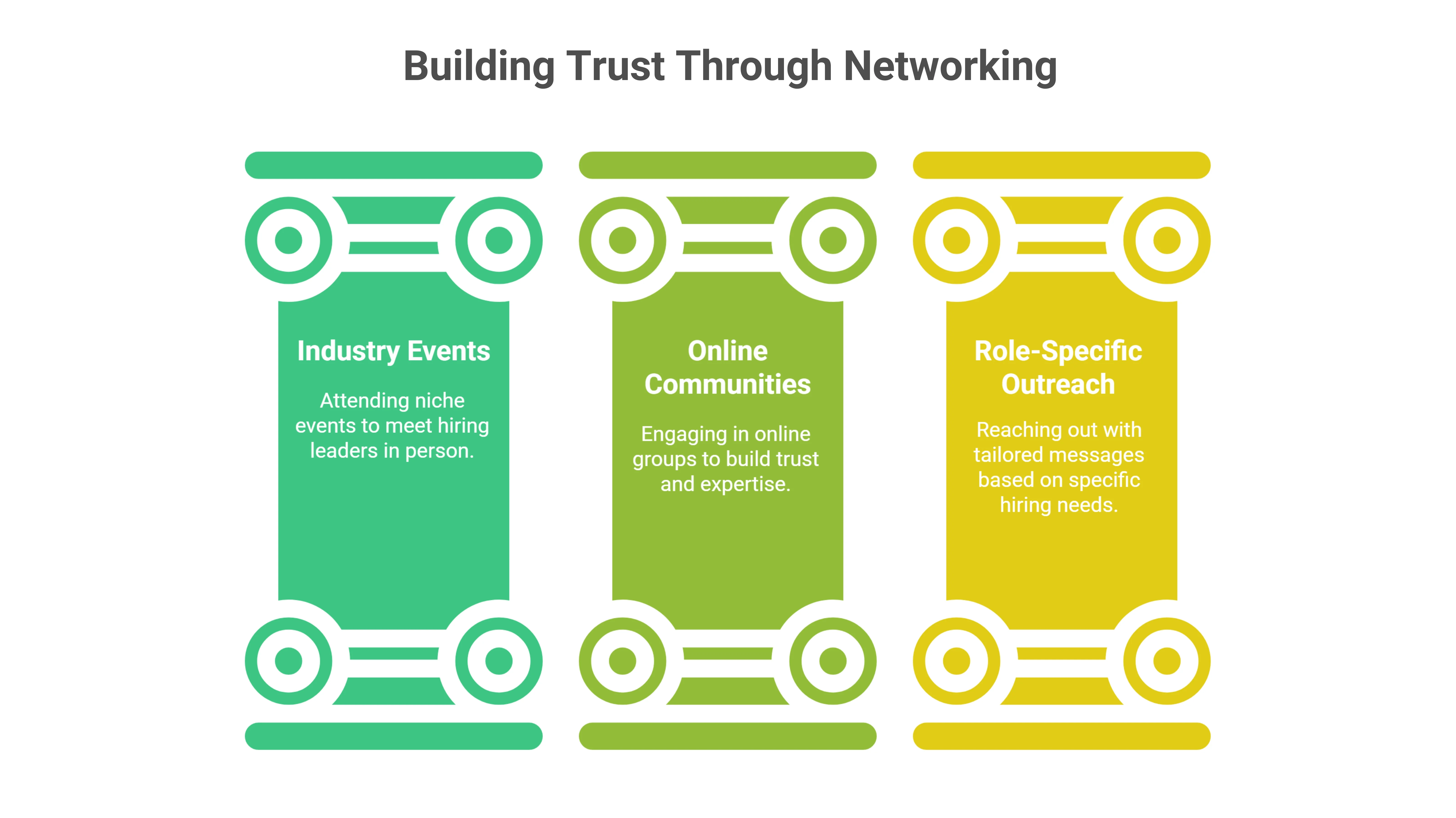
Networking builds trust faster than cold outreach because people connect with you in a real environment. This section explains which events and communities lead to actual conversations with decision-makers and how staffing agencies can use them to build relationships that turn into clients.
Events are a great way to meet hiring leaders in person and have real conversations. These interactions often turn into client opportunities. Focus on attending the right events not general job fairs, but niche, industry-specific gatherings.
Look for places where hiring managers and team leads are likely to attend, such as HR meetups, tech conferences, healthcare expos, or local chamber events.
Before attending, check the guest list or speaker list so you know who you want to meet. Start conversations naturally asking about their teams, challenges, or recent projects. Avoid hard-selling; networking works best when the focus is on listening and offering simple insights.
Bring a short introduction you can say comfortably, such as: “I help logistics teams hire reliable warehouse staff.” This gives clarity without sounding like a pitch. Follow up lightly after the event with a friendly message referencing your conversation. Consistent event attendance builds familiarity and trust.
Online communities are powerful because decision-makers join them to solve problems, ask questions, and share experiences. LinkedIn groups, niche Slack communities, and industry forums are great places to observe what hiring leaders struggle with and join conversations naturally.
You don’t need to post constantly. Instead, engage by answering questions, giving small insights, or sharing short hiring tips. When people see your helpful comments repeatedly, they begin to trust your expertise. Over time, this positions you as someone worth reaching out to when hiring needs arise.
Join groups related to your niche for example, tech leadership groups, HR compliance communities, or local business networks. Participate consistently, not aggressively. The goal is recognition, not promotion. When you show up where hiring leaders already spend their time, you create warm opportunities without forcing outreach.
When you reach out based on a specific role a company is hiring for, your message immediately feels relevant. Instead of sending a generic introduction, mention the position you saw and offer one or two details that show you understand the requirements.
For example:“Noticed you're hiring a senior backend engineer. We recently helped a SaaS team fill a similar role with Go and AWS skills. Happy to share insights if needed.”
This short message works because it speaks directly to their current need. You’re not selling, you're showing awareness and offering help.
Keep outreach light and simple. Demonstrating that you understand the role makes hiring managers more open to a conversation and turns a cold message into a warm interaction.
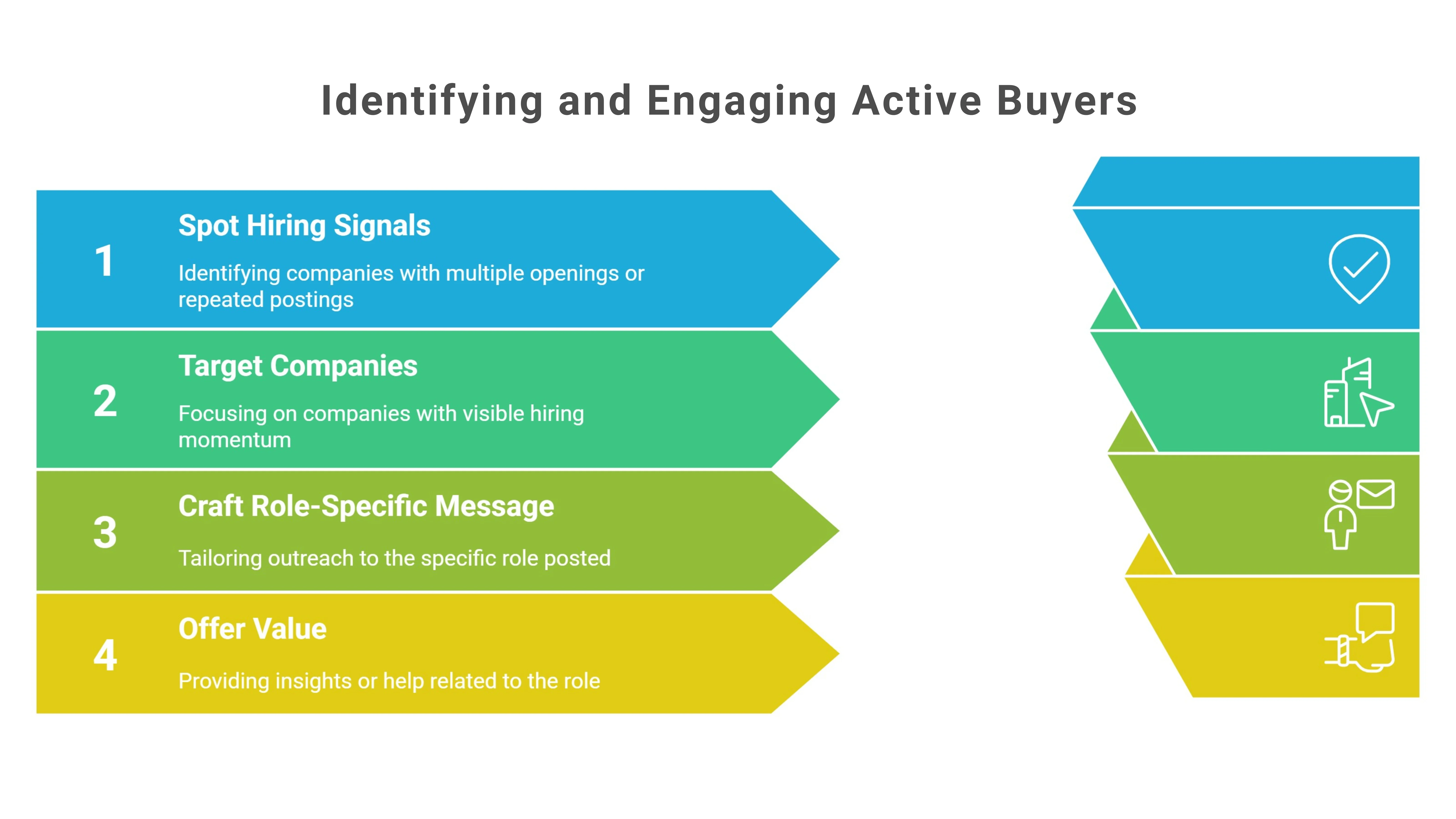
Job boards show you which companies are hiring right now, giving you a clear view of who needs help immediately. This section explains how to spot strong hiring signals and use them to start warmer, more relevant conversations instead of random cold outreach.
Job boards are one of the easiest places to see which companies are growing or struggling to fill roles. When a business posts several openings at once or keeps the same roles active for weeks, it usually means they need support quickly.
Look for clear hiring signals such as:
These signals show which organizations are more open to speaking with staffing partners because they’re feeling real hiring pressure.
When you focus on companies with visible momentum, you reduce guesswork. You’re reaching out to businesses that are already hiring and far more likely to respond.
Shows how to identify companies with active hiring needs by looking for patterns in job postings, repeated openings, and expansion signs, helping you target buyers who are more likely to respond.
Reaching out based on a specific role makes your message instantly relevant. Instead of sending a general introduction, reference the exact job you saw posted and show that you understand what they’re looking for.
Your message should include:
Example structure:
This approach works because it feels helpful, not sales-driven. You’re speaking directly to their current challenge.
Keep your outreach short, friendly, and relevant. When hiring managers see that you understand the role, they become more open to continuing the conversation.
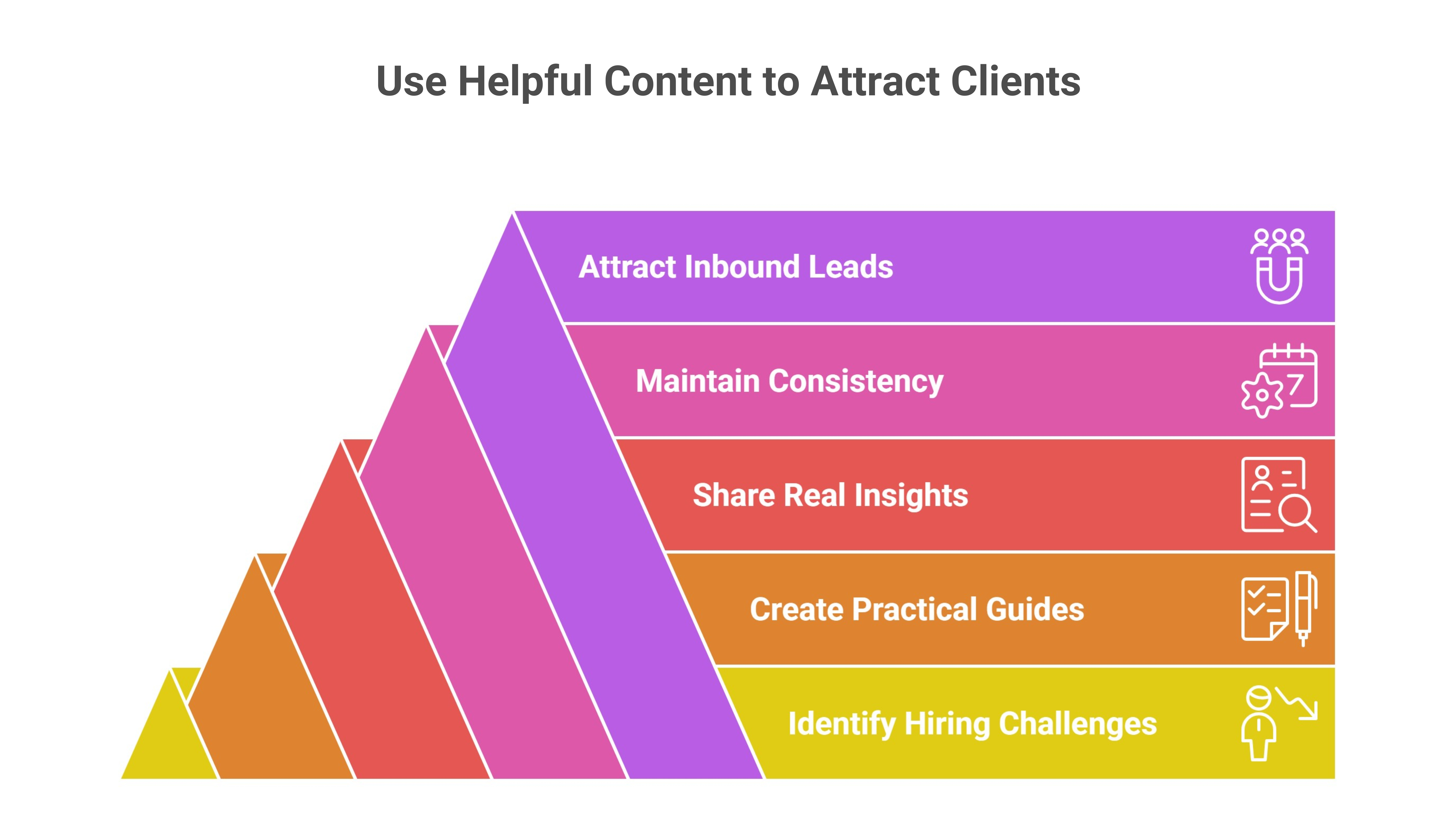
Helpful content positions your agency as a trusted resource, not just another vendor. This section explains what hiring managers actually care about and how to create simple, practical content that brings inbound leads without feeling promotional or overwhelming to produce.
The most effective content focuses on real hiring challenges. Instead of posting generic advice, create short guides that solve specific problems decision-makers face. These can include interview checklists, role-specific hiring tips, onboarding frameworks, or simple explanations of market trends.
You don’t need long blog posts every week. Even short posts that answer one common question can build momentum. For example, a quick breakdown of how to evaluate junior developers or what to ask during CNA interviews provides immediate value. Hiring managers appreciate content that saves time or reduces uncertainty.
Use clean, simple language and focus on practical steps. When your content consistently solves problems, it naturally draws in the right audience because they begin to see you as someone who understands their challenges and can support their hiring needs.
Educational content works best when it doesn’t sound like a pitch. Share small insights you’ve gained from recent placements, resume reviews, or interviews you’ve conducted. These behind-the-scenes observations show expertise without asking for anything in return.
You can post quick tips about hiring patterns, skill availability, interview bottlenecks, or resume mistakes. These insights feel valuable because they come from real experience, not theory. Consistency matters more than perfection. Two helpful posts a month are enough to build trust over time.
When hiring managers repeatedly see your content in their feed, it builds familiarity. By the time they need help filling a role, you’re already on their mind. This is how educational content quietly attracts inbound inquiries without aggressive sales messages.
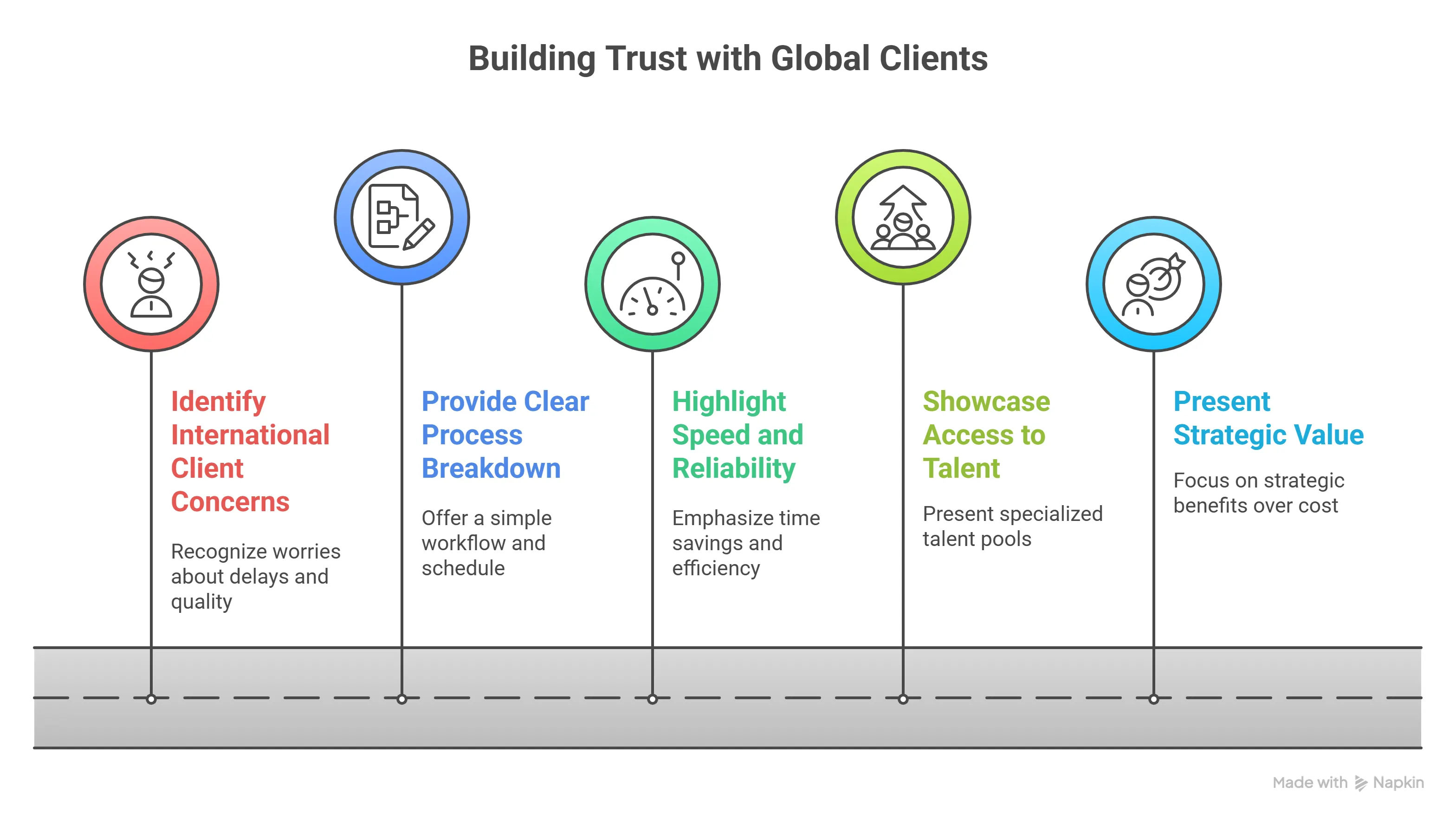
Working with international companies requires clarity, predictable communication, and strong process transparency. This method explains how to build trust with global clients and present your value in a way that feels reliable and low-risk.
International buyers often worry about delays, communication gaps, and inconsistent quality. Provide a simple breakdown of your sourcing workflow, screening process, reporting structure, and communication schedule.
These steps make it easier for companies to understand how to find clients for offshore staffing who see you as a trustworthy partner.
Offshore staffing offers faster hiring cycles and access to specialized talent pools. Instead of emphasizing cost only, focus on time savings, efficiency, and stronger talent pipelines. Share examples of reduced hiring times or improved candidate quality. Clients respond better when the value feels strategic rather than budget-driven.
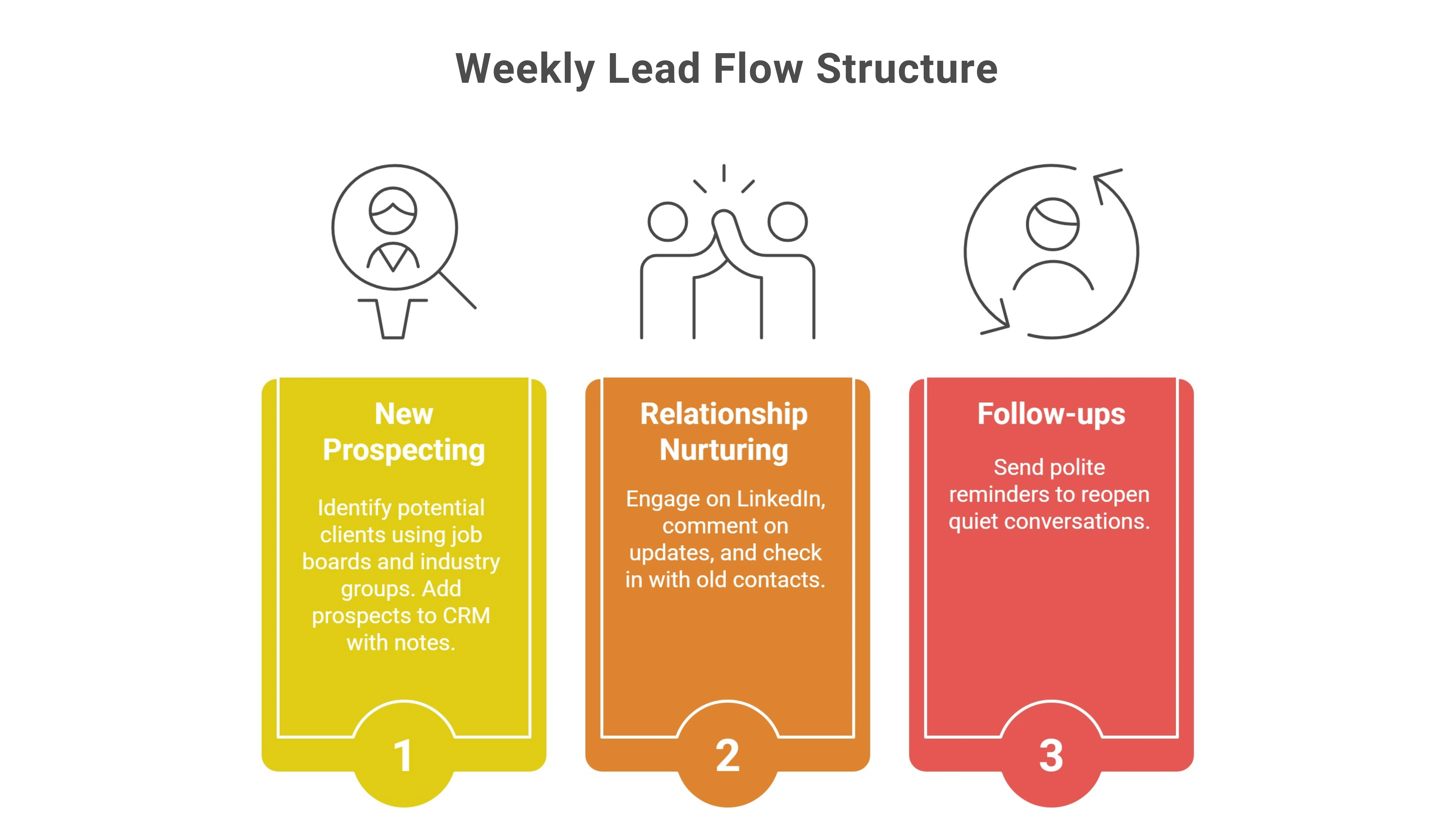
A consistent system is the difference between random client wins and predictable growth. This section explains how to organize your weekly activities, manage follow-ups, and build a simple rhythm that fills your pipeline every week without relying on sudden spikes of outreach.
Most agencies lose clients not because of weak outreach but because they don’t follow a consistent weekly structure. A simple routine helps you stay visible, active, and top-of-mind with decision-makers. Start by dividing your week into three parts: new prospecting, relationship nurturing, and follow-ups.
On Mondays, focus on identifying new potential clients. Use job boards, industry groups, or recent hiring announcements to find companies actively hiring. Add these prospects to your CRM with clear notes.
Mid-week is the best time for relationship-building. Engage with people on LinkedIn, comment on hiring updates, and check in with old contacts who may need help again. These small interactions accumulate into real opportunities over time.
End the week with follow-ups. Most replies come from polite reminders rather than first messages. A short, friendly nudge often reopens conversations that went quiet. When you follow this simple structure consistently with new leads, relationship touches, and follow-ups you create a steady flow of opportunities instead of waiting for luck.
Breaks down a weekly routine that balances new outreach, relationship-building, and follow-ups, helping you stay consistent and create a predictable flow of opportunities every week.
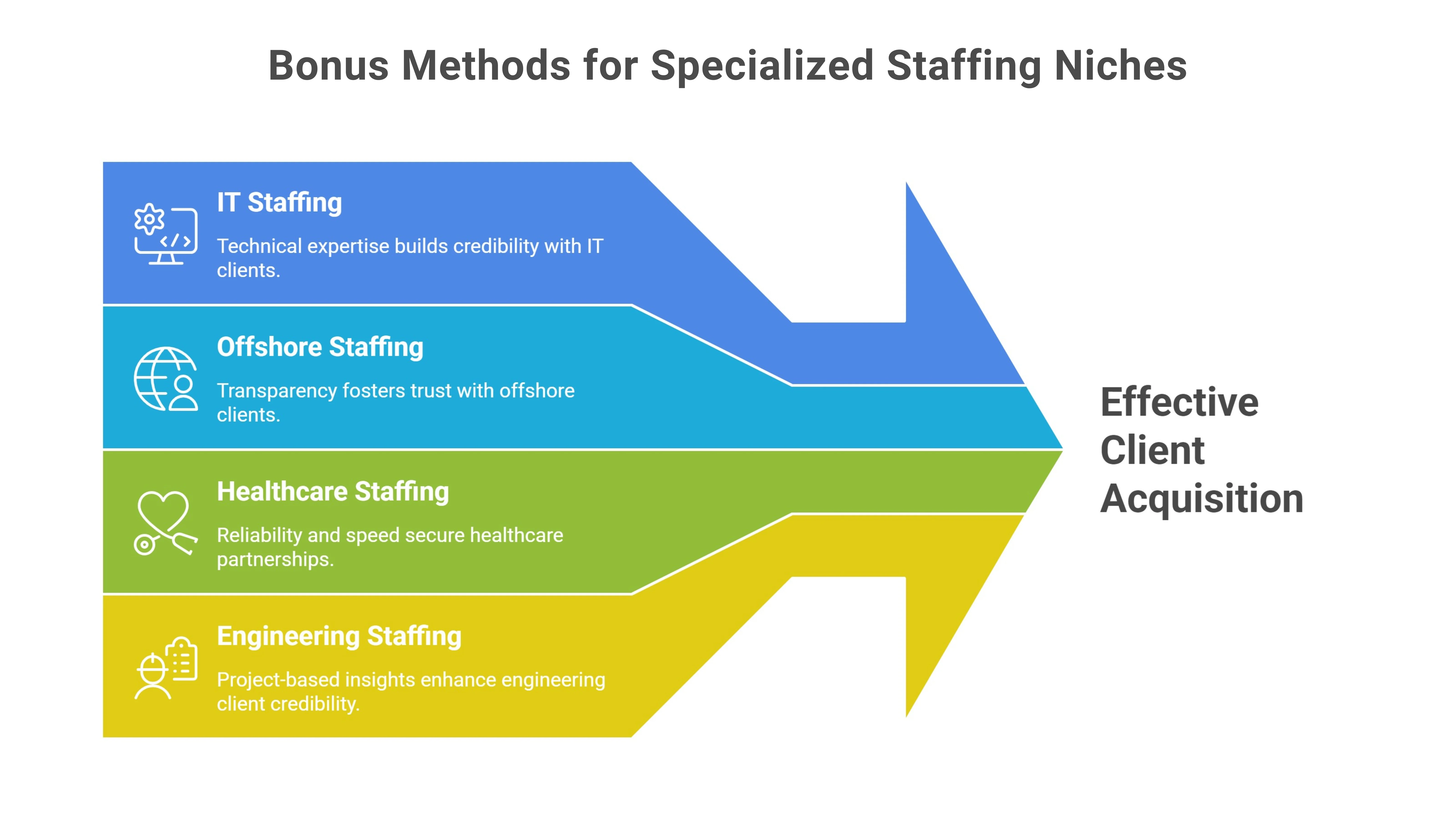
These bonus methods adapt the core strategies from this guide to niche industries. Each niche has unique hiring expectations, urgency levels, and skill requirements. Understanding these differences helps you tailor your outreach more effectively and create stronger relevance with your ideal clients.
Technical companies like SaaS teams, fintech firms, cybersecurity groups, and cloud-driven organizations expect recruiters to understand the roles they hire for. A generic approach won’t work here.
Show familiarity with the technical environment by mentioning relevant skills, frameworks, and tools tied to the positions they need. When you reference roles like DevOps engineers, backend developers, or data specialists, your outreach feels more credible and specialized.
IT decision-makers respond faster when they feel you understand their hiring challenges. Precision, relevance, and industry knowledge make your message stand out and open the door to meaningful conversations.
International clients care deeply about communication, reliability, and consistency. They often hesitate to work with offshore teams unless they clearly understand your process.
Share simple details about your workflow—how you source talent, how you conduct quality checks, how you report progress, and how you provide time-zone support. These elements reduce perceived risk and help buyers feel more confident early in the relationship.
When offshore staffing agencies demonstrate transparency and predictable operations, global clients see them as dependable long-term partners.
Healthcare facilities hire continuously, often under urgent conditions. They prefer agencies that understand certifications, compliance requirements, and the pressure to fill shifts quickly.
Highlight your knowledge of credentialing, onboarding timelines, and the roles you specialize in—such as CNAs, RNs, LPNs, or allied health positions. Showing that you understand their regulatory environment builds credibility fast.
Healthcare clients value reliability and speed. When your outreach communicates both, facilities are more likely to form repeat partnerships.
Engineering and construction companies hire based on project timelines, permits, and contract awards. Their staffing needs spike at predictable moments.
Monitor local tenders, infrastructure projects, new developments, or seasonal peaks. Contact companies when hiring demand is highest—during project mobilization or before major deadlines.
Showcase experience with technical field roles or specialised labour. This demonstrates that you understand the skills required on construction sites and engineering teams, making your agency more credible in a project-based hiring environment.
We've covered several proven methods to help you find clients and build consistent cold email outreach. From niche positioning to building a strong online presence and using LinkedIn for consistent outreach, these strategies are tried-and-true approaches that help staffing agencies find new opportunities.
But if you find cold emailing a challenge especially when it comes to email discovery, verification, and staying consistent with follow-ups then Oppora can help streamline your workflow. By automating lead generation, verifying emails, and organizing your outreach Automating saves your time and effort, ensuring your emails are reaching the right people at the right time.Sign up for today, it's a free forever plan, and no credit card is required.
The fastest approach is combining job board signals with warm LinkedIn outreach. Target companies actively hiring, reference their open roles, and send short, relevant messages. This creates immediate conversations because you’re contacting businesses with real and urgent hiring needs.
Most agencies see small wins within 2–4 weeks if they follow a weekly system. Larger, consistent results usually appear within 60–90 days. Predictability improves over time as your outreach, content, referrals, and relationships compound.
The top mistake is inconsistency. Agencies often send outreach in bursts, then stop completely. This creates unpredictable results. A simple weekly routine—new leads, relationship touches, and follow-ups—builds steady momentum and prevents dry pipelines.
Yes. The core principles—niche positioning, hiring signals, content, networking, and weekly structure—apply to agencies of all sizes. Smaller firms often see faster results because they can stay more focused and personalize outreach easily.
Choose the method that matches your strengths. If you’re social, start with networking. If you prefer writing, start with content. If you want immediate responses, use hiring signals and role-based outreach. Build one strong method, then layer others.
Summarize with AI
Share