Home
Blog
Find 500 B2B Contacts for Free Every Month with Built-In Outreach.
Home
Blog
Stephen Parker
Published January 21, 2026
10 min
Try Oppora AI
Create Self-Running Agentic Sales Workflows like N8N just by chatting with AI
Get Started for FREE
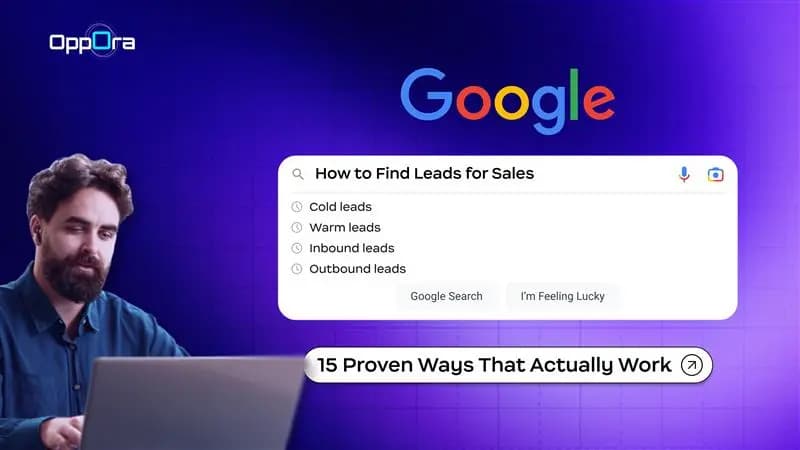
Sales don’t fail because people can’t sell.They fail because there’s no one to sell to.
Without a steady flow of leads, even the best pitch goes nowhere. Hustle can’t fix an empty pipeline. And tactics without results are just noise.
This guide focuses on what actually works. Not theory. Not trends. Proven ways to find leads in real situations. Some methods are fast. Some compounds over time. Some work better when you need control. Others, when you need scale.
You’ll learn multiple ways to find leads for sales, so you can choose what fits your business, your market, and your stage and execute with clarity.
If inbound builds momentum over time, outbound creates movement now. It's proactive. You decide who to reach, when to reach them, and why. That control is the biggest advantage.
Outbound takes effort. There’s no way around that. But it also brings speed and predictability.
When done right, it removes guesswork from how to find leads for sales and replaces it with a clear, repeatable process. This is why outbound works best for teams that need leads on demand, not months later.
Below are five outbound methods that still work today, not because they’re clever, but because they’re intentional.
Cold email prospecting works when outreach is based on clear targeting and a specific reason for reaching out. Broad campaigns sent to generic audiences usually result in low reply rates and poor engagement.
For example, emailing “HR teams everywhere” about a payroll tool produces weak results. Targeting HR managers at 50–200 employee SaaS companies dealing with compliance challenges creates relevance, even with the same product and message length.
Define one role, one company size, and one active pain point before building your list. Write emails that explain why this prospect is being contacted now. Specific targeting improves replies more than changing copy or subject lines.
As volume grows, teams often systemize list building and personalization to keep outreach consistent without manual effort.
Cold calling becomes inefficient when calls are made without context or prioritization. Performance improves when outreach is guided by recent company activity or operational signals.
For instance, calling an operations leader simply because they match a job title rarely converts. Calling after a company raises funding, expands headcount, or opens a new location provides a clear reason to start the conversation.
Before calling, identify one trigger that explains why now. This could be hiring activity, growth announcements, or internal changes. Use that signal to frame the opening of the call.
Targeted calling reduces wasted dials and increases meaningful conversations.
LinkedIn outreach is more effective when prospects are familiar with the sender before receiving a direct message. Visibility and engagement improve response rates over cold messaging alone.
Sales reps who regularly comment on relevant posts, share practical insights, or engage in discussions tend to see higher acceptance and reply rates than those who send immediate pitch messages.
Engage with your target audience’s content before messaging. Comment thoughtfully on posts related to their role or challenges. Reference that interaction when reaching out so the message feels contextual rather than unsolicited.
This approach supports longer sales cycles where trust develops before conversion.
Intent signals help prioritize leads based on timing rather than volume. Companies often reveal buying intent through actions such as hiring, funding announcements, product launches, or increased site engagement.
For example, a company hiring sales representatives may soon evaluate CRM or outreach tools. Reaching out during this window increases relevance.
Create a short list of intent signals tied to your product and review them weekly. Use these signals to rank leads before outreach instead of treating all prospects equally.
Manual prospecting takes more effort upfront but leads to better timing and higher-quality conversations. As this process scales, teams often rely on systems that surface these signals continuously without changing the underlying strategy.
Referrals remove resistance instantly. Someone else does the trust-building for you.
A marketing agency referring clients to a CRM provider. A consultant introducing a tool they already trust. These leads close faster because credibility comes built-in.
Outbound doesn’t always mean cold. Sometimes, it just means asking the right people.
Outbound lead generation isn’t about volume. It’s about control.
When teams want predictable results and faster feedback, outbound methods remain one of the most reliable answers to how to find leads for sales, especially early on or during growth pushes.
Outbound creates movement. Inbound builds gravity. Instead of reaching out, inbound pulls the right people toward you. It works by attracting buyers who are already searching, already curious, or already feeling the problem you solve.
The results compound over time, which is why inbound leads are often warmer and easier to convert.
Inbound takes patience. You won’t see results overnight. But when done well, it creates a steady flow of leads without constant manual effort.
For teams thinking long-term about finding leads for sales, inbound becomes the foundation that keeps pipelines healthy.
Below are five inbound methods that consistently generate high-intent leads.
Good content answers questions buyers already have.
A blog post that explains a real problem pricing confusion, process mistakes, or comparison decisions does more than educate. It positions you as a trusted source before a sales conversation ever starts.
Buyers who find value in your content arrive informed. And informed leads convert better.
Search intent reveals urgency.
When someone searches for a solution, they’re already problem-aware. Ranking for those searches puts you in front of buyers at the exact moment they’re looking.
SEO-driven leads often take longer to acquire. But they arrive with purpose.
That makes them some of the most consistent inbound leads over time.
Social media works when it’s not treated like advertising.
Sharing insights, experiences, and opinions builds familiarity. Over time, prospects recognize your perspective before they ever click a link or send a message.
Inbound leads from social platforms come from trust, not tactics. They engage because they already know you.
Some buyers need a small step before a conversation.
A checklist.A short guide.A simple template.
Lead magnets capture interest without pressure. When paired with a basic follow-up flow, they turn anonymous visitors into qualified leads you can nurture naturally.
Simple funnels outperform complex ones.
Buyers talk where they feel understood.
Online communities, industry groups, and forums are places where real problems surface openly. Participating consistently and not pitching builds credibility.
When people ask for recommendations, they already trust familiar names.
Inbound doesn’t start with selling. It starts with showing up.
Inbound lead generation isn’t about chasing attention. It’s about earning it.
When done consistently, these methods create a stream of warm leads that grow stronger over time and reduce reliance on constant outbound effort.
Inbound builds trust. Outbound creates momentum. Paid methods sit on top of both.
They don’t replace what’s already working. They accelerate it. When your targeting is clear and your message resonates, paid channels help you scale faster and test how to find leads for sales without waiting months for results.
Paid lead generation only breaks when teams treat it like a shortcut. Used correctly, it amplifies proven ideas and gives faster feedback on what actually converts.
Below are five paid approaches teams use to increase volume while staying in control.
Paid ads work best when intent is clear.
Search ads capture buyers already looking for a solution. Social ads introduce your offer to the right audience before they actively search. In both cases, relevance matters more than reach.
One audience. One problem. One clear outcome.
That’s what makes ads convert.
Buying lead lists fails when it’s done blindly. It works when lists are narrow, verified, and tied to a specific use case. For example, a focused list of CFOs at mid-market manufacturing firms can support outbound testing if messaging and follow-up are disciplined.
Lists don’t create demand. They help you reach it faster.
Marketplaces trade precision for speed. They give quick access to large pools of contacts filtered by role, industry, or company size. This helps teams launch faster without building lists from scratch. The value isn’t in volume. It’s in how selectively the data is used.
Most buyers don’t convert on the first visit. Retargeting keeps the conversation going.
By showing ads to people who’ve already visited your site, viewed pricing, or read key content, you stay visible without chasing new audiences. Familiarity lowers friction.
Warm traffic converts better.
Scale breaks without systems. As lead volume increases, automation ensures nothing slips through. Fast follow-up matters. The quicker a lead hears from you, the higher the chance of a real conversation.
Automation doesn’t replace sales.It supports it. Paid lead generation isn’t about spending more. It’s about scaling what already works.
When inbound and outbound are aligned, paid methods become one of the most efficient ways to grow lead flow without losing focus or relevance.
More leads don’t fix pipeline problems.Better leads do.
After outbound, inbound, and paid methods start working, a new issue appears time. Sales teams burn out not because they lack leads, but because they chase the wrong ones. This is where qualification matters.
Learning how to find leads for sales is only half the job. The other half is knowing which leads deserve attention now, later, or never. Proper qualification protects energy, shortens sales cycles, and keeps teams focused on deals that can actually close.
Below are four ways to qualify leads without overcomplicating the process.
Not all leads behave the same.
A B2C lead may convert after one visit and a discount. A B2B lead often needs multiple conversations, internal approval, and time. Treating both the same creates friction.
For example, a founder downloading a whitepaper is very different from a consumer signing up for a free trial. Qualification starts by knowing which buying behavior you’re dealing with.
Every lead source fits a different sales motion. Cold outbound may work for high-ticket deals. Content and SEO often suit longer cycles. Paid ads can support mid-range offers.
If a deal takes six months to close, leads expecting instant results will drop off. Matching source to cycle prevents wasted follow-ups and false urgency.
A good qualification doesn’t need a framework name.
Simple questions work:
For instance, a lead asking about pricing with a timeline is more qualified than one asking for features “for later.” Clarity saves time.
Untracked leads disappear. Without a system, follow-ups get missed, and context gets lost. Even basic organization status, source, and last touch help prioritize effort.
A lead contacted yesterday shouldn’t compete with one untouched for weeks. Tracking creates focus.
Lead generation creates opportunity. Qualification creates results.
When teams filter early and consistently, sales effort goes where it matters mostand burnout stays out of the pipeline.
By now, you already know the methods outbound, inbound, and paid all work when applied correctly.
The real challenge is running those methods consistently without manual effort, breaking the process. And this is the gap Oppora is built to fill.
Oppora.ai is an agentic AI sales platform that turns outbound lead generation into a repeatable system. There’s no complex setup. With its AI-powered LinkedIn extension, you can identify and collect highly targeted leads either one by one or in bulk directly from LinkedIn, without breaking your workflow.
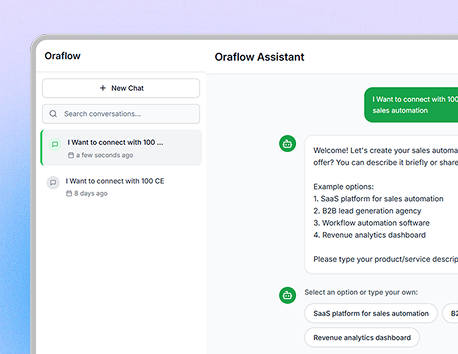
You tell Oppora who you want to reach, what you’re selling, and your outreach goal. Execution runs automatically from there.
Once your ICP is defined, Oppora continuously runs outbound prospecting using its 700M+ global leads and company database, enriched with live B2B data. Leads are discovered, enriched, and verified without manual list building.
Outreach Campaigns are created automatically, with emails personalized by real AI that rewrites messages based on context, not templates.
As replies arrive, Oppora goes beyond sending emails. Its AI reads responses and AI Reply Agent replies based on the responses, manages follow-ups, and books meetings automatically. All activity is logged in a built-in Sales CRM or synced with your existing CRM, so teams don’t lose visibility or context.
Oppora is also designed for safe scale:
This allows teams to increase outbound volume while maintaining inbox placement and reply quality.
Oppora doesn’t introduce new tactics. It operationalizes the ones that already work.
By connecting lead discovery, enrichment, outreach, replies, and booking into one Workflow Automation, Oppora removes manual friction and keeps outbound running consistently in the background.
For teams that already understand their ICP, it becomes the system that holds everything together without adding more work.
Lead generation isn’t about hacks or shortcuts. It’s a system that improves through focus and consistency. When teams chase too many methods at once, progress slows and effort gets wasted.
The better approach is to start small. Choose one or two methods that fit your market, refine them, and let real results guide what comes next. Over time, this creates clarity around what actually works.
As the process matures, the right tools can help remove friction instead of adding complexity. Platforms like Oppora.ai fit naturally at this stage when execution needs to run smoothly in the background.
The goal isn’t more activity. It’s steady, repeatable progress that keeps the pipeline moving without constant effort.
You find sales leads by using a mix of outbound, inbound, and paid methods. Outbound helps you reach specific prospects quickly, inbound attracts buyers over time, and paid channels scale what’s already working. The best approach depends on your target market and sales cycle.
The easiest way to get sales leads is to start with targeted outbound outreach, such as cold email or LinkedIn messaging. These methods give faster feedback than inbound channels and help you learn what messaging and audiences work before scaling.
Inbound leads are often warmer because prospects come to you, but outbound leads give more control and speed. Neither is better in every case. High-performing sales teams usually combine both, adjusting based on deal size and growth stage.
Sales leads are qualified by checking relevance, intent, and timing. Focus on whether the lead has the problem you solve, some influence over the decision, and a reason to act now. This helps sales teams avoid wasting time on low-quality opportunities.
Automation tools are most effective after lead sources and messaging are validated. Platforms like Oppora.ai help automate prospecting, outreach, replies, and meeting booking so teams can scale proven methods without adding manual work.
Summarize with AI
Share