Home
Blog
Find 500 B2B Contacts for Free Every Month with Built-In Outreach.
Home
Blog
Manasa Goli
Published March 14, 2026
5 min
Try Oppora AI
Create Self-Running Agentic Sales Workflows like N8N just by chatting with AI
Get Started for FREE
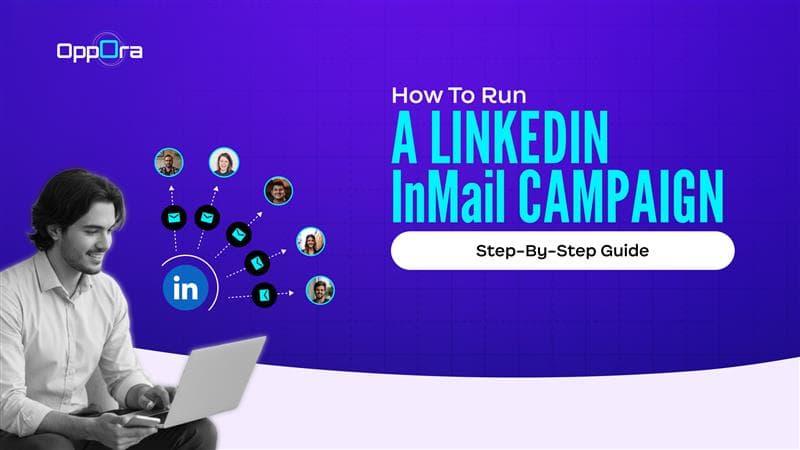
LinkedIn has become one of the most powerful platforms for B2B outreach. With millions of professionals actively networking and exploring opportunities, it offers direct access to decision-makers across industries.
However, connecting with the right prospects isn’t always easy. Traditional connection requests often go unnoticed, and cold emails frequently get buried in crowded inboxes.
This is where LinkedIn InMail campaigns come in.
LinkedIn InMail allows you to send messages directly to professionals—even if you’re not connected with them. This makes it a powerful channel for sales prospecting, recruitment, partnerships, and lead generation.
When executed strategically, a LinkedIn InMail campaign can generate significantly higher engagement compared to traditional outreach methods.
In this guide, you’ll learn:
A LinkedIn InMail campaign is a targeted outreach strategy that uses LinkedIn’s premium messaging feature to contact professionals who are not in your network.
Unlike regular LinkedIn messages, InMail allows you to send direct messages to anyone on the platform without a connection request.
Companies commonly use InMail campaigns for:
Because these messages are delivered inside LinkedIn’s professional environment, they often receive higher visibility and response rates compared to traditional email outreach.
In fact, studies suggest that LinkedIn InMail messages can achieve significantly higher open rates than standard email campaigns.
Before running an InMail campaign, it’s important to understand why this outreach channel is effective.
LinkedIn allows businesses to target professionals by:
This level of targeting makes InMail campaigns highly effective for reaching relevant prospects.
Unlike traditional cold emails that can end up in spam folders, InMail messages appear directly in a user’s LinkedIn inbox.
This increases the chances that your message will actually be read.
LinkedIn users are already in a professional mindset when they log in.
This makes them more likely to respond to relevant business opportunities.
LinkedIn’s Campaign Manager allows you to build precise audience segments and measure campaign performance.
This helps marketers continuously refine their outreach strategy.
Before running a campaign, it is important to understand the two main types.
This is the most common approach used by sales teams.
It involves:
This method is ideal for highly targeted B2B outreach.
Sponsored InMail allows companies to send messages to large audiences through LinkedIn Ads.
This approach is commonly used for:
Advertisers select audience targeting and set a budget, and LinkedIn delivers the messages to selected professionals.
Running a successful InMail campaign involves more than simply sending messages.
You need a structured approach that includes targeting, personalization, and follow-up.
Before launching a campaign, clearly define what you want to achieve.
Common objectives include:
Your campaign objective will determine the target audience, message structure, and call-to-action.
For example:
Lead generation campaign → CTA: “Book a quick demo.” Recruitment campaign → CTA: “Would you be open to a conversation?”
One of LinkedIn’s biggest advantages is its advanced targeting capabilities.
You can define your ideal audience using filters such as:
The more precisely you define your audience, the higher your campaign response rate will be.
For example:
Target Audience Example
Industry: SaaS Role: VP of Sales Company Size: 50–500 employees Location: North America
This ensures your InMail messages reach professionals who are most likely to benefit from your solution.
After defining your audience, the next step is building a prospect list.
This can be done using:
Sales teams typically export these leads into their outreach workflow.
Many companies now use AI-powered outbound tools like Oppora to manage prospect lists and run structured outreach campaigns across multiple channels.
This helps teams keep prospect data organized and scale outreach without losing personalization.
The success of your campaign largely depends on the quality of your message.
Your InMail should feel conversational, relevant, and personalized.
A typical structure includes:
Subject Line
Short, clear, and curiosity-driven.
Example:
"Quick question about your outbound strategy"
Opening Line
Reference something specific about the prospect.
Example:
"I noticed you're leading sales growth at [Company Name] and expanding your outbound team."
Value Proposition
Explain how you can help solve a problem.
Example:
"We recently helped several SaaS companies improve reply rates in outbound campaigns using AI-driven personalization."
Call-to-Action
Ask for a small commitment.
Example:
"Would you be open to a quick 10-minute conversation next week?"
Personalization is critical because LinkedIn users receive many messages daily.
Short, relevant messages tend to perform significantly better.
If you're running Sponsored InMail campaigns, you'll configure them in LinkedIn Campaign Manager.
Steps include:
LinkedIn will estimate your audience size and campaign reach based on your targeting criteria.
Most replies happen after follow-up messages.
A simple follow-up can significantly increase response rates.
Example:
"Hi [First Name], just wanted to follow up in case you missed my previous message. Would love to share how we’re helping sales teams improve outbound results."
Timing recommendation:
Here’s a simple example of an effective InMail message.
Subject: Quick idea for improving outbound replies
Hi Sarah,
I noticed you’re leading sales operations at GrowthTech.
Many SaaS companies we work with struggle with low reply rates in outbound campaigns.
At Oppora, we’ve built an AI outbound sales agent that helps teams personalize outreach at scale while maintaining deliverability.
Would you be open to a quick conversation to explore whether this could help your team?
Best,
Alex
To improve results, keep these proven strategies in mind.
Long messages reduce response rates.
Aim for 100–150 words.
Reference something specific about the prospect:
Your message should answer:
“Why should the recipient care?”
Run A/B tests with:
Testing helps identify which messages generate the highest engagement.
Running outreach manually can quickly become time-consuming for sales teams.
Modern outbound strategies combine LinkedIn outreach, email campaigns, and automated follow-ups.
Platforms like Oppora help sales teams scale outreach by:
Instead of sending random messages, teams can build structured outbound campaigns that maintain personalization while reaching more prospects.
This approach helps companies generate more conversations and qualified leads.
LinkedIn InMail campaigns are one of the most effective ways to connect with professionals who are outside your network.
When executed correctly, they allow businesses to reach highly targeted prospects and start meaningful conversations.
The key to success lies in:
As outbound sales becomes increasingly competitive, combining LinkedIn outreach with AI-driven tools like Oppora can help sales teams scale campaigns while maintaining authentic, personalized communication.
Summarize with AI
Share