12 Best Cold Calling Database Platforms for High-Converting Lists
Adam Hossain
Published May 6, 2026
18 min
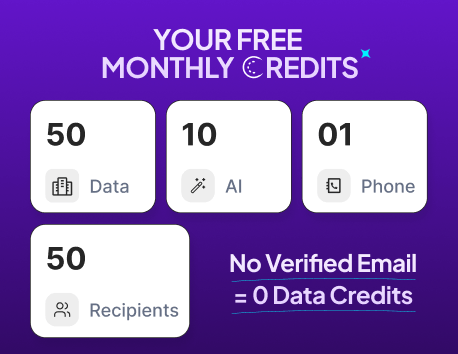
Complete Agentic Email Outreach
AI agents find and enrich prospects, personalize emails, follow up, handle replies, and book meetings automatically.
Claim Your FREE Credits
Cold calling still works—but only if you’re calling the right people with the right data.
If your list is outdated, incomplete, or filled with generic contacts, your conversion rates drop fast and your team wastes hours chasing dead leads.
That’s where a cold calling database becomes your biggest advantage.
It helps you find verified contacts, target decision-makers, and build high-converting call lists without guesswork.
In this guide, you’ll learn:
- What a cold calling database actually is
- Key features to look for
- 12 best platforms to consider
- How to choose the right one for your needs
What Is a Cold Calling Database (And Why It Matters)
A cold calling database is a platform that gives you access to verified contact details like phone numbers, job titles, and company information for your target prospects.
But it’s more than just a list.
It helps you identify the right people to call—decision-makers who are relevant to your offer.
Most tools also include filters, insights, and enrichment features to improve targeting.
This matters because cold calling today is not about volume.
It’s about precision.
When your data is accurate and well-segmented, your conversations improve, your connect rates increase, and your chances of closing deals grow significantly.
Key Features to Look for in a Cold Calling Database Platform
Once you know what a cold calling database does, the next step is understanding what separates a good platform from a great one.
You should look for accurate and verified contact data, access to both personal and corporate numbers, and deep insights into companies and decision-makers.
Features like real-time data enrichment, advanced filtering, and CRM integrations also matter.
These capabilities help you build cleaner lists, target smarter, and improve your overall calling efficiency.
Accuracy of phone numbers and contact data
Everything starts with data quality.
If your phone numbers are outdated or incorrect, your team spends more time dialing than actually selling.
A strong cold calling database ensures contacts are verified, regularly updated, and sourced from reliable providers.
This directly impacts your connect rates and protects your team from wasted effort.
Suggested Reading:
10 Best B2B Phone Number Finder Platforms Compared (2026)Availability of Personal Contact vs Corporate
Not all numbers are equal, and this is where many tools fall short.
Some platforms only provide generic company lines, which often lead to gatekeepers or dead ends.
You should ideally have access to:
- Direct dials of decision-makers
- Mobile numbers for higher connect rates
- Corporate numbers as backup options
This flexibility gives you multiple ways to reach the same prospect and increases your chances of real conversations.
Depth of company and decision-maker insights
Once you have the contact, context becomes your advantage.
A good database doesn’t just show names and numbers it tells you who the person is and why they matter.
Look for insights like job role, seniority, company size, industry, and even buying signals.
This helps you personalize your pitch and approach each call with relevance instead of guesswork.
Data freshness and enrichment capabilities
Even the best data becomes outdated quickly.
That’s why real-time enrichment is critical for keeping your lists accurate and usable.
The best platforms continuously update contact details and fill in missing information automatically.
This ensures you’re always working with the most current and complete data possible.
Suggested Reading:
10 Best Data Enrichment Companies That Give You Free CreditsFiltering and segmentation options
Having a large database is useless if you can’t narrow it down effectively.
You need strong filtering options to build targeted lists based on your ideal customer profile.
This usually includes filters like:
- Industry and location
- Company size and revenue
- Job title and department
With proper segmentation, your outreach becomes more focused and far more effective.
Suggested Reading:
How to Use LinkedIn Sales Navigator Advanced Search (+Full Filter List)Integration with CRM and outreach tools
Finally, your database should not work in isolation.
It should connect seamlessly with your CRM and outreach tools so your workflow stays smooth and organized.
This allows you to sync contacts, track conversations, and manage follow-ups without switching between multiple platforms.
When everything is connected, your entire sales process becomes faster, cleaner, and easier to scale.
12 Best Cold Calling Database Platforms for High-Converting Lists
Now that you know what to look for, the next step is choosing the right tools that actually deliver reliable data and real results.
Not every platform is built the same, and the difference often shows up in your connection rates and conversions.
In this section, you’ll explore some of the best cold calling database platforms that help you build accurate, targeted, and high-converting calling lists without wasting time on bad data or guesswork.
Suggested Reading:
10 Best B2B Database Tools for High-Volume Lead Generation1. Oppora.ai — AI-powered prospecting with enriched contact data
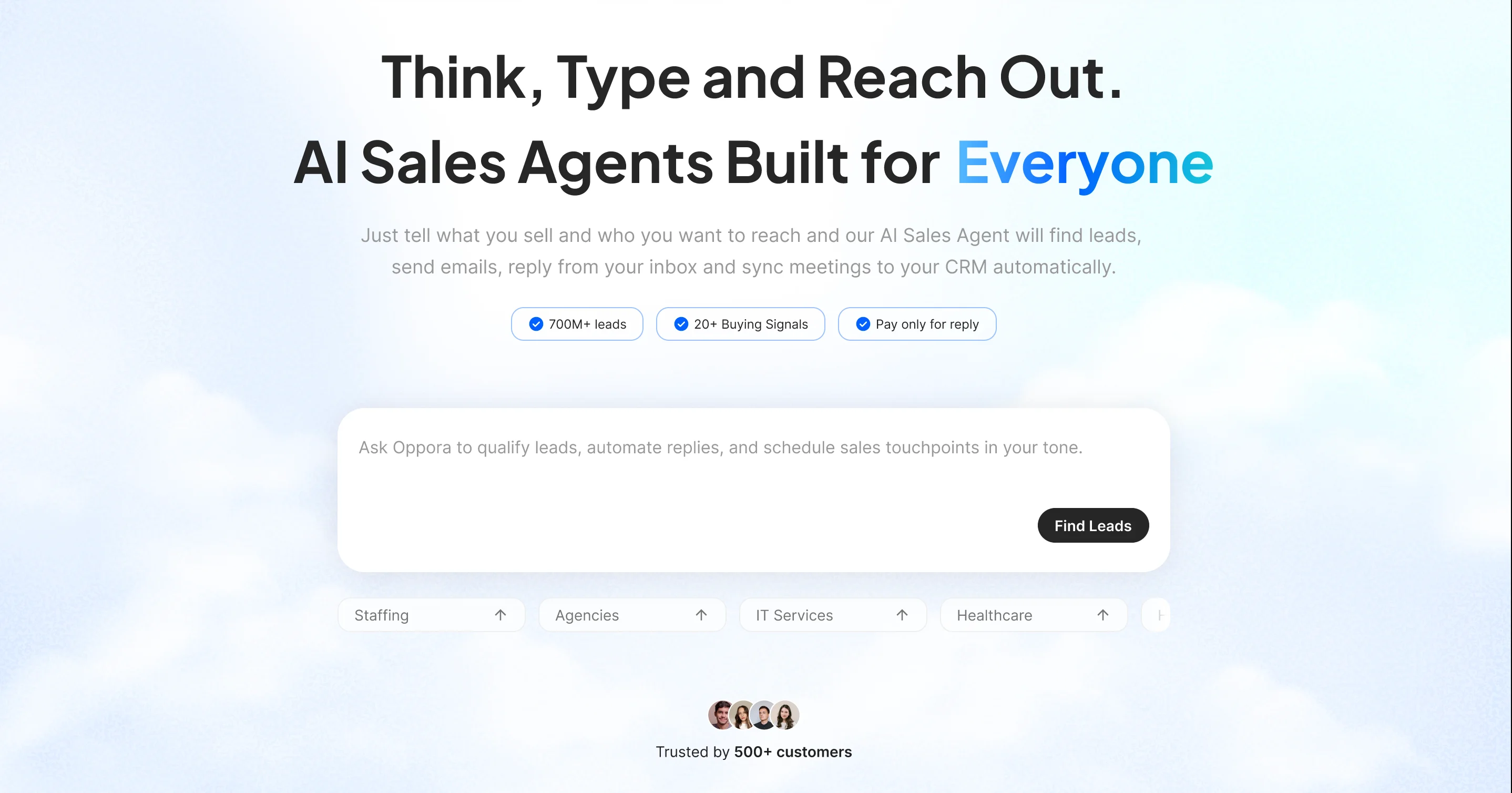
Most cold calling database tools help you with just one part of the process.
You either get contact data, or you get outreach features—but rarely both working together.
Oppora works differently by turning your entire list-building workflow into one automated system powered by AI outbound sales agents.
It gives you access to a 1B+ contact database, helping you find decision-makers across industries with high accuracy.
You start by defining your target audience using filters like role, industry, company size, or intent signals.
From there, Oppora automatically finds relevant prospects and builds your calling list without manual research.
Instead of just giving you raw data, it also:
- Enriches contacts with verified phone numbers and emails
- Identifies high-fit decision-makers instead of generic contacts
- Segments your list based on relevance and priority
- Syncs everything directly into your CRM
What makes it practical is how everything stays connected.
Your prospecting flows directly into list building, enrichment, and outreach without switching tools or cleaning data manually.
Oppora handles verification in the background, so your team focuses on real conversations.
From a pricing perspective:
- Starts at $34/month
- Uses separate credits for phone, and email
- Offers flexible add-on credit packs
- Includes unlimited campaigns and workflows
- Supports LinkedIn automation like connection requests and follow-ups
So instead of stacking multiple tools, you manage your entire outbound system in one place.
Suggested Reading:
10 Best LinkedIn Connection Automation Tool [Free + Paid Options]2. ZoomInfo — Enterprise-grade contact database with intent data
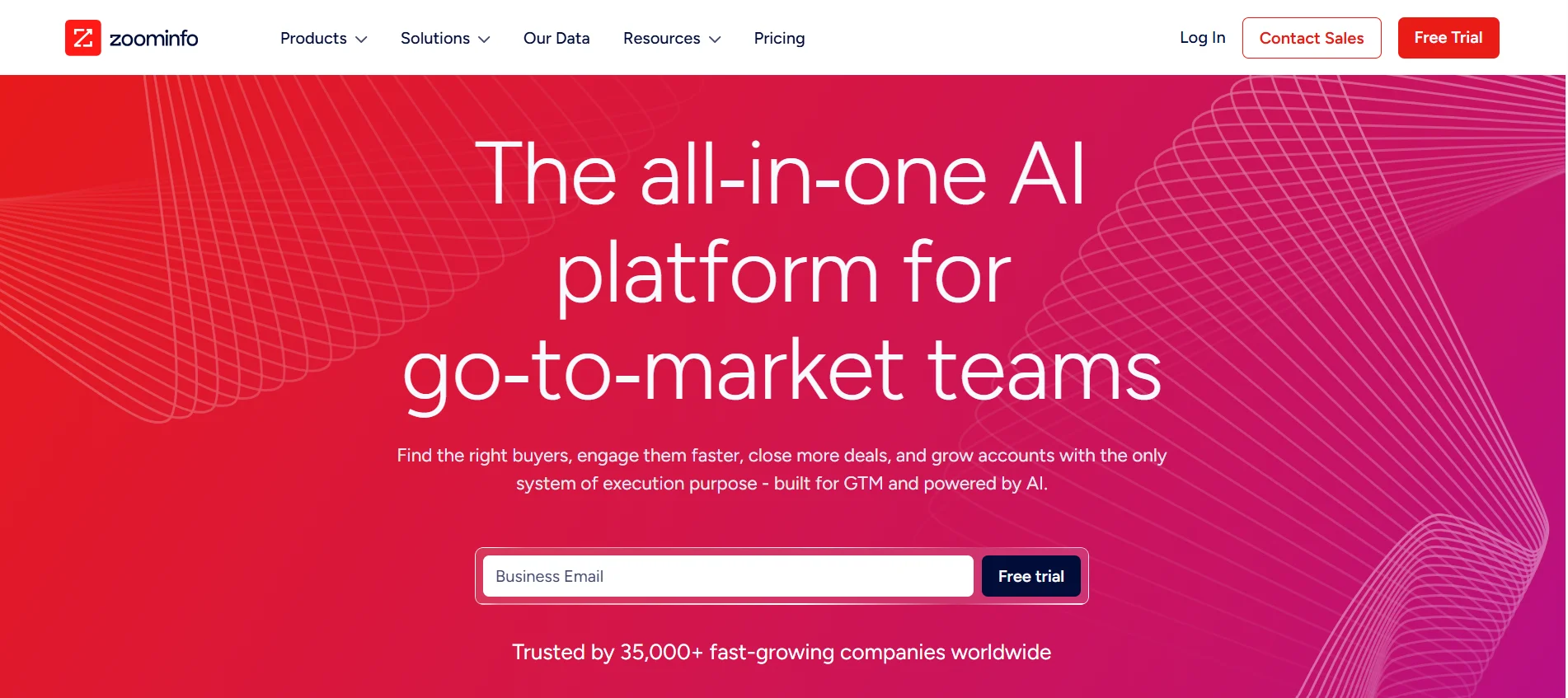
ZoomInfo is designed for large sales teams that need deep data, advanced targeting, and intent-driven prospecting.
It provides access to a massive B2B contact database with verified direct dials, company insights, and detailed org charts.
One of its biggest advantages is intent data, which helps you identify companies actively researching solutions, so your calls are more timely and relevant.
You can build highly targeted lists using filters like:
- Job title and seniority
- Company size and revenue
- Industry and technologies used
It also integrates well with major CRMs and sales tools, making it easier to manage large-scale outreach workflows.
However, ZoomInfo is built for enterprise use.
- Pricing is custom and typically high, often starting in the thousands per year
- Best suited for mid-size to large sales teams
- May feel complex for smaller teams or solo users
If your focus is scale, data depth, and intent-based targeting, ZoomInfo is a strong option—but it comes with a higher investment compared to most tools.
3. Apollo.io — All-in-one database with outreach features
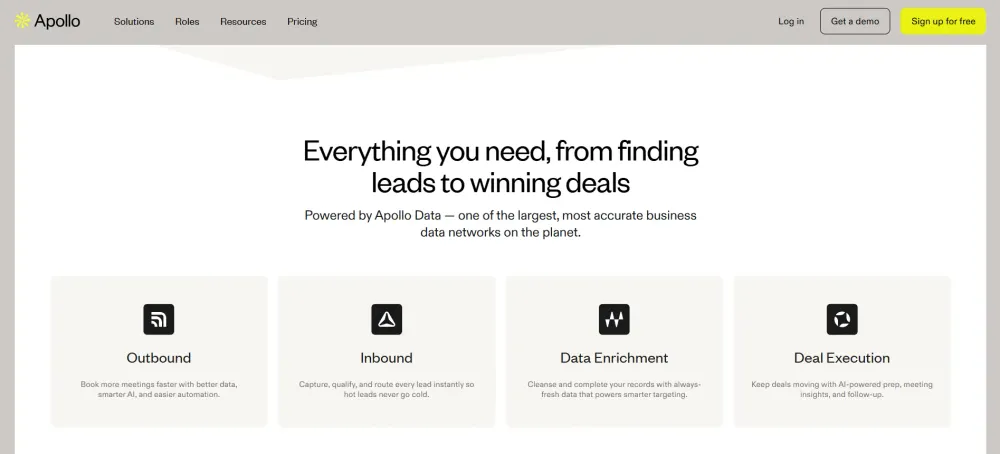
Apollo.io is a popular choice for teams that want both contact data and outreach capabilities in one platform.
It combines a large B2B database with built-in email sequencing, making it easier to move from prospecting to outreach without switching tools.
You can find decision-makers using filters like job title, company size, industry, and location.
The platform also provides verified emails and some direct dials, helping you build usable calling lists quickly.
Apollo stands out for its all-in-one approach.
- Built-in email outreach and sequencing
- Contact database with enrichment features
- Chrome extension for capturing leads
- Basic CRM and workflow integrations
This makes it especially useful for startups and small sales teams that want a simple, unified setup.
From a pricing perspective:
- Offers a free plan with limited credits
- Paid plans start around $49–$99/month per user
- Uses credit-based system for data access and enrichment
While it may not match enterprise tools in data depth, Apollo is a strong option if you want a balance between affordability, functionality, and ease of use.
4. Lusha — Easy-to-use phone number and email finder
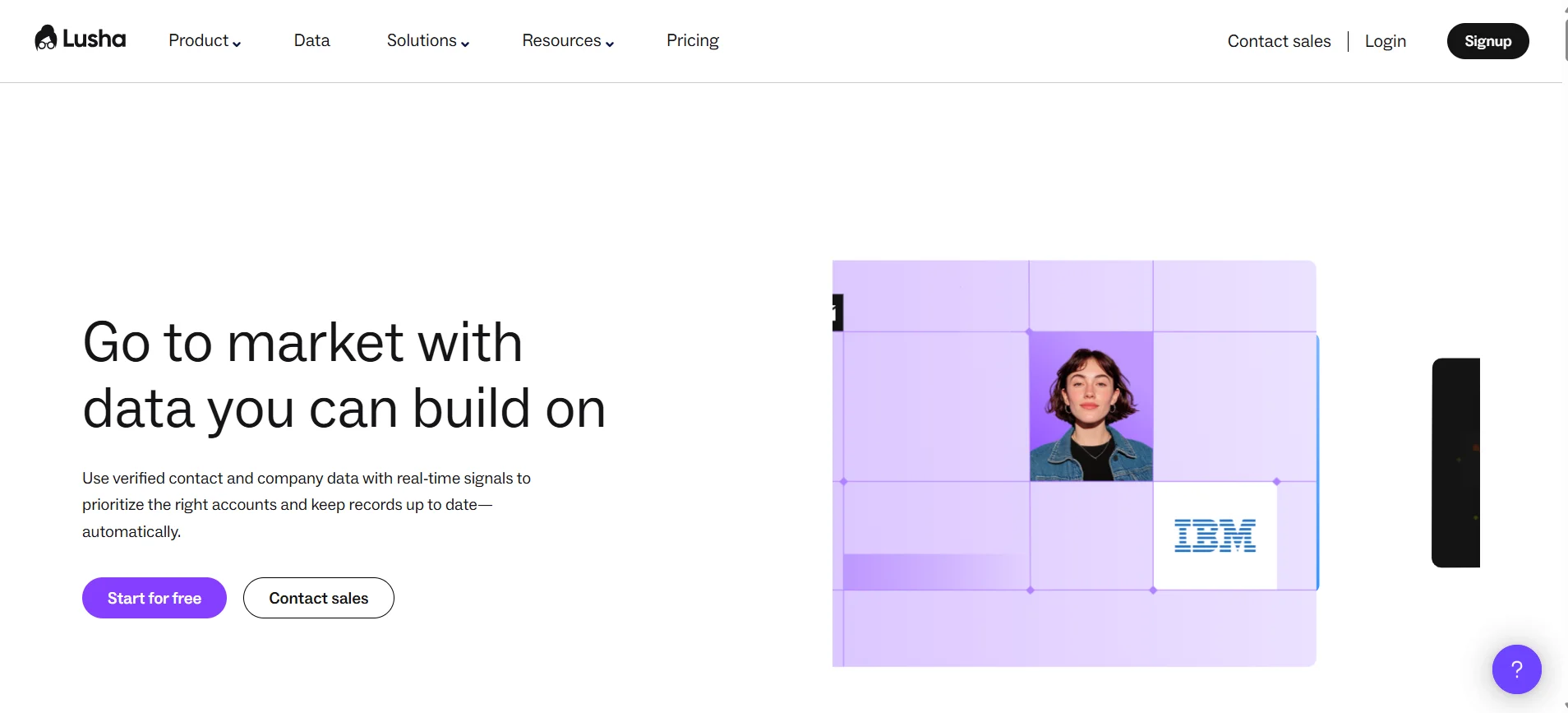
Lusha is known for its simplicity and speed when it comes to finding contact details.
It focuses on helping you quickly access verified phone numbers and emails without complex setup or workflows.
You can use Lusha directly through its Chrome extension while browsing LinkedIn or company websites, making it easy to capture leads in real time.
The platform is designed for ease of use rather than deep data analysis.
- Quick access to direct dials and email addresses
- Simple interface with minimal learning curve
- Chrome extension for LinkedIn-based prospecting
- Basic filtering and list-building features
This makes it a strong choice for individual reps, recruiters, or small teams who need fast data without heavy tooling.
From a pricing perspective:
- Offers a free plan with limited credits
- Paid plans start around $39–$99/month
- Uses a credit-based model for contact lookups
While Lusha may not provide advanced insights or large-scale enrichment, it works well if your priority is quickly finding accurate contact details for cold calling and outreach.
5. Cognism — GDPR-compliant global B2B data
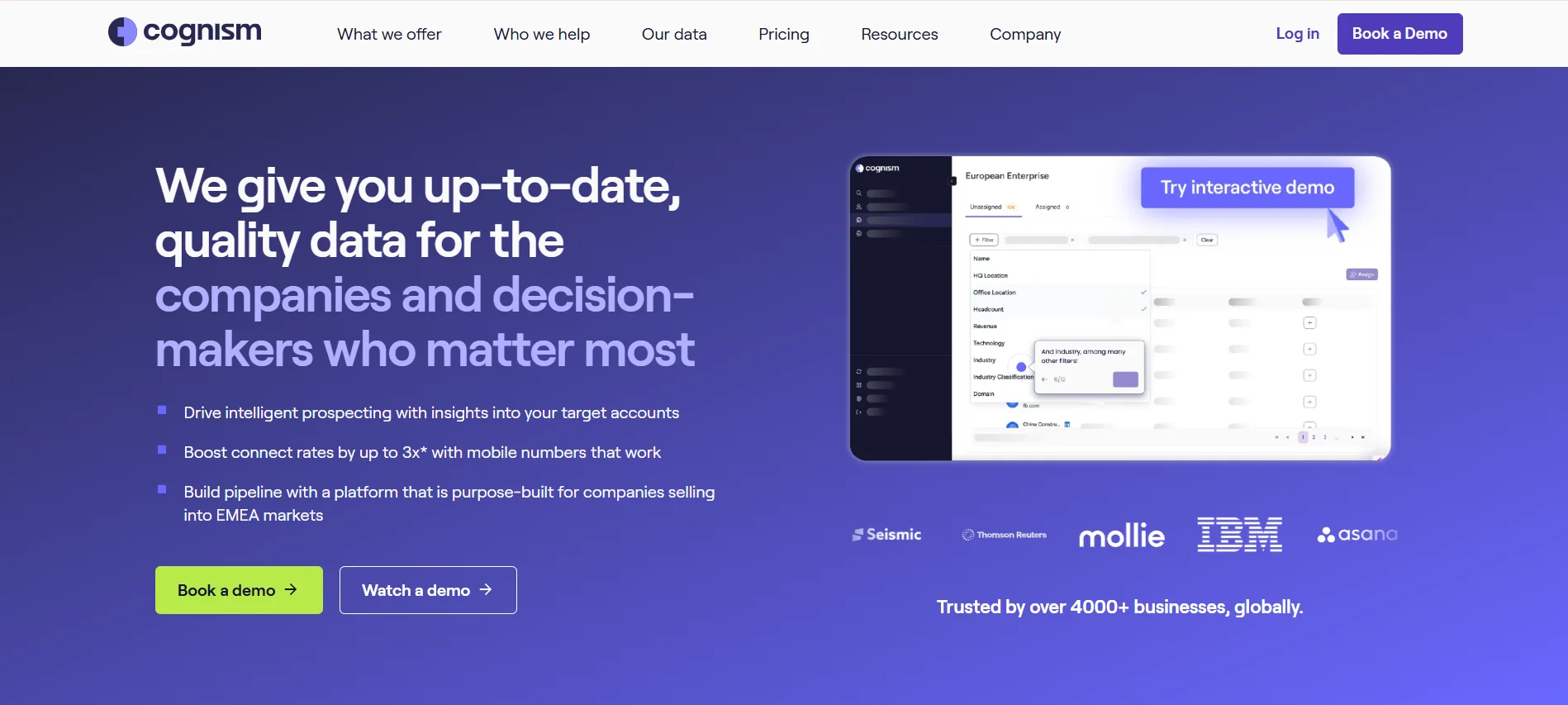
Cognism is a strong choice for teams that prioritize compliance and global data coverage.
It provides access to a large B2B contact database with a focus on GDPR-compliant data, making it especially valuable for companies targeting European markets.
You can build targeted calling lists using filters like job title, seniority, company size, and location.
Cognism is also known for its Diamond Data®, which includes phone-verified mobile numbers for better connect rates.
Key capabilities include:
- Verified direct dials and mobile numbers
- Strong coverage in Europe and international markets
- Intent data and company insights
- CRM and sales tool integrations
This makes it suitable for teams running outbound campaigns across multiple regions while staying compliant with data regulations.
From a pricing perspective:
- Uses custom pricing based on regions and data access
- Typically positioned as a premium tool for mid-size and enterprise teams
- No public free plan, but demos and trials may be available
If compliance, global reach, and phone-verified data are important to your strategy, Cognism is a reliable option for building high-quality cold calling lists.
6. UpLead — Real-time verified contact data
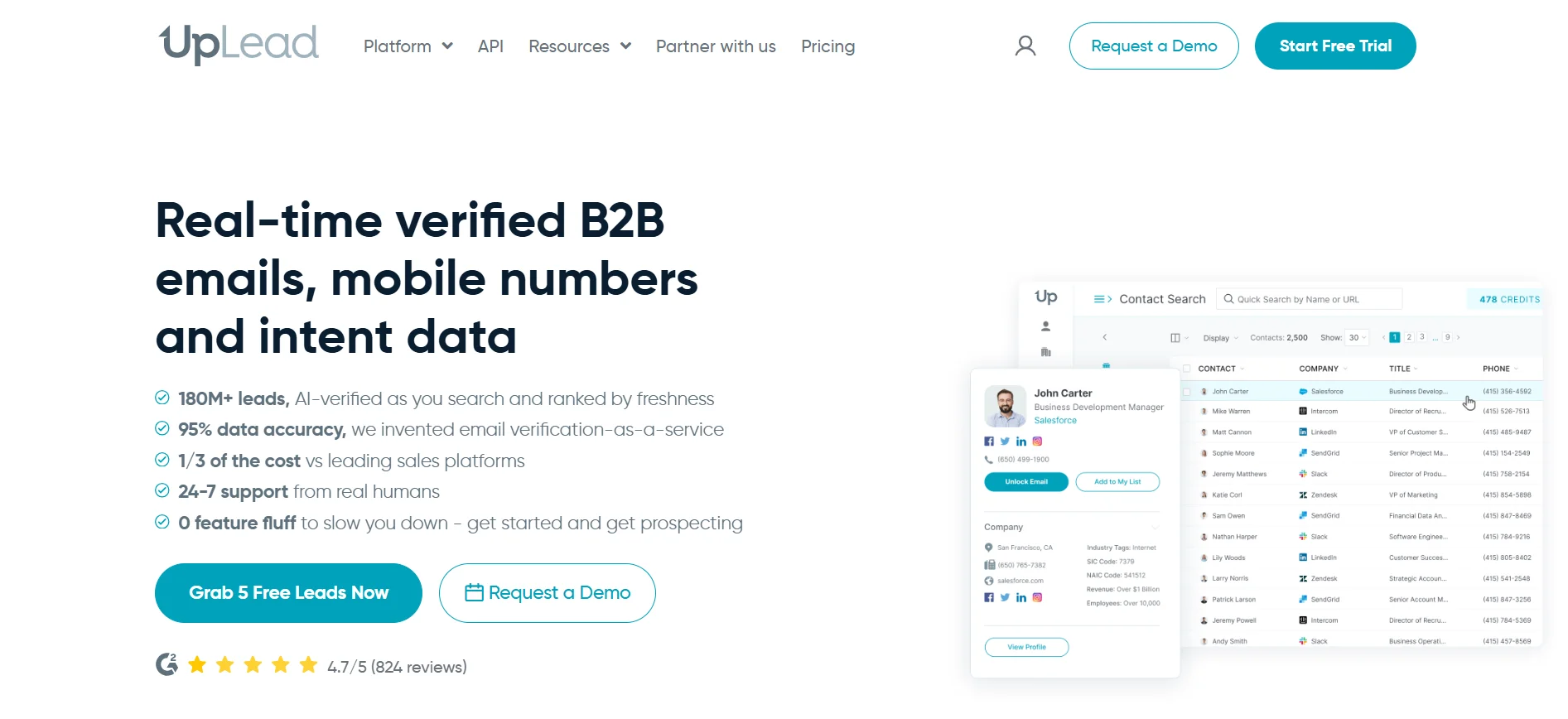
UpLead focuses on one core promise—giving you accurate, verified contact data in real time.
Instead of relying on static databases, UpLead verifies emails as you access them, which helps reduce bounce rates and improves overall outreach quality.
You can build targeted calling lists using filters like job title, industry, company size, and location.
The platform is especially known for its data accuracy guarantee, making it a reliable choice for teams that prioritize clean lists over sheer volume.
Key features include:
- Real-time email verification
- Direct dials and B2B contact data
- Technographic and firmographic filters
- CRM integrations for smooth workflows
This makes it a strong option for sales teams that want dependable data without complex setup.
From a pricing perspective:
- Paid plans start around $99/month
- Includes credits for contact access and enrichment
- No permanent free plan, but trials are often available
If your goal is to reduce wasted calls and improve connect rates with accurate data, UpLead offers a straightforward and reliable solution.
7. RocketReach — Large global contact database
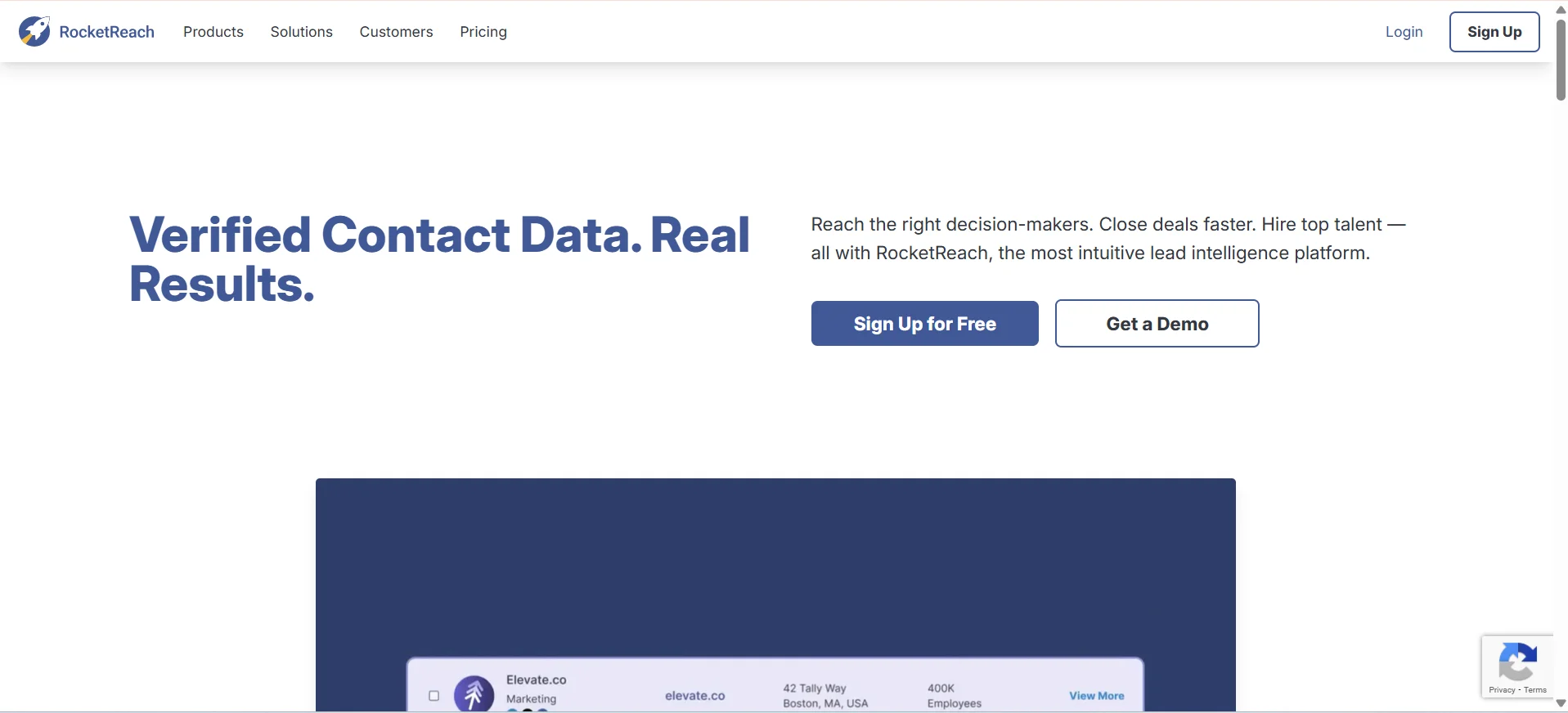
RocketReach is known for its extensive global database and wide coverage across industries.
It provides access to millions of professional profiles, including emails, phone numbers, and social links, making it useful for both B2B and cross-industry prospecting.
You can search for contacts using filters like name, company, role, and location, or even look up specific individuals directly.
RocketReach stands out for its database size and global reach, especially when targeting international markets.
Key features include:
- Large database of global contacts
- Email and some direct dial access
- Chrome extension for quick prospecting
- API access for data integration
This makes it a practical option for teams that need broad coverage rather than deep intent insights.
From a pricing perspective:
- Offers a limited free plan with basic lookups
- Paid plans start around $50–$100/month
- Uses a credit-based system for contact access
While it may not offer advanced enrichment or intent data like some enterprise tools, RocketReach works well if your priority is finding contacts quickly across a wide range of industries and regions.
8. LeadIQ — Sales prospecting with data capture
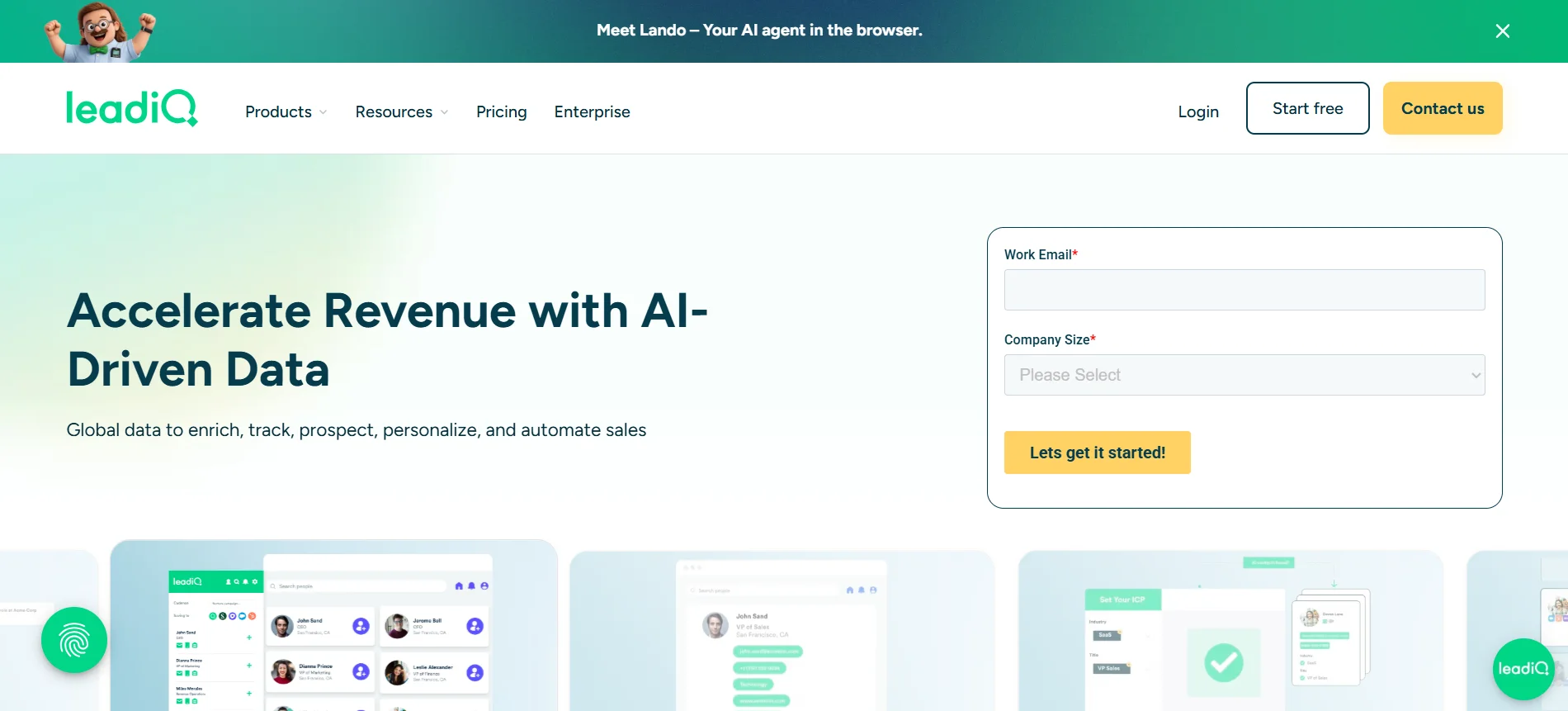
LeadIQ is designed to simplify how you capture and organize prospect data during your workflow.
Instead of searching databases separately, it focuses on helping you collect and enrich leads directly while browsing platforms like LinkedIn.
You can quickly capture contact details, sync them to your CRM, and prepare them for outreach without manual entry.
LeadIQ stands out for its real-time data capture and workflow integration, making it useful for sales reps who prospect daily.
Key features include:
- Chrome extension for capturing leads from LinkedIn
- Verified emails and limited direct dials
- CRM syncing and list management
- Basic enrichment and personalization support
This makes it a strong fit for outbound teams that rely heavily on LinkedIn prospecting.
From a pricing perspective:
- Offers a free plan with limited credits
- Paid plans start around $75–$100/month per user
- Uses a credit-based system for capturing and enriching contacts
While it’s not a deep database platform, LeadIQ works well if your focus is capturing, organizing, and activating leads quickly within your existing sales workflow.
9. Seamless.AI — Real-time contact discovery
Seamless.AI focuses on helping you discover contact data in real time rather than relying only on static databases.
It uses AI to search the web and generate contact details like emails and phone numbers as you prospect.
This makes it useful for building calling lists on the go, especially when targeting niche industries or specific accounts.
You can search using filters like job title, company, and location, then instantly pull contact information for outreach.
Seamless.AI stands out for its live data discovery approach.
- Real-time contact generation using AI
- Direct dials and email discovery
- Chrome extension for quick prospecting
- Basic CRM integrations
This makes it a good fit for reps who want to build lists dynamically instead of relying only on pre-built databases.
From a pricing perspective:
- Offers a free plan with limited credits
- Paid plans typically start around $100+/month
- Uses a credit-based system for contact searches
While data accuracy can vary compared to fully verified platforms, Seamless.AI works well if your priority is speed and real-time prospect discovery.
10. Kaspr — Phone numbers from LinkedIn profiles
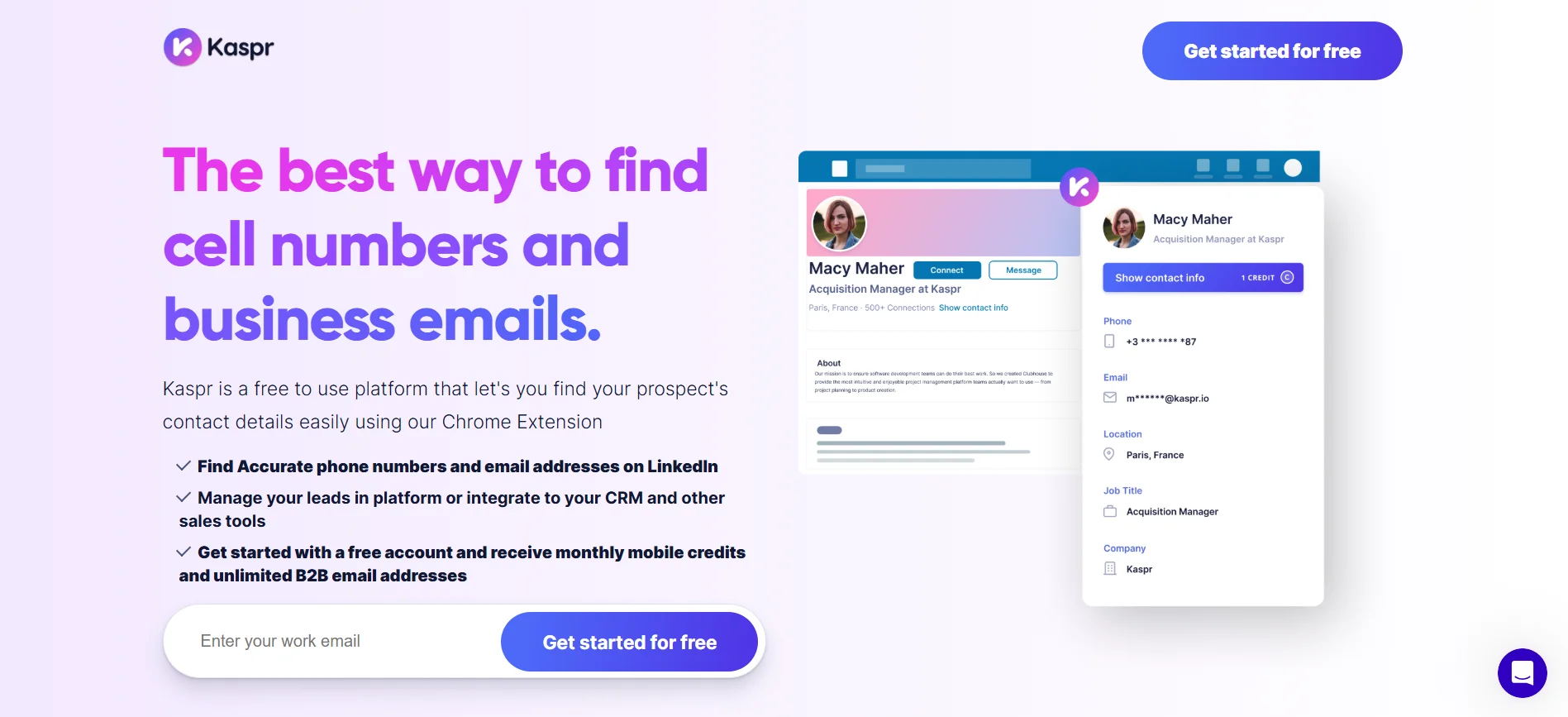
Kaspr is built specifically for extracting contact data directly from LinkedIn profiles.
It focuses on helping you find phone numbers and emails while you browse prospects, making it ideal for LinkedIn-driven prospecting workflows.
Instead of switching between tools, you can capture contact details in real time and add them to your calling lists instantly.
Kaspr is especially useful for sales reps who rely heavily on LinkedIn for lead generation.
Key features include:
- Direct phone number and email extraction from LinkedIn
- Chrome extension for real-time data capture
- Simple lead list building and export options
- Integration with basic CRM and outreach tools
This makes it a practical choice for individuals or small teams focused on fast and simple prospecting.
From a pricing perspective:
- Offers a free plan with limited credits
- Paid plans start around $30–$60/month
- Uses a credit-based system for contact lookups
While it doesn’t provide deep company insights or large database access, Kaspr works well if your priority is quickly finding phone numbers from LinkedIn profiles and turning them into ready-to-call leads.
11. Adapt.io — Affordable contact database for SMBs
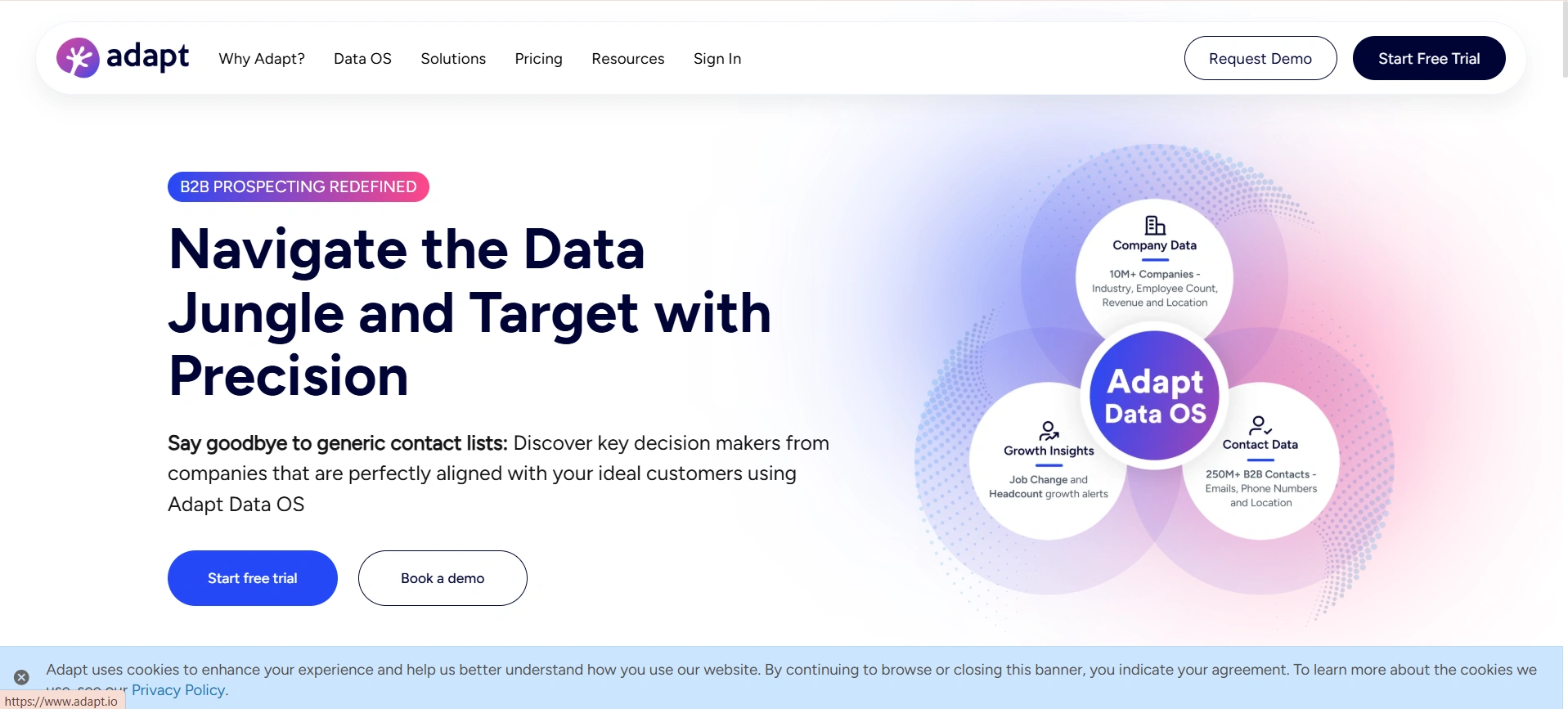
Adapt.io is designed for small and mid-sized businesses that need a simple and budget-friendly way to build contact lists.
It provides access to a global B2B database with emails, some direct dials, and basic company insights.
You can search for prospects using filters like industry, job title, company size, and location, making it easy to create targeted calling lists without complexity.
Adapt.io focuses on ease of use and affordability rather than advanced features.
Key capabilities include:
- B2B contact database with email and phone data
- Basic filtering and segmentation options
- Chrome extension for quick lead capture
- CRM integrations for syncing contacts
This makes it a good fit for startups, small sales teams, and agencies that need reliable data without enterprise-level costs.
From a pricing perspective:
- Offers a free plan with limited credits
- Paid plans start around $49–$99/month
- Uses a credit-based system for contact access
While it may not offer deep enrichment or intent data, Adapt.io works well if your priority is building targeted lists at an affordable price point.
12. SalesIntel — Human-verified contact data
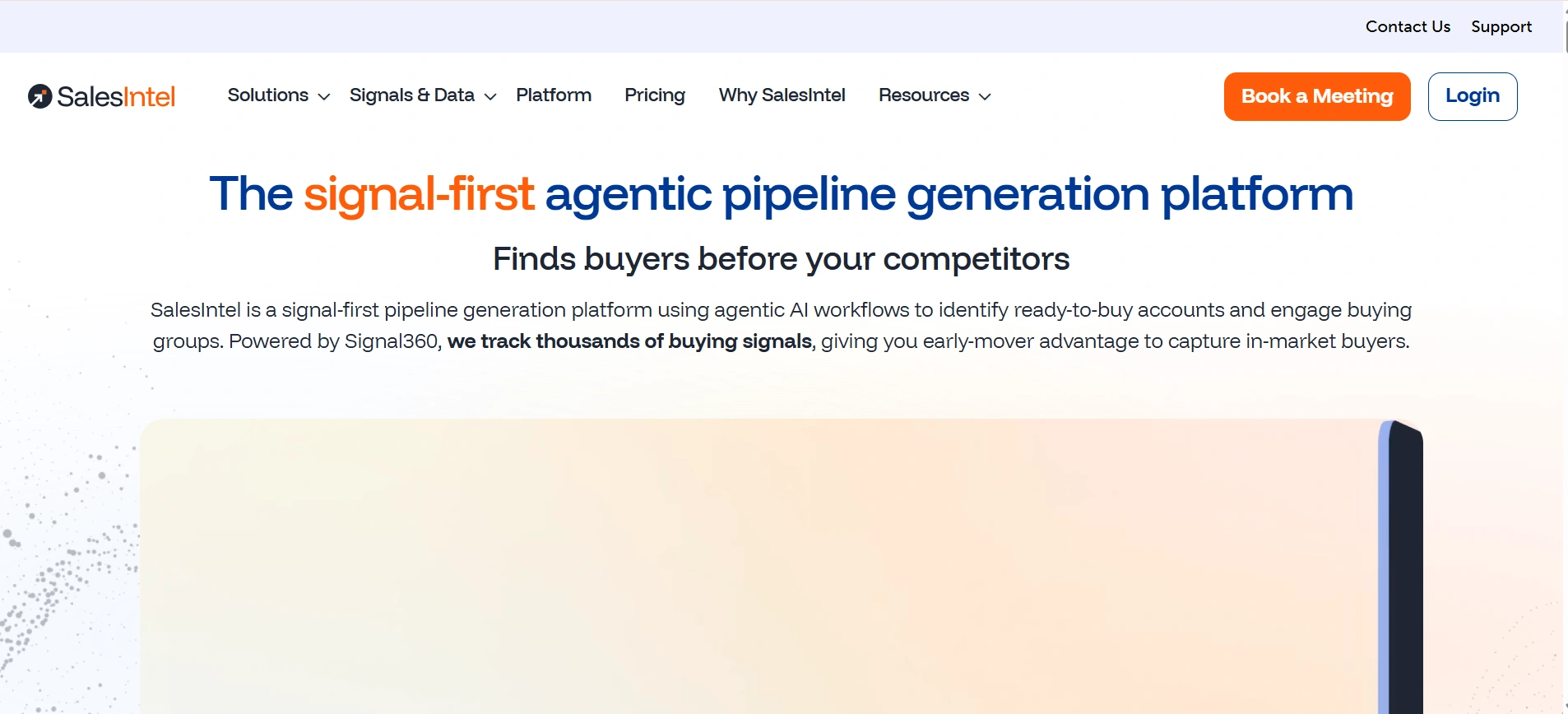
SalesIntel focuses on delivering highly accurate contact data through human verification.
Unlike platforms that rely only on automated scraping or AI, SalesIntel uses a team to manually verify contacts, which helps improve data reliability and connect rates.
It provides access to direct dials, verified emails, and company insights, making it suitable for teams that prioritize accuracy over volume.
You can build targeted calling lists using filters like job title, industry, company size, and intent signals.
SalesIntel stands out for its human-verified data approach.
- Human-checked contact details for higher accuracy
- Direct dials and verified emails
- Buyer intent data for better targeting
- CRM integrations for workflow alignment
This makes it a strong option for teams that want cleaner data and fewer wasted calls.
From a pricing perspective:
- Uses custom pricing based on data usage and features
- Typically positioned for mid-size to enterprise teams
- No standard free plan, but demos are usually available
If your priority is data accuracy and verified contacts, SalesIntel is a reliable choice for building high-quality cold calling lists.
How to Choose the Right Cold Calling Database Platform
Now that you know what features matter, the real question is—how do you pick the right platform for your specific needs?
The answer isn’t one-size-fits-all.
It depends on how you sell, who you target, and how your team operates day to day.
Let’s break it down in a practical way.
Based on data accuracy vs database size
Most tools will position themselves as having the “largest database.”
But size means nothing if the data isn’t accurate.
You’re always better off choosing a platform with slightly fewer contacts but higher verification standards.
Clean data leads to better conversations, while large but messy databases only inflate your outreach volume without results.
Suggested Reading:
10 Best B2B Database Tools for High-Volume Lead GenerationBased on geography and target market
Not every database performs equally across regions.
Some platforms are stronger in the US, while others provide better coverage in Europe or emerging markets.
So before choosing, think about where your ideal customers are located.
If your database lacks strong coverage in your target geography, even the best features won’t help you connect with the right people.
Based on budget and team size
Your budget and team structure play a big role in your decision.
If you’re a solo founder or small team, you need something simple, affordable, and easy to manage.
Larger teams, on the other hand, may need advanced features like bulk prospecting, team collaboration, and deeper analytics.
The key is to avoid overpaying for features you won’t use—or underinvesting in tools that limit your growth.
Based on integration with your sales workflow
Finally, think about how the tool fits into your existing workflow.
Your cold calling database should work seamlessly with your CRM, email tools, and outreach systems.
If it doesn’t integrate well, your team will end up wasting time on manual data entry and switching between tools.
A well-integrated platform keeps everything connected, so you can focus more on selling and less on managing systems.
Common Mistakes When Using Cold Calling Databases
Even with the right platform, results can fall flat if the data is used the wrong way.
Most teams don’t fail because of the tool—they fail because of how they build and use their lists.
If you avoid the following mistakes, your calling efforts become far more effective and predictable.
Relying on outdated or unverified data
This is one of the most common and costly mistakes.
If your data isn’t verified or regularly updated, you end up calling wrong numbers, disconnected lines, or irrelevant contacts.
That not only wastes time but also lowers team morale.
Always prioritize platforms that verify and refresh data continuously.
Prioritizing volume over relevance
It’s tempting to build massive lists and focus on dialing more numbers.
But more calls don’t automatically mean more results.
In reality, smaller and highly targeted lists outperform large, generic ones.
You should focus on quality first, ensuring every contact has a real potential to convert.
Not filtering for decision-makers
Calling the wrong person slows everything down.
If your list includes junior roles or unrelated contacts, you spend more time navigating internally instead of selling.
You should always filter for:
- Relevant job titles
- Seniority level (manager, director, founder, etc.)
- Decision-making authority
This ensures your calls reach people who can actually say “yes.”
Ignoring data enrichment before calling
Raw data alone is not enough to have meaningful conversations.
Without context, your pitch feels generic and easy to ignore.
Enrichment adds details like company size, industry, recent activity, or role-specific insights.
This helps you personalize your approach and sound more relevant from the first few seconds of the call.
Not updating lists regularly
Even good data expires faster than most teams expect.
People change roles, companies evolve, and contact details become outdated.
If you keep using the same list for weeks or months, performance drops naturally.
Make it a habit to refresh, clean, and update your lists consistently so your outreach stays accurate and effective.
Conclusion
A cold calling database is only as powerful as the way you use it.
When your data is accurate, targeted, and regularly updated, your calls become more relevant and your conversion rates improve naturally.
But when you rely on outdated lists or chase volume over quality, even the best tools won’t deliver results.
The key is to combine the right platform with the right process.
If you want to simplify that entire workflow—from finding prospects to building ready-to-call lists—tools like Oppora can help you do it faster, cleaner, and with far less manual effort.
Frequently Asked Questions (FAQs)
How often should you update your cold calling database?
You should ideally refresh your database every 2–4 weeks depending on your industry. Contact data changes frequently as people switch roles or companies. Regular updates ensure your phone numbers remain valid and your outreach stays relevant. If you rely on static lists for too long, your connect rates will drop and your team will waste time on outdated contacts.
Is cold calling still effective in 2026?
Yes, cold calling is still effective—but only when combined with accurate data and proper targeting. Random dialing no longer works. Modern cold calling depends on high-quality databases, verified phone numbers, and personalized conversations. When done right, it can still generate strong pipeline and immediate feedback compared to slower channels like email.
What industries benefit the most from cold calling databases?
Cold calling databases work best for B2B industries where reaching decision-makers directly matters. This includes SaaS, agencies, staffing, IT services, consulting, and healthcare sales. Any business selling high-ticket or complex solutions can benefit from direct conversations with qualified prospects.
How do you improve connect rates when cold calling?
To improve connect rates, focus on using verified mobile numbers, calling at optimal times, and targeting the right decision-makers. Avoid generic lists and prioritize relevance over volume. Also, having context about the prospect’s role or company helps you start stronger conversations, increasing your chances of engagement.
Can you combine cold calling with other outreach channels?
Yes, combining cold calling with email and LinkedIn outreach significantly improves results. Multi-channel outreach helps you stay visible and increases response rates. For example, you can call a prospect after they’ve seen your email or LinkedIn message, making the conversation more familiar and effective.
Summarize with AI
Share