Home
Blog
Find 500 B2B Contacts for Free Every Month with Built-In Outreach.
Home
Blog
Stephen Parker
Published April 24, 2026
13 min
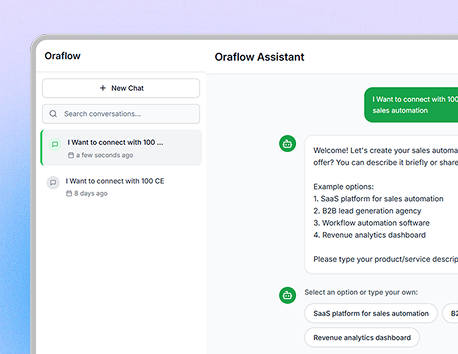
Try Oppora AI
Create Self-Running Agentic Sales Workflows like N8N just by chatting with AI
Get Started for FREE
Most sales conversations fail before they even begin, not because your product is weak, but because the questions are.
If you rely too much on pitching instead of asking the right open-ended questions for sales, you miss what actually matters to your prospect.
That is where great sales reps stand out. They guide conversations, not control them.
In this guide, you will learn:
By the end, you will know how to ask questions that actually move deals forward.
Most prospects don’t want another pitch sitting in their inbox or interrupting their day.
What they actually respond to is a conversation that feels relevant, thoughtful, and centered around them.
That’s exactly where open-ended questions for sales change everything. Instead of pushing your message, you create space for the buyer to share theirs.
Let’s break down why this shift matters so much in real sales conversations.
Short answers kill momentum in sales calls.
If your questions can be answered with a simple “yes” or “no,” the conversation ends before it even begins.
Open-ended questions for sales calls invite prospects to explain their situation in detail, which naturally extends the conversation and gives you more context to work with.
The longer the conversation, the more opportunities you have to understand, connect, and guide.
People trust conversations, not scripts.
When your approach feels like a two-way discussion instead of a one-sided pitch, prospects lower their guard and engage more openly.
Using open-ended question examples for sales helps you sound curious and human, rather than transactional or pushy.
And when prospects feel heard, they are far more likely to trust your recommendations.
Most buyers won’t tell you their real problems upfront.
Surface-level questions only lead to surface-level answers, which means you miss the actual pain driving their decisions.
The best open-ended questions for sales are designed to go deeper, helping you uncover challenges, frustrations, and hidden blockers that truly matter.
Once you understand the real problem, your solution becomes far more relevant.
Asking questions is only half the job.
What you do with the answers matters even more.
When you use open-ended questions for sales reps and actively listen, you can quickly identify whether a prospect is a good fit, what stage they are in, and how serious their intent is.
This helps you prioritize the right opportunities instead of chasing every lead.
Prospects respond when the conversation feels about them, not you.
If your questions guide the discussion toward their goals, challenges, and priorities, engagement naturally increases.
Open-ended questions for sales associates help shift the focus from pitching features to understanding outcomes, which makes your outreach feel more relevant and timely.
And that is what ultimately drives replies, meetings, and conversions.
Suggested Reading:
Cold Email vs. Cold Calling: What Should You KnowKnowing what to ask is important, but knowing when to ask is what actually makes your questions effective.
Even the best open-ended questions for sales can fall flat if they are used at the wrong moment in the conversation.
Here’s how to use them strategically across different stages of your sales calls.
First impressions shape the entire conversation.
If you jump straight into a pitch, you risk losing the prospect before they even engage.
Instead, start with open-ended questions for sales calls that invite them to share context, like what they are currently working on or exploring.
This helps you shift from a cold start to a natural conversation quickly.
This is where most of the real value lies.
During discovery, your goal is not to impress but to understand what is actually broken or missing.
Using open-ended question examples for sales helps you go beyond surface-level answers and uncover deeper challenges that prospects may not openly share at first.
The better you understand the pain, the stronger your positioning becomes.
Not every prospect is ready to buy.
Some are exploring, some are comparing, and others are just curious.
Open-ended questions for sales reps help you figure out what matters most to them, what they are prioritizing, and how serious they are about solving the problem.
This clarity saves time and helps you focus your efforts on the right opportunities.
A generic demo rarely works.
If you don’t understand what the prospect cares about, your demo becomes a feature walkthrough instead of a solution.
Ask the best open-ended questions for sales before the demo to understand what they want to see, what success looks like, and what concerns they already have.
This allows you to tailor the demo to their specific needs.
Objections are not rejections; they are signals.
Instead of countering immediately, use open-ended questions for sales associates to explore what is really behind the hesitation.
When you ask the right follow-up questions, prospects often reveal concerns that are easier to address than the surface objection.
This turns resistance into an opportunity for clarity.
Closing is not about pushing; it is about guiding.
At this stage, your questions should help prospects think through their decision and next steps.
Open-ended questions for sales calls can help you understand what is holding them back and what they need to move forward confidently.
This makes the transition to the next step feel natural instead of forced.
Now that you know when to use them, the next step is knowing what to actually ask.
The best open-ended questions for sales are not random. They are tied to specific moments in your conversation.
Below, you’ll find practical, ready-to-use questions grouped by situation, along with simple examples to help you apply them naturally.
Before you suggest anything, you need to understand how things work today.
These open-ended questions for sales reps help you map their current workflow and identify gaps.
Example: You ask, “How are you currently managing outbound campaigns?”They explain manual steps, and you identify inefficiencies you can later address.
This is where real opportunities start to show up.
Use these open-ended questions examples for sales to uncover what is slowing them down or causing frustration.
Example: A prospect says lead quality is inconsistent, so you now know exactly where to focus the conversation.
Not every problem is urgent.
These questions help you understand what actually matters to the prospect right now.
Example: If their priority is scaling outreach, you can position your solution around growth instead of just efficiency.
Deals often stall because you do not know how decisions are made.
These open-ended questions for sales associates bring clarity to the buying process.
Example: You learn there are multiple stakeholders, so you adjust your approach early instead of getting blocked later.
Timing changes everything in sales.
These open-ended questions for sales calls help you gauge how serious and ready the prospect is.
Example:If they mention an upcoming deadline, you can align your next steps around that urgency.
Instead of pushing back, you want to understand the hesitation.
These are some of the best open-ended questions for sales when objections come up during a live conversation.
Example: A pricing concern may actually be a value concern, which gives you a better way to respond.
Follow-ups work better when they continue the conversation instead of restarting it.
These open-ended questions for sales reps help you pick up where things left off.
Example: You reference their earlier feedback, and the conversation feels more relevant and intentional.
At some point, you need to guide the conversation forward.
These open-ended questions for sales calls help prospects think through what needs to happen next.
Example: Instead of forcing a close, you let the prospect define the next action, which often creates stronger commitment.
These questions are not meant to sound scripted.
They are meant to help you stay curious, listen better, and turn normal conversations into meaningful sales progress.
Not every sales call is the same, so your questions should not be either.
The way you approach a cold call is very different from how you handle a closing conversation.
That is why using the right open-ended questions for sales calls based on the situation can completely change how your conversations perform.
Here’s how to adapt your questions across different stages of the sales process.
Cold calls are all about starting a conversation, not selling immediately.
Your goal is to spark interest and understand if there is even a reason to continue.
These open-ended questions for sales help you move from interruption to interaction quickly.
Discovery calls are where you gather real insights.
This is the stage where strong open-ended questions examples for sales make the biggest difference.
These questions help you go deeper and understand what actually matters.
Demos should feel tailored, not generic.
Your questions here should guide what you show and how you position your product.
The best open-ended questions for sales during demos help you connect features to real needs.
Follow-ups are where many deals either progress or fade away.
Your goal is to re-engage and understand what has changed since your last conversation.
These open-ended questions for sales reps keep the conversation relevant and moving forward.
Closing is about clarity, not pressure.
At this stage, your questions should help the prospect make a confident decision.
These open-ended questions for sales calls make the transition to closing feel natural instead of forced.
At this point, you understand that asking the right questions is only one part of the equation.
The real challenge is doing it consistently across every prospect, every call, and every follow-up without losing context or momentum.
This is where systems like Oppora.ai help you turn good conversations into repeatable outcomes.
Better conversations start with better targeting.
Oppora.ai helps you build targeted prospect lists so your open-ended questions for sales feel more natural and personalized from the very first touchpoint.
Not every lead deserves equal attention.
This helps you use your best open-ended questions for sales where they actually drive outcomes, instead of spreading your effort too thin.
Generic outreach leads to weak conversations.
With better context, your open-ended question examples for sales feel more relevant, which improves engagement and response quality.
Suggested Reading:
Follow Up Email on Business Proposal: How to Write + 15 Sample EmailsMost deals are lost because follow-ups are inconsistent.
This ensures your open-ended questions for sales reps carry forward instead of restarting every conversation from scratch.
As conversations scale, managing replies becomes difficult.
Oppora keeps conversations active and helps you move deals forward without missing opportunities or slowing down your workflow.
Suggested Reading:
10 Cold Email Mistakes That Kill Replies (and How to Fix Them)Asking open-ended questions for sales is powerful, but only when done right.
In many cases, it’s not the question itself that fails, but how and when it is asked.
Here are some common mistakes that can quietly hurt your sales conversations.
More questions do not mean better conversations.
When you fire questions back-to-back without giving space, it can overwhelm the prospect and make the interaction feel rushed.
Instead, slow down and let the conversation breathe so your open-ended questions for sales feel natural and thoughtful.
Prospects can easily tell when you are reading from a script.
Even the best open-ended questions for sales lose their impact if they sound rehearsed or robotic.
Focus on being genuinely curious and adapt your questions based on what the prospect just shared.
Many reps ask a question but don’t wait for the full answer.
Interrupting too soon not only breaks the flow but also signals that you are not truly listening.
Let prospects finish their thoughts so your open-ended questions examples for sales actually lead to deeper insights.
Generic questions lead to generic answers.
If your questions are not tailored to the prospect’s situation, they won’t feel relevant or engaging.
Use context like industry, role, or recent activity to make your open-ended questions for sales reps more meaningful.
A discovery call should feel like a conversation, not an interview.
If every interaction feels like a checklist of questions, prospects may disengage quickly.
Balance your open-ended questions for sales calls with insights, reactions, and small moments of discussion to keep things natural and human.
At the end of the day, sales is not about how well you pitch, but how well you understand your prospect.
That understanding comes from asking the right open-ended questions for sales at the right time and actually listening to the answers.
When you shift from pitching to guiding conversations, everything changes. Your interactions feel more natural, your insights get sharper, and your chances of closing improve without added pressure.
The best open-ended questions for sales are not scripts to follow but tools to stay curious and relevant in every conversation.
And if you want to make this process consistent at scale, having a system like Oppora.ai behind your outreach can help you turn better questions into better outcomes.
Open-ended questions for sales are questions that cannot be answered with a simple yes or no, and instead encourage prospects to share detailed insights about their needs, challenges, and goals, helping you understand their situation more clearly.
They shift the focus from pitching to understanding, allowing you to learn directly from the prospect, which makes your conversations more relevant, builds trust, and increases the chances of moving the deal forward.
Some common open ended questions examples for sales include asking how a prospect currently handles a process, what challenges they are facing, or what outcomes they are trying to achieve, all of which help uncover deeper insights during conversations.
Open ended questions for sales calls can be used throughout the entire sales process, including cold calls, discovery, demos, follow-ups, and objection handling to keep conversations meaningful and engaging.
They help uncover real pain points, improve lead qualification, and create more customer-focused conversations, which naturally leads to higher engagement, better response rates, and stronger conversions.
Summarize with AI
Share