Home
Blog
Find & Send Cold Emails to 500 Unique Prospects Every Month for FREE.
Home
Blog
Manasa Goli
Published February 17, 2026
6 min
Try Oppora AI
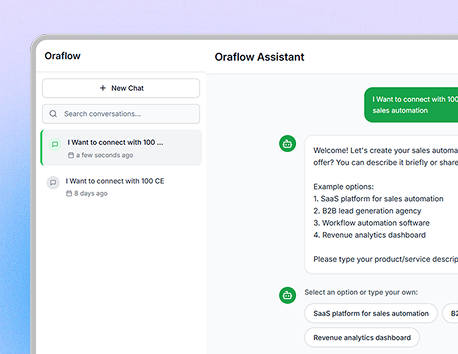
Create Self-Running Agentic Sales Workflows like N8N just by chatting with AI
Get Started for FREE
Inbound builds brand.
Outbound builds pipeline.
In 2026, companies that depend only on inbound are facing longer sales cycles, unpredictable deal flow, and rising competition. The most scalable growth engines today combine inbound awareness with structured, intelligent outbound lead generation strategies.
But here’s the shift:
Outbound is no longer about volume. It’s about precision, timing, and intelligence.
Let’s break down the most effective outbound lead generation strategies that are working right now — and why.
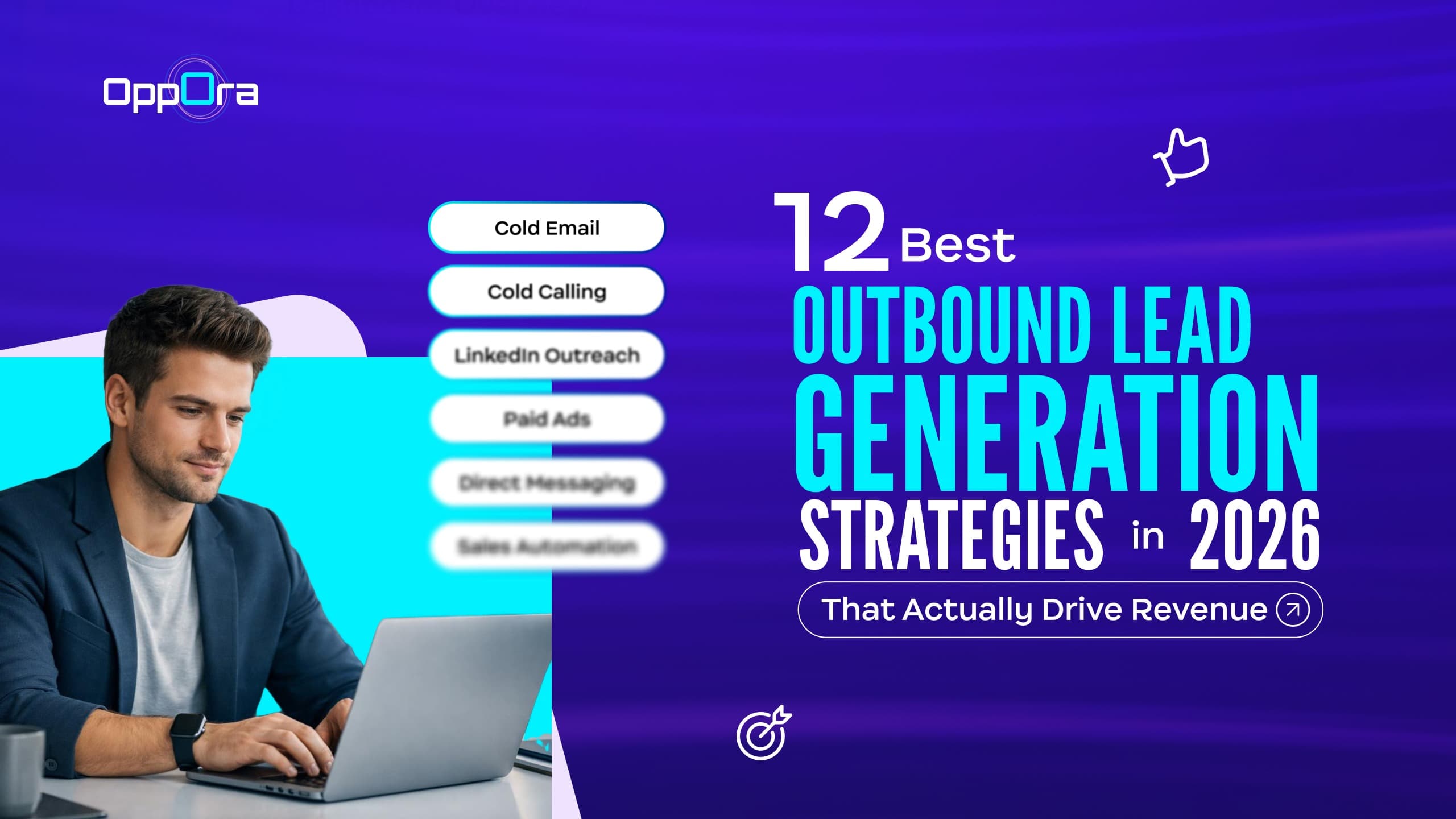
An outbound lead generation strategy is a proactive approach where businesses initiate contact with potential customers through channels like:
Instead of waiting for prospects to discover you, outbound puts your message directly in front of them.
And when done strategically — it works incredibly well.
Despite the rise of inbound marketing, paid acquisition, and content-driven growth, outbound remains powerful for three reasons:
But success depends on execution. Generic outreach fails. Strategic outreach scales.
Most outbound fails at the targeting level.
A vague ICP like “B2B SaaS companies” produces low engagement. High-performing outbound campaigns narrow it down using:
For example:
Series A SaaS companies in FinTech with 25–100 employees hiring SDRs and using HubSpot.
The narrower and more intentional the ICP, the higher the response rate.
Precision reduces wasted outreach and increases relevance.
Outbound works best when paired with change.
Instead of static lists, advanced lead generation outbound strategies track triggers such as:
Why it works: change creates urgency.
Reaching out during a growth event increases receptivity because the company is already in motion.
Personalization in 2026 goes beyond:
“Hi {{FirstName}}”
Modern personalization includes:
Instead of pitching your product, you connect your message to something happening inside their business.
That shift moves outbound from interruption → relevance.
Most prospects won’t respond to the first touch.
Research and real-world data consistently show that multiple touchpoints significantly improve meeting rates.
A strong outbound cadence typically includes:
This structured approach builds familiarity and increases trust.
Consistency outperforms intensity.
When selling high-ticket solutions, volume outreach becomes inefficient.
Instead, companies apply Account-Based strategies:
This approach improves:
Account-based outbound requires deeper research — but yields higher ROI.
No outbound strategy works if emails don’t reach inboxes.
Deliverability is often ignored — but it’s foundational.
Best practices include:
Inbox placement directly impacts campaign performance.
Strong outbound teams treat deliverability like infrastructure — not an afterthought.
Instead of listing features, top-performing outbound messages address friction upfront.
Common outbound objections:
Effective messaging anticipates these objections by:
Outbound should spark curiosity, not pressure.
Most sales conversations happen after multiple touches — yet many teams stop too early.
Strategic follow-ups:
Persistence signals professionalism — when done respectfully.
The difference between average and high-performing outbound often lies in follow-up discipline.
A CEO, VP of Sales, and Marketing Manager do not respond to the same messaging.
Effective outbound lead generation strategies tailor messaging based on:
This improves relevance and reduces friction.
One message does not fit all.
Outdated data kills outbound performance.
Modern outbound systems rely on:
High-quality data improves:
Outbound performance is directly tied to data accuracy.
Outbound is not guesswork — it’s iterative.
Winning teams track:
They then test:
Small optimization loops compound over time.
Read More: https://oppora.ai/blog/different-ways-to-sign-off-an-email/
The most advanced outbound strategies in 2026 integrate AI to:
AI doesn’t replace human strategy — it amplifies it.
When used correctly, AI reduces manual workload while maintaining personalization depth.
A strong outbound lead generation strategy requires three core elements:
Oppora.ai supports these critical outbound functions in a streamlined way.
One of the biggest bottlenecks in outbound is building qualified prospect lists.
Oppora.ai enables teams to:
This helps sales teams align outreach with a defined Ideal Customer Profile (ICP) instead of relying on broad, static databases.
For outbound lead generation strategies, this ensures targeting accuracy — which directly impacts reply and meeting rates.
Outbound campaigns fail quickly when data quality is poor.
Oppora.ai improves outreach reliability by:
Clean and verified data improves deliverability — a critical but often overlooked part of effective outbound lead generation strategies.
If emails don’t reach inboxes, strategy doesn’t matter.
Consistency is key in outbound.
Oppora.ai allows teams to:
Instead of sending one-off emails, teams can build repeatable, multi-step campaigns — which significantly improves response rates.
Structured sequencing is one of the most important components of modern lead generation outbound strategies.
Generic emails no longer convert.
Oppora.ai supports personalized email outreach by enabling:
This helps maintain message relevance while reducing the manual workload on SDRs.
Effective outbound lead generation strategies depend heavily on contextual messaging — and personalization at scale enables that.
Outbound should be optimized continuously.
Oppora.ai provides campaign tracking and performance visibility, allowing teams to monitor:
This enables data-driven adjustments to messaging, targeting, and cadence — strengthening overall outbound performance.
Oppora.ai supports the execution layer of outbound lead generation strategies by helping teams:
Instead of managing separate tools for lead capture, email outreach, and campaign monitoring, teams can streamline these outbound functions within one system.
When targeting precision, structured execution, and performance tracking work together, outbound becomes scalable — not chaotic.
Outbound lead generation in 2026 isn’t about sending more emails, hiring more SDRs, or increasing call volume.
It’s about building a structured, intelligent system.
The companies driving consistent revenue growth understand that outbound success depends on:
When these elements work together, outbound becomes predictable instead of experimental.
And when execution is supported by automation and real-time insights, teams can scale without sacrificing personalization.
Inbound builds brand visibility.
Outbound builds revenue momentum.
The businesses that combine both — strategically and systematically — will own their pipeline in 2026 and beyond.
Outbound can start generating replies within the first 1–2 weeks, but consistent pipeline impact typically takes 30–60 days. Results depend on targeting accuracy, message-market fit, and follow-up consistency. Outbound is fast to launch but requires structured iteration to optimize performance.
Reply rates vary by industry and targeting precision, but generally:
Positive reply rate (not just total replies) is a more important metric than open rate.
Most effective outbound campaigns include 6–10 touchpoints across multiple channels. Stopping after 1–2 emails significantly reduces potential conversion. Consistency and variation in messaging angle across touches are critical.
Startups often benefit more from outbound early on because it creates immediate market feedback. Inbound takes time to build authority, while outbound allows founders to directly test positioning, pricing, and messaging with real prospects.
Yes. In fact, structured outbound systems allow small teams to compete with larger companies. With automation and clear ICP focus, even a small sales team can generate a consistent pipeline without high headcount.
Summarize with AI
Share