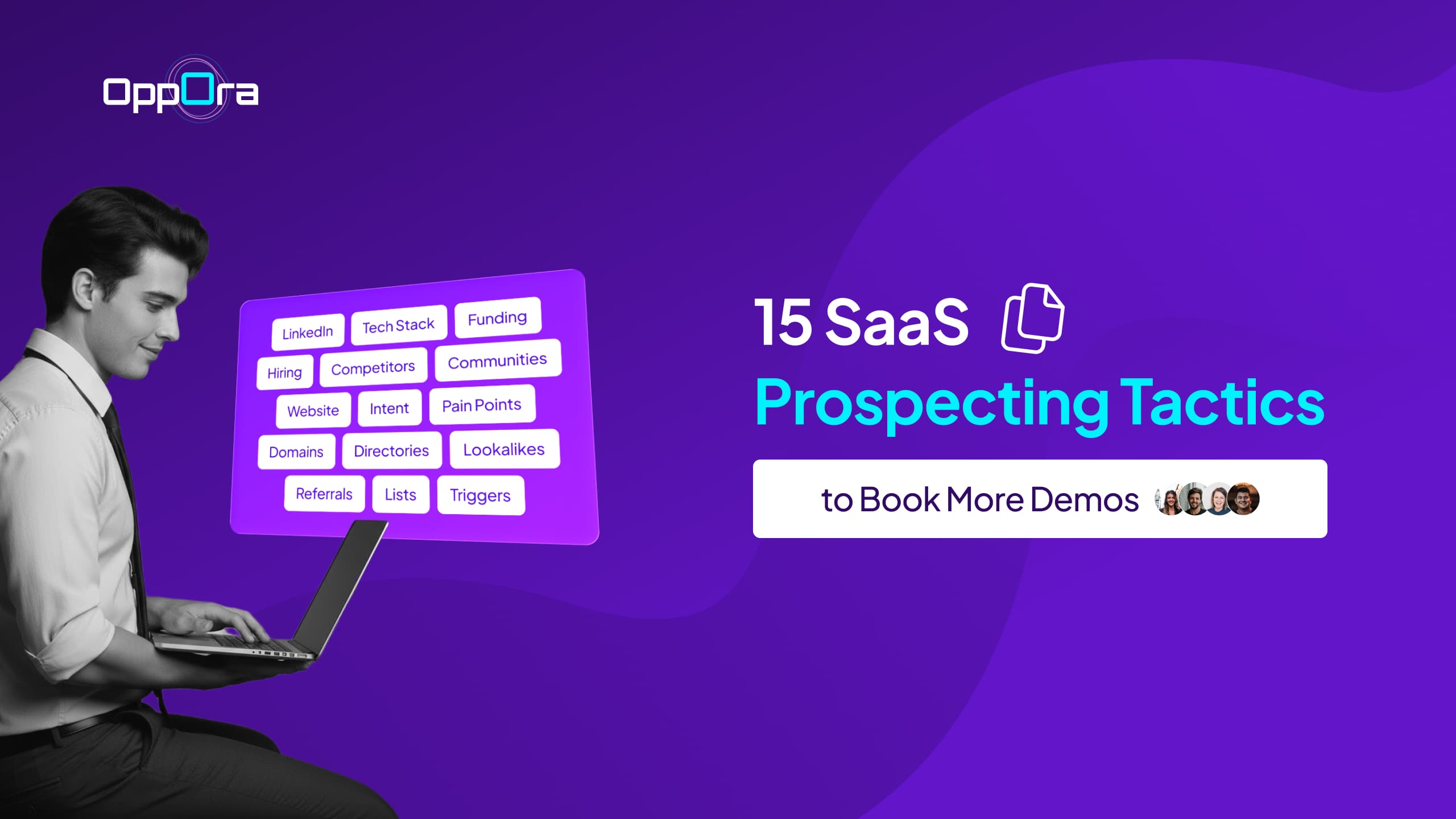
15 SaaS Prospecting Tactics to Book More Demos
Stephen Parker
Published April 7, 2026
11 min
Complete Agentic Email Outreach
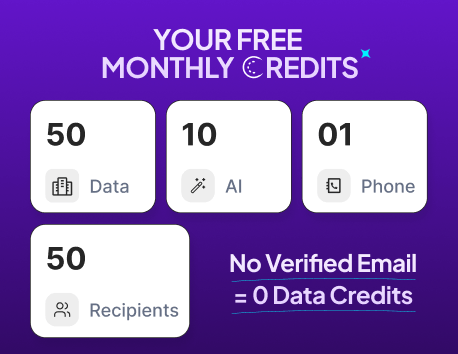
AI agents find and enrich prospects, personalize emails, follow up, and handle replies with your meeting link.
Claim Your FREE Credits
If your SaaS prospecting efforts are not turning into booked demos, the issue is rarely your product. It usually comes down to who you target and how you approach them.
Many teams rely on volume, sending generic outreach to large lists without clear intent or relevance. This creates noise instead of conversations that actually convert into demos.
Effective SaaS prospecting is about identifying the right people at the right time with the right context. When your targeting and messaging align, your chances of booking demos increase significantly.
In this guide, you will learn what SaaS prospecting really means, what defines a high-quality prospect, and proven tactics to consistently generate more demo opportunities.
What SaaS Prospecting Really Means
SaaS prospecting is about finding and reaching out to people who are a good fit for your product. It is not just lead generatio, but targeted lead selection.
Most teams fail because they chase volume instead of relevance. Strong SaaS prospecting focuses only on leads that match your ICP.
It also depends on timing and context, not just contact data. Reaching out when a prospect actually has a need makes a huge difference.
When your targeting and messaging align, your outreach becomes more effective. That is what turns prospecting into consistent demo bookings.
Key Characteristics of High-Quality SaaS Prospects
Not every lead is worth pursuing in SaaS prospecting. The best prospects share clear traits that make them more likely to convert into demos.
Strong ICP alignment (industry, size, use case)
High-quality prospects closely match your Ideal Customer Profile. This ensures your product is actually relevant to their needs.
- Operate in your target industry
- Fit your ideal company size
- Have a clear use case for your product
Relevant decision-makers or influencers
Reaching the right person increases your chances of getting a response. Decision-makers or key influencers can move deals forward faster.
- Founders, CEOs, or department heads
- Managers directly facing the problem
- Influencers involved in buying decisions
Signals that indicate potential need or intent
Good prospects often show signs that they are ready to buy. These signals help you reach out at the right time.
- Recent funding or company growth
- Hiring for roles related to your solution
- Actively using or switching tools
Accessible and verifiable contact data
Even perfect prospects are useless without accurate contact details. Clean data ensures your outreach actually reaches them.
- Verified email addresses
- Active LinkedIn profiles
- Updated company information
Clear Offer & Messaging
A strong prospect converts only when your message is clear. Your offer should directly connect to their problem.
- Clear value proposition
- Problem-solution alignment
- Simple and direct messaging
15 SaaS Prospecting Tactics to Book More Demos
Now that you know what defines a strong prospect, the next step is applying the right tactics. These SaaS prospecting strategies will help you consistently find better leads and convert them into demos.
Use LinkedIn filters to find decision-makers
LinkedIn is one of the most reliable channels for SaaS prospecting because it gives you direct access to decision-makers. The key is not just searching, but filtering with intent.
- Filter by job title, seniority, and company size
- Use keywords like “Head,” “VP,” “Founder,” or “Manager”
- Narrow down by industry, location, and company growth stage
When you apply precise filters, you avoid wasting time on irrelevant contacts. This makes your outreach more focused and increases your chances of starting real conversations that convert into demos.
Target companies based on tech stack
In SaaS prospecting, understanding a company’s tech stack helps you identify whether they actually need your product. It gives you context before you even reach out.
- Use tools like BuiltWith or Wappalyzer to analyze stacks
- Identify companies using competitor or outdated tools
- Spot missing integrations your product can solve
When you tailor your outreach based on their existing tools, your message feels relevant instead of generic. This makes it easier for prospects to see the value immediately.
Tech stack-based targeting also helps you prioritize better-fit accounts. As a result, your outreach becomes more focused and leads to higher demo conversion rates.
Identify companies with recent funding or growth signals
In SaaS prospecting, timing plays a major role in getting responses. Companies that recently raised funding or show growth signals are more likely to invest in new tools.
- Track funding rounds on platforms like Crunchbase or LinkedIn
- Look for press releases, product launches, or expansion news
- Focus on companies hiring aggressively or entering new markets
These signals indicate that a company has both budget and urgency. Reaching out during this phase makes your message more relevant and timely.
When your outreach aligns with growth moments, prospects are more open to change. This significantly increases your chances of booking demos and starting meaningful conversations.
Track hiring trends to spot expansion-stage companies
Hiring trends can reveal what a company is actively prioritizing. In SaaS prospecting, this helps you understand where your solution might fit.
- Monitor job postings on LinkedIn and company career pages
- Look for multiple roles in the same department
- Identify new roles that didn’t exist before
When a company is hiring rapidly, it usually means they are scaling or facing new challenges. This creates a strong opportunity for relevant outreach.
If your product aligns with the roles they are hiring for, your message feels timely. This increases your chances of getting attention and booking demos.
Use competitor customers as a prospecting source
Competitor customers are one of the easiest segments to target in SaaS prospecting. They already understand the problem, which reduces the need for heavy education.
- Find customers through G2, Capterra, or review platforms
- Analyze competitor case studies and testimonials
- Look for complaints or gaps in reviews
These prospects are already using a similar solution, which means they are open to switching if they see better value. Your job is to position your product as a clear improvement.
When you highlight what makes you different, your outreach becomes more compelling. This increases your chances of starting conversations and booking demos faster.
Find prospects through industry communities and groups
Industry communities are where your prospects openly discuss their challenges and tools. This makes them a valuable source for SaaS prospecting if you approach them the right way.
- Join Slack groups, Discord servers, or niche forums
- Explore Reddit threads and LinkedIn groups
- Look for active discussions around your problem space
Instead of pitching directly, focus on engaging and adding value first. This helps you understand real pain points and build trust naturally.
When you reach out after meaningful interaction, your message feels warm and relevant. This increases your chances of getting replies and turning conversations into demos.
Use website signals (forms, tools, integrations)
A company’s website can reveal strong buying intent if you know what to look for. These signals help you identify prospects who are already exploring solutions.
- Check demo pages, contact forms, or “Get started” sections
- Look at listed integrations and tools they use
- Analyze product updates or new feature announcements
These signals often indicate that a company is actively evaluating options. Reaching out at this stage makes your message more relevant and timely.
When you reference something specific from their website, your outreach feels personalized. This increases trust and improves your chances of converting interest into booked demos.
Leverage intent data and buying signals
Intent data helps you identify prospects who are actively researching solutions like yours. In SaaS prospecting, this gives you a major advantage in timing and relevance.
- Track content engagement like blog visits or downloads
- Use tools that show keyword searches and buying intent
- Prioritize accounts showing repeated interest signals
When a prospect is already exploring solutions, your outreach feels timely instead of intrusive. This increases the likelihood of getting a response.
By focusing on high-intent prospects, you avoid cold outreach guesswork. This makes your efforts more efficient and significantly improves your chances of booking qualified demos.
Search by job titles combined with pain points
Searching only by job titles is not enough in SaaS prospecting. Combining roles with specific pain points helps you find prospects who are more likely to respond.
- Use queries like “Sales Manager struggling with CRM”
- Combine job titles with keywords related to common problems
- Focus on roles directly impacted by your solution
This approach helps you target people who are already aware of their challenges. It makes your outreach feel more relevant and less generic.
When your message speaks directly to their problem, it grabs attention faster. This increases engagement and improves your chances of converting prospects into booked demos.
Use domain-based prospecting for company-wide targeting
Instead of relying on a single contact, domain-based prospecting helps you target an entire company. This increases your chances of reaching the right decision-maker.
- Find all employees associated with a company domain
- Identify multiple stakeholders across teams
- Run multi-threaded outreach to different roles
This approach reduces the risk of getting blocked by one unresponsive contact. It also gives you more entry points into the same organization.
When multiple people from the same company see your outreach, it builds familiarity. This increases trust and improves your chances of booking demos faster.
Explore directories and SaaS marketplaces
SaaS directories and marketplaces are filled with companies already using similar tools. This makes them a strong source for high-intent SaaS prospecting.
- Browse platforms like G2, Capterra, and Product Hunt
- Filter by category, industry, or use case
- Identify companies reviewing or comparing tools
These prospects are already aware of solutions in your space. This means you spend less time educating and more time positioning your value.
When you reference tools they already use or evaluate, your outreach feels relevant. This increases engagement and improves your chances of turning interest into booked demos.
Reverse-engineer your best customers
Your existing customers are one of the most reliable sources for SaaS prospecting insights. By analyzing them, you can find more prospects who are likely to convert.
- Identify patterns in industry, company size, and roles
- Look at common use cases and problems solved
- Analyze which customers convert fastest or bring most value
These patterns help you build a clearer Ideal Customer Profile. It also reduces guesswork in your prospecting process.
When you target lookalike prospects, your outreach becomes more accurate. This increases efficiency and improves your chances of consistently booking high-quality demos.
Use referrals and second-degree networks
Referrals and second-degree connections can significantly improve your SaaS prospecting results. Warm introductions create trust even before the first message is sent.
- Ask existing customers for relevant referrals
- Use LinkedIn to find mutual connections
- Leverage partners, investors, or advisors
When someone introduces you, your outreach feels more credible and less intrusive. This increases the chances of getting a response quickly.
Even second-degree connections can open doors that cold outreach cannot. By tapping into your network, you reduce friction in conversations and improve your ability to turn prospects into booked demos.
Build and continuously refine prospect lists
SaaS prospecting is not a one-time activity, but an ongoing process that improves with time. Your prospect lists should evolve based on what works and what doesn’t.
- Regularly clean and update your contact data
- Remove inactive, irrelevant, or unresponsive leads
- Double down on segments that convert better
As you refine your lists, your targeting becomes sharper and more efficient. This helps you avoid wasting effort on low-quality prospects.
When your data improves, your outreach results improve as well. Consistently updating your lists ensures you focus only on prospects who are more likely to book demos.
Use personalized outbound messaging based on trigger events
Generic outreach rarely works in SaaS prospecting anymore. Personalizing your message based on real trigger events makes your outreach feel timely and relevant.
- Reference funding news, hiring activity, or product launches
- Mention a recent post, update, or company milestone
- Connect your solution directly to that specific event
When you tie your message to something happening right now, it immediately stands out. It shows that your outreach is thoughtful, not automated spam.
This level of personalization increases reply rates significantly. It also helps you start more meaningful conversations that are far more likely to turn into booked demos.
How Oppora.ai Helps You Find the Right SaaS Prospects Automatically
By now, it is clear that SaaS prospecting is not just about finding names and email addresses. You also need to enrich data, verify contacts, personalize outreach, follow up, and manage replies at the right time.
Doing all of that manually slows your team down. It also makes prospecting harder to scale consistently.
This is where Oppora fits naturally into the process. Instead of giving you disconnected features, it helps you automate the full prospecting workflow from targeting to outreach.
Oppora.ai uses AI-powered workflows to turn prospecting into a repeatable system.
- Find companies and leads that match your ICP
- Enrich and verify contact data automatically
- Build self-running outreach workflows with AI agents
Its automated workflow setup is especially useful when you do not want to manage every step manually. You can define what you sell and who you want to reach, then let the workflow keep moving without daily intervention.
Another major advantage is the AI Reply Agent. Instead of leaving replies sitting in your inbox, it can understand the context of incoming messages and respond on your behalf.
- Reply to leads based on conversation context
- Share documents or attachments when needed
- Qualify interest and book meetings automatically
That means Oppora does not stop at prospect discovery or email sending. It also helps move conversations forward after a prospect replies, which is often where manual follow-up becomes a bottleneck.
It also supports better prospecting quality overall.
- Uses verified contact data from trusted sources
- Personalizes outreach with AI instead of generic spintext
- Syncs meetings, contacts, and activity into your CRM
So, instead of juggling tools for lead finding, outreach, and reply handling, you get one system that keeps prospecting moving. This makes your SaaS prospecting more scalable, consistent, and focused on booking more demos.
Common SaaS Prospecting Mistakes That Hurt Demo Conversion
Even with the right tactics, SaaS prospecting can fail if a few core mistakes are not addressed. These issues often reduce reply rates and hurt your ability to book demos.
Targeting too broad or generic ICPs
When your ICP is too broad, your outreach becomes generic and less effective. You end up targeting companies that are not a strong fit for your product.
- Targeting multiple industries without focus
- Ignoring company size or use case differences
- Using the same messaging for all segments
Focusing on volume instead of relevance
Many teams believe sending more emails will bring better results. In reality, low-quality volume reduces engagement and wastes effort.
- Building large but low-quality lead lists
- Sending generic, non-personalized messages
- Prioritizing quantity over fit
Ignoring buying signals and timing
Timing plays a critical role in SaaS prospecting success. Reaching out without context makes your message easy to ignore.
- Ignoring funding, hiring, or growth signals
- Reaching out without context
- Treating all prospects the same
Collecting data without verifying contacts
Unverified data can damage your outreach performance and sender reputation. It leads to bounced emails and missed opportunities.
- Using outdated or incorrect email addresses
- Skipping email verification steps
- Relying on incomplete data sources
Not updating or refining prospect lists
Prospecting lists need regular updates to stay effective. Static lists quickly become outdated and reduce your results.
- Keeping inactive or irrelevant leads
- Not removing unresponsive contacts
- Ignoring performance insights
Key Takeaways
SaaS prospecting is not about reaching more people, but about reaching the right people with the right context. When done correctly, it becomes a consistent system for generating qualified demos.
- Focus on strong ICP alignment instead of broad targeting
- Use signals like funding, hiring, and intent to improve timing
- Prioritize relevance and personalization over volume
- Use multiple channels like LinkedIn, communities, and directories
- Continuously refine your prospect lists based on performance
When you combine the right tactics with clean data and clear messaging, your prospecting becomes more predictable. This is what helps you consistently book more demos and build a stronger pipeline.
If you want to simplify this entire process, tools like Oppora.ai can help you automate prospecting, outreach, and follow-ups in one workflow. This allows you to focus more on closing deals instead of managing manual tasks.
Frequently Asked Questions (FAQs)
What is SaaS prospecting?
SaaS prospecting is the process of identifying and reaching out to potential customers who are likely to benefit from your software. It focuses on targeting the right accounts instead of reaching random leads.
Why is SaaS prospecting important for booking demos?
Strong SaaS prospecting ensures you connect with relevant prospects who actually need your solution. This directly improves your chances of converting outreach into booked demos.
What are the best channels for SaaS prospecting?
The most effective channels include LinkedIn, email outreach, industry communities, and SaaS directories. Using a mix of these channels increases your chances of reaching and engaging prospects.
How do I identify high-quality SaaS prospects?
High-quality prospects match your Ideal Customer Profile and show buying signals like hiring, funding, or tool usage. These indicators help you focus on leads that are more likely to convert.
Can SaaS prospecting be automated?
Yes, SaaS prospecting can be automated using tools that handle lead discovery, outreach, and follow-ups. This helps you scale your efforts while keeping your pipeline active and consistent.
Summarize with AI
Share