Home
Blog
Find 500 B2B Contacts for Free Every Month with Built-In Outreach.
Home
Blog
Adam Hossain
Published April 6, 2026
13 min
Try Oppora AI
Create Self-Running Agentic Sales Workflows like N8N just by chatting with AI
Get Started for FREE
If your outreach still sounds generic, your results probably look the same.
That’s where email personalization tools start making a real difference.
Instead of writing every email manually, you can create relevant, context-driven messages at scale without losing quality or consistency across campaigns.
In this guide, you’ll learn:
Once you understand why personalization matters, the next step is seeing how it actually works in practice.
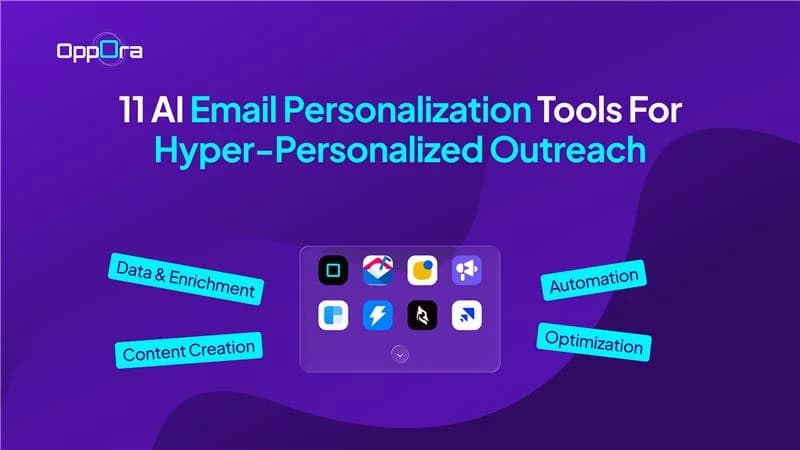
Most ai email personalization tools follow a structured workflow that connects data, content, automation, and optimization into one continuous system.
Everything starts with data, because personalization is only as strong as the information behind it.
Once the data is ready, the focus shifts to turning it into relevant messaging.
With content in place, automation ensures campaigns run smoothly at scale.
After execution, performance data helps refine everything further.
Email personalization tools track opens, replies, and engagement patterns to identify what’s working and what needs improvement.
AI uses these insights to adjust targeting, messaging, and timing, so your campaigns keep getting better without constant manual analysis.
Now that you understand how these tools work in real campaigns, the next step is knowing what actually separates good tools from average ones.
Not all ai email personalization tools deliver meaningful results, especially if they rely on shallow automation or poor data.
This is where true personalization happens beyond basic placeholders.
Strong personalization depends on accurate and complete data.
Automation ensures consistency without losing control over campaigns.
Even the best emails fail if they don’t reach the inbox.
Now that you know what features actually matter, the next step is choosing the right tool for your workflow.
Not all email personalization tools are built the same, so this list breaks down platforms based on how they handle personalization, automation, and scalability in real outreach scenarios.
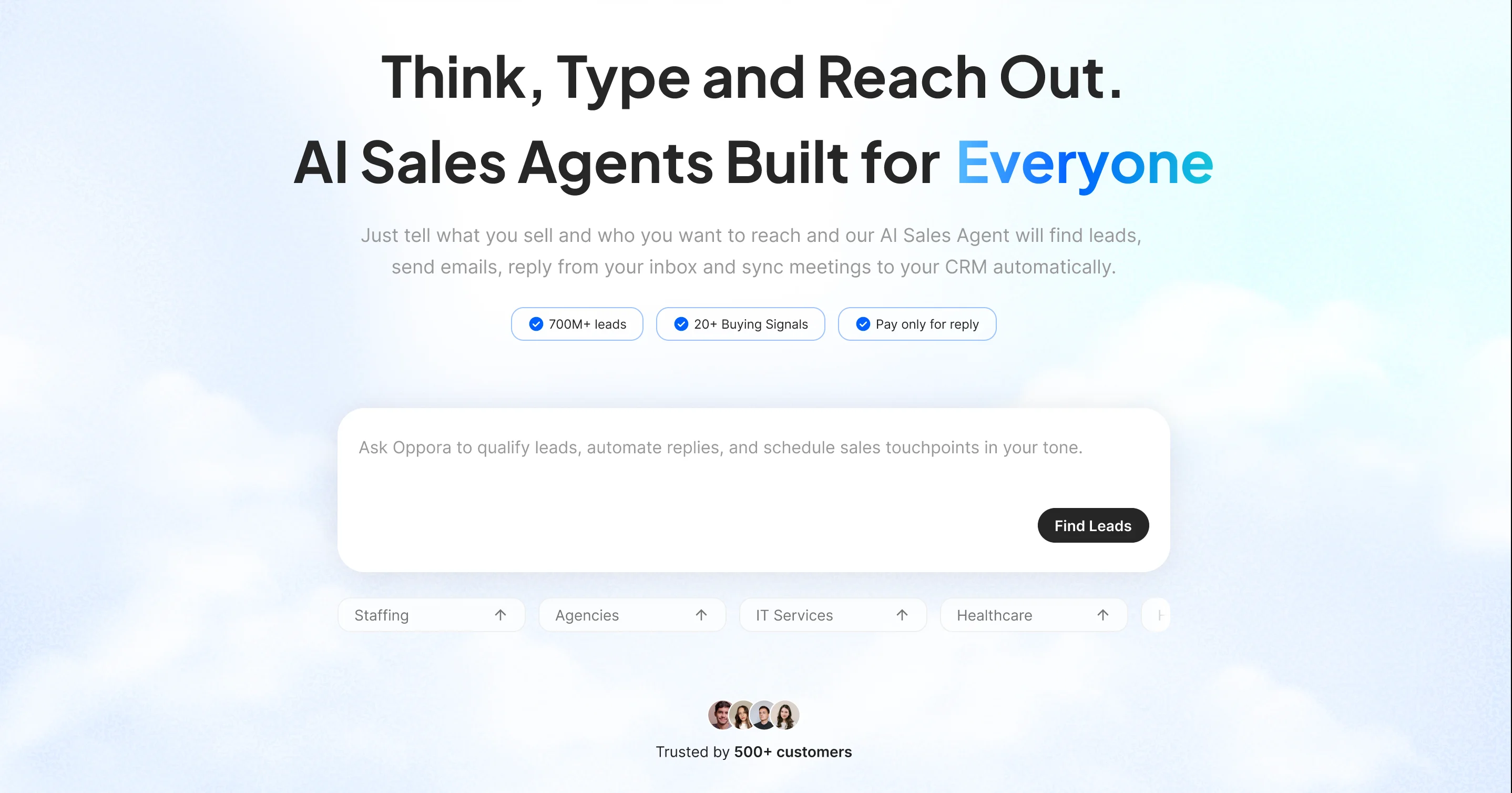
Oppora.ai works as an independent outreach platform that connects lead data, personalization, and campaign execution in one place.
It is designed for teams that want a structured system where prospecting, email personalization, and outreach automation run together without relying on multiple disconnected tools or manual coordination.
Instead of managing multiple tools, you can move from finding leads to launching campaigns in one place.
For example, a staffing team can identify sales managers, verify emails, and start outreach without leaving the platform.
This keeps personalization consistent while reducing manual effort across every step.
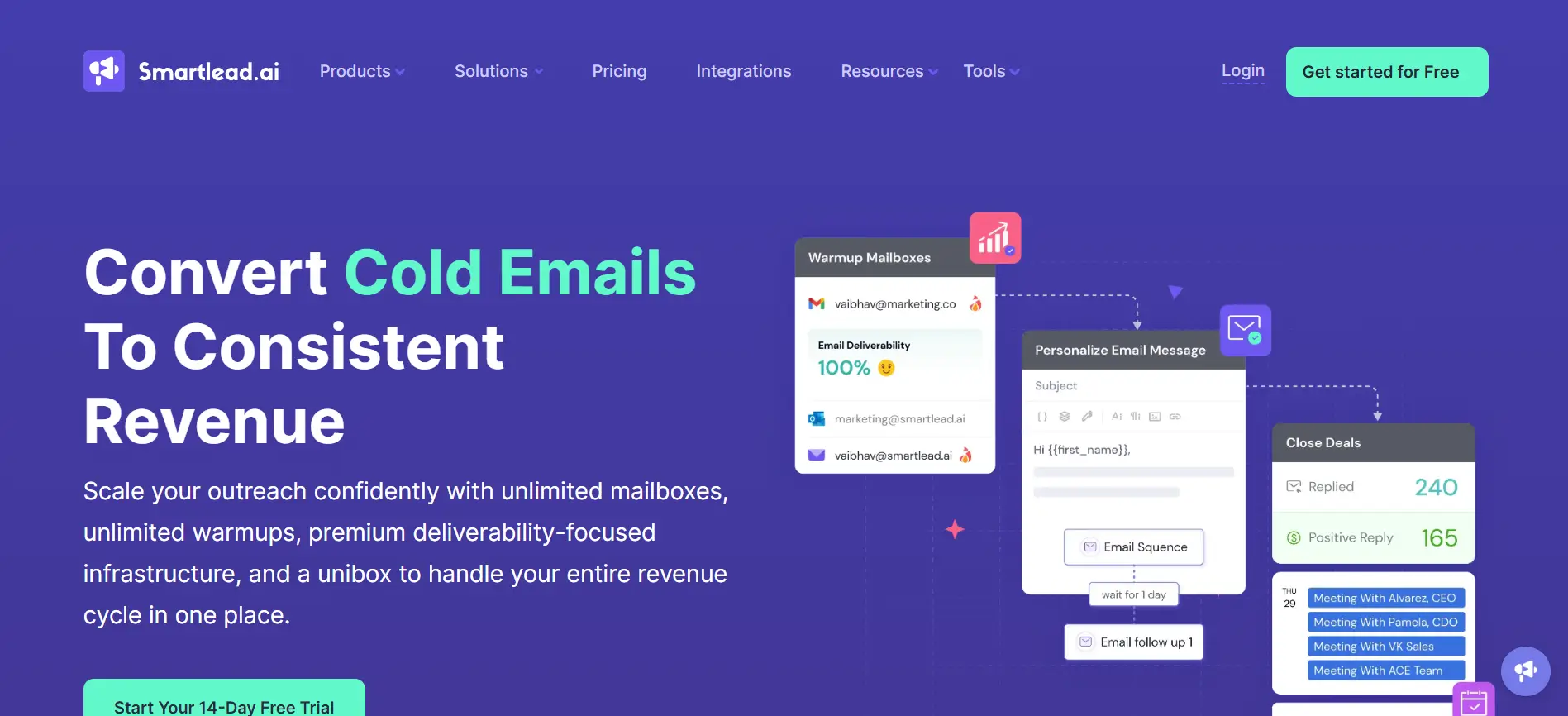
Smartlead operates as an independent cold email platform focused on scaling outbound campaigns while maintaining deliverability.
It is built for teams that manage multiple inboxes and need a system that can distribute sending activity, personalize messages, and maintain sender reputation without manual oversight or complex setup.
Smartlead allows you to run large-scale campaigns across multiple inboxes while keeping sending behavior distributed and consistent.
For example, an agency managing multiple clients can assign separate inboxes per campaign and maintain deliverability while sending thousands of emails daily with structured follow-ups.
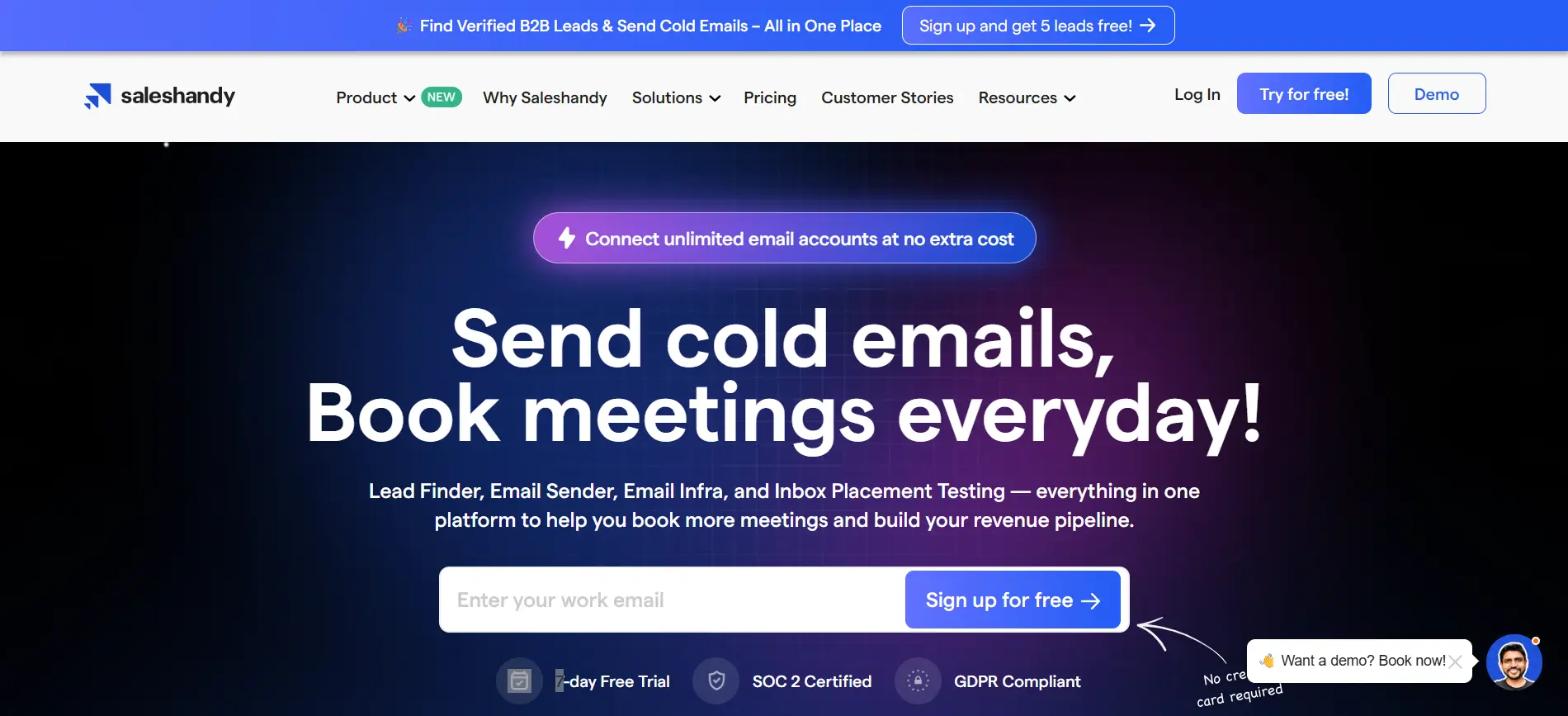
Saleshandy functions as an independent email outreach and tracking platform designed for teams that want a balance of simplicity and automation.
It focuses on helping users create campaigns, track engagement, and manage personalized sequences without requiring advanced configuration or technical setup.
Saleshandy enables users to run structured outreach campaigns while monitoring engagement in real time.
For example, a founder can upload a prospect list, set up a sequence with personalized templates, and track which emails are performing best to refine messaging and improve response rates over time.
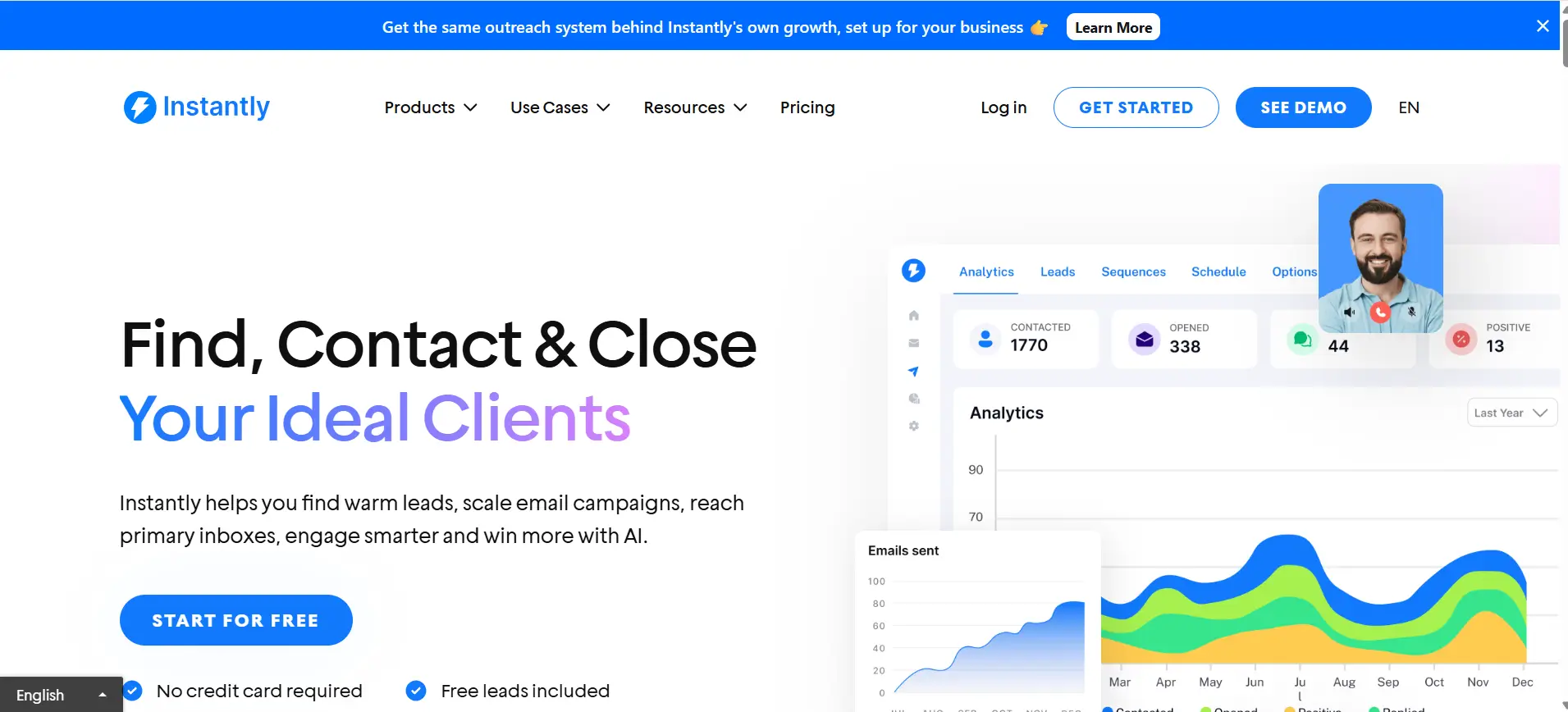
Instantly.ai operates as a high-volume outreach platform built around scaling campaigns through multiple inboxes and automated workflows.
It is designed for users who want to combine deliverability management with bulk sending capabilities while maintaining a level of personalization across campaigns.
Instantly.ai enables teams to send large volumes of emails while distributing sending across multiple inboxes to avoid deliverability issues.
For example, a growth team can target different segments with tailored messaging across multiple inboxes, ensuring each campaign maintains consistent sending patterns and avoids spam filtering while still operating at scale.
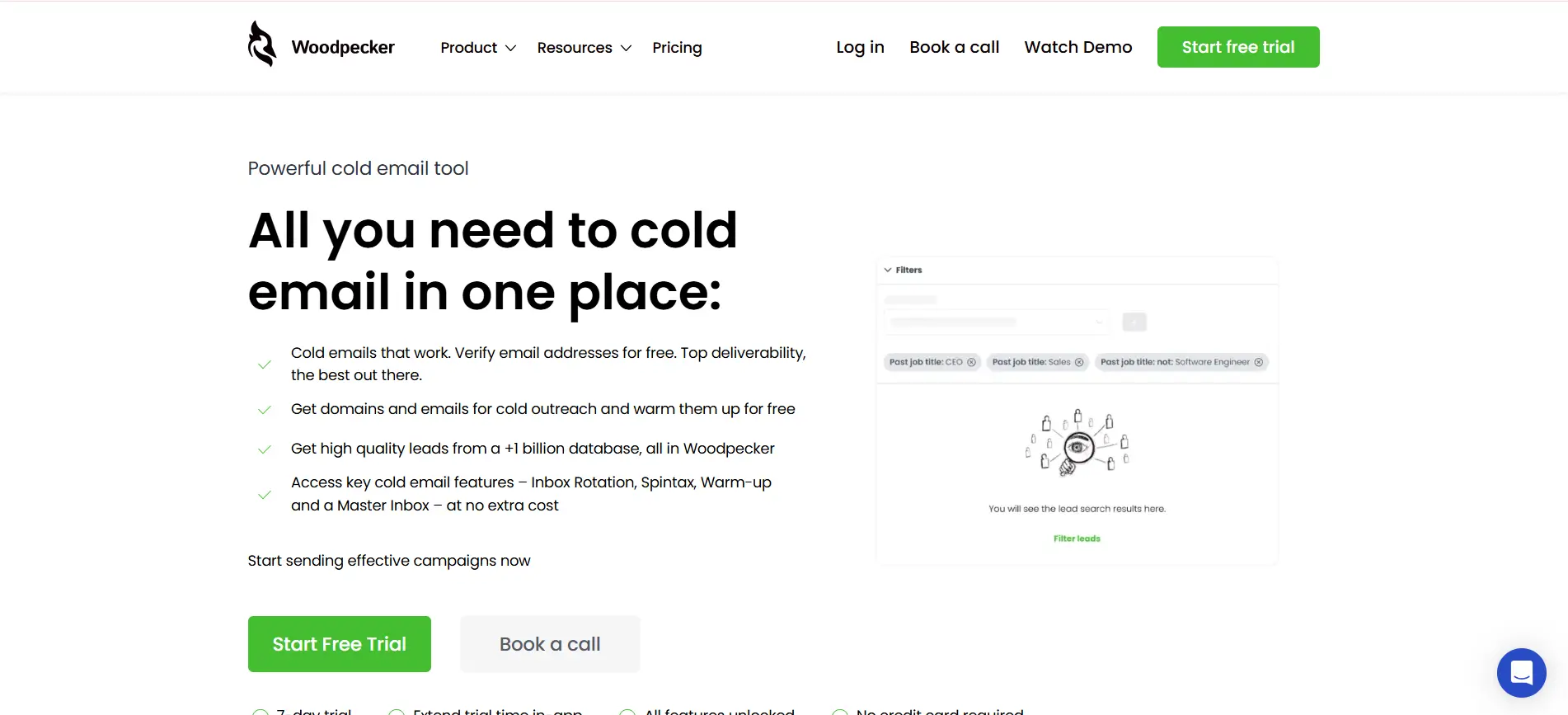
Woodpecker works as an independent outreach automation tool focused on reliability and structured follow-ups.
It is commonly used by smaller teams that want to manage personalized email sequences without dealing with complex systems or high-volume infrastructure requirements.
Woodpecker helps teams maintain consistent communication by automating follow-ups based on recipient behavior and timing.
For example, a sales team can set up a sequence that sends an initial outreach email followed by timed follow-ups, ensuring prospects are nurtured without requiring manual tracking or repeated sending efforts.
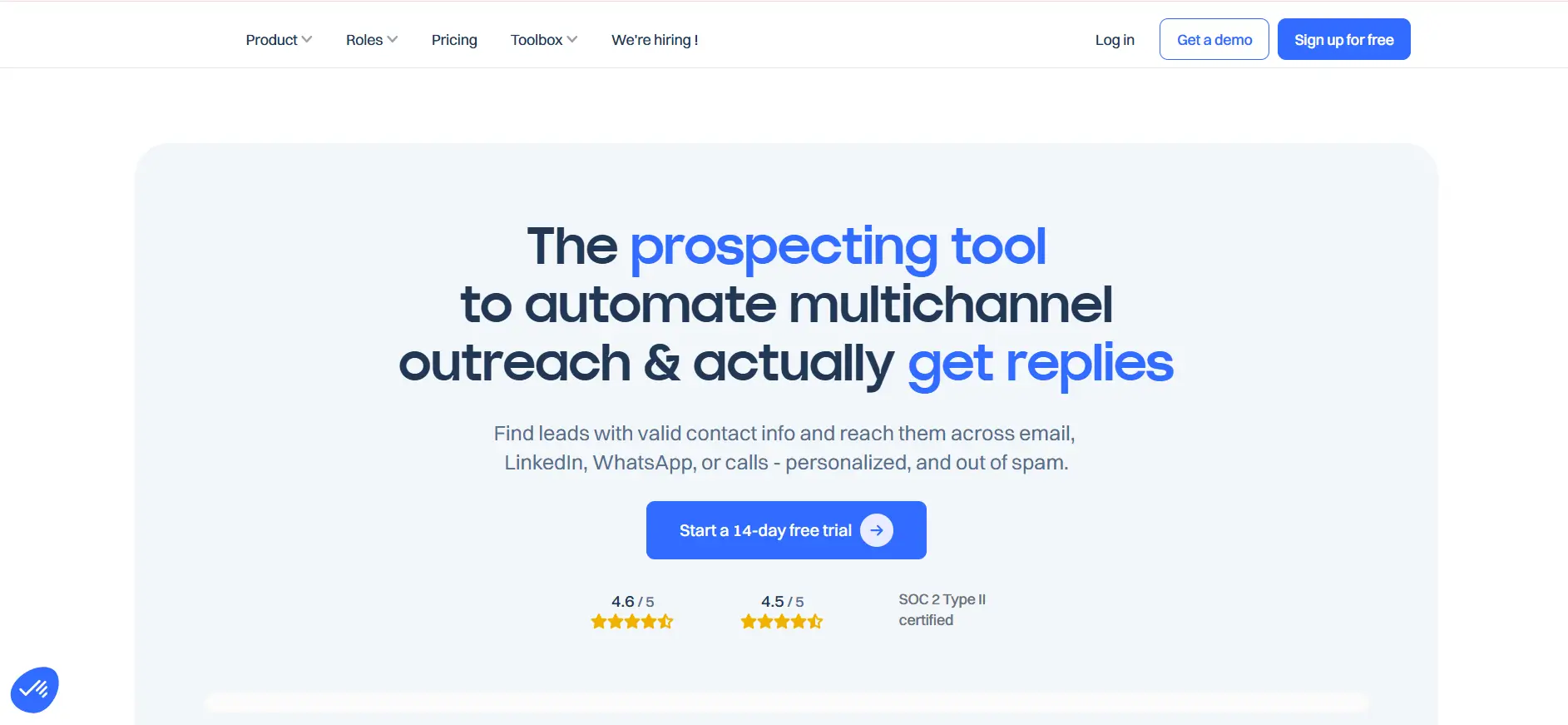
Lemlist operates as an outreach platform that emphasizes creative personalization alongside campaign automation.
It is designed for users who want to stand out in crowded inboxes by combining traditional email sequencing with visually enriched and highly customized messages.
Lemlist enables users to create more engaging outreach by incorporating visual and contextual personalization into emails.
For example, a sales team can send emails with custom images or videos that include prospect-specific details, making messages feel more relevant and increasing the likelihood of replies compared to standard text-based outreach.
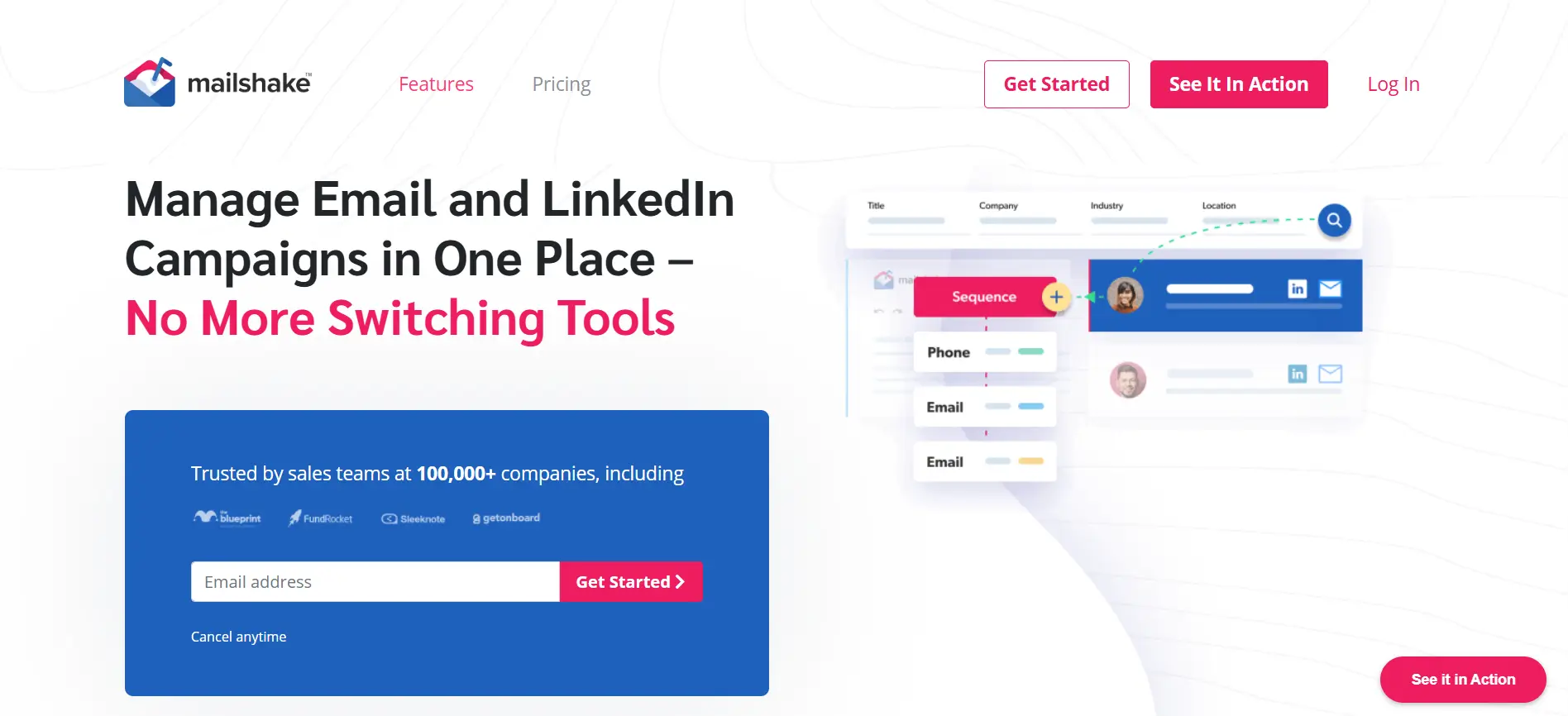
Mailshake operates as an independent outreach platform designed to help teams manage personalized email campaigns with a straightforward setup.
It focuses on combining automation, tracking, and templates into a single interface so users can run outreach without dealing with overly complex configurations.
Mailshake allows you to structure outreach campaigns using reusable templates while still customizing messages for each prospect.
For example, a sales team can create a proven email sequence, adjust personalization fields for different segments, and reuse the same framework across multiple campaigns while tracking performance to identify what drives responses.
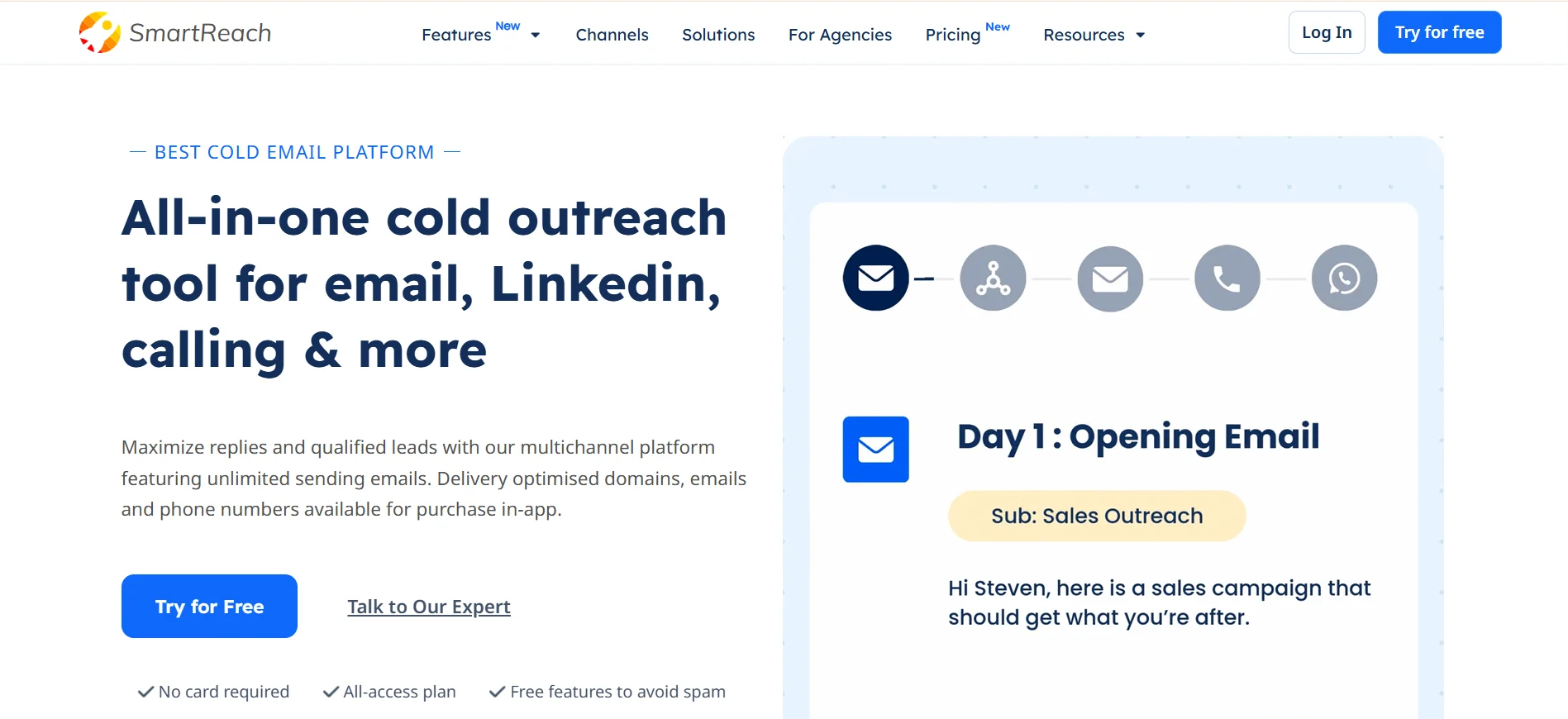
SmartReach.io functions as an independent outreach platform that combines personalization with multi-channel communication and deliverability management.
It is built for teams that want to coordinate email and other channels while maintaining consistent messaging across touchpoints.
SmartReach.io enables teams to run coordinated campaigns across multiple channels while keeping personalization consistent.
For example, a sales team can send a personalized email, follow up based on engagement, and continue outreach through LinkedIn or other channels, ensuring each interaction builds on the previous one without losing context.
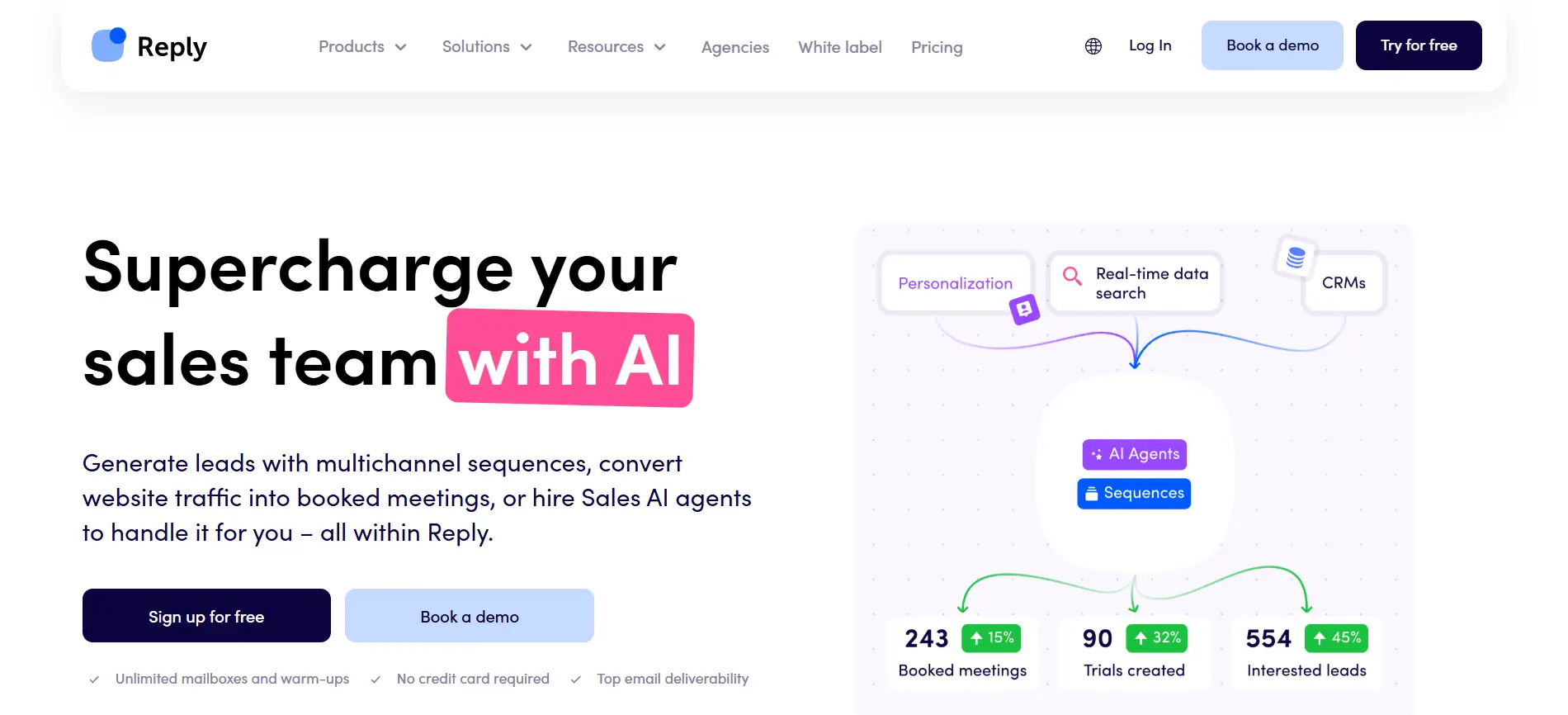
Reply.io operates as an independent sales engagement platform that focuses on automating outreach across multiple channels while maintaining personalization throughout the communication process.
It is designed for teams that manage ongoing conversations rather than one-off campaigns.
Reply.io supports structured outreach across the full sales cycle by combining automation with contextual messaging.
For example, a sales team can build a sequence that starts with a personalized email, follows up through multiple channels, and adapts based on prospect responses, allowing conversations to evolve naturally while staying automated and organized.
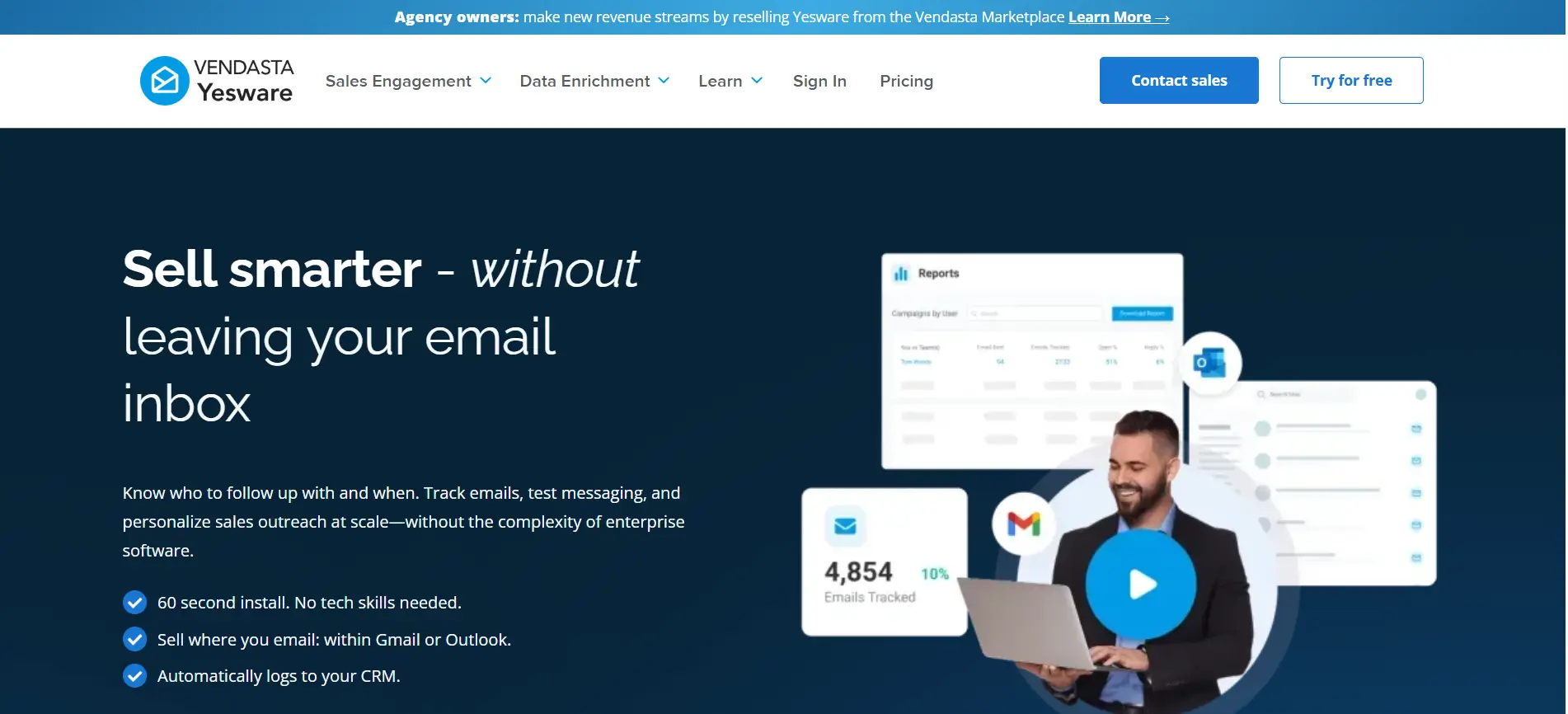
Yesware functions as an independent email productivity and outreach tool that integrates directly into existing email workflows.
It focuses on tracking, templates, and personalization features that help users improve communication without leaving their inbox.
Yesware enables users to personalize emails while gaining visibility into how recipients interact with them.
For example, a sales rep can send a personalized message using a template, monitor when the prospect opens or clicks the email, and use that data to time follow-ups more effectively, improving the chances of engagement.
Outreach.io operates as a comprehensive enterprise-grade outreach platform designed for large teams that require structured workflows, advanced automation, and detailed analytics.
It centralizes outreach activities to ensure consistency across multiple users and campaigns.
Outreach.io enables organizations to standardize outreach across teams while maintaining personalization at scale.
For example, an enterprise sales team can create shared sequences, assign campaigns to multiple reps, and track performance across the entire pipeline, ensuring that messaging remains consistent while each rep manages their own prospects within a unified system.
Most tools give you features. But they still depend on you to connect everything manually.
That’s where outreach starts breaking.Too many steps. Too many decisions. No consistency.
Oppora changes how outreach actually runs.
It doesn’t just give tools.It builds a system that keeps everything structured, predictable, and scalable.
Here’s what that really means in practice.
Instead of rebuilding campaigns every time, you work with a clear structure.
This removes guesswork.
Your outreach stops being random.It becomes something you can repeat, test, and improve over time.
One of the biggest problems in outreach is inconsistency.
Different lists. Different messaging. Different execution styles.
Oppora solves this by keeping everything aligned:
This makes your campaigns easier to manage and compare.
You’re not just sending emails anymore.You’re running a controlled system.
Most teams struggle when they try to scale.
More campaigns usually mean:
Oppora removes that friction.
Scaling becomes predictable instead of overwhelming.
When outreach is scattered, it’s hard to know what’s working.
Oppora brings everything into one view:
This helps you make better decisions faster.
Instead of guessing, you improve based on real patterns.
Even with the best email personalization tools, campaigns can fail if certain pitfalls are overlooked. Avoiding these mistakes ensures your outreach feels natural, relevant, and effective.
Trying too hard to personalize can actually make your emails feel unnatural.
Bad data leads to weak personalization and missed opportunities.
Without testing, your campaigns stay static and stop improving.
Choosing the right email personalization tools is not about picking the most advanced platform.
It is about finding a system that fits how you already work and helps you scale without adding complexity.
When your tool combines strong data, real AI personalization, and reliable automation, your outreach stops feeling like a manual task and starts becoming a repeatable growth system.
The goal is simple: better conversations, not just more emails.
If you want to move beyond disconnected tools and build a complete, structured outreach workflow, Oppora is worth exploring as a natural next step.
Most AI email personalization tools follow regulations like GDPR and CCPA by using publicly available or consent-based data.
However, you should always verify how a tool sources and processes data to ensure your outreach stays compliant and avoids legal or reputational risks.
Yes, many email personalization tools are designed for small teams and even solo founders.
They reduce manual effort by automating writing, sending, and follow-ups, making it easier to run consistent outreach without needing a dedicated sales or marketing team.
No, they do not replace humans entirely.
AI handles repetitive tasks like writing drafts and sending emails, but strategy, targeting, and relationship-building still require human input to ensure messages stay relevant and aligned with business goals.
Results can vary, but most teams start seeing engagement within a few days of launching campaigns.
Consistent testing, data quality, and message relevance play a major role in improving reply rates and long-term performance.
Industries like SaaS, agencies, staffing, consulting, and B2B services benefit the most.
Any business that relies on outbound outreach to connect with decision-makers can use email personalization tools to improve engagement, build relationships, and generate more qualified opportunities.
Summarize with AI
Share