Home
Blog
Find & Send Cold Emails to 500 Unique Prospects Every Month for FREE.
Home
Blog
Adam Hossain
Published February 22, 2026
10 min
Try Oppora AI
Create Self-Running Agentic Sales Workflows like N8N just by chatting with AI
Get Started for FREE
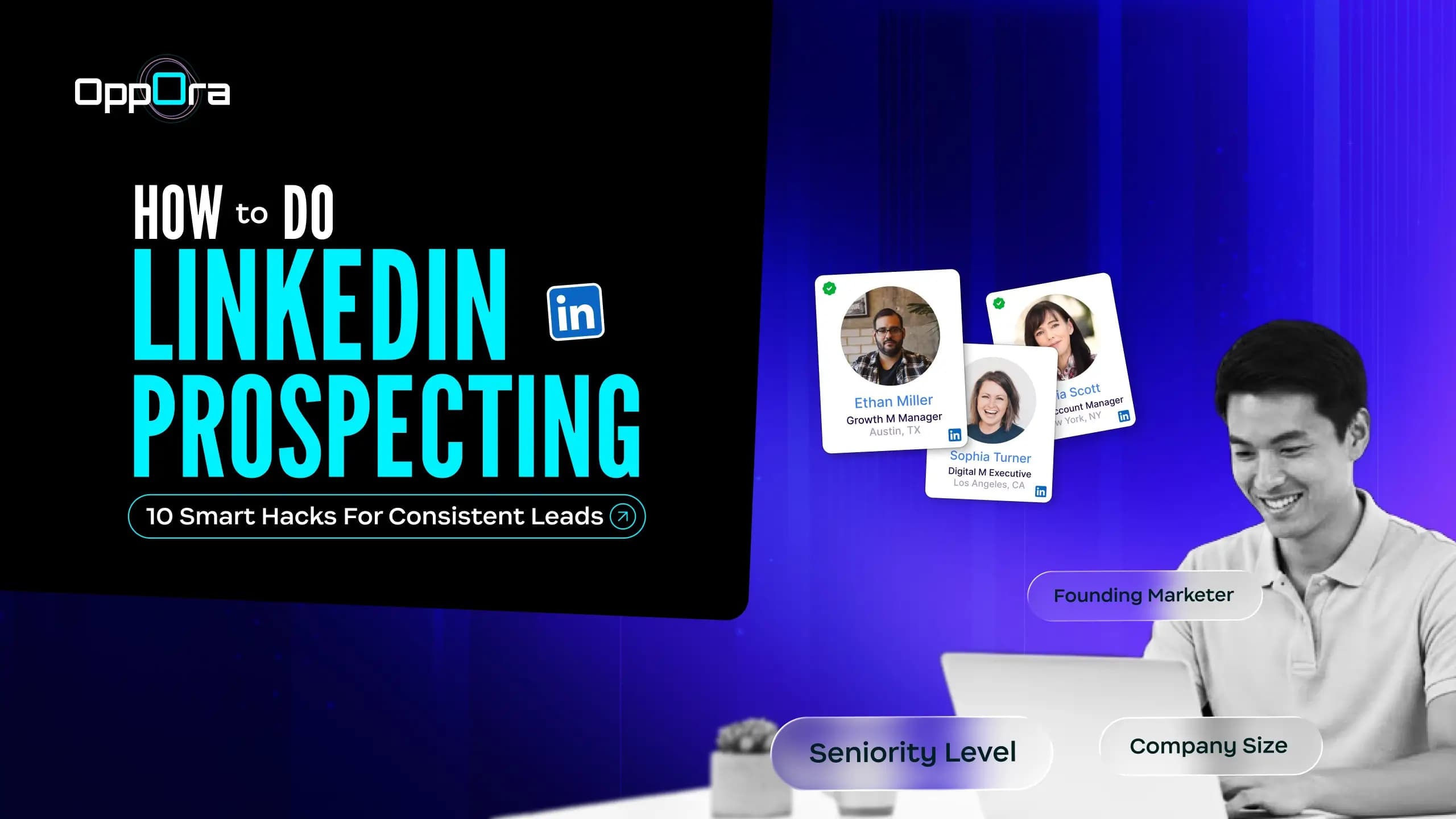
LinkedIn prospecting still remains one of the strongest B2B lead generation channels if you use it correctly.
But most people don’t get consistent results.
Not because LinkedIn doesn’t work but because their approach lacks structure.
If you treat LinkedIn prospecting as random outreach, you’ll see random results.
If you treat it like a system, you’ll start generating predictable conversations.
In this guide, you’ll learn:
Let’s start from the basics.
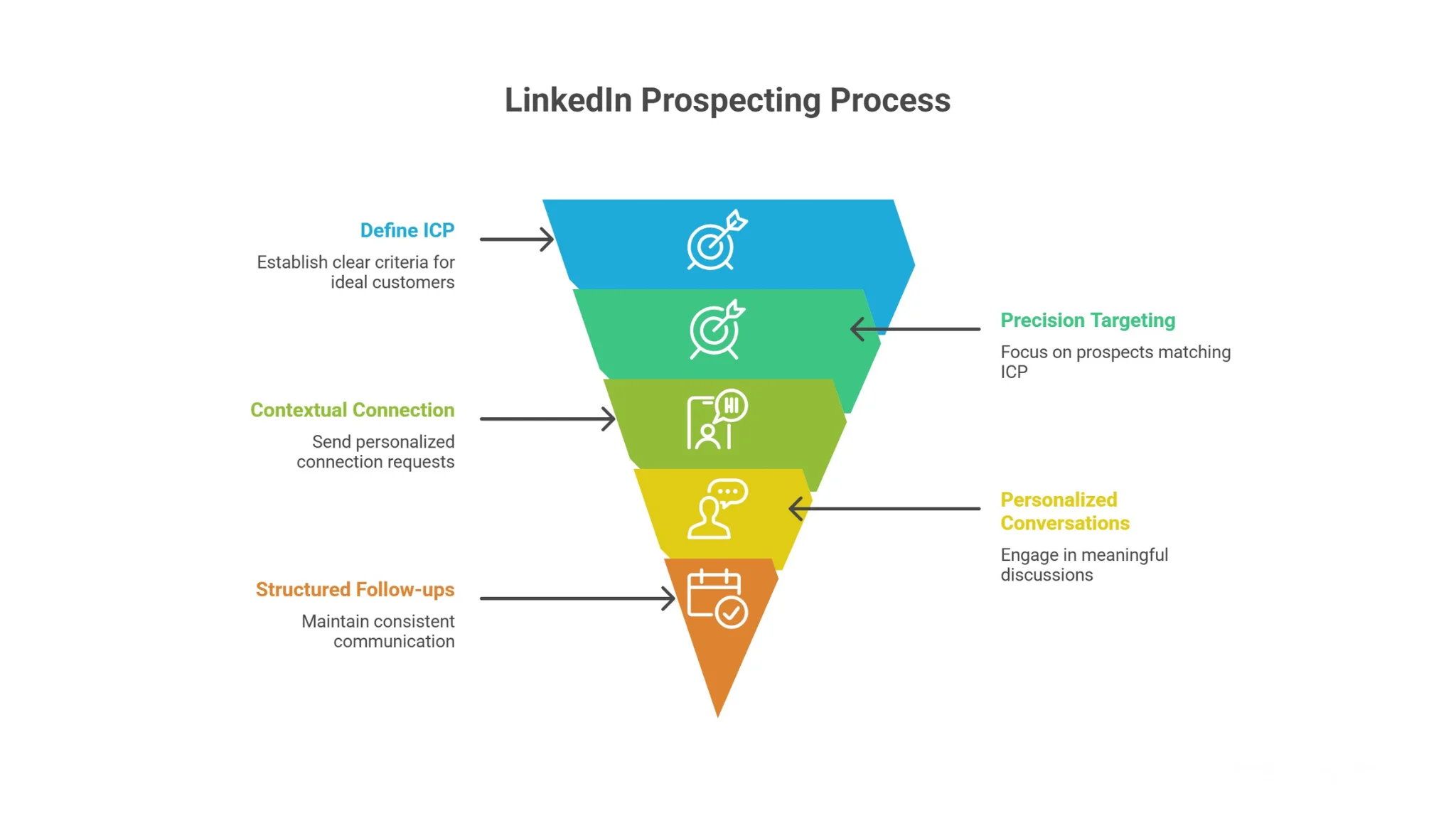
LinkedIn prospecting is the process of identifying and connecting with potential B2B buyers on LinkedIn to start meaningful conversations.
It is not mass pitching.
It is not sending 100 connection requests per day.
It is structured relationship building.
When done properly, LinkedIn prospecting focuses on:
The goal is simple.
Start relevant conversations with the right decision-makers and guide them naturally toward a business discussion.
Now that you understand what it is, let’s look at why most people struggle with it.
Now that you understand what LinkedIn prospecting really is, the next question becomes obvious.
If the platform works so well, why do most people struggle with it?
The answer is rarely effort.
It’s structure.
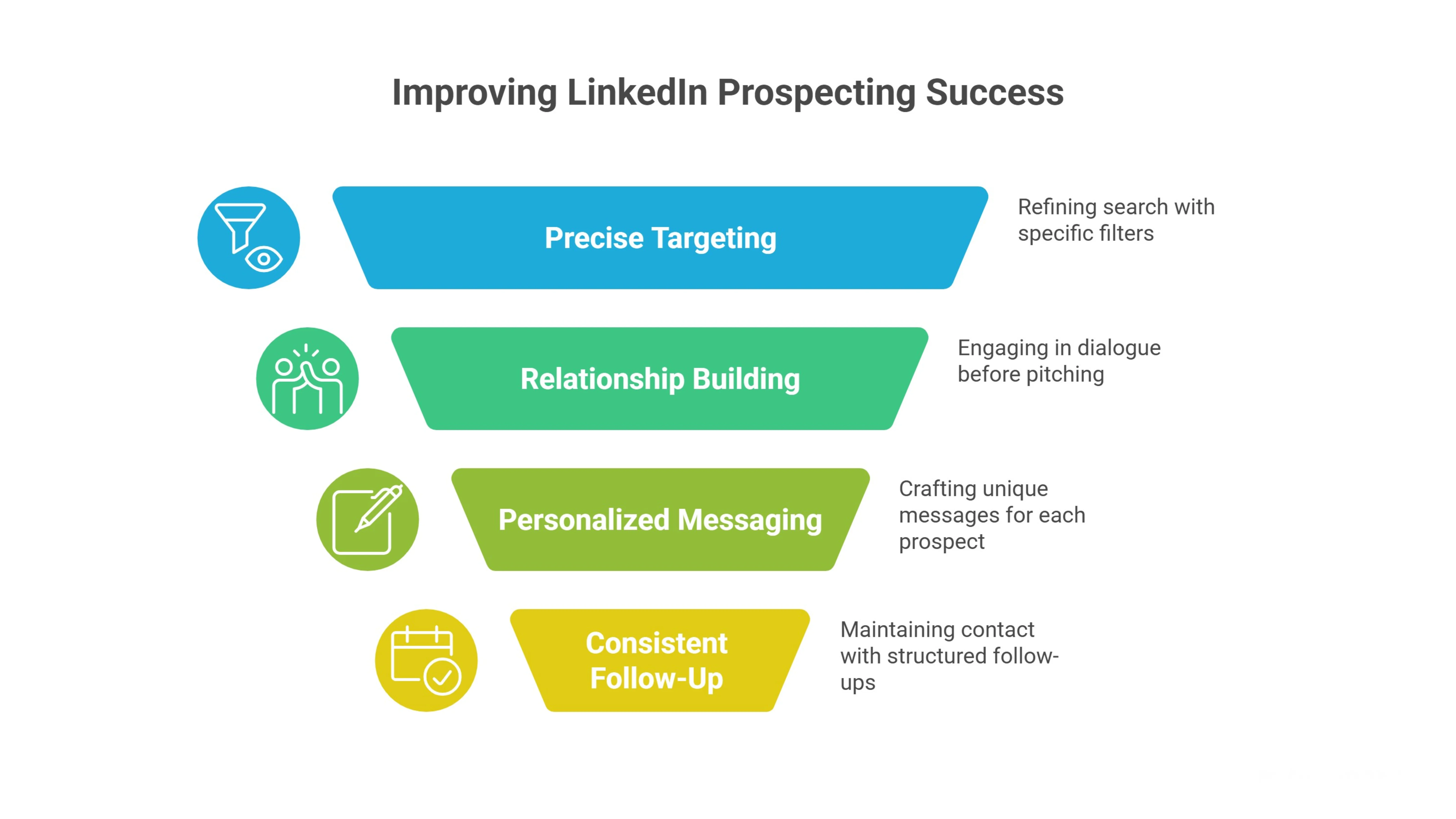
Most outreach fails because it lacks precision, patience, and process. Let’s break down the common patterns that quietly kill results.
The biggest mistake starts before the first message is even sent.
If your targeting is broad, your messaging will automatically become generic.
When you search for “Marketing Managers” across every industry and company size, you’re mixing completely different problems, budgets, and priorities into one list.
That forces you to write neutral messages that speak to no one in particular.
And neutral messages don’t get replies.
Strong LinkedIn prospecting begins with clarity around:
The more precise your filters are, the more relevant your conversations become.
Precision creates momentum.
This is one of the fastest ways to lose credibility.
Someone accepts your connection request, and within minutes they receive a sales pitch.
No context.
No engagement.
No conversation.
That signals automation.
LinkedIn is built on professional relationships, not cold inbox blasts.
Instead of selling immediately, focus on starting dialogue.
Ask thoughtful questions.
Reference something specific about their role or company.
When trust builds first, business discussions feel natural rather than forced.
People can spot templated outreach instantly.
If your message could be sent to 500 other profiles without changing a word, it won’t feel personal.
Lines like “I came across your profile” or “We help companies like yours” have become white noise.
Specificity is what earns attention:
When someone feels understood, they’re far more likely to reply.
Most conversations don’t convert on the first touch.
They convert on the second or third follow-up.
But many prospecting efforts fade because follow-ups are forgotten or random.
Without a simple tracking system, conversations slip through the cracks.
Structured follow-up — spaced properly and relevant to the previous message — increases response rates dramatically.
Consistency beats intensity every time.
Now that you know what breaks LinkedIn prospecting, let’s talk about what strengthens it.
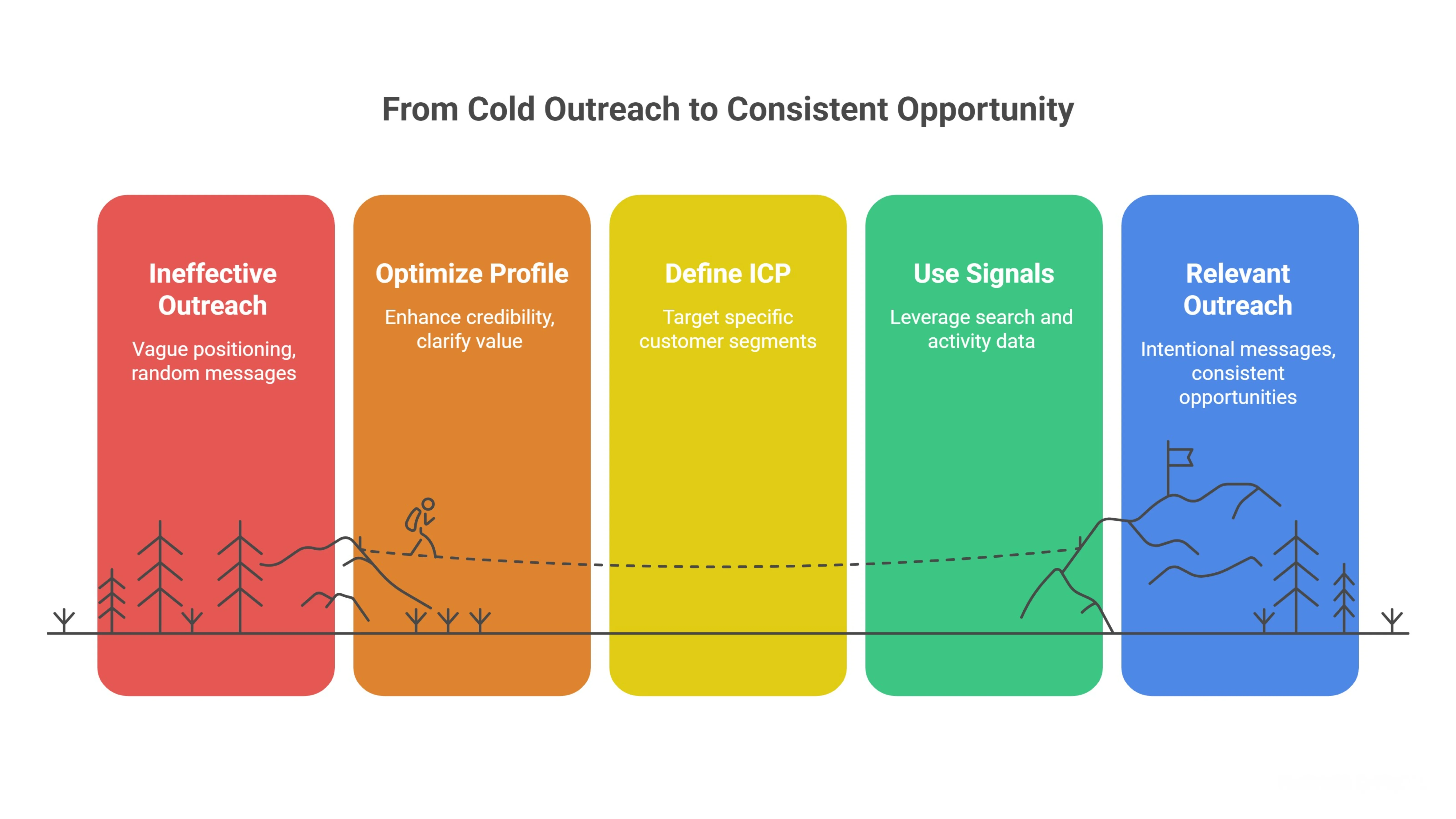
Good outreach starts before you open the LinkedIn search bar.
If your positioning and targeting are unclear, no tactic will save the results.
Think of this as preparing the ground before planting seeds.
Before someone replies to your message, they check your profile.
In seconds, they decide whether you’re relevant.
Your headline should clearly state who you help and the outcome you create.
Not just your job title.
Your About section should reflect your ICP’s challenges and show that you understand their world.
Add proof wherever possible:
Your profile acts like a landing page.
If it’s vague, your outreach loses impact.
You cannot personalize effectively without knowing exactly who you are targeting.
Define your Ideal Customer Profile using clear parameters:
Then go one step deeper.
What events signal readiness to buy?
New funding.
Rapid hiring.
Leadership transitions.
The narrower your ICP, the easier it becomes to write messages that feel intentional instead of random.
LinkedIn provides powerful filters that most people barely use.
Look for signals such as:
Timing matters more than volume.
A decision-maker who just stepped into a new role is often evaluating systems and open to conversations.
When you combine precise targeting with timing signals, your outreach stops feeling cold.
It starts feeling relevant.
And relevance is what turns LinkedIn prospecting into consistent opportunity.
Now that your foundation is clear, let’s talk about execution.
These hacks focus on one thing only.
Finding the right leads not just more leads.
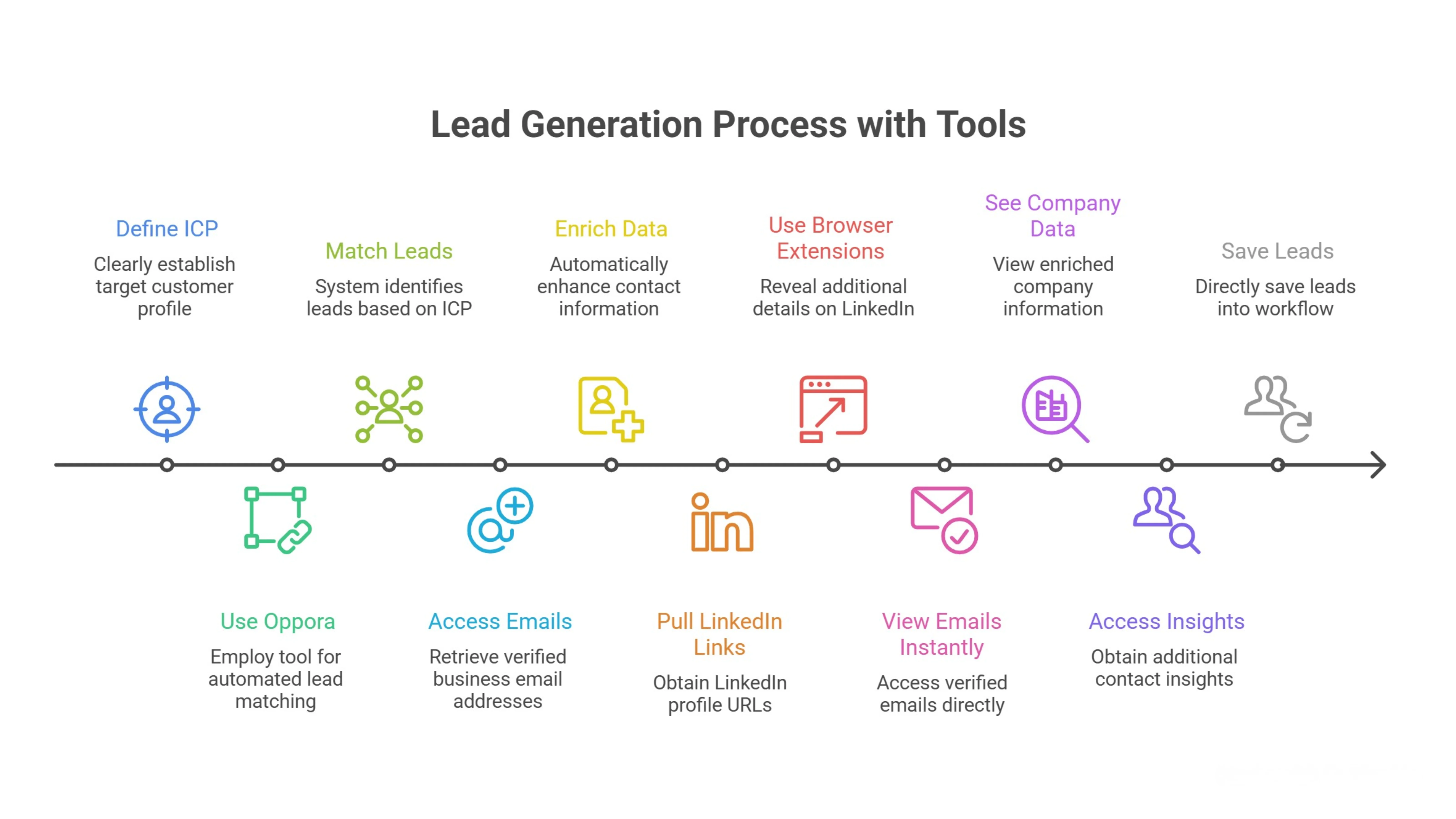
If you want to do this fast and without LinkedIn search limitations, you can use tools like Oppora.
Instead of manually filtering inside LinkedIn every single day, you define your ICP once and let the system match leads automatically.
Oppora helps you:
This removes hours of manual filtering and significantly reduces low-fit prospects.
Another advantage?
You can use browser extensions that reveal additional details directly while browsing LinkedIn profiles.
Instead of switching tabs or copying information manually, extensions allow you to:
This means when you’re scrolling LinkedIn, you’re not just viewing profiles.
You’re actively building a qualified, enriched lead list in real time.
Smart move: define your ICP clearly before using any tool or extension.
Because the output quality always depends on how precise your targeting criteria are.
Now, if you’re prospecting directly inside LinkedIn without additional tools, here’s how to do it smarter.
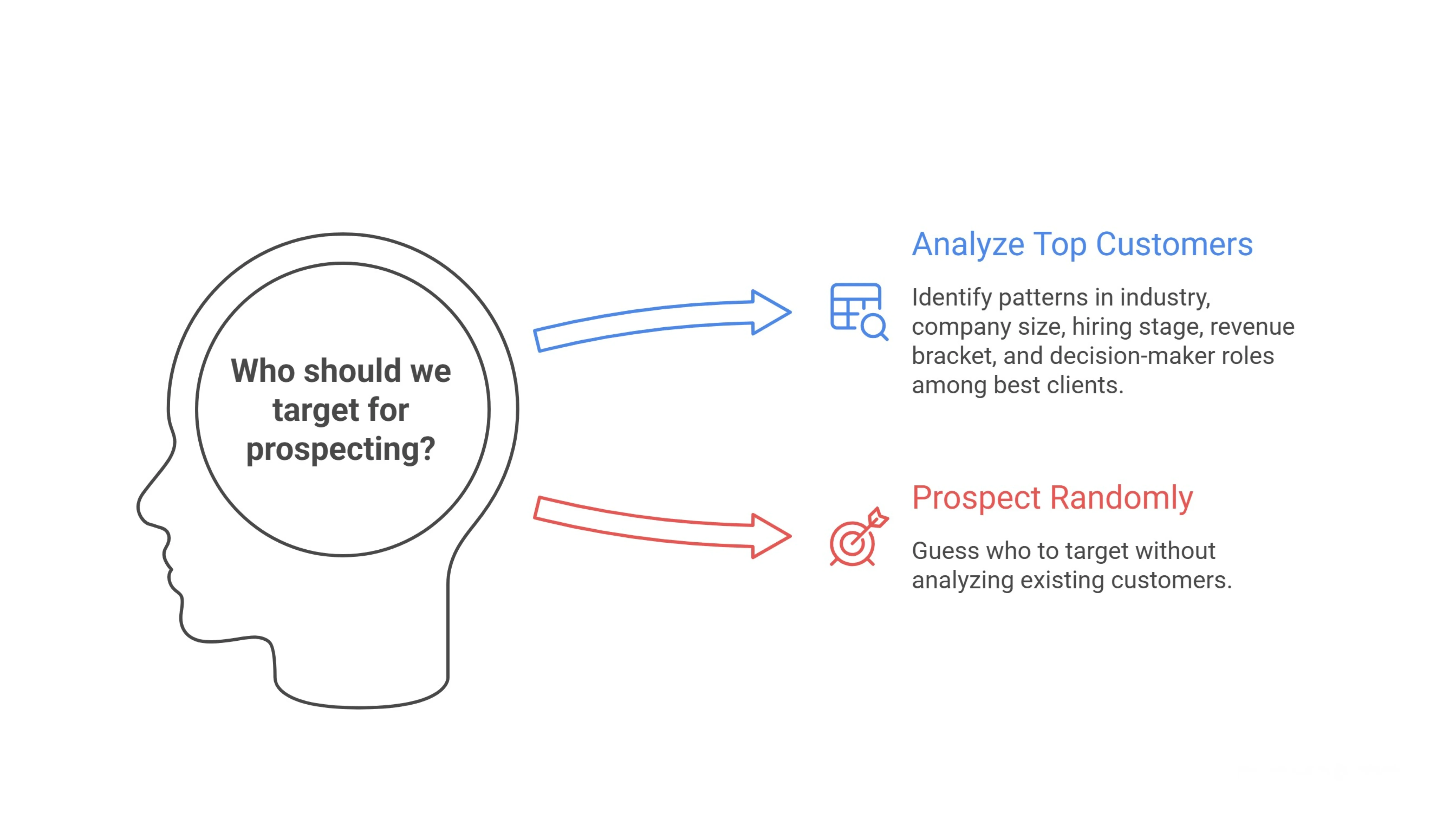
If you already have paying customers, your prospect list is hiding in plain sight.
Instead of guessing who to target, analyze your top 5–10 best clients. Look for patterns in industry, company size, hiring stage, revenue bracket, and decision-maker roles.
Ask yourself: what do they have in common before they bought from you?
When you reverse-engineer success, you stop prospecting randomly. You start targeting companies that already resemble proven wins.
That shift alone can dramatically improve reply quality.
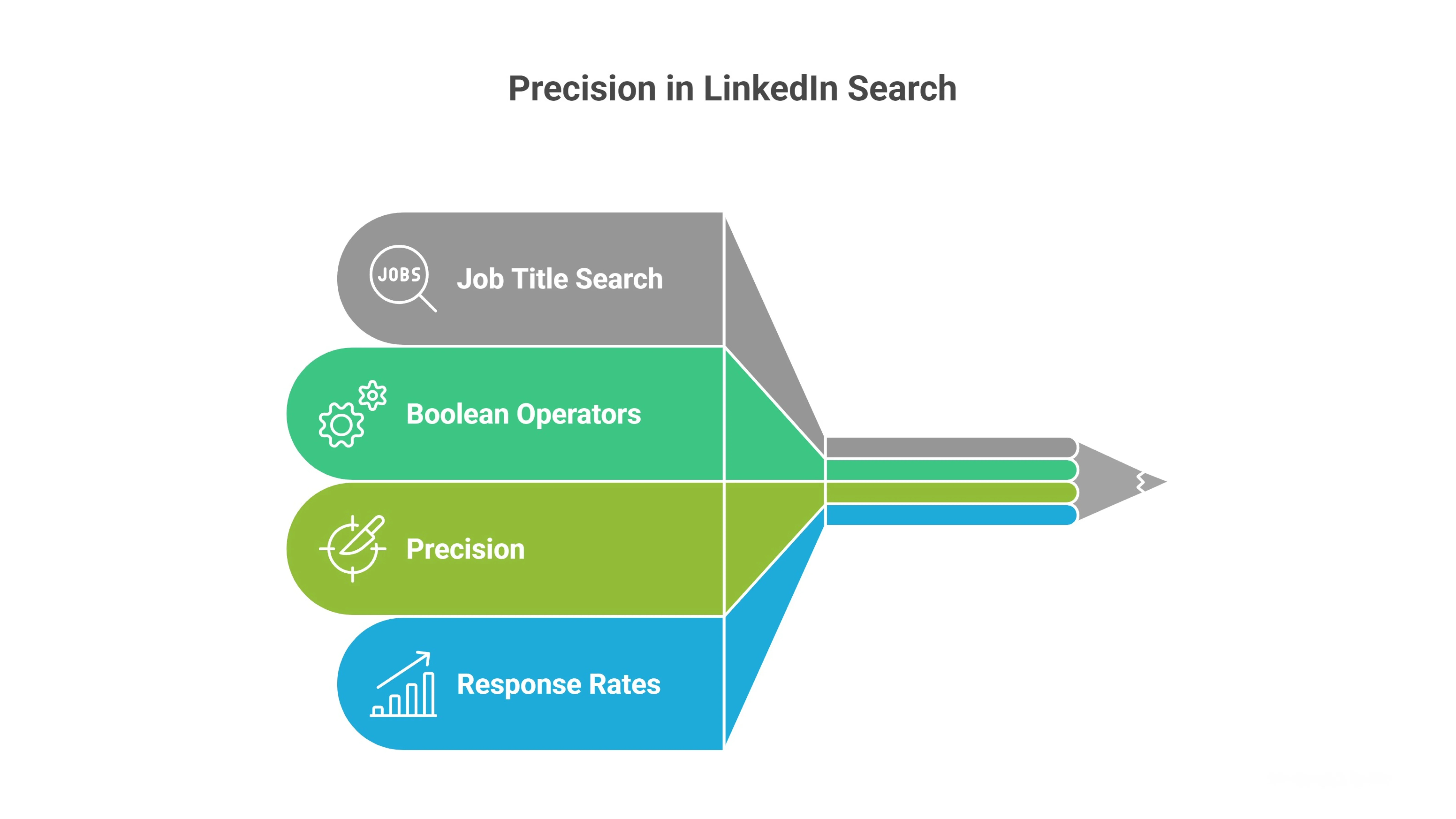
Most people type a job title into LinkedIn search and stop there.
That’s lazy targeting.
Boolean search lets you combine keywords using operators like AND, OR, and NOT to narrow results precisely. For example, instead of “Marketing Manager,” you can search:
“Marketing Manager” AND SaaS NOT “Agency”
This removes irrelevant profiles and surfaces higher-fit prospects. The more precise your search, the more relevant your outreach feels.
Precision increases response rates because your message speaks directly to a clearly defined segment.
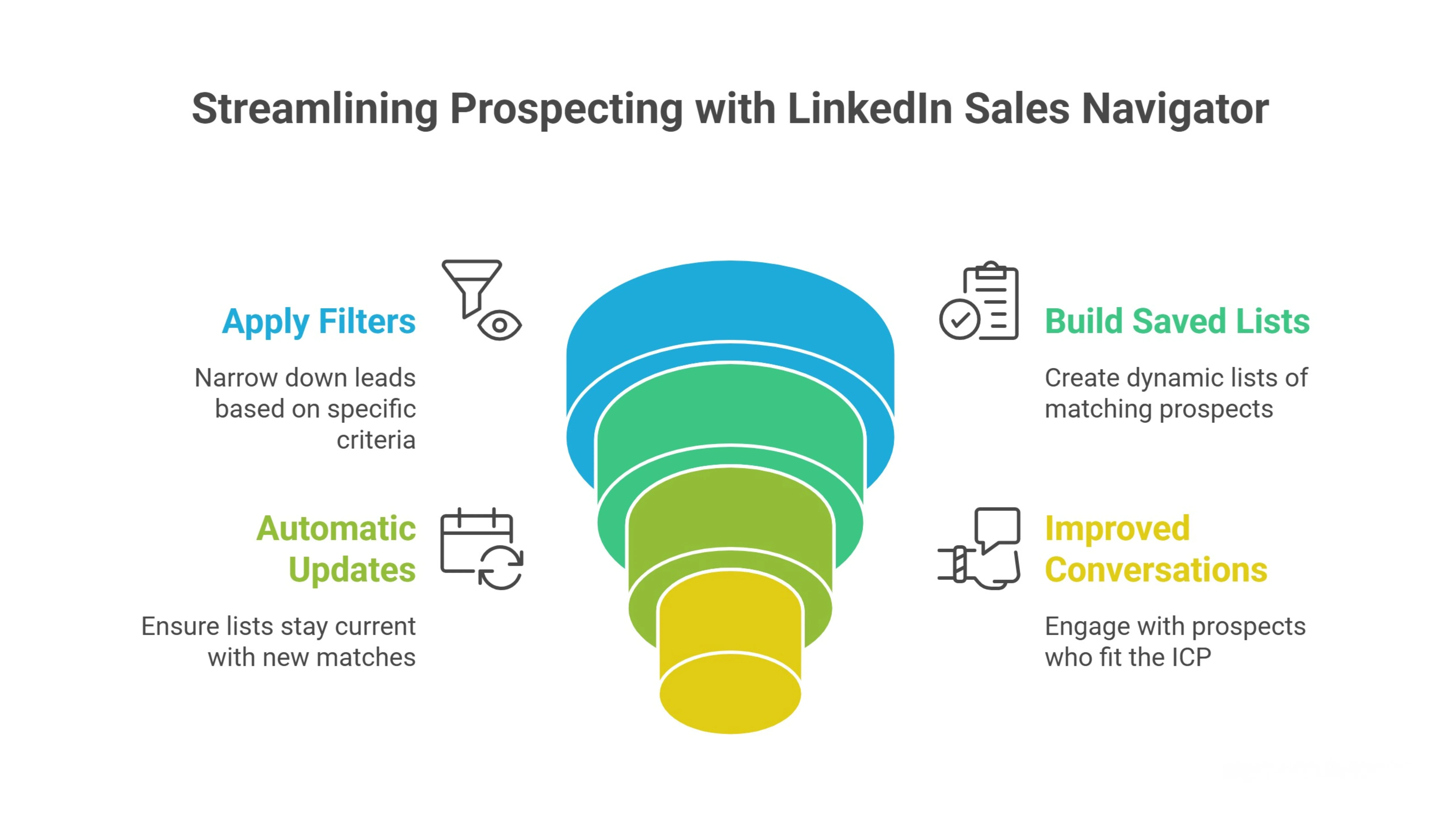
If you’re serious about consistent pipeline, LinkedIn Sales Navigator is worth considering.
It allows you to filter by company headcount growth, job changes, years in current role, geography, seniority level, and more.
Instead of scrolling endlessly, you can build saved lead lists that update automatically when new prospects match your criteria.
This turns prospecting from manual hunting into a repeatable system.
When your filters are strong, your conversations improve because you’re speaking to people who actually fit your ICP.
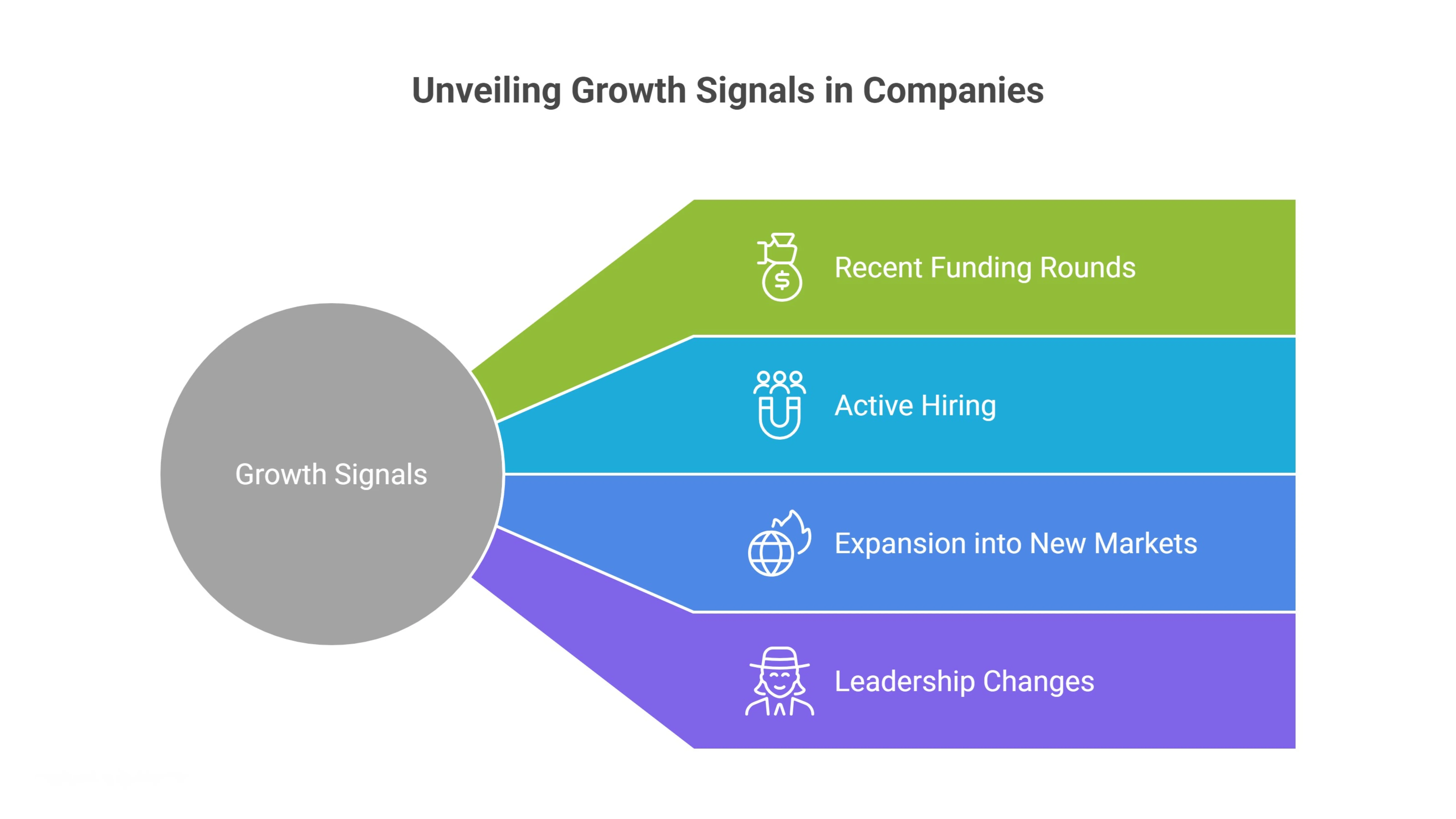
Not every company is ready to buy.
But growing companies often are.
Look for signals like recent funding rounds, active hiring, expansion into new markets, or leadership changes. These indicators usually mean budget, urgency, and openness to solutions.
For example, a company hiring multiple SDRs might need better sales infrastructure. A startup that just raised funding may be investing in growth tools.
Timing matters more than volume.
When you reach out during moments of change, your message feels relevant instead of intrusive.
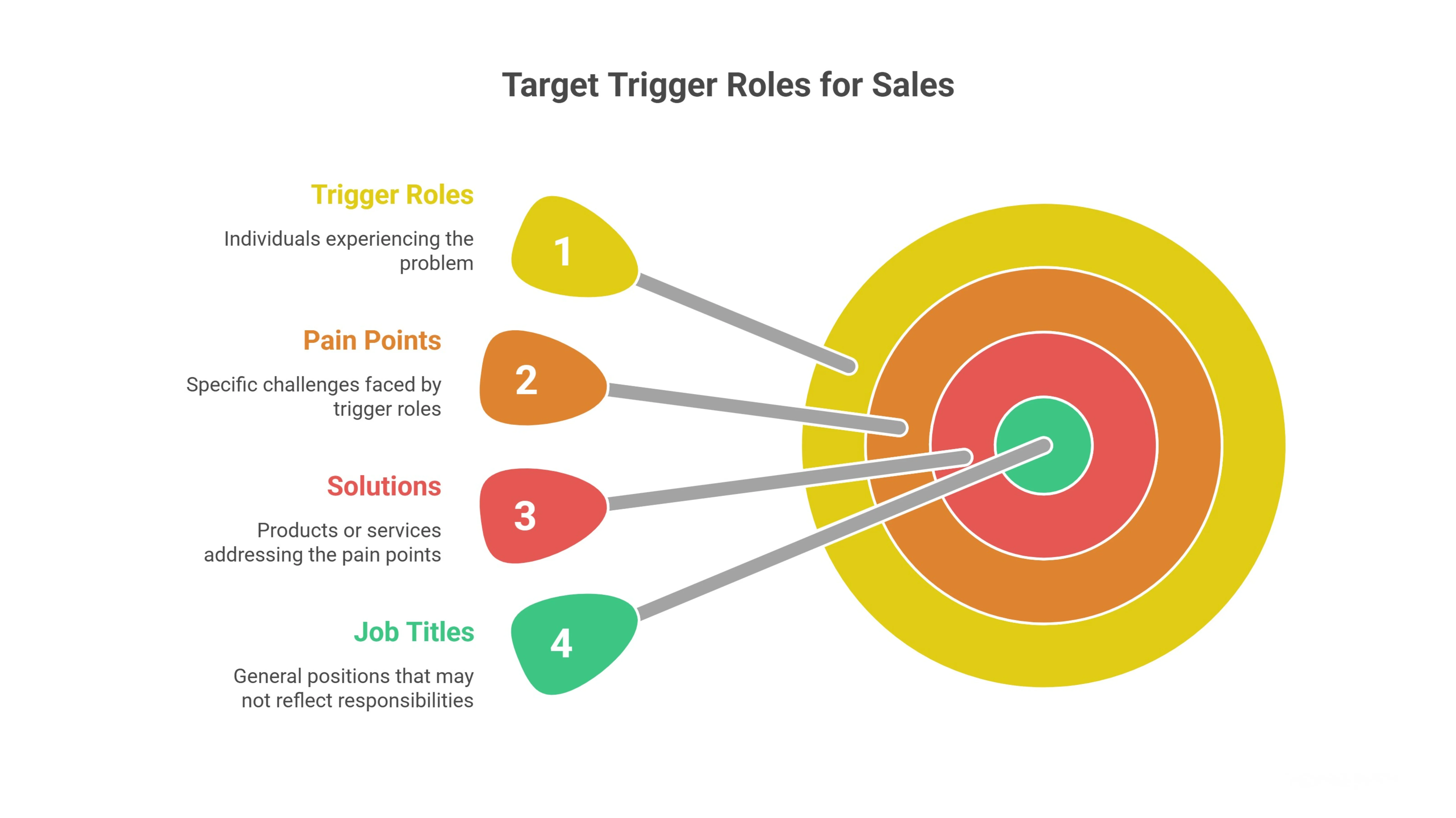
Job titles alone can be misleading.
Two “Heads of Marketing” may have completely different responsibilities depending on company size and structure.
Instead of focusing only on titles, think about who actually experiences the problem you solve.
For example:
Trigger roles are defined by pain, not position.
When you identify the person who feels the problem most intensely, your outreach becomes sharper, more direct, and far more likely to convert into a meaningful conversation.
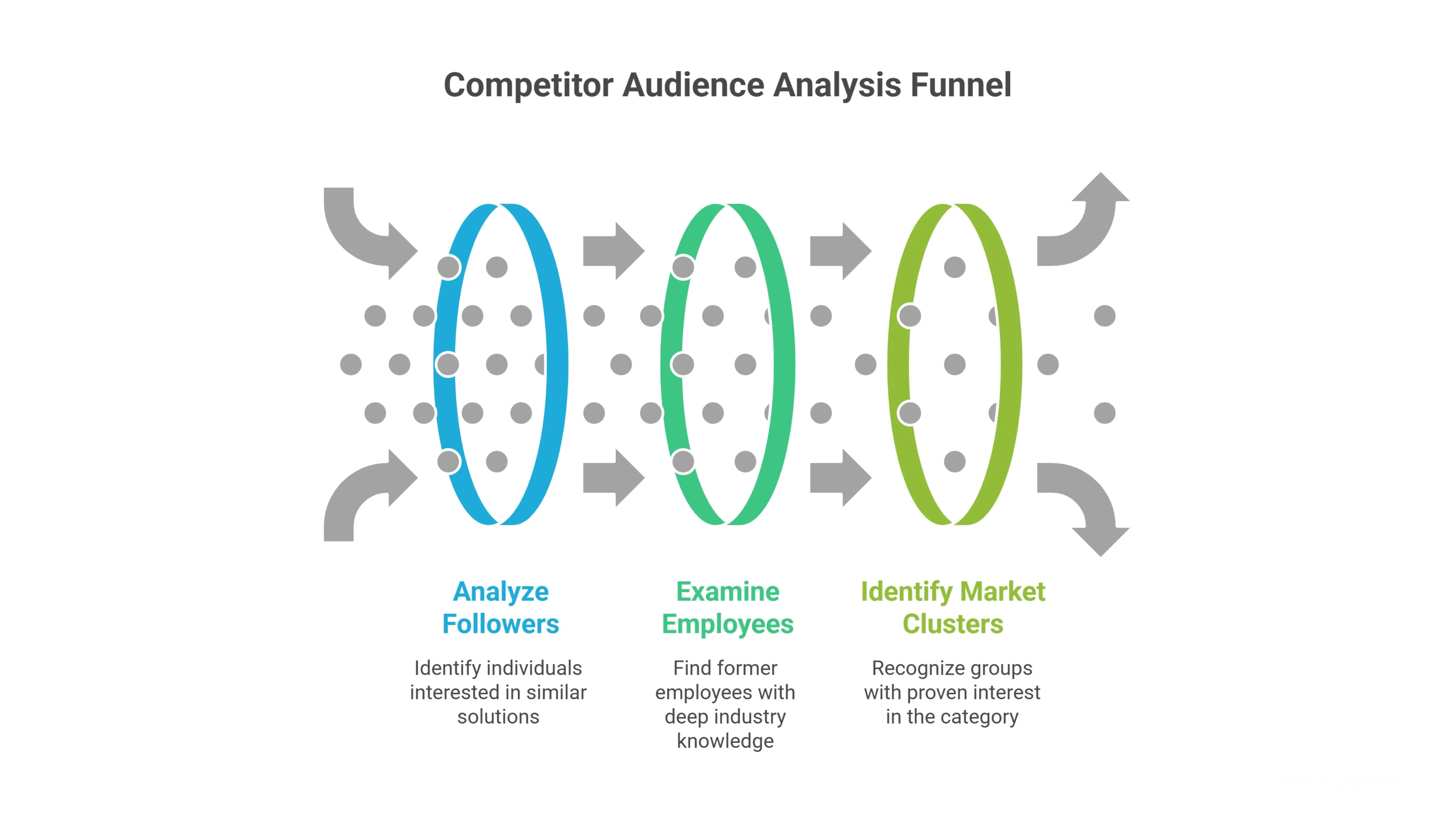
If your competitor is attracting the right audience, you don’t need to reinvent targeting.
Start by analyzing their company page followers. These people already show interest in a similar solution. That makes them warmer than completely cold prospects.
Next, look at their employees. Former employees, especially, can be strong leads because they understand the problem space deeply.
You’re not copying competitors. You’re identifying proven market clusters.
This shortcut helps you tap into an audience that is already educated about the category you sell in.
LinkedIn quietly gives you a powerful discovery feature.
When you visit a profile, check the “People Also Viewed” section on the right sidebar. It often suggests professionals with similar roles, industries, and backgrounds.
Think of it as LinkedIn’s built-in lookalike engine.
If you find one perfect-fit prospect, this feature can help you uncover dozens of similar profiles quickly. Over time, this becomes a fast way to expand highly relevant lead lists without starting every search from scratch.
If you sell to businesses, their tech stack tells you a lot.
The tools a company uses reveal maturity level, budget, and possible gaps. For example, a company using basic CRM software might need automation. A business already investing in sales tools might be open to optimization solutions.
You can use tech-stack data tools to filter companies by the platforms they use.
When your outreach references their existing tools, your message feels tailored and thoughtful instead of generic.
Relevance drives replies.
Not all prospects deserve equal effort.
Create three tiers:
Your A-list should receive deep research and highly personalized outreach.
Your B-list can use semi-personalized messaging.
Your C-list can be more automated and volume-driven.
This structured approach prevents burnout and ensures your best opportunities get the most attention.
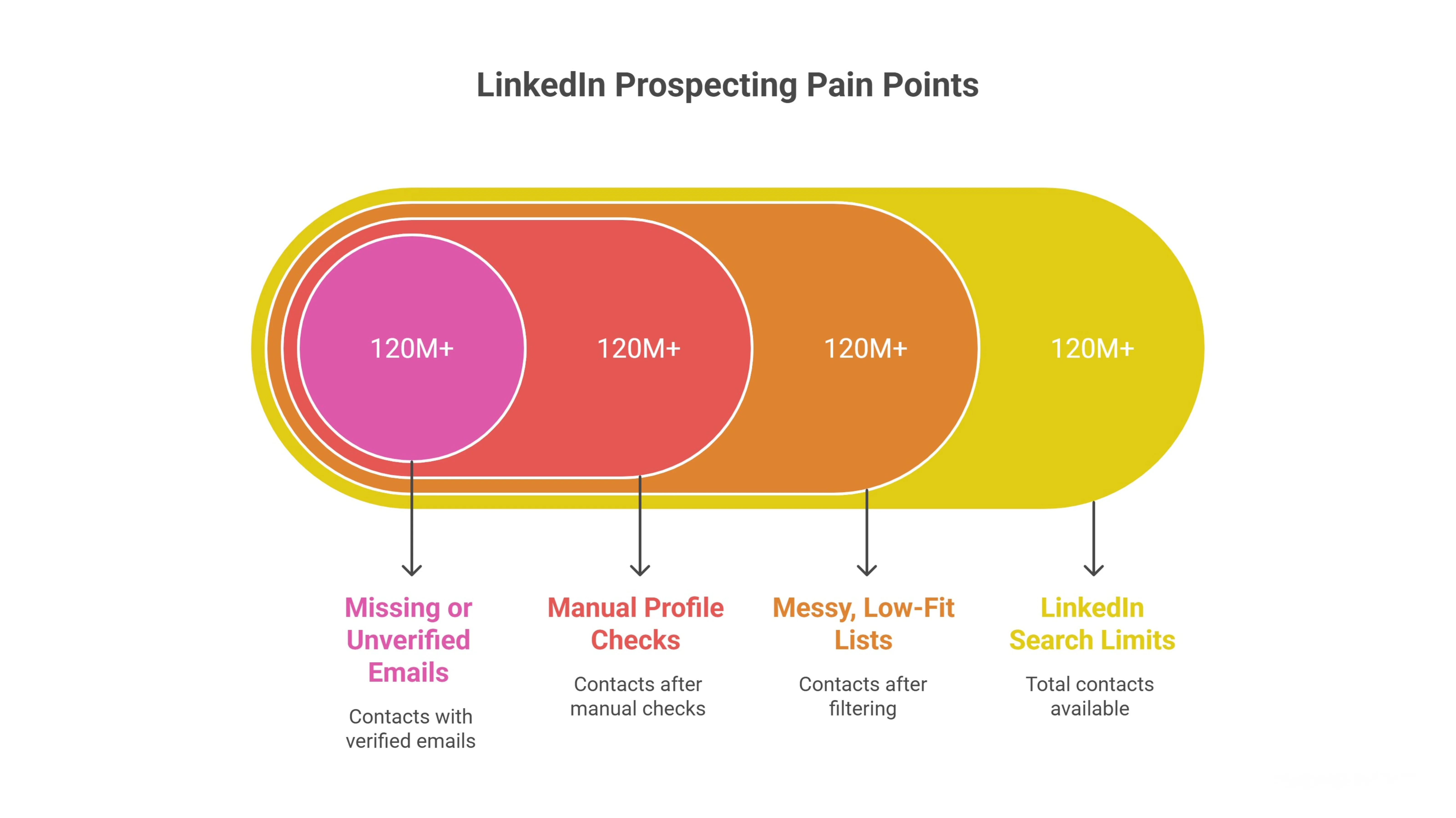
List building may look simple on the surface.
But once you try scaling it, the friction shows up fast.
Here’s the real-world pain on the prospecting side:
❌ You hit LinkedIn search limits quickly
❌ Filters still leave you with messy, low-fit lists
❌ You manually check profiles one by one
❌ Emails are missing or unverified
❌ Data sits in spreadsheets with no enrichment
So even before outreach starts, your pipeline is already inefficient.
Instead of spending hours cleaning lists, structured workflow flips the process.
With platforms like Oppora, you define your ICP once and connect agents in an n8n-style flow.
Here’s what that unlocks:
✅ Access to 120M+ verified contacts via waterfall sourcing
✅ Built-in real-time email verification
✅ Automatic enrichment and deduplication
✅ LinkedIn + email data connected in one place
✅ Clean, ready-to-use lead lists without manual filtering
You stop hunting manually.
The system continuously builds qualified lists based on your criteria.
And the best part, you can try Oppora and build your first structured workflow for free.
LinkedIn prospecting isn’t about sending more messages.
It’s about targeting smarter, timing your outreach well, and building structured follow-up systems.
When you combine precise ICP clarity, growth signals, trigger roles, and workflow automation, prospecting becomes predictable instead of frustrating.
Start with strong foundations.
Apply the smart hacks consistently.
And when volume increases, rely on structured systems like Oppora to scale without losing personalization or control.
Quality matters more than quantity. Instead of maxing out daily limits, focus on 20–30 highly targeted connection requests. When your ICP is clear and your messaging is relevant, smaller, consistent batches generate better conversations and reduce the risk of account restrictions.
A good rule is 3–5 days between follow-ups. This gives prospects time to respond without feeling pressured. Plan 2–3 thoughtful follow-ups that add value, reference context, or ask a new angle instead of repeating the same message.
They work best together. LinkedIn builds visibility and familiarity, while email provides more space for detailed messaging. A combined, multichannel approach increases response rates and keeps your outreach from relying on one platform alone.
Don’t focus only on connection acceptance rates. Track reply rate, positive response rate, meetings booked, and pipeline value generated. These metrics show whether your targeting and messaging are driving real business outcomes.
Yes, and often even better. Smaller niches allow for deeper personalization and clearer positioning. When your ICP is narrow, your outreach becomes more specific, making conversations feel relevant instead of generic, which increases trust and reply rates.
Summarize with AI
Share