Home
Blog
Find & Send Cold Emails to 500 Unique Prospects Every Month for FREE.
Home
Blog
Adam Hossain
Published February 17, 2026
9 min
Try Oppora AI
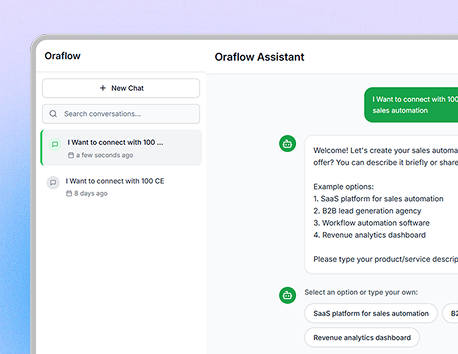
Create Self-Running Agentic Sales Workflows like N8N just by chatting with AI
Get Started for FREE
Your cold email subject line decides everything.
Before someone reads your pitch, checks your offer, or clicks a link, they read those few words sitting in their inbox. And in a crowded inbox, that tiny line determines whether your email gets opened or ignored.
If your open rates are low, it’s rarely because your offer is bad. It’s usually because your subject line didn’t earn attention.
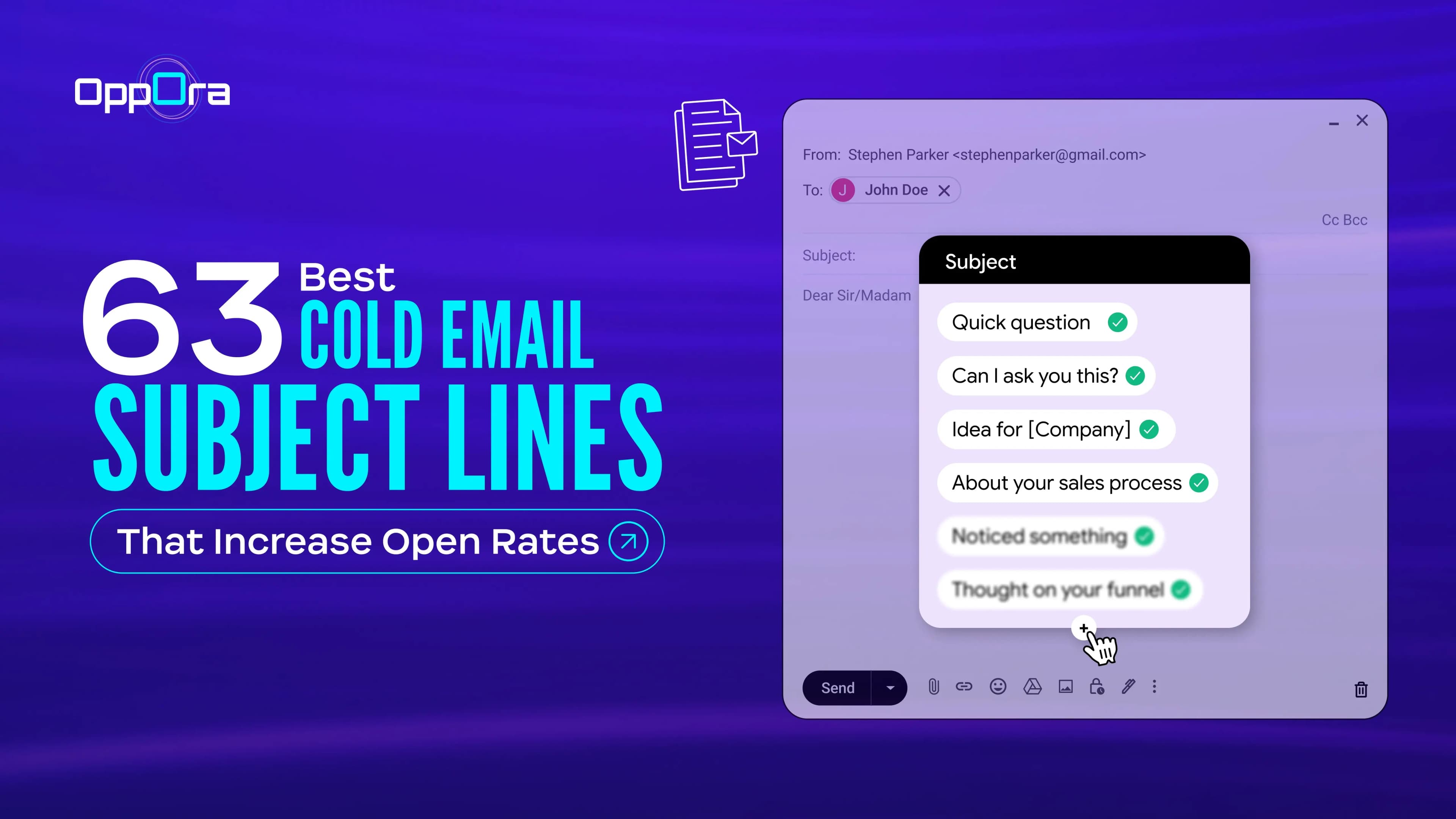
In this guide, you’ll learn what makes cold email subject lines work and get 63 proven examples you can test immediately to increase opens and start more conversations.
If you want higher open rates, you don’t need magic words.
You need psychological precision.
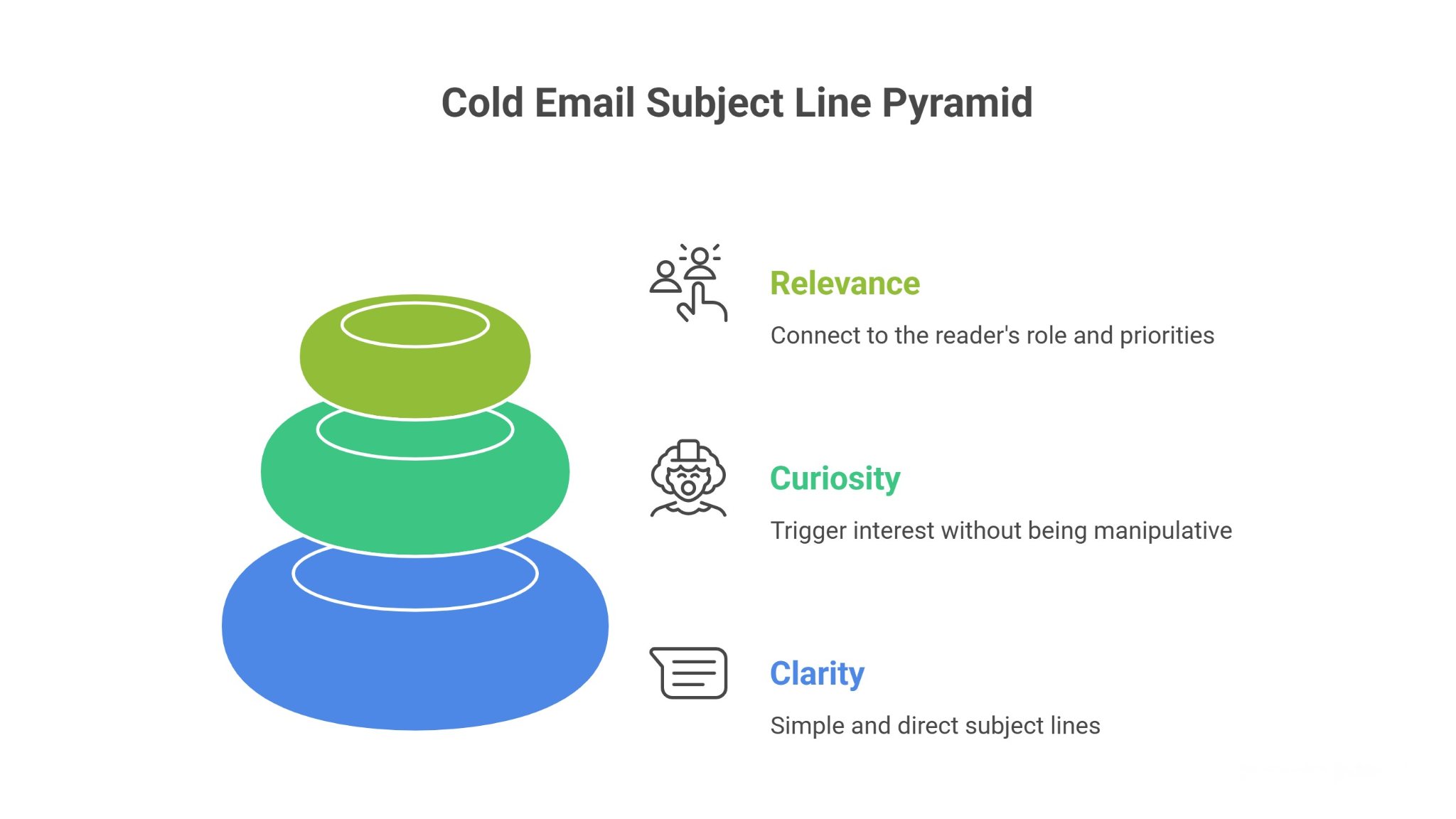
The best-performing subject lines feel simple, intentional, and relevant to the person reading them. When you understand why people open emails, writing strong subject lines becomes much easier.
Clever subject lines might feel smart.
But in cold outreach, clarity almost always wins.
When someone scans their inbox, they make split-second decisions. If your subject line is confusing, vague, or overly witty, it creates friction. And friction lowers opens.
Instead of trying to impress, focus on being obvious.
Clear subject lines like “Quick question about your hiring process” or “Idea to improve demo bookings” immediately tell the reader what the email is about. There’s no guessing. No decoding.
Clarity signals confidence.
And confidence builds trust before the email is even opened.
That doesn’t mean your subject lines should be boring.
They should create curiosity — just enough to trigger interest, but not so much that they feel manipulative.
Curiosity works when there’s a clear gap between what someone knows and what they want to know. A subject line like “Noticed something on your homepage” invites the reader to open the email to find out what you saw.
The key is control.
If curiosity feels like clickbait, people ignore it. If it feels specific and relevant, they lean in.
Relevance is what separates spam from opportunity.
When your subject line connects to the reader’s role, company, or current priorities, it instantly feels intentional.
Context can come from their industry, recent activity, hiring patterns, funding news, or shared connections. Even small personalization signals effort.
When someone feels like the email was written specifically for them, not copied to 500 others, open rates naturally increase.
Now that you understand what makes subject lines work, let’s get practical.
Below are 63 cold email subject lines grouped by psychological angle so you can test what fits your audience, industry, and offer.
Sometimes shorter wins.
These are simple, clean, and frictionless.
These work because they don’t overwhelm the reader. They feel human and easy to respond to.
Here you introduce a knowledge gap without sounding vague or salesy.
These subject lines invite the reader to open without triggering defensive “sales radar.”
This is where open rates start to climb because relevance increases.
When your subject line reflects real research, it feels intentional rather than automated.
These highlight a clear benefit or pain point.
They work well when you deeply understand your buyer.
The key here is specificity. The more tangible the outcome, the stronger the pull.
Social proof lowers resistance.
These subject lines suggest legitimacy without overselling.
Credibility-based lines work best when the reference is real and verifiable.
Most deals close in the follow-up.
These subject lines help restart conversations without sounding pushy.
Follow-ups work when they feel respectful. You’re not demanding attention. You’re simply reopening the thread and making it easy to respond.
Now you have 63 angles to test.
Don’t copy them blindly. Adapt them to your audience, experiment with tone, and track what resonates. Open rates improve when subject lines feel intentional, specific, and human — not automated or generic.
Suggested Reading:
Cold Email Follow-Up: 8 Proven Templates.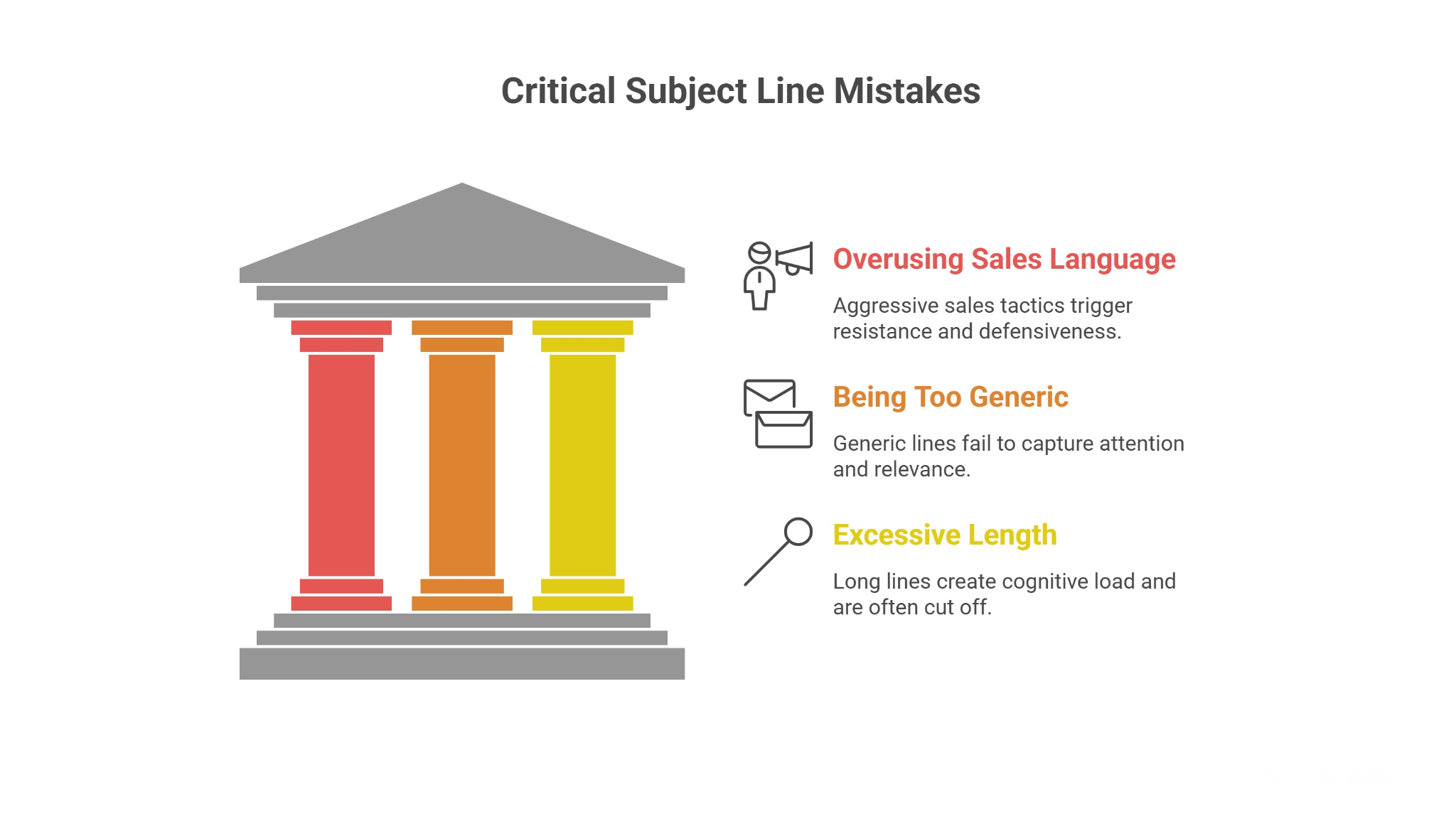
You can follow every best practice and still struggle with opens if you make a few critical mistakes.
Most low-performing subject lines fail for predictable reasons.
The fastest way to get ignored is to sound like a pitch.
Words like “Buy,” “Discount,” “Limited Offer,” “Free Demo,” or “Act Now” immediately trigger resistance in cold outreach. Your prospect doesn’t know you yet, so aggressive sales language feels premature.
Even subtle hype can hurt you.
Phrases like “Revolutionary Solution” or “Guaranteed Results” sound promotional instead of conversational.
Cold email works best when it feels like one professional reaching out to another, not a marketing campaign blasting an offer. When your subject line sounds calm and neutral, people are more likely to open out of curiosity rather than defensiveness.
Generic subject lines blend into the noise.
If your line could be sent to anyone in any industry, it won’t feel relevant to anyone.
“Business Proposal” or “Opportunity for You” says nothing specific. It doesn’t signal effort, context, or understanding. And without relevance, there’s no compelling reason to open.
Even small personalization signals can dramatically improve performance.
Referencing a role, initiative, metric, or company-specific detail makes your email feel intentional rather than mass-sent.
Long subject lines create cognitive load.
If someone has to read 12–15 words just to understand what you want, they’ll often skip it.
Shorter lines are easier to process and more mobile-friendly. Most inboxes cut off longer subject lines anyway, hiding the most important words.
Aim for clarity in as few words as possible.
When your message is easy to scan, it’s easier to open.
Writing strong subject lines is important.
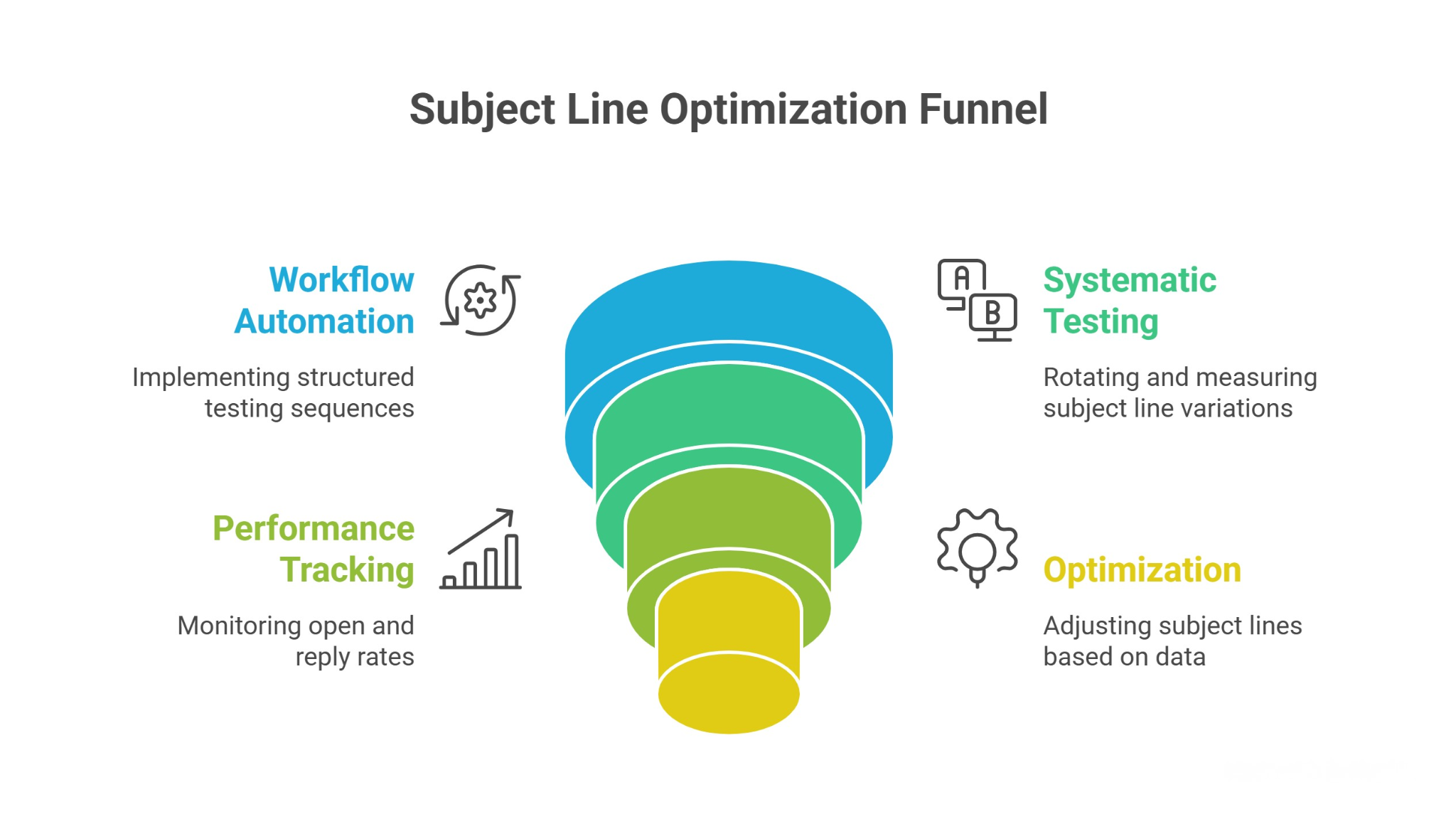
But testing them is what actually improves your open rates over time.
If you treat subject lines as experiments instead of guesses, you’ll quickly see patterns in what your audience responds to.
The biggest testing mistake is changing too many things at once.
If you modify tone, length, personalization, and structure in a single test, you won’t know what caused the improvement.
Keep it simple.
Test one clear variable per experiment — such as personalization vs. no personalization, short vs. slightly longer, or question vs. statement.
For example, compare: “Quick question”
vs.
“Quick question about your outbound strategy.”
Now you’re isolating clarity and specificity. When results come in, you’ll know exactly what made the difference.
Small, controlled tests create reliable insights.
Suggested Reading:
10 Best SDR Outbound Strategies.Not all audiences respond to the same trigger.
Some react better to curiosity. Others respond to clear outcomes. Some prefer directness.
Instead of testing random variations, compare different psychological angles intentionally.
For instance: Curiosity: “Noticed something on your homepage” Outcome-focused: “Improve demo conversions by 18%?” Social proof: “How we helped 3 SaaS teams last quarter”
Track which angle consistently earns higher opens.
Over time, you’ll identify the emotional drivers that resonate most with your specific market.
Open rates are not universal.
A founder, SDR manager, and marketing leader will respond differently to the same subject line.
Break down performance by segment — industry, job role, company size, or even geography. You may discover that highly direct subject lines work better with founders, while department heads prefer context-driven personalization.
Segmentation prevents misleading conclusions.
If one group performs poorly, it doesn’t mean the subject line failed. It may simply be misaligned with that audience.
When you combine structured testing with segmentation, your subject lines stop being creative guesses and start becoming predictable performance assets.
Testing subject lines manually works at small scale.
But once you’re sending hundreds or thousands of emails, manual tracking becomes messy and inconsistent.
That’s where workflow automation changes the game.
Instead of sending isolated campaigns, you build structured sequences where subject lines can be tested systematically. You can rotate variations automatically, measure performance in real time, and let winning versions scale without constant supervision.
For example, you might test:
When automation handles distribution evenly, your results become cleaner and more reliable.
This is where tools like Oppora fit naturally into the process.
Oppora’s AI Sales Agents don’t just send emails. They manage full outreach workflows from finding verified leads to writing personalized emails, rotating inboxes, handling replies, and syncing data to your CRM.
That means you can:
Instead of manually rewriting subject lines every week, you build a workflow once. The system keeps running, testing, and executing in the background.
When experimentation becomes part of your automated system, not a one-time task, your subject lines stop being creative guesses and start becoming scalable growth levers.
Cold email success starts before your message is read.
Your subject line determines whether your effort turns into a conversation or disappears in a crowded inbox.
When you focus on clarity, controlled curiosity, and relevance, your open rates improve naturally. Add structured testing and automation, and you turn small improvements into predictable growth.
Use the 63 subject lines as inspiration, experiment intentionally, and refine what works for your audience. Better opens mean more replies and more opportunities.
Aim for 3 to 7 words so it stays fully visible on mobile and easy to scan quickly. Shorter lines feel clearer, more confident, and less promotional.
Only personalize when it adds meaningful context like role, company, or activity. Forced personalization feels automated and can reduce trust instead of increasing opens.
Emojis can stand out visually, but they don’t always suit professional B2B outreach. Test carefully, because clean and simple subject lines often perform better.
Update them when performance drops or when targeting a new audience segment. Let data guide adjustments instead of making frequent changes without clear testing.
Yes, consistency builds trust from the first impression to the final sentence. When tone aligns, the open feels justified and replies become more likely.
Summarize with AI
Share