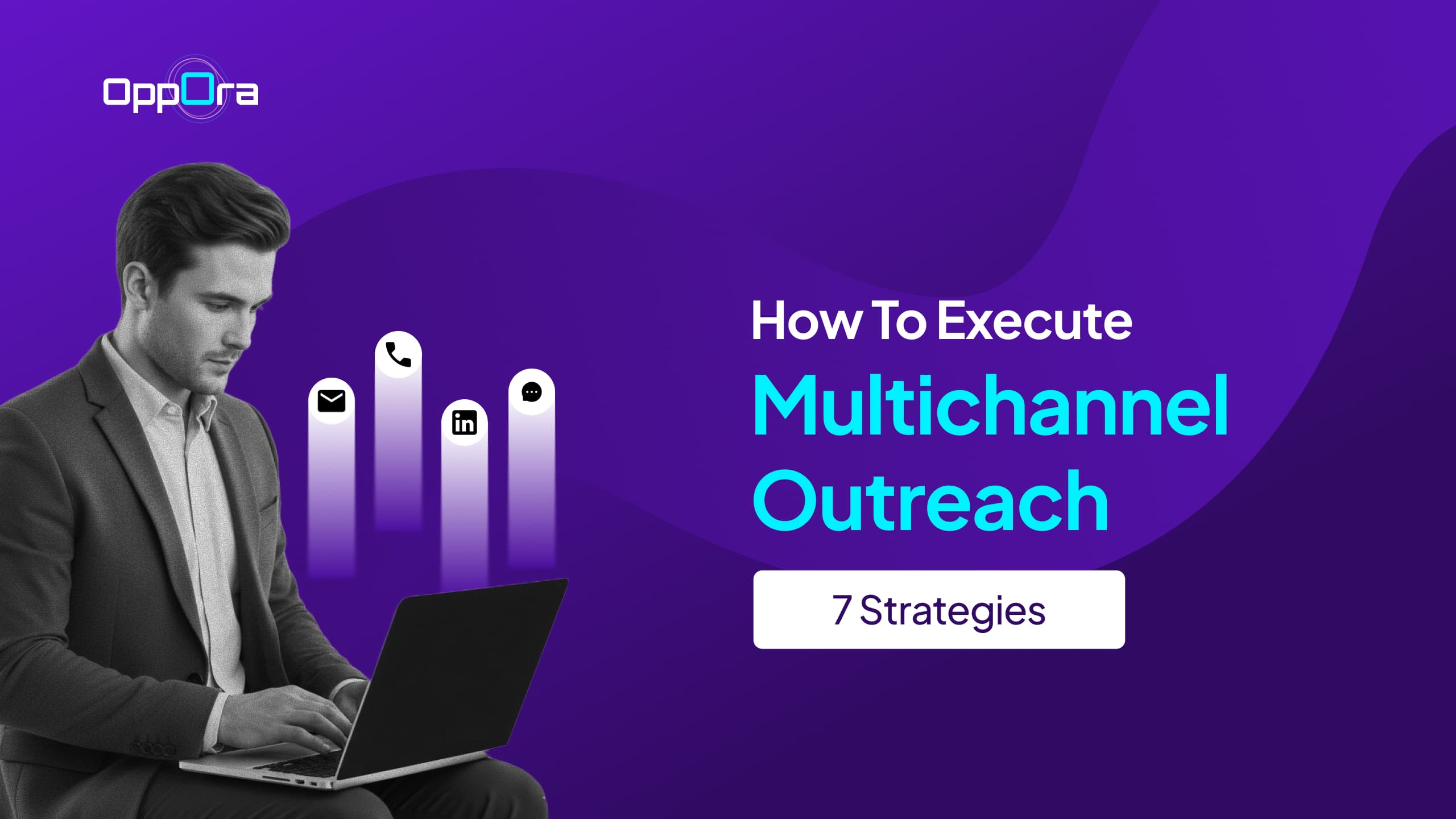
How to Execute Multichannel Outreach [+7 Strategies]
Manasa Goli
Published June 5, 2026
8 min
Complete Agentic Email Outreach
AI agents find and enrich prospects, personalize emails, follow up, and handle replies with your meeting link.
Start Your 7-Day Free Trial
Your prospects are overwhelmed with messages.
Their inbox is crowded, LinkedIn requests keep piling up, and sales calls often go unanswered.
This is why relying on a single outreach channel no longer works the way it used to.
The most successful sales teams don't just send emails. They create coordinated experiences across email, LinkedIn, calls, and other touchpoints that keep conversations moving without feeling repetitive.
That's where a strong multichannel outreach strategy makes the difference.
In this guide, you'll learn:
- What multichannel outreach really means
- Why it outperforms single-channel prospecting
- How to build a scalable multichannel outreach strategy
- 7 proven strategies to improve engagement and response rates
- Common mistakes that reduce campaign performance
Suggested Reading:
How to Use a LinkedIn QR Code for LinkedIn ProfilesWhat Is Multichannel Outreach?
Multichannel outreach is the process of engaging prospects through multiple communication channels as part of a single outreach campaign.
Instead of relying only on email, you combine channels such as:
- Phone calls
- SMS
- Social media engagement
- Voice messages
The goal isn't to contact prospects everywhere at once.
The goal is to create multiple opportunities for engagement while meeting buyers on the platforms they already use.
For instance, a prospect might ignore your first email but accept your LinkedIn connection request. Another prospect may see your LinkedIn message, recognize your name later in their inbox, and decide to reply.
Each touchpoint reinforces the others.
This creates familiarity, improves trust, and increases the likelihood of getting a response.
Think of multichannel outreach as building a conversation rather than sending isolated messages.
Why Multichannel Outreach Outperforms Single-Channel Outreach
Buyers are more distracted than ever.
Executives receive hundreds of emails every week, attend back-to-back meetings, and spend limited time reviewing unsolicited messages.
As a result, even a well-written email can easily get buried.
A strong multichannel outreach strategy solves this problem by increasing visibility across multiple touchpoints.
Here are some of the biggest benefits:
1. Higher Response Rates
The more relevant touchpoints you create, the more chances prospects have to engage with your message.
2. Better Brand Recognition
Seeing your name across email, LinkedIn, and other channels makes you more familiar and trustworthy.
3. Faster Relationship Building
Multiple interactions help prospects become comfortable with your brand before they respond.
4. Reduced Dependence on One Platform
Email deliverability issues, LinkedIn inactivity, or call avoidance won't completely derail your outreach efforts.
Instead of hoping one channel works perfectly, you're creating a system that works together.
How to Build a Multichannel Outreach Strategy
Now that you understand why multichannel outreach works, the next step is building a system that keeps every touchpoint connected.
Many teams fail because they simply add more channels without creating a strategy behind them. The result is inconsistent messaging, duplicate outreach, and a poor prospect experience.
A successful multichannel outreach strategy starts with three fundamentals.
1. Define Your Ideal Customer Profile (ICP)
Before choosing channels or writing messages, you need clarity on who you're targeting.
Identify:
- Industry
- Company size
- Job title
- Geography
- Pain points
- Buying triggers
The more specific your targeting, the easier it becomes to personalize outreach across every channel.
For example, the messaging that resonates with a SaaS founder will be very different from what works for a staffing agency owner.
2. Choose Channels Based on Buyer Behavior
Not every prospect prefers the same communication channel.
Some decision-makers live in their inbox.
Others spend hours on LinkedIn but rarely respond to emails.
Start by identifying where your audience is most active.
Common channel combinations include:
- Email + LinkedIn
- Email + Calls
- LinkedIn + Calls
- Email + LinkedIn + SMS
You don't need every channel.
You need the right channels.
3. Create One Message Across Multiple Touchpoints
Your messaging should feel consistent regardless of where prospects interact with you.
That doesn't mean copying and pasting the same text everywhere.
Instead, keep the core value proposition the same while adapting the format for each channel.
A prospect should instantly recognize the connection between your email, LinkedIn message, and follow-up call.
Once these fundamentals are in place, you can begin optimizing the actual execution of your outreach.
7 Multichannel Outreach Strategies That Drive More Responses
A strong framework is important, but execution is what ultimately determines results.
The following strategies are used by successful outbound teams to increase engagement without overwhelming prospects.
1. Combine Email and LinkedIn From Day One
Email remains one of the highest-converting outreach channels.
But relying on email alone often means competing with hundreds of messages in a prospect's inbox.
LinkedIn adds another layer of visibility.
A simple sequence could look like this:
- Day 1: Send your first email
- Day 2: View the prospect's LinkedIn profile
- Day 3: Send a connection request
- Day 5: Follow up via email
- Day 7: Engage with their recent content
This combination helps prospects recognize your name before they ever respond.
2. Give Each Channel a Different Purpose
One of the biggest outreach mistakes is repeating the same message everywhere.
Instead, let each channel serve a unique role.
For example:
- Email → Share value and context
- LinkedIn → Build familiarity
- Calls → Start conversations
- SMS → Remind or confirm interest
When every touchpoint adds new information, prospects feel guided rather than chased.
3. Personalize Using Real Buyer Signals
Personalization goes far beyond using someone's first name.
Look for signals that indicate potential interest or change.
Examples include:
- Recent funding announcements
- New hiring initiatives
- Job changes
- Product launches
- Industry news
Referencing relevant events shows that your outreach is intentional rather than automated.
4. Build Sequences Around Buyer Intent
Timing matters as much as messaging.
A prospect who downloaded a resource yesterday is more likely to engage than someone who has shown no activity for months.
Use intent signals whenever possible.
This allows you to prioritize outreach when buyers are already evaluating solutions or exploring opportunities.
5. Create Follow-Ups That Add Value
Most follow-ups fail because they simply ask the same question again.
Instead of saying:
"Just checking if you saw my last email."
Add something useful.
You could share:
- A case study
- An industry insight
- A relevant statistic
- A practical recommendation
Every follow-up should move the conversation forward.
6. Automate Repetitive Tasks, Not Relationships
As outreach volume increases, manual execution becomes difficult.
Automation can handle:
- Lead sourcing
- Prospect enrichment
- Email scheduling
- Task reminders
- Follow-up sequences
But relationship-building should still feel human.
The best outreach systems automate workflows while keeping communication relevant and personalized.
7. Measure the Entire Buyer Journey
Many teams focus only on email metrics.
The problem is that buyers rarely convert after a single touchpoint.
Track performance across every channel.
Monitor:
- Open rates
- Reply rates
- Connection acceptance rates
- Meeting bookings
- Opportunity creation
- Revenue influenced
This gives you a complete view of what is actually driving results.
The goal isn't simply generating activity.
The goal is creating conversations that turn into pipeline.
Suggested Reading:
How to Increase Click Rate in Email Marketing: 15 Proven StrategiesHow AI Is Changing Multichannel Outreach
Executing a multichannel outreach strategy sounds simple on paper.
In reality, it involves dozens of moving parts.
You need to find prospects, enrich contact data, write personalized messages, schedule follow-ups, monitor replies, book meetings, and keep your CRM updated.
As outreach volume grows, managing all these tasks manually becomes difficult.
This is why more sales teams are turning to AI-powered outreach systems.
Instead of using separate tools for prospecting, email outreach, LinkedIn engagement, and CRM management, AI can coordinate these activities within a single workflow.
For example, modern AI sales platforms can:
- Find and qualify leads automatically
- Verify contact information before outreach
- Personalize messages at scale
- Trigger follow-ups based on prospect behavior
- Respond to common questions
- Book meetings automatically
- Sync activity with CRM systems
The biggest advantage isn't simply saving time.
It's maintaining consistency across every touchpoint while reducing the manual work required to keep campaigns running.
This allows sales teams to focus more on conversations and less on administrative tasks.
How Oppora Helps Automate Multichannel Outreach
As multichannel campaigns become more sophisticated, many teams find themselves juggling multiple tools to manage prospecting, outreach, follow-ups, and reporting.
The challenge isn't launching campaigns.
The challenge is keeping everything connected.
Oppora approaches this differently by using AI sales agents that work together across the entire outbound process.
Instead of switching between separate tools, you can build a workflow that handles:
- Lead discovery
- Contact enrichment
- Email verification
- Email outreach
- LinkedIn outreach
- AI-powered replies
- Meeting booking
- CRM synchronization
What makes this particularly useful for multichannel outreach is that the workflow continues running after it's configured.
Rather than manually moving prospects from one stage to another, the system coordinates outreach activities across channels while keeping data synchronized throughout the process.
For teams looking to scale outbound efforts without increasing operational complexity, this can make managing a multichannel outreach strategy significantly easier.
Common Multichannel Outreach Mistakes to Avoid
Even with the right channels and tools in place, certain mistakes can limit your results.
Avoiding these issues can often improve performance faster than adding new tactics.
1. Using Too Many Channels Too Soon
More channels don't automatically mean better results.
Adding every available platform often creates complexity without improving engagement.
Start with two or three channels and expand only after you've established a repeatable process.
2. Sending the Same Message Everywhere
Prospects interact differently across channels.
A message that works in email may feel unnatural on LinkedIn.
Adapt your communication to fit the context of each platform while maintaining a consistent value proposition.
3. Ignoring Outreach Timing
Even highly personalized messages can fail if they reach prospects at the wrong moment.
Pay attention to buyer signals and engagement patterns.
Reaching out when interest is highest can dramatically improve response rates.
4. Over-Automating Conversations
Automation is valuable for repetitive tasks.
However, prospects can quickly recognize when conversations feel robotic.
Use automation to support outreach, not replace genuine communication.
5. Measuring Activity Instead of Outcomes
Sending more emails isn't necessarily a sign of success.
Neither is generating more LinkedIn connection requests.
Focus on metrics that directly impact pipeline growth, such as:
- Qualified conversations
- Meetings booked
- Opportunities created
- Revenue generated
The purpose of multichannel outreach is not more activity.
It's more meaningful engagement.
Conclusion
Your prospects don't rely on a single communication channel, and your outreach shouldn't either.
A well-executed multichannel outreach strategy helps you stay visible, build familiarity, and create more opportunities to engage with decision-makers throughout their buying journey.
The key is not being present on every platform. It's delivering the right message through the right channel at the right time.
Start by identifying where your audience is most active. Then create coordinated touchpoints across email, LinkedIn, calls, or other channels that naturally reinforce each other instead of feeling repetitive.
As your outreach scales, automation and AI can help manage the complexity without sacrificing personalization.
Whether you're a founder, SDR, agency, or sales leader, combining channels strategically can help you generate more conversations, book more meetings, and build a more predictable pipeline.
The sooner you move beyond single-channel prospecting, the sooner you'll start meeting buyers where they already are.
Frequently Asked Questions
Which channel typically delivers the highest ROI in multichannel outreach?
Email often remains the highest ROI channel because of its scalability and direct access to decision-makers.
However, email performs significantly better when supported by channels like LinkedIn and phone calls that increase familiarity and trust throughout the outreach process.
How long should a multichannel outreach sequence be?
Most successful outreach sequences run between 14 and 30 days.
This gives prospects enough opportunities to engage without making the outreach feel excessive.
The ideal duration depends on factors such as deal size, sales cycle length, and target audience behavior.
Is multichannel outreach effective for long sales cycles?
Yes.
Long sales cycles often require multiple touchpoints before a buyer is ready to engage.
A well-structured multichannel outreach strategy helps maintain visibility over time while nurturing prospects through different stages of the decision-making process.
Summarize with AI
Share