How to Increase Click Rate in Email Marketing: 15 Proven Strategies
Manasa Goli
Published May 16, 2026
7 min
Complete Agentic Email Outreach
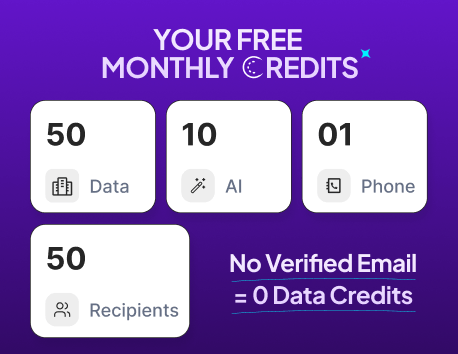
AI agents find and enrich prospects, personalize emails, follow up, handle replies, and book meetings automatically.
Claim Your FREE Credits
You spend hours writing emails, setting up campaigns, and building lists.
But when the clicks barely move, it feels like all that effort goes nowhere.
That’s the frustrating part about email marketing. Opens alone don’t generate leads, demos, or sales. Clicks do.
Your click-through rate tells you whether people are actually interested enough to take action after reading your email.
And if your CTR is low, it usually means something inside the email is breaking the flow.
The good news is that improving CTR in email marketing is rarely about one massive change.
Small improvements in copy, targeting, CTAs, timing, and personalization can dramatically increase clicks over time.
In this guide, you’ll learn:
- What CTR in email marketing actually means
- How to calculate click through rate email campaigns correctly
- Why your email click rates may be dropping
- 15 proven strategies to increase email clicks consistently
- Common mistakes hurting your CTR
What Is CTR in Email Marketing?
CTR in email marketing stands for Click-Through Rate.
It measures the percentage of recipients who clicked a link inside your email after receiving it.
This metric helps you understand whether your email content, offer, and CTA are compelling enough to drive action.
A strong click-through rate usually means:
- Your message matches audience intent
- Your CTA is clear
- Your offer feels relevant
- Your email copy creates curiosity or urgency
On the other hand, low CTR often signals that subscribers opened the email but didn’t find enough value to continue.
That’s why marketers track CTR alongside open rates and conversions instead of relying on opens alone.
How to Calculate Click Through Rate Email Campaigns
Before you improve anything, you need to know how to calculate CTR in email marketing correctly.
The standard formula is:
CTR = \frac{\text{Total Clicks}}{\text{Total Delivered Emails}} \times 100
For example:
- 500 people received your email
- 45 people clicked a link
Your CTR would be:
CTR = \frac{45}{500} \times 100 = 9%
Some platforms also show:
- Unique click-through rate
- Click-to-open rate (CTOR)
But for most campaigns, CTR is the primary metric used to measure engagement quality.
What Is a Good Email Click-Through Rate?
CTR varies across industries, audience types, and campaign goals.
But generally:
- 1–2% = below average
- 2–5% = healthy performance
- 5%+ = strong engagement
If your emails already get good open rates but low clicks, the issue usually exists inside the email itself.
That’s where optimization matters.
How to Increase Click Rate in Email Marketing: 15 Ways
1. Write Subject Lines That Match the Email Content
A misleading subject line may increase temporarily.
But if the email content doesn’t match expectations, people stop clicking immediately.
Your subject line should create curiosity without overpromising.
Instead of:
- “You Won’t Believe This Marketing Trick”
Try:
- “3 Email CTA Changes That Increased Clicks by 27%”
The second one sets a clear expectation and attracts the right audience.
That alignment improves both trust and click behavior.
2. Focus on One Primary CTA
One of the biggest reasons marketers struggle with how to improve email click through rate is simple:
Too many choices.
If your email asks readers to:
- Watch a webinar
- Read a blog
- Book a demo
- Download a guide
- Follow on LinkedIn
Most people end up doing nothing.
Every email should have one primary goal.
One clear CTA creates direction and reduces decision fatigue.
3. Move Your CTA Higher in the Email
Many subscribers never scroll to the bottom.
If your main CTA only appears after several paragraphs, a large portion of readers may never see it.
Place your primary CTA:
- Near the top
- After the first major value section
- Again near the end if needed
This simple adjustment can significantly increase click rate email marketing campaigns generate.
4. Personalize Beyond First Names
Adding someone’s first name is no longer enough.
Modern personalization means tailoring emails around:
- Industry
- Pain points
- Funnel stage
- Buying intent
- Previous engagement
- Behavior patterns
When emails feel specifically written for the reader, clicks naturally improve.
For example:
Instead of saying:
“Here’s our lead generation guide.”
You could say:
“Here’s how SaaS founders are reducing outbound response time.”
That feels far more relevant to the recipient.
5. Segment Your Email List Properly
A generic email blast usually creates generic results.
Segmentation helps you send more relevant emails to smaller groups.
You can segment based on:
- Industry
- Job role
- Company size
- Geography
- Purchase history
- Engagement activity
The more aligned the message feels, the easier it becomes to improve click rate in email.
6. Make Your CTA Buttons Impossible to Miss
Sometimes the issue isn’t the offer.
It’s visibility.
Your CTA should visually stand out without overwhelming the email design.
Good CTA buttons usually:
- Use action-oriented language
- Have enough spacing around them
- Avoid vague wording
- Stay short and direct
Instead of:
- “Learn More”
Try:
- “See the Full Strategy”
- “Get the Free Template”
- “Book Your Demo”
Specific CTAs usually drive stronger clicks.
7. Improve Email Copy Flow
Readers don’t click when the email feels difficult to read.
Long blocks of text reduce momentum quickly.
High-performing emails usually feel conversational and easy to scan.
A better structure often looks like this:
- Problem
- Why it matters
- Quick insight
- CTA
That flow keeps attention moving naturally toward the click.
8. Add Social Proof Near Your CTA
People trust actions others have already validated.
Adding proof close to your CTA reduces hesitation.
You can include:
- Customer results
- Short testimonials
- Case study metrics
- User numbers
- Brand mentions
For example:
“Used by 2,000+ B2B teams to automate outbound workflows.”
That extra context increases confidence before the click happens.
9. Optimize for Mobile First
A huge percentage of emails are opened on phones.
If your email looks cluttered on mobile, CTR drops immediately.
Make sure:
- Buttons are thumb-friendly
- Text is readable without zooming
- Paragraphs stay short
- Images load properly
- CTAs appear early
Mobile optimization directly affects how to increase CTR in email marketing campaigns today.
10. Use Curiosity Inside the Email Body
Curiosity should not stop at the subject line.
Your email copy itself should create momentum toward the CTA.
Instead of explaining everything upfront, leave a knowledge gap.
For example:
“We tested three CTA placements and one doubled our clicks unexpectedly.”
That naturally encourages readers to continue.
Curiosity-driven writing often improves engagement without sounding overly salesy.
11. Send Emails at Better Times
Timing influences click behavior more than many marketers realize.
Even strong emails underperform when sent at the wrong moment.
While timing varies by audience, testing often reveals patterns around:
- Morning vs afternoon
- Weekday vs weekend
- Industry-specific schedules
- Buyer activity windows
Consistent testing helps improve CTR in email marketing over time.
12. Reduce Visual Clutter
Too many visuals can overwhelm readers.
Heavy designs, multiple banners, and excessive links create distractions that reduce clicks.
Cleaner emails usually perform better because they keep attention focused.
A simple layout with:
- One message
- One CTA
- Clear spacing
often outperforms overly designed templates.
13. A/B Test Your CTAs Constantly
Most marketers test subject lines.
Far fewer test CTA wording.
That’s a missed opportunity.
You should regularly test:
- CTA button text
- Placement
- Color contrast
- CTA frequency
- Email length before CTA
Even small wording changes can dramatically increase click rate email marketing performance.
14. Use Behavioral Triggers Instead of Generic Broadcasts
Triggered emails usually outperform mass campaigns because they match real intent.
Examples include:
- Cart abandonment emails
- Demo follow-ups
- Pricing page visits
- Lead magnet downloads
- Webinar attendance
Behavior-driven emails feel more relevant, which naturally increases clicks.
This is one reason modern outbound systems focus heavily on automation and behavioral workflows instead of manual bulk campaigns.
15. Continuously Clean and Refresh Your List
Inactive subscribers hurt engagement metrics over time.
If people repeatedly ignore your emails, mailbox providers may reduce deliverability.
That means even interested subscribers may stop seeing your emails consistently.
Regularly:
- Remove inactive contacts
- Re-engage cold subscribers
- Verify email addresses
- Update segmentation
Cleaner lists usually lead to stronger CTR performance.
How Oppora Helps Improve Email Click Rates
Once you start scaling outbound campaigns, manually optimizing every email becomes difficult.
That’s where platforms like Oppora can help streamline the process.
Instead of managing separate tools for lead sourcing, personalization, email sequencing, replies, and campaign workflows, Oppora combines everything into one AI-driven outbound system.
Some features especially useful for improving CTR include:
- AI-personalized email generation instead of repetitive spintext
- Multi-step workflow automation
- A/B testing support
- Sender identity matching for better deliverability
- Automated follow-up sequences
- Unified inbox management
- AI-powered reply handling
Because better deliverability and personalization directly impact engagement, systems like these can help improve click-through rates at scale without manually rewriting every campaign.
Final Thoughts
If you’re wondering how to improve click rate in email, start by focusing on clarity, relevance, and simplicity.
Most email CTR problems happen because:
- The message feels generic
- The CTA lacks direction
- The content overwhelms readers
- The timing is wrong
- The audience targeting is weak
The good thing is that even small improvements compound quickly.
A slightly stronger CTA, better personalization, cleaner formatting, or improved segmentation can dramatically increase click rate email marketing campaigns generate over time.
And once you consistently improve CTR, every part of your email funnel performs better — replies, demos, conversions, and revenue included.
Frequently Asked Questions
Should every email have only one CTA?
In most cases, yes. Having one primary CTA keeps readers focused and reduces decision fatigue. When emails include too many links or competing actions, users often click nothing at all. A focused email usually drives stronger CTR in email marketing campaigns.
How many CTAs should an email have?
Most marketing emails perform best with one primary CTA. Too many CTAs can confuse readers and dilute attention, which often reduces clicks instead of increasing them.
Can too many links reduce email CTR?
Yes, too many links can reduce email CTR because they create distractions and make it harder for readers to decide what action to take.Focused emails with one clear goal generally perform better.
What is the difference between open rate and click-through rate?
Open rate measures how many people opened your email, while click-through rate measures how many people clicked a link inside the email. A high open rate with low CTR usually means your subject line worked, but the email content failed to drive action.
Summarize with AI
Share