Home
Blog
Find & Send Cold Emails to 500 Unique Prospects Every Month for FREE.
Home
Blog
Adam Hossain
Published February 17, 2026
9 min
Try Oppora AI
Create Self-Running Agentic Sales Workflows like N8N just by chatting with AI
Get Started for FREE
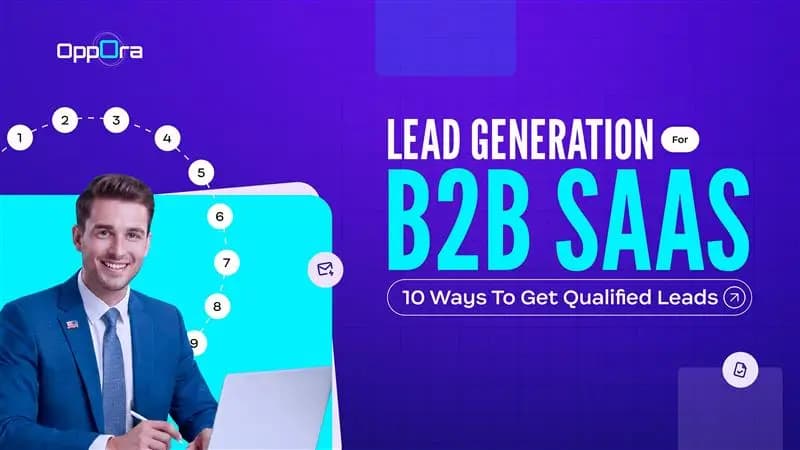
Generating qualified leads in B2B SaaS is not about collecting emails or driving random traffic to your website.
It’s about attracting the right companies, the right decision-makers, and the right buying intent at the right time.
Unlike simpler business models, SaaS requires trust, education, and alignment before someone books a demo. And if your strategy isn’t built around qualification, you’ll waste time chasing leads that never convert.
In this guide, you’ll learn 10 practical ways to generate qualified B2B SaaS leads — plus how to design a system that consistently turns interest into real sales opportunities.

If you’ve ever tried selling SaaS, you already know it’s not like selling a simple product online.
You’re not asking someone to make a quick purchase decision. You’re asking them to change tools, processes, and sometimes even internal workflows.
That makes B2B SaaS lead generation more layered, slower, and far more strategic than most other business models.
In SaaS, one person rarely makes the final decision.
You might attract a marketing manager, but finance wants pricing clarity, IT wants security validation, and the founder wants ROI proof.
This means your lead generation must speak to multiple stakeholders at once — and nurture them over weeks or months. Without structured follow-up and clear value communication, even strong interest fades before a demo gets booked.
Many SaaS founders assume that increasing website traffic will automatically increase demos.
It rarely works that way.
If your traffic is broad or poorly targeted, you simply collect unqualified signups who were never serious buyers. What you need instead is high-intent traffic aligned with a clear problem, strong positioning, and a frictionless path to book a call.
SaaS growth becomes predictable only when you stop chasing random leads and start building systems.
That means defining your ideal customer profile, selecting the right acquisition channels, and creating a process that consistently turns strangers into qualified opportunities.
When your lead generation works like a system — not a series of experiments — your pipeline becomes measurable, optimizable, and scalable.
Now that you understand why SaaS lead generation is more complex, let’s talk about what actually works.
You don’t need dozens of channels. You need focused strategies that attract decision-makers with real intent and move them toward a sales conversation.
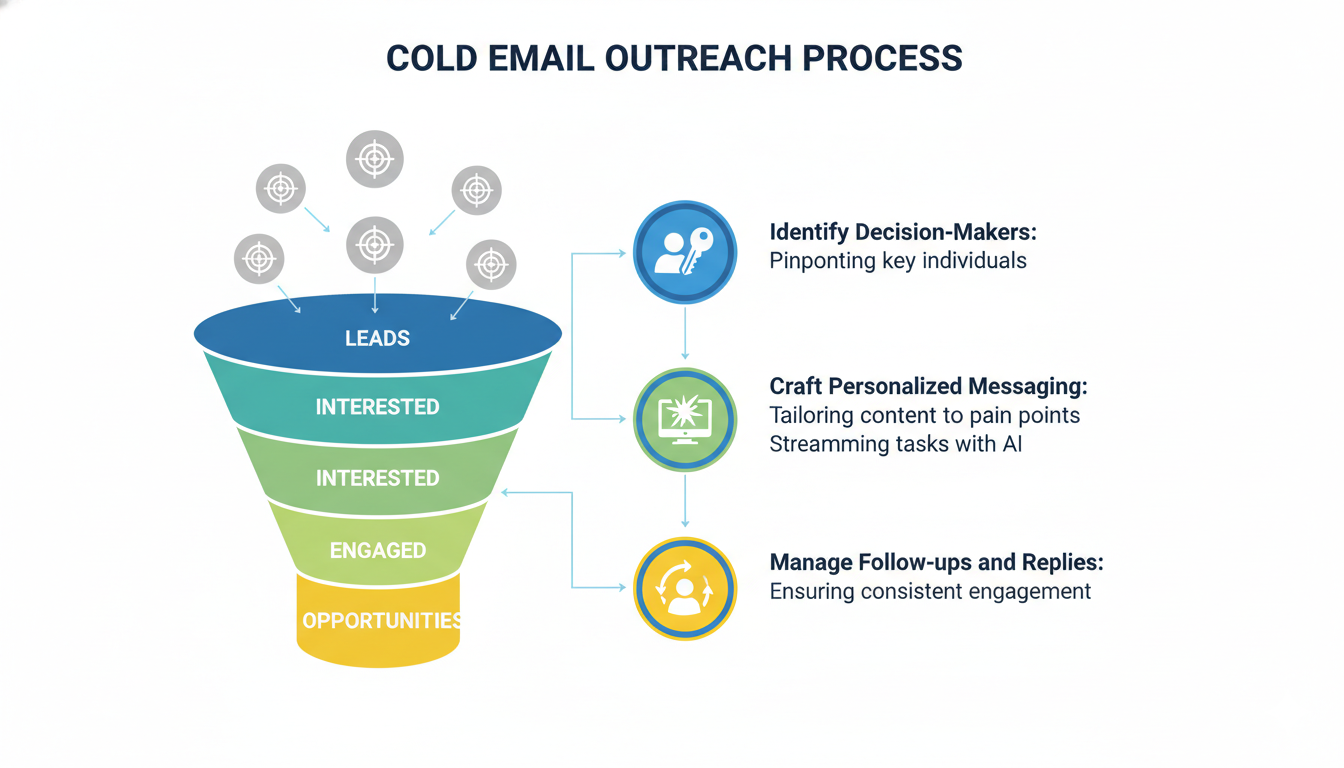
Cold email still works in B2B SaaS — but only when it’s targeted and systemized.
The difference between spam and pipeline is precision.
Instead of blasting thousands of generic emails, you define your ideal customer profile, identify decision-makers, and craft messaging around their specific pain points. When personalization is thoughtful and relevance is high, cold outreach becomes a predictable demo channel.
But managing this manually is exhausting.
You have to find leads, enrich data, verify emails, write copy, send follow-ups, reply to objections, and book meetings — all while protecting deliverability.
This is where intelligent automation makes a difference.
Tools like Oppora’s AI Sales Agents can build an end-to-end outreach workflow where lead sourcing, personalization, follow-ups, and even inbox replies happen automatically. Instead of prompting AI for each task, you design the system once and let it execute consistently.
The goal is not automation for the sake of it.
It’s creating a repeatable outbound engine that runs without daily micromanagement.
Content marketing in SaaS often fails because it attracts the wrong audience.
Traffic alone doesn’t build a pipeline.
If your blog content targets broad educational topics with no buying intent, you’ll generate readers, not prospects.
Intent-focused content starts with understanding what your buyer searches for right before they make a decision.
Think comparison posts, solution-specific guides, implementation frameworks, pricing breakdowns, and tool evaluations. These topics attract people who are actively exploring solutions.
When someone reads “best CRM for small SaaS teams” or “how to automate outbound sales,” they are much closer to booking a demo than someone reading “what is sales automation.”
Structure your content to naturally move readers toward action.
Include clear CTAs, case examples, and logical next steps that guide them into your funnel.
SEO for SaaS should prioritize bottom-of-funnel keywords first.
Many founders start with high-volume keywords that are too broad and too competitive.
Instead, focus on high-intent queries with clear commercial signals.
Examples include:
These searches may have lower volume, but they convert significantly better.
When your SEO strategy aligns with your ICP and their buying stage, organic traffic becomes one of your highest-quality lead sources.
Over time, you can expand into mid-funnel educational content.
But start where buying intent already exists.
Not all lead magnets are equal.
A generic “free ebook” might generate downloads, but it won’t necessarily generate sales conversations.
Instead, design lead magnets that filter for serious prospects.
This could include:
When someone invests time filling out a calculator or completing an assessment, they are demonstrating real interest.
You can also include qualifying questions within the download process.
Company size, role, current tools, or revenue range can help you segment leads immediately.
A well-designed lead magnet does two things at once.
It provides value while signaling buying readiness.
Webinars remain powerful because they create direct interaction.
Unlike blog readers, webinar attendees raise their hands.
The key is positioning.
Instead of generic product demos, host problem-focused sessions. Teach a specific framework, show how to solve a real operational challenge, and then demonstrate how your solution supports that process.
For example, instead of “Product Demo,” consider “How to Build a Scalable Outbound System for B2B SaaS.”
Now your product becomes part of a bigger strategy.
Live Q&A sessions are especially valuable.
When prospects ask questions in real time, you uncover objections, buying signals, and qualification data instantly.
Always follow up quickly.
Webinar leads are warm but time-sensitive. A structured follow-up sequence can turn engaged attendees into booked meetings within days.
When done right, webinars don’t just educate.
They compress your sales cycle by building trust at scale.
If your buyers are in B2B, they are on LinkedIn.
But simply sending connection requests won’t generate qualified leads.
LinkedIn works best when prospecting and authority building happen together.
You identify decision-makers based on role, industry, and company size, then engage them with thoughtful connection messages tied to a specific problem you solve.
At the same time, your profile and content must reinforce credibility.
When a prospect checks your page, they should immediately understand who you help and what outcome you deliver.
Share short insights, mini case breakdowns, and operational lessons from your space.
This builds familiarity before you ever pitch.
When inbound and outbound meet on LinkedIn, conversations feel natural.
You are no longer a stranger asking for time. You are someone who already demonstrated expertise.
Paid ads can accelerate growth, but only if your funnel is aligned.
Driving traffic to a homepage and hoping for demos is rarely profitable.
Instead, match your ad objective to buyer intent.
Cold audiences should be directed to value-driven assets like guides, checklists, or webinar registrations. Warmer audiences can be sent directly to demo booking pages.
Your messaging must mirror the pain your ICP feels.
Generic “all-in-one SaaS solution” ads rarely convert. Specific pain-focused messaging performs significantly better.
Think in stages.
Awareness ads educate. Consideration ads build proof. Conversion ads ask for the demo.
When your ad funnel mirrors your sales journey, paid acquisition becomes predictable instead of expensive experimentation.
Sometimes the fastest way to qualified leads is borrowing trust.
Strategic partnerships allow you to access audiences that already trust someone else.
Look for complementary tools serving the same ICP.
If you sell sales automation software, partner with CRM consultants or outbound agencies. If you serve HR teams, collaborate with payroll providers or recruiting platforms.
Joint webinars, co-authored guides, and bundled offers create mutual benefit.
You gain exposure to warm audiences, and your partner enhances their offering.
Affiliates can also drive consistent referrals.
But structure matters. Provide clear positioning, messaging guidance, and incentives aligned with long-term customer value — not just quick signups.
When partnerships are strategic instead of transactional, they become ongoing lead channels.
Product-led growth flips the funnel.
Instead of convincing prospects through long sales cycles, you let the product demonstrate value first.
Free trials, freemium models, or limited-feature access reduce friction.
Users experience real outcomes before committing financially.
But PLG only works when onboarding is tight and value is delivered quickly.
If users sign up and feel confused, they churn before activation.
Focus on time-to-value.
Guide users to one clear action that produces a visible result.
Usage data also becomes qualification data.
You can identify power users, expansion-ready accounts, or teams inviting multiple colleagues — all strong buying signals.
When sales teams act on product behavior instead of guesswork, conversations become more relevant and higher converting.
Most visitors won’t convert on the first interaction.
That doesn’t mean they are unqualified.
Retargeting ads keep your brand visible after someone visits your site, reads a blog post, or attends a webinar.
You stay top of mind while they continue researching options.
Pair this with structured email nurture sequences.
Instead of random newsletters, design educational flows aligned with buying stages.
For example:
Each email should move the reader one step closer to clarity and action.
Consistency matters more than frequency.
When nurture is structured and purposeful, you build trust gradually without sounding pushy.
Over time, this combination of retargeting and thoughtful follow-up turns silent prospects into qualified opportunities.
Suggested Reading:
15 Quotation Follow-Up Emails That Convert.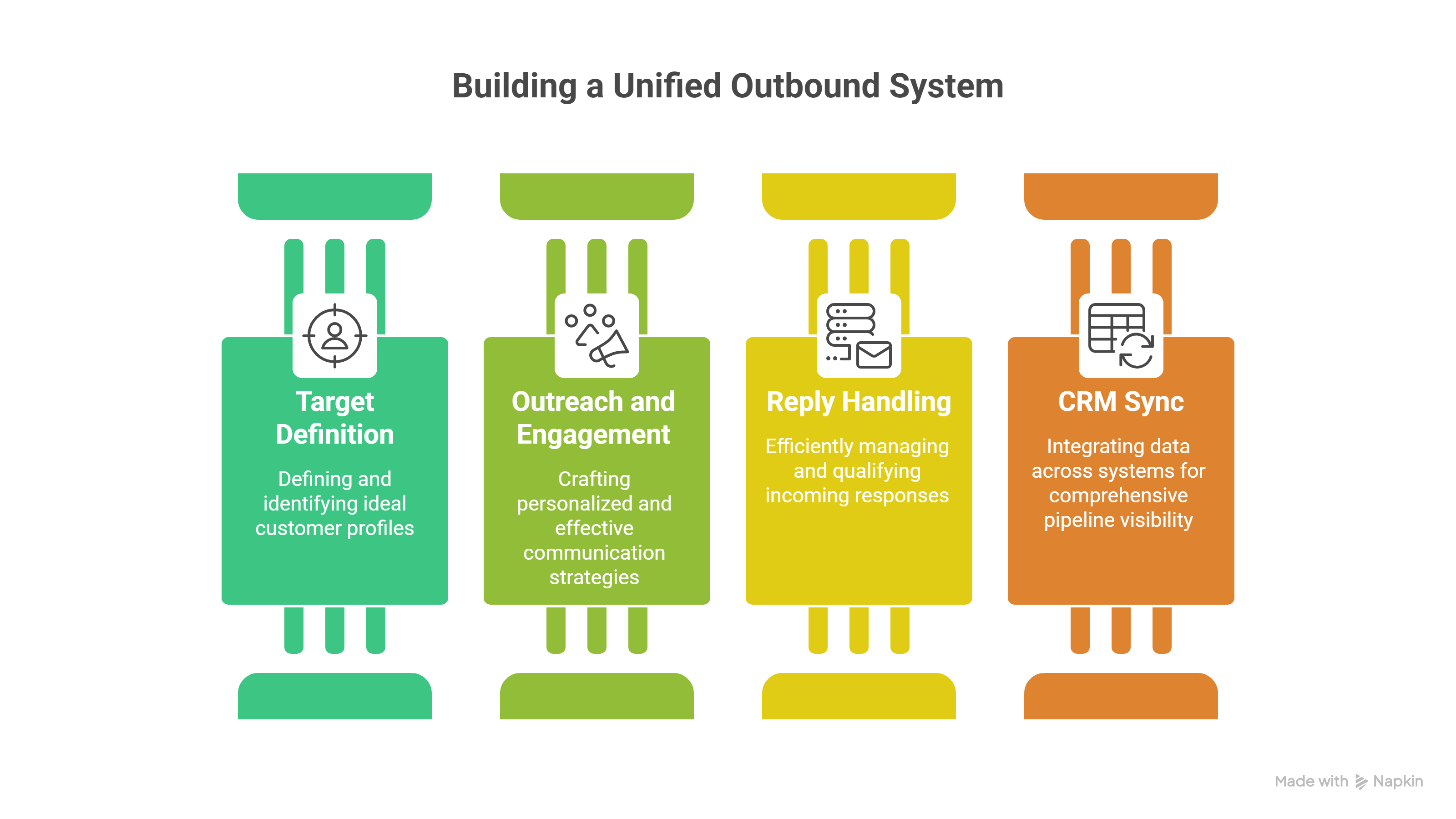
Generating leads is one thing.
Turning them into structured, qualified opportunities is where most SaaS teams struggle.
Instead of juggling separate tools for sourcing, writing, sending, replying, and syncing data, you can design a unified outbound system. That’s where Oppora fits naturally into your funnel not as another feature tool, but as an execution layer.
Here’s how the funnel can work.
Every qualified pipeline starts with clarity.
You define who you want to reach based on industry, company size, job title, and buying signals.
Oppora’s AI Sales Agents can pull verified contacts from large waterfall data sources, enrich them with additional insights, and score them based on relevance.
Instead of manually exporting spreadsheets and cleaning data, your list is enriched, deduplicated, and verified before outreach even begins.
This reduces wasted effort and improves deliverability from day one.
Once targets are defined, outreach must feel relevant and personalized.
Generic templates burn domains and damage trust.
With Oppora, you design a workflow once, combining email, LinkedIn, and follow-ups and the AI agents execute it continuously. Each message is uniquely generated instead of spun from a static template, which helps avoid spam patterns.
The system can rotate inboxes, warm domains, and match sender identity automatically.
That means your outreach scales without increasing deliverability risk.
Replies are where real qualification happens.
But manually managing conversations across inboxes slows everything down.
Oppora’s AI Reply Agent can answer common questions, handle objections, send attachments, qualify interest, and share booking links directly from your inbox.
Warm leads are identified quickly instead of sitting unnoticed.
This compresses response time and moves serious prospects toward meetings faster.
Even strong outreach fails if data stays scattered.
You need visibility across your pipeline.
Oppora automatically syncs contacts, conversations, meetings, and deal stages into your CRM, whether that’s HubSpot, Salesforce, Pipedrive, or its built-in CRM.
No manual updates.
No lost context.
When your entire funnel operates as one connected system, lead generation stops being chaotic and starts becoming predictable.
B2B SaaS lead generation isn’t about chasing volume.
It’s about building a system that consistently attracts, engages, and qualifies the right buyers.
When you combine targeted outbound, intent-driven content, strategic partnerships, and structured nurturing, your pipeline becomes predictable instead of reactive.
And when your funnel is supported by automation that handles sourcing, personalization, replies, and CRM sync, you stop juggling tools and start scaling outcomes.
Focus on quality, clarity, and repeatability.
That’s how you turn attention into conversations and conversations into qualified revenue opportunities.
Outbound can generate replies within days, while SEO and content take longer to compound. Consistency and precise targeting determine how quickly results become predictable.
Focus on sales-qualified leads, conversion rates, and deal velocity.These metrics reveal pipeline quality better than traffic or impressions.
Outbound delivers faster pipeline feedback and early traction. Inbound builds authority and lowers acquisition costs over time.
Win through niche positioning and sharper messaging . Precision and personalization often outperform scale and budget.
Review tactical performance weekly and strategy monthly. Small, consistent improvements drive stronger long-term results.
Summarize with AI
Share