Home
Blog
Find 500 B2B Contacts for Free Every Month with Built-In Outreach.
Home
Blog
Adam Hossain
Published March 10, 2026
12 min
Try Oppora AI
Create Self-Running Agentic Sales Workflows like N8N just by chatting with AI
Get Started for FREE
Finding qualified prospects is one of the most time-consuming parts of sales.
If you rely on manual research, building lead lists can quickly turn into hours of searching profiles, websites, and databases just to find the right contact.
This is where lead prospecting tools make a real difference.
Instead of hunting for data one lead at a time, these platforms help you discover companies, identify decision-makers, and collect verified contact details much faster.
In this guide, you’ll learn how prospecting tools work and which platforms help sales teams find qualified leads efficiently.
Choosing a prospecting platform is not just about finding the biggest contact database.
What actually matters is how well the tool helps you identify the right prospects, access reliable contact details, and move leads smoothly into your outreach workflow.
Before selecting a platform, you should look closely at the data quality it provides, the targeting filters available, and how easily it fits into the way your team works.
Even the most advanced prospecting tool becomes ineffective if the underlying data is unreliable.
When emails bounce or job titles are outdated, sales teams waste time reaching out to the wrong people and campaigns quickly lose momentum.
High-quality platforms continuously verify their databases to ensure contact information stays current and accurate.
Look for tools that offer verified email addresses, updated company data, and real-time validation features.
Accurate data improves deliverability, reduces wasted outreach efforts, and increases the chances that your messages actually reach the right decision-makers.
Strong targeting capabilities are what turn large contact databases into useful prospect lists.
Without proper filters, users often end up sorting through thousands of irrelevant contacts just to find a few qualified leads.
Good prospecting platforms allow you to narrow searches using filters such as industry, company size, location, revenue, job title, department, seniority level, and technologies used.
The more precisely you can define your ideal customer profile, the easier it becomes to build focused lead lists.
Better targeting also improves response rates because your outreach is directed toward prospects who are more likely to need your solution.
Another important factor is how well the platform fits into your existing sales workflow.
Some teams only need tools for discovering contact information, while others prefer platforms that connect prospecting directly with outreach and campaign management.
If moving leads between tools requires too many manual steps, productivity quickly drops.
The right prospecting platform should allow you to research, organize, and export leads easily while integrating smoothly with your CRM or outreach systems.
When discovery and execution work together, sales teams can move from research to outreach much faster.
Lead prospecting tools help you move from manual research to structured lead discovery.
Instead of searching for contacts one profile at a time, these platforms give you access to large databases, advanced targeting filters, and verified contact information.
Some tools focus purely on contact discovery, while others combine prospecting with outreach workflows.
Below are 13 popular tools sales teams commonly evaluate when building prospect lists and identifying qualified leads faster.
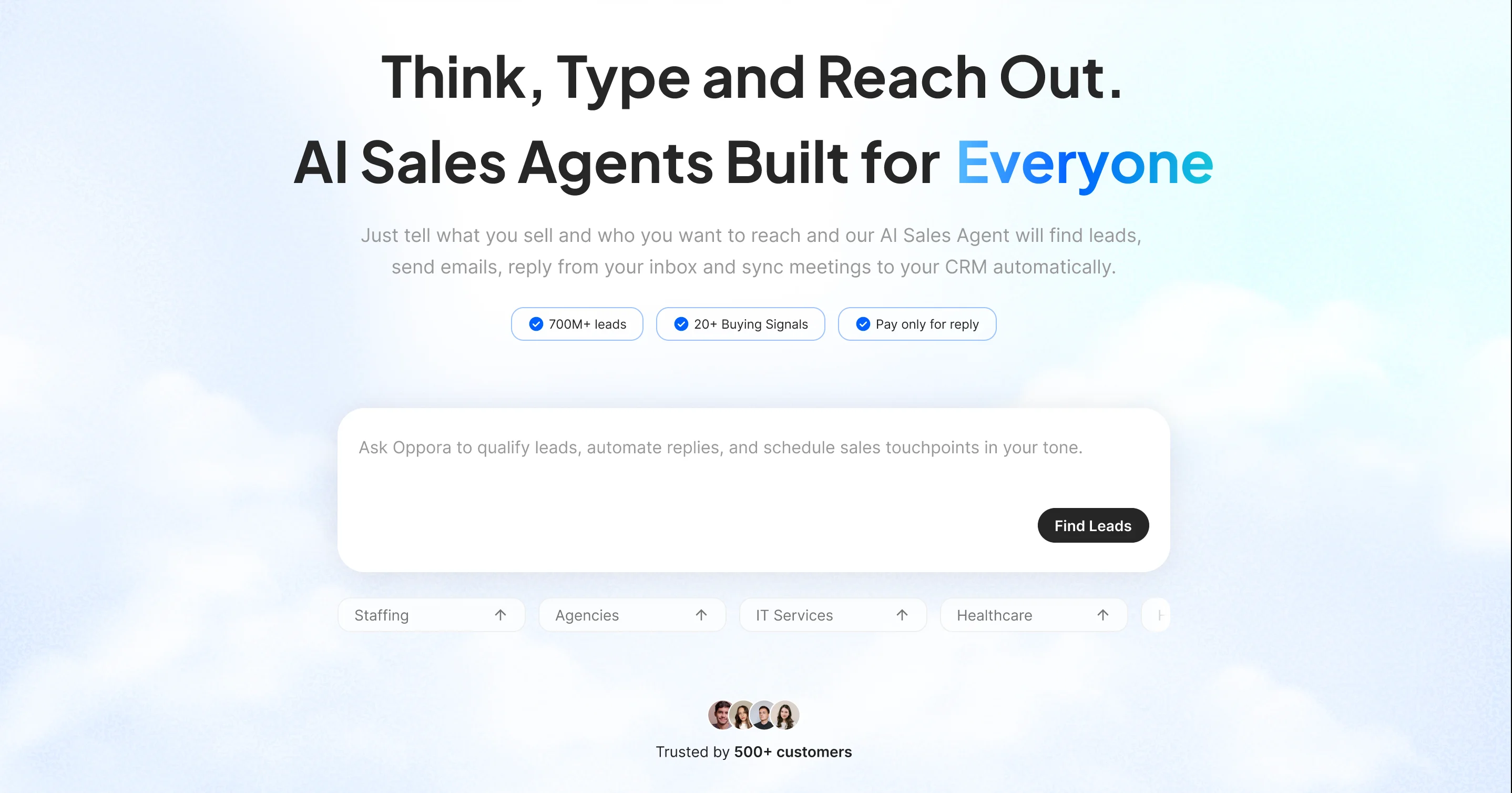
Prospecting usually requires several steps such as finding companies, identifying decision-makers, verifying contacts, and moving data into outreach tools. Managing these tasks across multiple platforms often slows teams down and increases manual work.
Oppora simplifies this process by combining lead discovery, qualification, and outreach in one workflow. With its B2B contact database, filtering tools, verified email discovery, and automated outreach features, teams can find prospects, build lists, and launch campaigns without switching between multiple tools.
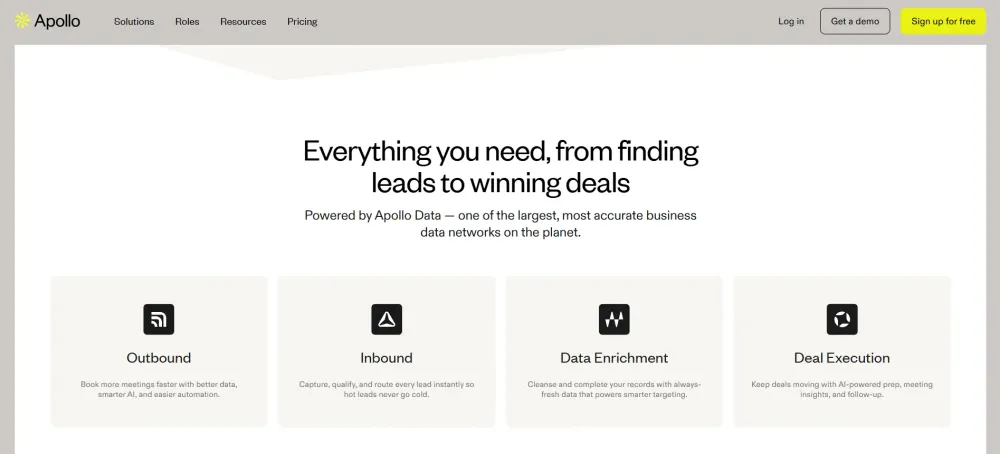
Apollo is a widely used sales intelligence platform that combines lead prospecting, contact discovery, and outbound outreach tools in one system.
Many sales teams choose Apollo because it provides a large B2B contact database alongside features that support list building and campaign execution. Instead of relying on separate tools for research and outreach, users can identify prospects, organize lead lists, and start basic email sequences within the same platform.
Apollo also offers strong search filtering, which allows users to narrow prospects by factors like industry, company size, location, job title, and seniority. These filters help teams focus on leads that closely match their ideal customer profile.
Sales teams that want prospecting, lead list building, and outreach capabilities inside a single platform instead of managing several separate sales tools.
Apollo offers a free plan with limited access, while paid plans unlock additional data credits, automation features, and advanced prospecting capabilities.
ZoomInfo is an enterprise-focused sales intelligence platform known for its large B2B contact database and deep company insights.
Many mid-sized and enterprise sales teams use ZoomInfo to research target accounts, identify decision-makers, and gather detailed information before starting outreach. The platform provides structured company data, organizational charts, and buyer intent signals that help teams understand which companies may already be researching relevant solutions.
ZoomInfo is often used for account-based prospecting, where teams focus on high-value companies instead of building broad contact lists.
Mid-sized and enterprise sales teams that need deep account intelligence, advanced targeting, and large-scale prospecting data.
ZoomInfo uses custom enterprise pricing, typically based on data access, number of users, and additional intelligence features.
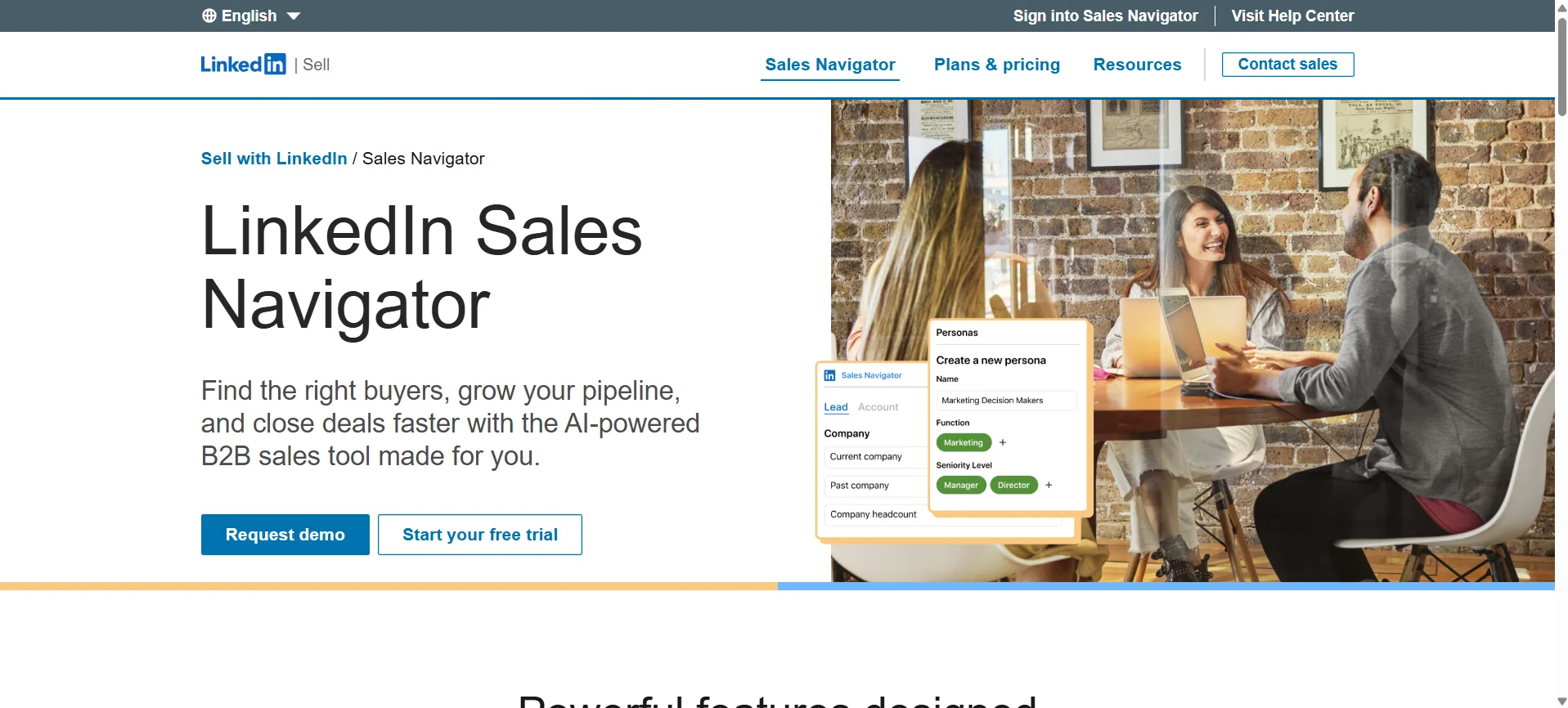
LinkedIn Sales Navigator is a prospecting tool designed to help sales professionals discover and track potential buyers within LinkedIn’s professional network.
Instead of relying on a general LinkedIn search, Sales Navigator provides advanced filtering and account insights that help you identify the right decision-makers inside target companies. It also highlights signals like job changes, company growth, and engagement activity that can indicate when a prospect may be open to a conversation.
Because the platform works directly inside LinkedIn’s ecosystem, many teams use it as a primary tool for relationship-based prospecting and account research.
Sales professionals and B2B teams who rely heavily on LinkedIn to identify decision-makers, track accounts, and build targeted lead lists.
LinkedIn Sales Navigator uses subscription-based pricing, with different plans depending on whether the tool is used by individuals or sales teams.
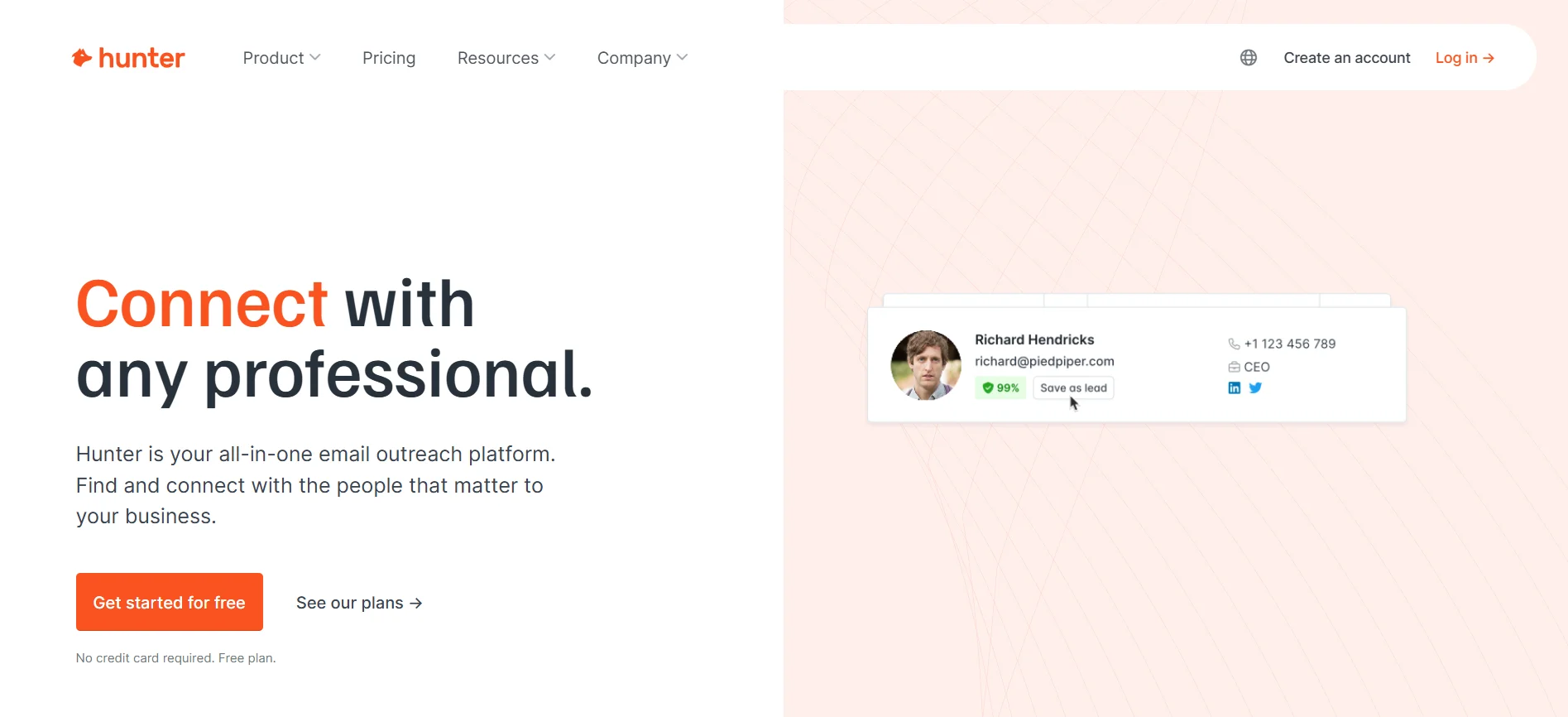
Hunter is a simple and widely used tool for business email discovery and verification.
Unlike larger prospecting platforms, Hunter focuses primarily on helping you find professional email addresses connected to specific companies or domains. This makes it useful when you already know the organization you want to contact but need a reliable way to identify the right email addresses.
The platform also provides verification features to help confirm whether an email address is valid before sending outreach messages.
Users who need a fast and straightforward tool for finding and verifying business email addresses without using a full sales engagement platform.
Hunter offers a free plan with limited searches, along with paid plans based on the number of monthly searches and verifications.
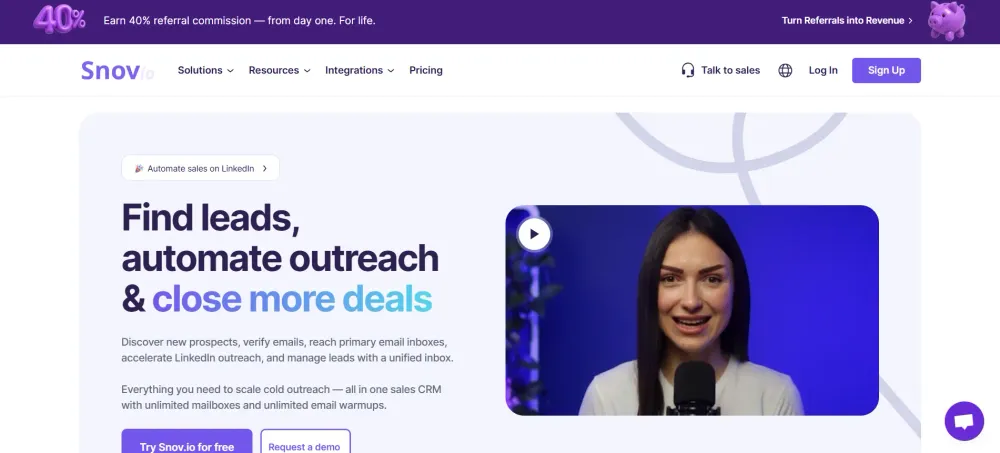
Snov.io is a sales prospecting platform that combines email discovery, verification, and outreach tools in one system.
It is commonly used by small and mid-sized teams that want a straightforward way to find contacts and run email campaigns without setting up complex sales software. With Snov.io, you can search for leads using domains, company names, or databases, then verify those emails before adding them to outreach sequences.
This combination helps teams move from lead discovery to campaign execution without relying on multiple separate tools.
Small teams and growing businesses that want prospecting and email outreach tools in a single, easy-to-use platform.
Snov.io offers tiered pricing based on credits, contacts, and campaign usage, with a free plan available for basic prospecting needs.
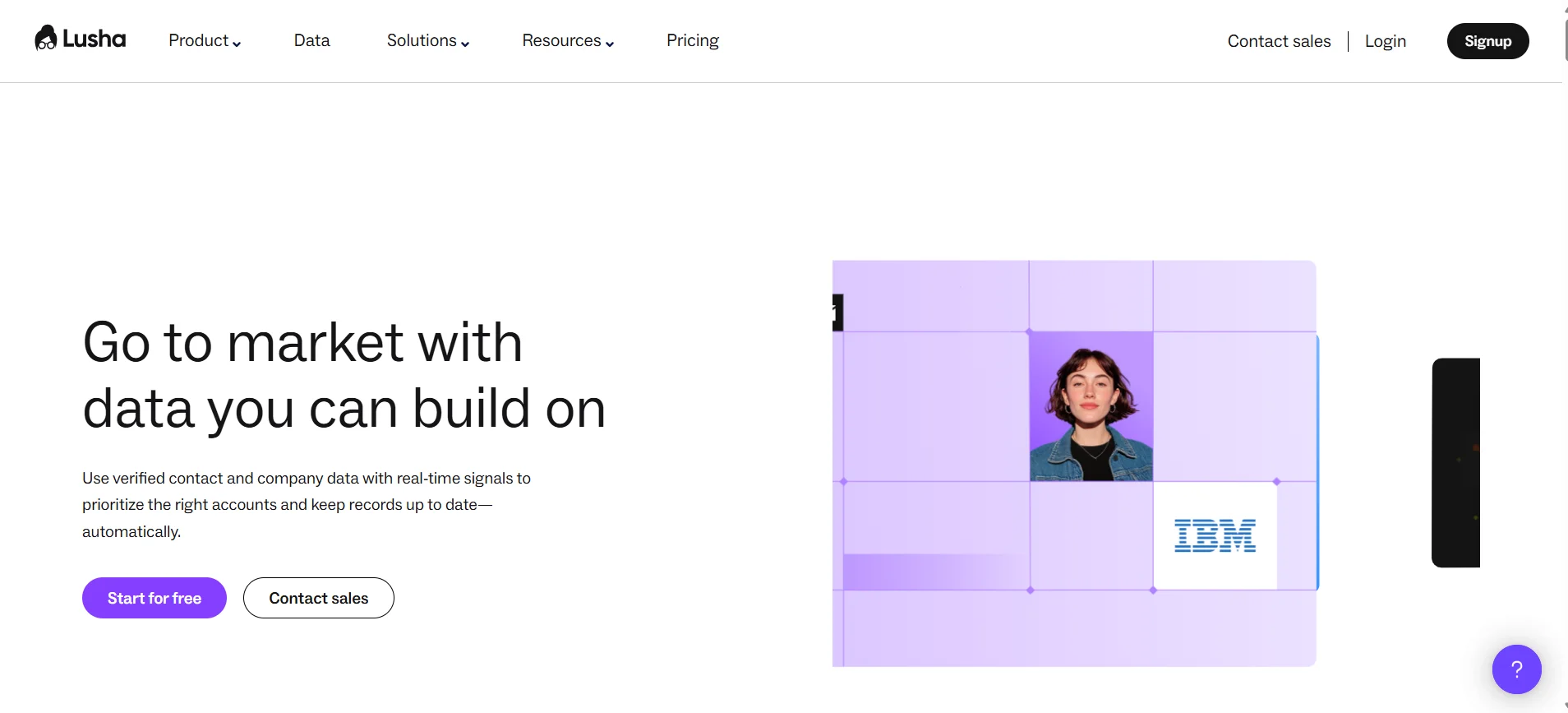
Lusha is a prospecting tool focused on quick contact discovery, especially for business emails and direct phone numbers.
Many sales reps and recruiters use Lusha while browsing LinkedIn profiles or company pages to capture contact details instantly. Instead of manually searching for emails or phone numbers, the platform helps users retrieve available contact information with just a few clicks.
Because of its simple setup and browser extension, Lusha is often used for fast prospecting during daily outreach activities.
Recruiters, SDRs, and sales professionals who want fast access to verified contact details while prospecting on LinkedIn or company websites.
Lusha provides limited free access, while paid plans offer more credits, team collaboration features, and higher contact discovery limits.
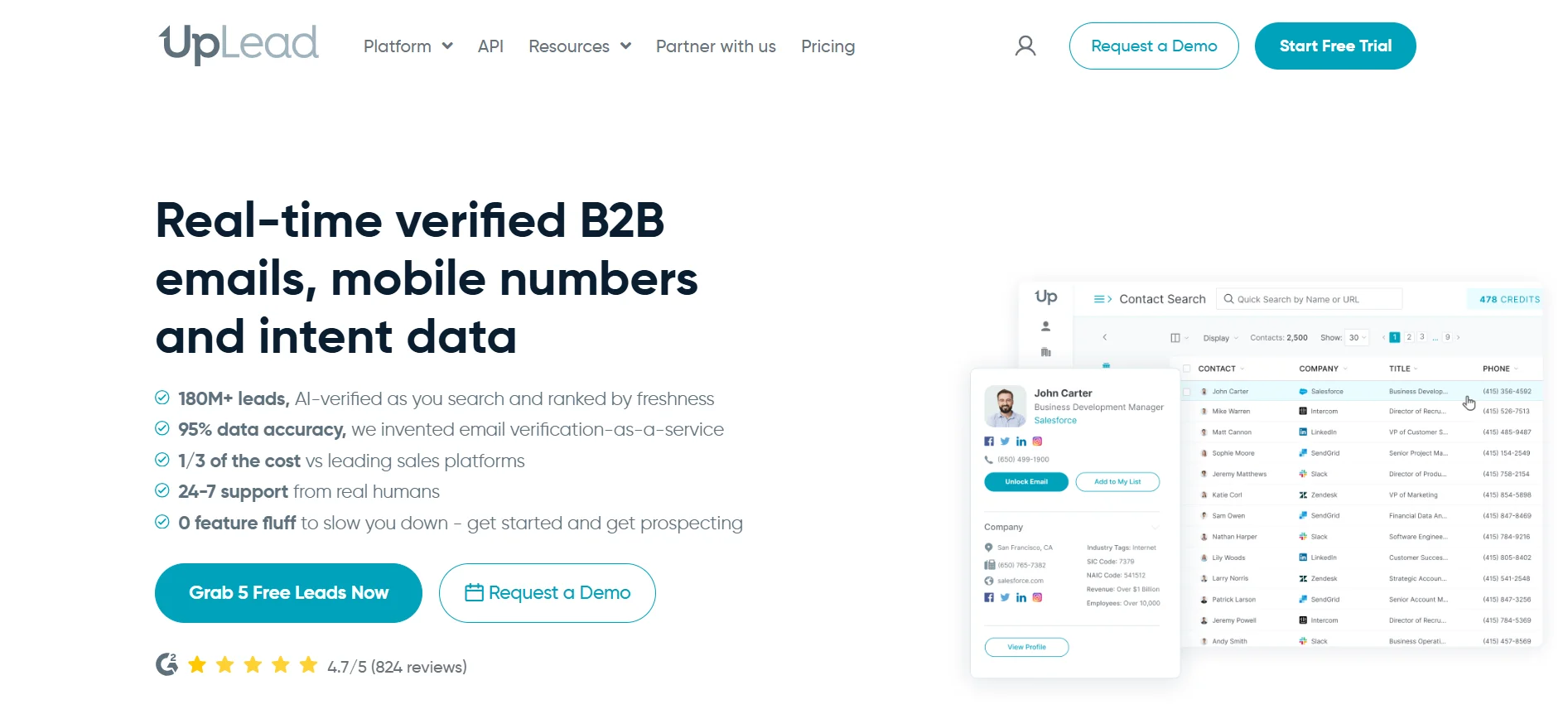
UpLead is a B2B prospecting platform known for its strong focus on data accuracy and verified contact information.
Many teams choose UpLead when they want reliable lead lists without spending time cleaning outdated or incorrect data. The platform offers advanced filtering options that allow you to search prospects based on firmographic and demographic attributes such as industry, company size, location, and job title.
UpLead also verifies email addresses in real time, helping reduce bounce rates and improving outreach deliverability.
Sales teams that prioritize high contact accuracy and clean B2B lead lists for targeted outreach.
UpLead uses subscription-based pricing, with plans that vary based on contact credits, data access, and additional prospecting features.
Seamless.AI is a lead generation platform designed to help sales teams discover prospects quickly using AI-assisted search.
Instead of relying only on a static contact database, the platform scans multiple data sources to identify companies, decision-makers, and verified contact details. This approach allows users to generate prospect lists faster while expanding their reach beyond a single dataset.
Many teams use Seamless.AI when they want rapid lead discovery combined with simple list-building workflows.
Sales professionals who want fast lead generation and AI-supported contact discovery across a wide range of companies and decision-makers.
Seamless.AI offers tiered and custom pricing, typically based on credits, number of users, and access to advanced prospecting features.
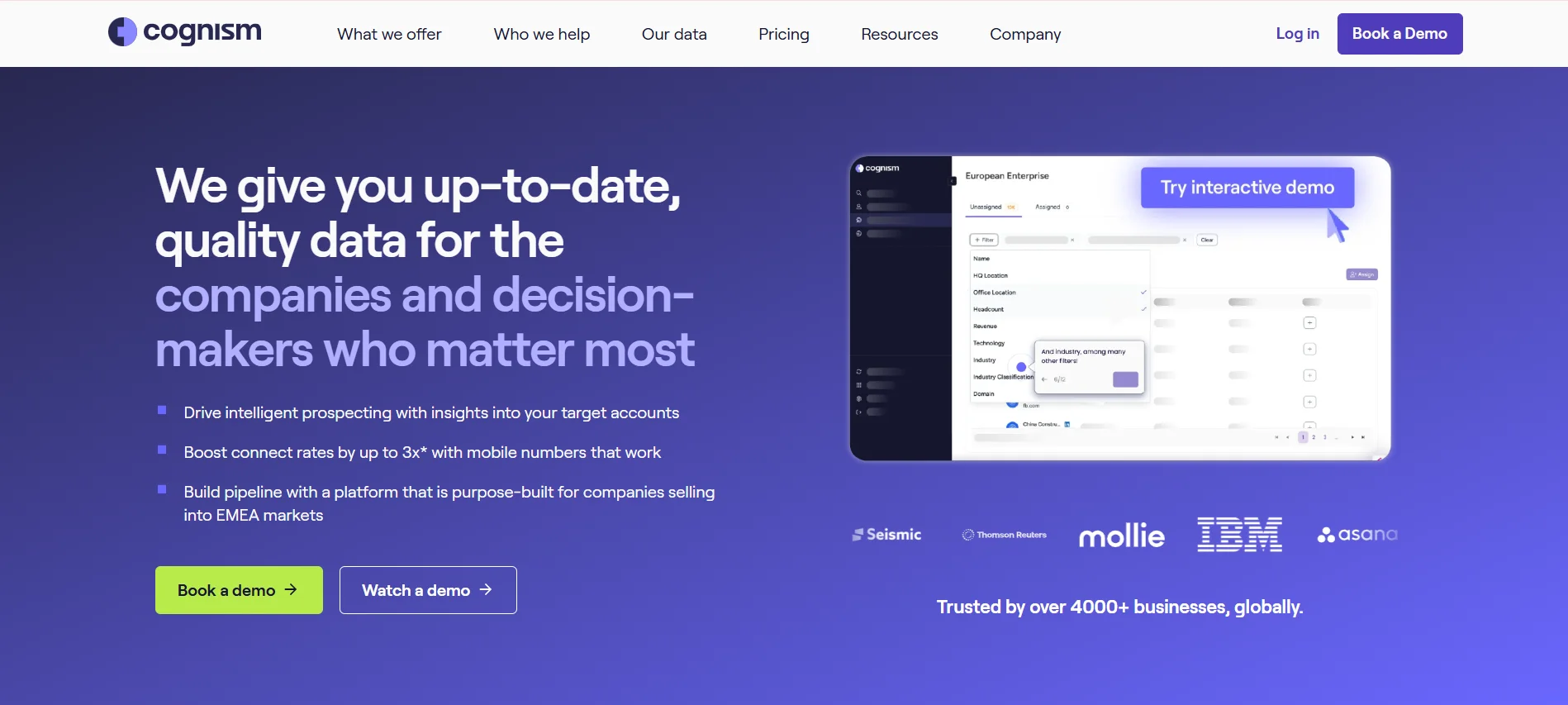
Cognism is a B2B prospecting platform known for its international data coverage and compliance-focused contact database.
Many organizations that sell across multiple regions rely on Cognism because it provides access to global contact data while maintaining strong compliance standards. This is especially important for companies operating in regions with stricter data privacy regulations.
The platform also supports account-based prospecting by helping teams identify decision-makers within target companies.
Companies prospecting across international markets that need reliable contact data while maintaining compliance with privacy regulations.
Cognism offers custom pricing based on data access, geographic coverage, and team size, typically tailored to mid-sized and enterprise sales teams.
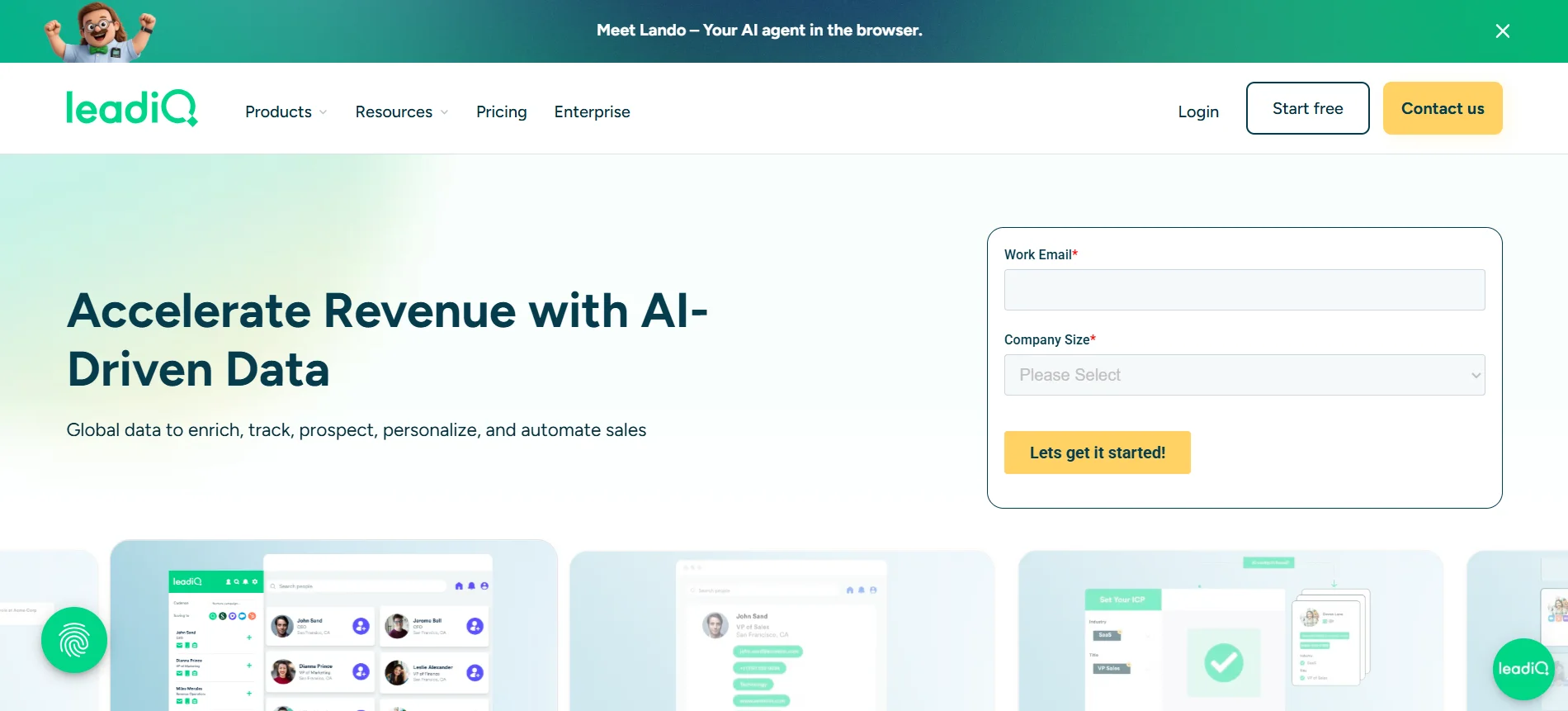
LeadIQ is a prospecting tool designed to help sales teams capture and organize lead information while researching prospects online, especially on LinkedIn.
Instead of manually copying contact details into spreadsheets or CRM systems, LeadIQ allows users to collect prospect data directly from profiles and send it into their sales workflow instantly. This helps reduce repetitive tasks and speeds up the process of building targeted lead lists.
Many outbound teams use LeadIQ to streamline prospect capture during daily prospecting activities.
Outbound sales reps who prospect heavily on LinkedIn and want a faster way to capture, enrich, and sync leads into their CRM or outreach tools.
LeadIQ offers free and paid plans, with pricing typically based on credits, number of users, and additional workflow features.
Clearbit is a data enrichment platform that helps businesses turn partial lead information into complete customer profiles.
Instead of focusing mainly on prospect discovery, Clearbit is often used to enhance existing leads by adding firmographic and company-level data. This helps teams better qualify prospects, segment audiences, and route leads to the right sales representatives.
Many companies integrate Clearbit with their CRM or marketing automation systems to automatically enrich new leads as they enter the pipeline.
Teams that already generate leads and want better data enrichment for qualification, segmentation, and lead scoring.
Clearbit typically offers custom pricing based on enrichment volume, integrations, and API usage.
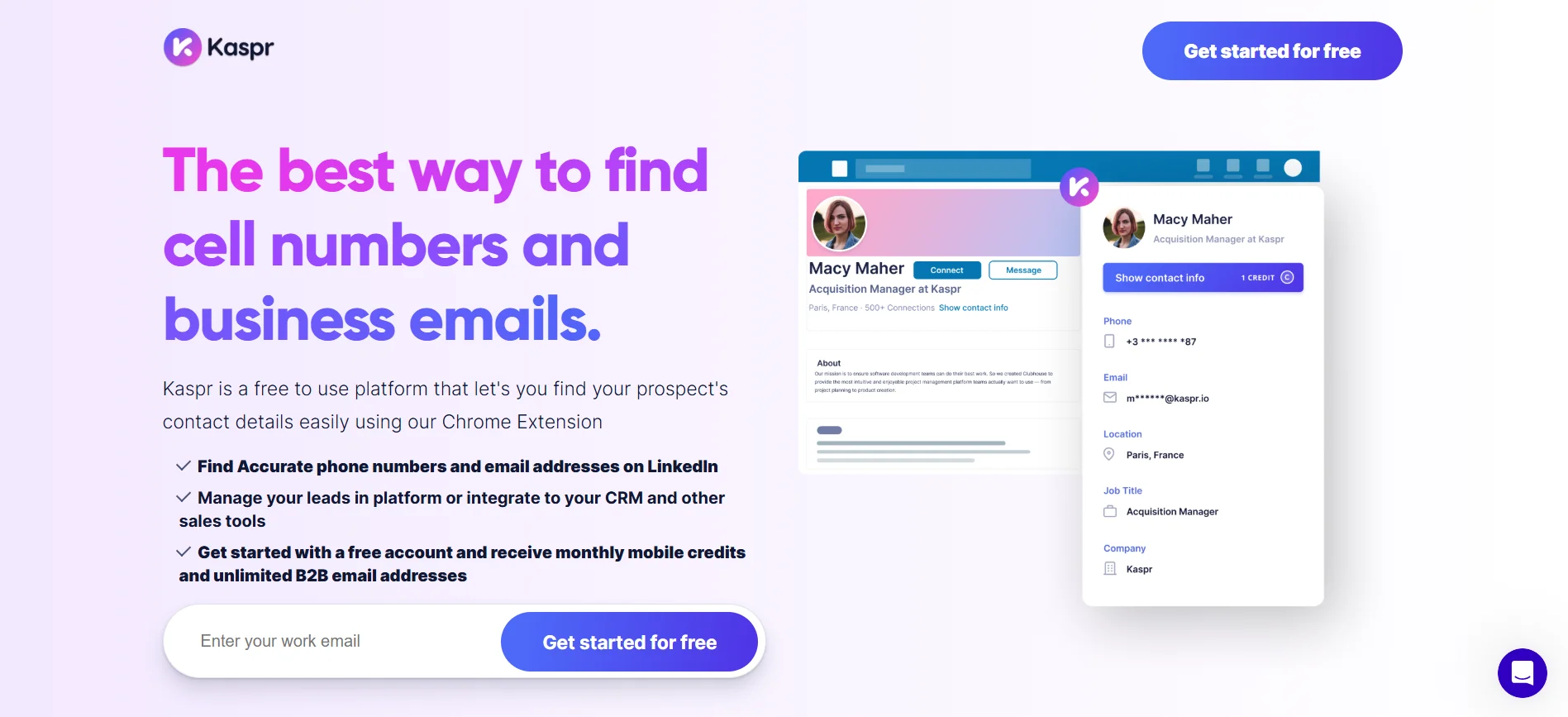
Kaspr is a prospecting tool designed to help users extract contact details directly from LinkedIn profiles.
Instead of manually searching for emails or phone numbers, Kaspr allows you to capture contact information while browsing LinkedIn. This makes it useful for sales professionals who rely heavily on LinkedIn for daily prospect research.
With its browser extension, users can collect verified contact details and export them to their CRM or lead lists in just a few clicks.
Sales reps and recruiters who prospect mainly on LinkedIn and want a simple way to capture contact details quickly.
Kaspr offers free and paid plans, with pricing typically based on credits, users, and the number of contact exports.
Finding qualified leads becomes much easier when you use the right prospecting tools.
Some platforms focus on simple contact lookup, while others support deeper company insights, targeting filters, and outreach workflows. The best choice ultimately depends on how your team researches prospects, builds lead lists, and launches campaigns.
If you want to simplify the entire process, platforms that connect prospect discovery with outbound execution can save significant time.
Tools like Oppora help you move from identifying prospects to running outreach campaigns in one workflow, allowing your team to focus less on manual research and more on meaningful conversations with the right buyers.
Lead prospecting tools help you actively search for potential customers using databases, filters, and contact discovery features. Lead generation tools, on the other hand, focus on attracting inbound leads through marketing campaigns, forms, ads, or website activity rather than manually identifying prospects.
Accuracy depends on how frequently the platform updates and verifies its data. The best prospecting tools use real-time email verification, enrichment sources, and AI-based updates to maintain reliable contact information. Even then, occasional verification before outreach is recommended to reduce bounce rates.
Yes. Most modern prospecting tools integrate with CRM platforms like HubSpot, Salesforce, or Pipedrive. These integrations automatically sync contacts, activities, and deal information, helping sales teams manage prospects without manually transferring data between tools.
Yes. Many platforms offer free plans or affordable tiers designed for small teams. Startups and founders often use prospecting tools to quickly build targeted lead lists, identify decision-makers, and launch outbound outreach without needing a large sales team.
Prospect lists should be refreshed regularly because contact information and job roles change frequently. Updating lists every few weeks or before starting new outreach campaigns helps ensure higher deliverability, more relevant targeting, and better response rates.
Summarize with AI
Share