10 Best Account-Based Marketing Tools for Smarter Targeting
Stephen Parker
Published April 16, 2026
13 min
Complete Agentic Email Outreach
AI agents find and enrich prospects, personalize emails, follow up, and handle replies with your meeting link.
Claim Your FREE Credits
If you’re targeting everyone, you’re probably converting no one.
That’s exactly why account-based marketing tools are becoming essential for modern B2B teams.
At its core, account-based marketing (ABM) flips the traditional funnel. Instead of chasing volume, you focus on a defined set of high-value accounts and treat each like its own market.
And in 2026, this approach is dominating B2B growth strategies.
Why? Because buyers expect personalization, longer deal cycles demand precision, and generic outreach simply doesn’t cut it anymore.
This is where the right account-based marketing tool changes everything.
It helps you identify the right accounts, personalize outreach at scale, and align sales with marketing all while improving conversion rates and revenue efficiency.
What Are Account-Based Marketing Tools
Now that you understand why ABM is growing so fast, the next question is simple what exactly are account based marketing tools?
Account-based marketing tools are platforms designed to help you identify, target, and engage high-value accounts with personalized campaigns. Instead of managing scattered workflows, these tools bring everything into one system.
They typically combine data, automation, and personalization to support your entire ABM strategy.
With the right account-based marketing tool, you can:
- Identify ideal target accounts using firmographic and intent data
- Map key decision-makers within those accounts
- Run personalized outreach across email, ads, and social channels
- Track engagement and measure account-level performance
In short, these tools help you move from broad marketing to precise, revenue-focused targeting making every effort count.
Types of ABM Tools for B2B Marketing Teams
Now that you know what account-based marketing tools do, it’s important to understand that not all tools serve the same purpose.
Different tools handle different parts of your ABM strategy, and knowing these categories helps you build a more complete system.
Targeting & Data Platforms
Everything in ABM starts with finding the right accounts.
These tools help you identify companies that match your ideal customer profile using firmographic data, intent signals, and buying behavior insights.
They also enrich your data by showing decision-makers, company size, industry, and tech stack so you’re not guessing who to target.
Outreach & Engagement Tools
Once you have your target accounts, the next step is reaching them in a personalized way.
Outreach tools help you send emails, LinkedIn messages, and follow-ups at scale while still keeping each interaction relevant.
They also allow sales and marketing teams to stay aligned, ensuring every touchpoint feels consistent and intentional.
Advertising & Retargeting Tools
Not every prospect responds to emails right away.
That’s where advertising and retargeting tools come in by helping you stay visible across channels like display ads, LinkedIn, and other platforms.
You can run highly targeted campaigns that only show ads to your selected accounts, reinforcing your message over time.
Analytics & Attribution Tools
Finally, you need to know what’s actually working.
Analytics tools track engagement at the account level, measure campaign performance, and show how each interaction contributes to the pipeline and revenue.
This helps you double down on what drives results and continuously improve your ABM strategy.
10 Best Account-Based Marketing Tools for Smarter Targeting
Choosing the right account-based marketing tools can directly impact how well you identify, engage, and convert high-value accounts.
Below are some of the best tools that help you streamline targeting, personalize outreach, and run scalable ABM campaigns without adding unnecessary complexity to your workflow.
1. Oppora.ai – Best AI-Powered Account-Based Marketing Tool
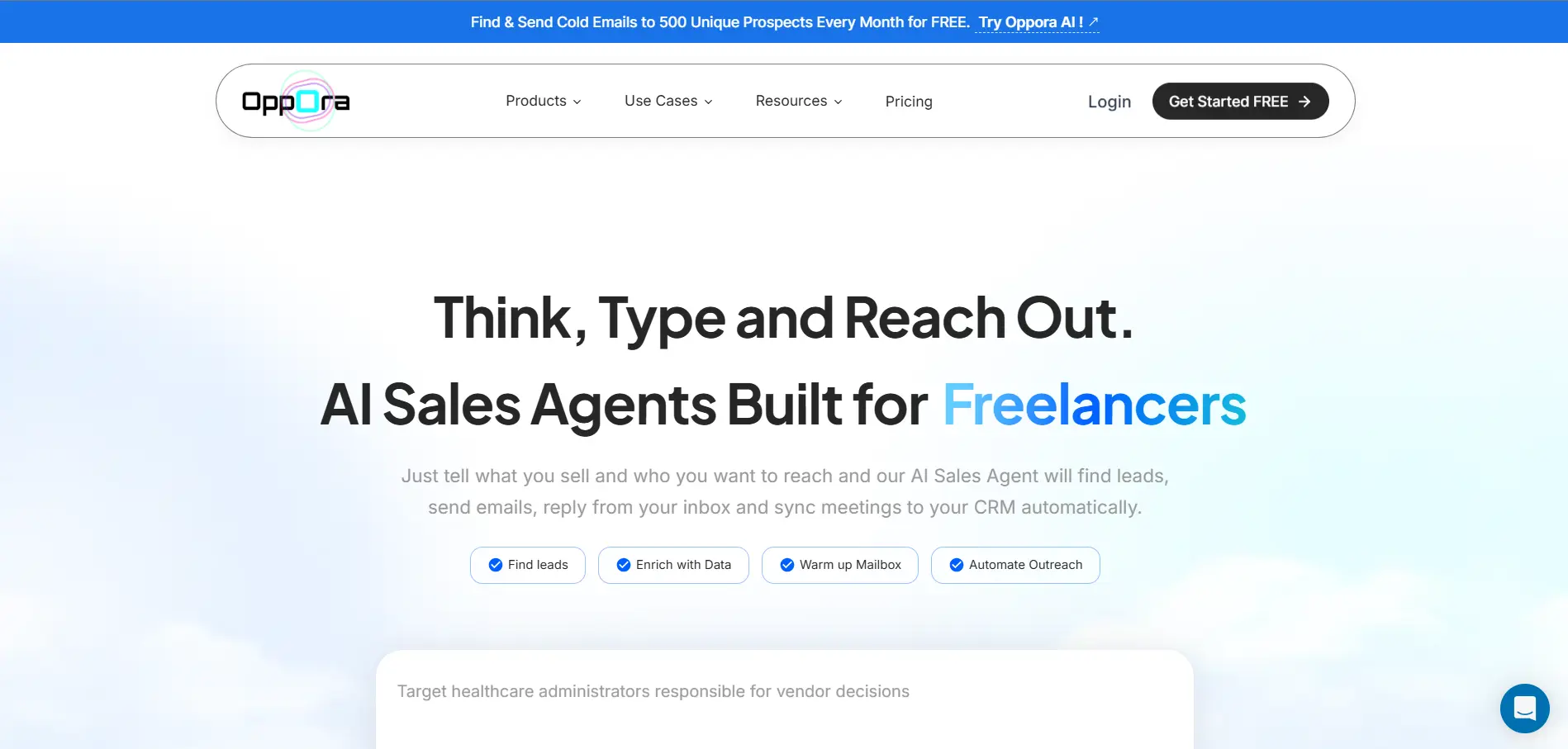
Managing ABM across multiple tools can quickly become inefficient and fragmented.
That’s where Oppora.ai stands out among modern account-based marketing tools by combining everything into one system.
Here’s what makes it powerful:
- Massive lead discovery & precision targetingAccess 700M+ verified contacts and filter accounts by role, industry, company size, and buying signals to reach the right decision-makers faster
- Advanced data enrichment & list accuracyAutomatically enrich, clean, and deduplicate your data so every campaign starts with high-quality lead lists
- Built-in email intelligence & verificationFind and verify emails in real time to reduce bounce rates and improve deliverability
- AI-powered workflows with 8 sales agentsAI-powered workflow automation, automate prospecting, enrichment, outreach, and follow-ups without daily manual input
- AI reply agent & meeting automationRespond to leads, handle objections, qualify interest, and book meetings directly from your inbox
- Scalable outreach with inbox rotationConnect and rotate up to 50 mailboxes to scale safely without sender fatigue
- Automated domain warmup & deliverability controlProtect your sender reputation with warmup and smart email matching
- Seamless CRM sync & integrationsSync contacts, replies, deals, and meetings with tools like HubSpot and Salesforce
- Free plan available ($0/month)
- Pro: $34/month
- Max: $79/month
- Enterprise: Starts at $499/month
If you want an account-based marketing tool that executes your strategy, not just supports it, Oppora is a strong choice.
2. Factors.ai: Best AI ABM Tool for Growth Teams
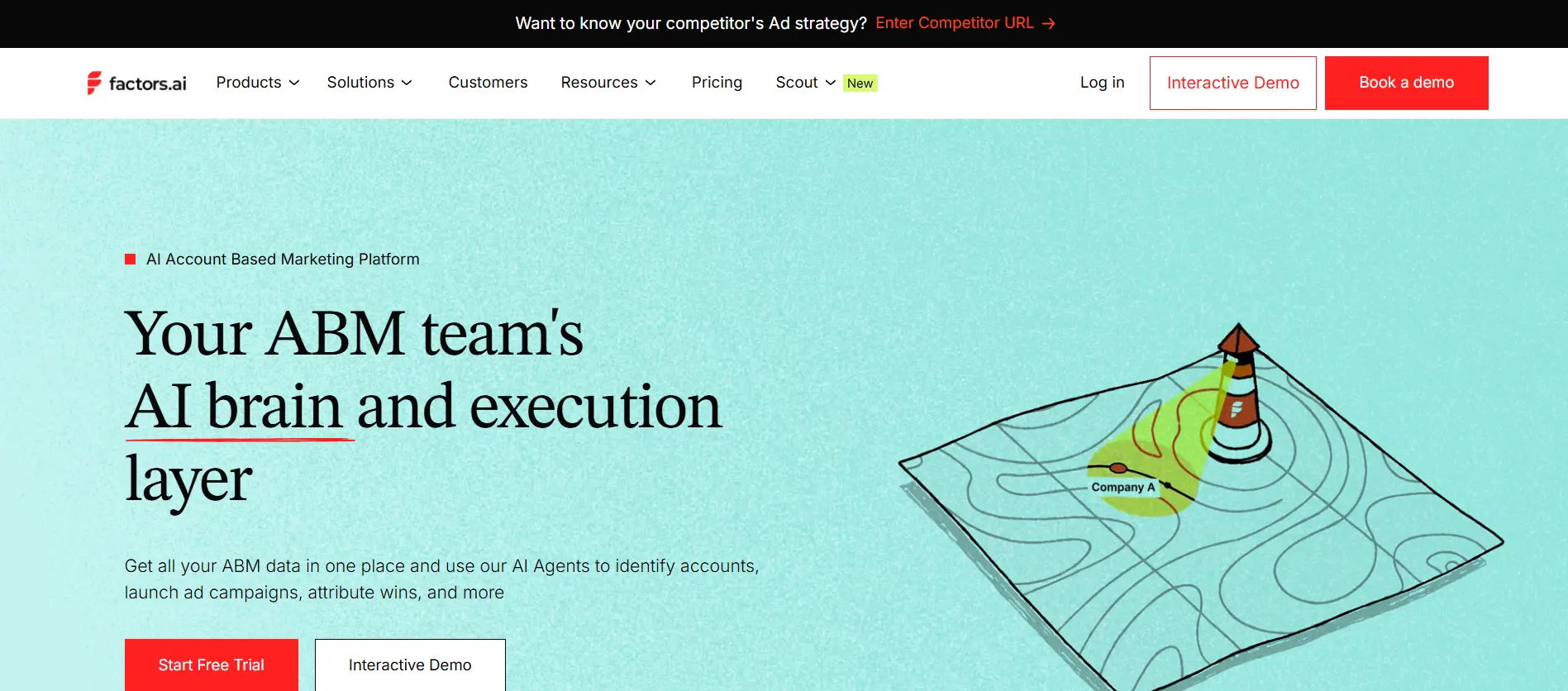
Most ABM platforms show you data. You still have to figure out what it means and what to do next.
That's where Factors.ai stands out among AI-powered account-based marketing tools.
It's built around Scout, an AI ABM coworker that turns your account interactions, campaigns, pipeline, and intent data into answers and actions, not just dashboards.
Here's what makes it powerful:
- An AI coworker you can query – Ask questions like “why did the pipeline increase last month?" in plain language and get answers traced back to the exact campaign change, with visual reports in minutes
- High-coverage account identification – Identify up to 75% of companies visiting your website, combined with intent signals from G2, LinkedIn Ads, Google Ads, and third-party sources. It also offers up to 40% person-level identification coverage (US audience)
- Agentic campaign orchestration – A single trigger, like a new form fill, can identify the account, enrich it, send a personalized email, and add it to a LinkedIn campaign in one automated flow
- Custom agents without code – Describe any GTM use case in plain language and deploy it across Slack, CRM workflows, segment columns, reports, or the API
- Ad ROI optimization – AI-led bid recommendations, direct syncing of high-intent accounts to LinkedIn and Google Ads, and smart reach to cover more accounts on the same budget
- Multi-touch attribution – First touch, last touch, and influenced models, so every campaign gets credit for what it actually did
Pricing details:
- Lite: $199/month
- Basic: $6,000/year
- Growth: $20,000/year
- Enterprise: Starts at $30,000/year
Free trial included on Lite plan
Factors.ai is ideal if you want enterprise-grade account intelligence and orchestration at a fraction of what 6sense or Demandbase costs, and you'd rather ask an AI coworker a question than build another dashboard
3. 6sense – Best for Intent Data & Predictive Insights
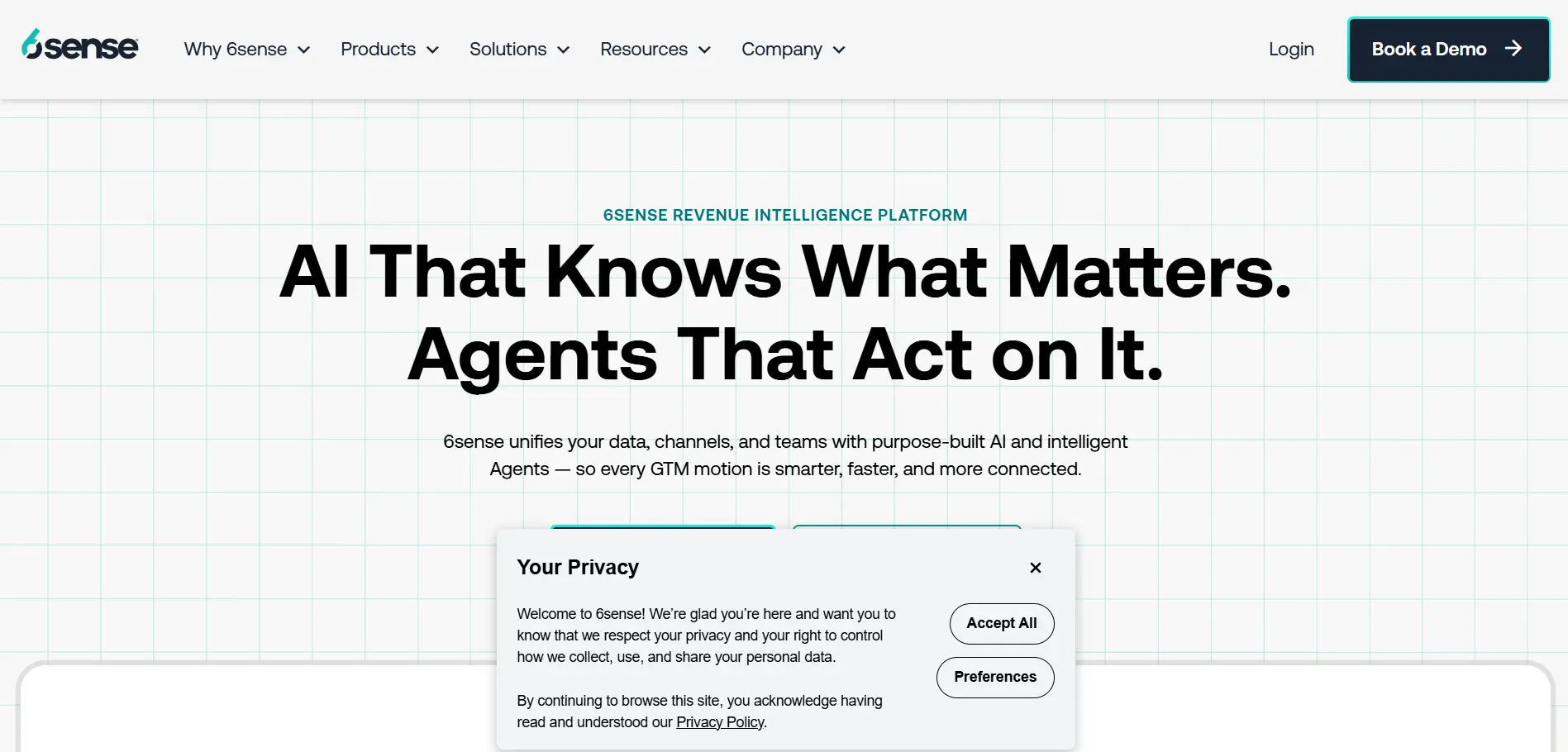
Knowing which accounts to target is important, but knowing when they’re ready to buy is what truly drives results.
That’s where 6sense stands out among advanced account-based marketing tools.
It focuses heavily on intent data and predictive analytics to help you prioritize the right accounts at the right time.
Here’s what makes it powerful:
- Buyer intent tracking Identify accounts actively researching solutions using real-time intent signals
- Predictive analytics Use AI to predict which accounts are most likely to convert
- Account scoring & prioritization Focus your efforts on high-value accounts with the highest buying potential
- Anonymous buying behavior insights Track activity even before prospects fill out forms or identify themselves
- Sales and marketing alignment Give both teams a shared view of account readiness and engagement
Pricing details:
- Estimated: Starts around $60,000/year
- Custom pricing based on usage
6sense is a strong choice if you want to move beyond basic targeting and focus on timing, intent, and predictive decision-making in your ABM strategy.
4. Terminus – Best for Multi-Channel Campaigns
Reaching your target accounts on just one channel is rarely enough.
That’s why Terminus is a strong choice among account-based marketing tools for running coordinated, multi-channel campaigns.
It helps you engage accounts across ads, email, and website experiences all from one platform.
Here’s what makes it powerful:
- Multi-channel campaign execution Run campaigns across display ads, email, and web personalization
- Account-based advertising Target specific accounts with highly relevant ads across platforms
- Email engagement tools Send personalized emails and track engagement at the account level
- Website personalization Customize landing pages and content based on the visiting account
- Centralized campaign management Manage and track all ABM efforts from a single dashboard
Pricing details:
- Estimated: Starts around $1,000–$2,000/month
- Custom pricing for full platform access
Terminus is ideal if you want to create a consistent experience across multiple touchpoints and stay top-of-mind with your target accounts.
5. ZoomInfo MarketingOS – Best for B2B Data
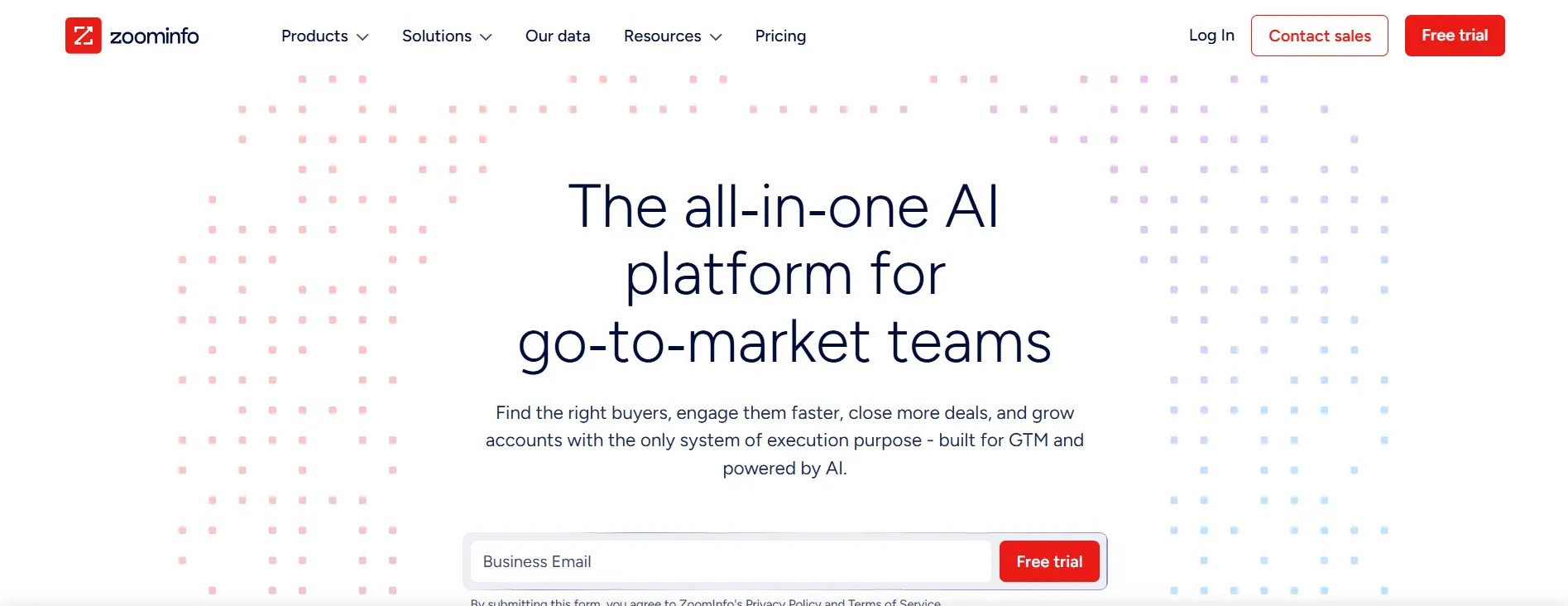
Strong ABM campaigns start with accurate and deep data.
That’s where ZoomInfo MarketingOS stands out among account-based marketing tools.
It gives you access to one of the largest B2B contact databases, helping you find and target the right accounts with confidence.
Here’s what makes it powerful:
- Extensive B2B contact database Access millions of company profiles and decision-maker contacts
- Advanced filtering & segmentation Narrow down accounts by industry, size, job role, and intent signals
- Real-time data updates Keep your contact lists accurate and up to date
- Intent data insights Identify accounts showing interest in solutions like yours
- Seamless integration with outreach tools Push data directly into your campaigns and workflows
Pricing details:
- Estimated: Starts around $15,000/year
- Custom pricing based on data volume
ZoomInfo MarketingOS is ideal if your priority is high-quality data and precise targeting to power your account-based marketing strategy.
6. HubSpot ABM Tools – Best for CRM Integration
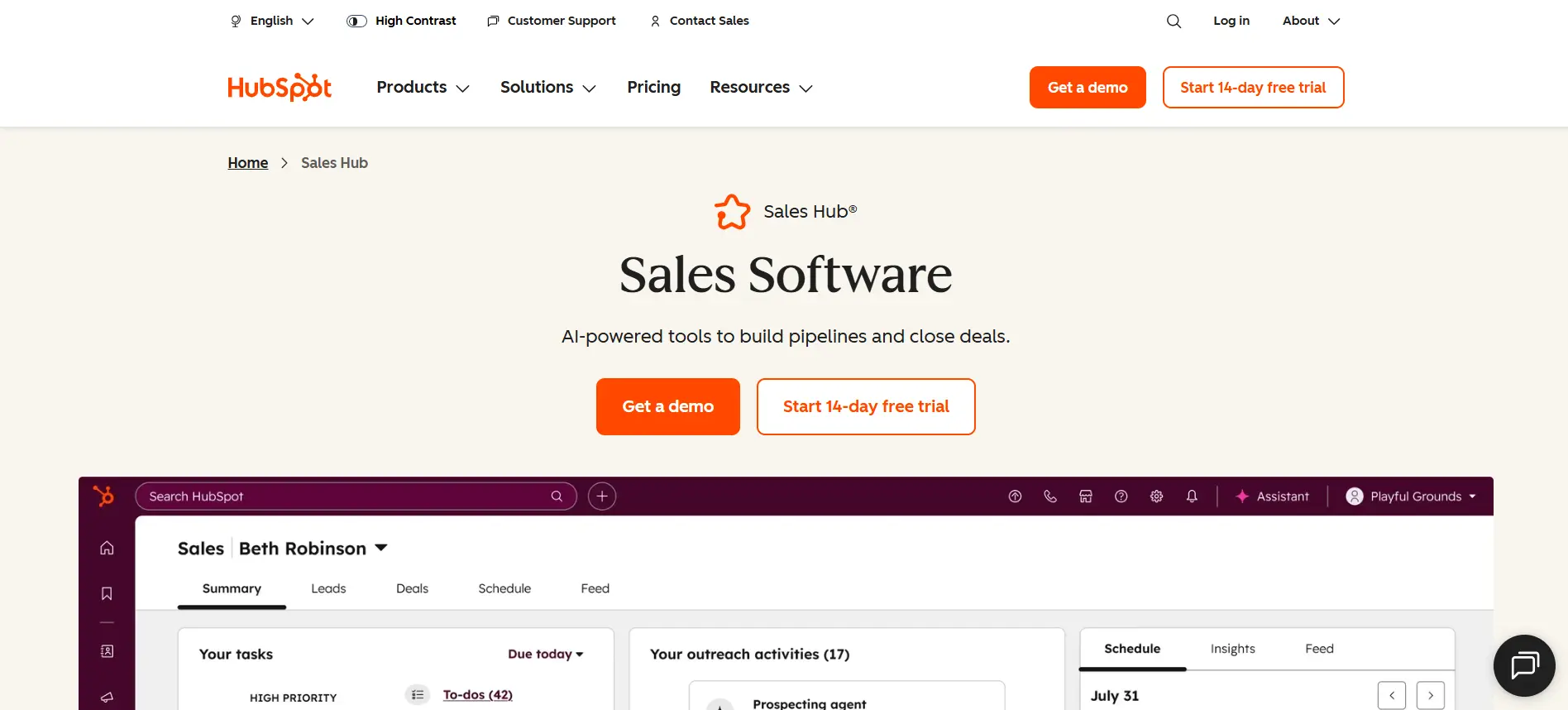
If your marketing and sales teams already rely on a CRM, switching between tools can slow everything down.
That’s where HubSpot’s ABM tools stand out among account-based marketing tools.
They are built directly into its CRM, making it easy to align teams and manage account-based campaigns in one place.
Here’s what makes it powerful:
- Seamless CRM integration Manage accounts, contacts, and campaigns without leaving your CRM
- Account targeting & segmentation Identify high-value accounts and organize them into target lists
- Sales and marketing alignment Keep both teams synced with shared data and activity tracking
- Personalized outreach tools Send tailored emails and track engagement across accounts
- Built-in analytics & reporting Measure performance and track revenue impact from one dashboard
Pricing details:
- Free CRM: $0/month
- Starter: $20/month
- Professional: $800/month
- Enterprise: $3,600/month
HubSpot is a great choice if you want an account-based marketing tool that fits naturally into your existing CRM workflow.
7. Salesforce Account Engagement – Best for Salesforce Users
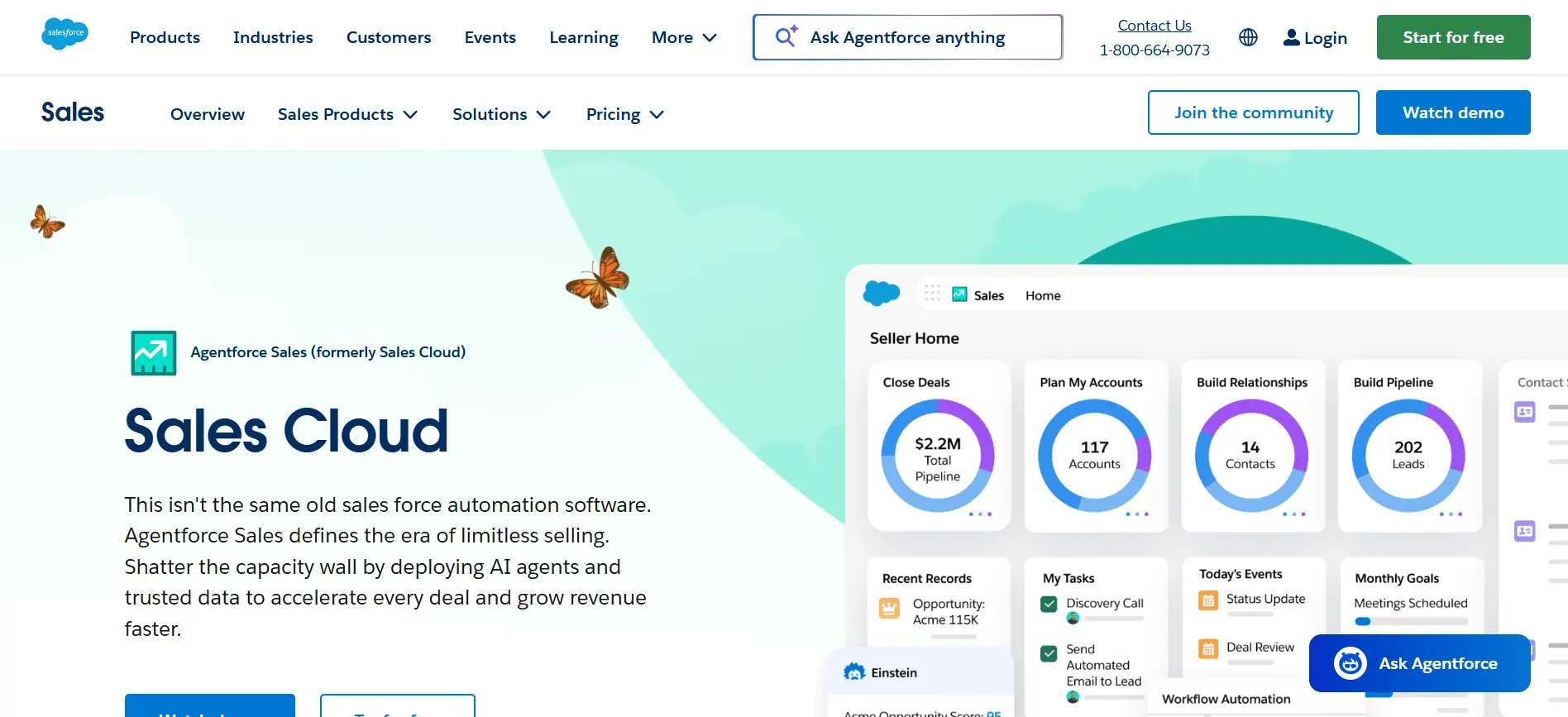
If your entire sales process runs on Salesforce, adding external tools can create friction.
That’s where Salesforce Account Engagement (formerly Pardot) fits naturally into your workflow.
It’s designed for teams that want to run account-based marketing directly within the Salesforce ecosystem.
Here’s what makes it powerful:
- Deep CRM integration Access account data, campaigns, and insights directly inside Salesforce
- Advanced lead nurturing Build automated journeys tailored to specific accounts
- Sales and marketing alignment Share real-time insights between teams for better coordination
- Personalized email campaigns Deliver targeted messaging based on account behavior
- Robust reporting & attribution Track how campaigns influence pipeline and revenue
Pricing details:
- Growth: $1,250/month
- Plus: $2,500/month
- Advanced: $4,000/month
- Premium: $15,000/month
Salesforce Account Engagement is ideal if you want a tightly integrated account-based marketing tool that works seamlessly within your existing Salesforce setup.
8. Madison Logic – Best for Content Syndication
Getting in front of the right accounts is one thing, but engaging them with the right content is another challenge.
That’s where Madison Logic stands out among account-based marketing tools.
It focuses on content syndication, helping you distribute relevant content directly to high-value target accounts.
Here’s what makes it powerful:
- Targeted content distribution Promote your content to specific accounts based on industry and intent
- Intent-driven targeting Reach accounts actively researching topics related to your offering
- Content performance insights Track which assets drive engagement and pipeline growth
- Account-level engagement tracking See how target accounts interact with your content
- Integration with sales workflows Pass engaged accounts directly to your sales team
Pricing details:
- Estimated: Starts around $6,000–$10,000/year
- Custom pricing based on campaigns
Madison Logic is a strong choice if content is a key part of your ABM strategy and you want to ensure it reaches the right audience at the right time.
9. Dealfront (Leadfeeder) – Best for Website Tracking
Not all your target accounts fill out forms or identify themselves.
That’s where Leadfeeder (now part of Dealfront) stands out among account-based marketing tools.
It helps you uncover which companies are visiting your website — even if they don’t convert.
Here’s what makes it powerful:
- Anonymous website visitor tracking Identify companies visiting your site without form submissions
- Account-level insights See which pages they visit and how they engage with your content
- Lead qualification & scoring Prioritize accounts based on behavior and engagement signals
- CRM and sales tool integrations Push identified accounts directly into your sales pipeline
- Real-time alerts Get notified when high-value accounts visit your website
Pricing details:
- Free: $0/month (limited)
- Paid: Starts at €99/month
- Premium tiers: Custom pricing
Leadfeeder is ideal if you want to turn anonymous traffic into actionable account insights and uncover hidden opportunities in your funnel.
10. Metadata.io – Best for Paid Campaign Automation
Running paid campaigns for ABM can quickly become complex and time-consuming.
That’s where Metadata.io stands out among account-based marketing tools.
It focuses on automating and optimizing your paid campaigns using AI, so you can scale faster with better results.
Here’s what makes it powerful:
- AI-driven campaign automation Automate campaign setup, testing, and optimization across channels
- Paid ad optimization Continuously improve performance based on real-time data
- Audience targeting & segmentation Reach specific accounts with highly targeted paid campaigns
- Experimentation & A/B testing Test multiple creatives and audiences to find what works best
- Pipeline and revenue tracking Measure how your paid campaigns impact actual business outcomes
Pricing details:
- Estimated: Starts around $3,000/month
- Custom pricing based on ad spend
Metadata.io is ideal if you rely heavily on paid acquisition and want to automate performance while keeping your targeting aligned with your ABM strategy.
How to Choose the Right Account-Based Marketing Tool
Now that you’ve explored different account-based marketing tools, the next step is choosing one that actually fits your workflow.
The right decision comes down to how you balance cost, data, automation, and integrations.
Budget vs Features Trade-Off
Not every team needs an enterprise-level platform with complex features.
- Choose tools that match your current stage and team size
- Avoid overpaying for features you won’t use immediately
- Ensure the tool can still scale as your ABM strategy grows
Data Quality & Targeting Needs
Your results depend heavily on the quality of your data.
- Look for tools with accurate and regularly updated contact data
- Prioritize platforms offering intent signals and segmentation
- Ensure strong enrichment capabilities for cleaner targeting
Automation vs Personalization Balance
Scaling outreach without losing relevance is key in ABM.
- Use automation to handle repetitive tasks and workflows
- Make sure the tool still allows deep personalization
- Avoid tools that rely on generic or templated messaging
Integration with Your Existing Stack
A disconnected tool will create more problems than it solves.
- Check CRM integrations (HubSpot, Salesforce, etc.)
- Ensure smooth data syncing between sales and marketing
- Avoid tools that require replacing your entire stack
11 Best Account-Based Marketing Tools for Smarter Targeting
Now that you’ve explored each tool in detail, here’s a quick comparison to help you choose faster.
This table gives you a side-by-side view of the best account-based marketing tools based on use case, strengths, and pricing.
Quick Comparison of the Best Account-Based Marketing Tools
Suggested Reading:
11 B2B Sales Tools Every Team Needs for Smarter SellingFinal Thoughts
Choosing the right account-based marketing tools isn’t about picking the most popular option it’s about finding what fits your workflow.
Every tool on this list solves a different part of ABM, from data and targeting to outreach and automation.
If you’re just getting started, focus on simplicity and ease of use.
If you’re scaling, prioritize tools that offer strong data, automation, and multi-channel capabilities.
The key is alignment.
Your account-based marketing tool should match your team size, goals, and how you actually run campaigns, not force you into a complex system you won’t fully use.
If you’re looking for a solution that combines targeting, outreach, and execution in one place, Oppora.ai is a strong starting point to explore.
Frequently Asked Questions (FAQs)
What are account-based marketing tools?
Account-based marketing tools are platforms that help you identify, target, and engage high-value accounts with personalized campaigns, allowing you to focus on quality over quantity and drive better conversion rates and revenue.
Which are the best account-based marketing tools in 2026?
Some of the best account-based marketing tools include Oppora.ai, Demandbase, 6sense, and Terminus, depending on your team size and goals.
How do account-based marketing tools work?
Account-based marketing tools combine data, automation, and personalization to help you identify ideal accounts, find decision-makers, run targeted outreach campaigns, and track engagement across the entire customer journey.
What features should you look for in an account-based marketing tool?
You should look for features like accurate B2B data, targeting and segmentation, outreach automation, email verification, CRM integrations, and analytics to ensure your campaigns are both effective and scalable.
How much do account-based marketing tools cost?
Account-based marketing tools can range from $30/month for basic SMB tools to $1,000+/month for mid-tier platforms and up to $15,000–$60,000 per year for enterprise solutions, depending on features and scale.
Summarize with AI
Share