Home
Blog
Find & Send Cold Emails to 500 Unique Prospects Every Month for FREE.
Home
Blog
Stephen Parker
Published March 3, 2026
6 min
Try Oppora AI
Create Self-Running Agentic Sales Workflows like N8N just by chatting with AI
Get Started for FREE
Cold outreach works, but doing it manually drains your time fast. Finding leads, researching companies, writing emails, and tracking follow-ups quickly eat up your week.
That is why ai cold email outreach is becoming the smarter way to build pipeline. You let AI handle repetitive execution while you focus on conversations and closing deals.
Before setting anything up, you need clarity on what AI should actually run for you.
AI is not just an email writing tool, and that is where most people get confused. Cold email outreach ai systems can now manage almost the entire outbound workflow if you structure it correctly.
The real advantage comes from automating the operational layers while keeping strategy in your control. Here is what that looks like in practice.
Building lead lists manually is slow and inconsistent. You move between LinkedIn, company websites, and spreadsheets without a clear system.
AI can identify companies that match your ICP, find decision-makers, and pull verified emails automatically. Instead of searching one by one, you define targeting rules and let the system generate ready-to-contact leads.
Adding a first name is not real personalization anymore. Prospects expect relevance, not templates.
AI can analyze role, industry, and company context to generate unique email variations. You create the messaging logic once, and the system adapts it for every lead automatically.
Most replies happen after multiple touchpoints. Manual follow-ups usually break because tracking everything becomes overwhelming.
AI can schedule sequences, pause campaigns on replies, and manage timing automatically. Once your sequence is set, execution runs without gaps or missed steps.
Not every reply means interest. Some responses are objections, questions, or automated messages.
AI can detect intent, categorize replies, and flag qualified leads instantly. Instead of sorting inbox noise, you focus only on prospects ready to move forward.
AI can automate execution, but it cannot fix a broken foundation. If your targeting, infrastructure, or goals are unclear, automation will only scale confusion.
Before launching any ai cold email outreach system, you need three things in place.
If you try to target everyone, you will convert no one. AI Tools are best when you define exactly who should receive your emails.
Start with basics like industry, company size, geography, and revenue range. Then go deeper into job titles, decision-making authority, and pain points.
Think about who benefits most from what you sell right now, not theoretically. Narrow targeting improves reply rates because your message feels relevant instead of generic.
When your ICP is specific, AI tools can find better companies, better contacts, and better data signals. Strong targeting is what makes cold email outreach ai systems actually profitable.
Sending cold emails from your primary domain is risky. If deliverability drops or spam complaints increase, your main brand reputation suffers.
You need dedicated sending domains and properly configured inboxes before scaling outreach. This includes domain authentication like SPF, DKIM, and DMARC records.
Warm up new domains slowly instead of blasting hundreds of emails on day one. Gradual volume increase builds sender trust with inbox providers.
You should also rotate inboxes and monitor bounce rates carefully. Clean infrastructure protects your sender reputation while AI handles execution.
Many people start outreach without defining what success actually means. More replies do not always mean better results.
Decide whether your goal is booking demos, qualifying leads, generating partnerships, or driving sign-ups. Your goal determines your messaging, call to action, and sequence structure.
When your objective is clear, AI can optimize execution around that single outcome. Without a goal, automation simply creates activity without direction.
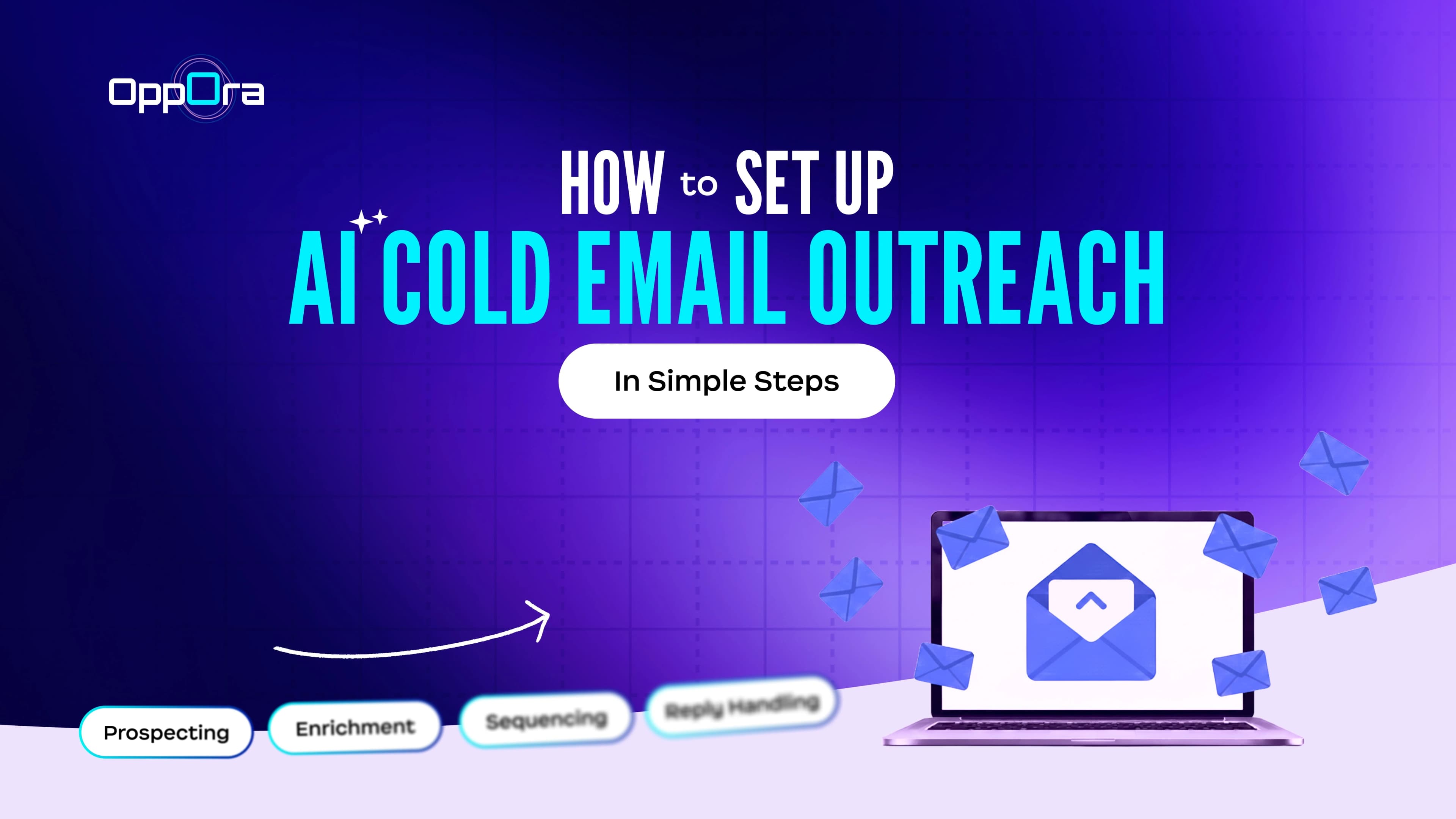
Once your strategy is clear, the next step is setting up your AI outreach system properly. To run ai cold email outreach effectively, you need a tool that can manage prospecting, messaging, sending, and replies in one connected flow.
A platform like Oppora.ai allows you to structure this setup once and let AI handle execution continuously. Here is how to set it up step by step.
Start by clearly defining who you want to reach. Set filters for industry, company size, geography, and decision-maker roles.
Once defined, AI begins sourcing matching companies and contacts automatically. Oppora uses waterfall sourcing, enrichment providers, and real-time verification to prepare clean, campaign-ready leads.
If you already have a list, upload it and let AI clean, enrich, verify, and score the data before outreach begins.
After your lead list is ready, structure your outreach sequence. Define your offer, messaging angle, and follow-up timing clearly.
AI then generates unique emails using real AI instead of Spintext and executes the sequence automatically. You can also add LinkedIn steps inside the same workflow for blended outreach.
Before increasing volume, secure your sending setup. Strong infrastructure protects long-term performance.
AI automatically warms up domains, rotates up to 50 inboxes, and matches sender identity like Gmail-to-Gmail or Outlook-to-Outlook. These controls help maintain trust and reduce spam risk as campaigns run.
Once emails are live, replies start coming in. Managing them manually slows growth.
Oppora’s AI Reply Agent responds directly from your inbox by answering questions, handling objections, qualifying interest, and booking meetings. Warm leads can also be routed to the right teammate automatically.
If you do not want to rebuild campaigns or manage each step manually every time. Instead, create a structured workflow where prospecting, messaging, sending, and reply handling are connected.
Using Oppora’s drag-and-drop builder, you link AI agents into a single continuous flow. Once activated, they keep running together without daily supervision.
Workflow automation helps you generate the campaign structure and set checkpoints before launch. After activation, contacts, replies, meetings, and deals sync automatically to HubSpot, Salesforce, Pipedrive, or Oppora CRM.
Once your campaigns start generating replies and meetings, the next step is scaling without disrupting performance. Growth in ai cold email outreach should feel controlled and strategic, not rushed.
Scaling is not about sending more emails randomly. It is about expanding volume carefully while improving targeting, messaging, and deliverability together.
Here is how to scale properly.
Early success often creates the urge to scale fast. Doubling volume overnight can hurt sender reputation and reduce inbox placement.
Instead, scale in controlled increments by:
If performance remains steady, you can continue increasing volume step by step. Consistent growth protects both results and infrastructure.
Once campaigns are running, your data becomes your strongest advantage. Performance metrics clearly show which segments respond best.
Use campaign insights to:
Instead of expanding your audience randomly, narrow your ICP based on real results. Sharper targeting often improves performance more than simply increasing volume.
Strong early results show your offer resonates, but messaging should always evolve. Small refinements can produce noticeable improvements in reply rates.
Improve performance by:
Optimization should feel like controlled refinement. Keep what works and improve individual elements gradually.
As sending volume increases, deliverability becomes even more critical. More emails mean higher exposure to reputation risks.
Protect your scaling efforts by:
Strong deliverability ensures your outreach reaches inboxes instead of spam folders. Scaling only works when visibility remains high.
Successful ai cold email outreach does not start with automation. It starts with clarity around who you want to reach and why they should care.
First, define your strategy clearly and narrow your ideal customer profile. Strong targeting makes every other step easier and more profitable.
Second, secure your infrastructure before increasing volume. Healthy domains, warmed inboxes, and stable sending patterns protect long-term performance.
Third, automate execution once your foundation is solid. Let AI handle prospecting, sequencing, and reply management while you focus on closing conversations.
Finally, scale carefully using data and gradual volume increases.
When structured correctly, platforms like Oppora.ai help you turn outreach into a connected system instead of a daily manual task.
AI cold email outreach uses artificial intelligence to automate prospecting, email writing, follow-ups, and reply handling. It helps you scale outbound efforts without managing every task manually.
AI improves speed, consistency, and scalability, while manual outreach limits volume. The strongest results come from combining clear strategy with automated execution.
Yes, modern AI generates context-based messages using role, company, and industry data. It goes beyond simple first-name personalization.
Use dedicated sending domains, warm them gradually, and increase volume slowly. Proper infrastructure protects deliverability as you scale.
Yes, AI executes workflows but does not define positioning or targeting. Clear strategy must come before automation.
Summarize with AI
Share