Home
Blog
Find 500 B2B Contacts for Free Every Month with Built-In Outreach.
Home
Blog
Stephen Parker
Published December 17, 2025
13 min
Try Oppora AI
Create Self-Running Agentic Sales Workflows like N8N just by chatting with AI
Get Started for FREE
You’re wasting 60% of your sales team’s time. That’s the reality when your team spends hours on repetitive tasks like lead generation, follow-ups, and data entry.
But what if you could free up that time and focus on what really matters, closing deals?
This guide will show you how B2B sales automation can transform your process. We’ll explore the tools, tips, and benefits of automating your sales workflows. By the end, you’ll have a clear roadmap to streamline your sales process, increase productivity, and ultimately drive more revenue without increasing headcount.
B2B sales automation is the use of technology to simplify and speed up tasks in the sales process. It automates repetitive activities like lead generation, follow-ups, and email outreach, allowing sales teams to focus on higher-value tasks.
By automating these processes, businesses can manage and track leads more efficiently. Automation tools integrate with CRM systems and AI platforms, providing real-time insights, streamlining workflows, and ensuring no lead is neglected. With these tools, you can capture, engage, and nurture leads effectively while improving productivity and reducing human error.
In short, B2B sales automation frees up time, improves efficiency, and helps your sales team focus on converting leads into customers.

B2B sales automation helps teams work faster without losing focus. It removes repetitive tasks, keeps leads organized, and improves how sales teams engage with prospects and customers.
When sales workflows run automatically, teams spend less time on admin work and more time closing deals. Below are the key benefits B2B companies see after automating their sales process.
Sales teams often lose hours on manual tasks like lead capture, follow-ups, and activity tracking. These tasks slow down the sales process and reduce productivity.
B2B sales automation handles these tasks automatically. Leads are captured and stored without manual input. Follow-up emails are sent on time. Activities are logged in the system without extra effort.
This allows sales reps to focus on meaningful work. They spend more time talking to prospects, building relationships, and moving deals forward. Managers also gain better visibility without chasing updates. The result is higher efficiency and faster deal movement.
Manual lead management often leads to missed opportunities. Some leads are followed up too late. Others are forgotten.
Sales automation brings structure to this process. Every lead is tracked from the first interaction. Lead behavior such as email engagement or website visits helps prioritize prospects automatically.
This ensures sales teams focus on leads that are more likely to convert. Follow-ups happen at the right time, keeping conversations active. As a result, conversion rates improve and pipelines become more predictable.
Consistent communication is key to strong customer relationships. Doing this manually at scale is difficult.
Sales automation ensures timely and relevant communication throughout the customer journey. Emails, reminders, and updates are sent based on real customer actions.
Customers feel supported, not ignored or rushed. This builds trust, improves retention, and increases repeat business. Automation strengthens relationships by making sure every customer gets the right attention at the right time.
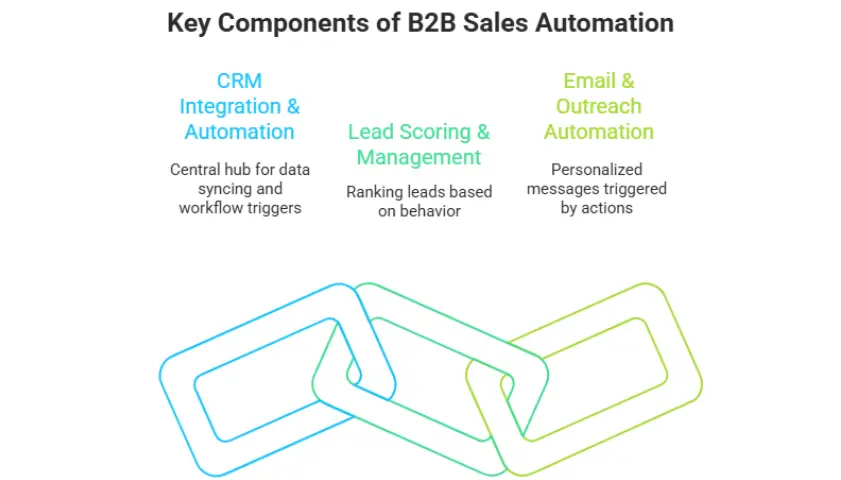
To get the most out of B2B sales automation, it’s important to understand the key components that drive the process. These tools and features help streamline workflows, reduce manual tasks, and increase productivity. Let’s take a closer look at the core elements of sales automation that power successful B2B sales strategies.
CRM systems are the backbone of sales automation. They store crucial customer data, track sales activities, and serve as the central hub for all customer interactions.
When integrated with automation tools, CRMs ensure that no lead is left behind. All interactions,, whether emails, calls, or meetings are captured and updated in one place, making it easier for your sales team to stay organized.
Automated workflows within the CRM can update customer records, send personalized emails, and even assign tasks based on lead behavior. For example, if a lead downloads a case study, the CRM could automatically trigger a follow-up email with more related resources.
This integration makes the sales process more efficient and ensures that every lead gets the attention they deserve, without relying on manual tracking or follow-ups.
Lead scoring is a critical process in B2B sales automation that ranks leads based on their likelihood to convert. Automating this process allows sales teams to prioritize their efforts on high-potential leads.
Automation tools track lead activity, such as website visits, email opens, or content downloads, and assign scores based on these actions. For example, if a lead frequently visits a product page or engages with specific content, their score increases, signaling that they are more likely to convert.
With this automated system, sales reps can focus on nurturing leads that are most likely to close, rather than wasting time on those who aren’t yet engaged or ready to buy. This results in a more efficient use of resources and a higher conversion rate.
Email and outreach automation help sales teams scale their efforts without sacrificing personalization. Automation tools handle cold outreach and follow-ups, ensuring no lead is forgotten.
For instance, you can set up automated email sequences that are triggered by specific lead behaviors. If a lead visits your pricing page, the system can automatically send them an email offering a free demo. If they don’t respond, a follow-up email could be sent after a few days, keeping them engaged throughout the process.Personalization within these automated sequences ensures that your messages resonate with the recipient, improving the chances of conversion.

Automating your B2B sales process may sound daunting, but it’s a straightforward way to increase efficiency, boost conversions, and free up time for your sales team. By using the right tools and following a structured process, you can automate key parts of the sales journey from lead generation to follow-ups without losing the personal touch that converts leads into loyal customers.
Let’s dive into a step-by-step guide on how to automate your B2B sales process effectively.
The first step in sales automation is choosing the right platform. The system you select should integrate seamlessly with your existing CRM and offer tools that support key tasks like email marketing, lead scoring, and reporting.
By automating these core tasks, your team can focus on higher-impact activities, like closing deals and building relationships.
Lead generation is one of the most time-consuming aspects of the sales process, but automation makes it effortless.
Automated lead nurturing helps you build strong relationships with leads, guiding them through the buyer’s journey without constant manual effort.
Follow-ups are a critical part of sales automation. With B2B sales automation, sales reps no longer need to manually track every interaction automated workflows ensure timely, personalized communication.
Automated follow-ups keep your sales pipeline flowing smoothly, while freeing up your sales team to focus on high-value activities like closing deals.
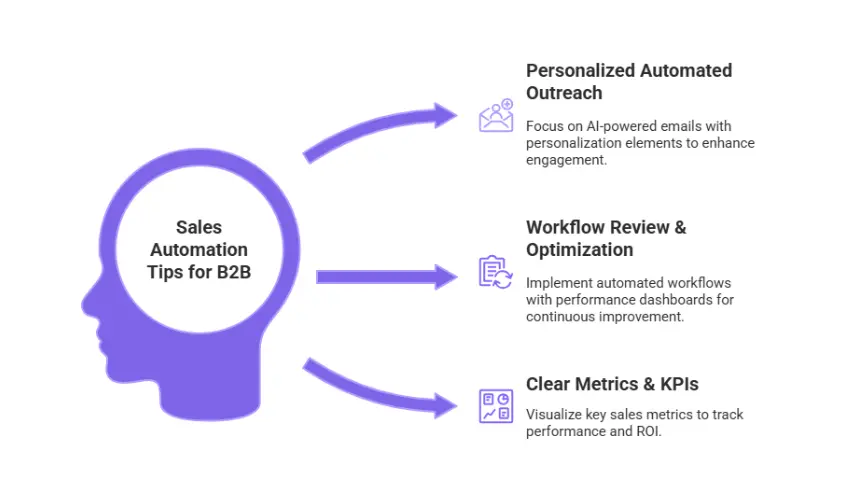
To get the most out of your B2B sales automation system, it’s essential to use best practices that ensure the system is working efficiently. While automation streamlines many processes, strategic use of the system will drive better results. Below are some practical tips to help you optimize your automation efforts and achieve measurable success.
Automation doesn’t have to mean cold, impersonal messages. In fact, personalized automation is much more effective in engaging leads and converting them into customers.
By automating personalization, your sales outreach will feel more human, making it easier to build relationships and drive engagement.
B2B sales automation is not a one-time setup. To ensure that your system is performing at its best, it’s important to review and refine your workflows regularly.
By regularly reviewing your automation system, you ensure it evolves with your needs and continues to drive results.
To measure the success of your sales automation efforts, it’s essential to define clear KPIs (Key Performance Indicators). These metrics allow you to track performance and make data-driven decisions for continuous improvement.
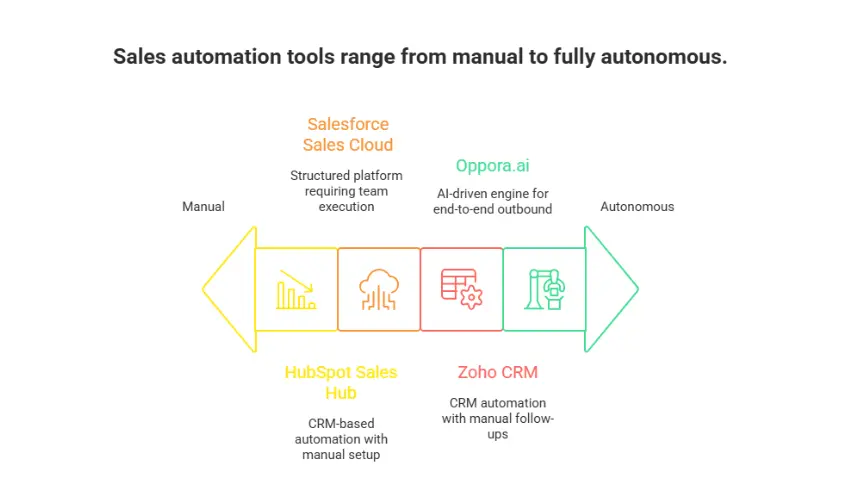
Choosing the right sales automation tools is key to improving the efficiency and effectiveness of your B2B sales process. There are many platforms that provide excellent automation features, allowing you to streamline everything from lead generation to follow-ups. In this section, we’ll explore the top sales automation tools that can transform your sales workflows and drive better results.
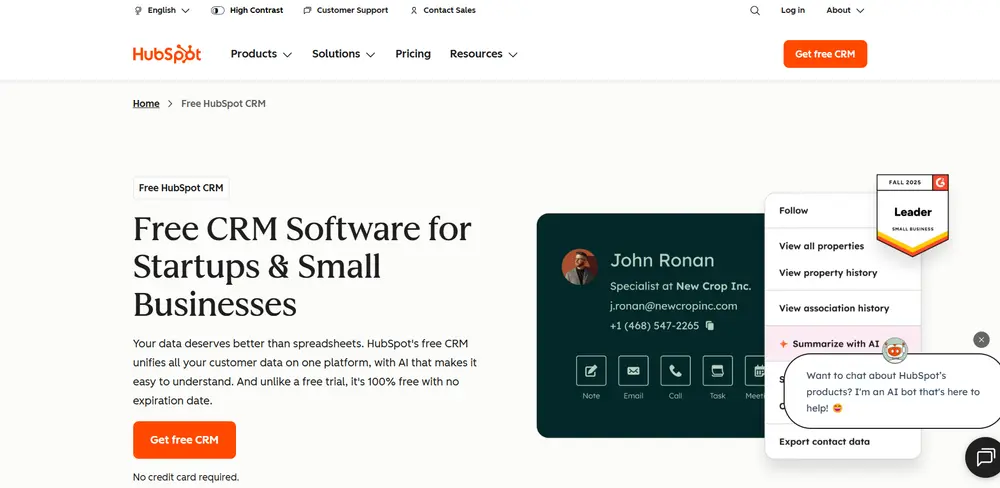
HubSpot Sales Hub is a comprehensive sales automation platform that offers lead management, email marketing, and CRM integration.
With HubSpot, sales teams can easily automate outreach and track sales performance, ensuring no lead falls through the cracks.
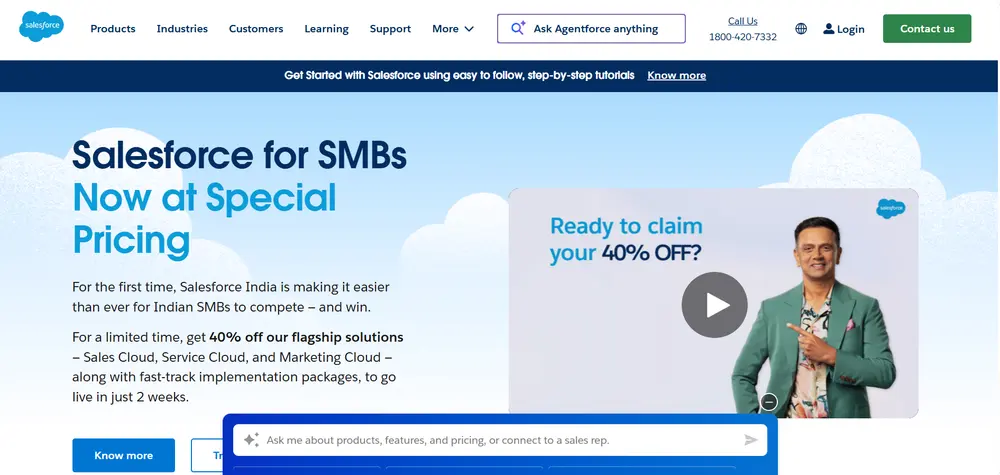
Salesforce Sales Cloud is a powerful CRM platform known for its robust sales automation features.
Salesforce helps sales teams manage leads more effectively, allowing for better follow-up and ensuring that no opportunity is overlooked.
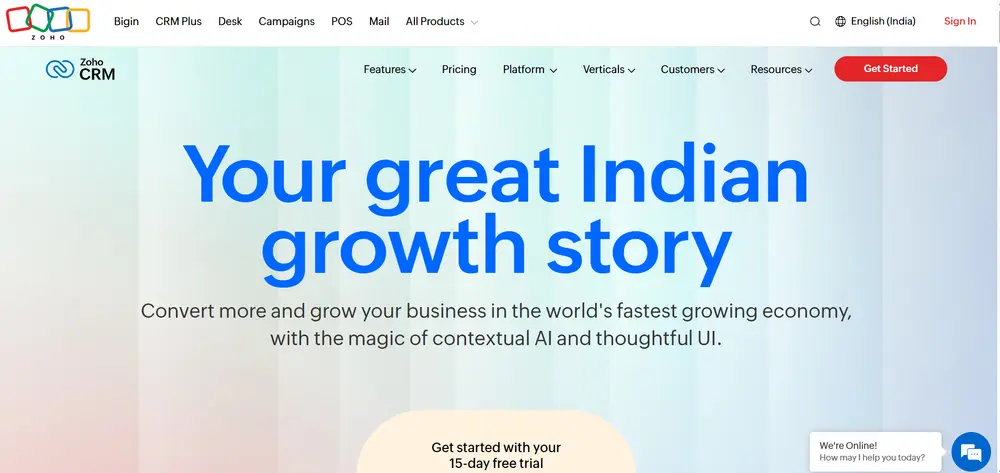
Zoho CRM is an affordable and effective sales automation platform that simplifies lead management and email outreach.
Zoho CRM is a great tool for businesses looking to automate their lead management and communication processes without breaking the bank.
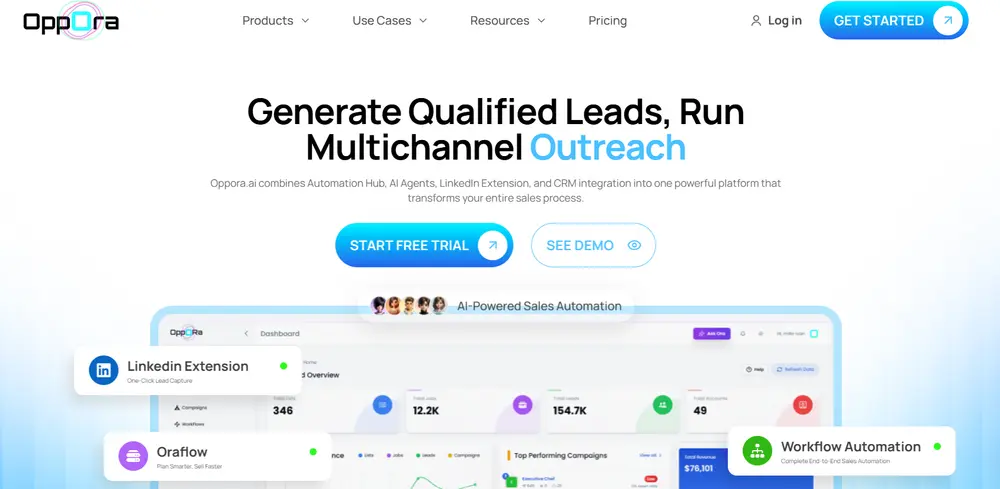
Oppora.ai is built for teams that want real automation, not just more tools to manage. Instead of asking you to run every step manually, Oppora runs the entire outbound sales process for you.
You tell Oppora what you sell and who you want to reach. From there, Oppora’s AI Sales Agents take over finding the right companies, discovering decision-makers, enriching and verifying contacts, scoring leads, sending personalized emails, replying to prospects, and booking meetings directly into your CRM.
This is what makes Oppora different.
Most sales tools claim to use AI, but still require constant prompting. You have to find leads, enrich data, score contacts, write emails, send follow-ups, and manage replies—again and again. Oppora removes this friction.
Oppora uses 8 connected AI agents that talk to each other. You build the workflow once, and the system keeps executing it continuously. No repeated setup. No micromanagement. This is autonomous outbound, not assisted automation.
Key Features
AI Lead Scoring :Oppora scores leads based on relevance, intent, and engagement signals. This helps sales teams focus on prospects that are more likely to convert instead of wasting time on low-quality leads.
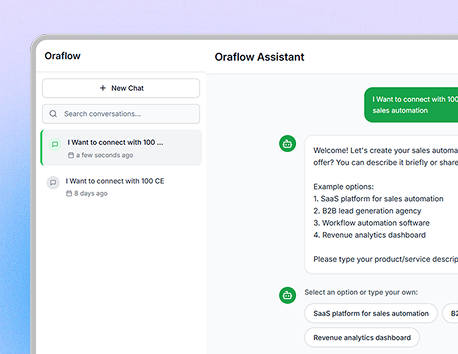
AI Sales Planner (Oraflow): Describe your goal, and Oraflow creates a complete sales plan from company discovery to campaign launch and CRM updates with review checkpoints so you stay in control.
Contact Verification: Before outreach begins, contacts are verified to ensure accuracy and deliverability. This reduces bounce rates and improves the overall success of outbound campaigns.
AI Email Outreach: Oppora sends personalized outbound emails automatically based on your sales plan. Emails are generated and scheduled without manual effort, ensuring consistent and timely outreach to every qualified lead.
AI Reply Agent (Reply Ora): Reply Ora handles incoming replies and follow-ups automatically. It responds to common questions, continues conversations, and keeps leads engaged without requiring manual responses from sales reps.
CRM Sync: All lead data, conversations, and activity are synced to your CRM in real time. Your pipeline stays accurate without manual updates or data entry.
Workflow Automation: Oppora automates the entire outbound workflow end to end. Once set, the system runs continuously without switching tools, rebuilding flows, or managing disconnected platforms.
Automated Company & Lead Discovery: Oppora automatically finds relevant companies and decision-makers based on your ideal customer profile. You don’t need to manually search databases or platforms the system continuously discovers and adds qualified prospects to your pipeline.
Oppora.ai lets your sales team focus on closing deals while the system handles everything else.
B2B sales automation is no longer optional for teams that want to stay competitive. As sales processes become more complex, relying on manual work slows growth and creates missed opportunities.
By automating tasks like lead discovery, scoring, outreach, and follow-ups, sales teams can focus on high-impact work—building relationships and closing deals. The right automation setup improves consistency, reduces errors, and ensures every lead is handled at the right time.
However, automation only works when the tools work together. Using multiple disconnected platforms still creates friction and manual effort. This is why many teams now look for all-in-one B2B sales automation solutions instead of juggling tools.
This is where Oppora.ai fits naturally.
Oppora automates the entire outbound sales workflow from finding the right companies and contacts to scoring leads, sending personalized emails, replying to prospects, and updating your CRM automatically. You define your goal once, and Oppora’s AI Sales Agents keep executing the workflow without constant input.
If you want B2B sales automation that runs with minimal manual effort, Oppora can handle the scoring and complete outreach automation for you. You can try it casually it’s available on a free forever plan, and you can sign up without a credit card .
B2B sales automation is the use of software and AI to automate sales tasks such as lead discovery, scoring, email outreach, follow-ups, and CRM updates. It helps sales teams reduce manual work and move leads through the pipeline more efficiently.
B2B companies use sales automation to save time, improve lead management, and maintain consistent follow-ups. Automation reduces errors, ensures timely communication, and helps sales teams focus on closing deals instead of managing repetitive tasks.
B2B sales automation can handle company research, lead discovery, contact verification, lead scoring, email outreach, follow-ups, reply handling, and CRM syncing. Advanced platforms can automate the entire outbound workflow end to end.
Oppora.ai automates the complete outbound sales process. You define what you sell and who you want to reach, and Oppora’s AI Sales Agents find companies, discover leads, score and verify contacts, send personalized emails, reply to prospects, and update your CRM automatically without repeated setup.
Yes. Oppora.ai is designed for small and growing teams that want to scale outbound sales without adding complexity. It reduces manual effort, works with existing CRMs, and offers a free forever plan with no credit card required.
Summarize with AI
Share