Home
Blog
Oppora’s Claude MCP is Live. Connect our Email Database & Outreach features with any tool to build smart automations inside Claude.
Home
Blog
Adam Hossain
Published July 7, 2026
15 min

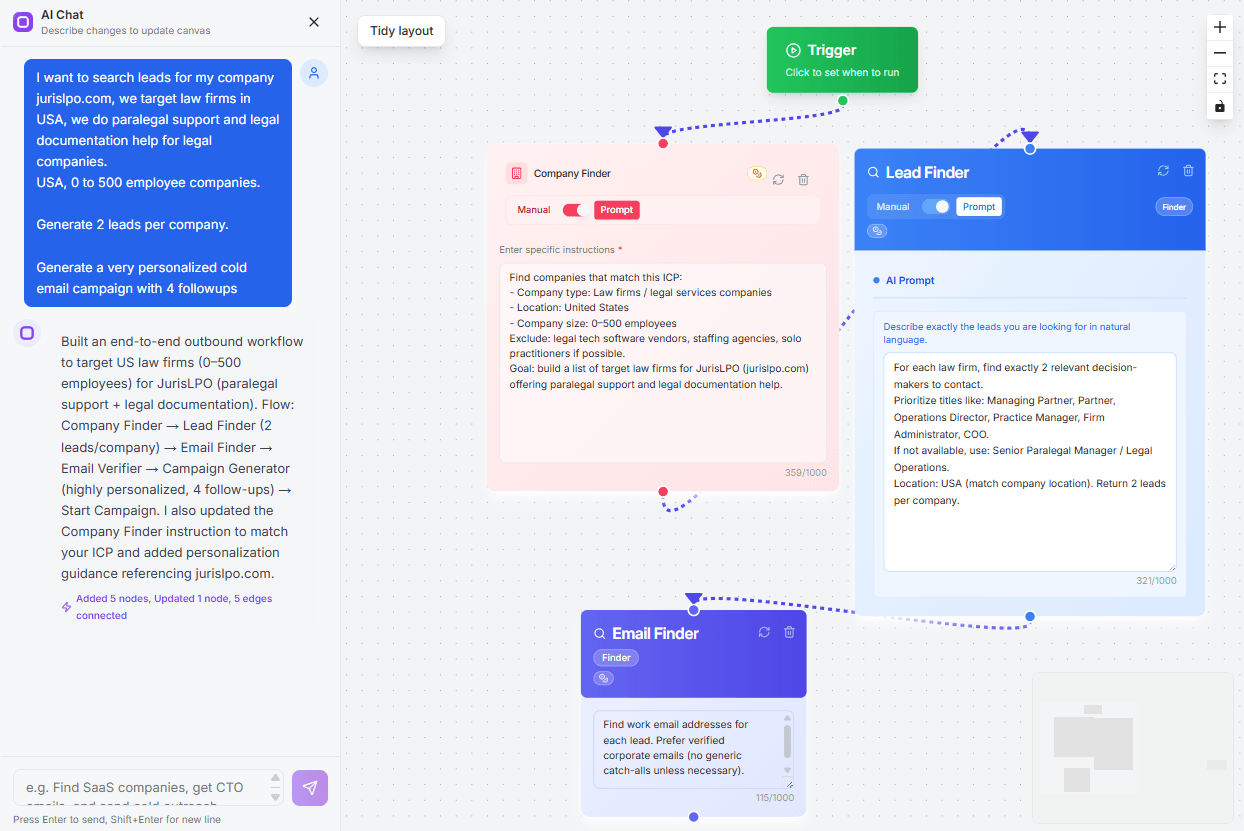
Try Oppora AI
Create Self-Running Agentic Sales Workflows like N8N just by chatting with AI
Get Started for FREE
Finding the right pharmaceutical contacts shouldn't feel like guesswork, yet most sales teams still waste hours chasing outdated numbers and bounced emails.
The pharma space makes this harder. You're dealing with strict compliance rules, layered decision-makers, and niche companies that generic databases barely cover.
The right B2B prospect database changes everything. It hands you verified contacts, real buying signals, and cleaner targeting from day one.
In this guide, you'll learn:
Now that you know what's at stake, let's look at how we actually judged these tools.
We didn't just count features or trust marketing claims. Instead, we focused on what matters when you're selling into a compliance-heavy, hard-to-reach industry like pharma.
Every database was measured against the criteria below.
A database is only useful if it actually knows your market. Many generic tools list a handful of big pharma names and call it coverage.
We looked deeper than that.
We checked whether each platform mapped the full pharmaceutical landscape, from global manufacturers to smaller biotech and specialty firms.
Strong coverage means you can reach niche players, not just the obvious giants everyone already emails.
Bad contact data quietly kills your outreach before it starts. You send the email, it bounces, and the lead is gone.
So we prioritized accuracy above volume.
Here's what we evaluated for each tool:
Databases that surfaced accurate contacts for medical directors, procurement leads, and R&D heads scored highest here.
Suggested Reading:
Catch-All Email Verification: What is it & How It WorksReaching the right person is half the battle. Reaching them at the right moment is what closes deals.
That's where buying signals come in.
We assessed whether each platform could spot intent, like companies researching solutions, hiring in key departments, or expanding into new therapeutic areas.
The strongest tools helped you prioritize prospects already leaning toward a purchase, so your team spends time where it counts.
Suggested Reading:
15 Buyer Intent Signals B2B Sales Teams Should WatchReaching the right people gets easier when you can slice your market with precision.
That's why we tested how granular each platform's filters really are.
We looked for filtering that goes beyond basic job titles and locations. The best databases let you segment by therapeutic focus, company size, funding stage, or regulatory role.
Sharper segmentation means you build tighter lists and waste far less time on prospects who were never a fit.
A great contact list loses value if it lives in a silo.
Your data needs to flow straight into the tools your team already uses every day.
So we checked how smoothly each database connects with popular CRMs and outreach platforms.
We also weighed built-in automation, like sequencing and syncing, that keeps your pipeline moving without manual exports.
Tools that fit naturally into your existing workflow scored highest here.
Suggested Reading:
How to Automate Outreach Using Oppora AI Sales AgentsIn pharma, clean data isn't a nice-to-have. It protects both your outreach and your reputation.
Contacts change roles constantly, and outdated records quietly drain your results.
Here's what we prioritized in this area:
Databases that refreshed often and respected privacy laws earned the most trust from us.
The most powerful tool means little if your team dreads using it.
We paid close attention to how quickly you can learn each platform and pull real value.
We also compared pricing against what you actually get in return.
The goal was simple: find databases that balance clear usability with fair, scalable cost.
Before we break down each tool in detail, here's a quick snapshot to help you compare them at a glance.
This table gives you the essentials, so you can spot which pharmaceutical prospect databases fit your needs before diving deeper.
Keep in mind that the right choice depends on your goals, team size, and how deeply you sell into the pharmaceutical space.
Next, let's unpack each tool so you can see exactly what it offers.
Now that you've seen how these tools stack up, let's dig into the details.
Below, you'll find a closer look at the 10 best B2B prospect databases for pharmaceutical sales teams.
For each one, we'll walk through the key features, how it supports your pharma prospecting, and what the pricing looks like.
Let's start with our top pick.
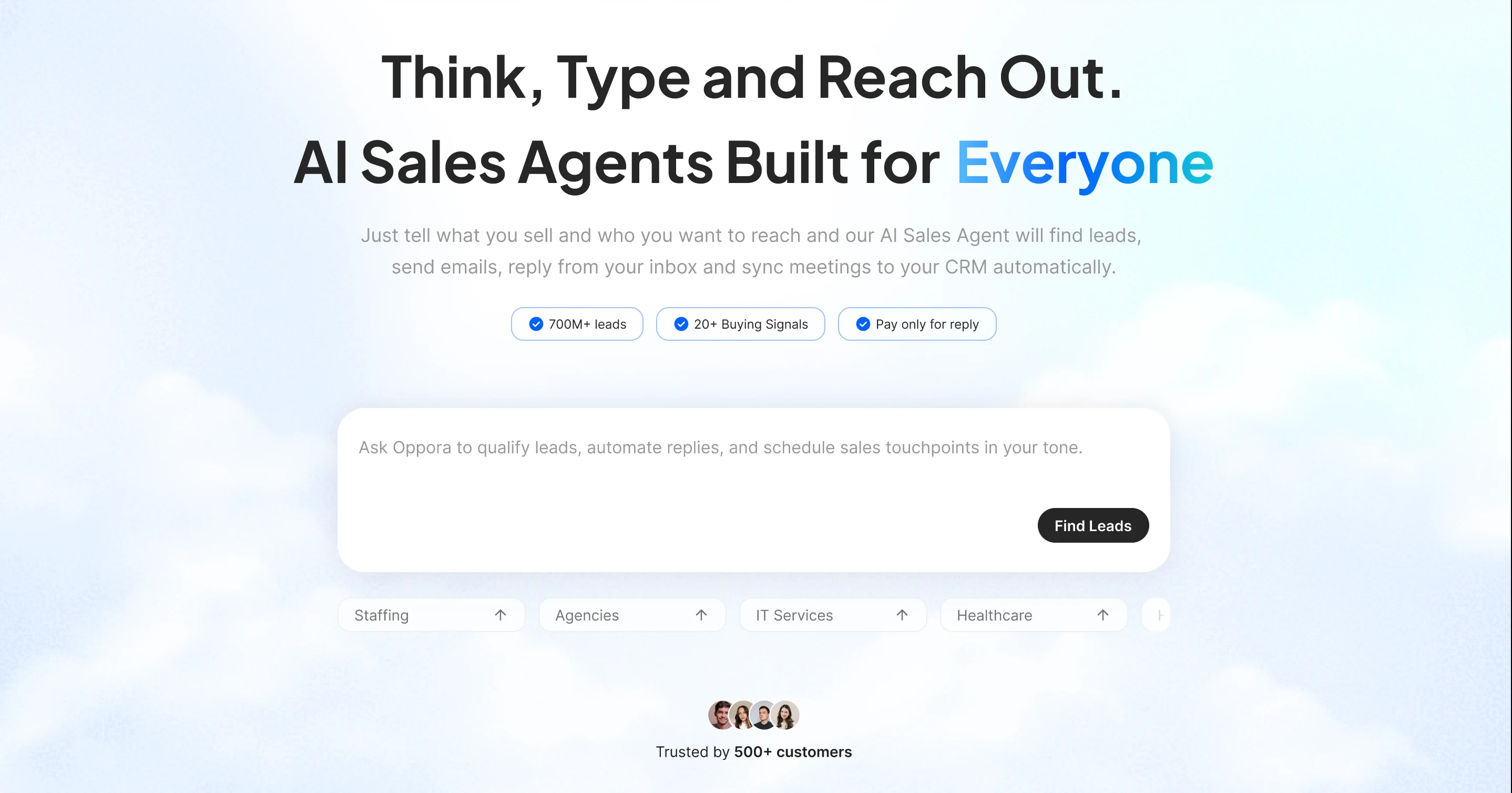
We're starting with Oppora because it rethinks prospecting entirely.
Oppora is an AI-powered sales platform that finds verified leads and runs your outreach from a single place.
Instead of handing you data and leaving the outreach to you, it runs the full cycle with 8 AI sales agents that work together automatically.
That makes Oppora AI one of the best B2B prospect databases for pharmaceuticals, helping your team build targeted prospect lists and reach the right decision-makers without switching tools.
Pharma prospecting gets simpler when the busywork runs itself.
Just tell Oppora's AI lead finder what pharma prospects you want, or apply a pharmaceutical filter directly.
It pulls matching leads with verified emails, phones, and LinkedIn profiles, ready for outreach inside Oppora.
Its HIPAA and GDPR alignment also makes it safer for regulated pharmaceutical outreach.
Oppora keeps its pricing flexible, so you can start small and scale as your outreach grows.
Here's how the plans break down:
The free plan gives you a real feel for the platform before you commit to anything.
ZoomInfo has built its reputation as one of the most established players in B2B data.
If your pharma team needs deep enterprise coverage and a massive contact pool, it's a strong contender.
Pharma sales often means reaching decision-makers inside large, complex organizations.
ZoomInfo helps you map those accounts and surface the right contacts across departments.
Its intent signals let you focus on companies showing real buying activity, so your outreach lands at a better moment.
ZoomInfo uses custom pricing based on your team size and feature needs.
There's no standard public plan, so you'll need to request a quote and expect enterprise-level costs.
Apollo.io has grown popular with sales teams that want data and outreach in one place.
For pharma teams watching their budget, it offers a lot of value without an enterprise price tag.
Pharma prospecting works best when finding leads and reaching them live under one roof.
Apollo lets you build targeted lists of medical and procurement decision-makers, then launch sequences right away.
Its filters help you narrow down to the pharmaceutical roles that actually influence buying decisions.
Apollo offers a free plan to help you test the platform first.
Paid tiers scale up from there, with pricing based on the features and credits your team needs.
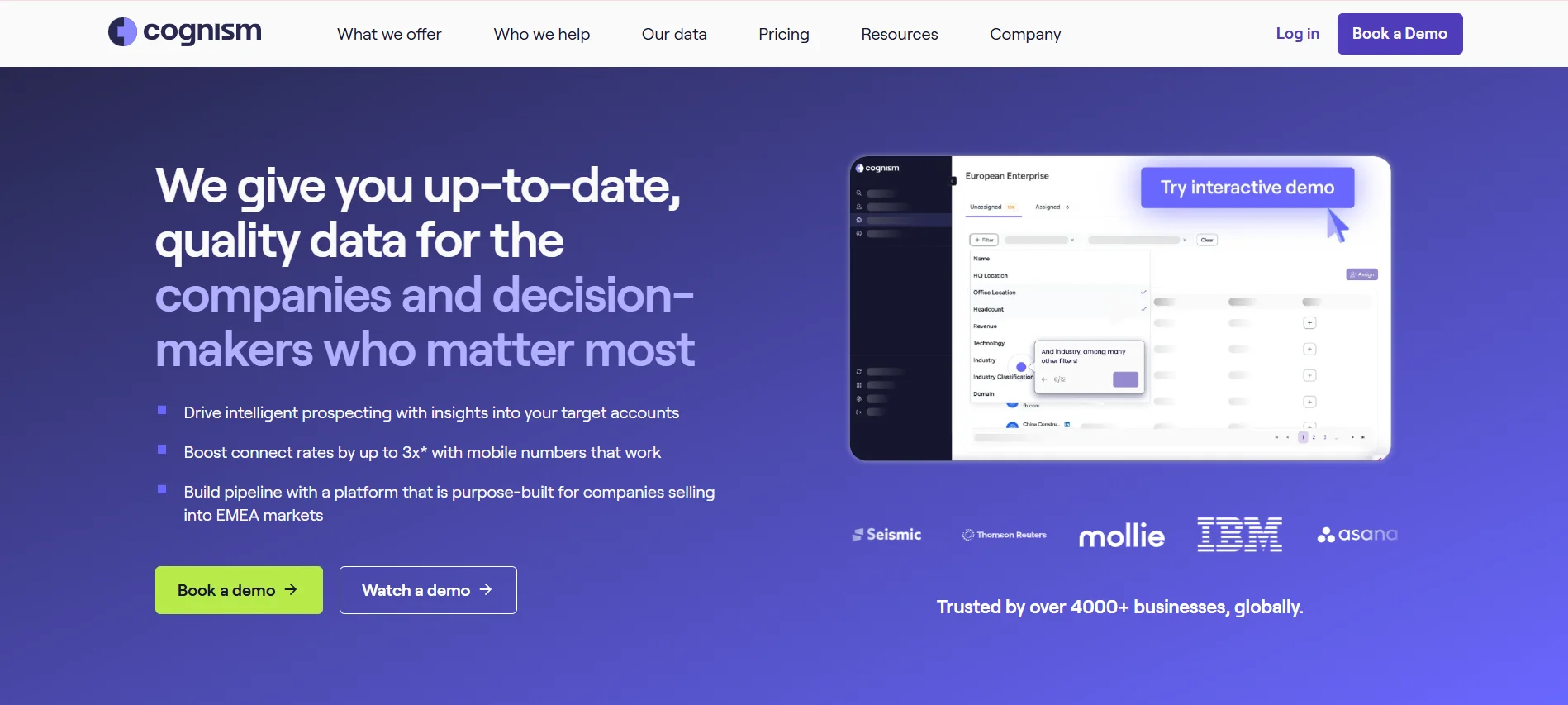
Cognism stands out for teams that care deeply about compliant, global data.
If your pharma outreach reaches into Europe, its strong GDPR-ready coverage makes it worth a close look.
Pharma outreach carries real compliance risk, especially across international markets.
Cognism helps you reach medical and procurement leaders while staying aligned with strict privacy rules.
Its verified direct dials also make it easier to connect with hard-to-reach pharmaceutical buyers who rarely answer cold emails.
Cognism uses custom pricing tailored to your team size and data needs.
There's no public plan listed, so you'll need to book a demo and request a quote.
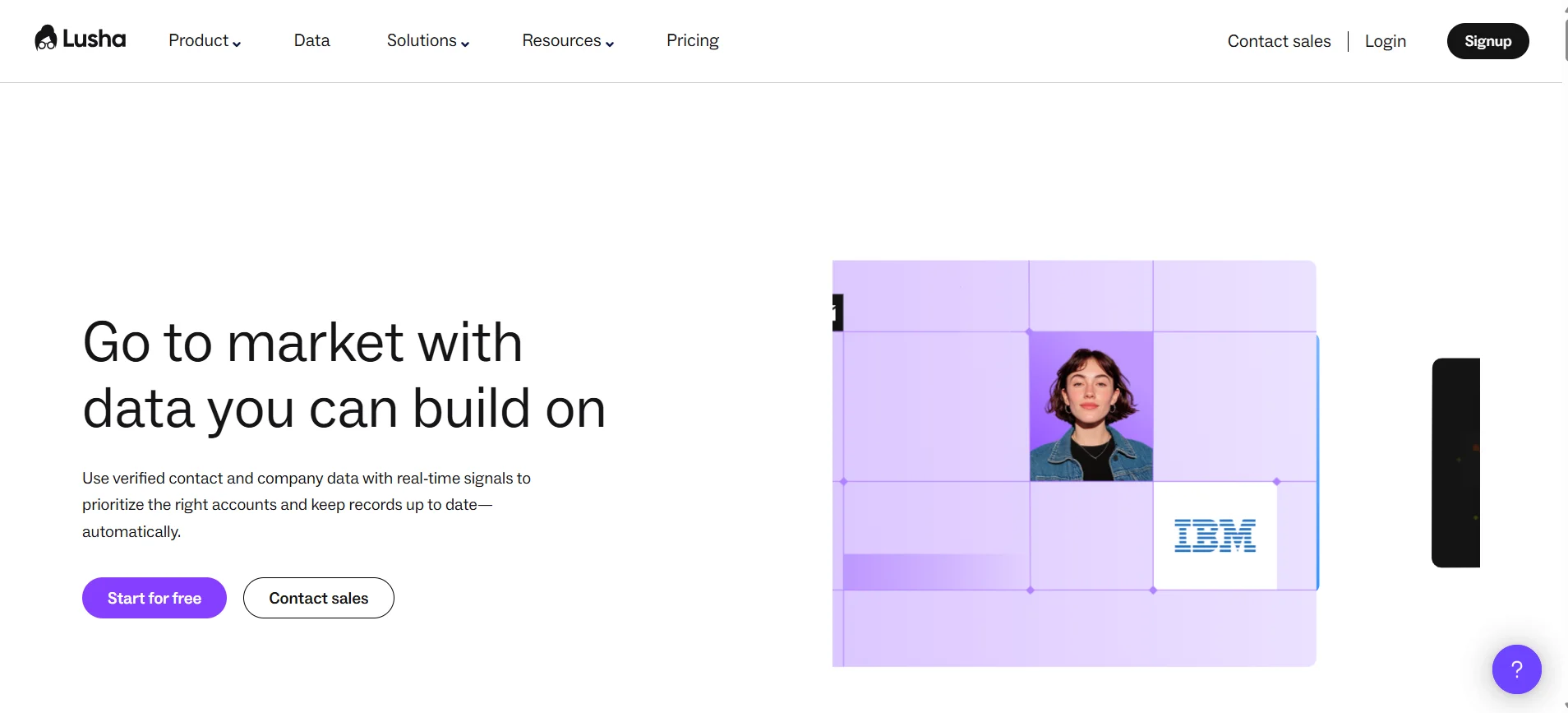
Lusha keeps things refreshingly simple for teams that want contacts fast.
If your pharma reps value speed over heavy setup, its lightweight approach fits neatly into daily prospecting.
Pharma reps often need a contact right now, not after a long search.
Lusha lets you grab verified emails and phone numbers for medical and procurement leaders in just a few clicks.
Its simplicity makes it a handy option when you're prospecting on the fly and want clean contact data without the learning curve.
Lusha offers a free plan with limited credits to get you started.
Paid tiers scale up based on the number of contacts and features your team needs.
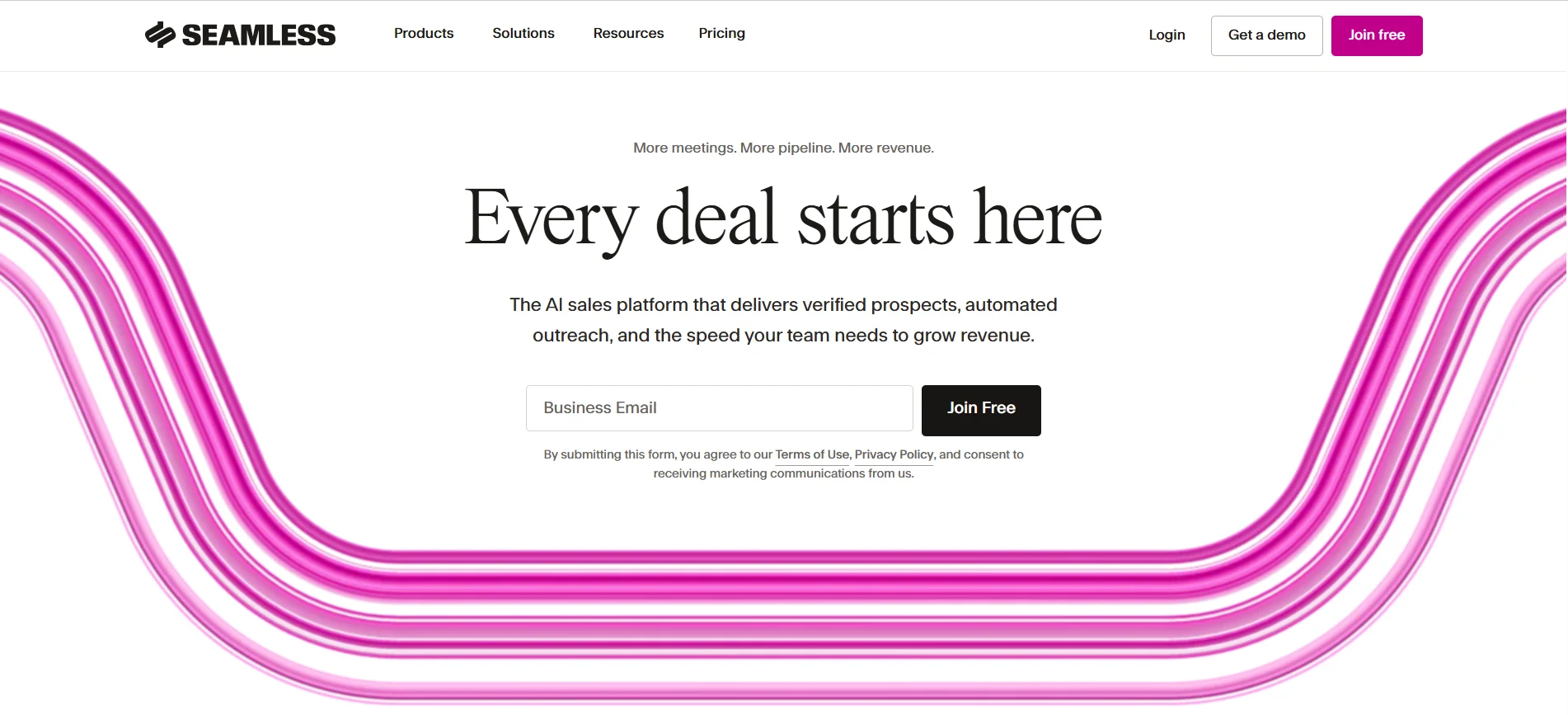
Seamless.AI leans hard into real-time search, building contacts on the spot rather than pulling from a static list.
For pharma teams that want fresh data as they prospect, that approach has real appeal.
Pharma contact data ages fast as people switch roles and companies restructure.
Seamless.AI helps you pull current details for medical and procurement leaders right when you need them.
Its real-time engine means you're less likely to reach out with a stale email or an outdated phone number.
Seamless.AI offers a free plan with limited credits to test the tool.
Paid tiers scale up from there, based on the credits and features your team requires.
Suggested Reading:
11 Seamless AI Alternatives Compared: Pricing, Data & Features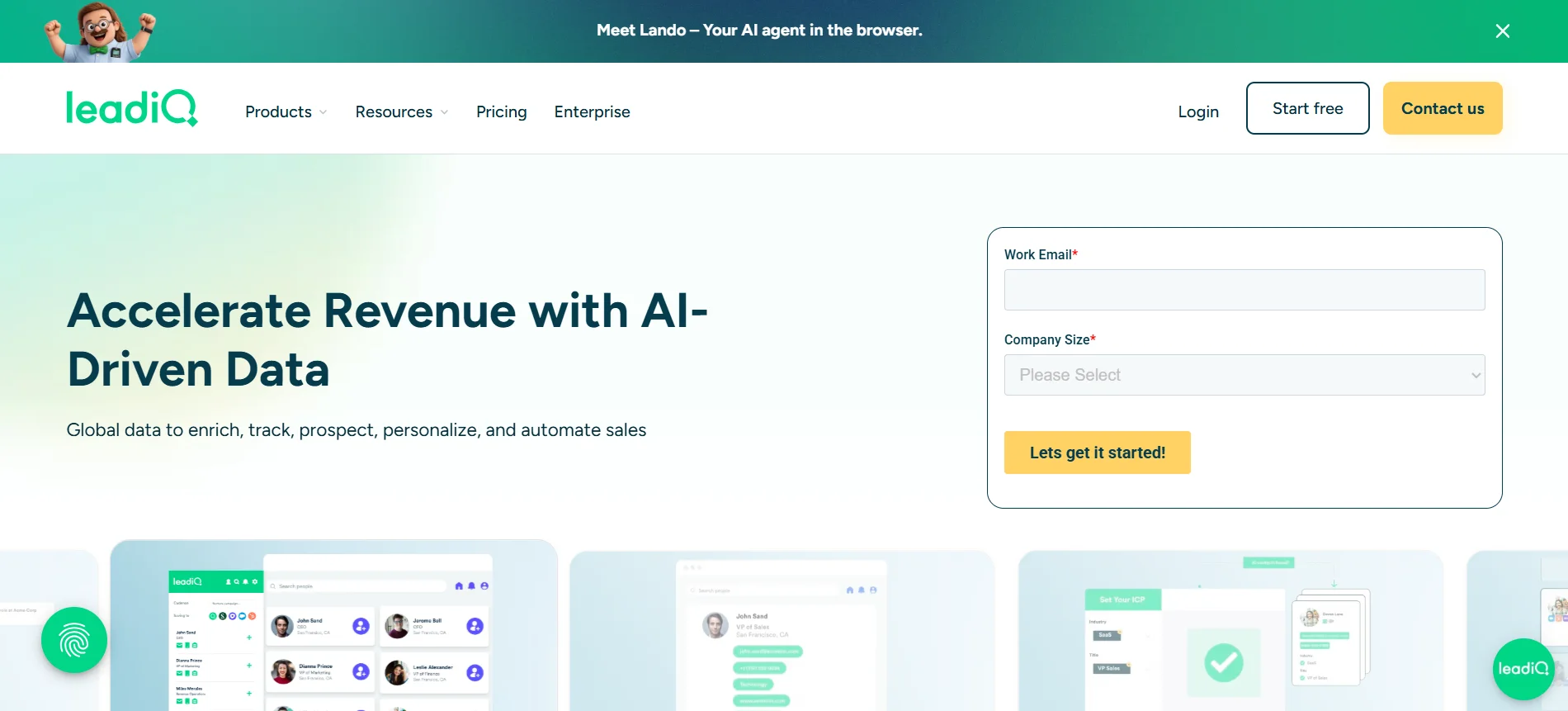
LeadIQ is built for teams that want to move from prospect to CRM in seconds.
If your pharma reps live inside their sales workflow, its one-click capture keeps things moving fast.
Pharma prospecting slows down when reps waste time on manual data entry.
LeadIQ removes that friction by pushing verified contacts for medical and procurement leaders straight into your pipeline.
Your team spends less time copying details and more time actually reaching the right pharmaceutical buyers.
LeadIQ offers a free plan with limited credits to test the platform.
Paid tiers scale up from there, based on the credits and features your sales team needs.
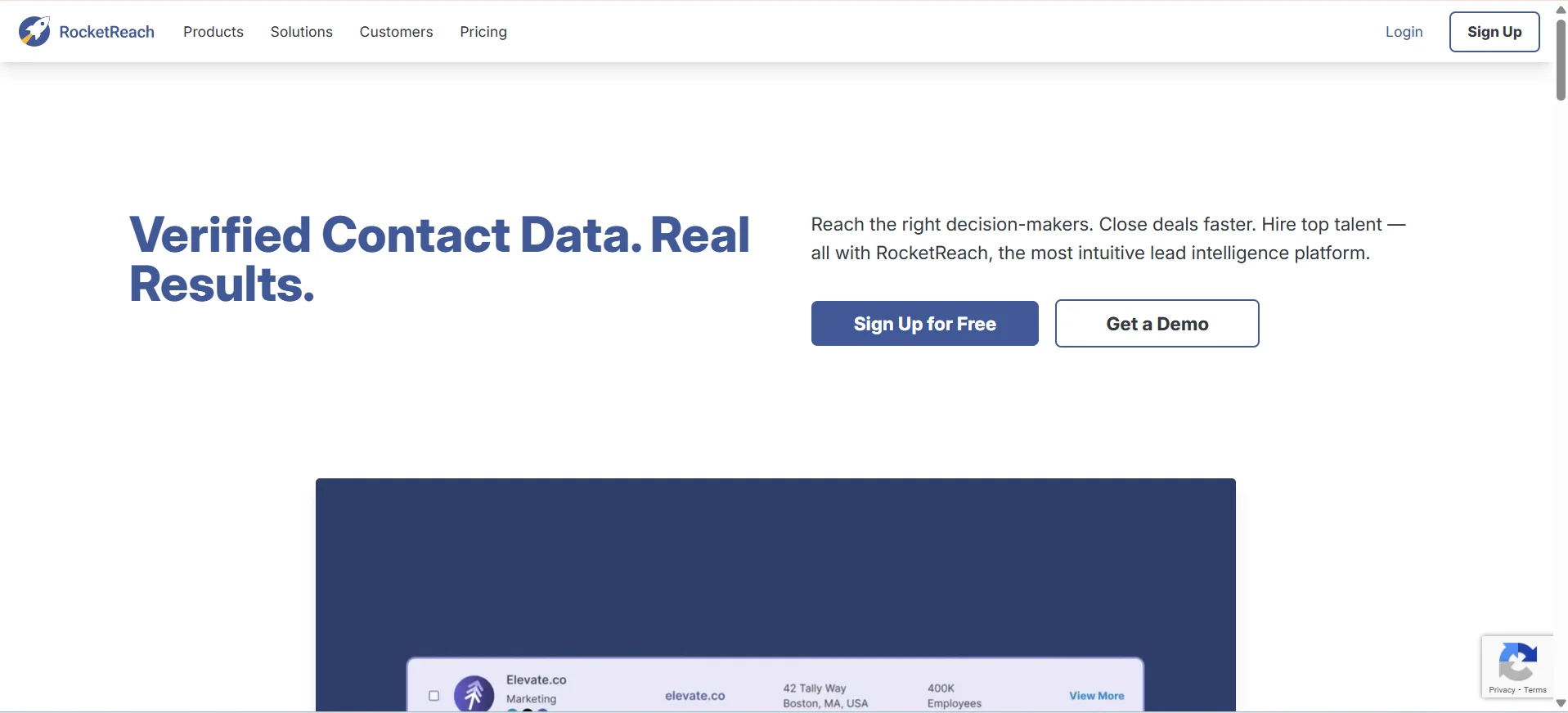
RocketReach is known for its wide reach across emails and social profiles.
If your pharma team needs to track down contacts that other tools miss, its broad coverage comes in handy.
Pharma decision-makers can be tough to pin down across scattered channels.
RocketReach helps you surface their emails and social profiles, giving you more ways to make contact.
That wider coverage is useful when you're chasing niche pharmaceutical roles that don't appear in smaller databases.
RocketReach skips a free plan and offers paid tiers only.
Pricing scales with the number of lookups and features you need, so costs grow alongside your prospecting volume.
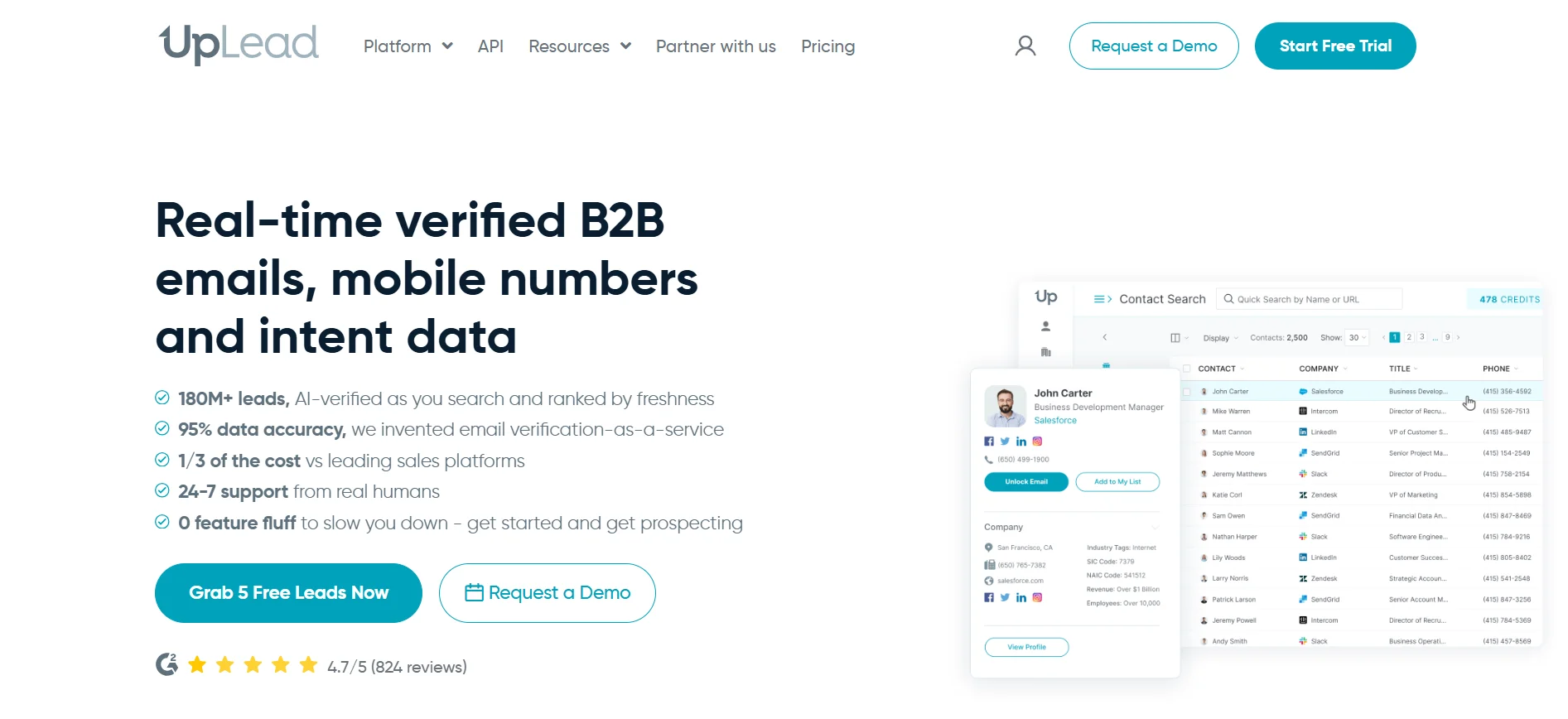
UpLead has built a name around clean, verified data at a fair price.
If your pharma team wants accuracy without a steep enterprise bill, it's a practical choice.
Pharma outreach falls apart fast when your data is full of bad emails.
UpLead helps you avoid that by verifying contacts in real time before you ever hit send.
You can zero in on medical and procurement decision-makers, then trust that the details you're reaching out with actually work.
UpLead offers a free trial so you can test the data quality first.
Paid tiers scale up based on the credits and features your team needs.
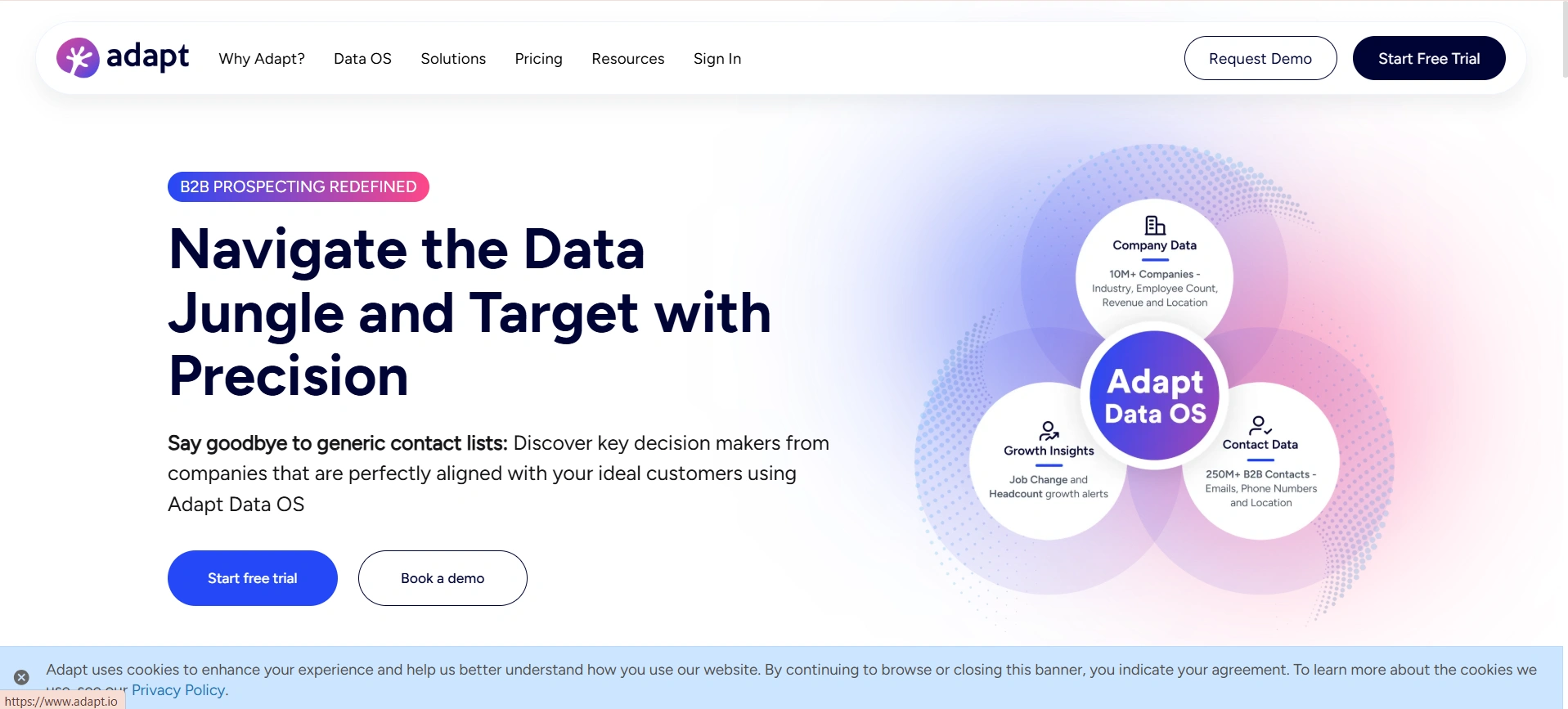
Adapt.io rounds out our list as a solid, budget-friendly option for growing sales teams.
If your pharma team wants dependable data without heavy overhead, it's worth a look.
Pharma sales teams in the mid-market often need quality data on a tighter budget.
Adapt.io helps you build targeted lists of medical and procurement decision-makers without overspending.
Its filters make it easier to focus on the pharmaceutical roles that carry real buying influence, so your outreach stays sharp.
Adapt.io uses custom pricing shaped around your team size and data needs.
There's no standard public plan, so you'll want to request a quote to see what fits your budget.
You've seen the top tools, so now comes the real question: which one fits your team?
The best choice depends less on features and more on how well a database matches your goals.
Let's walk through four factors that make that decision easier.
Before comparing tools, get clear on exactly who you're trying to reach.
A vague target leads to bloated lists and wasted outreach.
Think about the specific roles and companies that actually drive your deals, such as:
Once you know your ideal customer, you can judge each database on how well it covers them.
A big database means little if the contacts inside it are stale.
So look closely at how each tool verifies its data and how often it refreshes.
Accurate emails and direct dials keep your outreach from bouncing before it starts.
Buying signals matter just as much here.
Tools that flag intent, like companies hiring or researching solutions, help you reach prospects at the right moment instead of guessing.
Your data should flow straight into the tools your team already uses.
A database that syncs cleanly with your CRM saves hours of manual work every week.
Look for smooth connections with platforms like HubSpot, Salesforce, and Pipedrive.
Automation adds even more value.
Features like sequencing, auto-replies, and CRM updates keep your pipeline moving without constant manual effort, so your reps focus on selling.
The cheapest tool isn't always the smartest buy.
Instead of chasing the lowest price, weigh what each plan delivers in return.
A slightly higher cost can pay off if it means cleaner data, better automation, and fewer wasted hours.
Look for pricing that scales with your team, so you're not forced to switch tools the moment you grow.
Choosing the right database really comes down to your goals, budget, and how deeply you sell into pharma.
Every tool on this list brings something useful, from enterprise reach to budget-friendly data.
But if you want prospecting and outreach handled in one place, Oppora stands out.
Its verified data, buying signals, and AI sales agents help pharma teams find the right decision-makers and reach them without juggling extra tools.
If that sounds like the workflow you've been missing, it's worth exploring what Oppora can do for your pharmaceutical outreach.
A prospect database helps you find and verify new leads, like medical directors or procurement heads. A CRM manages relationships with contacts you already have. Most pharma teams use both, syncing fresh leads from the database into their CRM.
Yes, when the database complies with privacy laws like GDPR, HIPAA, and CCPA. Legitimate B2B outreach for sales is legal, but you must use compliant tools and respect opt-out requests to avoid legal and reputational risk.
Ideally in real time or at least monthly. Pharma professionals change roles frequently, and companies restructure often. Databases with real-time verification keep your contacts accurate, reducing bounced emails and wasted outreach on people who've already moved on.
Small teams benefit too. Many tools offer free plans or affordable tiers built for startups and lean teams. You don't need an enterprise budget to access verified contacts, buying signals, and outreach automation for pharmaceutical prospecting.
A mix of email and LinkedIn usually performs best. Many pharma buyers rarely answer cold calls, so verified direct dials paired with personalized email and LinkedIn messages give you more ways to connect and improve your response rates.
Summarize with AI
Share