Home
Blog
Find & Send Cold Emails to 500 Unique Prospects Every Month for FREE.
Home
Blog
Stephen Parker
Published February 26, 2026
10 min
Try Oppora AI
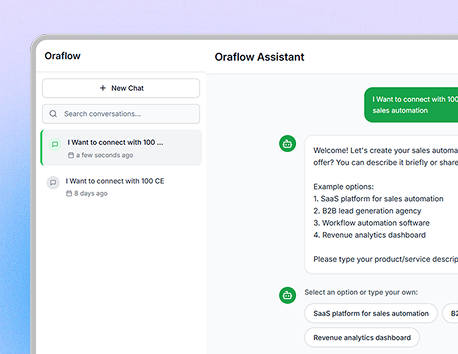
Create Self-Running Agentic Sales Workflows like N8N just by chatting with AI
Get Started for FREE
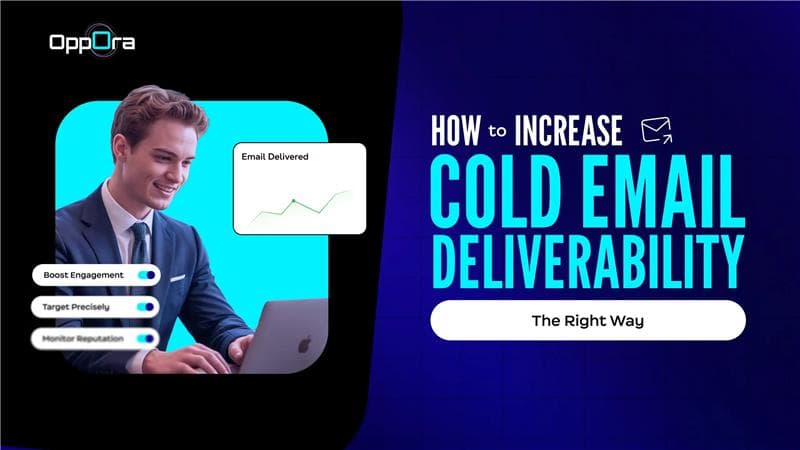
Most people focus on open rates when measuring outbound success. However, cold email deliverability matters more because your email must reach the inbox before it can ever be opened.
Delivered does not mean inbox placement. An email can be accepted by the server yet still land in Spam or Promotions unseen.
Inbox placement directly impacts revenue and pipeline growth. If your emails reach the Primary tab, conversations happen, but Spam placement silently kills opportunities.
Mailbox providers are tightening standards in 2026. Gmail and Yahoo now require stricter authentication, lower complaint rates, and stronger compliance.
This guide will show you how to improve deliverability step by step.
Cold email deliverability is not random. It is shaped by technical setup, sending behavior, engagement quality, and historical reputation.
When you understand these factors, you stop guessing and start controlling inbox placement. Let’s break down what truly influences where your emails land.
Email delivery only means the receiving server accepted your message. It does not mean your email reached the inbox.
Inbox placement determines whether your message appears in Primary, Promotions, or Spam. Only Primary placement consistently generates replies and real conversations.
Most outreach dashboards show “delivered” rates and make performance look strong. They rarely reveal whether your emails are quietly filtered into Spam.
If your emails are not visible, they cannot generate pipeline. Inbox visibility is the real performance metric that matters.
Mailbox providers evaluate your technical foundation before reviewing your content. Weak authentication instantly lowers trust.
Your setup must include:
Using a separate cold outreach domain protects your primary business domain. A custom tracking domain also improves authenticity signals and reduces shared-link risk.
Infrastructure is your foundation. If it is unstable, scaling volume will only magnify problems.
Email providers monitor how consistently you send. Stability builds trust while erratic behavior raises red flags.
Sudden volume spikes look suspicious. Jumping from 10 emails per day to 200 overnight resembles spam activity.
Large batch sends within minutes also trigger filtering systems. Sending at steady daily volumes across business hours looks more natural.
Over-aggressive follow-ups damage reputation over time. Controlled frequency protects long-term trust stability.
Engagement is one of the strongest drivers of cold email deliverability. Mailbox providers track how recipients respond after delivery.
Positive signals include:
Negative signals include:
Spam complaints are far more damaging than unsubscribes. The more real conversations you generate, the stronger your domain trust becomes.
Gmail and Outlook analyze sender behavior over time, not just individual campaigns. They evaluate historical domain performance and complaint thresholds together.
Filtering systems use engagement-weighted algorithms and pattern recognition models. They score both short-term activity and long-term reputation trends.
One bad campaign can damage months of trust. Deliverability is cumulative, and stability always beats aggressive scaling.
Email providers are no longer lenient with bulk senders. Gmail and Yahoo now enforce stricter authentication, complaint thresholds, and compliance standards that directly affect cold email deliverability.
If you ignore these rules, inbox placement drops quickly. Even technically delivered emails can be filtered before recipients ever see them.
Understanding these requirements is no longer optional. It is a foundational part of protecting your domain reputation and sustaining outbound performance.
Authentication is no longer a best practice. It is a requirement for inbox eligibility.
You must configure SPF correctly, enable DKIM signing, and ensure DMARC alignment between your sending domain and headers. Misalignment signals spoofing risk and lowers sender trust immediately.
Recommended DMARC policies start with p=none for monitoring, then gradually move toward quarantine or reject once alignment is verified. Many senders fail because of incorrect DNS records, missing DKIM keys, or DMARC policies that are published but not aligned properly.
Even one misconfiguration can impact filtering. Proper authentication alignment is now the baseline for cold email deliverability.
Gmail now expects bulk senders to maintain spam complaint rates below 0.3%. Anything above this threshold increases filtering risk and reputation damage.
Complaints are measured when recipients click “Report Spam” or move your email to the spam folder. These negative signals carry more weight than unsubscribes.
Irrelevant targeting dramatically increases complaint rates. Broad ICP campaigns and poorly matched messaging push recipients to mark emails as spam instead of ignoring them.
Exceeding complaint thresholds can trigger bulk sender restrictions. Recovering from reputation damage takes significantly longer than maintaining clean engagement from the start.
Bulk senders must now provide clear one-click unsubscribe functionality. This applies to high-volume senders, including many B2B cold email operators.
If recipients cannot easily opt out, they are more likely to file spam complaints. One-click unsubscribe reduces friction and protects your complaint rate.
Compliance also improves trust signals with mailbox providers. When opt-outs are processed quickly, your domain appears more legitimate.
Ignoring this requirement increases monitoring pressure. Gmail and Yahoo actively flag senders who fail to meet compliance expectations.
Filtering algorithms are becoming engagement-first and policy-driven. Authentication, complaint rates, and user behavior now influence placement more aggressively than ever.
Bulk senders are under heavier scrutiny. Mailbox providers use pattern recognition to detect scaling behaviors, inconsistent targeting, and reputation instability.
These rules are not temporary adjustments. They represent a permanent tightening of sender standards.
If your system is not built around compliance and engagement quality, inbox placement will decline steadily over time.
Cold email deliverability improves when you build a system, not when you chase shortcuts. Every layer infrastructure, behavior, engagement, and monitoring works together to protect your domain reputation.
If you scale before stabilizing these layers, filtering algorithms will correct you quickly. Follow these steps in order and you build long-term inbox consistency instead of temporary spikes.
Start by registering a separate domain for cold outreach. This protects your primary business domain from reputation damage if deliverability fluctuates.
Choose a domain that looks brand-aligned and natural. Avoid spammy variations or obviously temporary domains.
Before sending anything, configure proper authentication:
Authentication alignment is no longer optional. Even small misconfigurations can reduce inbox placement.
Use a custom tracking domain instead of shared tracking links. Shared tracking domains often carry reputation baggage from other senders.
Never mix cold outreach with newsletters or marketing automation from the same domain. Different intent streams require different reputation management strategies.
Warm-up builds trust gradually with mailbox providers. It creates behavioral history before you introduce real outbound volume.
Domain warm-up strengthens overall domain trust. Mailbox warm-up builds reputation at the inbox level.
Start small and increase volume weekly. For example:
Never jump from low volume to aggressive scaling. Sudden spikes are one of the fastest ways to damage cold email deliverability.
Avoid relying heavily on shared warm-up pools. Poor engagement behavior inside those networks can negatively impact your reputation.
Your domain is ready to scale when bounce rates remain low and replies begin appearing consistently. Stable inbox placement over several weeks is your green light.
Hard bounces damage reputation instantly. Mailbox providers interpret them as poor data hygiene.
Keep the bounce rate under 3% at all times. If it exceeds 5%, filtering risk increases dramatically.
Strong verification includes multiple validation layers:
Real-time email address verification prevents bad emails from entering sequences. Bulk verification protects campaigns before launch.
Scraped or outdated lists are extremely dangerous for new domains. A handful of hard bounces early can weaken trust before it is established.
Clean data always scales better than aggressive volume.
Spread emails naturally across business hours. Sending everything in large bursts signals automation abuse.
Keep daily volume stable and predictable. Consistency builds trust over time.
Send on consistent days instead of erratic patterns. Stability signals legitimacy to filtering systems.
Limit cold email follow-ups to two to four steps. Over-aggressive sequences increase complaints and damage engagement quality.
Remove negative responders and disengaged contacts. Continuing to email unresponsive leads slowly weakens reputation.
Deliverability improves when your list becomes cleaner with each campaign.
Reply rate matters more than open rate. Mailbox providers prioritize active engagement over passive views.
Strong engagement strengthens domain trust signals. Real conversations act as proof that your emails are wanted.
Write short, relevant emails that respect attention. Long, heavily formatted messages increase delete behavior.
Avoid spam-trigger patterns like multiple links, excessive formatting, or image-heavy layouts. Simple text emails consistently perform better for cold outreach.
Use role-based messaging to increase relevance. Add company-context details to make outreach feel intentional.
Respond quickly when prospects reply. Faster reply handling deepens conversation threads and improves reputation over time.
Engagement compounds, and compounding trust protects deliverability.
Deliverability problems often start with poor targeting. Broad ICP campaigns increase complaints and disengagement.
Define a narrow ideal customer profile using filters such as:
Avoid purchased lists and generic scraping databases. Low-quality data increases both bounce and complaint rates.
Focus on high-likelihood responders using signals like hiring activity or growth patterns. Intent-based segmentation dramatically reduces spam complaints.
Relevance protects cold email deliverability better than any technical tweak.
Deliverability rarely collapses overnight. It declines gradually before becoming obvious.
Track these metrics consistently:
Use seed testing or inbox monitoring tools to detect spam placement early. Early detection prevents long-term reputation damage.
Pause campaigns if metrics decline sharply. Continuing to send during filtering accelerates domain decay.
Sustainable cold email deliverability is built on monitoring, stability, and controlled scaling not aggressive volume expansion.
Improving cold email deliverability requires strong infrastructure, clean data, precise targeting, and controlled scaling. Oppora.ai unifies warm-up, verification, enrichment, sending, and reply handling into one coordinated AI workflow that stabilizes patterns and protects your domain reputation over time.
Oppora automatically warms up both domains and connected mailboxes using gradual ramp logic. This builds reputation steadily instead of exposing new domains to risky volume spikes.
The warm-up system focuses on:
This structured ramp protects new domains during their most vulnerable stage.
Oppora includes built-in, real-time email verification before sending. Invalid or risky addresses are filtered out before they can damage your domain.
Verification protects deliverability through:
Cleaner lists directly translate into stronger long-term inbox stability.
Deliverability improves when outreach is relevant. Oppora provides advanced filtering to narrow targeting with precision.
You can filter using:
More precise targeting reduces irrelevant outreach, which lowers spam complaints and improves engagement quality.
Oppora Company Enrichment enriches leads with contextual company data before outreach begins. This ensures your messaging reflects real business conditions.
Enrichment includes:
Context-driven messaging increases replies, and higher engagement strengthens domain trust signals.
Oppora ranks prospects based on fit and intent signals. This helps you focus outreach on leads most likely to engage.
Lead scoring supports deliverability by:
Higher engagement consistency strengthens your domain reputation over time.
Oppora allows you to connect and rotate multiple mailboxes within one workflow. This distributes sending volume safely instead of concentrating risk in one inbox.
The system enables:
Consistent patterns protect cold email deliverability while still enabling growth.
Oppora automatically matches sender identity with the recipient’s mail provider. Gmail emails are sent from Gmail inboxes and Outlook emails from Outlook inboxes.
This provider alignment increases trust signals and improves open behavior. Better engagement contributes directly to stronger inbox placement.
Oppora generates fully unique email lines using real AI instead of spintext recycling. Each message is dynamically written based on context.
This avoids repetitive patterns that trigger spam filters. Natural, unique personalization improves reply rates without harming deliverability.
Oppora’s AI Reply Agent operates directly from your connected inbox. It answers questions, qualifies interest, handles objections, and shares scheduling links automatically.
Consistent and fast reply handling deepens conversations. Strong conversation depth strengthens long-term cold email deliverability performance.
Many cold email deliverability problems are self-inflicted. Small mistakes compound quickly and damage your domain reputation before you notice performance decline.
Avoid these common errors:
Cold email deliverability is a system, not a hack. It requires discipline across infrastructure, warm-up, verification, targeting, and engagement.
Each layer strengthens the next. Infrastructure enables trust, warm-up builds history, verification protects reputation, and targeting drives engagement.
Stability always beats aggressive volume. Slow, consistent scaling produces stronger and more predictable inbox placement.
Clean data protects domain health more than clever copy ever can. Engagement compounds when your targeting is precise and your sending behavior remains controlled.
Sustainable outbound requires structured execution, not manual juggling of tools. If you want a system that manages warm-up, verification, targeting, scaling, and AI-driven replies in one coordinated workflow, Oppora.ai helps you protect deliverability while growing pipeline safe
Cold email deliverability refers to your ability to land emails in the recipient’s inbox instead of Spam or Promotions. It determines whether your outreach is actually seen and has a chance to generate replies.
“Delivered” only confirms server acceptance, not inbox placement. Your emails may be landing in Spam or Promotions, which drastically reduces visibility and engagement.
A healthy bounce rate should remain under 3%. If it exceeds 5%, your sender reputation can decline quickly and negatively affect inbox placement.
Yes, reply rate is one of the strongest positive signals. Higher engagement tells mailbox providers your emails are relevant and improves future inbox placement.
Improve authentication (SPF, DKIM, DMARC), warm up domains gradually, verify emails before sending, target precisely, and maintain stable sending patterns. A structured system like Oppora.ai can help manage these layers together while protecting domain reputation.
Summarize with AI
Share