How to Outreach to Local Small Businesses for Website Services
Adam Hossain
Published July 14, 2026
11 min
Complete Agentic Email Outreach
AI agents find and enrich prospects, personalize emails, follow up, and handle replies with your meeting link.
Claim Your FREE Credits
Most local small businesses don't know their website is quietly costing them customers.
They're busy running the shop, serving clients, and handling day-to-day work.
A slow, outdated, or missing website is the last thing on their mind, even when it's driving people straight to competitors.
That's exactly where your opportunity is.
If you sell website services, these businesses are everywhere around you. You just need the right way to find them and reach out.
In this guide, you'll learn how to:
- Identify the right local businesses to target
- Find and contact them using Oppora AI
- Run outreach that actually wins clients
Start by Defining the Right Local Small Business Before You Start Outreach
Before you send a single message, you need to know exactly who you're reaching out to.
Not every local business is a good fit for website services. Some already have solid sites, while others simply won't see the value.
Chasing the wrong ones wastes your time and weakens your results.
The businesses worth your attention share one thing in common. They have a website problem that's costing them customers right now.
Here's how to spot them.
Businesses Without a Website
Some local businesses still run entirely on word of mouth and a Google listing.
They might have a Facebook page, but no real website to send customers to. When someone searches for them online, there's nothing solid to find.
These businesses are your easiest conversation. You're not replacing anything. You're giving them something they've never had.
Businesses With Outdated or Slow Websites
Plenty of local businesses built a website years ago and never touched it again.
The design looks dated, the pages load slowly, and nothing works well on mobile. Customers land on it, feel unsure, and leave without reaching out.
This is a strong opening for you. The business already believes in having a website. They just need a better one.
Businesses Losing Visibility on Google
Some businesses have a website that barely shows up in local search.
Competitors sit at the top of the results while they get buried on page two or three.
Every missed ranking is a missed customer walking into someone else's door.
You can help them reconnect their website to the searches that actually bring in business.
Newly Opened Local Businesses
New businesses are hungry for customers and moving fast.
They've just spent money on their space, staff, and stock. A proper website is often the piece they haven't sorted out yet.
Reaching them early means you become their go-to person before a competitor does.
Businesses Running Ads to Weak Landing Pages
Some local businesses spend real money on Google or Facebook ads.
The problem is where those ads send people. Clicks land on a slow, confusing, or outdated page, and most of that ad budget quietly disappears.
You can show them how a stronger page turns the traffic they already pay for into real leads.
Once you know which of these businesses to target, the next step is finding them quickly and at scale.
Find & Outreach to Local Small Businesses for Website Services Using Oppora AI
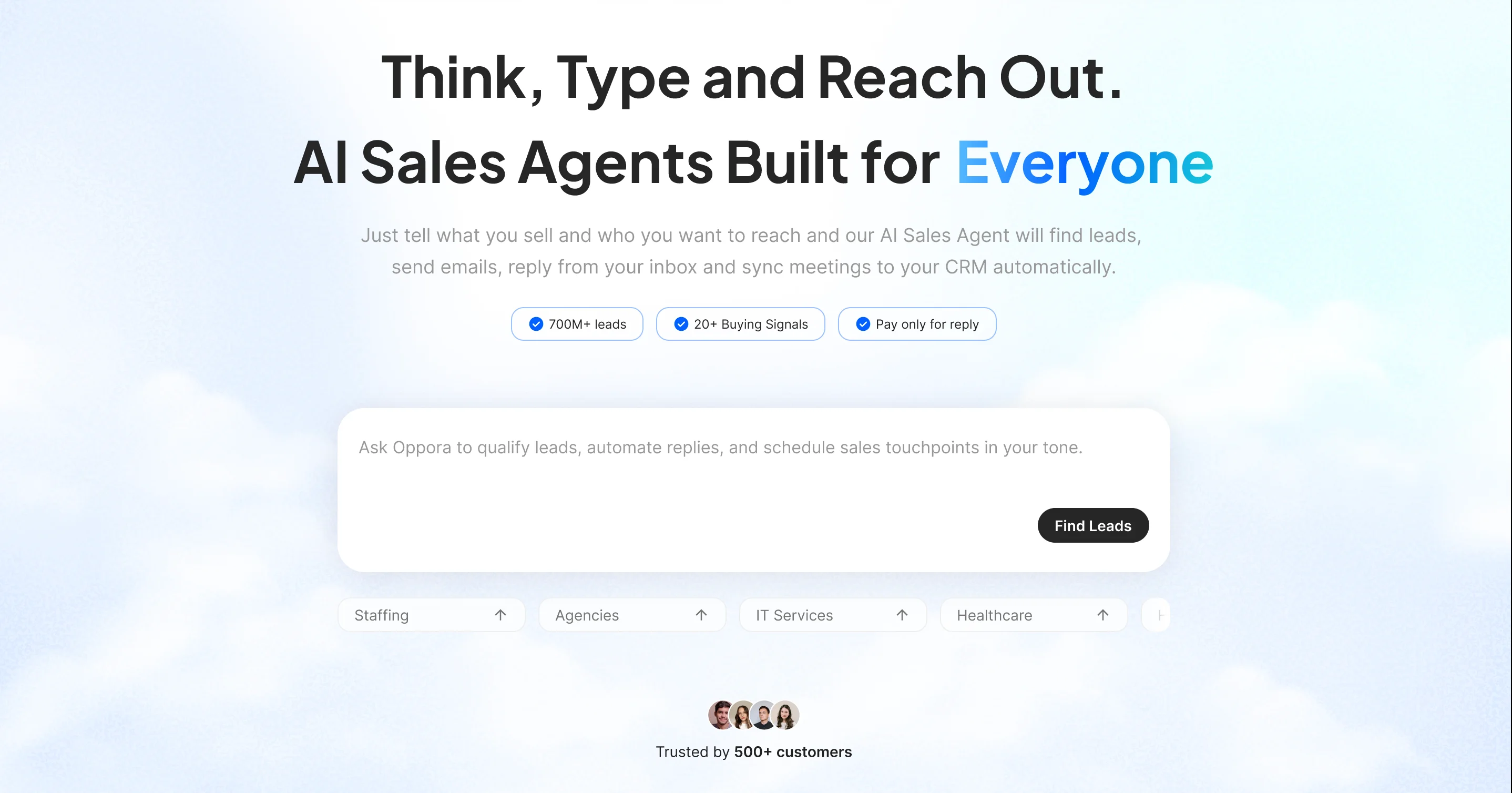
Knowing who to target is one thing. Actually finding those businesses at scale is where most agencies get stuck.
Manually searching Google Maps, checking each website, and hunting for the owner's email eats up entire days.
You end up with a short list and very little time left to sell.
Oppora AI removes that grind. It helps you find local businesses, spot the ones with website gaps, and reach the right person without switching tools.
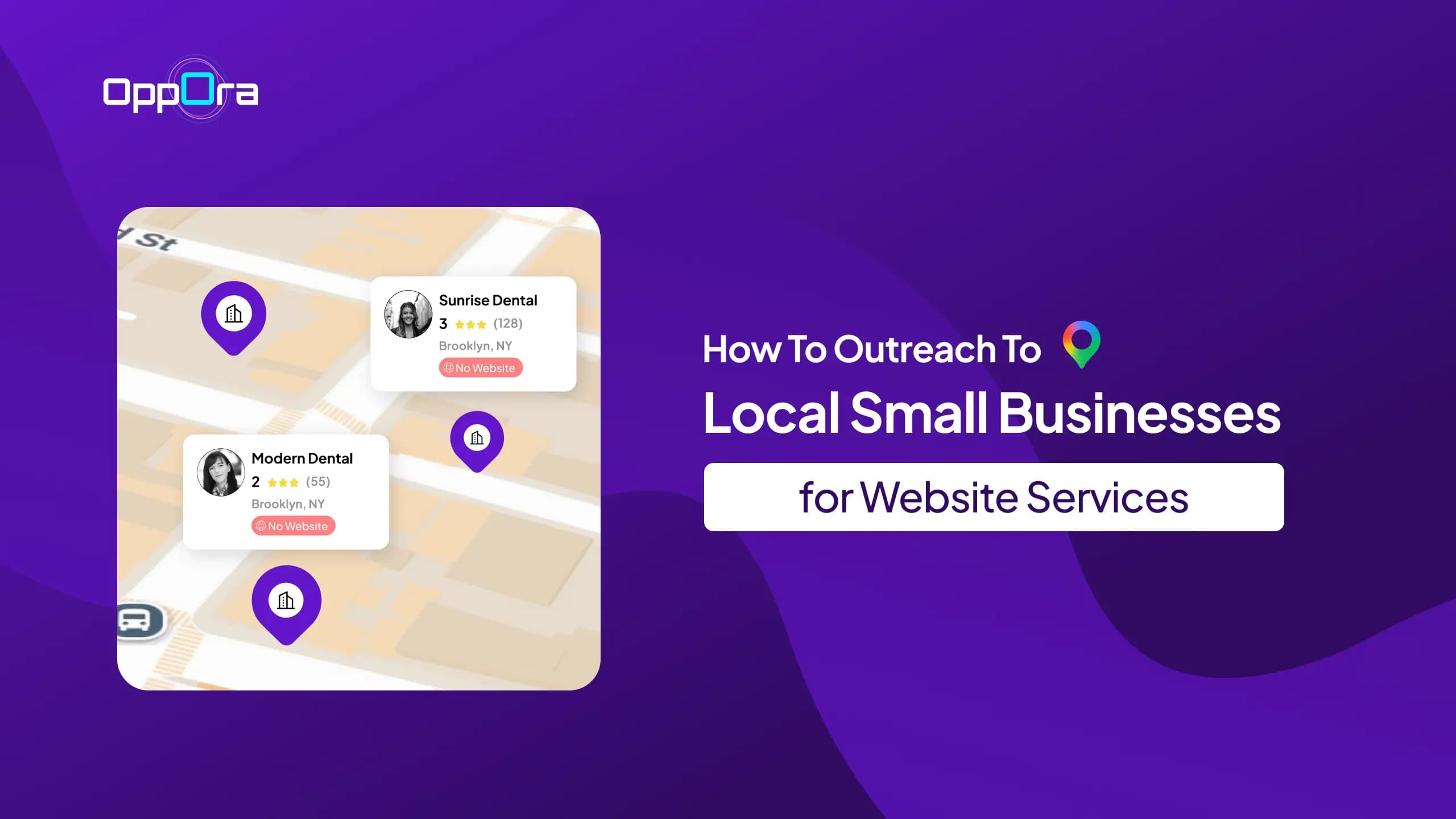
Discover Businesses Missing a Professional Website
Oppora AI pulls local business data straight from Google Maps.
You instantly see which businesses have no website listed and which ones are running on a weak or barely maintained page.
That gives you a ready-made list of prospects with a clear problem you can solve.
Instead of guessing who needs help, you start with businesses that already show the gap.
Search by City, Industry, or Business Category
You can narrow your search to exactly the market you serve.
Filter by:
- City, area, or specific neighborhood
- Industry or business category
- Business size and other qualifying signals
This keeps your list tight and relevant. A dentist in Austin and a restaurant in Miami need very different pitches, so it helps to build focused lists you can speak to properly.
Enrich Every Prospect With Verified Decision-Maker Contact Data
Finding the business is only half the job. You still need the person who signs off on a new website.
Oppora AI's waterfall enrichment finds verified emails, phone numbers, and LinkedIn profiles for the actual decision-maker.
Every contact is checked before it lands in your list, so your messages reach real inboxes instead of bouncing.
Next, you can turn those insights into outreach that feels personal.
Suggested Reading:
How to Find CEO Email Address in 2026 (28 Real Tactics)Personalize Outreach Using AI Business Insights
A generic pitch gets ignored, especially by a busy business owner.
Oppora AI gives you real context on each prospect before you write a word.
You can see what the business does, how it presents itself online, and where its website is falling short.
That means your first line can point to something specific and true about their business.
When an owner reads a message that clearly wasn't blasted to a hundred people, they actually respond.
Suggested Reading:
11 AI Email Personalization Tools for Hyper-Personalized OutreachLaunch Email, LinkedIn, and Phone Outreach From One Platform
Local business owners aren't all reachable the same way.
Some check email daily. Others live on LinkedIn or simply pick up the phone.
Bouncing between separate tools for each channel slows you down and scatters your data.
With Oppora AI, you run email, LinkedIn, and phone outreach from one place.
Inbox rotation protects your deliverability as your volume grows, so more messages actually land where they should.
Suggested Reading:
How to Execute Multichannel Outreach [+7 Strategies]Automate Follow-Ups While Keeping Every Message Personal
Most website deals aren't won on the first message.
Owners are busy, and your email often lands mid-shift or between customers. A single attempt rarely gets a fair read.
Oppora AI runs your follow-up sequence automatically across email and LinkedIn.
Each step still carries the personalization from your original message, so nothing feels like a robotic reminder chasing a reply.
Manage Replies and Sync Your CRM Automatically
Once replies start coming in, things get messy fast.
Oppora AI brings every response into a unified inbox.
Its AI reply handling sorts interested prospects from polite passes and can book meetings straight into your calendar.
Every lead is tagged by status and synced to your CRM, whether you use Pipedrive or HubSpot. You stay focused on conversations instead of manual data entry.
Bonus: Let Oppora AI Find New Local Businesses and Start Outreach Automatically Every Day
If you don't want to do this prospecting work yourself every single day, you can automate the whole thing with workflows.
Say you build a workflow that checks Google Maps daily and pulls out salons in London.
It finds the decision-makers, enriches their contact details, and adds them straight into your outreach sequence pitching website design services.
You set it up once and it runs on its own. Your pipeline keeps filling in the background while you focus on closing website projects.
Suggested Reading:
How to Automate Outreach Using Oppora AI Sales AgentsOutreach Strategies That Help You Win More Website Clients
Having the right list and the right tools puts you ahead of most agencies.
What you say next decides whether the deal happens. Local business owners get pitched constantly, and most of those messages sound identical.
These strategies help your outreach feel useful instead of just another sales attempt.
Research Every Business Before Reaching Out
Spend two minutes on each prospect before you write to them.
Open their website, check how it loads on mobile, and search their business on Google to see where they rank.
You'll quickly spot something concrete worth mentioning.
That small effort changes the entire tone of your message. It shows you looked at their business, not just their category.
Lead With a Website Problem They Already Have
Owners don't wake up wanting a new website. They want more customers walking in.
So open with a problem they can feel.
Their site takes eight seconds to load, their booking page breaks on mobile, or their competitor outranks them for the exact service they offer.
When the problem sounds familiar, they keep reading. That's the whole job of your first message.
Offer One Practical Improvement Instead of a Complete Redesign
A full redesign sounds expensive and disruptive to a small business owner.
Suggesting one focused fix feels far easier to say yes to. It lowers the risk and gets you into a real conversation instead of a silent rejection.
Keep your first offer small and specific, such as:
- Making their site load faster on mobile
- Fixing a broken contact or booking form
- Rebuilding one page that's meant to convert
Once they see results from that, bigger projects follow naturally.
Build Trust With Proof, Results, and Relevant Examples
Local owners trust evidence far more than promises.
Show a similar business you helped and what changed for them. A restaurant owner cares about another restaurant, not a SaaS case study.
Keep it short and grounded in outcomes. More calls, more bookings, more foot traffic beats any talk of frameworks or design trends.
Follow Up Consistently Without Becoming Annoying
Silence usually means they were busy, not uninterested.
Space your follow-ups out and add something new each time.
A quick observation, a small idea, or a relevant example works far better than asking if they saw your last email.
Three to four thoughtful touches will always outperform one message and a shrug.
Measure Outreach Performance and Improve Every Campaign
Your first campaign won't be your best one.
Track open rates, reply rates, and which subject lines actually get responses. Watch which business types convert and which ones ignore you completely.
Then double down on what works and cut what doesn't.
Common Website Outreach Mistakes to Avoid
Knowing what to do is only half the picture.
Most agencies lose website deals for reasons that have nothing to do with their skills. They send solid work but run outreach that quietly kills their chances.
These mistakes show up again and again, and every one of them is easy to fix.
Sending the Same Message to Every Business
Copy-pasting one template across your entire list feels efficient.
Owners spot it instantly. A message that could apply to any business tells them you know nothing about theirs, and it gets deleted in seconds.
You don't need a custom essay for each prospect. One specific line about their actual website is usually enough to change how the whole message reads.
Talking About Website Features Instead of Business Outcomes
Responsive layouts and clean code mean nothing to a plumber or a dentist.
They care about phones ringing and appointments getting booked. When you lead with technical language, you're speaking a language they never asked to learn.
Translate every feature into something they actually feel:
- Faster loading means fewer visitors leaving before they call
- Better mobile design means more bookings from phone searches
- Stronger local SEO means showing up before the competitor down the road
Same work, completely different conversation.
Contacting Low-Intent or Poor-Fit Prospects
Volume feels like progress until you look at your reply rate.
Blasting every business in a city means half your list has no reason to care.
Some already have a good website, others have no budget, and a few won't touch anything digital.
Focus your energy on businesses showing a real signal. A missing site, a broken page, or an ad campaign pointing somewhere weak is worth ten random names.
Stopping After the First Outreach Attempt
Most website deals never happen because the agency gave up too early.
One unanswered email doesn't mean no. It usually means the owner was mid-shift, buried in work, or simply forgot to reply.
Plan your sequence from the start so follow-ups are already built in. The people who stay in the conversation are the ones who eventually get the project.
Ignoring Campaign Performance and Reply Data
Sending outreach without checking your numbers is guesswork with extra steps.
Your replies tell you exactly what's working. Which subject lines get opened, which business types respond, and which messages get ignored completely.
Look at that data every week and adjust. Small changes to your targeting or your opening line can double your results without sending a single extra email.
Conclusion
Winning website clients isn't about sending more messages. It's about reaching the right local businesses with something worth reading.
Target owners who already have a visible website problem. Lead with that problem, keep your first offer small, and stay in the conversation long enough to earn the project.
The hard part is doing all of this at scale without losing hours to manual research.
That's where Oppora AI fits in. It finds local businesses with website gaps, gives you verified decision-maker contacts, and runs your outreach from one place.
Try it free and start filling your pipeline this week.
Frequently Asked Questions (FAQs)
How much should I charge a local small business for website services?
Most small business website projects fall between $1,000 and $5,000, depending on page count and features. Local owners are price-sensitive, so consider offering a lower-cost starter package or a monthly retainer covering hosting, updates, and small improvements.
Is cold email or cold calling better for local website outreach?
Email scales better and gives you room to explain the problem you spotted. Calling works well for follow-ups, since local owners often answer their own phones. Running both together usually beats relying on either channel alone.
What should I include in a website outreach subject line?
Keep it short, specific, and free of sales language. Mentioning their business name or a concrete issue works best, since it reads like a note from a real person rather than a mass campaign landing in their inbox.
How long does it take to close a local website client?
Expect two to four weeks from first contact to signed project. Small business owners move fast once convinced, but they often need a few touches, a quick call, and clear pricing before committing to any work.
Do I need a portfolio before starting website outreach?
You need proof, not a huge portfolio. Two or three relevant examples work fine, especially from similar local industries. If you're starting out, build a free or discounted site for one business and use those results.
Summarize with AI
Share