5 Effective Ways to Optimize Content for Better Audience Retention
Adam Hossain
Published July 15, 2026
4 min
Complete Agentic Email Outreach
AI agents find and enrich prospects, personalize emails, follow up, and handle replies with your meeting link.
Claim Your FREE Credits
Most people open a blog and decide quickly whether to keep reading or leave. That's just how reading works online now.
Attention is short, and there's a lot of content fighting for it.
If your content doesn't hold people, all that writing effort goes to waste, no matter how good the information actually is.
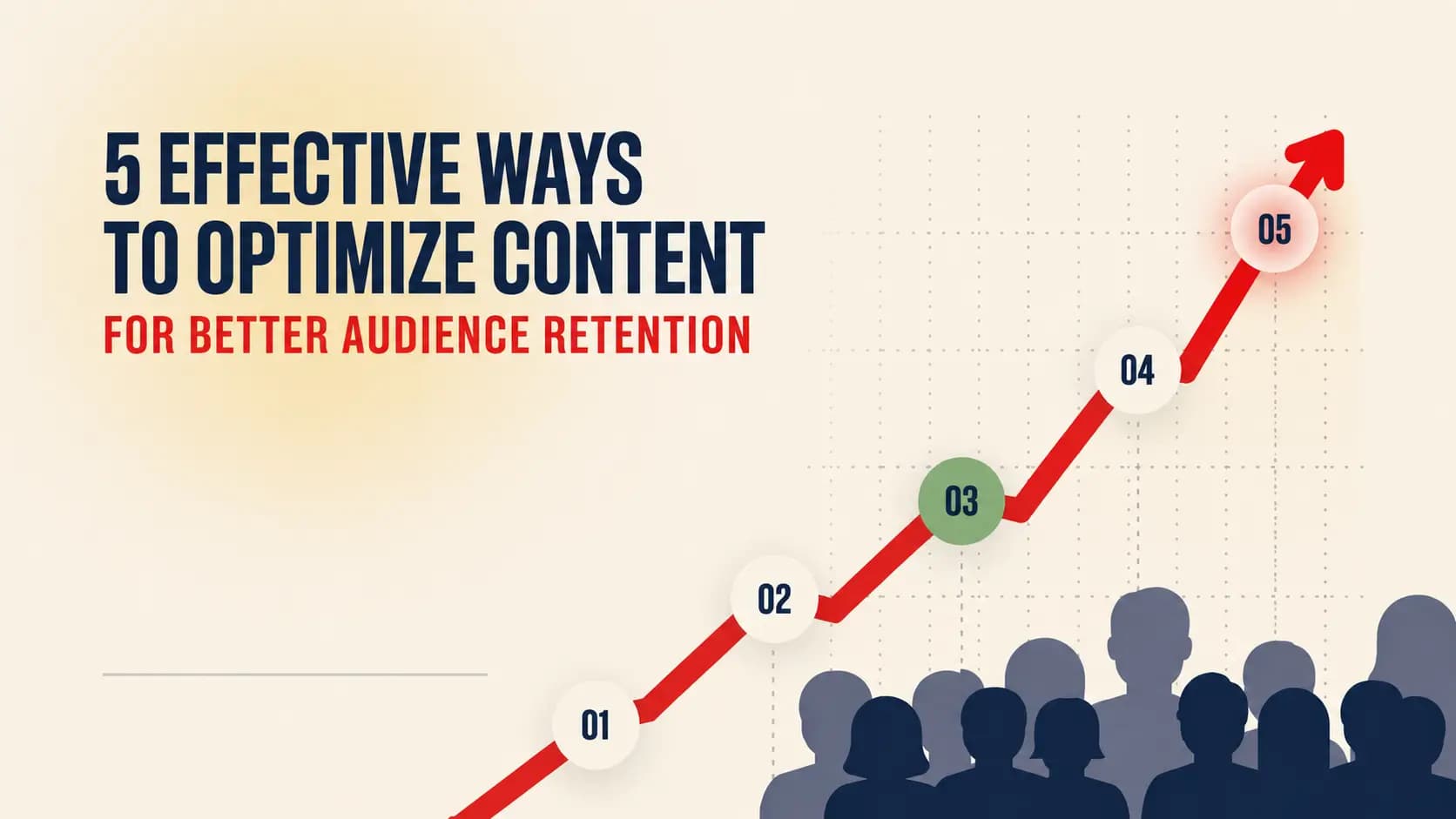
So the real challenge is not just writing good content. It is making people stay till the end. In this blog, we'll go through 5 effective ways you can optimize your content so readers actually stick around and read more content.
1) Structure Your Content for Easy Scanning
Many readers skim a blog before deciding whether to read it in full. They look for the required information there and then decide if they want to read it properly.
If your content lacks headings and paragraph breaks, many readers won't even attempt to read it.
Proper headings and subheadings fix this. They break up your content into concise sections so the reader immediately knows what’s next without reading everything.
They can easily jump to the part they actually need.
Short paragraphs count here too, a lot. Long paragraphs look heavy and tiring even by looking at them. So keep paragraphs short, almost 2-3 lines.
Bullet points help anywhere you’re listing things. They present information more clearly.
And don't forget whitespace. Some empty space between sections gives readers' eyes a break.
It makes the whole page feel less packed and more inviting to actually read through.
2) Write in a Simple and Readable Style
Complex words and long, twisted sentences don't make content look smart. They just make readers give up halfway.
Some writers still think that writing in tough language looks professional and signals quality content. But it is actually the opposite most of the time.
Research suggests that difficult-to-read content can increase the likelihood that visitors leave a webpage quickly.
To evaluate the complexity and readability of your text, you can use online tools like the Hemingway Editor, which helps you identify and fix readability issues.
Simple writing works better. The reader doesn't have to stop and think about what a sentence means.
Avoid jargon wherever you can. If a technical term is necessary, explain it in easy words.
Also, long sentences tire the reader before they even reach the point. Short sentences are easier to read and understand.
Write like you're explaining something to a friend, not writing an exam paper. That's the style that actually keeps people reading till the end.
3) Provide In-Depth Information That Fully Answers User Intent
One of the top reasons that people leave blogs is thin content. Users are always searching for information or solutions to their problems.
If you just write superficial content, the users will read it and will not be satisfied, and will leave immediately.
Good content is about the right topic and answers the real question the reader came in with.
So always cover a topic in full depth. Try to cover all the important aspects of a topic to satisfy the user's queries.
If you lack information on a certain point during writing, you can search for it on the internet.
If you are short on time, the alternative solution is to use a free paragraph generator.
This tool can help generate draft paragraphs on a specific topic.
You give it your rough idea, and it turns that into an insightful and well-structured paragraph, which you can review and edit further in your own words and style.
The point is, don’t leave any part of the topic thin or half explained. The reader should get a full, useful answer by the time they finish reading.
4) Add Real Examples and Data
Plain information alone sometimes doesn't stick with the reader.
But when you wrap that same information around a real example, it becomes much easier to remember and relate to.
Case studies work great here. Instead of just saying a method works, show an actual example.
For example, how a business or a student applied it and what result they got. Numbers and stats add more weight, too.
Real data makes your point look backed up instead of an opinion you are giving without any authority.
Personal experience helps a lot as well. If you've actually gone through something related to the topic, sharing that makes content feel more genuine.
Readers trust it more than something that sounds copy-pasted from everywhere else, and it's worth running your draft through a free plagiarism checker before publishing, just to be sure your original voice hasn't accidentally blended in phrases you've read elsewhere.
Small scenarios or a bit of storytelling also keep readers engaged. So add them instead of just listing facts one after another.
People remember stories more than plain lines of information. That's just how reading works.
5) Support Your Message with High-Quality Visual Content
Some things are just easier to show than to say.
Long paragraphs trying to explain steps or numbers can confuse the reader. But one clear image or chart makes the same point in seconds.
Images are especially helpful in how-to guides. The reader knows exactly where to click instead of guessing from written instructions.
Infographics are also great for data-heavy content. They make boring numbers easy to scan and understand at a glance.
Charts and diagrams are good for comparisons or processes. It is much clearer to show flow or a trend visually than to describe it line by line.
A simple, relevant image breaks up the text and gives the readers' eyes a break from constant reading.
Just make sure visuals are adding value, not just because they look attractive.
Random images that have nothing to do with the content just look like filler and don’t help the reader understand anything better.
Final Words
So these are 5 ways that actually help keep readers on your content longer.
Clear structure lets them scan easily, simple language keeps them from giving up midway, full answers stop them from leaving to search elsewhere, real examples make content stick, and good visuals explain things faster than plain text sometimes.
None of this is hard to apply either. It just needs a bit of extra effort while writing.
Try adding these to your next blog or article, and see the difference in how long people actually stay and read. Also, update your older blogs. It will work there too.
Summarize with AI
Share