B2B Email Segmentation Strategy: 10 Proven Ways to Segment Your List
Manasa Goli
Published April 17, 2026
9 min
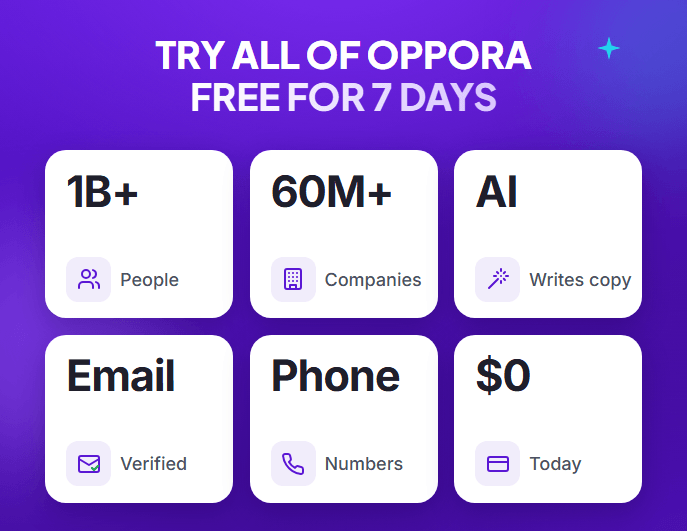
Complete Agentic Email Outreach
AI agents find and enrich prospects, personalize emails, follow up, and handle replies with your meeting link.
Start Your 7-Day Free Trial
Your emails are going out, but are they actually landing with the right people?
If your entire list gets the same message, chances are most of it gets ignored.
That’s where a strong email segmentation strategy changes everything.
Instead of blasting generic emails, you start sending messages that feel relevant, timely, and worth opening.
And in B2B, where every lead matters, that difference directly impacts replies, meetings, and revenue.
In this guide, you’ll learn:
- What email segmentation really means in B2B
- Why email segmentation strategies drive better conversions
- How to segment your email list step-by-step
- 10 proven B2B email segmentation strategies that actually work
Let’s start by understanding the basics.
What Is Email Segmentation?
If you’re sending the same email to everyone on your list, you’re not really doing email marketing — you’re just broadcasting.
Email segmentation strategy is the process of dividing your email list into smaller, meaningful groups based on specific criteria.
These groups can be based on things like:
- Industry or company type
- Job role or decision-making power
- Behavior (opens, clicks, replies)
- Stage in the buying journey
Instead of treating your list as one big audience, you start treating it like multiple micro-audiences.
That’s where things change.
When you segment your emails, your messaging becomes more relevant, your timing improves, and your chances of getting a response increase.
In simple terms, email segmentation strategies help you send the right message to the right person at the right time.
Why Email Segmentation Strategy Is Critical for B2B Growth
Now that you understand what segmentation is, let’s talk about why it matters so much in B2B.
In B2B, you’re not selling to just anyone.
You’re targeting specific decision-makers, in specific companies, with very specific problems.
If your messaging doesn’t reflect that, it gets ignored.
A strong email segmentation strategy helps you avoid that by making your outreach feel tailored instead of generic.
Here’s what that unlocks:
- Higher open and reply rates because emails feel relevant
- Better lead qualification since you’re targeting the right people
- Shorter sales cycles with more contextual conversations
- Stronger relationships built through personalized communication
More importantly, it helps you stop wasting time on leads that were never a good fit.
When you segment your email list properly, you focus your effort where it actually matters.
And that’s what drives real B2B growth — not volume, but precision.
Types of Email Segmentation Strategies in B2B
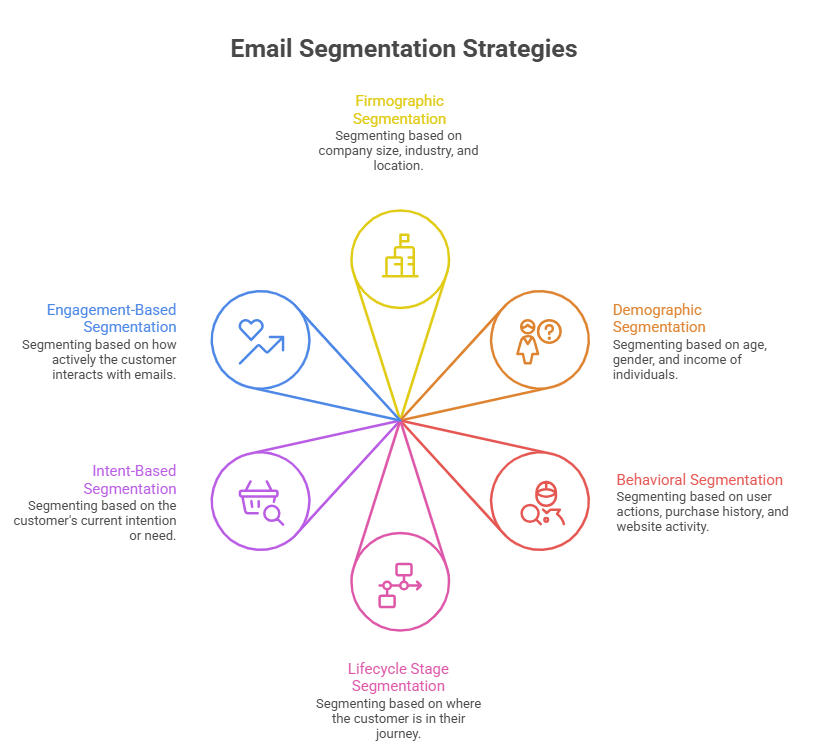
Now that you know why segmentation matters, the next step is understanding how you can actually segment your audience.
Because in B2B, not all segmentation approaches work the same way.
Some are basic and easy to implement, while others give you a serious competitive edge when done right.
Let’s break down the most effective email segmentation strategies you can use.
-> Firmographic Segmentation
This is usually where most B2B teams start.
You segment your list based on company-level data like:
- Industry (SaaS, healthcare, finance, etc.)
- Company size (startup vs enterprise)
- Revenue or growth stage
- Location or region
This helps you align your messaging with the business context your prospect operates in.
Because what works for a startup won’t resonate with an enterprise team.
-> Demographic Segmentation
Here, you focus on the individual, not just the company.
You segment based on:
- Job title (CEO, Marketing Head, SDR)
- Department (sales, marketing, operations)
- Seniority level
This matters because each role cares about different outcomes.
A founder looks for growth, while a sales manager focuses on pipeline and conversions.
-> Behavioral Segmentation
This is where your email segmentation strategy starts getting smarter.
Instead of guessing, you segment based on actual actions:
- Email opens and clicks
- Replies or no responses
- Website visits or product interactions
This tells you who is interested, who is warm, and who needs nurturing.
And that changes how you follow up.
-> Lifecycle Stage Segmentation
Not every lead is ready to buy today.
Some are just discovering you, while others are already evaluating solutions.
You can segment based on:
- New leads
- Engaged prospects
- Qualified opportunities
- Existing customers
This helps you send the right message based on where they are in the journey.
-> Intent-Based Segmentation
This is one of the most powerful b2b email segmentation strategies if you get it right.
You group prospects based on buying signals like:
- Searching for solutions in your category
- Visiting pricing or comparison pages
- Engaging with competitor-related content
These leads are much closer to making a decision.
So your messaging can be more direct and conversion-focused.
-> Engagement-Based Segmentation
Over time, your list naturally splits into active and inactive users.
Segmenting based on engagement helps you:
- Re-engage cold leads
- Double down on active prospects
- Clean your list for better deliverability
It also prevents you from sending the same emails to people who clearly behave differently.
When you combine these email marketing segmentation strategies, you move from generic outreach to highly targeted communication.
And that’s when your emails start feeling less like campaigns and more like conversations.
How to Segment Your Email List (Step-by-Step)
Now that you know the different types of segmentation, the next question is simple — how do you actually do it?
Because knowing how to segment your email list is one thing, but applying it in a structured way is what makes it work.
Let’s break it down step by step.
Step 1: Define Your Goal First
Before you start segmenting, get clear on what you want to achieve.
Are you trying to:
- Increase reply rates?
- Book more meetings?
- Nurture cold leads?
Your goal decides how you should segment your email list.
Without this clarity, segmentation becomes random and ineffective.
Step 2: Identify the Right Data Points
Once your goal is clear, decide what data actually matters.
This is where most people overcomplicate things.
Start simple and focus on high-impact attributes like:
- Industry and company size
- Job role or decision-maker level
- Engagement data (opens, clicks, replies)
You don’t need perfect data — you need useful data.
Step 3: Group Your Audience into Segments
Now comes the actual segmentation.
Based on your data, start creating clear audience buckets.
For example:
- SaaS founders vs agency owners
- Warm leads vs cold leads
- Decision-makers vs influencers
The key here is clarity.
Each segment should feel distinct enough that it needs a different message.
Step 4: Align Messaging to Each Segment
This is where your email segmentation strategy starts showing results.
Instead of one generic email, you tailor messaging for each group.
That means:
- Different pain points
- Different value propositions
- Different CTAs
When you do this right, your emails stop feeling like mass outreach.
They start feeling personal.
Step 5: Set Up Triggers and Automation
Segmentation is not a one-time task.
People move between segments based on their behavior.
That’s why you need simple automation rules like:
- Move leads to “engaged” if they click or reply
- Shift cold leads into a re-engagement sequence
- Trigger follow-ups based on specific actions
This keeps your segmentation dynamic instead of static.
Suggested Reading:
Top Triggered Email ExamplesStep 6: Test, Refine, and Optimize
No segmentation strategy is perfect from day one.
You need to keep improving it.
Track metrics like:
- Open rates
- Reply rates
- Conversion rates
Then refine your segments and messaging based on what’s working.
When you follow this process, how to segment an email list becomes much clearer.
You’re not just organizing contacts — you’re building a system that continuously improves your outreach results.
10 Proven B2B Email Segmentation Strategies That Work
Now that you know how to segment your email list, let’s move into what actually works in real B2B campaigns.
Because theory is helpful, but results come from applying the right email segmentation strategies in the right context.
These are proven approaches you can start using immediately.
1. Segment by Industry
Different industries have different problems, budgets, and priorities.
If you send the same message to a SaaS company and a healthcare business, it won’t land the same way.
Create segments like:
- SaaS
- Agencies
- IT services
- Healthcare
Then tailor your messaging to each industry’s specific challenges.
2. Segment by Job Role
Not everyone in a company thinks the same way.
A founder, a marketer, and a sales head all care about different outcomes.
Group your list by roles like:
- Founders / CEOs
- Marketing leaders
- Sales teams
This lets you align your messaging with what each role actually values.
3. Segment by Company Size
A startup and an enterprise company don’t buy the same way.
Segment based on:
- Small teams (1–50 employees)
- Mid-sized companies
- Enterprises
Your messaging, pricing context, and use cases should reflect their scale.
4. Segment by Lead Source
Where a lead comes from tells you a lot about their intent.
Someone from a cold list behaves very differently from someone who signed up or downloaded something.
Segment based on:
- Cold outbound leads
- Inbound leads
- Event or webinar attendees
This helps you adjust how aggressive or nurturing your outreach should be.
5. Segment by Engagement Level
Not all leads are equally active.
Some open every email, while others haven’t engaged once.
Create segments like:
- Highly engaged (opens/clicks/replies)
- Moderately engaged
- Cold or inactive
Then adjust your follow-ups accordingly instead of treating everyone the same.
6. Segment by Buying Stage
Timing matters more than messaging.
If someone is just exploring, a hard pitch won’t work.
Segment based on stages like:
- Awareness
- Consideration
- Decision
This helps you send the right message at the right moment.
7. Segment by Intent Signals
Some leads show clear buying intent — you just need to notice it.
This includes:
- Visiting pricing pages
- Checking competitor comparisons
- Repeated website visits
These are high-priority leads, and your outreach should reflect that urgency.
8. Segment by Pain Points
Instead of grouping people by data, group them by problems.
For example:
- Struggling with lead generation
- Low email reply rates
- Poor deliverability
When you segment this way, your emails feel instantly relevant.
9. Segment by Geography or Market
Location can impact messaging more than you think.
Different regions have different:
- Buying behaviors
- Compliance requirements
- Market maturity
Even simple segmentation like region or country can improve relevance.
10. Segment by Tech Stack or Tools Used
This is a highly underrated b2b email segmentation strategy.
If you know what tools your prospects use, you can:
- Position your solution better
- Highlight integrations
- Call out inefficiencies in their current stack
For example, messaging someone using manual tools will be very different from someone already using automation platforms.
When you start combining these b2b email segmentation strategies, your outreach becomes far more precise.
You’re no longer guessing what might work — you’re speaking directly to what matters for each segment.
And that’s what turns emails into conversations, and conversations into pipelines.
How Oppora Helps You Build Smarter Email Segmentation
By now, you understand that segmentation is not just about dividing lists — it’s about building a system that continuously improves your outreach.
But doing this manually can get messy very quickly.
You’re dealing with data collection, enrichment, segmentation, personalization, and follow-ups — all at once.
This is where a system like Oppora changes how you approach your email segmentation strategy.
Instead of managing everything manually, you can build a workflow where segmentation happens automatically in the background.
Here’s how that looks in practice:
- Automatically enriched lead data: Oppora pulls verified contacts and enriches them with relevant attributes, so you already have the foundation needed to segment your email list properly.
- Behavior-driven segmentation: As leads interact with your emails, they naturally move between segments based on engagement, intent, and responses.
- AI-powered personalization at scale: Each segment gets messaging tailored to its context without you rewriting emails every time.
- Multi-channel segmentation flows: You’re not limited to email — you can combine LinkedIn and email outreach into one unified segmentation strategy.
- Self-running workflows: Once you define your segments and logic, Oppora’s AI agents keep executing the process without constant manual input.
What this really means is simple.
You’re no longer figuring out how to segment your email list every time you run a campaign.
You build the system once, and it keeps improving your segmentation and outreach over time.
Conclusion
If your emails feel generic, your results will reflect that.
That’s the reality of B2B outreach today.
A strong email segmentation strategy helps you move from mass messaging to meaningful conversations.
Instead of guessing what might work, you start speaking directly to the right people, with the right context, at the right time.
And that’s what drives:
- Better engagement
- Higher reply rates
- More qualified conversations
- Faster pipeline growth
The key is to start simple.
You don’t need perfect segmentation from day one.
Focus on a few high-impact segments, test what works, and refine as you go.
Because once you understand how to segment your email list effectively, your entire outbound strategy becomes sharper, more efficient, and far more predictable.
Frequently Asked Questions
How many segments should you create?
Start with 3–5 segments that clearly differ in audience type or intent, then expand as needed.
How often should you update segments?
Review your segments every few weeks, or keep them dynamic using behavior-based triggers.
Can small lists benefit from segmentation?
Yes, even basic segmentation makes your emails feel more relevant and improves response rates.
Should you segment before writing emails?
Yes, because your segment decides what message will actually resonate.
What’s the biggest segmentation mistake?
Creating too many segments without changing the messaging for each one.
Summarize with AI
Share