11 B2B Outbound Marketing Strategies for High-Intent Leads
Adam Hossain
Published May 22, 2026
13 min
Complete Agentic Email Outreach
AI agents find and enrich prospects, personalize emails, follow up, handle replies, and book meetings automatically.
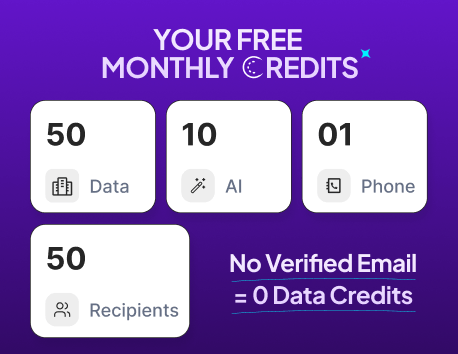
Claim Your FREE Credits
Most B2B outbound campaigns fail because teams still rely on outdated tactics like generic cold emails, poor targeting, and high-volume outreach.
Buyers are overloaded with messages, which means getting replies now depends on timing, relevance, personalization, and operational consistency.
Modern outbound marketing works differently.
Successful teams combine intent signals, multichannel engagement, automation, deliverability management, and structured follow-ups to generate better conversations and more qualified pipeline opportunities.
In this guide, you’ll learn:
- Why traditional outbound strategies no longer work
- 11 modern B2B outbound marketing strategies for high-intent leads
- Common outbound mistakes that reduce performance
- How to measure if your outbound strategy is actually working
Why B2B Outbound Marketing Strategies Have Changed
B2B outbound marketing strategies have changed because buyers no longer respond to mass outreach the way they once did.
Most decision-makers already receive hundreds of emails, LinkedIn messages, and sales calls every week.
That means outbound success now depends on relevance, timing, personalization, and operational consistency instead of pure sending volume.
Suggested Reading:
9 SDR Outbound Strategies That Actually Book Meetings (Not Just Send Emails)Buyers Ignore Generic Outreach Faster Than Ever
Generic cold emails are easier to spot than ever. Buyers immediately ignore messages that feel copied, overly sales-focused, or disconnected from their business priorities.
Modern outbound works better when your messaging reflects real company context, recent activity, hiring trends, operational challenges, or industry-specific pain points.
Even small personalization signals can improve reply quality because prospects feel the outreach was actually written for them.
Suggested Reading:
10 B2B Outbound Lead Generation Strategies That Actually WorkOutbound Is Now a Multichannel Process
Email alone is rarely enough to maintain visibility throughout the buying journey.
Most successful outbound teams now combine multiple touchpoints together instead of relying on a single communication channel.
A modern outbound workflow often includes:
- Personalized cold emails
- LinkedIn profile engagement
- Connection requests and follow-ups
- Strategic phone outreach
- Retargeting ads for target accounts
This creates familiarity over time and increases the chances of starting meaningful conversations.
Suggested Reading:
10 Best LinkedIn Connection Automation Tool [Free + Paid Options]Better Data Creates Better Outbound Results
Poor contact data quietly damages outbound performance. Invalid emails, outdated job titles, and inaccurate company information reduce deliverability while wasting sales effort.
Modern teams prioritize verified contacts, enriched company profiles, and updated buying signals before launching campaigns.
Better targeting usually creates stronger engagement because outreach reaches the right decision-makers at the right time.
Suggested Reading:
13 B2B Data Prospecting Tactics to Find & Convert Better LeadsAutomation Helps Teams Scale Faster
As outbound operations grow, manual workflows become difficult to manage consistently.
Teams now use automation to handle repetitive tasks like prospect research, lead enrichment, follow-ups, and reply organization.
This allows sales teams to spend less time managing systems and more time focusing on conversations, qualification, and pipeline generation.
11 B2B Outbound Marketing Strategies for High-Intent Leads
Modern B2B outbound marketing strategies focus less on mass outreach and more on targeting buyers with stronger intent and higher conversion potential.
Companies generating better outbound results now combine personalization, automation, multichannel engagement, deliverability management, and operational timing together.
The strategies below will help you build a more scalable outbound system that improves reply quality, meeting generation, and long-term pipeline performance without relying on high-volume prospecting alone.
1. Use Intent-Based Prospecting Instead of Static Lead Lists
Traditional lead lists often become outdated quickly because company priorities change constantly.
Modern outbound teams now focus more on intent-based prospecting to improve timing and increase the chances of starting relevant conversations.
Instead of targeting random companies, they prioritize businesses already showing signs of activity like:
- Hiring for specific roles
- Recent funding announcements
- Market expansion
- Technology adoption changes
- Leadership movement
These signals usually indicate operational change, which often creates buying opportunities and stronger outbound engagement.
2. Build Personalized Cold Email Campaigns
Cold outreach performs better when prospects feel the message was written specifically for them. Buyers ignore emails that sound overly templated or filled with generic sales language.
Strong personalization does not require writing every email from scratch.
The goal is to make your outreach relevant by using company context, business priorities, or visible operational challenges.
Simple personalization areas may include:
- Industry-specific pain points
- Recent company announcements
- Team growth patterns
- Relevant use cases
- Role-specific challenges
Keep messaging concise, conversational, and focused on relevance instead of long sales pitches.
Suggested Reading:
How to Automate a Cold Email Drip Campaign (Step-by-Step)3. Combine LinkedIn Outreach With Email Sequences
Most buyers rarely respond after a single touchpoint. That is why modern outbound strategies combine LinkedIn engagement with structured email outreach to create familiarity over time.
For example, a prospect may ignore your first email but later recognize your name after viewing your LinkedIn profile or receiving a connection request.
That additional visibility often improves response rates naturally.
A multichannel outbound process may include:
- Cold email outreach
- LinkedIn profile visits
- Connection requests
- Follow-up messages
- Strategic engagement with prospect content
The goal is not to overwhelm prospects. It is to stay visible across channels while maintaining consistent and relevant communication.
Suggested Reading:
How to Combine LinkedIn Outreach with Email Campaigns4. Launch Account-Based Outbound Campaigns
High-value outbound campaigns usually perform better when teams focus on a smaller group of qualified accounts instead of mass prospecting thousands of companies.
Account-based outbound allows teams to personalize messaging at the company level while targeting multiple stakeholders involved in the buying process.
This creates more relevant conversations and improves overall pipeline quality.
Instead of sending the same outreach to everyone, teams customize messaging based on company goals, operational priorities, team structure, and industry-specific challenges.
This approach typically produces fewer but significantly higher-quality outbound opportunities.
5. Create Structured Multi-Step Follow-Up Sequences
Many outbound campaigns fail because teams stop outreach too early. In most cases, prospects do not respond after the first message simply because they are busy, distracted, or not ready to engage yet.
Structured follow-up sequences help maintain visibility without making outreach feel repetitive.
Instead of sending the same message repeatedly, each follow-up should introduce a slightly different angle or additional context.
A strong sequence may include:
- A short value-focused follow-up
- A relevant use case or insight
- A LinkedIn touchpoint
- A simple check-in message
- A soft call-to-action
Consistency matters more than aggressive persistence. Well-timed follow-ups often generate replies weeks after the initial outreach.
6. Use Retargeting to Support Outbound Campaigns
Outbound campaigns become stronger when prospects recognize your brand before responding.
Retargeting helps reinforce visibility after someone interacts with your emails, website, or LinkedIn content.
Even if prospects do not reply immediately, repeated exposure creates familiarity over time. This makes future outreach feel less cold and improves trust during later conversations.
Retargeting works especially well for:
- High-value account lists
- Long sales cycles
- Competitive B2B markets
- Multi-stakeholder buying processes
Instead of relying only on direct outreach, retargeting keeps your company visible while prospects continue evaluating solutions internally.
7. Use AI to Manage Replies and Prioritize Leads
As outbound volume increases, manually organizing replies becomes difficult.
Teams often waste time sorting uninterested responses while high-intent prospects wait too long for follow-up.
AI helps outbound teams categorize conversations faster by identifying positive replies, objections, meeting interest, and follow-up opportunities automatically.
Modern outbound workflows now use AI to:
- Prioritize warm leads
- Route conversations to the right team member
- Detect buying intent signals
- Organize inbox workflows
- Reduce repetitive manual reply handling
This improves response speed while helping teams focus more attention on qualified opportunities.
8. Improve Deliverability Before Scaling Outreach
Scaling outbound without proper deliverability infrastructure usually creates long-term performance problems. Even strong messaging fails when emails consistently land in spam folders.
Before increasing outreach volume, teams should focus on building healthy sending systems first.
This includes proper domain setup, inbox warm-up, authentication configuration, and controlled sending behavior.
Key deliverability areas include:
- SPF, DKIM, and DMARC setup
- Inbox warming
- Sending consistency
- Domain reputation monitoring
- Gradual volume scaling
Strong deliverability protects outbound performance and helps maintain sustainable campaign growth over time.
9. Automate Prospect Research and Lead Enrichment
Manual prospect research slows outbound teams down quickly.
Repeating the same tasks across company research, contact verification, and lead qualification also increases operational inconsistency over time.
Modern outbound teams now automate large parts of the research process to improve speed without sacrificing lead quality.
This usually includes:
- finding companies that match ICP filters
- enriching contacts with verified data
- identifying buying signals
- scoring prospects based on relevance
- syncing leads into outbound workflows automatically
Automation helps teams spend less time building lists and more time creating meaningful outbound conversations.
It also improves targeting accuracy because enriched data gives sales teams better context before outreach begins.
10. Use Direct Mail for High-Value Decision-Makers
Most decision-makers ignore crowded inboxes throughout the day. That is why direct mail has become useful again for high-value outbound campaigns.
Instead of relying only on email sequences, some teams combine physical outreach with digital engagement to create stronger visibility.
This does not mean sending generic company merchandise to hundreds of prospects. Effective direct mail works best when it feels relevant and intentional.
For example, teams often use:
- personalized gifts connected to prospect interests
- handwritten notes
- executive mail packages
- event-based outreach kits
When combined with LinkedIn engagement and email follow-ups, direct mail can help outbound teams start conversations with difficult-to-reach stakeholders.
Suggested Reading:
How to Find CEO Email Address in 2026 (28 Real Tactics)11. Build Outbound Infrastructure That Can Scale Safely
Many outbound campaigns fail after scaling too aggressively. Sending volume increases quickly, but deliverability, inbox health, and workflow coordination often break underneath the surface.
Strong outbound infrastructure helps teams scale more safely while maintaining campaign performance.
This usually includes proper inbox rotation, domain warm-up, sending controls, reply management systems, and workflow automation.
Without operational infrastructure, even strong messaging can lose effectiveness because emails stop reaching primary inboxes consistently.
Sustainable outbound growth depends as much on infrastructure stability as it does on personalization and targeting.
How Oppora Helps Teams Build High-Intent Outbound Systems
As outbound campaigns become increasingly complex, many teams struggle with disconnected workflows, scattered tools, and slow prospect management processes that reduce execution speed and consistency.
This often leads to fragmented outreach and missed high-intent opportunities.
That is where connected outbound systems become essential.
Oppora is an AI outbound sales agent that helps businesses find leads, automate outreach, handle replies, and book meetings without manual work.
It brings prospecting, personalization, outreach, and deliverability into one unified workflow, helping teams scale campaigns more efficiently while improving response quality.
Finding Better Outbound Opportunities With Buying Signals
Instead of relying only on static lead lists, Oppora helps teams identify companies already showing signs of potential buying intent.
This includes signals like:
- hiring activity
- funding announcements
- expansion plans
- leadership changes
- operational growth patterns
These signals help outbound teams prioritize accounts that are more likely to engage instead of prospecting completely cold audiences.
Connecting Prospecting, Enrichment, and Outreach in One Workflow
Managing prospecting across multiple tools often creates delays, duplicated work, and inconsistent outbound execution.
Oppora helps connect different outbound activities into one workflow, including lead sourcing, contact enrichment, verification, personalization, and campaign management.
This reduces operational friction while helping teams move faster from research to outreach.
Instead of manually switching between disconnected systems, teams can manage outbound workflows in a more centralized way.
Simplifying Reply Handling and Meeting Coordination
As outbound volume increases, reply management becomes harder to organize manually. Missed follow-ups and delayed responses can quickly reduce conversion opportunities.
Oppora helps teams organize conversations, prioritize interested prospects, and streamline meeting coordination from a single system.
This makes it easier for outbound teams to respond faster, maintain workflow consistency, and manage larger outbound operations without creating unnecessary operational overhead.
Common Mistakes That Hurt B2B Outbound Marketing Strategies
Many b2b outbound marketing strategies fail because teams focus too heavily on volume while ignoring targeting quality, deliverability health, and operational consistency.
Modern outbound success depends more on relevance and timing than aggressive sending volume alone.
Targeting Broad Audiences Instead of Qualified Buyers
One of the biggest outbound mistakes is targeting everyone instead of focusing on qualified buyers.
Broad prospecting usually creates weak engagement because messaging becomes too generic to feel relevant.
Strong outbound targeting works better when teams narrow their focus based on industry, company size, operational pain points, and decision-maker responsibilities.
Smaller, more relevant prospect lists often outperform larger unqualified databases.
Sending Generic Outreach That Feels Automated
Most buyers can recognize automated outreach immediately. Generic cold emails that lack context usually get ignored within seconds.
Effective outbound personalization does not require writing completely custom emails for every prospect.
Instead, teams should use relevant company insights, buying signals, and business context to make outreach feel more intentional.
Even small personalization improvements can increase reply quality significantly.
Scaling Outreach Before Fixing Deliverability
Many teams increase outbound volume before building proper sending infrastructure. This often damages domain reputation and reduces inbox placement rates over time.
Before scaling email outreach, teams should focus on:
- inbox warm-up
- authentication setup
- sending consistency
- domain reputation monitoring
- bounce management
Without strong outbound deliverability, even high-quality campaigns struggle to generate results consistently.
Ignoring Follow-Up Consistency and Reply Speed
Outbound conversion opportunities are often lost during follow-up management. Some teams stop too early, while others respond too slowly after prospects show interest.
A structured outbound follow-up strategy helps maintain engagement without overwhelming prospects.
Faster reply management also improves momentum because interested buyers usually evaluate multiple vendors within short decision windows.
How to Measure If Your Outbound Marketing Strategy Is Actually Working
Many outbound teams focus on vanity metrics that look impressive in dashboards but do not create real pipeline growth.
Strong outbound campaign performance should be measured based on conversation quality, sales opportunities, and long-term scalability.
The goal is not simply generating more activity. It is generating better business outcomes.
Focus on Positive Replies Instead of Open Rates
Open rates have become less reliable because privacy updates and automated inbox behavior often distort reporting accuracy.
Instead of treating opens as a primary KPI, outbound teams should focus on positive replies, qualified conversations, and buying intent signals.
These metrics provide a clearer picture of whether your messaging, targeting, and timing are actually working.
A campaign with lower opens but stronger reply quality usually performs better than one generating inflated engagement numbers without real interest.
Measure Meeting Quality Instead of Meeting Volume
High meeting volume does not always indicate strong outbound performance. Many meetings fail because prospects are poorly qualified or lack decision-making authority.
Modern outbound teams now evaluate:
- decision-maker relevance
- ICP alignment
- pipeline conversion potential
- sales progression quality
This helps teams identify whether outbound campaigns are creating real revenue opportunities instead of filling calendars with low-intent conversations.
Monitor Deliverability as Campaigns Scale
As outbound campaigns grow, deliverability becomes one of the most important performance indicators.
Poor inbox placement can quietly reduce campaign effectiveness even when messaging quality remains strong.
Teams should consistently monitor domain reputation, bounce rates, spam placement, and inbox health while scaling outbound operations.
Sustainable outbound growth depends on maintaining both engagement quality and sending infrastructure performance together.
Conclusion
Modern outbound marketing succeeds when teams stop treating outreach like a volume game and start focusing on relevance, timing, personalization, and operational consistency.
The strongest b2b outbound marketing strategies combine intent-driven targeting, multichannel engagement, deliverability management, and scalable workflows to create better conversations and stronger pipeline growth.
As outbound operations become more complex, managing prospecting, enrichment, outreach, follow-ups, and reply handling across disconnected tools also becomes harder to scale efficiently.
That is why many teams now use platforms like Oppora to connect outbound workflows, automate repetitive processes, and build more scalable high-intent outbound systems without sacrificing personalization or campaign quality.
Frequently Asked Questions (FAQs)
How long does it usually take to see results from B2B outbound marketing?
Most outbound campaigns need a few weeks before generating consistent results. Factors like targeting quality, deliverability, follow-up consistency, and offer positioning heavily influence performance. Teams that continuously optimize messaging and prospect selection usually see stronger long-term outbound pipeline growth.
What is the ideal outbound channel mix for B2B companies?
There is no universal outbound channel mix for every company. Most modern teams combine cold email, LinkedIn outreach, follow-up calls, retargeting, and sometimes direct mail. The right combination depends on your audience, deal size, sales cycle length, and buyer behavior.
Should small B2B companies invest in outbound marketing early?
Yes, outbound can help small B2B companies generate predictable pipeline faster, especially before strong inbound traffic exists. However, smaller teams should focus on highly targeted outreach and operational efficiency instead of trying to scale large outbound campaigns too quickly.
How often should outbound messaging be updated or refreshed?
Outbound messaging should be reviewed regularly based on reply quality, market changes, and campaign performance. Many teams refresh messaging every few months to avoid repetitive positioning, improve personalization, and adapt to changing buyer priorities or competitive trends.
What tools are important for managing outbound campaigns effectively?
Most outbound teams use tools for prospecting, enrichment, email sequencing, deliverability monitoring, analytics, and reply management. Platforms like Oppora help combine multiple outbound workflows into one system, making it easier to manage scalable outbound operations more efficiently.
Summarize with AI
Share