AI SDR vs Human SDR: Key Differences, Pros, Cons & Which Is Better?
Manasa Goli
Published June 27, 2026
12 min
Complete Agentic Email Outreach
AI agents find and enrich prospects, personalize emails, follow up, handle replies, and book meetings automatically.
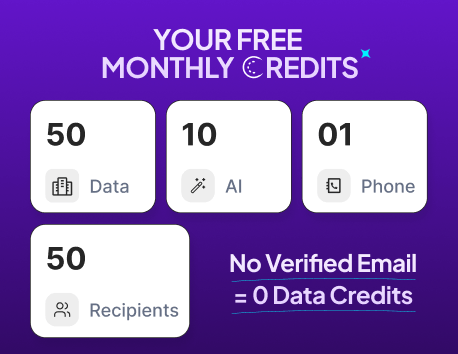
Claim Your FREE Credits
Hiring SDRs has become more challenging than ever.
Businesses need teams that can find prospects, personalize outreach, follow up consistently, and book meetings at scale. At the same time, AI is transforming outbound sales.
Modern AI SDR tools can research prospects, automate outreach, and qualify leads, raising an important question: Can AI replace human SDRs, or do you need both?
The answer isn't that simple.
While AI delivers speed, automation, and scalability, human SDRs excel at building relationships, understanding context, and handling meaningful sales conversations.
In this guide, we'll explore the AI SDR vs Human SDR debate, including:
- What AI SDRs and Human SDRs do
- Key AI SDR vs Human SDR differences
- The pros and cons of each approach
- Which option fits different business needs
- Why many companies combine AI and human SDRs for better results
What Is an AI SDR?
Now that you know why businesses are comparing AI and human SDRs, let's start with the first half of the equation.
An AI SDR (Artificial Intelligence Sales Development Representative) is software that automates repetitive outbound sales tasks. Instead of manually researching prospects, writing emails, and following up, an AI SDR handles these activities automatically.
Depending on the platform, it can find leads, enrich contact data, personalize outreach, send follow-ups, qualify responses, and even book meetings. This helps businesses scale outbound sales while reducing the manual workload on their teams.
Rather than replacing salespeople, an AI SDR is designed to take care of repetitive tasks so your team can focus on building relationships and closing deals.
Pros of Using an AI SDR
Now that you've seen the key differences between AI and human SDRs, it's easier to understand why more businesses are adopting AI for outbound sales.
Integrating machine learning into go-to-market workflows stands among the most prominent digital transformation projects examples modern companies use to stay competitive.
While AI can't replace every aspect of the sales process, it excels at handling repetitive tasks, improving efficiency, and helping teams scale their outreach. Here are some of the biggest advantages of using an AI SDR.
1. Handles Repetitive Tasks Automatically
Many outbound sales activities, such as prospect research, email writing, follow-ups, and CRM updates, are repetitive and time-consuming.
An AI SDR automates these tasks, allowing your sales team to spend more time talking to qualified prospects instead of managing administrative work.
2. Scales Outreach Faster
As your business grows, reaching more prospects usually requires hiring more SDRs.
An AI SDR can engage thousands of prospects simultaneously, making it much easier to scale outbound campaigns without significantly increasing your team size.
3. Works Around the Clock
Unlike human SDRs, AI doesn't stop at the end of the workday.
It can continue researching prospects, sending outreach, and managing follow-ups 24/7, helping you maintain a consistent outbound process across different time zones.
4. Reduces Operational Costs
Hiring, onboarding, and training SDRs require both time and money.
By automating repetitive sales activities, an AI SDR can reduce operational costs while allowing existing sales teams to focus on higher-value work.
5. Maintains Consistent Follow-ups
Following up consistently is essential for converting prospects into meetings.
An AI SDR ensures every prospect receives timely follow-ups based on predefined workflows, reducing the chances of missed opportunities and improving campaign consistency.
Cons of Using an AI SDR
While AI SDRs offer speed and efficiency, they aren't the perfect solution for every sales process.
Understanding their limitations can help you decide where AI fits into your outbound strategy and where human involvement is still necessary.
1. Limited Emotional Intelligence
AI can generate personalized messages and respond to common questions, but it can't truly understand emotions or build genuine relationships.
For sales that rely heavily on trust and rapport, human interaction remains essential.
2. Depends on High-Quality Data
An AI SDR is only as effective as the data and instructions it receives.
If your prospect data is outdated or your targeting is inaccurate, AI can quickly scale those mistakes across your campaigns.
3. Can Struggle With Complex Sales
AI works best with repetitive and structured tasks.
However, enterprise deals, complex negotiations, and unique customer requirements often require critical thinking and real-time decision-making that only human SDRs can provide.
4. Still Requires Human Oversight
Although AI automates many sales activities, it isn't a "set it and forget it" solution.
You still need to review campaign performance, refine messaging, monitor results, and make strategic decisions to ensure your outbound efforts stay effective.
Suggested Reading:
9 SDR Outbound Strategies That Actually Book MeetingsWhat Is a Human SDR?
Now that we've covered AI SDRs, let's look at what a human SDR brings to the sales process.
A Human SDR (Sales Development Representative) is responsible for identifying potential customers, reaching out to them, qualifying leads, and booking meetings for the sales team. Beyond outbound activities, they also build relationships, understand prospect needs, and adapt conversations based on each interaction.
While AI can automate many routine tasks, human SDRs excel at handling complex conversations, overcoming objections, and creating the trust that's often needed to move prospects further down the sales pipeline.
Pros of Using a Human SDR
AI can automate many parts of outbound sales, but there are situations where human SDRs remain the better choice.
Their ability to understand people, adapt to different conversations, and build trust makes them an important part of many successful sales teams.
Builds Strong Customer Relationships
Sales is about more than sending emails—it's about building trust.
Human SDRs can connect with prospects on a personal level, understand their challenges, and create conversations that feel genuine rather than automated.
Handles Complex Conversations Better
Not every prospect follows the same buying journey.
Human SDRs can answer unexpected questions, address objections, and adapt their approach based on the direction of the conversation, making them especially valuable for high-value or enterprise sales.
Thinks Strategically
Experienced SDRs don't just follow a script.
They can identify new opportunities, adjust their messaging, and make decisions based on context, helping businesses respond to changing customer needs.
Creates Trust Throughout the Sales Process
Many buying decisions are influenced by confidence and credibility.
By listening carefully and offering relevant solutions, human SDRs create stronger relationships that often lead to higher conversion rates and long-term customer loyalty.
Cons of Using a Human SDR
While human SDRs bring valuable skills to the sales process, they also come with certain challenges that can make scaling outbound efforts difficult.
As your business grows, these limitations can impact both productivity and costs.
Higher Hiring and Training Costs
Building an SDR team requires a significant investment.
Beyond salaries, you need to spend time and resources on hiring, onboarding, training, and ongoing coaching before new SDRs become fully productive.
Limited Daily Capacity
A human SDR can only research, contact, and follow up with a certain number of prospects each day.
To increase outreach, businesses often need to hire additional SDRs, which also increases operational costs.
Inconsistent Follow-ups
Managing multiple prospects at different stages of the sales funnel isn't easy.
Busy schedules, competing priorities, or simple human error can lead to delayed or missed follow-ups, reducing the chances of converting interested prospects.
Scaling Requires More Resources
Growing your outbound sales team isn't just about adding more people.
It also requires more managers, training, software, and operational support. For businesses looking to scale quickly, this can become both time-consuming and expensive.
AI SDR vs Human SDR: Key Differences
The comparison above shows that both AI and human SDRs have their own strengths.
An AI SDR is built for speed, automation, and consistency, while a human SDR brings experience, critical thinking, and relationship-building skills to the table.
That's why the AI SDR vs Human SDR discussion isn't about choosing one over the other—it's about understanding where each delivers the most value.
To help you decide which approach fits your business, let's explore the key AI SDR vs Human SDR differences one by one.
1. Speed and Scalability
When it comes to handling large-scale outbound sales, this is where AI has a clear advantage.
A human SDR can only research, contact, and follow up with a limited number of prospects each day. As your outreach grows, you often need to hire more SDRs to keep up with the workload.
An AI SDR, on the other hand, can perform these tasks at scale. It can research prospects, personalize outreach, and manage multiple campaigns simultaneously without slowing down.
That doesn't mean human SDRs are less valuable.
While AI helps you reach more prospects faster, human SDRs are better at turning those conversations into meaningful relationships. The best approach is often using AI to scale outreach while letting your sales team focus on high-value interactions.
2. Personalization
Personalization plays a major role in successful outbound sales, but AI and human SDRs approach it differently.
A human SDR personalizes outreach by understanding a prospect's challenges, reading between the lines, and adapting their messaging based on real conversations. This often creates a stronger connection, especially in complex sales.
An AI SDR personalizes at scale. It can analyze prospect data, company information, and buying signals to generate tailored emails for hundreds or even thousands of leads.
If you need personalized outreach for a large audience, AI can save significant time. But when every conversation requires deeper context and empathy, human SDRs still have the edge.
3. Availability and Consistency
Consistency is one of the biggest challenges for any outbound team.
Human SDRs work within business hours and juggle multiple responsibilities, making it possible to miss follow-ups or delay outreach during busy periods.
An AI SDR works continuously. It sends emails, schedules follow-ups, and manages campaigns based on predefined workflows, ensuring every prospect receives timely communication.
This level of consistency helps businesses maintain momentum without adding more manual work.
4. Cost and Resource Requirements
Building an SDR team involves more than salaries.
You also need to invest in hiring, onboarding, training, management, and sales tools. As your team grows, these costs increase alongside your outbound efforts.
An AI SDR offers a more predictable way to scale. Instead of hiring additional SDRs for repetitive work, businesses can automate many of those tasks through software.
For growing companies with limited budgets, AI can improve productivity without significantly increasing operational costs.
5. Relationship Building
While AI improves efficiency, building relationships remains one of the biggest strengths of human SDRs.
People often make buying decisions based on trust and meaningful conversations rather than automated outreach alone.
Human SDRs can understand emotions, adjust their communication style, and build rapport throughout the sales process. These qualities become especially valuable in enterprise sales or high-value deals.
AI can start conversations and nurture leads, but lasting business relationships are still built through genuine human interaction.
6. Handling Objections and Complex Conversations
Every sales conversation doesn't follow the same script.
Prospects may raise unexpected questions, compare competitors, or involve multiple stakeholders before making a decision.
Human SDRs can think critically, adapt their responses, and handle these situations naturally. They understand context and can guide conversations in ways that AI still struggles to replicate.
AI is excellent at answering common questions and qualifying leads, but complex discussions often require human expertise.
Suggested Reading:
How to Find Someone’s Phone Number for Business Outreach Legally7. Learning and Adaptability
Markets, customer expectations, and sales strategies continue to evolve.
Human SDRs learn from every conversation. They pick up on customer feedback, experiment with new approaches, and adapt naturally to changing situations.
AI also improves over time by using better data, updated workflows, and refined prompts. However, it still depends on the quality of information and instructions it receives.
This makes AI highly efficient, while humans remain more flexible when dealing with unfamiliar situations.
8. Accuracy and Decision-Making
The quality of your outbound sales depends on making the right decisions.
An AI SDR relies on the data and workflows it's given. If the inputs are accurate, it can execute tasks with remarkable consistency and speed.
Human SDRs bring experience and judgment into the process. They can identify opportunities, question assumptions, and adjust their approach when something doesn't feel right.
For this reason, many businesses combine AI's efficiency with human decision-making to create a stronger outbound sales strategy.
Here is the table form -
AI SDR vs Human SDR: Which Is Better?
After comparing the strengths and limitations of both, it's clear that there isn't a one-size-fits-all answer.
The right choice depends on your sales process, business goals, and the type of customers you're trying to reach.
Choose an AI SDR When...
An AI SDR is a great choice if your priority is scaling outbound sales and reducing manual work. It's especially useful for startups and growing businesses that want to reach more prospects without rapidly expanding their sales team.
AI SDRs are best suited for:
- High-volume outbound campaigns
- Prospect research and lead generation
- Automated email outreach and follow-ups
- Businesses with limited sales resources
- Repetitive sales tasks that require consistency
Choose a Human SDR When...
A human SDR is the better option when your sales process relies on conversations, trust, and strategic decision-making.
If you're selling high-value products or managing long sales cycles, human interaction can have a significant impact on conversion rates.
Human SDRs are best suited for:
- Enterprise and high-ticket sales
- Relationship-driven industries
- Complex negotiations and objection handling
- Personalized discovery calls
- Building long-term customer relationships
Why Most Businesses Benefit From Combining Both
For many businesses, the smartest approach isn't choosing AI or human SDRs—it's combining both.
AI can automate prospecting, outreach, follow-ups, and other repetitive tasks, allowing your sales team to focus on conversations that require critical thinking and relationship building.
This hybrid approach helps you scale outbound efforts without losing the personal touch that drives meaningful customer relationships.
How Oppora Helps You Combine AI Efficiency With Human Expertise
By now, you've probably noticed a common theme throughout this comparison.
AI is excellent at handling repetitive, time-consuming tasks, while human SDRs are better at building relationships and moving deals forward. Instead of replacing one with the other, many businesses are now combining both to create a more efficient sales process.
This is where Oppora.ai fits in.
Rather than acting as another AI writing tool, Oppora automates the repetitive work that usually slows sales teams down.
It can help you find prospects, enrich contact data, personalize outreach, send follow-ups, manage replies, and keep your CRM updated—all through connected AI workflows instead of disconnected tools.
That means your SDRs spend less time on manual tasks and more time having meaningful conversations with qualified prospects.
Whether you're a founder, a growing sales team, or an established business looking to scale outbound, Oppora helps you increase productivity without losing the human touch that's essential for closing deals.
Conclusion
The AI SDR vs Human SDR debate isn't about deciding which one is better in every situation. It's about choosing the right approach for your sales process and growth goals.
AI SDRs are ideal for scaling outreach, automating repetitive tasks, and improving efficiency, while human SDRs bring relationship-building skills, empathy, and strategic thinking to complex sales conversations.
For most businesses, the best results come from combining both. Let AI handle prospecting and follow-ups while your SDRs focus on building trust, overcoming objections, and turning opportunities into customers.
Frequently Asked Questions
1. Can an AI SDR completely replace a human SDR?
Not yet. AI SDRs can automate prospecting, outreach, follow-ups, and lead qualification, but they still struggle with relationship building, complex negotiations, and strategic sales conversations. For most businesses, AI works best alongside human SDRs.
2. Is an AI SDR suitable for small businesses and startups?
Yes. AI SDRs are especially valuable for startups and small teams because they automate repetitive outbound tasks without requiring additional sales hires. This allows businesses to scale outreach while keeping costs under control.
3. Which industries benefit the most from AI SDRs?
Industries that rely on high-volume outbound sales, such as SaaS, IT services, agencies, staffing, consulting, and B2B technology companies, often benefit the most from AI SDRs because they need consistent prospecting and follow-ups.
4. Do AI SDRs only send cold emails?
No. Modern AI SDRs can do much more than email outreach. Depending on the platform, they can find prospects, enrich contact data, personalize messages, qualify leads, manage follow-ups, respond to prospects, and schedule meetings.
5. Are AI-generated sales emails actually personalized?
Yes, but the quality depends on the platform and the data available. Advanced AI SDRs analyze prospect information, company details, and buying signals to create relevant outreach instead of sending generic templates.
6. When should you hire a human SDR instead of relying on AI?
If your business sells high-value products, has long sales cycles, or requires consultative selling, a human SDR is often the better choice. Their ability to build trust and handle complex conversations can significantly improve conversion rates.
7. What is the biggest advantage of combining AI and human SDRs?
A hybrid approach lets AI handle repetitive tasks like prospecting, outreach, and follow-ups while human SDRs focus on building relationships, handling objections, and closing opportunities. This improves both efficiency and sales effectiveness.
Summarize with AI
Share