11 Best AI SDR Tools in 2026: Features, Pricing & Comparison
Stephen Parker
Published March 31, 2026
23 min

Complete Agentic Email Outreach
AI agents find and enrich prospects, personalize emails, follow up, handle replies, and book meetings automatically.
Claim Your FREE Credits
Sales teams are under pressure to book more meetings without adding more manual work. But not every AI SDR tool actually removes that workload.
Some platforms help you write emails faster. Others can research prospects, find leads, manage follow-ups, handle replies, and even book meetings with far less human involvement.
That difference matters when you are comparing tools, pricing, and the real value each platform brings to your sales process.
In this guide, you will learn:
- Which AI SDR tools stand out in 2026
- How their features and pricing compare
- Which platforms offer deeper automation
- How to choose the right fit for your sales workflow
Best AI SDR Tools at a Glance
Before you compare every feature in detail, it helps to see where each platform actually fits.
Some tools can manage most of your outbound workflow autonomously. Others are better when you want stronger prospecting, deliverability, or AI assistance while keeping your team in control.
The right choice depends less on how many “AI” features a platform lists and more on how much of your actual SDR workflow you want it to own.
How We Evaluated the Best AI SDR Tools
A long feature list does not tell you whether an AI SDR will actually reduce your workload. So, each platform in this guide is evaluated based on how it fits into a real sales development workflow.
The comparison focuses on eight areas:
- Workflow coverage and autonomy: How much the tool handles across lead discovery, research, outreach, follow-ups, replies, qualification, meeting booking, and CRM updates.
- Lead data and targeting: Database access, enrichment, email verification, and intent or buying signals.
- AI personalization: Whether personalization goes beyond merge fields and uses prospect context, research, dynamic follow-ups, and response understanding.
- Deliverability: Verification, inbox warm-up, mailbox or domain rotation, and sender reputation safeguards.
- Integrations: How well the platform connects with CRMs and the rest of your sales stack.
- Analytics: Visibility into outreach, replies, meetings, conversions, and campaign performance.
- Pricing and stack value: What you actually pay after considering credits, mailboxes, enrichment, verification, and additional tools.
- Setup and control: How easily you can launch workflows and decide where human approval is required.
The evaluation combines vendor documentation, publicly available pricing, available third-party reviews, and first-party product information where relevant. It does not imply hands-on testing of every platform unless explicitly stated.
Disclosure: Oppora.ai publishes this guide and is included in the comparison. Oppora product details come from first-party information, while competing platforms are assessed using publicly available sources so you can compare them using the same criteria.
What Is an AI SDR Tool—and What Makes One Different From Basic Sales Automation?
Now that you have seen how the leading platforms compare, it helps to understand what actually qualifies a tool as an AI SDR.
An AI SDR tool uses artificial intelligence to assist with or automate work traditionally handled by a sales development representative. That can include prospect research, lead sourcing and enrichment, prioritization, personalized outreach, follow-ups, reply handling, qualification, meeting booking, and CRM updates.
The key difference from basic sales automation is decision-making.
Traditional automation usually follows rules you set in advance. A prospect enters a sequence, receives scheduled emails, and moves through predetermined steps based on simple triggers.
A stronger AI SDR platform can interpret prospect data, generate contextual messages, understand responses, adjust follow-ups, and decide what should happen next.
AI-Assisted vs Autonomous AI SDR Platforms
Not every AI SDR platform operates with the same level of independence.
AI-assisted SDR tools keep you in control of the workflow. You decide who to target and how the process should run, while AI helps with tasks such as research, scoring, email writing, personalization, and sequence creation.
Autonomous or agentic AI SDR platforms can take ownership of several connected stages. They may find prospects, research them, launch outreach, interpret replies, qualify interested leads, schedule meetings, and update your CRM with much less manual intervention.
So, when you compare AI SDR tools, look beyond whether they “use AI.” Focus on how many decisions and workflow stages the platform can reliably handle without requiring you to step in constantly.
11 Best AI SDR Tools for Sales Automation in 2026
The difference between these platforms becomes much clearer when you look at the entire SDR workflow instead of one AI feature.
Some can take leads from discovery to booked meetings. Others are better at helping your existing SDRs prospect, personalize, and send outreach faster.
1. Oppora.ai — Best for End-to-End AI Outbound Workflow Automation

Best for: You want one platform to automate prospecting, multichannel outreach, replies, meeting booking, and CRM updates.
Review: Oppora has a 4.5/5 rating on G2.
Oppora.ai uses connected AI sales agents to automate the outbound workflow from lead discovery to booked meetings.
You can build workflows with its drag-and-drop builder, let AI create them for you, or set up campaigns manually when you want more control.
Key AI SDR Capabilities
- Lead sourcing: Access a 1B+ lead database and 60M+ company database, with list building and a Chrome extension.
- Enrichment: Use waterfall enrichment across multiple providers, plus built-in email search and verification.
- Personalized outreach: Generate contextual emails and automate email and LinkedIn sequences.
- Reply automation: Handle replies, qualify leads, and book meetings through connected calendars.
- Workflow execution: Run unlimited campaigns, emails, and follow-ups with drag-and-drop AI sales workflows.
- Optimization: Use a shared inbox, A/B testing, and campaign performance reporting.
Integrations & Deliverability
- CRM: HubSpot, Salesforce, and Pipedrive integrations.
- Mailboxes: Warm-up, sender rotation, and multiple connected inboxes.
- Provider matching: Gmail-to-Gmail and Outlook-to-Outlook sending.
- LinkedIn: Automated LinkedIn outreach alongside email.
- Calendar: Automated meeting booking for qualified leads.
Oppora.ai Pricing
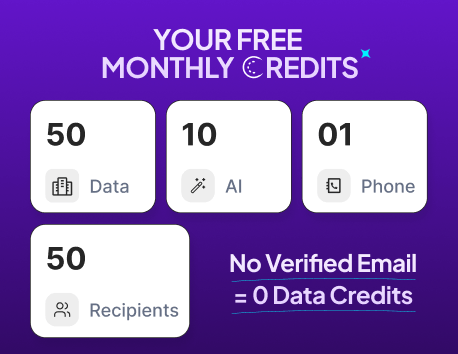
- Free: $0/month — 50 data credits, 10 AI credits, 3 workflows, 3 mailboxes, 50 recipients.
- Pro: $34/month — 10,000 data credits, 500 AI credits, 50 workflows, 25 mailboxes, 5,000 recipients.
- Max: $79/month — 25,000 data credits, 1,000 AI credits, unlimited workflows and recipients, 50 mailboxes.
- Enterprise: From $499/month with custom limits and all intent signals.
Pros
- Covers the complete outbound workflow
- Combines data, outreach, deliverability, and CRM automation
Cons
- More functionality than you may need for basic email sequencing
Verdict: Choose Oppora if you want to consolidate your outbound stack. If you only need simple sequencing, a narrower tool may be enough.
2. Agent Frank — Best for Adaptive AI SDR Outreach

Best for: You want an autonomous AI SDR for continuous prospecting, personalized email and LinkedIn outreach, follow-ups, and meeting booking.
Review: Agent Frank does not have a separate G2 profile. Salesforge, its parent platform, has a 4.6/5 rating from 137 reviews on G2.
Agent Frank is Salesforge’s AI SDR for automating outbound from prospect discovery through meeting scheduling.
You can use Auto-Pilot for largely autonomous execution or Co-Pilot when you want to review and edit its work before it continues.
Key AI SDR Capabilities
- Prospect discovery: Search a 500M+ contact database and continuously identify prospects matching your ICP.
- AI personalization: Generate prospect-specific emails, subject lines, and LinkedIn messages using multiple data sources.
- Multichannel outreach: Run coordinated email and LinkedIn sequences.
- Automated follow-ups: Continue outreach without manually managing every sequence step.
- Reply handling: Monitor and respond to prospect emails automatically.
- Meeting booking: Send calendar links and schedule interested prospects.
Integrations & Deliverability
- CRM: Connects with major CRMs through the Forge Stack.
- Email infrastructure: Supports your own mailboxes or Salesforge infrastructure such as Infraforge, Mailforge, Primeforge, and Megaforge.
- Deliverability: Includes warm-up, email verification, mailbox rotation, spam checks, placement testing, ESP matching, and mailbox-health monitoring.
- Calendar: Supports calendar-based meeting scheduling.
- LinkedIn: Combines LinkedIn and email within multichannel sequences.
Agent Frank Pricing
- Quarterly: Starts at $599/month for 1,000 active contacts.
- Annual: Starts at $499/month for 1,000 active contacts.
- Email infrastructure: Not included; Infraforge starts at $33/month annually.
- Free trial: No free trial; a demo is required.
Pros
- Auto-Pilot and Co-Pilot options
- Strong multichannel personalization
- Extensive deliverability infrastructure
Cons
- Email infrastructure costs extra
- Higher entry price than AI-assisted sequencing tools
Verdict: Choose Agent Frank if you want AI to own most of your outbound execution while retaining optional human oversight. It is probably unnecessary if you only need basic cold-email automation.
3. 11x.ai — Best for Enterprise Autonomous Outbound

Best for: You want an autonomous AI SDR that can research prospects, run outbound campaigns, handle replies, and book meetings with limited manual involvement.
Review: 11x has a 4.4/5 rating from 31 verified reviews on G2.
11x.ai’s outbound agent, Alice, is designed to manage prospecting and outreach as a connected workflow rather than assist with individual SDR tasks.
Alice identifies buyers, researches accounts, uses intent signals, personalizes messaging, follows up, handles replies, and schedules meetings autonomously.
Key AI SDR Capabilities
- Prospect discovery: Access a database of 400M+ verified B2B contacts with live enrichment.
- Intent targeting: Track website visits, job changes, funding events, and other buying signals.
- Deep research: Analyze prospect, company, social, and engagement data before outreach.
- Personalized outreach: Adapt messaging and tone based on prospect context.
- Automated follow-ups: Run multi-touch campaigns without manually advancing every lead.
- Reply and booking automation: Handle responses and schedule qualified meetings.
Integrations & Deliverability
- CRM: Native bi-directional sync with Salesforce, HubSpot, Pipedrive, and Zoho.
- Email infrastructure: Managed Gmail mailboxes, domain setup, warm-up, and inbox rotation.
- Deliverability: Includes monitoring, bounce suppression, and domain-health tracking.
- Calendar: Built-in meeting scheduling.
- Data: Enrichment, personalization, and signal-based triggers are included.
11x.ai Pricing
- Growth: Starts at $3,750/month, billed annually, for up to 2,000 new prospects monthly.
- Pro: Custom pricing for up to 5,000 new prospects monthly.
- Enterprise: Custom pricing for 10,000+ prospects monthly.
- Free plan/trial: No self-serve free plan is listed.
Pros
- High workflow autonomy
- Managed deliverability infrastructure
- Strong CRM and signal-based targeting
Cons
- High starting cost
- Annual commitment may not suit smaller teams
Verdict: Choose 11x if you need enterprise-scale autonomous outbound. Smaller teams wanting lower-cost or hands-on workflows may find it excessive.
4. AiSDR — Best for Autonomous Personalized Outreach

Best for: You want an autonomous AI SDR focused on signal-based prospecting, researched personalization, two-way conversations, and meeting booking.
Review: AiSDR has a 4.6/5 rating from 96 reviews on G2.
AiSDR combines prospecting, research, multichannel outreach, reply handling, and meeting booking in one workflow.
It researches each prospect before outreach and can continue the conversation after someone replies, including answering questions, handling common objections, and qualifying interest.
Key AI SDR Capabilities
- Prospect discovery: Search a native database of 300M+ leads using conversational ICP criteria.
- Signal-based targeting: Find prospects using job changes, hiring data, company news, website activity, and LinkedIn engagement.
- Deep personalization: Research prospect, company, CRM, and LinkedIn context before generating messages.
- Omnichannel outreach: Run email, LinkedIn, and calling steps within configurable sequences.
- Two-way conversations: Generate contextual follow-ups and respond to questions or objections.
- Qualification and booking: Qualify interested prospects and move them toward scheduled meetings.
Integrations & Deliverability
- CRM: Native two-way HubSpot integration; Salesforce support on Scale.
- Email: Gmail and Outlook sending with domain and mailbox setup.
- Deliverability: Ongoing warm-up, triple bounce checks, inbox rotation, and domain-health tracking.
- Calendar: Calendly and HubSpot Calendar integrations.
- LinkedIn: Connection requests, direct messages, InMail, and engagement signals.
AiSDR Pricing
- Solo: $250/month — 200 researched contacts, 1 user, 3 mailboxes, and 1 LinkedIn account.
- Explore: $900/month — 800 contacts, unlimited users, 6 mailboxes, and 5 LinkedIn accounts.
- Scale: $2,500/month — 2,500 contacts, 18 mailboxes, and 20 LinkedIn accounts.
- Free trial: Not available; annual plans receive a 20% discount.
Pros
- Strong research-led personalization
- Autonomous reply and qualification workflows
- Email infrastructure included
Cons
- Outreach volume is limited by researched-contact allowances
- Salesforce requires the higher Scale plan
Verdict: Choose AiSDR if you want AI to manage personalized conversations from prospect discovery through booking. It may not suit you if high-volume outreach at a lower cost is your priority.
5. Artisan — Best AI BDR for Prospect Research and Outreach

Best for: You want an autonomous AI BDR that combines prospect research, enrichment, personalized outreach, reply handling, and meeting booking.
Review: Artisan has a 4.1/5 rating from 50 reviews on G2.
Overview: Artisan is an outbound sales platform built around Ava, its autonomous AI BDR.
Ava can find prospects, research and enrich them, create personalized campaigns, handle replies, and book meetings while giving you approval controls when human oversight is needed.
Key AI SDR Capabilities
- Prospect sourcing: Search 250M+ verified B2B contacts or import prospects from your CRM.
- Multi-source enrichment: Research prospects using CRM data and 22+ enrichment sources.
- Intent signals: Monitor funding, leadership changes, hiring, investor activity, and technology changes.
- AI personalization: Generate messaging using prospect context, brand voice, and campaign-specific coaching rules.
- Autonomous outreach: Run personalized email and social sequences with conditional workflows.
- Reply-to-meeting automation: Handle objections, qualify interested leads, and book meetings automatically.
Integrations & Deliverability
- CRM: Salesforce and HubSpot with enterprise-grade synchronization.
- Email infrastructure: Sends through your reps' mailboxes and supports multi-domain sending.
- Deliverability: Includes mailbox warm-up, sender-reputation monitoring, and sending-volume optimization.
- Calendar: Books qualified prospects directly onto your reps' calendars.
- Data: Built-in B2B data, enrichment, lead scoring, and intent signals.
Artisan Pricing
- Team: Custom pricing, typically scoped around lead volume.
- Scale: Custom pricing with additional support and deployment options.
- Enterprise: Custom pricing based on lead volume, mailboxes, and dialer seats.
- Trial: A free Ava trial with $300 in credits is currently available.
Pros
- Strong autonomous research and outreach
- Built-in data, enrichment, and intent signals
- Human approval controls when needed
Cons
- No transparent fixed monthly pricing
- More suited to serious outbound teams than lightweight users
Verdict: Choose Artisan if you want Ava to own much of your outbound workflow. It may be excessive if you only need prospect data or basic email sequencing.
6. Amplemarket Duo — Best Human-in-the-Loop AI SDR

Best for: You want AI-powered prospecting and outreach while keeping your sales reps involved in important decisions.
Review: Amplemarket has a 4.6/5 rating from 642+ verified reviews on G2.
Amplemarket Duo is an AI sales copilot that identifies buying signals, researches prospects, and creates personalized multichannel sequences.
Rather than removing your reps from the process, Duo helps them decide who to contact, why now, and what to say. This makes it useful when you want automation without giving AI complete control.
Key AI SDR Capabilities
- Signal identification: Detect job changes, competitor activity, website engagement, and other buying signals.
- Prospect research: Automatically gather account and contact context before outreach.
- AI sequences: Generate personalized multichannel campaigns based on prospect signals.
- Lead sourcing: Access a database of 200M+ contacts with enrichment and validation.
- Multichannel outreach: Engage prospects through email, phone, LinkedIn, and other supported channels.
- Workflow automation: Trigger follow-ups and sales actions based on prospect behavior.
Integrations & Deliverability
- CRM: Salesforce and HubSpot integrations.
- Email: Gmail, Outlook, and custom SMTP support.
- Deliverability: Built-in warm-up, domain health monitoring, spam checks, and mailbox recommendations.
- LinkedIn: Automated LinkedIn outreach and prospecting.
- Automation: 28+ native integrations plus Zapier, API, and webhooks.
Amplemarket Pricing
- Startup: $600/month annually for 2 users.
- Additional users: Available at extra cost.
- Free trial: Available on all plans.
- Data, engagement, AI, signals, and deliverability are bundled into the platform.
Pros
- Strong human-in-the-loop AI workflows
- Built-in prospect data and buying signals
- Comprehensive multichannel and deliverability tools
Cons
- Higher entry price for small teams
- Broad feature set can create an initial learning curve
Verdict: Choose Amplemarket Duo if you want AI to improve rep productivity without removing human judgment. If you want a largely autonomous SDR, another platform may suit you better.
7. Apollo.io — Best for AI Prospecting + Sales Engagement

Best for: You want strong B2B prospecting, enrichment, sequencing, calling, and AI assistance in one sales engagement platform.
Review: Apollo.io has a 4.7/5 rating from 9,623 verified reviews on G2.
Overview: Apollo combines a large B2B database with prospecting, enrichment, sequences, calling, meetings, and workflow automation.
It is better viewed as an AI-assisted sales intelligence and engagement platform than a fully autonomous AI SDR because your reps still control much of the workflow.
Key AI SDR Capabilities
- Lead sourcing: Search a database of 240M+ B2B contacts using detailed company and prospect filters.
- Intent targeting: Prioritize accounts using buying signals and intent data.
- Data enrichment: Enrich contacts, companies, CSVs, and CRM records with updated sales data.
- AI research: Research accounts and prospects before outreach.
- Sales engagement: Build automated email sequences with calls, social tasks, rules, and A/B tests.
- Analytics: Track sequence and team performance with built-in reporting.
Integrations & Deliverability
- CRM: Bidirectional sync with Salesforce, HubSpot, and Pipedrive.
- Email: Multiple connected mailboxes with mailbox rotation.
- Deliverability: Built-in warm-up, domain monitoring, bounce tracking, and reputation alerts.
- Calendar: Google Calendar and Microsoft Outlook meeting scheduling.
- Integrations: Connects with 50+ sales-stack tools.
Apollo.io Pricing
- Free: $0 — 900 credits/year.
- Basic: $49/user/month annually — 30,000 credits/year.
- Professional: $79/user/month annually — 48,000 credits/year.
- Organization: $119/user/month annually, minimum 3 users — 72,000 credits/year.
Pros
- Large prospect database
- Strong prospecting and engagement combination
- Free plan available
Cons
- More AI-assisted than autonomous
- Credit and mailbox limits vary by plan
Verdict: Choose Apollo if you want data and sales engagement in one platform. If you want AI to independently manage replies, qualification, and the full outbound workflow, a more autonomous AI SDR may fit better.
8. Reply.io / Jason AI — Best for Controlled Multichannel AI Sequences

Best for: You want autonomous multichannel outreach with the option to keep human approval over important sales actions.
Review: Reply.io has a 4.6/5 rating from 1,565 reviews on G2.
Jason AI is Reply.io’s AI SDR for automating prospect discovery, personalization, outreach, replies, and meeting booking.
You can run Jason in Autopilot for greater autonomy or use Copilot and approval controls when you want your team involved before outreach progresses.
Key AI SDR Capabilities
- Lead sourcing: Search a 1B+ verified contact database and automatically build ICP-based prospect lists.
- Intent targeting: Prioritize prospects showing relevant buying signals.
- AI personalization: Research prospects and create contextual messages for each contact.
- Multichannel outreach: Coordinate email, LinkedIn, and phone touches within sequences.
- Reply automation: Read responses, handle objections, and re-engage prospects automatically.
- Meeting booking: Move qualified replies directly into your calendar.
Integrations & Deliverability
- CRM: Connects with Salesforce, HubSpot, and Pipedrive.
- Email infrastructure: Unlimited mailboxes and warm-up, subject to fair-use limits.
- Deliverability: Includes done-for-you deliverability and high-accuracy email data.
- Calendar: Automatically books qualified prospects into connected calendars.
- LinkedIn: Includes LinkedIn accounts for multichannel outreach.
Reply.io / Jason AI Pricing
- AI SDR Starter: From $500/month, billed annually.
- AI SDR Growth: From $1,500/month, billed annually.
- Enterprise: Custom pricing for larger outbound operations.
- Free plan/trial: No self-serve free Jason AI plan is listed.
Pros
- Strong email, LinkedIn, and phone automation
- Autonomous and controlled operating modes
- Built-in prospect data and deliverability support
Cons
- Higher cost than basic sequencing platforms
- Advanced setups may require more configuration
Verdict: Choose Jason AI if you want multichannel AI automation without giving up human control. It may be excessive if you only need simple email sequences.
9. Saleshandy — Best for Deliverability-Focused Cold Email + Lead Finding

Best for: You want lead discovery, cold email automation, and strong deliverability controls without paying for a fully autonomous AI SDR.
Review: Saleshandy has a 4.6/5 rating from 804 reviews on G2.
Saleshandy combines lead finding, AI-assisted sequence creation, automated follow-ups, and cold email infrastructure in one platform.
It is more AI-assisted than autonomous, so you still control targeting and campaign decisions while AI helps you research prospects, create sequences, and scale outreach.
Key AI SDR Capabilities
- Lead sourcing: Search an 852M+ contact database for prospects.
- AI prospecting: Use AI and advanced filters to narrow down relevant leads.
- AI sequences: Generate cold email sequences with its Sequence Copilot.
- Automated follow-ups: Keep prospects moving through scheduled outreach automatically.
- Prospect enrichment: Add contextual prospect data for stronger personalization.
- Analytics: Track email, reply, and sequence performance.
Integrations & Deliverability
- CRM: Native Salesforce integration with automated lead and activity syncing.
- Email infrastructure: Unlimited connected email accounts across outreach plans.
- Deliverability: Sender rotation, warm-up, spam checks, inbox placement testing, and email verification.
- Mailboxes: Preconfigured Google Workspace, Microsoft 365, and Azure mailboxes are available as add-ons.
- Inbox: Unified Inbox is included on higher outreach plans.
Saleshandy Pricing
- Outreach Starter: $25/month annually — 2,000 active prospects and 6,000 emails/month.
- Outreach Pro: $69/month annually — 30,000 prospects and 150,000 emails/month.
- Outreach Scale: $139/month annually — 60,000 prospects and 240,000 emails/month.
- Scale Plus: $209/month annually — 100,000 prospects and 300,000 emails/month.
- Free trial: 7 days. Lead data, verification, AI credits, and email infrastructure can add to total cost.
Pros
- Strong cold-email deliverability stack
- Large prospect database
- Affordable starting price
Cons
- Not a fully autonomous AI SDR
- Some data and infrastructure features cost extra
Verdict: Choose Saleshandy if cold email scale and deliverability are your priorities. If you want AI to independently handle replies, qualification, and meeting booking, a more autonomous platform may fit better.
10. Instantly Copilot — Best for Scaling AI-Assisted Cold Email

Best for: You want to scale cold email with AI-assisted prospecting, campaign creation, reply handling, and strong deliverability infrastructure.
Review: Instantly has approximately 4.9/5 from 4,136 reviews on G2.
Instantly combines cold email automation, a B2B lead database, AI agents, CRM tools, and deliverability features.
Its AI Sales Agent can help source prospects and build campaigns, while the AI Reply Agent can respond to interested leads and book meetings. However, the platform remains more modular than a fully autonomous end-to-end AI SDR.
Key AI SDR Capabilities
- Lead sourcing: Search a 450M+ B2B lead database with filters and waterfall enrichment.
- AI prospecting: Generate targeted leads using the AI Sales Agent.
- AI email creation: Research prospects and generate personalized outreach.
- Sequence automation: Build automated cold email campaigns and follow-ups.
- Reply handling: Use the AI Reply Agent to handle objections, FAQs, and prospect responses.
- Meeting booking: Automatically move interested leads toward Calendly bookings.
Integrations & Deliverability
- CRM: CRM updates and exports to major CRM platforms.
- Email: Unlimited connected sending accounts.
- Deliverability: Unlimited warm-up, inbox rotation, email validation, and placement monitoring.
- Infrastructure: Higher plans include private server and IP sharding/rotation.
- Inbox: Unibox centralizes replies across connected accounts.
Instantly Pricing
- Growth: $47/month — 1,000 uploaded contacts and 5,000 emails/month.
- Hypergrowth: $97/month — 25,000 contacts and 125,000 emails/month.
- Light Speed: $358/month — 100,000 contacts and 500,000 emails/month.
- AI credits: Sold separately and start at $9/month; a 100-credit free trial is available.
Pros
- Strong deliverability infrastructure
- Unlimited sending accounts
- Large built-in prospect database
Cons
- AI credits are separate from outreach pricing
- More modular than a fully autonomous SDR
Verdict: Choose Instantly if cold email scale and deliverability are your priorities. If you want one agent managing every outbound stage autonomously, another platform may fit better.
11. Qualified Piper — Best AI SDR for Inbound Sales

Best for: You want an autonomous AI SDR to engage, qualify, and convert inbound website visitors into sales meetings.
Review: Qualified has a 4.9/5 rating from 1,540 reviews on G2.
Piper is Qualified’s AI SDR for inbound pipeline generation. It engages buyers across your website and email, qualifies their intent, and routes sales-ready prospects toward meetings.
Unlike most tools in this list, Piper focuses primarily on inbound leads rather than cold outbound prospecting.
Key AI SDR Capabilities
- Visitor engagement: Start real-time conversations with website visitors.
- Lead qualification: Assess buyer intent and determine when a prospect is sales-ready.
- AI email follow-up: Automatically nurture inbound leads with contextual emails.
- Multimodal conversations: Engage buyers through chat, voice, video, and email.
- Meeting booking: Schedule qualified prospects directly with sales reps.
- Lead routing: Route high-intent buyers to the right sales representative using CRM context.
Integrations & Deliverability
- CRM: Native Salesforce integration plus HubSpot connectivity.
- Marketing stack: Supports tools such as Marketo and Outreach.
- Email: Piper follows up and nurtures inbound prospects directly through email.
- Calendar: Automatically schedules meetings for qualified buyers.
- Deliverability: Traditional mailbox warm-up and sender rotation are less relevant because Piper focuses on inbound conversations rather than high-volume cold email.
Qualified Piper Pricing
- Pricing: Custom pricing based on your pipeline and deployment requirements.
- Free plan/trial: No public self-serve free plan is listed.
- Total value: Pricing is designed around broader inbound pipeline automation rather than standalone email outreach.
Pros
- Strong inbound qualification and routing
- Real-time website and email engagement
- Deep CRM and marketing-stack connectivity
Cons
- Not designed for cold outbound prospecting
- No transparent public starting price
Verdict: Choose Piper if you want to convert more inbound traffic and marketing-qualified leads automatically. If you need lead sourcing and cold outbound sequences, an outbound-focused AI SDR is a better fit.
Suggested Reading:
8 Best AI SDR Agents Built for Smarter Outreach and More DemosWhich AI SDR Integrations Matter Most for Targeting, Lead Quality, and Conversion?
Once you narrow down the right AI SDR tools, integrations become the next thing to examine.
A platform may automate outreach well, but if it cannot connect cleanly with your CRM, data sources, email infrastructure, and scheduling tools, you can still end up doing manual work between systems.
CRM Integrations
Look for native integrations with HubSpot, Salesforce, and Pipedrive, especially if your sales team already works inside one of them.
The strongest integrations support bidirectional sync, so lead ownership, outreach activity, replies, lifecycle stages, and opportunity updates stay consistent across both platforms.
Suggested Reading:
5 Best CRM With LinkedIn Integration + How To UseLead Data and Enrichment Integrations
Better targeting starts with better data.
Enrichment integrations can add missing company, role, firmographic, and contact information, while email verification helps you avoid invalid addresses before outreach begins. This improves both lead quality and deliverability.
Email and Deliverability Infrastructure
Your AI SDR should connect smoothly with the mailboxes you actually use.
Look for email verification, inbox warm-up, mailbox rotation, sending controls, and sender-reputation monitoring. These become increasingly important as your outreach volume grows.
LinkedIn and Social Prospecting
LinkedIn integrations help you add connection requests, profile research, and follow-up messages alongside email.
This gives you a more complete multichannel workflow instead of relying on a single touchpoint.
Calendar and Meeting Scheduling
Calendar integrations reduce friction after a prospect shows interest.
Your AI SDR should be able to share availability, book meetings, and pass scheduling information into your CRM automatically.
APIs and Workflow Integrations
If you already have a larger GTM stack, APIs, webhooks, and workflow connectors give you more flexibility.
They let you connect AI SDR activity with enrichment tools, internal systems, reporting platforms, and custom sales workflows without rebuilding your process from scratch.
How to Choose the Right AI SDR Platform
The right AI SDR platform depends on how much automation you want, what your sales process already looks like, and which parts of outbound currently create the most manual work.
Instead of comparing tools only by feature count, evaluate them across the areas that directly affect targeting, outreach quality, deliverability, and conversion.
Decide How Autonomous You Want the AI to Be
Choose the level of control that fits your team:
- AI-assisted: AI helps with research, writing, scoring, and sequencing while you control execution.
- Human-in-the-loop: AI automates more steps but asks for approval before important actions.
- Autonomous: AI can research, contact, follow up, qualify, and book meetings with minimal intervention.
Evaluate Lead Data Before Outreach Automation
Strong automation cannot fix poor targeting.
Check whether the platform offers:
- Large and relevant contact databases
- Company and contact enrichment
- Email verification
- Intent and buying signals
- Accurate filtering and segmentation
Test Personalization Beyond Basic Merge Fields
Look beyond first-name and company-name personalization.
A stronger AI SDR should use:
- Prospect role and responsibilities
- Company context
- Recent activity or signals
- Previous engagement
- Dynamic follow-up context
This helps outreach feel researched rather than templated.
Check Deliverability Before Scaling Outreach
Before increasing volume, review the platform’s deliverability controls.
Look for:
- Email verification
- Mailbox warm-up
- Sender rotation
- Bounce protection
- Sending limits
- Domain and reputation monitoring
Check CRM Compatibility and Workflow Depth
If you use HubSpot, Salesforce, or Pipedrive, check whether the integration supports more than simple contact syncing.
Useful capabilities include:
- Bidirectional sync
- Lead ownership updates
- Activity logging
- Lifecycle or stage changes
- Meeting and reply syncing
Compare Analytics and Reporting
Good AI SDR analytics and reporting features should help you understand what actually creates pipeline.
Track metrics such as:
- Reply and positive reply rates
- Meetings booked
- Sequence-level performance
- Conversion stages
- Pipeline attribution
- Campaign and rep performance
Compare Total Stack Cost—Not Only Subscription Price
Do not judge value from the headline monthly price alone.
Include the cost of:
- Lead credits
- Enrichment
- Email verification
- AI usage
- Mailboxes
- Warm-up
- CRM access
- Additional sales tools
The better-value platform is often the one that replaces more of your existing stack without reducing data quality, deliverability, or control.
Conclusion
AI SDR tools can help you reduce manual prospecting, personalize outreach faster, manage follow-ups, and create more consistent sales workflows. But the right platform depends on how much autonomy you want and where your current process slows down.
If you mainly need prospect data and sequencing, an AI-assisted platform may be enough. If you want AI to handle research, outreach, replies, qualification, and meeting booking, an autonomous or agentic AI SDR will usually be a better fit.
The most important thing is to compare the full workflow, not just the monthly price. Look at data quality, deliverability, integrations, analytics, and any extra tools you still need.
If you want to see how much of your outbound process can be handled inside one connected workflow, Oppora.ai is worth exploring. You can start with the free plan and see whether its agentic workflow approach fits your sales process.
Frequently Asked Questions About AI SDR Tools
What Is the Best AI SDR Platform?
The best AI SDR platform depends on your use case. Oppora.ai suits end-to-end outbound automation, 11x.ai fits enterprise autonomy, Amplemarket Duo works well for human-in-the-loop sales, and Qualified Piper is stronger for inbound qualification.
What Features Should I Look for in AI SDR Tools?
Look for lead data quality, enrichment, personalization, workflow autonomy, deliverability, CRM integrations, analytics, and transparent pricing. A strong AI SDR should reduce manual work across several sales stages.
Which AI SDR Tools Integrate With HubSpot and Salesforce?
Oppora.ai, 11x.ai, AiSDR, Apollo.io, and Amplemarket support HubSpot and Salesforce. Also check for bidirectional sync, activity logging, ownership updates, and CRM stage changes.
Which AI SDR Platforms Have the Best Analytics and Reporting?
Apollo is strong for sequence reporting, Amplemarket for pipeline attribution, Qualified for inbound conversion tracking, and Oppora for campaign performance, replies, deliverability, and A/B testing.
How Much Do AI SDR Tools Cost?
AI SDR tools can cost from tens of dollars to several thousand dollars per month. Compare the base price with lead credits, enrichment, verification, AI usage, mailboxes, warm-up, CRM access, and any extra tools you still need.
Summarize with AI
Share