10 Best Instantly AI Alternatives (Free & Paid Tools Compared)
Adam Hossain
Published February 26, 2026
26 min
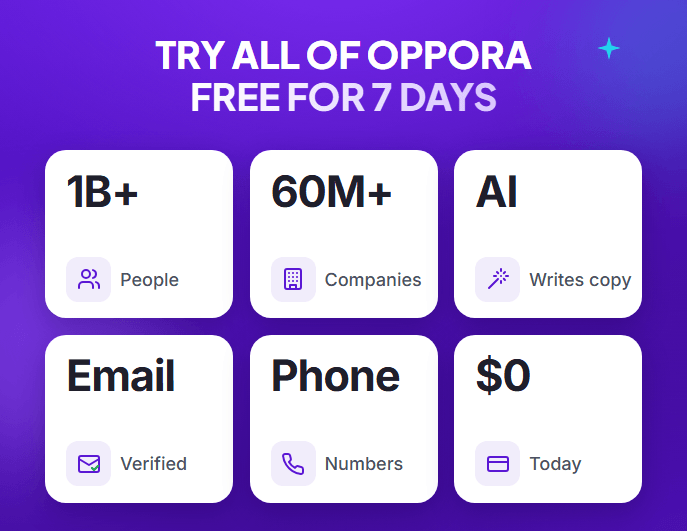
Complete Agentic Email Outreach
AI agents find and enrich prospects, personalize emails, follow up, and handle replies with your meeting link.
Start Your 7-Day Free Trial
Your cold email tool should make outreach easier, not harder. But if you're reading this, something about Instantly isn't working the way you hoped.
Maybe your sending costs climb every time you scale. Maybe deliverability feels shaky, or you're tired of paying separately for lead data. Whatever the reason, you're not stuck with it.
Plenty of alternatives handle cold outreach differently, and some do it better for specific needs.
In this guide, you'll learn:
- Why teams switch away from Instantly
- The 10 best alternatives compared side by side
- The best free options available
- How to choose the right fit for you
Why Look for Instantly AI Alternatives?
Instantly works well for many cold email workflows, but the experience can change once you care about consistent inbox placement, larger-scale costs, or reliable prospecting data.
These concerns also appear in user discussions. One recent Reddit discussion about Instantly describes emails landing in spam despite weeks of warm-up and apparently healthy setup signals.
That does not mean every Instantly user will face these problems. But it gives you practical reasons to compare alternatives before committing your outbound workflow to one platform.
Email Deliverability and Inbox Placement
Warm-up scores alone do not guarantee inbox placement. Your domains, sender reputation, authentication, email content, sending behavior, and mailbox providers can all influence where messages land.
Users have specifically reported Instantly deliverability issues on Reddit, including messages reaching spam when sent through the platform.
You may therefore want alternatives offering stronger controls around:
- Inbox and domain health
- Mailbox rotation and warm-up
- Email verification
- Provider matching and sending infrastructure
Pricing and Scaling Costs
Your real cost is rarely just the advertised monthly subscription.
As outreach grows, you may need more inboxes, leads, verification, enrichment, or other supporting tools. One recent Reddit user looking for Instantly alternatives cited both shakier deliverability and increasing costs as reasons for considering a switch.
Compare total workflow cost rather than subscription price alone.
Lead Database Accuracy and Prospecting Needs
Sending more emails means little when you are targeting outdated or irrelevant contacts.
If prospecting is central to your workflow, look beyond database size. Consider how an alternative handles:
- Contact verification and enrichment
- ICP and decision-maker filtering
- Buying signals
- Duplicate and outdated lead data
The better alternative is ultimately the one that helps you reach the right prospects, not simply more prospects.
Multichannel Outreach Requirements
Cold email may be your starting point, but you might eventually want LinkedIn and email working inside the same sequence.
That is where Instantly can feel restrictive. In a recent Reddit discussion about switching from Instantly, a user specifically complained about having no LinkedIn steps in sequences.
You may need an alternative if you want:
- Email and LinkedIn in one sequence
- Channel-specific triggers
- Centralized multichannel tracking
Suggested Reading:
How to Execute Multichannel Outreach [+7 Strategies]AI Automation and Workflow Limitations
AI-generated emails are useful, but they are different from automating your complete outbound workflow.
Another Reddit discussion about combining Instantly and HeyReach highlights this gap: integrating email and LinkedIn can require leads to move between separate tools through triggers rather than one unified sequence.
If you want prospecting, outreach, replies, and CRM updates to work together, end-to-end workflow automation becomes more important.
10 Best Instantly AI Alternatives at a Glance
Before we break down each tool in detail, here's a quick side-by-side look. Use this to spot the tools worth a closer read based on what matters most to you.
Pricing reflects the lowest paid tier as of 2026. Always confirm current numbers on each vendor's site, since add-ons and credits can shift the real cost.
A few of these prices look close on paper but split apart fast once you factor in per-seat billing, sending volume, or paid add-ons. We'll flag those trade-offs as we go.
Two things worth a quick note before the deep dive. Reply.io's $49 entry is email-only, and multichannel jumps to per-user pricing. Apollo, Klenty, and Lemlist all bill per user or per seat, so costs climb as your team grows.
Next, let's look at how we scored each tool so you know what's behind these picks.
How We Evaluated the Best Instantly Alternatives
A tool can look great on a features page and still fall apart in daily use. So instead of ranking by marketing claims, we ran each platform through the same real-world outbound scenario.
We set up a test campaign of 500 B2B prospects, sent across three warmed inboxes, and tracked how each tool performed on the things that actually decide whether your outreach works.
Here's what we weighed most heavily.
Email Deliverability, Warm-Up, and Sending Infrastructure
Deliverability is where cold email lives or dies. If your messages land in spam, nothing else matters.
We ran the same 500-contact send through each tool and checked inbox placement, then tracked how well each protected sender reputation over two weeks. That meant looking at a few specifics:
- Built-in warm-up and whether it's included or costs extra
- Inbox rotation across multiple sending accounts
- Bounce protection and sending limits that guard your domains
Tools that held inbox placement above 90% as volume climbed scored highest, since they let you scale without burning your domains.
Cold Email Sequencing and Sending Capabilities
Once your emails land, your sequencing engine decides how well they convert. So we built the same four-step sequence in every tool.
We timed how long setup took, then tested follow-up logic, A/B tests, and volume controls. Tools that let us launch in under 15 minutes without capping sends ranked well.
Suggested Reading:
10 Best Email Sequencing Tools & Software for 2026B2B Lead Data and Contact Accuracy
Great sequences still fail on bad data. So we gave real weight to what each tool brings here.
We pulled the same 100-lead list from each native database, then verified it against a third-party tool to measure accuracy.
Platforms with built-in data that hit low bounce rates scored higher, since they let you skip a separate data vendor.
AI Personalization and Workflow Automation
Manual outreach doesn't scale. So we looked closely at how much each tool actually did for us without constant hands-on work.
We tested whether AI could write and personalize messages, handle replies, and move prospects through a sequence on its own. Tools that automated real steps, not just copy suggestions, ranked higher here.
Suggested Reading:
10 Best AI Workflow Automation Tools to Save Work HoursMultichannel Outreach Capabilities
Email alone rarely carries a full campaign anymore. Your buyers live across inboxes and LinkedIn, so reaching them in one place matters.
We tried building a combined email-and-LinkedIn sequence in each tool to see how well outreach ran beyond email. A few things shaped the scoring:
- Native LinkedIn steps built into sequences, not bolted on
- Support for calls, SMS, or WhatsApp where relevant
- Whether channels live in one campaign or need separate tools
Tools that blended channels into a single flow scored best.
CRM and Sales Integrations
Your outreach tool has to fit the stack you already run. Otherwise you end up copying data by hand, and things start slipping through the cracks.
We connected each platform to a test CRM and checked whether replies, lead status, and activity synced automatically. Deeper two-way syncing scored higher than basic exports, since that's what keeps your records accurate without extra manual work.
Pricing and Scalability
A low starting price means little if your costs balloon the moment you grow. So we looked well past the sticker number on each plan.
We modeled the real monthly cost at 10 inboxes and factored in per-seat billing, sending caps, and paid add-ons that quietly lift your spend. Tools that stayed affordable as sending volume climbed ranked strongest here.
What Are the 10 Best Instantly AI Alternatives?
Now for the part you came for. Below are the ten tools that stood up best across deliverability, data, automation, and real-world cost.
Each one shines for a different need, so there's no single winner for everyone. We'll cover what each tool does well, how it compares to Instantly, its pricing, and where it falls short.
Let's start with the most complete option.
1. Oppora — Best Instantly AI Alternative for End-to-End AI Outbound

Most tools hand you features and leave the work to you. Oppora flips that. It runs the entire outbound motion for you, from finding leads to booking meetings, using AI agents that talk to each other.
If Instantly feels like a sending tool you still have to babysit, Oppora is the closest thing to an outbound system that runs itself.
Key Features
You build a workflow once, then Oppora keeps executing it. Here's what stands out:
- 8 AI sales agents that handle prospecting, enrichment, scoring, writing, replying, and CRM sync
- A drag-and-drop workflow builder, plus OraFlow to plan campaigns from a single prompt
- Warm-up for new domains and rotation across up to 50 mailboxes
- Email and LinkedIn outreach inside one sequence
B2B Lead Data and Buying Signals
Oppora gives you a native database of 700M+ leads and 42M+ companies, so you skip paying for a separate data tool. Contacts run through waterfall enrichment across 350M+ verified profiles and 120M+ verified emails.
You can also filter by up to 24 intent and buying signals, like recent funding, job changes, or active job postings.
AI Outreach and Workflow Automation
This is where Oppora pulls ahead. Its AI writes every line uniquely, so you avoid spintax patterns and copy fatigue.
The AI Reply Agent then answers questions, handles objections, qualifies interest, and books meetings straight from your inbox, with no manual follow-up from you.
Oppora vs Instantly
Instantly focuses on sending email at volume, and you bring your own data and enrichment.
Oppora covers the full cycle instead: find, enrich, score, write, send, reply, and sync.
You get a native lead database and enrichment built in, which Instantly makes you buy through separate tools.
Oppora Pricing
Oppora keeps everything in one plan, no separate pricing for data and outreach:
- Free: $0, with core agentic features to test the flow
- Pro: $34/month, 10,000 data credits and 50 workflows
- Max: $79/month, 25,000 data credits and unlimited workflows
- Enterprise: from $499/month for higher volume and custom limits
Pros and Limitations
The upside is real automation and one bill instead of a stitched-together stack. The trade-off is that a fully agentic system takes a little learning if you're used to simple send-only tools.
2. Smartlead — Best for High-Volume Cold Email

If your outbound lives or dies on sending volume, Smartlead is built for you. It's designed for agencies and teams pushing thousands of emails a day across a lot of inboxes.
Where Instantly caps sending on its lower tiers, Smartlead leans into scale without charging you per mailbox.
Key Features
Smartlead's strength is infrastructure. It gives you room to scale sending while protecting your sender reputation.
- Unlimited mailboxes and unlimited warm-up on every plan
- A unified master inbox to manage all replies in one place
- SmartServers and SmartDelivery for dedicated infrastructure and placement testing
- Deliverability analytics tracked per mailbox
You get real control over how your emails land, which matters most once volume climbs.
Smartlead vs Instantly
Both tools focus on email sending at scale, so this comparison comes down to model and depth.
Smartlead never charges per inbox, which makes spinning up many domains cheaper as you grow. Its deliverability tooling also runs deeper than Instantly's.
But Smartlead is email-only. It doesn't handle LinkedIn or native multichannel sequencing, and the interface carries a real learning curve for beginners.
Smartlead Pricing
Smartlead runs four flat plans, priced by volume rather than per seat. Annual billing saves roughly 17%.
- Base: $39/month, 2,000 leads and 6,000 emails
- Pro: $94/month, with unlimited tests and full API
- Unlimited Smart: $174/month, adding white-label
- Unlimited Prime: $379/month, for max scale
Keep in mind that mailboxes, domains, and verification are billed separately, so your real cost runs higher than the sticker price.
Pros and Limitations
The upside is unmatched sending scale and strong deliverability control for a fair base price.
The downside is no built-in lead data, no multichannel, and hidden infrastructure costs that add up fast as you scale.
Suggested Reading:
10 Best Smartlead Alternative for Startups, Agencies, & Sales Teams3. Saleshandy — Best for Affordable Cold Outreach

If price is your first concern, Saleshandy is hard to beat. It offers one of the lowest entry points in the market without stripping away the features that matter.
Unlike Smartlead's email-only focus, Saleshandy also folds in a lead database and light multichannel, so you get more under one roof for less.
Key Features
Saleshandy packs a lot into a low starting price. It works well for solo reps and small teams running lean.
- Unlimited email accounts on every plan
- A built-in lead database of 852M+ contacts
- Email verification built in, so you skip a separate tool
- A unified inbox plus LinkedIn steps for basic multichannel
You get prospecting, sending, and reply management together, which keeps your stack simple.
Saleshandy vs Instantly
Both tools sit at the affordable end, so the difference comes down to what's included.
Saleshandy gives you a native lead database and email verification, which Instantly doesn't offer natively. Its entry plan also includes more email capacity than Instantly's starter tier.
Instantly's edge is its free warm-up network and a slightly cleaner interface. But you'll still pay separately for data.
Saleshandy Pricing
Saleshandy runs four plans, and its entry price is among the lowest on this list.
- Outreach Starter: $25/month, 2,000 prospects and 10,000 emails
- Outreach Pro: $74/month, for small teams running multiple campaigns
- Outreach Scale: $149/month, built for agencies
- Scale Plus: higher tier for heavy volume
The starter tier alone covers most solo senders comfortably.
Pros and Limitations
The upside is clear: a built-in database, verification, and unlimited inboxes at a budget price
That combination is rare this low.
The trade-off is that its multichannel and automation stay lighter than tools like Oppora or Reply.io. So heavier AI-driven outreach may push you toward a more complete platform.
4. Lemlist — Best for Personalized Multichannel Outreach

If personalization is what wins your replies, Lemlist is built around it. It blends email, LinkedIn, and calls into one sequence, then lets you tailor each touch to the individual prospect.
Where Saleshandy keeps multichannel light, Lemlist treats it as the core of the product.
Key Features
Lemlist stands out for how deeply you can personalize at scale. It's a strong fit for teams that lead with relevance over raw volume.
- Native LinkedIn, email, and calling steps inside one sequence
- Dynamic image and video personalization for each prospect
- Intent-based triggers to reach leads at the right moment
- A built-in lead database of 650M+ contacts
You get channels and data together, so your outreach feels tailored without extra tools.
Lemlist vs Instantly
Instantly is email-first and volume-driven. Lemlist is the opposite, built for multichannel sequences and deep personalization.
Lemlist also charges by sending volume on its email plan, with unlimited users, so cost doesn't climb with each new seat. Instantly stays simpler and cheaper if you only send email.
But for LinkedIn steps and personalized touches, Lemlist gives you far more range.
Lemlist Pricing
Lemlist runs volume-based plans, and its email tier keeps users unlimited.
- Email: $69/month, for email-only outreach at volume
- Multichannel: $109/month, adding LinkedIn and calls
- Enterprise: custom, with a 5-seat minimum
A 14-day free trial needs no credit card. WhatsApp and enrichment run as paid add-ons, so factor those in.
Pros and Limitations
The upside is best-in-class personalization and true multichannel in one flow. Few tools match its depth here.
The trade-off is cost. Reviewers often flag Lemlist as pricey once add-ons and extra sending addresses stack up. So it fits teams that value relevance over the cheapest possible send.
5. Reply.io — Best for AI-Powered Sales Engagement

If you want AI doing real work alongside your team, Reply.io is built for that. It pairs multichannel outreach with an AI SDR that can run sequences and handle early replies on its own.
Where Instantly leaves the thinking to you, Reply.io leans on automation to carry more of the load.
Key Features
Reply.io is a mature, feature-rich platform that handles multiple channels natively. It suits teams running outreach across more than just email.
- Jason AI, an AI SDR that drafts sequences and manages initial replies
- Native email, LinkedIn, SMS, and WhatsApp steps in one sequence
- A built-in database of 1B+ verified contacts
- Deep sequence logic and analytics for engagement tracking
You get channels, data, and AI in one place, which cuts down on stitched-together tools.
Reply.io vs Instantly
Instantly focuses on high-volume email and keeps things simple. Reply.io goes wider, adding true multichannel and an AI SDR on top.
Reply.io also brings its own large contact database, while Instantly leaves data to you. The trade-off is complexity and cost, since Reply.io asks more setup upfront.
For email-only outbound, Instantly stays leaner. For multichannel AI engagement, Reply.io pulls ahead.
Reply.io Pricing
Reply.io's entry plan is email-only, and multichannel shifts to per-user pricing.
- Email Volume: $49/month, 1,000 emails with the AI assistant
- Multichannel: $89/user/month, adding LinkedIn, SMS, and calls
- Agency: from $210/month for client management
- AI SDR (Jason AI): available as a higher-tier agent
Per-user multichannel billing means costs climb as your team grows.
Pros and Limitations
The upside is strong multichannel depth, a big native database, and genuine AI assistance in one platform.
The downside is that Jason AI still needs heavy editing, and per-seat pricing gets expensive fast for larger teams.
6. Apollo.io — Best for B2B Lead Data and Prospecting

If finding the right prospects matters as much as sending emails, Apollo.io is a strong Instantly alternative.
Apollo combines B2B lead data, prospecting, enrichment, and sales engagement, helping you move from discovering decision-makers to contacting them without relying on separate prospecting tools.
Key Features
Apollo covers both lead discovery and engagement, making it useful when prospect quality is central to your outbound strategy.
You get:
- B2B contact and company database
- Advanced prospecting filters
- Buying signals and lead scoring
- Email sequences, calls, and LinkedIn tasks
- Contact enrichment and verification
- AI-assisted research and personalization
- CRM integrations and workflow automation
Apollo.io vs Instantly
Apollo and Instantly overlap in outbound email, but their strengths differ.
Apollo focuses more on B2B prospecting and sales intelligence. You can identify companies, find decision-makers, enrich contact information, and move prospects into outreach workflows.
Instantly focuses more heavily on cold email infrastructure, including mailbox management, warm-up, and scalable email campaigns.
Apollo therefore makes more sense when you need prospecting + data + engagement, while Instantly may suit you better when email sending infrastructure is your main priority.
Apollo.io Pricing
Apollo offers free and paid options. Based on the supplied pricing comparison data:
- Free: $0 with limited usage
- Basic: Starts at $59/month
- Professional: Starts at $99/month
- Organization: Designed for larger sales teams
Apollo uses shared credits for certain activities, so consider your prospecting and enrichment volume when calculating costs.
Pros and Limitations
Apollo’s biggest advantage is convenience. You can find companies, identify decision-makers, enrich contacts, and start outreach within one ecosystem. This makes it valuable when prospecting is a major part of your sales process.
However, shared credits can become restrictive as usage increases. Apollo may also feel unnecessarily broad if you mainly need high-volume cold email sending and simple mailbox management.
Suggested Reading:
5 Best Apollo.io Alternatives for B2B Lead Generation7. Woodpecker — Best for Deliverability-Focused Cold Email

If protecting your sender reputation is a priority, Woodpecker is a practical Instantly alternative. It focuses on controlled cold email outreach with tools that help you manage sending behavior and reduce deliverability risks.
Key Features
Woodpecker combines cold email automation with safeguards designed around consistent sending and inbox placement.
You get:
- Email and domain warm-up
- Deliverability monitoring and Bounce Shield
- Inbox rotation and adaptive sending
- Email verification
- Automated follow-up sequences
- A/B testing and conditional campaigns
- CRM integrations and centralized inbox management
These features make Woodpecker suitable when you want to scale outreach without losing control over how emails are sent.
Woodpecker vs Instantly
Both platforms provide cold email campaigns, mailbox management, warm-up, and automated follow-ups.
The difference is their focus. Woodpecker emphasizes deliverability-focused sending, including throttling, randomized sending intervals, verification, and monitoring.
Instantly is better positioned for teams focused on scaling outreach across multiple sending accounts. Woodpecker may fit you better when maintaining sender reputation and controlling campaign delivery are higher priorities.
Woodpecker Pricing
Woodpecker uses contacted-prospect-based pricing, meaning your cost increases with the number of prospects you contact.
- 500 contacted prospects: Around $35/month
- Email allowance: 8,000 emails/month at this level
- Warm-up: Two slots included
- LinkedIn outreach: $29/month per account
- Free trial: 14 days with no credit card required
This structure can work well for smaller campaigns, but you should calculate costs based on your expected prospect volume.
Pros and Limitations
Woodpecker’s main advantage is its deliverability-conscious approach. You get verification, warm-up, inbox rotation, adaptive sending, and monitoring alongside straightforward campaign automation.
This makes it useful when protecting domains matters more than maximizing raw sending volume.
However, contacted-prospect pricing can become more expensive as your outreach grows.
LinkedIn outreach also comes at an additional cost, so teams running high-volume campaigns should compare the total price against Instantly and other alternatives before switching.
8. Snov.io — Best for Email Finding and Verification

If finding and verifying prospect emails is central to your outbound process, Snov.io is a useful Instantly alternative.
It combines email discovery, verification, prospecting, deliverability tools, and outreach. Its Email Finder provides access to 500M+ B2B prospects, while discovered contacts are automatically verified.
Key Features
Snov.io is particularly useful when you need to turn basic prospect information into outreach-ready contacts.
You get:
- Email Finder and Bulk Email Finder
- Domain and database searches
- LinkedIn Prospect Finder
- 7-tier email verification
- Email warm-up and deliverability checks
- Email and LinkedIn campaigns
- Sales CRM and integrations
This combination lets you find contacts, validate their emails, and start outreach without constantly exporting lists between platforms.
Snov.io vs Instantly
The main difference is where each platform puts its emphasis.
Snov.io is stronger when email discovery and verification are important parts of your workflow. Its prospecting tools let you search using names, domains, LinkedIn profiles, and database filters.
Instantly is more focused on scaling cold email through sending accounts, warm-up, and campaign infrastructure.
Choose Snov.io when finding + verifying + contacting prospects needs to happen within one workflow.
Snov.io Pricing
Snov.io currently provides these main pricing options:
- Trial: Free
- Starter: $39/month
- Pro S: $99/month
- Pro M: $189/month
- Pro L: $369/month
- Ultra: $738/month
Paid plans scale credits and recipient allowances, while annual subscriptions currently receive a 25% discount.
Pros and Limitations
Snov.io’s biggest advantage is its connected prospecting workflow. You can discover prospects, find and verify emails, warm inboxes, and run campaigns without assembling several separate tools.
However, credits are shared between prospect search, email search, and verification, so heavy data usage can consume your allowance faster. LinkedIn automation is also sold separately, which can increase your total cost if multichannel outreach is essential.
9. Salesforge — Best for AI Personalization at Scale

If you want to personalize cold emails without manually researching every prospect, Salesforge is a strong Instantly alternative.
Salesforge combines AI personalization with email sequencing, mailbox management, warm-up, and deliverability features, making it useful for teams running personalized outreach at scale.
Key Features
Salesforge focuses heavily on using AI to make large campaigns feel more individualized.
You get:
- AI-generated personalized emails
- Multi-language email generation
- Automated email sequences
- Multiple mailbox connections
- Email warm-up capabilities
- Email validation
- Unified reply management
- Integrations and API access
Instead of relying entirely on reusable templates, you can use AI to create prospect-specific messaging across larger lead lists.
Salesforge vs Instantly
Both platforms help you scale cold email, but they approach personalization differently.
Instantly emphasizes sending infrastructure, mailbox management, warm-up, lead generation, and campaign automation. Salesforge puts more emphasis on AI-driven personalization and generating individualized outreach at scale.
Salesforge therefore makes more sense when AI personalization is central to your strategy. Instantly may suit you better when managing larger sending infrastructure is the bigger requirement.
Salesforge Pricing
Salesforge provides multiple plans depending on your outreach volume and required functionality:
- Free: Limited access for testing the platform
- Basic: Starts around $40/month
- Pro: Starts around $80/month
- Additional products and services may have separate pricing
Your total cost can increase when you add other tools from the broader Salesforge ecosystem, so compare the complete stack rather than the email platform alone.
Pros and Limitations
Salesforge’s main advantage is personalization at scale. You can generate individualized emails without manually researching and writing every message, helping you maintain relevance as campaign volume increases.
However, AI-generated personalization still requires monitoring. Poor prospect data or weak instructions can produce messaging that feels generic or inaccurate.
You may also need additional Salesforge products for a broader outbound workflow, which can make the overall setup more complex and expensive than the initial subscription suggests.
10. Klenty — Best for SDR Sales Engagement

If your SDR team needs more than cold email, Klenty is a strong Instantly alternative to consider.
Klenty is built around sales engagement, helping reps coordinate email, calls, LinkedIn tasks, follow-ups, and CRM activity from one platform. This makes it particularly useful for structured SDR workflows.
Key Features
Klenty gives sales teams tools for managing outreach across several touchpoints without making reps manually track every follow-up.
You get:
- Automated email sequences and follow-ups
- LinkedIn outreach tasks
- Sales dialer and calling workflows
- AI-assisted email personalization
- Multichannel sales cadences
- Automated lead prioritization
- CRM integrations and activity syncing
- Reporting and engagement analytics
These capabilities make Klenty useful when multiple SDRs need a repeatable outreach process.
Klenty vs Instantly
Klenty and Instantly both automate outbound outreach, but they serve different priorities.
Instantly focuses heavily on cold email, including mailbox management, warm-up, lead generation, and high-volume sending.
Klenty takes a broader sales engagement approach. You can combine email, calls, and LinkedIn activities within structured cadences while keeping sales activity connected to your CRM.
Choose Klenty when SDR productivity and multichannel engagement matter most. Instantly may be better when scalable cold email infrastructure is your primary requirement.
Klenty Pricing
Klenty offers multiple packages depending on the sales engagement capabilities your team needs:
- Startup: Starts at $60/user/month
- Growth: Starts at $85/user/month
- Plus: Starts at $125/user/month
- Enterprise: Custom pricing for larger requirements
Because pricing is typically seat-based, costs can increase as your SDR team grows.
Pros and Limitations
Klenty’s biggest strength is its SDR-focused workflow. Your reps can manage emails, calls, LinkedIn activities, follow-ups, and CRM updates through a more coordinated sales engagement process.
However, per-user pricing can become expensive for larger teams. Its broader engagement functionality may also be unnecessary if you only need cold email automation, warm-up, and high-volume mailbox management.
Which Instantly Alternative Is Best for Your Use Case?
The best Instantly alternative depends on what is slowing down your outbound process. You may need complete automation, higher email volume, or simply a more affordable way to run cold outreach.
Here is how three options fit those different priorities.
Best for End-to-End AI Outbound Automation — Oppora
Choose Oppora when you want to automate more than email sending. Its eight AI agents can work together across prospecting, enrichment, verification, outreach, replies, qualification, meeting booking, and CRM syncing.
It is particularly useful when you want:
- Self-running agentic sales workflows
- Email and LinkedIn outreach
- AI-generated replies and personalization
- Buying signals and verified lead data
- Automatic CRM synchronization
You build the workflow once, while the agents continue executing the connected outbound steps.
Best for High-Volume Cold Email — Smartlead
Smartlead makes more sense when your priority is scaling cold email across multiple sending accounts.
Its focus on mailbox infrastructure, automated warm-up, inbox rotation, campaign management, and sending at scale makes it suitable for agencies and outbound teams managing significant email volume.
Rather than prioritizing a broad sales engagement stack, you can keep your workflow centered on cold email execution and deliverability.
Best for Affordable Cold Outreach — Saleshandy
Saleshandy is worth considering when you want essential cold email capabilities without immediately moving into a more expensive outbound stack.
You get practical features for:
- Email sequences and automated follow-ups
- Multiple sending accounts
- Email warm-up and sender rotation
- Campaign tracking and personalization
This makes Saleshandy a better fit when you need straightforward cold outreach while keeping software costs under control.
Best for Personalized Multichannel Outreach — Lemlist
Lemlist is a good fit when you want outreach to feel personal across more than one channel. Instead of relying entirely on cold email, you can combine email, LinkedIn activities, and calls within coordinated sequences.
It works particularly well when you need:
- Personalized images, videos, and landing pages
- Email and LinkedIn outreach
- Multichannel sequences with automated follow-ups
This makes Lemlist useful when personalization and varied touchpoints matter more than sending maximum email volume.
Best for B2B Lead Data and Prospecting — Apollo.io
Apollo.io is better suited when finding the right prospects comes first. Its large B2B database and detailed search filters help you identify companies and relevant decision-makers before starting outreach.
You can combine prospecting, enrichment, buying signals, email sequences, and CRM workflows, reducing the need for separate lead-generation tools.
Best for SDR Sales Engagement — Klenty
Klenty makes sense for SDR teams that need a structured process for managing multiple sales touchpoints.
You can coordinate:
- Email sequences and follow-ups
- LinkedIn activities
- Calls and sales cadences
- CRM activity syncing
Rather than focusing purely on email volume, Klenty helps your SDRs manage prospect engagement across channels while keeping outreach activity organized.
What Are the Best Free Instantly AI Alternatives?
You do not necessarily need a paid subscription to test an Instantly alternative. Several platforms provide free plans or trials that let you evaluate prospecting, outreach, or automation before committing.
Compare the Best Free Instantly Alternatives
The right free option depends on which part of outbound you want to test.
- Oppora: Best for testing end-to-end AI outbound workflows
- Apollo.io: Best for testing B2B prospecting and lead data
- Snov.io: Best for testing email finding and verification
- Salesforge: Best for exploring AI-personalized outreach
- Woodpecker: Best for testing deliverability-focused cold email
Oppora is particularly notable because its supplied pricing information includes a $0 free plan, alongside paid plans and a seven-day trial.
Features and Limits of Free Instantly Alternatives
Free access usually gives you enough functionality to understand how a platform fits your workflow, but not enough capacity for serious outbound at scale.
Common restrictions include:
- Lower prospect or recipient limits
- Limited email-finding and verification credits
- Fewer connected mailboxes
- Reduced AI or automation usage
- Restricted integrations or advanced features
For instance, Oppora’s free tier supports 50 unique recipients and provides limited email search, verification, enrichment, and AI credits.
Free Plans vs Free Trials for Instantly Alternatives
A free plan is better when you want ongoing access without a deadline, even if usage is restricted.
A free trial usually unlocks more functionality but only for a limited period.
Before choosing, check what happens when the trial ends. Compare recipient limits, credits, mailbox allowances, and feature restrictions so you know what your outbound workflow will actually cost once you scale.
How to Choose the Right Instantly Alternative
The best Instantly alternative is not necessarily the platform with the longest feature list. You need one that matches how your team finds prospects, reaches them, and manages conversations after they respond.
Start by comparing these three areas.
Decide Between Email-Only and Multichannel Outreach
First, consider how you actually want to contact prospects.
If cold email drives nearly all your outbound activity, an email-focused platform with sequencing, mailbox rotation, and campaign controls may be enough.
Choose multichannel outreach when you also need:
- LinkedIn connection requests and messages
- Calls or other sales touchpoints
- Cross-channel follow-ups
- One workflow for tracking engagement
Multichannel platforms can reduce the manual work of coordinating separate outreach tools.
Compare Deliverability and Warm-Up Capabilities
Sending thousands of emails means little when your messages consistently reach spam.
Look beyond whether a platform simply offers warm-up. Compare how much control it gives you over sender reputation and campaign behavior.
Check for email verification, inbox rotation, sending limits, domain health monitoring, mailbox warm-up, bounce protection, and provider-specific sending controls.
The goal is sustainable sending, not maximum volume from day one.
Determine Whether You Need a Built-In Lead Database
Next, decide where your prospects will come from.
If you already have reliable lead lists, you may not need to pay for another B2B database.
But a built-in database becomes valuable when you regularly need to:
- Discover companies matching your ICP
- Find relevant decision-makers
- Access verified contact details
- Enrich and qualify prospects
- Identify buying or intent signals
This can reduce your dependence on separate prospecting, enrichment, and verification platforms.
Calculate Total Cost at Your Expected Sending Volume
A low starting price does not always mean lower outbound costs. Calculate what you will pay at the volume you realistically expect to reach.
Include costs for:
- Additional mailboxes or sender accounts
- Lead search and enrichment credits
- Email verification
- Unique recipient limits
- Extra users or integrations
Also check whether unused credits roll over or whether scaling forces you into a higher plan.
Evaluate Automation Against Manual Work Required
Next, look at what the platform actually automates.
Some tools automate email sequences but still require you to manually find leads, enrich data, monitor replies, qualify prospects, and update your CRM.
If reducing manual work is important, consider whether automation covers the entire outbound workflow rather than individual tasks.
Check CRM Integration and Workflow Scalability
Finally, consider what happens after prospects start replying.
Your Instantly alternative should connect outreach activity with the systems your sales team already uses.
Look for automatic syncing of:
- Contacts and lead statuses
- Replies and engagement activity
- Meetings, tasks, and deals
As your outreach grows, these integrations help you avoid duplicate data entry and keep your pipeline organized without adding more manual work.
Conclusion
Choosing the best Instantly AI alternative comes down to what you need from your outbound system. Some tools are better for high-volume cold email, while others stand out for prospecting, deliverability, personalization, or multichannel sales engagement.
Before switching, compare your actual requirements around lead data, sending volume, automation, integrations, and total monthly cost.
If your goal is to reduce the number of tools and manual steps involved, Oppora takes a broader approach. Its AI agents can connect prospecting, enrichment, outreach, replies, meeting booking, and CRM syncing within one workflow.
You can explore Oppora’s free plan to see whether that end-to-end approach fits your outbound process.
Frequently Asked Questions (FAQs)
Can I migrate my existing campaigns from Instantly to another platform?
Usually, you can export lead lists and campaign data from Instantly, but sequences, settings, analytics, and inbox configurations may require manual recreation. Before switching, check the alternative’s import options, CRM integrations, and campaign setup requirements to estimate the migration effort.
Can I use multiple Instantly alternatives together?
Yes. Some teams combine specialized tools for lead data, email verification, enrichment, outreach, and CRM management. However, using multiple platforms can increase costs and workflow complexity. Consider whether an all-in-one alternative can replace several tools before building a multi-tool outbound stack.
Do Instantly alternatives work with Google Workspace and Microsoft 365 inboxes?
Many cold email platforms support Google Workspace and Microsoft 365 mailboxes, but connection methods and sending controls vary. Check mailbox compatibility, account limits, authentication requirements, and deliverability features before choosing a platform, especially if your team manages multiple domains and sender accounts.
Can Instantly alternatives integrate with my existing CRM?
Many alternatives integrate directly with popular CRMs or connect through APIs and automation platforms. Integration depth varies, so check whether the platform can automatically sync contacts, campaign activity, replies, lead status, and other data your sales team needs without creating additional manual work.
What should I prepare before switching from Instantly to an alternative?
Export important lead and campaign data, document active sequences, review connected inboxes, and identify integrations your workflow depends on. Also compare sending limits, warm-up requirements, suppression lists, domain configurations, and automation rules before migrating so existing outbound operations are not unnecessarily disrupted.
Summarize with AI
Share