13 B2B Data Prospecting Tactics to Find & Convert Better Leads
Adam Hossain
Published April 27, 2026
15 min
Complete Agentic Email Outreach
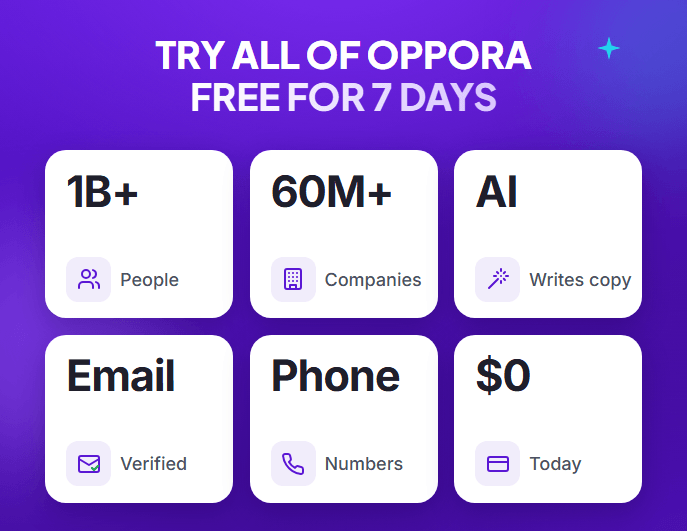
AI agents find and enrich prospects, personalize emails, follow up, and handle replies with your meeting link.
Start Your 7-Day Free Trial
Most B2B teams struggle with one thing that quietly breaks their pipeline—bad prospecting data.
You might have a long list of leads, but if the data is outdated, irrelevant, or missing intent signals, your outreach simply does not convert.
Modern B2B data prospecting is no longer about collecting contacts, it is about finding the right companies at the right time with the right context.
In this guide, you will learn:
- What B2B data prospecting really means today
- What defines high-quality prospecting data
- 13 proven tactics to find better leads consistently
- Common mistakes that quietly ruin your prospecting efforts
What B2B Data Prospecting Really Means Today
B2B data prospecting is no longer just about building lists of potential buyers. Today, it is about identifying companies and decision-makers who show real signals of interest, relevance, and timing.
Instead of relying on static databases, modern prospecting focuses on dynamic data like intent signals, behavioral activity, and real-time company changes.
This shift means you are not just collecting contacts, you are qualifying opportunities before outreach even begins.
In simple terms, B2B data prospecting today is the process of finding the right leads, at the right moment, using accurate, enriched, and continuously updated data to improve conversion rates.
Key Characteristics of High-Quality B2B Prospecting Data
Now that you understand what modern prospecting looks like, the next step is knowing how to judge your data.
Because not all data is equal and poor-quality data quietly kills your outreach before it even starts.
High-quality B2B prospecting data is not about volume.
It is about precision, timing, and context working together.
A Defined ICP
Everything starts with clarity on who you actually want to reach.
If your Ideal Customer Profile (ICP) is vague, your data will always feel scattered and inconsistent.
A strong ICP helps you filter out irrelevant companies and focus only on accounts that are likely to convert.
It usually includes factors like:
- Industry and company size
- Revenue range or growth stage
- Job titles and decision-makers
- Geography and market focus
When your ICP is clearly defined, every lead you generate starts making more sense.
Accuracy and Real-Time Freshness
Even the best targeting fails if your data is outdated.
People change jobs, companies pivot, and contact details become invalid faster than you expect.
That is why your data needs to be continuously updated and validated.
Fresh data ensures your outreach lands in the right inbox and reaches someone who is still relevant to your offer.
Relevance to Specific Use Cases
Not every lead is useful for every campaign.
The same dataset cannot work for outbound sales, partnerships, and hiring outreach without adjustments.
High-quality data is always tied to a specific use case, which means it aligns with your messaging and intent.
When your data matches your campaign goal, your outreach feels more natural and less forced.
Presence of Intent and Behavioral Signals
This is where modern prospecting creates a real advantage.
Instead of guessing who might be interested, you can focus on people already showing signs of need.
Look for signals like:
- Recent hiring activity in relevant roles
- Engagement with industry content or competitors
- Funding announcements or expansion plans
- Job changes or leadership movements
These signals help you reach prospects when they are most likely to respond.
Availability of Verified Contact Information
At the end of the day, you still need a reliable way to reach your prospects.
Unverified emails or missing contact details lead to bounced messages and wasted effort.
High-quality prospecting data always includes validated contact information that is safe to use.
This ensures your outreach actually gets delivered and gives you a real chance to start conversations.
Suggested Reading:
Catch-All Email Verification: What is it & How It Works13 B2B Data Prospecting Tactics to Find Better Leads
Now that you know what high-quality data looks like, the real question is how to actually find it.
Because better leads are not discovered by chance they come from using the right prospecting tactics consistently.
In this section, you will explore 13 practical ways to improve how you discover, qualify, and prioritize prospects.
These tactics go beyond basic list building and focus on signals, context, and smarter data layering.
Each one helps you move closer to leads that are not just relevant, but ready to convert.
1. Use Oppora AI to Automate Prospect Discovery End-to-End
You start your day planning to build a solid prospect list.
But within an hour, you are switching between tools to find leads, verify emails, enrich data, and organize everything manually.
By the time you are ready to send outreach, half your energy is already gone — and your data still feels incomplete.
This is the real bottleneck in modern prospecting.
Oppora removes this friction by turning your entire prospecting process into a single automated workflow.
Instead of handling each step separately, its AI agents work together to execute the full flow continuously.
Here is what that looks like in practice:
- Identify companies that match your ICP
- Find relevant decision-makers automatically
- Enrich and verify contact data in real time
- Prepare leads for outreach without manual effort
You simply define who you want to target.
The system keeps discovering, refining, and updating your pipeline in the background.
This shifts your role from doing repetitive tasks to focusing on conversations that actually drive conversions.
2. Use Signal-Based Prospecting Instead of Static Lists
Static lead lists look good at first, but they lose value quickly.
They do not tell you who is actually ready to buy.
Signal-based prospecting focuses on timing instead of just fit.
You prioritize leads based on real-world activity that indicates interest or need.
This could include:
- Companies actively hiring for relevant roles
- Businesses raising funding or expanding teams
- Decision-makers engaging with industry content
- Organizations adopting new tools or strategies
When you shift to signals, your outreach feels more relevant because it is tied to what is happening right now.
3. Layer Multiple Data Sources for Better Accuracy
Relying on a single data provider limits both accuracy and coverage.
No single source has complete or perfectly updated information.
That is why high-performing teams combine multiple data sources to validate and enrich their leads.
By layering data, you can:
- Cross-check company and contact details
- Fill gaps in missing information
- Improve confidence in your targeting
- Reduce bounce rates and errors
This approach gives you a more complete and reliable view of every prospect before you reach out.
4. Mine LinkedIn Activity for Real-Time Prospecting Signals
Beyond structured data, some of the best signals come from real-time activity.
LinkedIn is one of the richest sources for this kind of insight.
Instead of just filtering profiles, you can analyze how prospects behave and engage.
Look for patterns like:
- Posts about new initiatives or challenges
- Comments on industry trends or tools
- Promotions, role changes, or team expansions
- Engagement with competitor content
These signals give you context that most databases cannot capture.
When you use them effectively, your outreach feels timely, personalized, and far more likely to start a conversation.
Suggested Reading:
How to Do LinkedIn Prospecting [10 Smart Hacks for Consistent Leads]5. Track Hiring Trends to Identify Growth-Stage Companies
After signals and data layering, the next edge comes from understanding company momentum.
Hiring is one of the clearest indicators of growth.
When a company is actively recruiting, it usually means they are investing in expansion, new initiatives, or scaling operations.
Instead of guessing who might need your solution, you can focus on companies already moving forward.
Look for patterns like:
- Multiple openings in the same department
- New leadership roles being added
- Hiring in areas related to your product
These signals help you reach companies when budgets and priorities are already aligned with change.
6. Use Tech Stack Data to Find Qualified Prospects
Not every company is a good fit, even if they match your ICP.
The tools they already use can tell you a lot about whether they are likely to adopt your solution.
Tech stack data helps you identify compatibility, gaps, or replacement opportunities.
For example, if a company uses a complementary tool, your pitch becomes easier.
If they use a competing solution, your approach can focus on differentiation.
This makes your outreach more relevant because it is grounded in their current setup, not assumptions.
Suggested Reading:
12 Best B2B Sales Prospecting Tools to Build a Strong Pipeline7. Reverse Engineer Competitor Customer Lists
If your competitors are already serving a specific type of customer, that is valuable insight.
Instead of starting from scratch, you can analyze who they are targeting and why.
Look at case studies, testimonials, and public customer mentions.
These patterns help you identify:
- Common industries or company sizes
- Use cases that resonate in the market
- Segments that are already proven to convert
You are not copying — you are learning where demand already exists and positioning yourself smarter.
8. Scrape and Analyze Industry Directories and Marketplaces
Some of the most structured prospecting data already exists in public directories.
Industry platforms, marketplaces, and listings often group companies based on niche, category, or service type.
This makes them a goldmine for targeted prospecting.
When you analyze these sources, you can:
- Discover companies within a specific niche
- Understand how they position themselves
- Identify emerging players in the market
Unlike random lists, these sources are already organized around relevance.
That means the leads you find here are often more aligned with your ideal audience from the start.
9. Use Website Signals to Identify High-Intent Companies
After tracking external signals, you can go even deeper by analyzing what companies do on their own websites.
Website behavior often reveals intent before a prospect ever replies to you.
When a company updates key pages or adds new messaging, it usually signals a shift in priorities.
Pay attention to changes like:
- New product or service launches
- Updated pricing or positioning pages
- Recently published blogs or case studies
- Careers page expansion
These signals show that the company is actively evolving, which often aligns with new needs.
Reaching out at this stage makes your message feel timely instead of random.
10. Leverage Job Change Data for Warm Prospecting Opportunities
Cold outreach becomes much easier when there is already a subtle connection.
Job changes create exactly that kind of opportunity.
When someone moves to a new role, they often bring fresh ideas and openness to new solutions.
They are more likely to evaluate tools, rebuild processes, or try different vendors.
This makes them significantly more responsive compared to static prospects.
Focus on tracking:
- Recently promoted decision-makers
- Leaders joining new companies
- Role changes within your target accounts
These moments create a natural entry point for conversations without feeling forced.
11. Build Prospect Lists Based on Buying Triggers (Funding, Expansion)
Not all prospects are equal in terms of readiness.
Some companies are simply more likely to buy because of what is happening internally.
Buying triggers help you identify those moments.
Events like funding rounds, market expansion, or new product launches usually indicate budget availability and urgency.
You can prioritize companies that show signals such as:
- Recent funding announcements
- Expansion into new markets or regions
- Partnerships or strategic initiatives
- Rapid team or department growth
This approach shifts your focus from volume to timing, which is where most conversions actually happen.
Suggested Reading:
How to Build a Prospect List Without Manual Research — Try Oppora.ai in Live12. Use Domain-Based Prospecting to Map Entire Accounts
Instead of targeting individuals randomly, you can take a more structured approach by mapping entire organizations.
Domain-based prospecting allows you to identify multiple stakeholders within the same company.
This helps you understand the full decision-making unit rather than relying on a single contact.
By doing this, you can:
- Reach multiple roles within the same account
- Personalize messaging based on team functions
- Increase your chances of internal referrals
This strategy turns isolated leads into complete account-level opportunities, making your outreach more strategic and effective.
13. Identify Prospects Through Community and Event Participation
After using structured data and signals, you can uncover even richer insights through communities and events.
People often reveal their interests, challenges, and priorities more openly in these spaces.
Whether it is webinars, LinkedIn groups, Slack communities, or industry events, participation signals active engagement.
Look for prospects who are:
- Attending or speaking at relevant events
- Asking questions or sharing insights in communities
- Engaging with niche discussions in your industry
These interactions give you context that typical data sources miss.
When you reach out, your message feels more natural because it is based on shared conversations, not cold assumptions.
How Oppora Turns Prospecting Data into Better Conversion
Most teams don’t struggle with finding data—they struggle with what happens after they find it. Prospecting data is often scattered across tools, spreadsheets, and CRMs, which makes it hard to turn into real conversations.
Oppora changes this by turning disconnected steps into one continuous, automated system where every piece of data is designed to move toward conversion.
Instead of treating prospecting as separate tasks like searching, enriching, and emailing, Oppora connects everything into a single intelligent flow. This shift is what allows teams to move from “collecting leads” to actually generating predictable revenue.
Replace fragmented tools with a single prospecting system
One of the biggest problems in B2B outreach is tool fragmentation. You might use one platform for lead discovery, another for email finding, and a third for sending campaigns. Each step creates friction, data loss, and manual effort.
Oppora removes this complexity by acting as a unified system where everything happens in one place.
- Lead discovery
- Data enrichment
- Email verification
- Outreach execution
- CRM sync
Instead of switching between tools, you build one workflow and let it run continuously. This not only saves time but also reduces data inconsistency across your pipeline.
Combine lead discovery, enrichment, and verification in one flow
Traditional workflows treat prospecting as separate stages, but Oppora merges them into a single connected process. This matters because data quality usually breaks when it moves between tools.
With Oppora, each lead automatically goes through:
- Identification of relevant companies and decision-makers
- Enrichment with firmographic and contact details
- Real-time email verification before outreach
This ensures you are not just collecting leads, but working with validated and usable contacts from the start. It also reduces bounce rates and improves deliverability, which directly impacts campaign performance.
Suggested Reading:
10 Firmographic Data Providers Compared: Features, Data & PricingContinuously generate and refresh high-quality lead lists
Prospecting data is not static. Companies change roles, new funding rounds happen, and buying signals appear daily. Static lists quickly become outdated and ineffective.
Oppora solves this by continuously refreshing your pipeline using live signals and automated workflows. Instead of building lists once and reusing them, you maintain an always-updated stream of prospects.
This helps you:
- Capture new opportunities as they appear
- Remove outdated or irrelevant contacts automatically
- Keep outreach aligned with real-time market activity
The result is a pipeline that stays relevant without manual rebuilding.
Turn prospecting data into ready-to-use personalised outreach pipelines
The final step is where most systems fail turning data into action. Even with good leads, outreach often feels generic or disconnected from prospect context.
Oppora bridges this gap by transforming prospecting data directly into personalised outreach sequences. Each lead is not just stored but activated inside a campaign flow.
- Emails are generated based on real prospect context
- Messaging adapts to role, company, and intent signals
- Follow-ups are automated based on engagement
This means your data doesn’t sit idle it immediately becomes part of a conversion-ready pipeline.
Instead of thinking in terms of “leads collected,” Oppora helps you think in terms of “revenue workflows already running.”
Common Prospecting Mistakes That Lead to Poor Data Quality
From low reply rates to high bounce rates, most failures can be traced back to a few predictable mistakes that quietly destroy data quality.
Understanding these mistakes is important because prospecting is not just about volume. It’s about timing, relevance, and accuracy.
If any of these are missing, even the best outreach strategy will struggle to perform.
Relying on a single data source
One of the most common mistakes in prospecting is depending on just one data source. It might feel easier to stick with a single platform, but it significantly limits both accuracy and coverage.
No single database is complete or perfectly updated. Companies change roles, switch domains, and update contact details constantly. When you rely on one source, you inherit its blind spots.
This leads to:
- Missing key decision-makers in target accounts
- Reaching outdated or inactive contacts
- Building incomplete ICP coverage
A stronger approach is layering multiple data sources or using systems that automatically combine and validate data from different providers. This improves both depth and reliability of your prospect list.
Using outdated or unverified data
Outdated data is one of the fastest ways to waste outreach effort. Even a lead list that looks large and impressive can fail if the information is no longer valid.
Common issues include:
- Emails that no longer exist
- Job titles that have changed
- Companies that have shut down or pivoted
- Generic or catch-all inboxes that never get checked
Unverified data doesn’t just reduce performance—it can also damage your sender reputation. High bounce rates signal poor list quality and can push your emails into spam folders.
Verification should not be treated as an optional step. It is a core part of maintaining deliverability and ensuring your outreach actually reaches real people.
Ignoring intent and timing signals
Many teams still treat all prospects as equal, regardless of where they are in their buying journey. This is a major mistake.
Not every lead is ready to buy. Some are just researching, while others are actively looking for a solution. Without intent signals, you end up sending the same message to everyone.
Intent signals can include:
- Hiring trends in relevant roles
- Website visits or engagement behavior
- Recent funding or expansion activity
- Product or competitor research activity
When timing is ignored, even high-quality leads underperform. The right message sent at the wrong time still fails.
Building large lists without prioritization
Bigger lists do not automatically mean better results. In fact, unprioritized lists often create more problems than they solve.
When every lead is treated equally:
- Sales teams waste time on low-value prospects
- High-intent accounts get lost in noise
- Outreach becomes generic and ineffective
Prioritization allows you to focus on accounts that are most likely to convert. Without it, your pipeline becomes a volume game instead of a quality-driven system.
Not updating or enriching data regularly
Prospecting data decays quickly. A contact that was valid three months ago may no longer be relevant today. Yet many teams treat data as a one-time asset instead of something that needs ongoing maintenance.
Failing to update or enrich data leads to:
- Stale CRM records
- Missed role changes or promotions
- Inaccurate segmentation
- Lower campaign performance over time
Regular enrichment ensures your data evolves with your market. It keeps your outreach aligned with real-world changes instead of static assumptions.
When you look at these mistakes together, a clear pattern emerges. Poor prospecting is rarely about effort—it’s about systems. Fixing these issues is less about working harder and more about building a process that keeps your data accurate, relevant, and continuously updated.
Conclusion
B2B prospecting is no longer just about collecting leads—it’s about building a system where data quality directly drives conversions.
From avoiding fragmented tools to prioritizing intent signals and keeping your data continuously updated, every step you take shapes the effectiveness of your outreach.
When your prospecting process is clean, structured, and always refreshed, your entire sales pipeline becomes more predictable and scalable.
If you’re ready to move beyond manual prospecting and scattered tools, Oppora helps you bring everything into one connected system—so your leads, enrichment, verification, and outreach all work together automatically.
Frequently Asked Questions (FAQs)
How is B2B prospecting different from traditional lead generation?
B2B prospecting focuses on identifying and engaging specific decision-makers based on intent, timing, and relevance. Lead generation is broader and often volume-based. Prospecting prioritizes quality, context, and conversion potential rather than just collecting large lists of contacts.
What makes B2B prospecting data “high quality”?
High-quality prospecting data is accurate, verified, and aligned with your ideal customer profile. It also includes real-time updates, intent signals, and correct contact details. Good data ensures your outreach reaches the right person at the right time with minimal bounce or waste.
Why do most prospecting efforts fail even with large datasets?
Large datasets often fail because they lack relevance, verification, or prioritization. Without intent signals and proper segmentation, teams end up targeting unqualified or outdated contacts, which leads to low engagement and poor conversion despite having high volume.
How often should prospecting data be updated or refreshed?
Prospecting data should be refreshed continuously, not occasionally. Since roles, companies, and buying signals change frequently, regular updates ensure your outreach stays relevant. Ideally, data should be enriched and verified before every major campaign or outreach cycle.
Can automation improve B2B prospecting quality?
Yes, automation significantly improves prospecting quality by reducing manual errors and ensuring continuous data updates. It helps with enrichment, verification, and real-time signal tracking. Platforms like Oppora streamline these steps into one workflow, making prospecting more consistent and conversion-focused.
Summarize with AI
Share