How to Create Email Campaign Automation That Drives More Sales
Divya Mekala
Published June 1, 2026
11 min
Complete Agentic Email Outreach
AI agents find and enrich prospects, personalize emails, follow up, and handle replies with your meeting link.
Claim Your FREE Credits
Email marketing can bring consistent sales, but managing every follow-up manually quickly becomes overwhelming.
That’s where email campaign automation helps. It allows you to send the right message at the right time without constantly monitoring every lead.
With the right automation strategy, you can nurture prospects, improve conversions, and save hours of repetitive work. In this guide, you’ll learn:
- What email campaign automation is
- How to build automated email workflows
- Best practices to improve engagement and sales
- Common mistakes you should avoid
What Is Email Campaign Automation?
Email campaign automation helps businesses send emails automatically based on customer actions, interests, or behavior.
For businesses looking to simplify this process, platforms like emailoctopus can help manage targeted email campaigns and keep subscriber communication consistent.
These campaigns can include:
- Welcome emails for new subscribers
- Follow-up sequences for leads
- Promotional offers and product updates
- Cart abandonment reminders
- Re-engagement emails for inactive users
Automation keeps communication consistent while reducing repetitive manual work for your team. It also improves personalization by delivering relevant messages to the right audience segment.
As a result, businesses can increase engagement, build stronger customer relationships, and generate more sales with less effort.
Key Benefits of Email Campaign Automation
Once you understand how email automation works, the next step is knowing why businesses rely on it so heavily.
A well-structured automation strategy does more than save time. It improves communication, increases engagement, and creates better buying experiences.
1. Improved Lead Nurturing
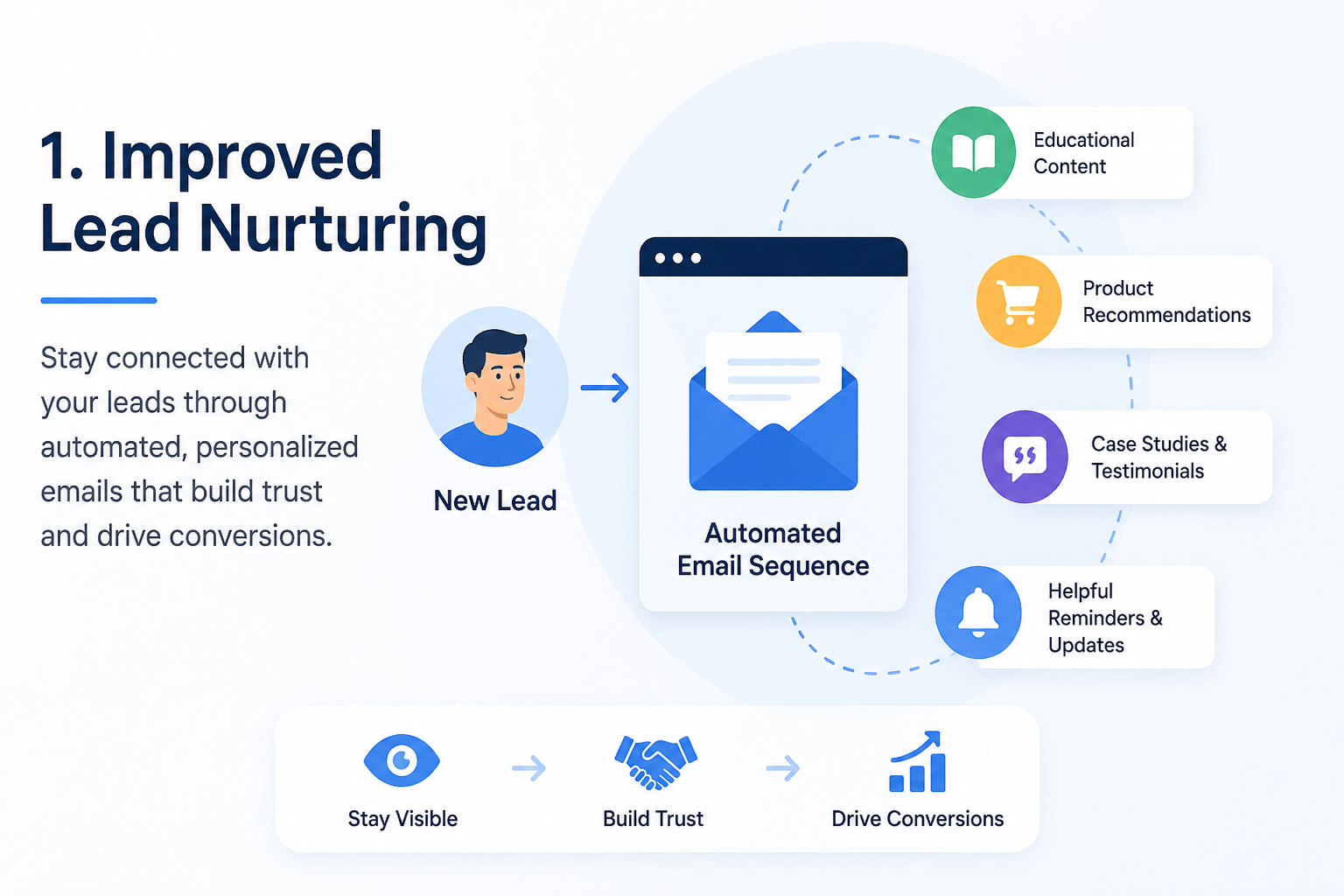
Not every lead is ready to buy immediately after discovering your business.
Some people need time, information, and multiple touchpoints before making a decision.
Email automation helps you stay connected throughout that journey without manual follow-ups.
You can automatically send:
- Educational content
- Product recommendations
- Case studies and testimonials
- Helpful reminders and updates
This keeps your brand visible while gradually building trust with potential customers.
2. Increased Conversion Rates
Sending the right message at the right time directly impacts conversions.
Automated campaigns react to customer behavior instantly, making communication more relevant.
For instance, someone who visits a pricing page may receive a targeted follow-up email automatically.
These timely interactions increase the chances of turning leads into paying customers.
Personalized automation also keeps prospects engaged instead of losing interest over time.
3. Time and Cost Efficiency
Managing large email campaigns manually takes significant time and resources.
Automation reduces repetitive work by handling scheduling, follow-ups, and customer journeys automatically.
This allows your team to focus on strategy, sales, and customer relationships instead of manual tasks.
It also lowers operational costs because fewer resources are needed for ongoing campaign management.
As your business grows, automation helps you scale communication more efficiently.
4. Better Customer Experience
Customers expect fast, relevant, and personalized communication from businesses today.
Email automation helps deliver that experience consistently across every stage of the customer journey.
Instead of receiving random messages, subscribers get content that matches their interests and actions.
This creates a smoother experience and makes communication feel more personal.
When customers receive useful information at the right moment, engagement naturally improves.
Essential Elements of Successful Email Automation
Email automation only works effectively when the foundation behind it is properly structured. Without a clear strategy, even automated campaigns can feel disconnected or ineffective.
1. Clear Goals and Strategy
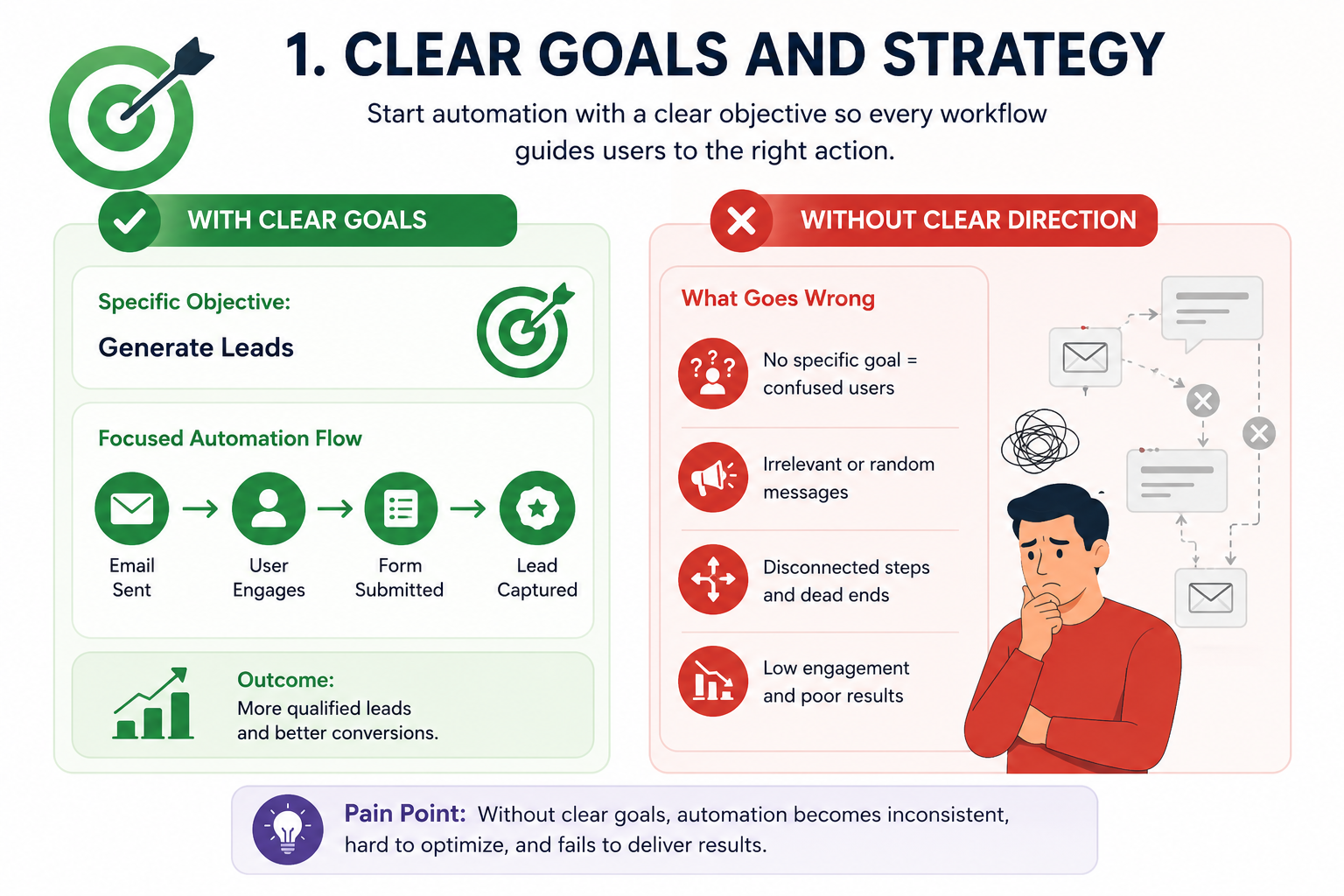
Every automated campaign should begin with a specific objective.
Your goal could be generating leads, increasing sales, onboarding customers, or improving retention.
Clear goals help you create focused workflows that guide users toward the right action.
Without direction, automation becomes inconsistent and difficult to optimize.
2. Audience Segmentation
Not every subscriber has the same interests, behavior, or buying intent.
Audience segmentation helps you group contacts based on factors like:
- Purchase history
- Engagement levels
- Industry or demographics
- Customer journey stage
This allows you to send more relevant emails that improve engagement and conversions.
3. Personalized Content
Generic emails often fail because they do not feel relevant to the reader.
Personalized content goes beyond simply adding someone’s first name to an email.
You should tailor messaging based on customer behavior, preferences, and interactions with your business.
The more relevant your emails feel, the more likely people are to engage with them.
4. Strong Call-to-Actions
Every email should guide readers toward a clear next step.
Whether you want users to book a demo, make a purchase, or read a resource, the action must be obvious.
Strong CTAs use direct and actionable language that encourages clicks and responses.
Confusing or weak CTAs often reduce engagement and hurt campaign performance.
Step-by-Step Guide to Creating Automated Email Campaigns with Oppora.ai
Now that you understand the foundation of email automation, the next step is building campaigns that actually drive results.
The process becomes much easier when you follow a structured workflow instead of setting everything randomly.
With Oppora.ai, you can manage outreach, automation, and email campaigns from one platform without juggling multiple tools.
Step 1: Define Your Campaign Goal
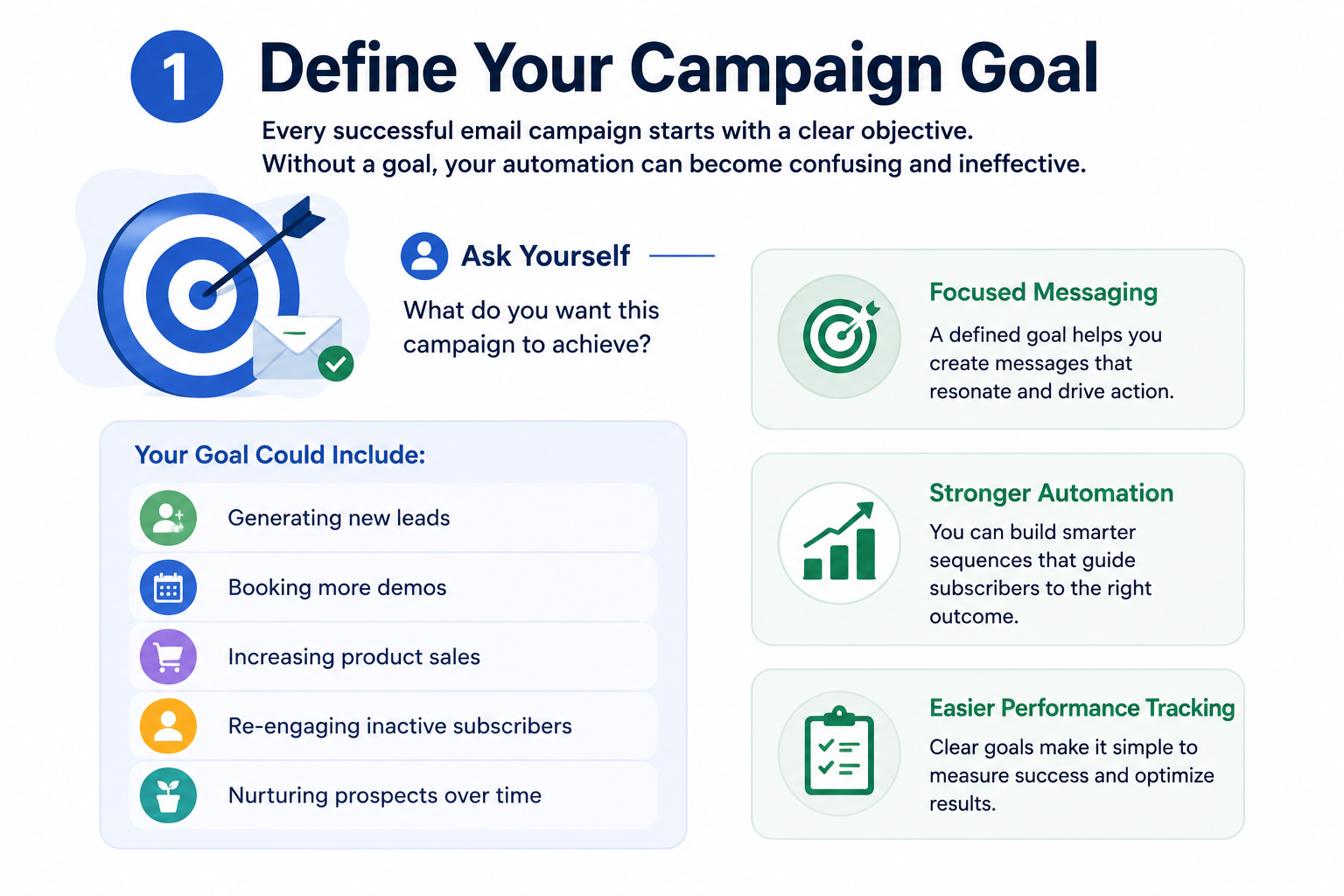
Every successful email campaign starts with a clear objective. Without a goal, your automation workflow can quickly become confusing and ineffective.
Ask yourself what you want the campaign to achieve.
Your goal could include:
- Generating new leads
- Booking more demos
- Increasing product sales
- Re-engaging inactive subscribers
- Nurturing prospects over time
A defined goal helps you create focused messaging and stronger automation sequences. It also makes performance tracking much easier later.
Step 2: Build Your Prospect List
Cold email automation starts with finding the right prospects. Instead of collecting newsletter subscribers, focus on building a targeted B2B lead list.
Your prospect list should match your ideal customer profile based on industry, company size, job role, or buying intent.
With Oppora.ai, you can search from 1B+ verified B2B leads directly inside the platform. This helps businesses find decision-makers without relying on multiple external tools.
You can identify prospects using filters like:
- Industry and niche
- Company headcount
- Job title or department
- Location and region
- Buying signals and intent data
A highly targeted prospect list improves reply rates and campaign performance significantly.
Suggested Reading:
How to Build a Prospect List Without Manual ResearchStep 3: Segment Your Audience
Once you have your lead list, segmentation becomes essential for effective cold outreach.
Sending identical emails to every prospect usually reduces engagement. Different companies and decision-makers respond to different messaging.
You can segment leads based on:
- Industry type
- Pain points
- Company size
- Funnel stage
- User intent or behavior
This allows your outreach to feel more personalized and relevant.
Better segmentation often leads to stronger open rates, replies, and conversions.
Step 4: Create Email Sequences
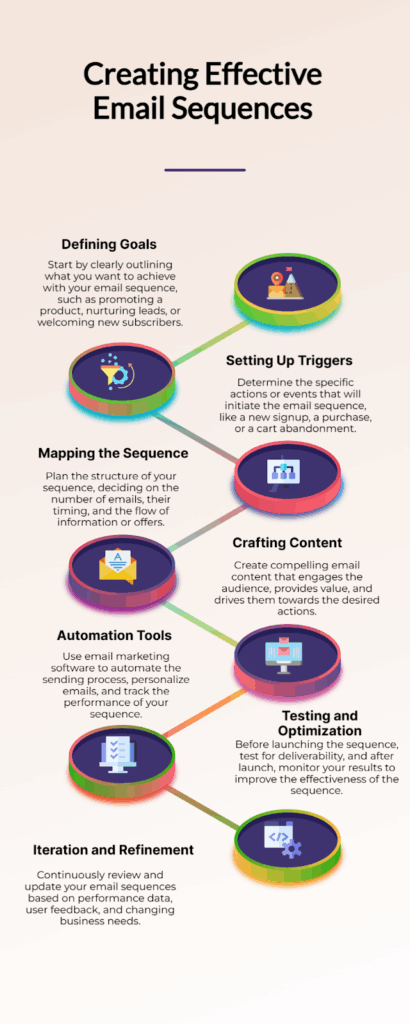
Cold email automation works best when communication happens through structured sequences.
An email sequence is a set of automated emails sent over multiple days. Instead of relying on a single email, sequences create repeated touchpoints with prospects.
A typical cold outreach sequence may include:
- A personalized introduction email
- A value-focused follow-up
- A case study or social proof email
- A reminder follow-up
- A final breakup email
Each email should feel natural and conversational instead of aggressive or overly sales-focused.
The goal is to build interest gradually while encouraging responses.
Step 5: Set Triggers and Automation Rules
Automation rules control when emails should be sent or follow-ups should stop. These triggers help campaigns react automatically based on prospect activity.
For example, workflows can change when someone:
- Replies to an email
- Opens a message multiple times
- Clicks a link
- Books a meeting
- Does not respond after several follow-ups
This prevents unnecessary emails and keeps outreach more relevant.
Oppora.ai simplifies cold email automation by managing workflows, replies, and follow-ups from one platform. That makes campaign scaling easier without increasing manual work.
Step 6: Write High-Converting Email Copy
Strong copy is one of the biggest factors behind successful cold email campaigns. Your emails should sound personal, relevant, and easy to understand. Avoid overly long messages or heavily promotional language.
Instead, focus on:
- Personalized opening lines
- Clear value propositions
- Short and readable formatting
- One simple CTA
- Conversational messaging
Cold emails perform better when they feel human rather than automated. The easier your email is to read, the higher the chance of receiving replies.
Step 7: Test and Optimize
Cold email automation requires ongoing optimization to improve performance consistently. Testing helps identify which strategies generate the best engagement and response rates.
You can test elements like:
- Subject lines
- Email personalization
- Sequence timing
- CTA placement
- Follow-up frequency
Tracking campaign analytics helps you understand what is working and where improvements are needed.
Monitoring opens, replies, meetings booked, and conversions helps optimize future campaigns more effectively. Even small improvements can significantly increase cold outreach results over time.
Best Practices for Email Campaign Automation
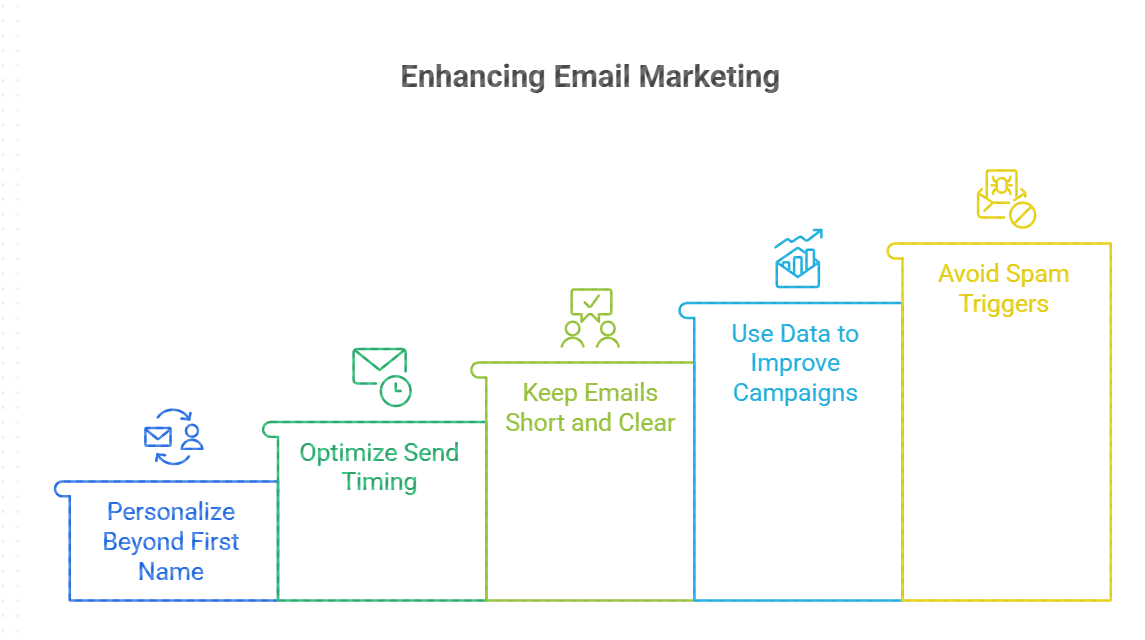
Creating automated campaigns is only the beginning. To improve results consistently, you need strategies that make emails feel relevant and valuable to readers.
Small improvements in timing, personalization, and messaging can significantly impact engagement and conversions.
1. Personalize Beyond First Name
Adding a subscriber’s first name is helpful, but true personalization goes much deeper.
Modern audiences expect emails that match their interests, behavior, and stage in the buying journey.
You can personalize campaigns using:
- Purchase history
- Browsing behavior
- Industry or role
- Previous email interactions
- Customer preferences
This makes your communication feel more relevant instead of generic. The more useful your emails feel, the higher the chances of engagement.
2. Optimize Send Timing
Even strong email content can underperform if it reaches inboxes at the wrong time. Your audience may engage differently depending on their location, schedule, or work habits.
Testing different send times helps identify when subscribers are most active.
You should monitor:
- Open rate patterns
- Click activity
- Time zone behavior
- Weekday performance
Optimized timing improves visibility and increases the likelihood of responses.
3. Keep Emails Short and Clear
Most people quickly scan emails instead of reading every line carefully. Long and overly detailed emails often reduce engagement and increase drop-offs. Your message should stay focused on one main goal.
To improve readability:
- Use short paragraphs
- Keep sentences simple
- Avoid unnecessary jargon
- Highlight the main value quickly
- Include one clear CTA
Clear communication usually performs better than overly complex messaging.
4. Use Data to Improve Campaigns
Email automation works best when decisions are backed by performance data. Analytics help you understand how subscribers interact with your campaigns. Instead of guessing, you can improve campaigns based on real engagement patterns.
Important metrics to track include:
- Open rates
- Click-through rates
- Reply rates
- Conversion rates
- Unsubscribe rates
Regular analysis helps you identify what needs improvement and what already performs well.
5. Avoid Spam Triggers
Even valuable emails can fail if they land in spam folders. Certain formatting choices and messaging patterns can hurt deliverability.
To reduce spam risks:
- Avoid excessive capitalization
- Limit spam-heavy phrases
- Use balanced image-to-text ratios
- Verify your email domain
- Keep contact lists clean
Maintaining good sending practices improves inbox placement and campaign performance.
Suggested Reading:
Outbound Email AutomationCommon Mistakes to Avoid in Email Automation
While automation creates efficiency, poor execution can quickly reduce engagement and trust.
Avoiding common mistakes helps your campaigns stay effective and customer-focused.
1. Over-Automation Without Personalization
Automation should improve communication, not make it feel robotic. Many businesses create workflows that send repetitive and overly generic messages. This often makes subscribers lose interest quickly.
Your emails should still feel human, relevant, and connected to customer needs. Balancing automation with personalization creates a much better experience.
2. Ignoring Analytics
Running campaigns without reviewing performance data limits long-term growth. Without analytics, it becomes difficult to understand why campaigns succeed or fail.
Regular monitoring helps identify weak subject lines, poor timing, or low-performing content. Small adjustments based on data can improve campaign performance significantly over time.
3. Poor Segmentation
Sending identical emails to every subscriber rarely produces strong results. Different audience groups respond to different messaging and offers.
Without segmentation, your campaigns may feel irrelevant to many recipients. This often leads to lower engagement and higher unsubscribe rates.
Better segmentation improves targeting and overall campaign effectiveness.
4. Sending Too Many Emails
Frequent emails can overwhelm subscribers and damage engagement. Even interested leads may unsubscribe if communication becomes excessive.
Instead of focusing on quantity, prioritize relevance and timing. Every email should provide clear value to the reader. Consistent but balanced communication usually creates stronger long-term customer relationships.
Why Choose Oppora.Ai for Email Automation
Choosing the right automation platform directly affects the success of your email campaigns. Many tools handle basic automation, but managing outreach, personalization, follow-ups, and replies separately often becomes difficult.
Oppora.ai simplifies the entire process by combining AI-powered outreach and automation into one workflow.
With Oppora.ai, you can:
- Build automated outreach sequences
- Search from 1B+ verified B2B leads directly inside the platform
- Personalize emails with AI
- Automate replies and follow-ups
- Manage leads from one platform
- Sync activities with your CRM automatically
The platform also helps businesses improve deliverability through domain warm-up and smart inbox rotation.
Instead of constantly managing campaigns manually, Oppora.ai allows your workflows to run consistently in the background. This helps teams save time while scaling outreach more efficiently.
How to Measure Success of Your Email Campaign Automation
Creating campaigns is important, but tracking performance is what helps you improve long-term results.
Monitoring the right metrics helps you understand how subscribers interact with your emails.
1. Open Rates
Open rates measure how many recipients open your emails after receiving them.
This metric helps evaluate:
- Subject line effectiveness
- Send timing performance
- Audience interest levels
Low open rates often indicate weak targeting or poor subject lines.
2. Click-Through Rates
Click-through rates show how many users clicked links inside your emails.
This helps measure how engaging and relevant your content feels to readers.
Strong CTAs and valuable content usually improve click performance significantly.
3. Conversion Rates
Conversion rates track how many subscribers complete a desired action after clicking an email.
This could include:
- Booking a demo
- Making a purchase
- Signing up for a webinar
- Downloading a resource
High conversion rates usually indicate strong targeting and effective messaging.
4. Response Rates
Response rates measure how many recipients actively reply to your emails.
This metric is especially valuable for sales and lead-generation campaigns.
Higher response rates often show that your emails feel personalized, relevant, and conversational rather than automated.
Conclusion
Email campaign automation helps businesses build stronger customer relationships while improving efficiency and sales performance.
With the right strategy, you can send personalized emails, nurture leads consistently, and increase conversions without managing every task manually.
The key is creating relevant workflows that focus on timing, personalization, and customer experience.
Platforms like Oppora.ai make the process easier by combining automation, outreach, and AI-powered engagement into one streamlined system, helping businesses scale campaigns more effectively.
Frequently Asked Questions (FAQs)
1. What is email campaign automation?
Email campaign automation is the process of sending pre-scheduled and behavior-based emails automatically to subscribers. It helps businesses improve engagement, save time, and increase conversions through timely communication.
2. Why is email campaign automation important for sales?
Email automation ensures consistent follow-ups, personalized messaging, and better lead nurturing. This helps businesses build stronger relationships with prospects and drive higher conversion rates.
3. How do I start creating automated email campaigns?
Start by defining your campaign goals, building and segmenting your email list, creating email sequences, and setting automation triggers. Then monitor performance metrics to optimize results over time.
4. What types of emails can be automated?
Businesses can automate welcome emails, onboarding emails, follow-up sequences, abandoned cart emails, promotional campaigns, lead nurturing emails, and re-engagement campaigns.
5. How can I improve the performance of my automated email campaigns?
You can improve performance by personalizing content, optimizing send times, testing subject lines, using clear CTAs, and analyzing metrics like open rates, click-through rates, and conversions regularly.
Summarize with AI
Share