Top 15 Email Marketing Trends You Need to Know
Ravikanth
Published May 18, 2026
12 min

Complete Agentic Email Outreach
AI agents find and enrich prospects, personalize emails, follow up, handle replies, and book meetings automatically.
Claim Your FREE Credits
Email marketing is changing faster than most businesses expected.
What worked even a year ago may now hurt engagement, reduce deliverability, or make your campaigns feel outdated.
At the same time, AI, privacy updates, personalization, and automation are reshaping how brands connect with customers through email.
If you want better opens, replies, clicks, and conversions, keeping up with the latest email marketing trends is no longer optional.
In this guide, you’ll discover:
- The biggest email marketing trends shaping modern campaigns
- How AI and automation are changing outreach
- What businesses must do to improve engagement and deliverability
- How modern sales and marketing teams are adapting faster than competitors
Top 15 Latest Email Marketing Trends Shaping Modern Campaigns
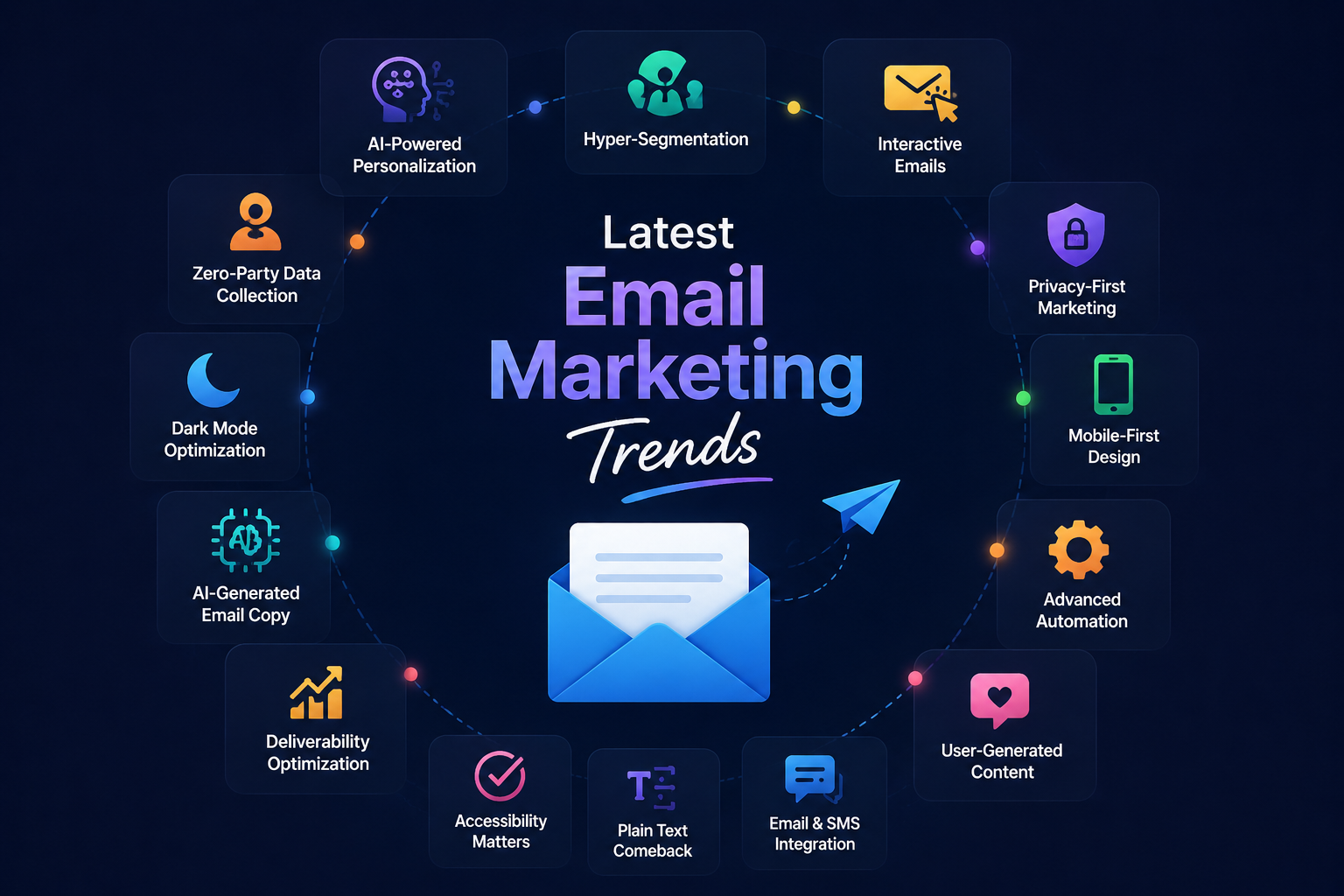
Email marketing is no longer just about sending newsletters or promotional offers.
Modern campaigns now depend on personalization, automation, user experience, and trust.
Businesses that adapt quickly are seeing stronger engagement, better deliverability, and higher conversion rates. Meanwhile, brands still relying on outdated mass-email strategies are struggling to keep attention in crowded inboxes.
Here are some of the biggest email marketing trends shaping modern campaigns today.
AI-Powered Personalization Is Becoming Standard
Generic email campaigns are slowly losing effectiveness. Customers now expect emails that feel relevant to their interests, behavior, and stage in the buying journey.
This is why AI-powered personalization is becoming one of the fastest-growing email marketing trends. AI tools can now analyze customer behavior, browsing activity, purchase history, and engagement patterns to create more relevant campaigns automatically.
Instead of sending the same email to thousands of people, businesses are creating highly tailored experiences at scale.
AI personalization is commonly being used for:
- Personalized subject lines
- Dynamic product recommendations
- Smart send-time optimization
- Behavior-triggered email sequences
- Personalized offers and follow-ups
The biggest advantage is that businesses can personalize campaigns without manually creating dozens of variations.
As AI tools continue improving, personalized email experiences will soon become the standard rather than a competitive advantage.
Hyper-Segmentation Is Replacing Broad Campaigns
For years, marketers grouped audiences into broad categories and sent large-scale campaigns to everyone at once. That approach is becoming far less effective today.
Modern consumers engage more with emails that match their exact interests, problems, and intent. This shift is pushing brands toward hyper-segmentation.
Instead of creating one campaign for an entire email list, businesses are now dividing audiences into smaller and more specific groups.
Segmentation can now happen based on:
- Purchase behavior
- Website activity
- Industry or company size
- Customer lifecycle stage
- Engagement frequency
- Geographic location
This level of targeting improves open rates, click-through rates, and overall campaign performance because the content feels more relevant to the reader.
Hyper-segmentation also helps reduce unsubscribes since subscribers receive fewer irrelevant emails.
Interactive Emails Are Increasing Engagement
Modern email marketing is becoming more interactive and engaging instead of static and text-heavy.
Brands are now using interactive email elements to encourage direct engagement inside the inbox itself. This creates a smoother experience and reduces friction for users.
Interactive emails often include:
- Polls and surveys
- Image carousels
- Product sliders
- Embedded quizzes
- Click-to-reveal offers
- Appointment booking buttons
These elements make emails feel more dynamic and encourage readers to spend more time interacting with the content.
Interactive campaigns can also improve click-through rates because users are actively participating rather than passively reading.
As inbox competition increases, interactive experiences are becoming an important way for brands to stand out.
Privacy-First Email Marketing Is Growing Fast
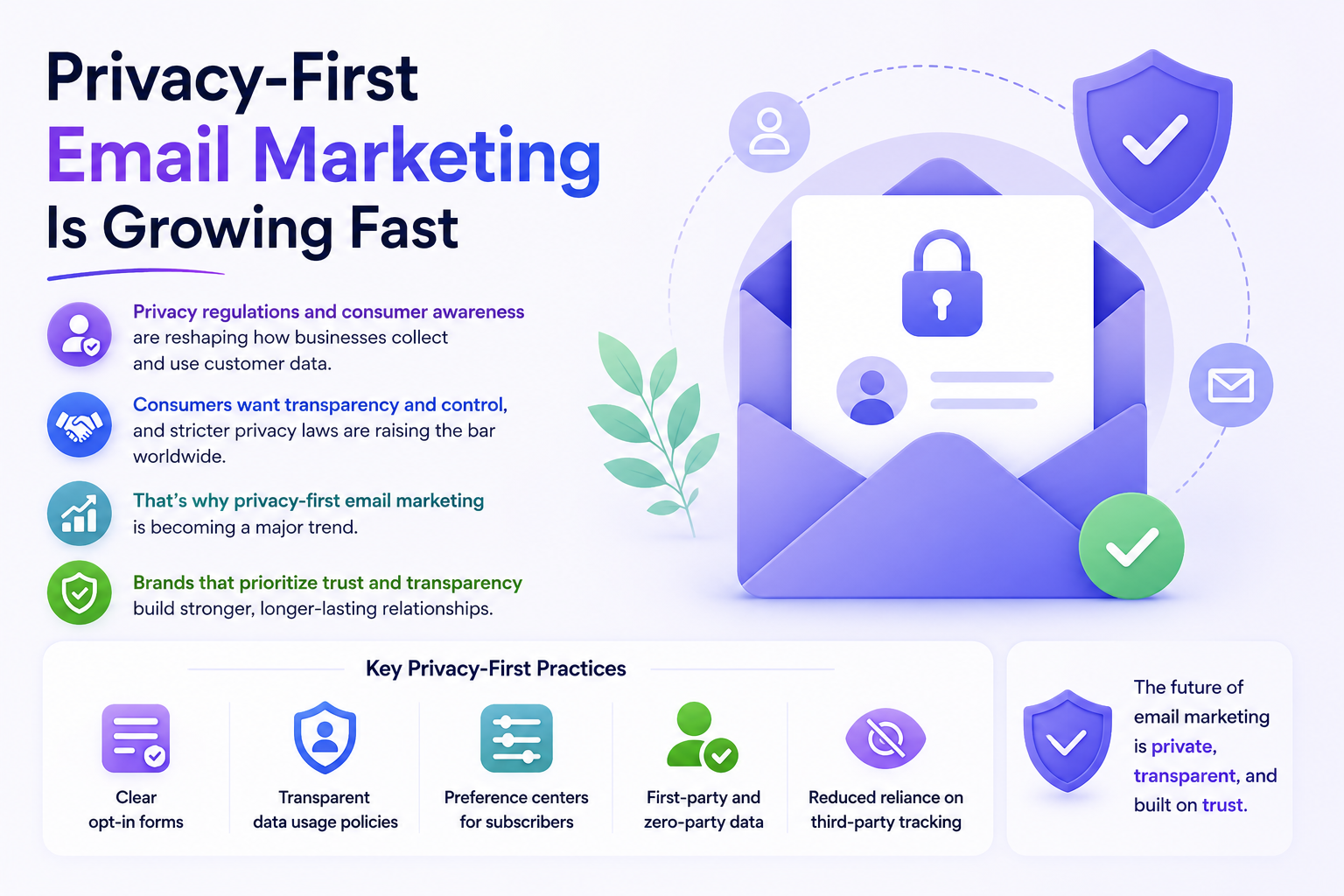
Privacy regulations and consumer awareness are changing how businesses collect and use customer data.
People are becoming more cautious about sharing personal information, and governments are introducing stricter privacy rules across different regions.
Because of this, privacy-first email marketing is becoming a major trend. Businesses are now focusing more on transparency, consent, and ethical data collection.
This shift includes practices like:
- Clear opt-in forms
- Transparent data usage policies
- Preference centers for subscribers
- First-party and zero-party data collection
- Reduced dependence on third-party tracking
Email marketers are also preparing for a future with limited tracking capabilities as platforms continue restricting cookies and behavioral tracking.
Brands that prioritize trust and transparency are more likely to build stronger long-term customer relationships.
Suggested Reading:
How to Prevent Emails From Going to SpamMobile-First Email Design Is No Longer Optional
Most users now open emails on mobile devices before checking them on desktops. Yet many businesses still design campaigns primarily for larger screens.
That approach creates poor user experiences, lower engagement, and lost conversions.
Mobile-first email design is now essential because readers expect emails to load quickly, look clean, and remain easy to navigate on smaller screens.
Modern mobile-friendly emails usually focus on:
- Short paragraphs and scannable formatting
- Larger fonts for readability
- Single-column layouts
- Fast-loading visuals
- Clear call-to-action buttons
- Minimal clutter and spacing issues
A mobile-optimized email not only improves readability but also increases the likelihood of clicks and conversions.
As mobile usage continues growing, brands that ignore mobile-first design will struggle to maintain strong email performance.
Advanced Email Automation Is Becoming Essential
Manual email workflows are becoming difficult to manage as businesses scale outreach and customer communication.
This is why advanced email automation is now becoming essential for modern marketing teams. Automation helps businesses send timely, relevant, and behavior-based emails without constant manual work.
Instead of creating one-time campaigns, brands are building automated journeys that react to customer actions in real time.
Advanced automation is commonly used for:
- Welcome email sequences
- Cart abandonment reminders
- Lead nurturing campaigns
- Re-engagement workflows
- Follow-up emails after downloads or demos
- Customer onboarding sequences
Modern automation tools also allow businesses to combine AI with workflows to improve timing, personalization, and responses automatically.
The biggest benefit is consistency. Automated systems help businesses stay connected with leads and customers without delays or missed opportunities.
User-Generated Content Is Driving More Trust
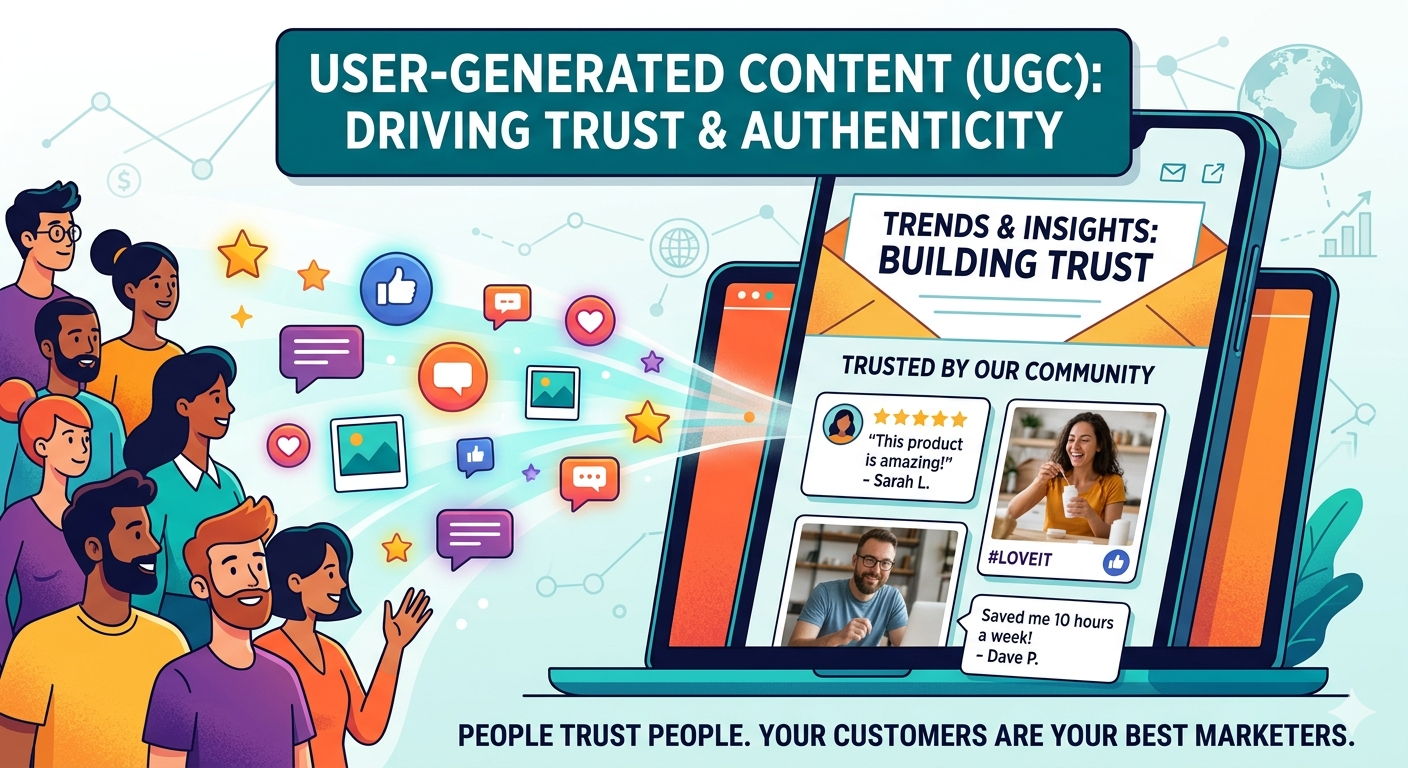
Customers trust other customers more than traditional brand messaging. Because of this, user-generated content is becoming a powerful part of email marketing campaigns.
Brands are now adding customer reviews, testimonials, social media posts, and community content directly inside emails to create stronger credibility.
This approach makes campaigns feel more authentic and less promotional.
User-generated content in emails often includes:
- Customer reviews and ratings
- Product photos shared by users
- Social media screenshots
- Case studies and testimonials
- Community success stories
When subscribers see real experiences from other people, they are more likely to trust the brand and take action.
This trend is especially effective for ecommerce brands, SaaS businesses, and service providers trying to build long-term customer confidence.
Accessibility Is Becoming a Major Email Marketing Trend
Businesses are realizing that email campaigns should be easy to read and navigate for everyone, including users with disabilities.
Accessibility is no longer treated as an optional improvement. It is becoming an important part of modern email marketing strategy.
Accessible emails improve the experience for a wider audience while also supporting better readability across devices.
Brands are now focusing on accessibility improvements such as:
- Clear font sizes and spacing
- High color contrast for readability
- Descriptive alt text for images
- Proper heading structure
- Screen-reader-friendly formatting
- Simple and easy-to-click buttons
Accessibility improvements often benefit all users, not just people with disabilities. Emails become cleaner, easier to scan, and less overwhelming overall.
As inclusivity becomes more important across digital marketing, accessible email design will continue growing in importance.
Plain Text Emails Are Making a Comeback
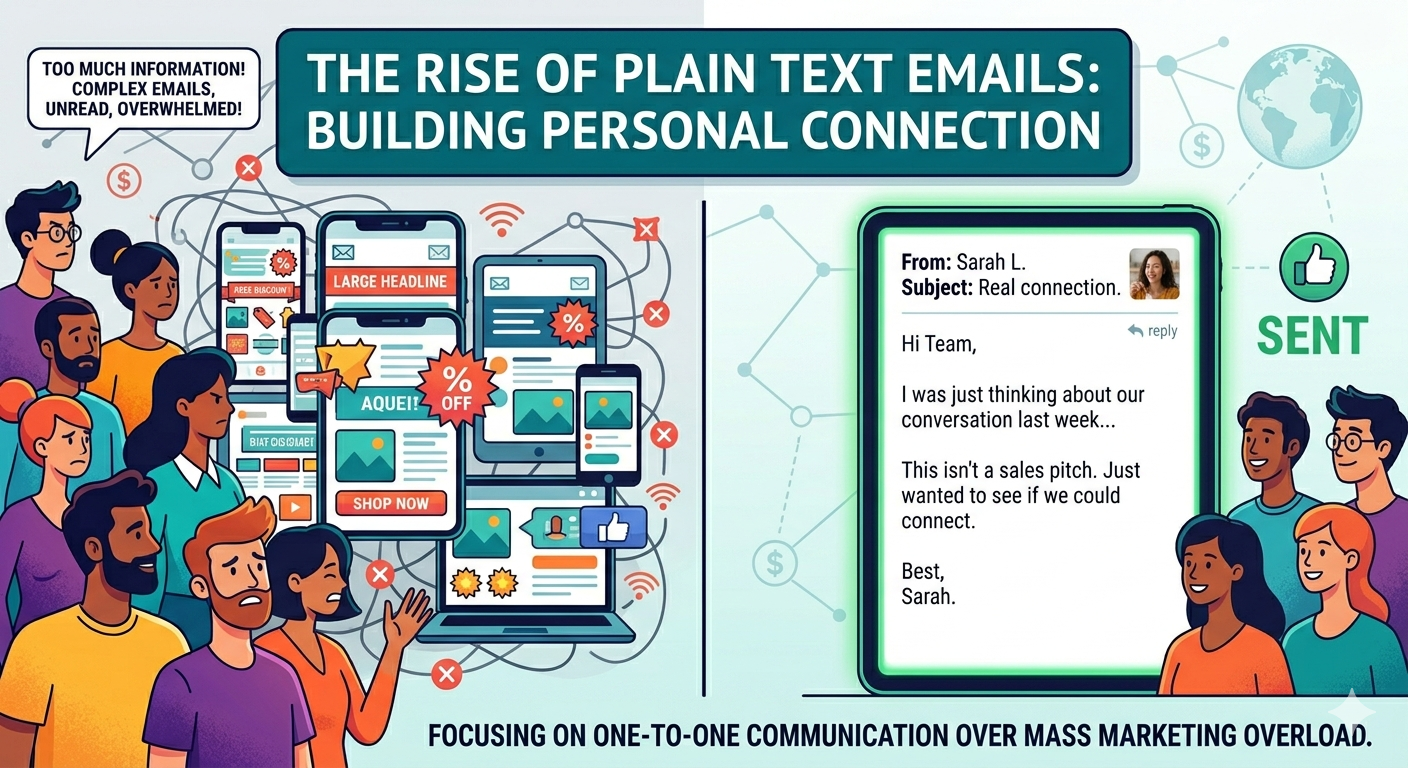
While visually designed emails remain popular, many businesses are also shifting toward simple plain text emails for certain campaigns.
Subscribers are becoming overwhelmed by heavily designed promotional emails that feel automated or overly sales-focused. Plain text emails create a more personal and conversational experience.
They often look like direct one-to-one communication instead of a mass marketing campaign.
Plain text emails are especially effective for:
- Cold outreach campaigns
- Founder-led communication
- Follow-up sequences
- Relationship-building emails
- B2B sales conversations
Another reason behind this trend is deliverability. Simpler emails with fewer heavy design elements can sometimes perform better in inbox placement.
Many businesses are now combining both approaches by using minimal design while keeping the tone personal and natural.
Email and SMS Integration Is Expanding
Businesses are no longer relying on a single communication channel to engage customers.
Email and SMS integration is becoming more common because brands want to create faster and more connected customer experiences across multiple touchpoints.
Email works well for detailed communication, while SMS helps deliver quick updates and urgent actions. Together, they create a stronger engagement strategy.
Businesses commonly combine email and SMS for:
- Appointment reminders
- Limited-time offers
- Cart recovery campaigns
- Event registrations
- Delivery updates
- Follow-up communication
This multi-channel approach improves customer reach because users may ignore one channel but respond to another.
Integrated communication workflows also help businesses maintain consistency across campaigns instead of treating every channel separately.
As customer expectations continue increasing, brands using connected communication strategies will have a major advantage in engagement and response rates.
Zero-Party Data Collection Is Increasing
Businesses are becoming less dependent on third-party data because of growing privacy restrictions and changing customer expectations.
This shift is increasing the importance of zero-party data collection in email marketing. Zero-party data refers to information customers intentionally share with a business.
Instead of tracking users silently, brands are now directly asking subscribers about their preferences, interests, and buying intent.
Common zero-party data collection methods include:
- Preference centers
- Surveys and polls
- Interactive quizzes
- Signup form selections
- Product interest checkboxes
The biggest advantage is accuracy. Since users willingly provide the information, businesses can create more relevant email experiences without relying heavily on tracking tools.
This approach also helps build trust because customers feel more in control of their data and communication preferences.
Dark Mode Optimization Is Becoming Essential
A growing number of users now view emails in dark mode across mobile devices and email platforms.
Unfortunately, many email campaigns still break visually when displayed in dark mode. Colors become unreadable, logos disappear, and layouts lose clarity.
This is why dark mode optimization is becoming an important part of modern email design.
Businesses are now testing campaigns across both light and dark viewing modes to ensure consistent readability and branding.
Dark mode optimization usually focuses on:
- Readable text contrast
- Transparent logo backgrounds
- Balanced color combinations
- Optimized image visibility
- Mobile-friendly layouts
A poorly optimized email can hurt user experience even if the content itself is strong.
As dark mode usage continues increasing, brands that ignore this trend may struggle with engagement and readability issues.
AI-Generated Email Copy Is Growing Rapidly
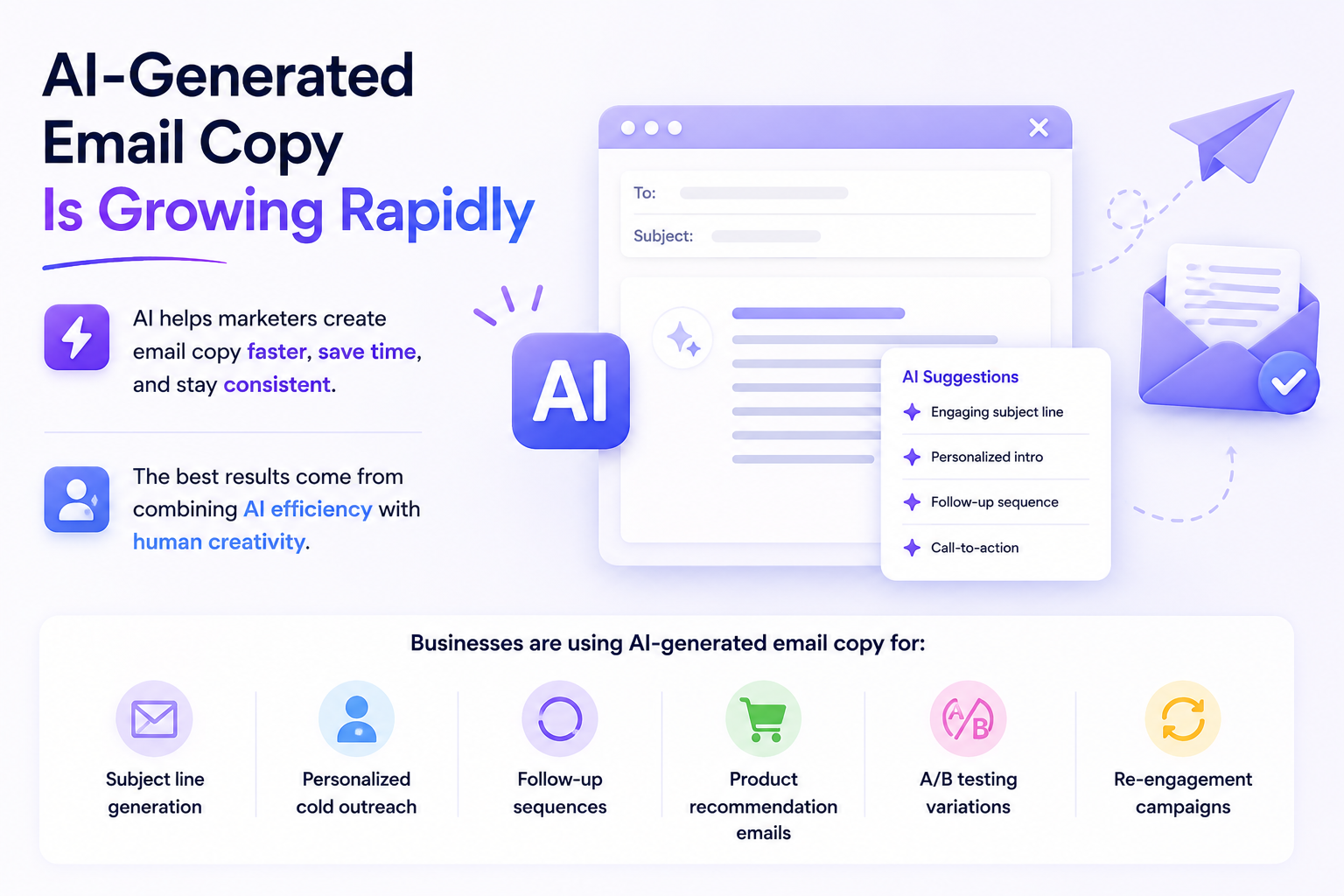
AI is changing how businesses create email campaigns at scale.
Instead of spending hours writing every campaign manually, marketers are now using AI tools to generate subject lines, email drafts, follow-ups, and personalization variations faster.
This trend is growing rapidly because AI helps teams save time while improving consistency across campaigns.
Businesses are using AI-generated email copy for:
- Subject line generation
- Personalized cold outreach
- Follow-up sequences
- Product recommendation emails
- A/B testing variations
- Re-engagement campaigns
However, successful brands are not relying entirely on AI-generated text without review. Human editing is still important for tone, accuracy, and emotional connection.
The strongest campaigns usually combine AI efficiency with human creativity and brand voice.
Deliverability Optimization Is Becoming a Core Focus
Getting emails delivered successfully is now just as important as writing good copy.
Many businesses are realizing that poor deliverability can quietly damage campaign performance even when content and targeting are strong.
This is why deliverability optimization is becoming a major email marketing priority.
Modern email strategies now focus heavily on protecting sender reputation and improving inbox placement.
Businesses are investing more attention into:
- Email authentication protocols
- Inbox warm-up strategies
- Bounce rate reduction
- Spam trigger monitoring
- List cleaning and verification
- Domain reputation management
Deliverability problems can reduce open rates, hurt conversions, and make future campaigns less effective over time.
As inbox providers continue tightening spam filters, businesses with strong deliverability practices will gain a significant advantage.
Minimalist Email Design Is Rising
Many modern email campaigns are moving away from overly crowded layouts and excessive design elements.
Minimalist email design is becoming more popular because it improves readability and helps readers focus on the main message faster.
Simple designs also tend to perform better on mobile devices where users prefer quick and easy-to-scan content.
Minimalist email design often includes:
- Clean layouts with more spacing
- Shorter copy blocks
- Limited color usage
- Focused call-to-action buttons
- Reduced visual clutter
This design style creates a more modern and professional appearance while making emails easier to consume.
As inbox competition grows, cleaner and simpler campaigns are helping brands capture attention without overwhelming subscribers.
How Oppora Helps Businesses Stay Ahead of Email Marketing Trends
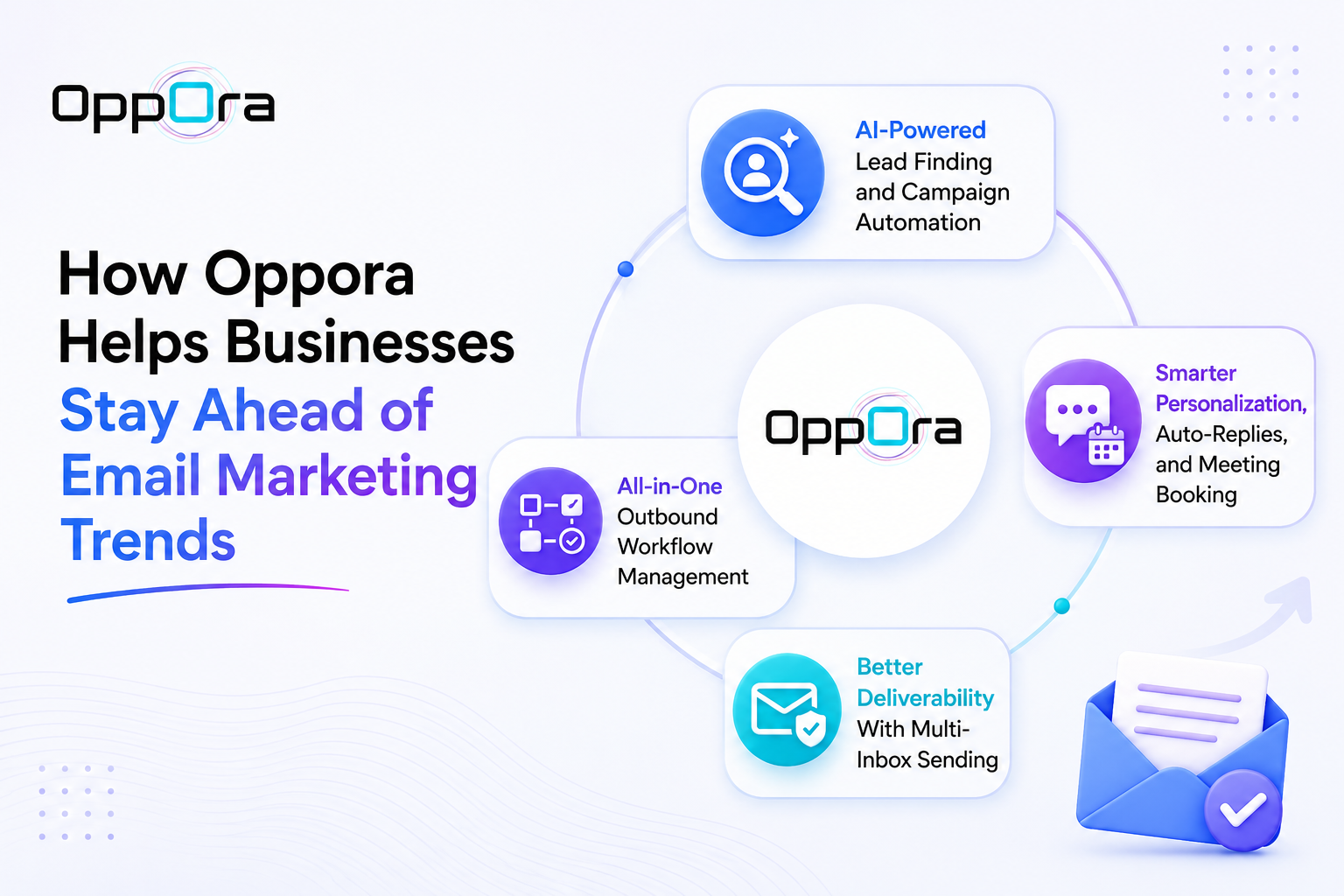
Modern email marketing is no longer just about sending campaigns. Businesses now need better personalization, automation, deliverability, and workflow management to stay competitive.
This is where Oppora helps businesses adapt to changing email marketing trends more efficiently.
AI-Powered Lead Finding and Campaign Automation
Finding the right leads and launching campaigns manually can slow down growth. Oppora simplifies this process with AI-powered outbound workflows.
Businesses can:
- Find targeted companies and decision-makers
- Access 1B+ verified contact data
- Automate outreach workflows
- Run multi-step email campaigns
- Manage lead enrichment and verification
This helps teams scale outreach without relying heavily on manual processes.
Smarter Personalization, Auto-Replies, and Meeting Booking
Personalized communication is becoming essential for improving engagement and response rates.
Oppora helps businesses create AI-personalized outreach while also automating replies and meeting scheduling.
Key capabilities include:
- AI-generated personalized emails
- Automated lead replies
- AI-assisted qualification workflows
- Automatic meeting booking integration
- Follow-up automation
This allows businesses to maintain faster and more consistent communication with prospects.
Better Deliverability With Multi-Inbox Sending
Deliverability has become one of the biggest priorities in email marketing.
Oppora supports safer outreach scaling with features designed to improve inbox placement and protect sender reputation.
Deliverability-focused features include:
- Multi-inbox sending
- Inbox rotation
- Domain warm-up automation
- Email verification workflows
- Mail-provider matching for outreach
These systems help reduce spam risks while improving campaign performance.
All-in-One Outbound Workflow Management
Instead of using multiple disconnected tools, businesses can manage outreach workflows from one platform.
Oppora combines lead generation, email automation, replies, reporting, and CRM syncing into a unified outbound workflow system that helps teams operate more efficiently at scale.
Conclusion
Email marketing is evolving toward smarter personalization, stronger deliverability, better automation, and more customer-focused communication.
Businesses that continue relying on outdated mass-email strategies will find it harder to maintain engagement and conversions.
The good news is that modern tools and AI-powered workflows are making it easier to adapt to these changes at scale.
By following the latest email marketing trends and improving how you manage outreach, personalization, and customer experience, you can build campaigns that generate stronger relationships, better responses, and long-term business growth.
Frequently Asked Questions
What are the latest email marketing trends businesses should follow?
Some of the biggest email marketing trends include AI-powered personalization, advanced automation, hyper-segmentation, deliverability optimization, interactive emails, and mobile-first email design.
Businesses are also focusing more on privacy-first marketing, zero-party data collection, and multi-channel communication strategies.
Why is personalization important in email marketing?
Personalization helps emails feel more relevant to the reader.
Instead of sending generic campaigns, businesses can tailor messages based on user behavior, interests, engagement history, and buying intent. This usually improves open rates, clicks, and conversions.
How can businesses improve email deliverability?
Businesses can improve deliverability by using verified email lists, warming up domains, reducing bounce rates, and avoiding spam-triggering content.
Using inbox rotation, authentication protocols, and list-cleaning practices also helps emails land in primary inboxes more consistently.
How is AI changing email marketing?
AI is helping businesses automate lead generation, personalize email copy, optimize send times, generate replies, and manage workflows more efficiently.
It allows teams to scale outreach faster while still maintaining relevant and personalized communication.
Why is mobile-first email design important?
Most users now open emails on mobile devices before desktops.
Mobile-first design ensures emails remain readable, fast-loading, and easy to interact with on smaller screens. This improves user experience, engagement, and conversion rates.
Summarize with AI
Share