Lead Loss Prevention: Best Tools to Stop Losing Sales Leads
Stephen Parker
Published September 28, 2026
16 min

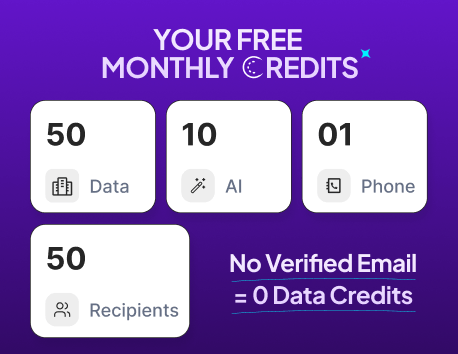
Complete Agentic Email Outreach
AI agents find and enrich prospects, personalize emails, follow up, handle replies, and book meetings automatically.
Claim Your FREE Credits
You’re generating leads, your CRM is filling up, and sales is still saying, “the leads are weak.” But are bad leads really the problem?
Often, lead loss happens after a good prospect enters your sales process. A slow response, missed follow-up, poor qualification, or disconnected handoff can turn genuine interest into another lost opportunity.
And simply generating more leads won’t fix a pipeline that keeps leaking.
In this guide, you’ll learn:
- Where and why you’re losing leads
- How to prevent good prospects from slipping away
- Which tools can reduce preventable lead loss
- Which lost leads are actually worth recovering
TL;DR: How to Stop Losing Sales Leads
- Lead loss happens when potential buyers enter your funnel but stop progressing before they convert.
- Don’t immediately assume the leads are weak. Slow responses, poor routing, weak qualification, generic outreach, and missed follow-ups can make good leads look bad.
- Track stage-to-stage conversion to pinpoint exactly where you’re losing leads before changing your process.
- Separate lead fit from buying intent so your sales team knows who needs immediate attention and who needs nurturing.
- Automate enrichment, scoring, routing, outreach, follow-ups, reply handling, and CRM updates to close operational gaps.
- Re-engage high-fit lost leads when timing changes or fresh buying signals appear instead of chasing every old contact.
Are You Getting Bad Leads or Losing Good Ones?
When sales slows down, it’s easy to conclude that the leads are weak. But before you blame lead quality, ask a more useful question: are you getting bad leads, or are good leads disappearing somewhere in your sales process?
Lead loss happens when a potential buyer enters your funnel or shows genuine interest but fails to progress toward a purchase. That loss can happen at almost any stage from the first handoff to qualification, follow-up, meeting, or opportunity.
So, a lead that doesn’t convert isn’t automatically a bad lead.
Bad Lead vs. Weak Lead vs. Failing Lead vs. Lost Lead
These terms describe different situations, and treating them as interchangeable can lead you to take the wrong action.
Imagine a prospect matches your ICP, attends a demo, and then goes quiet because their budget gets frozen. Calling them a bad lead hides what actually happened.
They may be a lost lead or no-decision opportunity worth revisiting when their situation changes.
Find the Exact Point Where Leads Disappear
Once you separate poor-quality leads from preventable lead loss, look at your funnel as a sequence of transitions:
Lead captured → Assigned → Contacted → Qualified → Meeting → Opportunity → Customer
Instead of saying, “We’re losing leads,” identify where that loss becomes unusually high.
Track metrics such as:
- Lead response time and contact rate
- Qualification and follow-up completion rates
- Lead aging and no-response rate
- Stage-to-stage conversion
- Closed-lost reasons
- Conversion by lead source
You can calculate loss at any stage with a simple formula:
Lead Loss Rate = (Leads Lost at a Stage ÷ Leads Entering That Stage) × 100
Suppose 200 qualified leads enter your meeting stage, but 50 disappear before progressing. Your lead loss rate at that transition is 25%.
That number alone doesn’t tell you whether performance is good or bad. Compare it with your historical performance, other funnel stages, and similar lead sources.
That way, you stop guessing why you’re losing leads and start identifying the specific leak that needs fixing.
Why Good Sales Leads Slip Through the Cracks
Once you know where leads are disappearing, the next question is why. In many cases, lead loss has less to do with generating bad leads and more to do with what happens after interest appears.
Slow responses, unclear ownership, poor qualification, generic outreach, and inconsistent follow-up can all turn promising prospects into lost leads.
Slow Response Turns Hot Leads Cold
Buyer intent is often strongest when someone takes action requesting information, submitting a form, or booking a demo. The longer you wait, the more time they have to explore alternatives or simply move on.
A Harvard Business Review study of 2,241 U.S. companies found that only 37% responded to web-generated leads within an hour, while 23% never responded at all. A separate analysis cited in the same research found that companies contacting leads within an hour were nearly 7× more likely to qualify them than those waiting another hour. Nurture247
That’s why you need a clear response-time SLA defining how quickly a new high-intent lead should receive attention and who is responsible for responding.
Leads Get Lost Between People and Tools
Sometimes you’re losing leads because nobody knows who owns them.
A prospect enters through marketing, waits for manual routing, gets transferred to sales, and then sits unassigned. Or your prospecting platform and CRM aren’t properly connected, leaving reps with incomplete records.
This creates gaps such as:
- Leads sitting without an owner
- Delayed marketing-to-sales handoffs
- Incomplete CRM records
- Manual routing errors
- Follow-ups happening outside the CRM
In these situations, you don’t necessarily have a lead-generation problem. You have an operational one.
Weak Qualification Makes the Entire Pipeline Look Weak
If every captured contact gets pushed directly to sales, reps will eventually conclude the leads are weak.
Instead, separate two questions.
Fit: Is this a company and decision-maker you can realistically help?
Intent: Is there evidence they might be interested in buying now?
Someone can be an excellent ICP fit without being ready to purchase today. Treating that person like a hot opportunity can turn a potentially valuable prospect into a failing lead.
High-fit, low-intent prospects often need nurturing rather than aggressive outreach.
Generic Outreach Gives Good Leads No Reason to Reply
Even the right prospect can ignore you when your message feels like it could have been sent to 5,000 other people.
Personalization needs to go beyond inserting {First Name}.
Your message should reflect context such as the buyer’s role, company, likely pain points, previous engagement, or relevant business activity. That gives the prospect an actual reason to pay attention.
Your Follow-Up Ends Before Their Buying Process Does
Finally, no response doesn’t automatically mean no interest.
A promising prospect can disappear because of a budget freeze, competing priority, internal approval process, leadership change, procurement delay, or paused evaluation.
This is why repeatedly labeling silent prospects as bad leads can distort your pipeline.
The goal isn’t to chase everyone indefinitely. It’s to build a process that recognizes when a good prospect needs another touch, when they need more time, and when they genuinely should be disqualified.
How to Stop Losing Leads Before They Become Lost Opportunities
You don’t prevent lead loss by chasing every prospect harder. You prevent it by designing a sales process where qualified opportunities have fewer chances to disappear.
That means creating clear rules for qualification, ownership, follow-up, automation, and tracking.
Qualify Before You Prioritize
Start with a clear Ideal Customer Profile (ICP). It helps you separate genuinely valuable prospects from bad leads before your sales team spends time on them.
Score fit and intent separately instead of treating every captured lead equally.
Fit signals can include:
- Industry and company size
- Geography
- Job role and seniority
- Relevant pain points
- Whether your solution matches their needs
Intent signals can include:
- Previous engagement
- Demo or information requests
- Buying signals
- Recent company activity
- Timing and urgency
A high-fit, high-intent lead deserves immediate attention. A high-fit prospect with limited intent may be valuable too, but nurturing them usually makes more sense than pushing for a meeting immediately.
Give Every Qualified Lead an Owner and a Deadline
A qualified lead should never enter your pipeline without answering two questions:
- Who owns this lead?
- When must they take the next action?
Set clear ownership rules and use automated routing where possible. You can also establish response SLAs based on lead type and intent.
If nobody acts within that window, trigger an escalation or reassignment. This prevents good prospects from quietly aging inside your CRM because everyone assumed somebody else was handling them.
Build Follow-Up Around Buyer Context
Sending every prospect through the same sequence can create another source of lead loss.
Instead, build follow-up paths around what you already know:
- High fit + high intent → Start immediate sales outreach.
- High fit + low intent → Add the prospect to a nurture sequence.
- High intent + uncertain fit → Qualify before investing more sales time.
- No response → Run a structured follow-up sequence.
- No decision → Pause and schedule a relevant re-engagement.
This approach helps you keep promising leads moving without repeatedly chasing prospects who aren’t ready.
Automate the Gaps Where Leads Usually Disappear
Now look at the steps that still depend on someone remembering what to do next.
A connected process can look like:
Find → Enrich → Verify → Score → Route → Contact → Follow Up → Handle Reply → Update CRM
Automation isn’t valuable simply because it lets you send more emails. It helps because important actions happen consistently and at the right stage.
You can automate tasks such as:
- Enriching missing prospect information
- Verifying contact details before outreach
- Scoring and routing qualified leads
- Scheduling follow-ups
- Handling and categorizing replies
- Updating CRM records after engagement
That reduces the manual gaps where otherwise promising leads can disappear.
Record Why Every Lead Was Lost
You won’t eliminate every lost lead, nor should that be the goal. Instead, understand why leads leave your pipeline.
Use consistent closed-lost reasons such as:
- No response
- Poor fit
- Budget
- Timing
- Competitor
- Missing capability
- No decision
Then turn those reasons into actions:
- Too many “no response” losses → Review messaging and follow-up.
- Too many poor-fit losses → Improve targeting and qualification.
- Too many timing losses → Build stronger nurture and re-engagement.
- Too many competitor losses → Review where prospects see stronger value elsewhere.
Once you track these patterns, lead loss stops being a vague complaint. You can see where the process is failing, fix the underlying issue, and give good opportunities fewer chances to slip away.
Best Tools to Prevent Lead Loss in 2026
Once you know which part of the process is leaking, choosing software becomes much easier. The right tool is the one that fixes the gap causing qualified leads to disappear.
Some teams need better outbound automation. Others need faster routing, stronger nurturing, or simply a clearer view of opportunities already in the pipeline.
Here’s how five options compare.
Quick Comparison
*HubSpot currently displays $7/user/month as promotional Starter pricing, alongside a $20/user/month standard figure, so check the live offer before purchasing.
1. Oppora.ai — Best for Preventing Lead Loss Across the Outbound Workflow
A good B2B prospect can disappear at several points. You might target the right company but reach the wrong person, use an unverified email, miss a follow-up, or leave an interested reply sitting in an inbox.
Oppora.ai helps reduce these gaps by connecting prospecting, qualification, outreach, reply handling, and pipeline management. Its Finder lets you search 60M+ companies and 1B+ people, while your ICP can guide prospect discovery, lead scoring, outreach messaging, and Reply Ora. Oppora-Knowledge-Base-Complete
Here’s how Oppora addresses common lead loss points:
With AI Workflows, you can connect steps such as:
Find → Enrich → Score → Outreach → Reply → CRM
This reduces the number of handoffs where leads can be forgotten. Reply Ora can also classify incoming responses by intent and draft or send replies based on your configured approach. The built-in CRM tracks accounts, contacts, opportunities, and tasks. Oppora-Knowledge-Base-Complete
Use case: Suppose you’re targeting HR leaders at growing SaaS companies. You can find matching companies and decision-makers, enrich and verify their contact details, prioritize leads, run outreach, handle replies, and move qualified opportunities into your pipeline.
You can still manually search leads, create lists, and build campaigns whenever you need more control. Oppora-Knowledge-Base-Complete
Starting price: Free plan; Pro $34/month.
2. HubSpot Sales Hub Best for Inbound Lead Nurturing
If you’re generating inbound leads but losing them after form submission, during qualification, or between marketing and sales, HubSpot Sales Hub can help keep those prospects visible and moving.
HubSpot combines CRM data, lead management, pipelines, follow-up activities, and sales automation. Its lead pipeline automation can move leads through stages based on activities such as outreach, replies, and completed meetings. HubSpot Knowledge Base
Here’s where it can help reduce lead loss:
For follow-up, HubSpot’s sequences can send timed, personalized emails and automatically create tasks for sales reps. Contacts can also be unenrolled when they reply or book a meeting, helping you avoid continuing an irrelevant sequence after a prospect takes action. HubSpot Knowledge Base
Use case: Suppose a prospect submits a demo form but isn’t ready to buy immediately. You can keep their CRM activity centralized, assign ownership, create follow-up tasks, and use sequences to nurture the relationship instead of letting the lead disappear after the initial inquiry.
This makes HubSpot particularly useful when your lead loss happens after inbound acquisition, during nurturing, or around the marketing-to-sales handoff.
Starting price: Free for up to two users. HubSpot currently displays promotional Starter pricing from $7/user/month, compared with a listed $20/user/month standard price. hubspot.com
3. Salesforce Sales Cloud Best for Complex Lead Routing
When you have multiple sales reps, territories, products, or approval steps, lead loss can happen simply because the right prospect reaches the wrong person—or nobody takes ownership quickly enough.
Salesforce Sales Cloud helps you structure these handoffs with lead management, assignment and routing, opportunity management, task tracking, and customizable sales processes. Salesforce
Here’s how it addresses common lead-loss points:
A key strength is routing. Salesforce’s Starter Suite includes built-in sales flows and lead routing, while higher tiers provide greater customization and automation for more complicated sales processes. Salesforce
Use case: Suppose you sell across several regions. A new enterprise lead from Europe shouldn’t sit in a general queue waiting for someone to notice it. You can build routing rules that direct leads into the appropriate sales process, then track activities and opportunities from the same CRM.
This makes Salesforce useful when you’re losing leads because your sales organization has complex ownership, routing, or pipeline requirements rather than simply lacking prospects.
Starting price: Salesforce currently offers a Free Suite at $0. Starter Suite costs $25/user/month, billed monthly or annually. Salesforce
4. Pipedrive Best for Keeping Deals Visible
Sometimes lead loss happens after you’ve already done the difficult part. You found the right prospect, qualified them, and started a conversation but then nobody schedules the next call or notices that the opportunity has gone quiet.
Pipedrive focuses on keeping leads, deals, activities, and next steps visible in a sales pipeline. Its activity system lets you attach calls, meetings, tasks, and emails to leads or deals, while reminders help you see what needs attention next. Pipedrive Support
Here’s where it can help:
One particularly useful feature for losing leads is deal rotting. Pipedrive can highlight deals that have remained inactive for too long, giving you a chance to act before an opportunity goes completely cold. Pipedrive
Its automation can also create follow-up activities based on specific events. For instance, you can automatically schedule another call after the previous one is completed instead of relying on a rep to remember it manually. Pipedrive Support
Use case: Imagine a qualified prospect completes a discovery call but needs two weeks to discuss the purchase internally. You can schedule the next activity, keep the deal visible in its pipeline stage, and receive reminders when follow-up is due.
That makes Pipedrive particularly useful when your lost leads are caused by opportunities becoming inactive or forgotten after entering the sales pipeline.
Starting price: Lite costs $14/user/month, billed annually, with a 14-day free trial. Pipedrive
5. Zoho CRM Best for SMB Sales Automation
When you have a smaller sales team, lead loss often comes from repetitive manual work. A new lead arrives, but nobody creates the follow-up task, updates its status, or alerts the right person.
Zoho CRM helps you automate these routine steps while keeping leads, contacts, deals, and sales activities in one system. Its workflow rules can trigger tasks, email notifications, field updates, and other actions when specific conditions are met. Zoho Corporation
Here’s how it can address common lead-loss points:
One useful application is automatically flagging inactivity. Zoho documents a workflow where you can trigger an email notification when a lead has remained in the same state for a defined period, such as 14 days. This gives your team another chance to act before a failing lead becomes a lost one. Zoho Corporation
Use case: Suppose a high-priority lead enters your CRM. Instead of relying on someone to notice it manually, you can trigger a workflow that alerts the relevant person, creates follow-up actions, and updates the lead record as your process progresses. Zoho Corporation
This makes Zoho CRM useful for SMBs that want structured lead management and automation without building a highly complex sales system.
Starting price: Free for up to 3 users; Standard is $14/user/month when billed annually. zoho.com
Which Lost Leads Should You Recover and Which Should You Let Go?
Fixing your process prevents future lead loss but your CRM probably already contains prospects worth another look.
That doesn’t mean you should reopen every closed deal or chase every contact who stopped responding. Some lost leads still have genuine potential, while others will only consume your sales team’s time.
The goal is to identify where something has changed since the opportunity was lost.
Recover These Leads First
Start with prospects that showed meaningful fit or engagement before leaving your pipeline. Give priority to:
- Recent lost opportunities where the original conversation is still relevant.
- High-fit accounts that closely match your ICP.
- No-decision prospects that evaluated your solution but never chose a vendor.
- Leads lost because the timing wasn’t right.
- Budget-delayed opportunities that may have entered a new planning cycle.
- Previously engaged prospects who attended meetings, requested information, or discussed requirements.
- Accounts showing fresh buying signals that suggest their situation has changed.
You can keep the prioritization simple:
Recovery Priority = Fit + Previous Engagement + Recency + New Intent
A high-fit account that spoke with sales three months ago and is now hiring aggressively deserves more attention than a low-fit contact that disappeared two years ago.
Re-Engage With a Reason Not “Just Following Up”
Once you know which leads deserve another look, your next message needs a reason to exist.
“Just following up” doesn’t tell the prospect why reopening the conversation matters. Instead, connect your outreach to something that has changed.
Useful re-engagement triggers include:
- New funding or investment
- Leadership or decision-maker changes
- A prospect moving to a new company
- Company expansion into new markets
- Increased hiring activity
- A new business priority
- A relevant capability added to your product
- Renewed website or content engagement
Suppose a prospect previously said budget was the problem. If the company later raises funding or expands its team, you now have a relevant reason to revisit the conversation rather than repeating your previous pitch.
Know When a Lost Lead Should Stay Lost
Some lead loss is healthy. Keeping obviously unsuitable prospects in your pipeline can waste time and distort your sales data.
You can usually let go of:
- Prospects clearly outside your ICP
- Companies with no relevant need
- Invalid or fake contacts
- Businesses your product cannot realistically serve
- Prospects who have repeatedly and explicitly rejected further outreach
- Leads with no realistic path toward becoming a customer
Removing these prospects lets you focus recovery efforts on opportunities where circumstances, timing, or intent could genuinely change.
Lead loss prevention isn't about keeping every lead. It's about making sure good opportunities aren't lost for preventable reasons.
Conclusion
When sales slows down, generating more leads can feel like the obvious solution. But adding more prospects to a pipeline that already leaks often creates more lost leads, not more revenue.
Start by finding where good opportunities disappear. Look at qualification, response times, ownership, follow-ups, outreach, and CRM handoffs. Then fix the stages creating preventable lead loss before increasing lead volume.
At the same time, don’t assume every old opportunity deserves another chance. Prioritize high-fit prospects where timing, engagement, or buying intent has changed, and let genuinely bad leads go.
The stronger your process becomes, the easier it is to separate weak leads from good prospects that simply need the right action at the right time.
If disconnected prospecting, enrichment, scoring, outreach, reply handling, and CRM updates are contributing to those gaps, Oppora.ai can help you bring those steps into one connected workflow so fewer qualified opportunities disappear between tools and handoffs.
Frequently Asked Questions
What is lead loss in sales?
Lead loss happens when a potential buyer enters your sales process but stops progressing before becoming a customer. It can occur during qualification, outreach, follow-up, meetings, or later pipeline stages.
Why do sales teams lose good leads?
Good leads are often lost because of slow responses, unclear ownership, poor qualification, missed follow-ups, generic outreach, or disconnected sales tools. Tracking stage-to-stage conversion helps you identify where leads are disappearing.
How can you prevent lead loss?
You can prevent lead loss by improving qualification, assigning clear ownership, responding quickly, creating structured follow-ups, and automating repetitive tasks such as enrichment, scoring, routing, outreach, and CRM updates.
What is the difference between a bad lead and a lost lead?
A bad lead generally doesn’t fit your ICP or have a relevant need, while a lost lead may have been a qualified prospect that stopped progressing because of timing, budget, missed follow-up, or another sales-process issue.
Can lost leads be recovered?
Yes, some lost leads can be recovered. Prioritize high-fit accounts, recent opportunities, no-decision prospects, previously engaged leads, and accounts showing fresh buying signals such as funding, hiring, expansion, or leadership changes.
Summarize with AI
Share