9 LinkedIn Prospecting Strategies for MSPs to Win More IT Clients
Adam Hossain
Published June 28, 2026
13 min
Complete Agentic Email Outreach
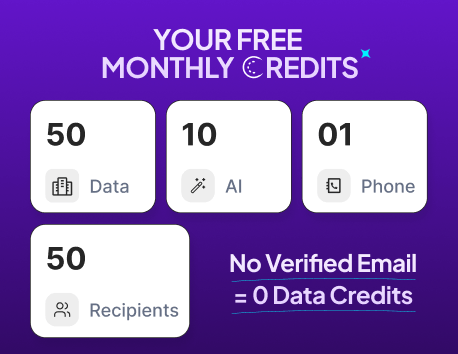
AI agents find and enrich prospects, personalize emails, follow up, handle replies, and book meetings automatically.
Claim Your FREE Credits
Most MSPs are active on LinkedIn but still struggling to book meetings with the right IT clients.
The problem isn't your service it's how you're using the platform.
Your ideal clients are already on LinkedIn. They're researching vendors, discussing tech challenges, and dropping quiet signals that they're open to change.
You just need the right LinkedIn prospecting approach to spot them and start the right conversation at the right time.
In this guide, you'll learn:
- Why LinkedIn prospecting for MSPs outperforms traditional outreach
- What to set up before you start
- 9 proven strategies to find and convert IT decision-makers into booked meetings
Why LinkedIn Prospecting for MSPs Works Better Than Traditional Outreach
Cold calls go to voicemail. Cold emails get ignored. And referrals only come when someone already knows you exist.
LinkedIn is different — and here's why it actually works for MSPs.
IT Decision-Makers Research Vendors Before Responding
Before any IT director or business owner picks up the phone, they've already done their homework.
They've checked your LinkedIn profile, read your posts, looked at who you're connected with, and formed an opinion — all before you've said a single word to them.
That means your LinkedIn presence is doing sales work whether you're actively prospecting or not.
When you show up consistently with relevant content and a sharp profile, you're already building trust with people who are quietly evaluating you.
Most Companies Only Consider Switching MSPs After a Trigger Event
Here's something most MSPs don't realize: businesses rarely switch IT providers out of nowhere.
They switch after something happens. A security incident. A key IT staff member leaving. A compliance deadline creeping up.
A merger or rapid headcount growth that their current setup can't handle.
These moments create urgency — and LinkedIn is one of the few places where you can actually spot them as they unfold.
LinkedIn Reveals Buying Signals That Other Channels Miss
No other outreach channel gives you this kind of live visibility into what's happening inside a company:
- A company posting multiple IT or cybersecurity job openings
- A new CTO or IT manager stepping into their role
- A business leader publicly discussing compliance struggles or infrastructure pain
- Rapid hiring growth that signals scaling pressure
These aren't just data points. They're buying signals — and catching them early is what separates MSPs who consistently win clients from those who are always chasing cold leads.
What MSPs Need Before Starting LinkedIn Prospecting for MSPs
Jumping into LinkedIn outreach without a clear foundation is one of the fastest ways to waste time and burn goodwill.
Before you send a single message, get these three things right.
Build an Ideal Customer Profile From Your Best Existing Clients
Don't guess at who you should be targeting — look at who's already working well with you.
Pull up your top 5 to 10 clients. Notice the patterns. What industry are they in? How many employees do they have? What IT problems were they dealing with before they hired you?
That overlap is your Ideal Customer Profile. It tells you exactly who to find on LinkedIn and who to filter out — so you're not wasting outreach on accounts that will never convert.
Lead With a Specific Offer Instead of Generic IT Services
"We manage IT for businesses" is not a message. It's a category.
Decision-makers on LinkedIn hear this all day. What actually gets their attention is specificity — a clear problem you solve for a specific type of company.
Think less "full-service MSP" and more "we help 50-person financial firms stay compliant, avoid IT downtime, and implement MSP backup solutions that keep them running after an incident."
That's the kind of positioning that makes someone stop and think, that's exactly us.
Use Verified Contact Data to Reach the Right Decision-Makers
Once you know who you're targeting, you need accurate data to actually reach them.
LinkedIn shows you the right people, but verified contact details — confirmed emails, direct lines, accurate titles — are what make your outreach land instead of bounce.
Bad data doesn't just waste credits. It wastes your reputation with prospects you actually wanted to reach.
9 Proven Ways MSPs Find Qualified IT Clients on LinkedIn
Knowing why LinkedIn works and having your foundation ready is one thing. Actually turning that into a repeatable system that books meetings is another.
These 9 strategies are built around how IT buying decisions actually happen — so you're not just reaching out, you're reaching out at the right moment, to the right person, with the right angle.
1. Let Oppora AI Find, Enrich, and Reach IT Decision-Makers for You
Most MSPs spend more time building lists than actually selling. Oppora flips that entirely.
Instead of manually searching LinkedIn, cross-referencing job titles, and copy-pasting contact details into a spreadsheet, Oppora's AI handles the entire prospecting layer for you.
It finds IT decision-makers that match your ICP on LinkedIn, enriches their profiles with verified contact data, and pushes them directly into outreach sequences — without you lifting a finger.
What that looks like in practice:
- Search across 1B+ leads using filters like job title, company size, industry, location & 20+ buying signals
- Find email and phone numbers for your leads
- Verify emails before sending so nothing bounces
- Launch LinkedIn and email outreach from one place in a single workflow
- Use AI agents to create self running prospecting to outreach workflow daily.
You stop chasing data and start having conversations with the right people at the right companies.
Suggested Reading:
How to Find CEO Email Address in 2026 (28 Real Tactics)2. Watch for Trigger Events That Signal a Company Is Open to Switching
Nobody switches MSPs when everything is running smoothly. They switch when something breaks — or when something changes.
That's exactly why trigger events are the most valuable signal you can track on LinkedIn. When a company goes through a significant shift, their current IT setup suddenly gets questioned.
The trigger events worth watching for:
- A data breach or public security incident
- A compliance deadline approaching — HIPAA, SOC 2, CMMC
- A leadership change at the executive or operations level
- Rapid headcount growth that strains existing infrastructure
- A recent merger, acquisition, or office expansion
When you spot any of these, you're not cold prospecting anymore. You're reaching out at exactly the moment they're already thinking about IT.
3. Track Companies Hiring Internal IT Teams or Showing Signs of IT Strain
A company posting IT jobs on LinkedIn is telling you something important — their current setup isn't keeping up.
They're either trying to build something in-house without the budget or expertise to sustain it, or they're patching gaps that a proper MSP relationship would solve far more efficiently.
Watch for job titles like IT Support Specialist, Systems Administrator, or IT Manager appearing at companies within your target size range.
That's your opening to position co-managed IT as the smarter, faster, and more cost-effective path — before they commit to a hire that still won't solve the underlying problem.
4. Catch Decision-Makers During Their First 90 Days in a New Role
A new CTO, IT Director, or Operations Manager has one clear priority in their first 90 days — prove they can make fast, smart decisions.
That means they're actively questioning everything their predecessor set up, including the current MSP relationship.
This window doesn't stay open long.
New leaders move quickly in the beginning, then settle into the existing setup by default.
Reaching out with a specific, relevant angle during this early period gives you a real conversation — one that simply wouldn't exist three months later, when routines have solidified and switching feels like far too much disruption to seriously consider.
5. Multithread Across Owners, IT Leaders, and Operations Stakeholders
Most MSPs send one message to one person and wait. That's not a strategy — that's hope.
Multithreading means reaching out to multiple stakeholders inside the same target company at the same time.
The business owner cares about cost and risk. The IT leader cares about stability and workload. The Operations Manager cares about uptime and efficiency.
Each of them has a different reason to say yes — and a different reason to ignore you.
When you approach all three with angles tailored to what they individually care about, you're not just increasing your chances of a response.
You're building internal momentum before you've even had a meeting.
6. Use AI Assessments and Automation Opportunities as Conversation Starters
Leading with "we manage IT" is forgettable. Leading with something genuinely useful is not.
Offering a free IT security assessment, a network health check, or a quick automation audit gives prospects a concrete reason to engage — without feeling like they're being sold to.
It lowers the barrier to a first conversation dramatically.
Once they see where their gaps are, you're no longer a vendor pitching services.
You're already the person who identified the problem — which puts you in a completely different position when the actual buying conversation begins.
7. Prospect Through Engagement Around Cybersecurity, Compliance, and AI Discussions
Your prospects are already talking about the problems you solve.
LinkedIn posts about ransomware threats, AI adoption challenges, and compliance deadlines appear every single day.
When you engage thoughtfully — not with a sales pitch, but with a genuinely useful perspective — you become visible to exactly the right people.
Comment on the right posts. Share a relevant take. Show up consistently where the conversation is already happening.
That's how MSPs build real authority and warm leads at the same time, without sending a single cold message to a stranger.
8. Target Co-Managed IT Opportunities Before Pursuing Full MSP Replacements
Trying to convince a company to rip out their entire IT setup and hand everything to you is a hard sell.
Offering to support what they already have is a much easier conversation.
Co-managed IT lets you step in alongside an existing internal team — filling skill gaps, handling overflow, or covering specialized areas like cybersecurity or compliance.
It's a lower-commitment entry point for the prospect, but it consistently becomes a full relationship over time.
Target companies that show these signs:
- A small internal IT team that's visibly stretched thin
- Job postings for IT roles that have been open for months
- Leadership discussing technology challenges publicly on LinkedIn
Get in the door first. The full engagement follows naturally.
9. Combine LinkedIn With Email and Calls for Multi-Channel Prospecting
LinkedIn alone is not enough. Neither is email alone.
The MSPs that consistently book meetings are the ones showing up across multiple touchpoints in a coordinated sequence — not randomly, but with clear intent behind every step.
A simple multi-channel flow looks like this:
- Connect on LinkedIn with a personalized note
- Follow up with a relevant email referencing your LinkedIn interaction
- Call when there's a clear signal of interest or engagement
Each touchpoint reinforces the last.
Prospects rarely respond to the first message. They respond when they've seen you enough times to feel like reaching out makes sense.
Suggested Reading:
How to Combine LinkedIn Outreach with Email CampaignsHow to Turn LinkedIn Prospecting for MSPs Into Booked Sales Meetings
Spotting the right prospects is only half the job. What you do next determines whether that signal turns into a real sales conversation or disappears into the noise.
Most MSPs identify a warm lead and then fumble the follow-through. The strategies below make sure that doesn't happen to you.
Respond to Warm Buying Signals Within 48 Hours
Timing is everything in MSP sales.
When a prospect posts about an IT challenge, announces a new role, or their company shows up in a trigger event — that window of relevance is short.
Reach out within 48 hours while the context is still fresh and the problem is still top of mind.
Waiting a week means you're reaching out cold again, even though the signal was warm.
Reference the Specific Trigger Event in Your Outreach
Generic outreach gets ignored. Specific outreach gets responses.
When you reference exactly what prompted you to reach out — a job posting, a LinkedIn comment, a leadership change, a compliance discussion — your message immediately feels relevant instead of random.
It shows you've done your homework. And it gives the prospect a clear reason to respond, because you're speaking directly to something already on their radar.
Qualify for Fit, Urgency, and Timing Before Requesting a Meeting
Not every interested prospect is a good prospect right now. Before you push for a meeting, make sure three things are true:
- Fit — Do they match your ICP in terms of size, industry, and IT complexity?
- Urgency — Is there an active problem or pressure driving them to act?
- Timing — Are they in a position to make a decision in the near term?
If all three line up, ask for the meeting. If one is missing, keep nurturing until it does.
Nurture Prospects Until the Right Opportunity Appears
Most prospects won't be ready the first time you reach out. That doesn't mean they're a lost cause — it means the timing isn't right yet.
Stay visible. Engage with their content. Share something useful occasionally.
When their situation changes — and it will — you want to be the MSP they already know and trust, not a stranger showing up at the worst possible moment.
Common LinkedIn Prospecting for MSPs Mistakes That Hurt Results
Even MSPs with a solid ICP and good targeting can sabotage their own results with the wrong approach.
These are the mistakes that consistently kill LinkedIn prospecting performance — and what to do instead.
Sending Generic Connection Requests to Large Prospect Lists
Volume without relevance is just noise.
Blasting connection requests to hundreds of prospects with no personalization doesn't scale your outreach — it scales your rejection rate.
LinkedIn's algorithm also flags accounts that accumulate too many ignored or declined requests, which can limit your reach when it matters most.
One specific, relevant connection note outperforms fifty generic ones every time.
Suggested Reading:
11 Best Practices for Converting LinkedIn Connections Into Sales MeetingsLeading With "We Manage IT" Instead of a Relevant Business Problem
This is the single most common MSP prospecting mistake on LinkedIn.
Decision-makers don't wake up thinking about IT management.
They wake up thinking about staying compliant, avoiding downtime, protecting client data, and keeping their team productive.
When your first message leads with what you do instead of what they're dealing with, you've already lost them.
Reframe every outreach around a specific business problem they're likely experiencing right now.
Relying on a Single Contact Instead of Multiple Stakeholders
If your only contact at a target company goes quiet, your entire opportunity goes quiet with them.
Buying decisions for IT services rarely happen in isolation.
The business owner, IT lead, and operations stakeholder all have influence — and they all have different priorities.
Reaching out to multiple people across the same account keeps the conversation alive even when one thread goes cold.
It also creates internal awareness of your name before any formal conversation begins.
Prospecting With Outdated Data and Poor-Fit Accounts
Bad data doesn't just waste your time it damages your credibility.
Reaching out to someone who left the company six months ago, or targeting a 10-person team with an enterprise MSP pitch, signals that you haven't done your homework.
Prospects notice.
Keep your contact data clean and current:
- Verify emails before every outreach sequence
- Remove contacts who've changed roles or companies
- Regularly audit your target account list against your ICP criteria
Your list should get sharper over time, not just bigger.
Treating LinkedIn as a Standalone Channel Instead of Part of a Broader Strategy
LinkedIn opens the door. It rarely closes the deal on its own.
MSPs who rely exclusively on LinkedIn messages miss the compounding effect of coordinated multi-channel outreach.
A LinkedIn connection followed by a relevant email followed by a timely call is a sequence.
A LinkedIn message alone is just a message.
Build LinkedIn into a broader prospecting system, and every touchpoint becomes more effective as a result.
Conclusion
LinkedIn prospecting for MSPs isn't about sending more messages. It's about showing up at the right moment, with the right angle, for the right person.
When you combine trigger-based targeting, multi-stakeholder outreach, and a coordinated follow-up system, LinkedIn stops feeling like a grind and starts working like a pipeline.
The MSPs winning IT clients consistently aren't working harder — they're prospecting smarter.
If you want to put the prospecting layer on autopilot, Oppora handles the finding, enriching, and outreach side of this automatically — so you can focus entirely on closing the conversations that are already coming in.
Frequently Asked Questions (FAQs)
How many LinkedIn connection requests should an MSP send per day without risking account restrictions?
LinkedIn recommends staying under 20 to 25 personalized connection requests per day. Exceeding this — especially with low acceptance rates — can trigger restrictions on your account. Focus on quality targeting so more requests get accepted, keeping your account in good standing.
What's the ideal length for a LinkedIn prospecting message to an IT decision-maker?
Keep it under 150 words. Decision-makers skim long messages and ignore anything that feels like a pitch. Lead with a specific observation, connect it to a relevant problem, and end with one clear, low-commitment ask — not a meeting request right away.
Should MSPs use LinkedIn Sales Navigator or is a free account enough to start?
A free account works for early-stage prospecting, but Sales Navigator unlocks advanced filters like company headcount, seniority level, and recent job changes — all critical for MSP targeting. If you're prospecting consistently, the upgrade pays for itself quickly with better-fit leads.
How long should an MSP nurture a LinkedIn prospect before moving on?
There's no fixed timeline, but six to twelve months is a reasonable window. Stay visible through occasional content engagement and periodic check-ins tied to relevant events. If nothing changes after that, deprioritize them and revisit when new trigger events appear.
Is it better for MSPs to post content on LinkedIn or focus purely on direct outreach?
Both work better together than either does alone. Content builds passive visibility and warms up prospects before you reach out. Direct outreach creates active conversations. MSPs who combine consistent posting with targeted prospecting get responses faster because prospects already recognize their name.
Summarize with AI
Share